Moderate
Acei Cichlid (Pseudotropheus sp. “acei”)
24–26°C · pH 7.5–8.5 · 300L
£7.99

Haplochromis “Cribensis” (Haplochromis sp.) is an unidentified Haplochromis trade form offered as one live fish per purchase in 3–4 cm, 4–5 cm, 5–6 cm and XL supplier grades. Its exact adult size, origin, diet and sex remain uncertain, so this advanced-care guide uses cautious African Malawi cichlid group guidance and asks the keeper to plan the whole community before ordering.
Haplochromis sp.
Save when buying multiple fish. Each quantity is one fish; sex and pair formation are not guaranteed unless the selected variant explicitly states them.
Haplochromis “Cribensis” (Haplochromis sp.) is an unidentified Haplochromis trade form offered as one live fish per purchase in 3–4 cm, 4–5 cm, 5–6 cm and XL supplier grades. Its exact adult size, origin, diet and sex remain uncertain, so this advanced-care guide uses cautious African Malawi cichlid group guidance and asks the keeper to plan the whole community before ordering.

Cichlids are a family of roughly 1,800 accepted species, not one care type. Before buying, identify the exact species and source, then compare adult measurement, usable tank dimensions, social system, territory, tested water, diet and an exit plan. No family-wide minimum tank, water range or tank-mate list is safe.
Maintain these water conditions for optimal health and vibrant colors
Haplochromis “Cribensis” (Haplochromis sp.) is a live cichlid offered under the supplier's trade name “cribensis”. The accepted public record supports Haplochromis as a genus in the family Cichlidae, but the name Haplochromis cribensis does not resolve to a verified species in the supplied taxonomic search. The quotation marks around “Cribensis” preserve the useful trade label without presenting it as a valid species epithet.
The exact species has not been identified, so the care advice here follows the genus Haplochromis and its care group. That distinction matters. A genus can contain animals with different adult sizes, feeding strategies, native waters and social behaviour. This page therefore does not invent a precise origin, adult length, lifespan, breeding method or sex difference for this fish. The care plan uses the complete OATA African Malawi cichlid sheet as broad, cautious group guidance because the commercial record places the offer in the Malawi and Victoria cichlid category; that catalogue placement cannot locate this animal within either lake system.
The four catalogue grades are 3–4 cm, 4–5 cm, 5–6 cm and XL. One purchase supplies one live fish in the grade chosen. The size you select is the size supplied, not the adult size. XL is a supplier grade rather than a centimetre measurement, and none of the four labels establishes how large the unidentified species will become. Check the product page when ordering because availability changes; this care guide does not state current stock.
Sex is guaranteed only when the selected option explicitly states male or female. This Haplochromis cribensis listing has no sex-guaranteed option. Juvenile colour, egg spots or appearance in a photograph are not a safe basis for a sex promise, and the differences vary between cichlid species. Plan stocking without assuming a requested sex can be supplied. If the sex ratio is essential to an established group, contact Tropical Fish Co before purchase and be prepared for the answer to remain unconfirmed at the offered size.
This is an advanced-care choice, not because weekly maintenance is exotic, but because identity and social planning are unusually important. OATA describes Malawi cichlids as aggressive fish that need careful mixing, hard alkaline water, substantial filtration, oxygenation and enough space for a deliberately designed group. A buyer should already know the aquarium's measured pH and hardness, have a mature biological filter, and have a credible stocking and separation plan. The African cichlid collection is useful for comparing offers, but another cichlid shown there is not automatically a compatible tank mate.
| Suits or planning question | What a sound answer looks like |
|---|---|
| Is the aquarium mature? | Ammonia and nitrite are zero, the filter is established, and recent test results are recorded. |
| Does the water fit the broad care group? | The keeper has measured temperature, pH, GH and KH and understands that the published values are group guidance. |
| Is there a whole-community plan? | Space, rockwork, filtration, aeration, aggression and feeding ecology have been considered together. |
| Can the fish be separated safely? | A heated, filtered and biologically mature alternative is available if the intended group fails. |
| Is exact species information essential? | If it is, choose a listing with a verified species identity rather than filling gaps with assumptions. |
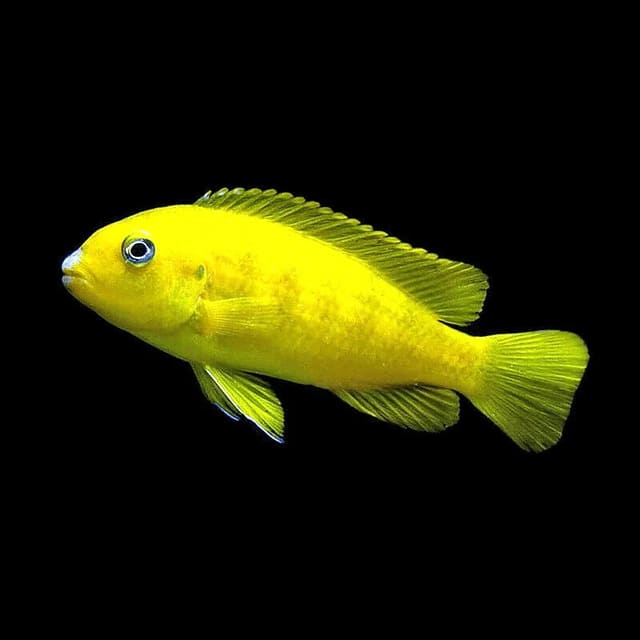
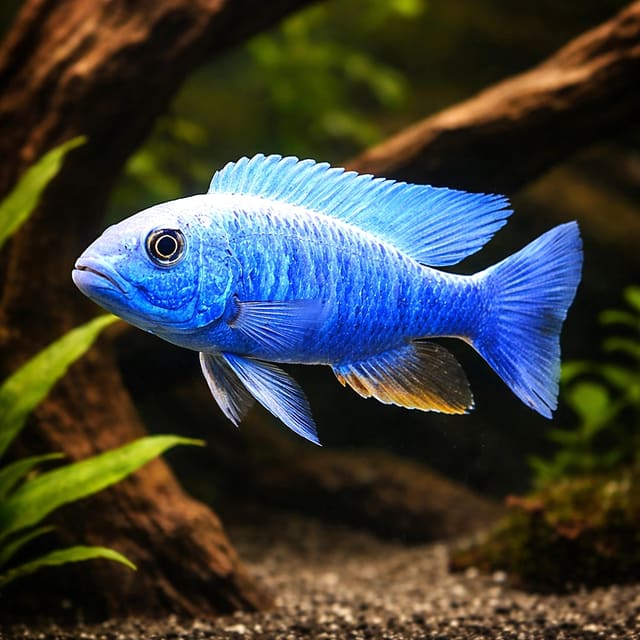
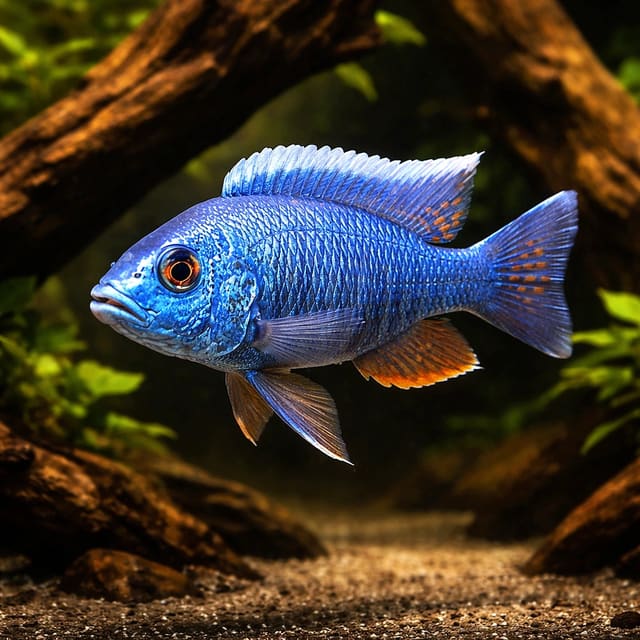
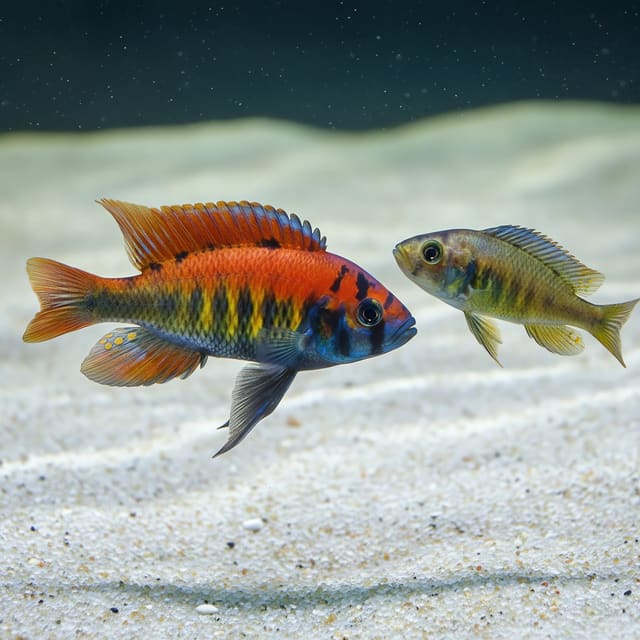
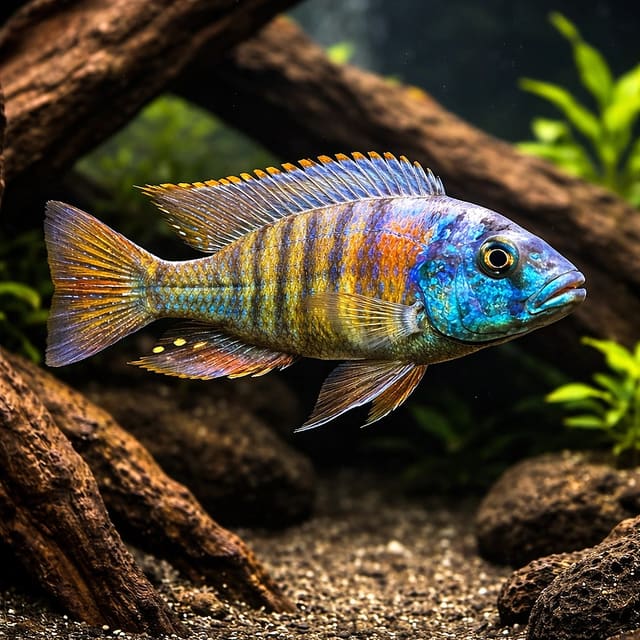
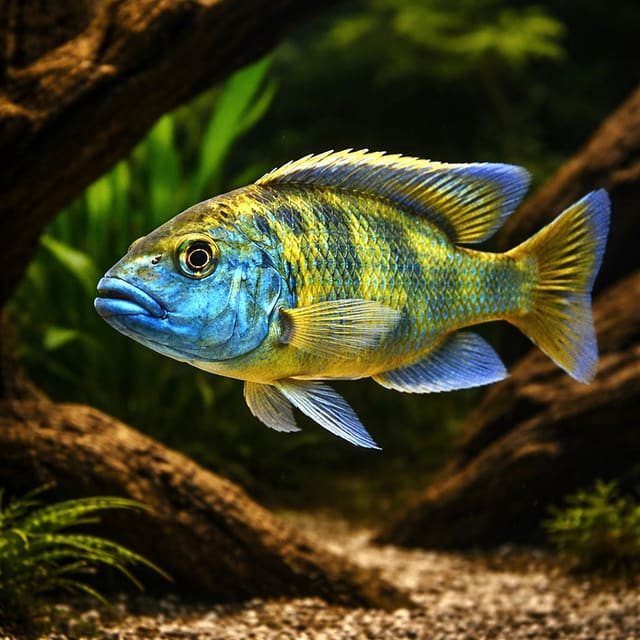
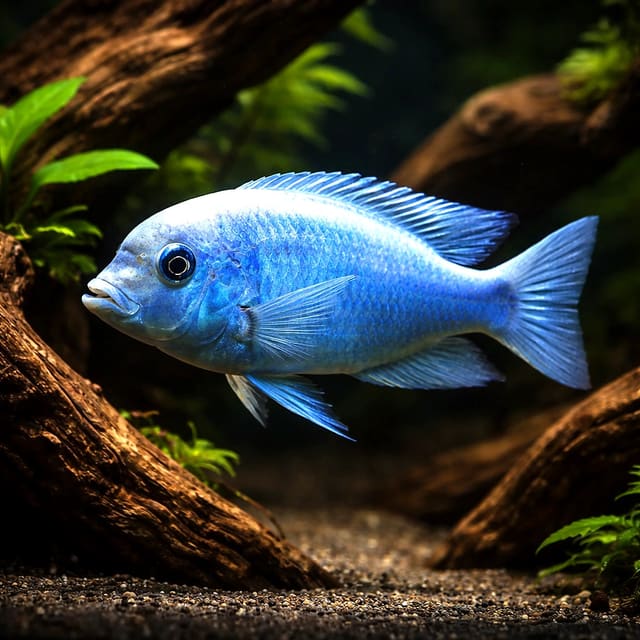
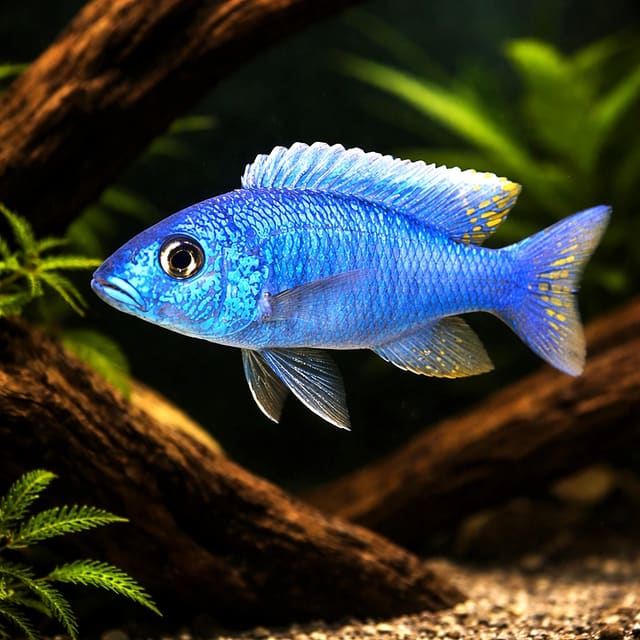
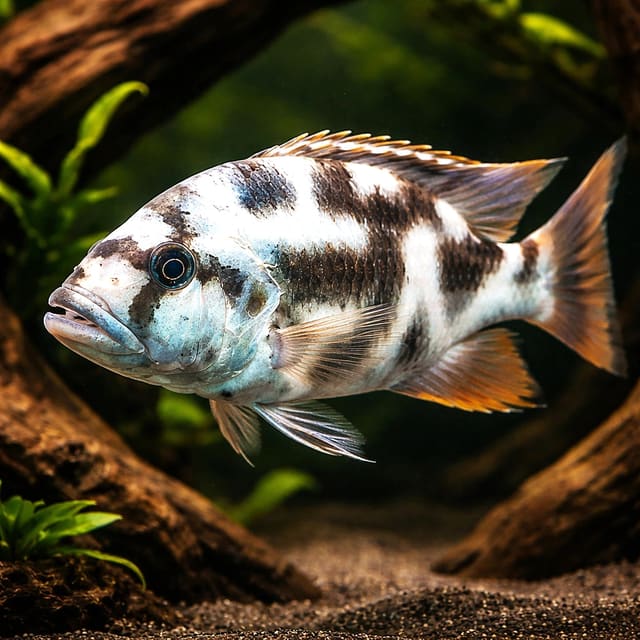
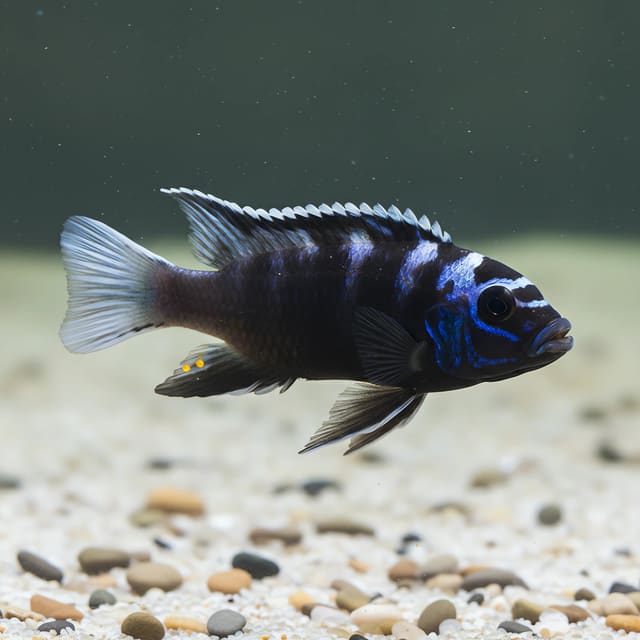
The gallery is representative and should not be used to infer a guaranteed sex, exact adult colour or species identity. Gallery images have been digitally enhanced to improve image quality. Natural colour, pattern, size and maturity can vary between live animals.
African cichlid care begins with the aquarium as a functioning system. If this is a first setup, use the first tropical aquarium guide and allow the filter to mature before arranging livestock. Fish waste produces toxic ammonia; established filter bacteria convert it to toxic nitrite and then to the safer nitrate. Both ammonia and nitrite must read zero before introduction and remain zero afterwards. Clear-looking water is not proof that either value is safe.
OATA recommends at least 200 litres for a reasonably sized Malawi cichlid community and notes that specialist species may differ. For this listing, 200 litres is a broad community-planning reference, not a verified minimum for Haplochromis “Cribensis”. The exact adult size is unknown, so do not use the 3–4 cm dispatch grade to justify a small permanent aquarium. A larger volume generally gives more room for territories, rockwork and retreat routes and is less vulnerable to rapid temperature or chemistry change.
Choose the aquarium only after mapping the intended adult community. Allow useful open water as well as structure, keep access for maintenance, and consider where displaced fish can retreat without being trapped. A beautiful wall of stone is not helpful if it creates dead zones, unstable stacks or one dominant cave. Place rockwork securely before the fish enters, accounting for the fact that cichlids will often dig and rearrange substrate.
The complete OATA African Malawi cichlid care sheet gives the following specialised group values. They are not a species-specific optimum for this unidentified trade form.
| Measure | Broad Malawi-group guidance |
|---|---|
| Temperature | 23–27°C |
| pH | 8.0–8.6 |
| General hardness | 12–18°dH, described as hard |
| Carbonate hardness | 10–15°dKH, described as hard |
| Ammonia | 0 mg/l |
| Nitrite | 0 mg/l |
| Nitrate | No more than 20 mg/l above the normal tap-water level |
Test the tap water as well as the aquarium. The nitrate limit is relative to the normal source-water level, so a tank result cannot be interpreted properly without that baseline. The water chemistry guide explains the measurements, and the water matcher can help compare recorded results with the stated guide. Neither tool resolves the species; they organise information so the keeper can make a better decision.
Stability is part of suitable water. Do not bounce pH or hardness around in pursuit of a midpoint. If the local supply is far from hard, alkaline Malawi-style conditions, research a safe and repeatable preparation method before buying the fish. Coral sand or a similar substrate can contribute buffering under the OATA plan, but it is not a substitute for testing. Any material used to change water should produce predictable results in both the aquarium and replacement water.
A filter is essential. The RSPCA aquarium guidance explains why biological filtration matters: beneficial bacteria process ammonia through nitrite to nitrate. OATA recommends an oversized filter for the crowded group structures often used in Malawi communities and strong aeration to maintain dissolved oxygen. Size the filter for the eventual livestock and feeding load rather than the empty tank volume alone.
Good circulation should carry waste towards filtration and avoid stagnant pockets behind rockwork. It should not create an unsafe torrent or undermine the substrate. Check flow after every maintenance session and after fish have dug. If an intake, outlet or air stone becomes blocked, the system can lose both waste processing and oxygen distribution. Keep electrical equipment accessible enough to inspect without dismantling the whole habitat.
OATA's Malawi plan uses coral sand or a similar buffering substrate, complex rockwork for territories, and broken lines of sight to reduce direct aggression. These are useful group-level principles here. Build several routes around and through the structure so one dominant individual cannot control every passage. Use aquarium-safe stone, place it securely and avoid narrow gaps that may become traps as fish grow.
Malawi cichlids often dig and uproot plants. Hardy plants attached to surfaces may fare better than rooted planting, but no plant choice makes an aggressive stocking plan safe. Use décor first to create functional territories and visual barriers, then for appearance. Reassess the layout as animals mature because a gap that suits a dispatched juvenile may not remain useful.
OATA separates Malawi diets broadly: smaller mbuna tend to be more herbivorous and may take algae-rich foods and vegetables, while larger utaka may need pellets with more animal content plus foods such as brine shrimp, prawn or cockle. The genus-level identity is too broad to place “Cribensis” in either feeding group. Confirm the current food before choosing a specialist herbivore, omnivore or predator formula.
Ask what the current fish are eating and choose an appropriate specialist cichlid food on that advice. Make any transition gradually and watch whether the animal feeds normally. Under the broad OATA routine, offer only what can be consumed within a few minutes, twice a day. Distribute food so that less dominant animals have a chance to feed and remove obvious leftovers. Excess food becomes waste, raises the filter load and can obscure whether appetite has genuinely changed.
OATA strongly recommends a partial water change of 25% at least once each week. Use a siphon to remove settled waste, condition replacement tap water for chlorine or chloramine and match it sensibly to the aquarium's temperature and prepared chemistry. “At least once a week” describes frequency; it is not an instruction to make a larger emergency change when the system is stable.
Test ammonia, nitrite, nitrate, pH, general hardness and carbonate hardness at least weekly, with extra checks during initial establishment and after livestock changes. Write down the date and results. A sequence shows drift that a single result can hide. If ammonia or nitrite is detectable, stop adding livestock, verify flow and oxygenation, review feeding and seek appropriate advice. Protect the bacterial population while correcting the cause.
Keep results together rather than recording only the value that happens to worry you. Temperature, ammonia, nitrite, nitrate, pH, GH and KH describe different parts of the same system. Add the date, water-change volume, unusual feeding, filter cleaning and any livestock change. When a value moves, that context helps distinguish a one-off testing error from a developing pattern.
Compare aquarium nitrate with the source-water nitrate because the OATA limit is measured above the normal tap-water level. A tank reading that looks modest in isolation may represent a large rise from the source, while a higher number may partly reflect incoming water. Repeat an unexpected test correctly before making a large intervention, then address the cause with measured maintenance rather than several untracked changes at once.
Hardness deserves the same attention as pH. General hardness and carbonate hardness are different measurements, and KH contributes to buffering. A stable pH reading does not by itself show that the broad Malawi hardness guide is met. Record both values and prepare replacement water consistently. This also makes acclimatisation easier to interpret: temperature matching is only the first part when transport water and aquarium chemistry differ.
If a result moves outside the planned range, keep the biological filter running and oxygenated while the cause is investigated. Review recent stocking, feeding, flow, dead areas and maintenance. Clean only media that genuinely needs it, rinse it in removed aquarium water, and preserve mature media. Replacing everything at once can reduce the bacterial capacity just when the aquarium needs reliable waste processing.
Increase observation after any corrective change. Watch whether breathing, appetite, colour and social position return towards the fish's usual pattern, and retest at a sensible interval. Improvement in behaviour supports the wider picture but never replaces a water test. Persistent abnormal behaviour with sound water needs suitable aquatic-health advice rather than repeated chemistry changes.
Be present for the confirmed delivery and have the mature, heated aquarium ready. The current delivery and Live Arrival Guarantee policy explains the tracked licensed live-animal courier, oxygen-filled bags, insulated box and weather-dependent heat pack. Before disturbing the parcel, record one continuous unboxing video from the sealed outer box through opening to the fish visible inside the still-sealed bag. If there is a problem, contact Tropical Fish Co the same day with the order number and video.
Do not add several unrelated livestock purchases at the same time simply to reach a group number. The biological filter must adjust when feeding and waste increase. OATA warns that rapid stocking can cause new tank syndrome, with ammonia or nitrite rising because the nitrifying bacteria cannot yet process the load.
Learn the individual's normal swimming, colour, breathing, appetite and use of cover. OATA lists surface hanging, bottom sitting, erratic swimming, unusual darkening or paling, changed aggression or hiding, altered gill movement, white spots, fluffy growths, lost fins or scales, weight change and reduced feeding as warning patterns. These observations do not diagnose a disease. Test water first, review recent changes and seek suitable aquatic-health advice when concern persists.
OATA describes Malawi cichlids as aggressive and warns that small groups often fight. Its broad plan uses a community of at least 15 with slight, deliberate overstocking to spread aggression, backed by a large aquarium, oversized filtration, strong aeration and complex rockwork. That is a complete system strategy, not permission to place many cichlids in an undersized or newly cycled tank.
For Haplochromis “Cribensis”, the group figure is not species-specific proof. The precise identity, adult size and temperament remain unknown, so an experienced keeper should plan conservatively and obtain current stocking advice for the entire aquarium. Do not buy one fish now and assume later additions will automatically form the right group. A 15-fish planning reference also does not guarantee that any 15 African cichlids will be compatible.
The OATA Malawi sheet limits companions to other Malawi cichlids or some Synodontis catfish that naturally inhabit Lake Malawi. Even those categories are conditional. Match the required water, eventual size, feeding ecology, activity, aggression and use of space. “Some Synodontis” is not every species in that genus, and “other Malawi cichlids” does not mean every possible combination.
| Proposed arrangement | Decision for this listing |
|---|---|
| A carefully planned Malawi cichlid community | Possible only with suitable volume, group structure, filtration, aeration, décor and specialist advice. |
| Selected Lake Malawi Synodontis | Consider only after exact species, adult size, water and behaviour are matched. |
| A small mixed group assembled by colour | Avoid; OATA warns that small Malawi groups often fight. |
| A general tropical community | Do not assume suitability; the broad care group's hard alkaline water and aggression plan are restrictive. |
| Fish with unmatched water or feeding needs | Avoid even if body size appears similar. |
| An unsexed purchase used to complete a precise ratio | Do not rely on it; this offer has no male or female guarantee. |
OATA advises adding Malawi cichlids in groups so one newcomer does not receive all the attention, placing more peaceful species before more aggressive ones, and rearranging décor to disrupt established territories. These tactics can reduce predictable pressure, but they cannot rescue an unsuitable mix. Adding a group also raises the biological load, so aquarium capacity and filter maturity must be assessed before the social tactic is used.
Break long sight lines with stable rockwork and create several retreat routes. Observe the whole aquarium after introduction, not just the new fish. Repeated pursuit, exclusion from food, cornering, torn fins, rapid breathing, persistent hiding or a fish pinned at the surface or bottom are reasons to intervene. Waiting for continuous injury is not a responsible compatibility test.
OATA notes that more females than males can help prevent one female being repeatedly harassed, where sex can be identified and the species plan supports that structure. It also says sex differences vary and may appear only in adults. This listing guarantees neither male nor female, so colour, egg spots or gallery appearance should not be used to promise a ratio. If an established community needs a known sex, select a product that explicitly offers it.
A juvenile community can change even when the first introduction appears calm. Body size, colour, feeding confidence and territorial pressure develop over time, and the true adult identity of this trade form remains uncertain. Recheck whether every fish reaches food, uses shelter and has room to leave a dominant animal's territory. A plan that works at 3–4 cm is evidence about today, not a permanent guarantee.
Use routine maintenance as an observation period. Look across several minutes rather than at the fish that approaches first. A subordinate animal may emerge only after the dominant fish has fed, and repeated retreat can be easier to see from a distance. Note which caves and routes are controlled, then alter the layout only with a clear purpose and a way to monitor the result.
When a change is needed, avoid making social, feeding and water adjustments simultaneously unless welfare requires immediate action. One measured change makes the response easier to interpret. Keep water stable, preserve the filter and prioritise safe separation when an animal is losing feeding access or accumulating injury.
A backup must be heated, filtered, mature and appropriately sized; a bucket or uncycled spare tank is not a long-term refuge. Decide before introduction which behaviours trigger separation and how a fish will be moved without dismantling unstable rockwork. Nets, containers and maintenance tools should be ready and clean.
When compatibility is uncertain, the answer is not to add another animal and watch what happens. Confirm the identity and requirements of every proposed companion, compare actual water needs and plan the final adult group. The two related products offered elsewhere on the page are shopping alternatives only, not suggested companions.
Adult size remains unresolved because “cribensis” has not resolved to an accepted species. The 3–4 cm, 4–5 cm, 5–6 cm and XL labels are dispatch grades, not adult-length claims.
OATA recommends at least 200 litres for a reasonably sized Malawi cichlid community, while noting that specialist species can differ. Use that only as broad group planning, not a species-specific minimum for this unidentified fish, and size the aquarium for the whole eventual community.
There is no verified species-specific number. OATA's Malawi-group plan uses at least 15 fish with carefully managed slight overstocking because small groups often fight, but this requires a large mature system, oversized filtration, strong aeration and specialist stocking advice.
This store rates it advanced. Routine maintenance is manageable, but uncertain species identity, aggressive group planning, hard alkaline water, substantial filtration and the lack of a sex guarantee require experienced decisions.
The genus-level identity is too broad for one exact feeding guild. OATA says Malawi cichlid diets vary from algae-rich foods and vegetables for smaller mbuna to more animal-rich pellets and frozen foods for larger utaka. Ask what the current fish are eating, choose a matching specialist food and feed only what is consumed within a few minutes twice daily.
The broad Malawi-group guide gives 23–27°C, pH 8.0–8.6, 12–18°dH GH and 10–15°dKH KH. These values are a cautious care-group reference, not a proven optimum for the unidentified species, so keep tested water stable and obtain individual advice.
Temperament remains uncertain, while OATA describes the Malawi care group as aggressive and states that small groups will often fight. Plan territories, broken sight lines, group structure and a mature separation system rather than assuming “semi-aggressive” predicts the individual.
OATA limits the Malawi care-group plan to other Malawi cichlids or selected Synodontis species from Lake Malawi. Each candidate still needs matched water, adult size, diet, behaviour and space; there is no universal safe tank mate for this unidentified fish.
Tropical Fish Co uses oxygen-filled bags, an insulated box, a heat pack when conditions call for one and a tracked courier licensed to carry live animals. Be present, film continuously from the sealed parcel to the fish in the sealed bag, and contact the store the same day with the order number and video if a Live Arrival Guarantee claim is needed.
The World Register of Marine Species records Haplochromis Hilgendorf, 1888 as an accepted genus in the family Cichlidae. The supplied exact-name query did not resolve Haplochromis cribensis, so this guide uses Haplochromis sp. and keeps “Cribensis” as a quoted trade label. It does not substitute another species.
OATA's complete African Malawi cichlid sheet supplies the broad hard-water, community-volume, group, filtration, feeding, compatibility, maintenance and introduction guidance. Because the precise identity is unavailable, those points remain clearly labelled as care-group guidance. The RSPCA aquarium page supports the general explanation of biological filtration and toxic nitrogen waste.
The four supplier grades and one-fish sold unit describe the commercial offer, not adult biology. Tropical Fish Co's current delivery page governs packing, courier, presence at the address, sealed-parcel video evidence, same-day contact and Live Arrival Guarantee wording.
No precise adult size, lifespan, native range, sex, breeding method or species-level diet is stated. The guide gives the keeper a cautious plan that remains safe when read as a detached tab or field, while directing identity-dependent decisions to current specialist advice.
No reviews for this item yet. Bought one? Honest reviews only, good or bad.
What customers say about ordering from us
I have a small group of long finned mountain minnows. So was delighted to be able to order ten of this variety to increase the genetics in my tank . The ones I recieved are healthy but it’s to early to give a verdict on wether they are of a long finned type since they are small currently.
Gordon Walker · 23 Sept 2026
100% success travel and "installation". Pleased with quality of purchase. The Siamese fighter a bit "shy" so have not yet seen him at his best yet but looking good. Happy customer. GG
George E Garratt · 21 Sept 2026
Reviews of our shop, collected by Judge.me, an independent third-party review collector. Newest first.