Moderate
Acei Cichlid (Pseudotropheus sp. “acei”)
24–26°C · pH 7.5–8.5 · 300L
£7.99

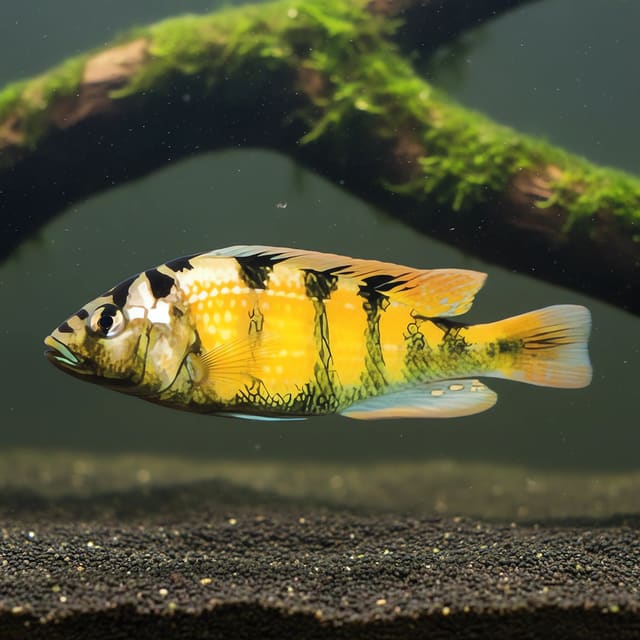
CH44 Thick-Skin Hap (Haplochromis sp. CH44) is a genus-labelled African cichlid supplied as one animal in the size selected. Plan a filtered, well-aerated aquarium around hard, alkaline water at 23–27°C and use 200 litres as the group-guidance starting point for a cichlid community. Screen companions carefully because its care group can be highly aggressive.
Haplochromis sp. CH44
Save when buying multiple fish. Each quantity is one fish; sex and pair formation are not guaranteed unless the selected variant explicitly states them.
CH44 Thick-Skin Hap (Haplochromis sp. CH44) is a genus-labelled African cichlid supplied as one animal in the size selected. Plan a filtered, well-aerated aquarium around hard, alkaline water at 23–27°C and use 200 litres as the group-guidance starting point for a cichlid community. Screen companions carefully because its care group can be highly aggressive.
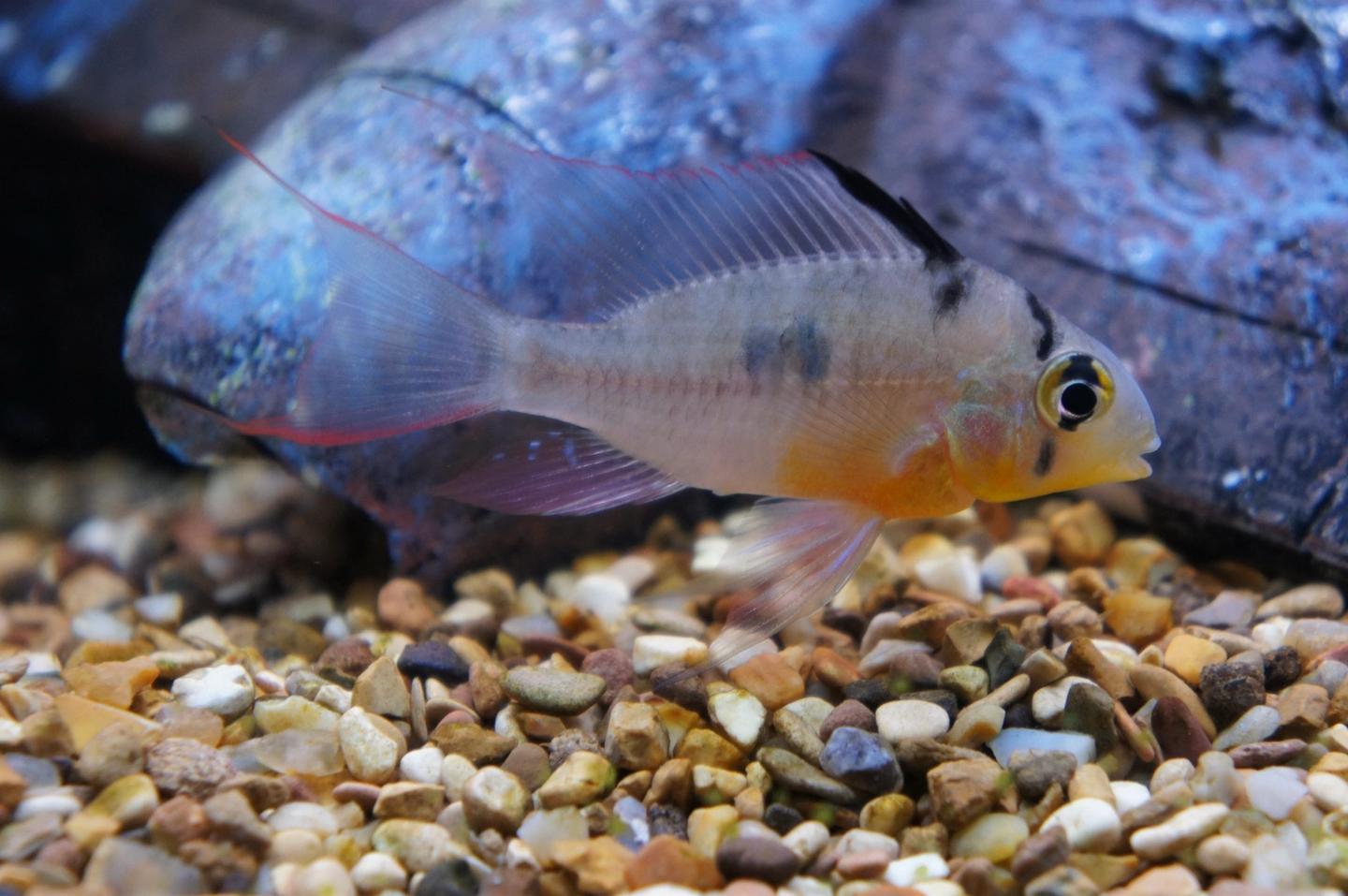
Cichlids are a family of roughly 1,800 accepted species, not one care type. Before buying, identify the exact species and source, then compare adult measurement, usable tank dimensions, social system, territory, tested water, diet and an exit plan. No family-wide minimum tank, water range or tank-mate list is safe.
Maintain these water conditions for optimal health and vibrant colors
CH44 Thick-Skin Hap is the aquarium trade name attached to Haplochromis sp. CH44. The abbreviation “sp.” matters: this fish is assigned to a genus, but the label does not name a formally identified species. The exact species has not been identified, so the care advice here follows the genus Haplochromis and its care group.
The World Register of Marine Species places Haplochromis as an accepted genus in the cichlid family Cichlidae and the order Cichliformes. That supports the genus and family identity without turning CH44 into a species name. Keep the full scientific label with the fish whenever you make notes or discuss a stocking plan; shortening it to a named species could attach the wrong adult size, diet or behaviour.
A summary of the genus Haplochromis explains that the name has historically been used as a broad grouping for East African Rift haplochromine cichlids. Aquarium keepers commonly call members of this wider group haps or haplos. That background explains why the familiar hap trade word is useful while a precise wild location or species-level natural history should not be inferred from the CH44 label.
This is a fish for a keeper prepared to manage hard, alkaline water, powerful biological filtration, aeration and deliberate compatibility decisions. Routine feeding and weekly maintenance are straightforward, but the group can be highly aggressive. The challenge lies in planning space and companions before the fish is introduced, not in adding complicated daily tasks afterwards.
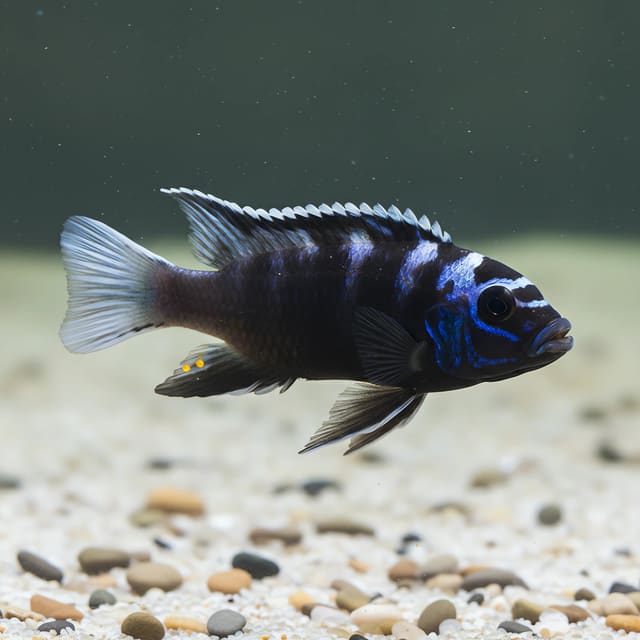
Treat colour and pattern as individual features rather than a way to identify sex, origin or species. Compare the fish with the aquarium’s measured water, adult-space allowance and existing occupants first. If you are still assembling the wider display, browse the African cichlid collection for planning purposes, then assess every proposed combination rather than matching fish by appearance alone.
The live size selector carries the labels “2 - 3 cm”, “4 - 5 cm”, “5 - 6 cm” and “7-9 cm”. Use the selector to choose the dispatch grade that suits your established aquarium and stocking plan. One purchase quantity supplies one animal of the selected option. The size you select is the size supplied, not the adult size.
Sex is guaranteed only when the selected option explicitly states male or female. This CH44 Thick-Skin Hap listing has no sex-guaranteed option.
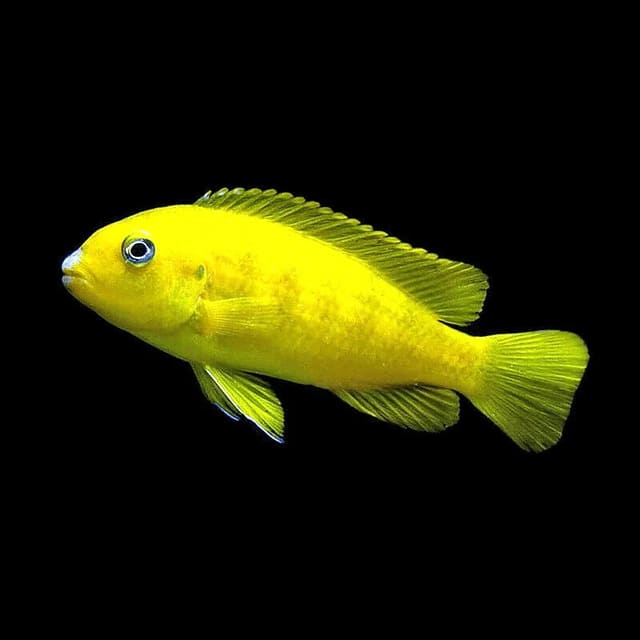
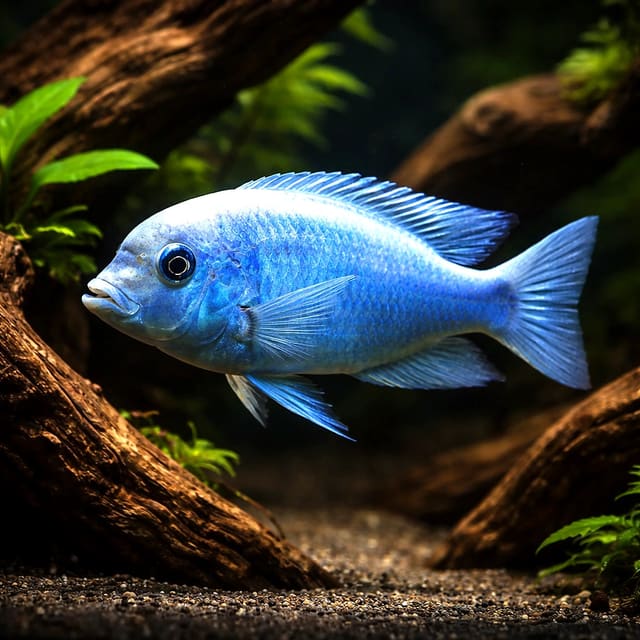
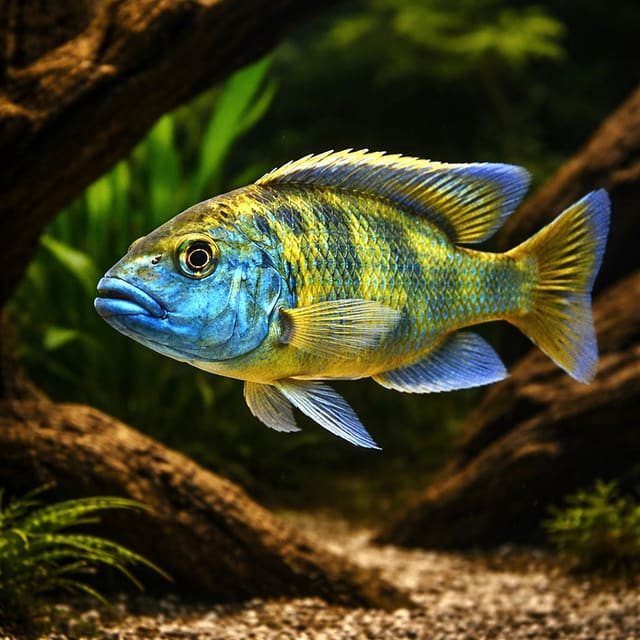
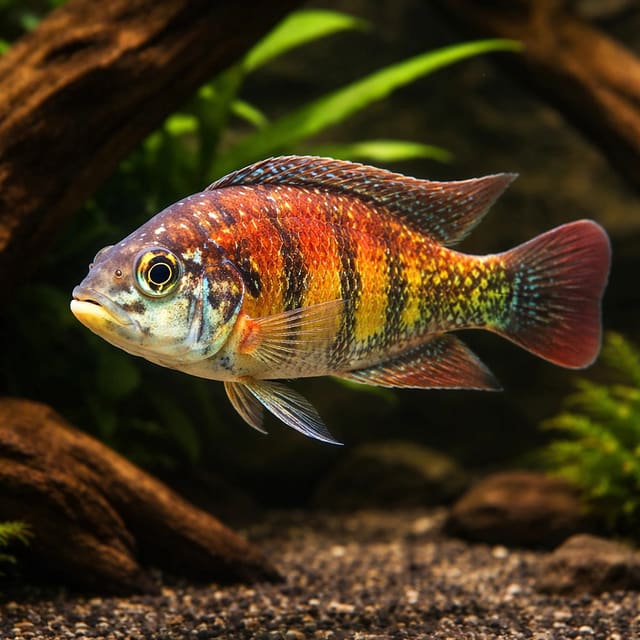
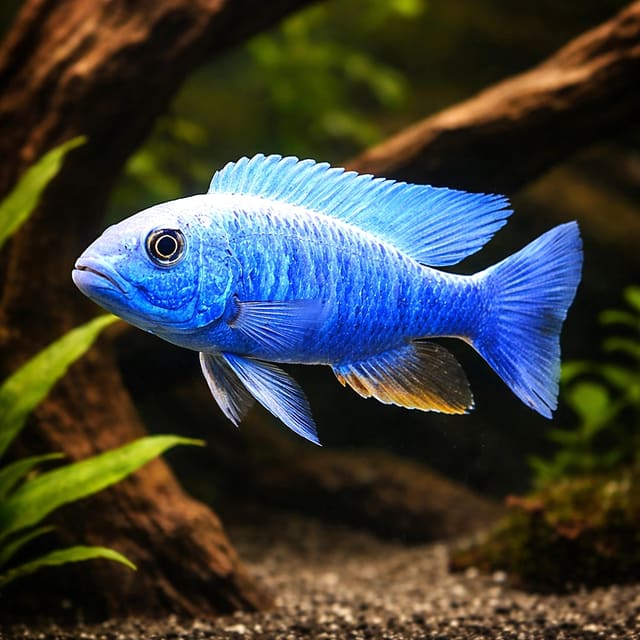
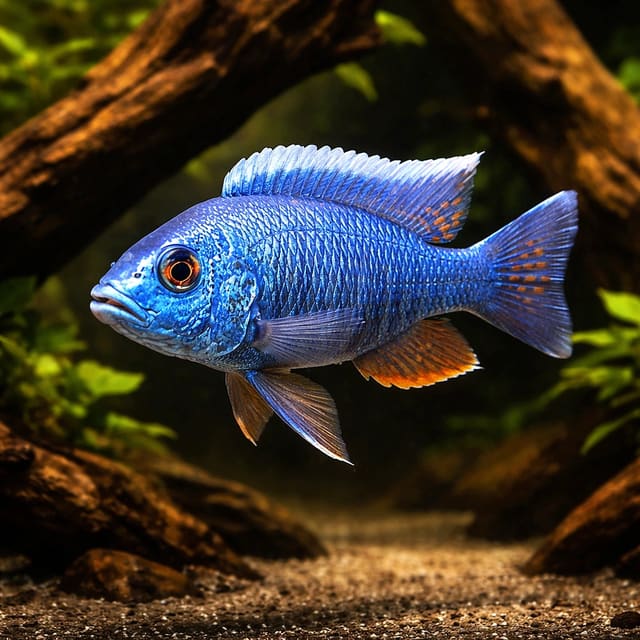
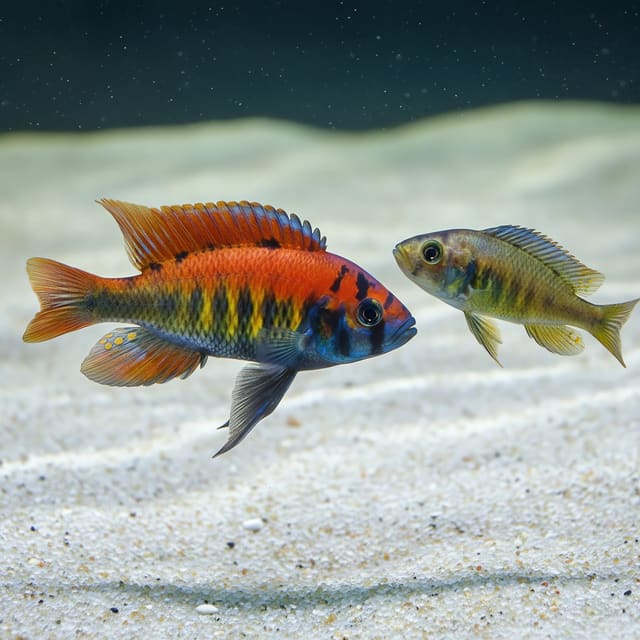
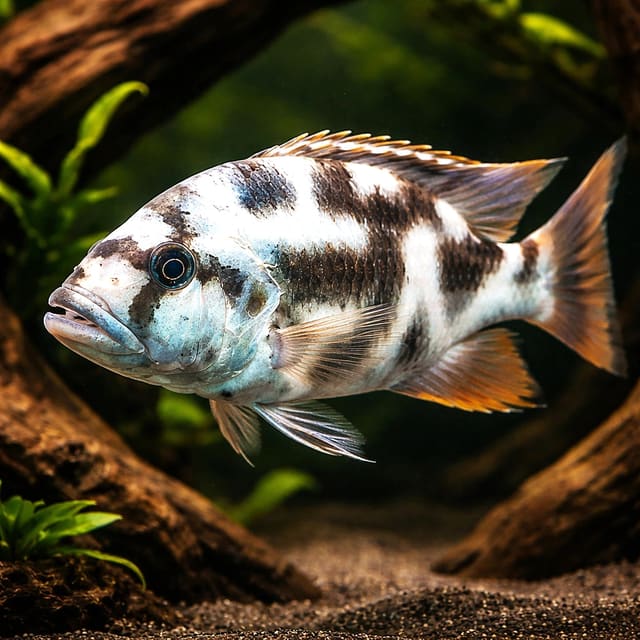
The gallery images are representative, based on reference photographs of this kind of animal, so colours can look slightly different from the live animal.
OATA’s African Malawi cichlid guidance gives 23–27°C, pH 8.0–8.6 and general hardness of 12–18°dH for the group. It also recommends at least 200 litres for a reasonable cichlid community, while noting that most members grow to around 10 cm and some grow up to 25 cm. Use the upper 25 cm group figure as a conservative space-planning reference, not as a prediction of this animal’s eventual length.
| Decision | Planning figure |
|---|---|
| Dispatch size | Use the label selected on the live selector |
| Adult allowance | Plan conservatively for a group member that may reach up to 25 cm |
| Community volume | At least 200 litres as group guidance |
| Routine temperature | 23–27°C |
| Water chemistry | pH 8.0–8.6; 12–18°dH |
The 200-litre figure is a starting point for a reasonable community rather than permission for every combination of cichlids. A proposed population containing larger or more aggressive individuals needs more room and filtration capacity. Plan the aquarium around the adult allowance and the whole community, even when the selected CH44 fish is small at dispatch.
| Suits | Not suited to |
|---|---|
| A mature, filtered and well-aerated hard-water cichlid aquarium | An unmatured or unfiltered aquarium |
| A deliberately screened African cichlid community | A general mixed tropical community |
| A keeper prepared to manage aggression and group stocking | An unplanned collection chosen by appearance alone |
Keep the aquarium at 23–27°C, with pH between 8.0 and 8.6 and general hardness between 12 and 18°dH. Carbonate hardness should remain within the group range of 10–15°dKH. Measure the aquarium rather than assuming that tap water, substrate or decorative materials produce the intended chemistry.
Ammonia and nitrite should both read zero mg per litre before the fish is introduced and throughout routine care. Nitrate should not exceed 20 mg per litre above the normal level in the tap water used for changes. This relative limit makes the tap-water result part of every useful nitrate decision.
| Tap-water nitrate | Aquarium ceiling |
|---|---|
| 0 mg/l | 20 mg/l |
| 5 mg/l | 25 mg/l |
| 10 mg/l | 30 mg/l |
| 20 mg/l | 40 mg/l |
For example, if the tap-water result is 10 mg/l, keep the aquarium at or below 30 mg/l. A result of 31 mg/l has crossed the group ceiling even though the number may look modest when viewed without its tap-water baseline. Record both readings together so the comparison remains meaningful.
Use our aquarium water chemistry guide to understand what each measurement represents, then enter the actual results into the water matcher. Check temperature, pH, hardness, ammonia, nitrite and nitrate as one set; a suitable temperature does not compensate for toxic nitrogen waste or unsuitable mineral conditions.
Stability comes from matching replacement water to the aquarium’s established routine and completing regular maintenance. When a reading moves outside the intended range, pause further livestock additions, check the measurements again and address the cause before increasing feeding or population. This protects both the fish and the biological filter from a larger change in waste load.
Start with at least 200 litres when planning a reasonable African cichlid community, then increase the aquarium size when the intended adult population, territorial pressure or group composition demands it. Larger aquariums provide more stable temperature and water quality, so extra volume has a practical purpose beyond simply giving the fish more distance to swim.
The CH44 label does not place this fish securely into either of the main Malawi-style habitat categories described by OATA. Mbuna are associated with rocks, while utaka use open water. Retain both structure and open swimming room instead of designing the entire aquarium around an assumed category. Décor should create visual separation without filling every part of the aquarium that fish could otherwise use for movement.
| Aquarium feature | Purpose |
|---|---|
| Coral sand or similar substrate | Helps buffer the hard, alkaline water |
| Structured décor | Creates territories and breaks direct lines of sight |
| Open areas | Retains swimming room for fish using open water |
| Hardy plants | Give the best chance of coping with digging |
African cichlids will often dig and rearrange the substrate, which will uproot any plants present. Treat delicate planting as a poor foundation for this layout. If plants are included, choose hardy examples and check them after the fish have moved substrate around them. The aquarium must continue to provide open water and sight breaks even after this rearrangement.
Review the layout from the fish’s level rather than only from the front. A direct view from one end to the other means a pursuing fish can maintain visual contact across the aquarium. Broken views give another fish opportunities to move away. Keep the design adjustable because rearranging décor can help when established territories are contributing to aggression.
Do not let the fish’s dispatch size set the permanent layout. A 2 - 3 cm selection still needs a plan based on the possible adult scale of its care group and the intended community. A small fish may fit physically into a temporary space while the same aquarium remains unsuitable for the mature stocking plan.
A filter is essential in every aquarium for this fish. The RSPCA’s aquarium welfare guidance explains that fish release toxic ammonia into the water and that a working biological filter supports bacteria which convert ammonia to nitrite and then to the safer nitrate. The filter therefore manages an ongoing biological process; it is not simply a device that makes the water look clear.
Prepare and mature the aquarium before adding livestock. Use our first aquarium guide to plan this stage, and confirm that ammonia and nitrite are both zero mg/l before introduction. The calendar alone cannot demonstrate readiness, so base the decision on measured water quality and a functioning filter.
OATA recommends an oversized filter and strong aeration for crowded Malawi-style communities. The reason is direct: each additional fish and each increase in feeding adds waste, while crowded populations also need enough dissolved oxygen. Choose filtration and aeration for the planned community rather than the aquarium’s empty starting condition.
Add livestock slowly because the filter’s beneficial bacteria need to increase as fish numbers and feeding rise. Stocking too quickly can create new tank syndrome, in which the biological filter cannot process the increased waste. This can raise ammonia and nitrite to harmful levels even when the aquarium looked mature before the addition.
Strong circulation does not replace biological maturity, and a mature filter does not remove the need for aeration or water changes. Treat filtration, oxygenation, testing and maintenance as connected safeguards. Each has a different role, so success in one area should not be used to excuse a weakness in another.
Arrange for someone to receive the parcel so live fish are not left unattended. Have the established aquarium ready at the intended temperature and confirm zero ammonia and zero nitrite before opening the transport bag. The arrival of a fish is not the time to finish maturing a filter or make a large change to the stocking plan.
These steps follow the current delivery and Live Arrival Guarantee policy. Read that page before the delivery date because it also explains the current receiving arrangements and the evidence needed for a guarantee claim. Keep the policy decision separate from routine care: the aquarium still needs to meet the fish’s water and compatibility requirements before release.
Use the first observation as a baseline rather than judging the animal by colour alone. Look for clear eyes, intact scales, undamaged fins and appropriate swimming. Watch the gill covers and note whether the fish hangs at the surface, sits on the bottom or swims erratically. These specific observations are more useful than a general impression that the fish looks quiet after transport.
The established community also needs watching. Aggression may appear as repeated chasing, a change in hiding or an individual being denied normal movement. If introduction triggers persistent pressure, use the compatibility plan: reassess territories, décor and the whole group rather than assuming the new fish must simply endure the hierarchy.
Do not add another group immediately because the first transfer appeared calm. Continue testing the water as feeding and waste increase. The filter’s bacterial population must adjust to each greater load, and a measured pause protects both the newcomer and the established fish.
Feed twice a day, offering only what the fish can consume within a few minutes. Remove the idea that an enthusiastic response justifies a larger meal: uneaten food breaks down, adds toxic waste and makes the filter’s job harder. Portion size should be judged by complete consumption rather than by how quickly the fish approaches.
Diet varies across the African Malawi cichlid group. Smaller mbuna tend towards more plant material and may take specialised feeds with a high algae content plus fresh vegetables. Some larger utaka are more predatory and may need pellets with a higher animal content alongside frozen brine shrimp, prawns or cockles. The CH44 genus label does not place this animal confidently into either dietary category.
Begin with an appropriate specialised Malawi cichlid feed and keep both daily portions modest. Avoid building the whole routine around either a vegetable-only assumption or a high-animal-content predator assumption based on colour, body shape or the dispatch grade. Those features do not settle the species or its feeding biology.
| Feeding decision | Action |
|---|---|
| Frequency | Twice daily |
| Meal length | Only what is eaten within a few minutes |
| Food choice | Use a specialised Malawi cichlid feed as the starting point |
| Food remains | Reduce the next portion and remove leftovers |
Observe feeding as a health and compatibility check. Every fish should have a practical opportunity to eat. Reduced intake, no interest in food or a sudden change in body condition deserves attention, especially when accompanied by altered breathing, colour, swimming or aggression. Test water quality before assuming the food itself is the only issue.
Keep the feeding load aligned with the filter. Adding fish means adding meals, and that increases the waste the beneficial bacteria must process. If a larger population is introduced, continue regular ammonia and nitrite checks while feeding remains tightly controlled. Clear water alone does not show that the biological filter is coping.
At least once every week, change 25% of the aquarium water. Use a siphon to remove solid waste from the substrate as water is taken out, and treat replacement tap water with conditioner to remove harmful chlorine or chloramine before it enters the aquarium. This routine reduces accumulated waste while protecting the fish and the filter bacteria.
Test the water at least weekly. Record temperature, pH, general hardness, carbonate hardness, ammonia, nitrite and nitrate in a consistent order so a change is easy to spot. Ammonia and nitrite must remain at zero mg/l, while nitrate stays within 20 mg/l above the tap-water baseline.
| Weekly task | Reason |
|---|---|
| Change 25% | Removes dissolved waste and refreshes the aquarium |
| Siphon the substrate | Removes trapped solid waste |
| Condition replacement water | Neutralises chlorine or chloramine |
| Test the aquarium | Finds ammonia, nitrite or nitrate changes early |
| Check filter flow | Finds blockages that reduce performance |
Check the filter for blockages during maintenance. When cleaning is needed, rinse the media lightly in water removed from the aquarium during the partial change. Do not rinse biological media under the tap because chlorine or chloramine may kill the beneficial bacterial population established there.
Use the weekly results to decide whether stocking and feeding remain appropriate. A rise in nitrate towards its ceiling calls for attention to waste production and maintenance before another fish is introduced. Any measurable ammonia or nitrite requires immediate action and a pause in population growth.
Weekly is the minimum rhythm, not a reason to ignore a visible problem between scheduled changes. Check the fish each day and bring testing forward when breathing, swimming, feeding, colour or aggression changes. Water quality can connect several symptoms, so measuring it gives a firmer first decision than choosing a treatment by appearance alone.
Learn the normal appearance and behaviour of the individual fish after it settles. Healthy fish should have clear, bright eyes, intact scales, undamaged fins, no ulcerations or bumps and swimming appropriate to the aquarium. A regular appetite and stable body condition provide further points of comparison.
Watch for changes rather than relying on one fixed idea of how every CH44 fish must behave. Warning signs include hanging at the surface, sitting on the bottom, erratic swimming, darker or paler colour, increased aggression, unusual hiding, slower or faster gill-cover movement, white spots, fluffy growths, lost fins or scales, changing body condition and reduced interest in food.
This sequence keeps water quality and social pressure at the front of the decision. Even small amounts of ammonia or nitrite can stress African cichlids, while incompatible stocking can change hiding, feeding, colour and fin condition. Several visible signs may therefore share one environmental cause.
Avoid choosing a disease treatment from colour change or reduced feeding alone. The same observation can occur alongside altered water, bullying or an increased waste load. Testing first provides the information needed to decide whether the immediate priority is water maintenance, filtration, aeration, territory management or health advice.
Keep dated notes when something changes. Record the measured water values, what the fish ate, where it spent its time and whether chasing occurred. A short comparison with the fish’s usual pattern makes gradual changes easier to recognise and gives a clearer basis for the next care decision.
Do not treat CH44 Thick-Skin Hap as a general mixed-community fish. The African Malawi cichlid group is aggressive, and OATA limits companions in that type of aquarium to other Malawi cichlids or some species of Synodontis catfish. Even within those categories, a group-level recommendation does not make every combination safe.
Avoid a general collection of tropical fish chosen only because the temperature overlaps. Temperature is one part of compatibility; mineral conditions, adult size, aggression and territorial behaviour must also align. Small or peaceful behaviour at dispatch does not promise the same relationship after growth and settlement.
Treat other Malawi cichlids as candidates for assessment, not universal tank mates. Some Synodontis may also be considered, but the word “some” must remain part of the decision. Check the exact catfish identity, adult needs and intended population rather than adding one as a generic cleaner.
Send us the aquarium volume, current inhabitants and proposed additions for a stocking assessment before mixing unfamiliar fish. Include measured water values and the adult sizes being used in the plan. This makes the assessment about the whole aquarium rather than one attractive potential companion.
If the plan depends on a fish staying unusually peaceful or small, revise it before introduction. A robust plan should still work when each occupant expresses the aggression and adult scale expected for its own group.
Malawi cichlids are not described as social fish, yet OATA advises that they can be managed in groups of at least 15, with slight overcrowding used to spread aggression. Small groups often fight because pressure can fall repeatedly on the same individuals. This is community-level planning and does not mean keeping 15 CH44 Thick-Skin Haps.
The population figure and the 200-litre starting point must be considered together with adult size, filtration and aeration. Some group members grow up to 25 cm, so 15 fish cannot be treated as an automatic target for every 200-litre aquarium. Decide the final adult population first, then check whether the volume, layout, oversized filter and oxygenation can support it.
Social planning favours grouped introductions and enough fish to spread aggression. Biological filtration favours gradual increases so beneficial bacteria can adjust to additional waste. Meet both needs by planning the final community in advance, adding coherent groups only when the mature filter has capacity, and testing closely after each increase. Never solve aggression by adding fish to an aquarium that is already failing its water-quality limits.
Introduce more peaceful species before more aggressive ones where possible. Adding Malawi cichlids in groups can reduce the chance that one newcomer receives all the attention. Rearranging décor at introduction may also disrupt existing territories and reduce aggression while fish establish new boundaries.
OATA recommends more females than males of each species where possible because this can reduce pressure on one female. Apply that advice only when sex has been explicitly identified through the selected offer or another dependable basis. This offer does not guarantee sex, so it cannot be used to order a promised male-to-female ratio.
| If you see | Do this |
|---|---|
| One fish repeatedly targeted | Review group composition, territories and sight breaks |
| Aggression after an addition | Rearrange décor and reassess the introduction order |
| Ammonia or nitrite above zero | Pause additions and restore water quality |
| Uncertain sex ratio | Do not build the stocking plan around a promised ratio |
It is a live African cichlid labelled Haplochromis sp. CH44. The name identifies the genus Haplochromis but not an exact species, so species, wild location and adult traits should not be inferred from the trade label.
One purchase quantity supplies one animal of the size selected. The community-planning figures elsewhere on this page do not change the purchase unit.
The live selector uses “2 - 3 cm”, “4 - 5 cm”, “5 - 6 cm” and “7-9 cm”. These are dispatch sizes rather than predicted adult lengths.
Use a mature, filtered and well-aerated hard-water cichlid aquarium. OATA’s African Malawi cichlid group guidance starts at 200 litres for a reasonable community, with coral sand or similar buffering substrate, structured décor and open swimming room.
OATA’s African Malawi cichlid group guidance says these fish can be kept in groups of at least 15 to spread aggression, but do not interpret that as 15 of this fish. Adult sizes, filter capacity and the complete stocking mix determine the final number.
OATA’s African Malawi cichlid group guidance gives 23–27°C, pH 8.0–8.6, general hardness of 12–18°dH and carbonate hardness of 10–15°dKH. Ammonia and nitrite must remain at zero mg/l.
OATA’s African Malawi cichlid group guidance supports starting with a specialised Malawi cichlid feed. Feed twice daily and offer only what it consumes within a few minutes because uneaten food adds waste and can damage water quality.
Start filming before opening the sealed parcel, keep the outer box visible and show the fish inside the sealed bag in one continuous take. Float the bag for 20–30 minutes before releasing the fish, and do not pour bag water into the aquarium.
OATA’s African Malawi cichlid group guidance limits candidates to other Malawi cichlids and some Synodontis catfish. Screen each one for matching water, adult scale and aggression, and avoid placing this fish in a general mixed tropical community.
No reviews for this item yet. Bought one? Honest reviews only, good or bad.
What customers say about ordering from us
I have a small group of long finned mountain minnows. So was delighted to be able to order ten of this variety to increase the genetics in my tank . The ones I recieved are healthy but it’s to early to give a verdict on wether they are of a long finned type since they are small currently.
Gordon Walker · 23 Sept 2026
100% success travel and "installation". Pleased with quality of purchase. The Siamese fighter a bit "shy" so have not yet seen him at his best yet but looking good. Happy customer. GG
George E Garratt · 21 Sept 2026
Reviews of our shop, collected by Judge.me, an independent third-party review collector. Newest first.