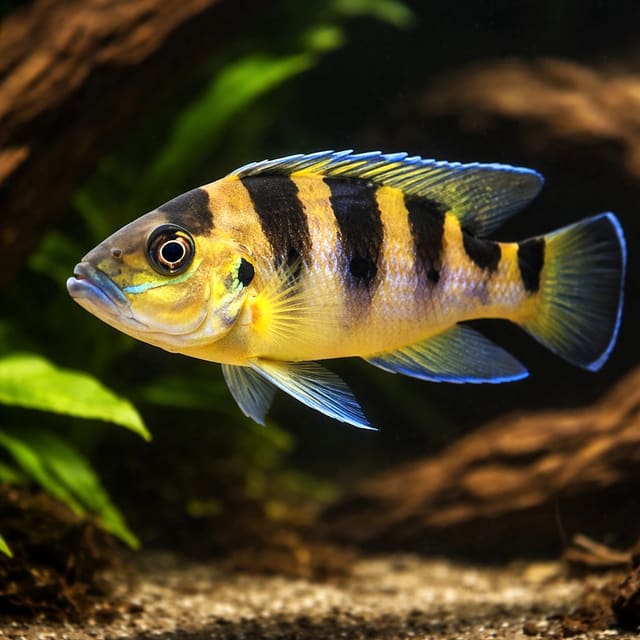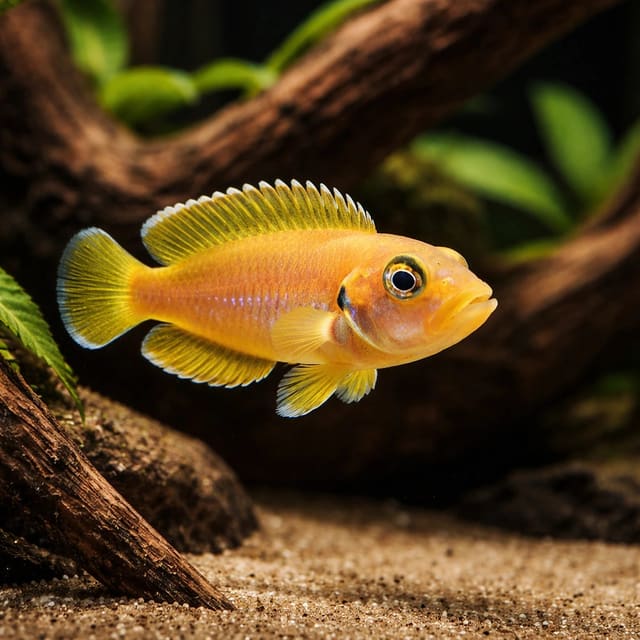
Moderate
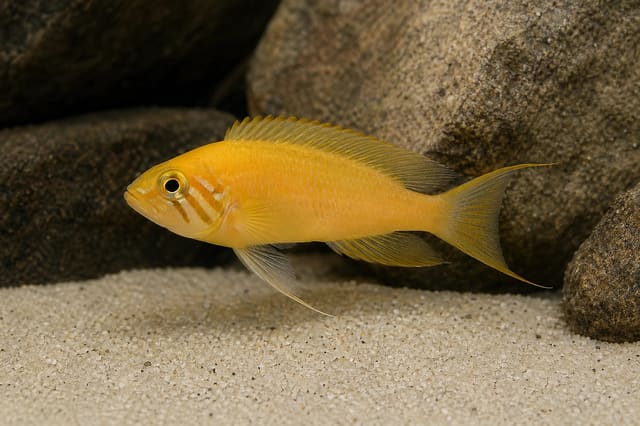
Gold Ocellatus Shell-Dweller (Neolamprologus ocellatus)
23–25°C · pH 8–9
£16.59

Caudopunk Shell-Dweller (Neolamprologus caudopunctatus) is a 6.5 cm Lake Tanganyika cichlid sold individually in three dispatch sizes. It suits an intermediate keeper who can provide hard alkaline water, fine sand, mature filtration and enough floor area for distinct territories.
Adult size is the maximum length this species reaches at full maturity (scientific sources). The livestock you receive will be younger and smaller — pick a size above for the actual shipping size. Product-photo provenance and any image-specific limitations are stated on the listing.
Neolamprologus caudopunctatus
Save when buying multiple fish. Each quantity is one fish; sex and pair formation are not guaranteed unless the selected variant explicitly states them.
Caudopunk Shell-Dweller (Neolamprologus caudopunctatus) is a 6.5 cm Lake Tanganyika cichlid sold individually in three dispatch sizes. It suits an intermediate keeper who can provide hard alkaline water, fine sand, mature filtration and enough floor area for distinct territories.
Adult size is the maximum length this species reaches at full maturity (scientific sources). The livestock you receive will be younger and smaller — pick a size above for the actual shipping size. Product-photo provenance and any image-specific limitations are stated on the listing.
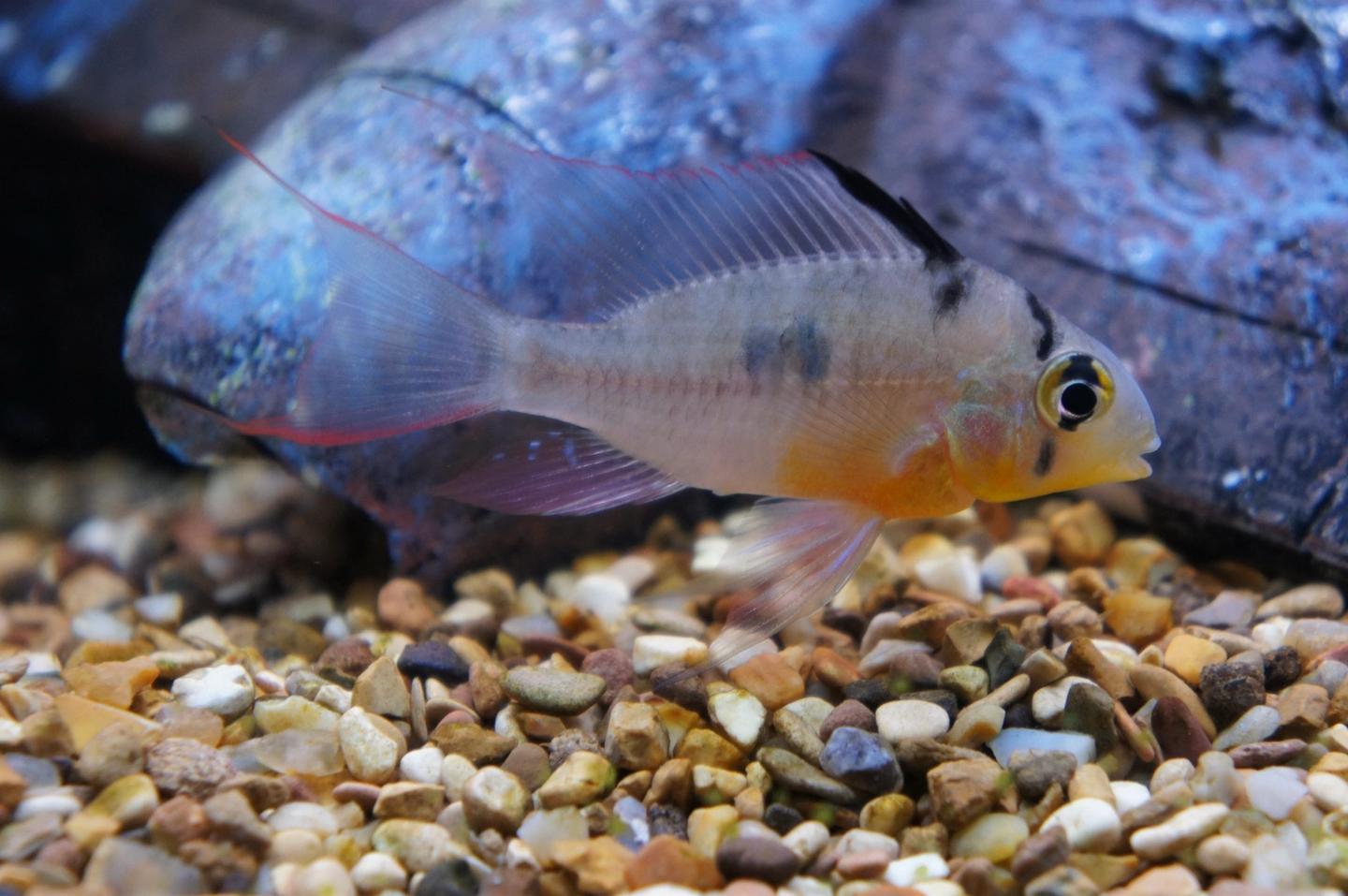
Cichlids are a family of roughly 1,800 accepted species, not one care type. Before buying, identify the exact species and source, then compare adult measurement, usable tank dimensions, social system, territory, tested water, diet and an exit plan. No family-wide minimum tank, water range or tank-mate list is safe.
Maintain these water conditions for optimal health and vibrant colors
Caudopunk Shell-Dweller (Neolamprologus caudopunctatus) is a small Lake Tanganyika cichlid for a deliberately planned hard-water aquarium. FishBase places it on the Zambian shores of the lake, records a maximum length of 6.5 cm total length and describes a fish that hovers above the substrate to take zooplankton. It needs sand for nest building and participates in a protective, warning group around the breeding community. That combination makes the bottom layout and social plan as important as the water figures.
One purchase supplies one fish. The offered dispatch sizes are 3–4 cm, 4–5.5 cm and over 5.5 cm. These are size choices for the animal sent, not pack quantities or separate species. Natural variation within a size band is expected, so allow each fish to complete its growth and never use the selected size as a permanent space allowance.
The size you select is the size supplied, not the adult size. Sex is guaranteed only when the selected option explicitly states male or female. This Caudopunk Shell-Dweller listing has no sex-guaranteed option. Buying two therefore supplies two unsexed fish; it does not promise a male and female or an established pair.
| Suits | Not suited to |
|---|---|
| A keeper prepared for stable, hard alkaline Tanganyika-style water | An aquarium built around soft, acidic water |
| A mature filtered setup with fine sand and separated bottom territories | A bare, immature tank or sharp coarse substrate |
| A stocking plan that allows territorial behaviour and careful observation | A crowded mixed community chosen only by body size |
| Small foods appropriate for a fish that takes zooplankton | Large food pieces that settle uneaten in defended areas |
The keeper should be comfortable testing water, reading behaviour and adjusting the layout before conflict becomes persistent. The care label here is intermediate: the fish is compact, but Lake Tanganyika chemistry, mature biological filtration and territorial cichlid behaviour reward deliberate preparation. A buyer who wants a general soft-water community fish should choose a species with a matching brief instead.
Its name needs a short explanation. Trade lists may use Lamprologus caudopunktatus with a k spelling and an “r. f.” abbreviation. The accepted species is Neolamprologus caudopunctatus; the corrected c spelling and accepted genus are used throughout the care information. “Caudopunk Shell-Dweller” remains the customer-facing common name without assigning extra biological meaning to the abbreviation.
The key commitment is a lower-zone habitat that still works after the fish reaches its recorded 6.5 cm maximum. The animal sent may be smaller, but its long-term needs include fine sand, mature filtration, hard alkaline water and enough floor area to express territorial behaviour. Decide where a displaced fish could retreat and where more than one resident could feed before placing décor.
Choose the dispatch size for the receiving aquarium and existing inhabitants, then choose the quantity only after mapping the adult territories. Smaller arrivals still need the adult plan, while a larger arrival may show territorial behaviour sooner. Because the fish are unsexed, quantity should never be based on an assumed pair outcome.
This is why the page describes the fish as intermediate care. The individual tasks are straightforward when prepared, but the aquarium must bring them together consistently. A small body does not make a territorial Tanganyika cichlid an automatic fit for a compact mixed community.
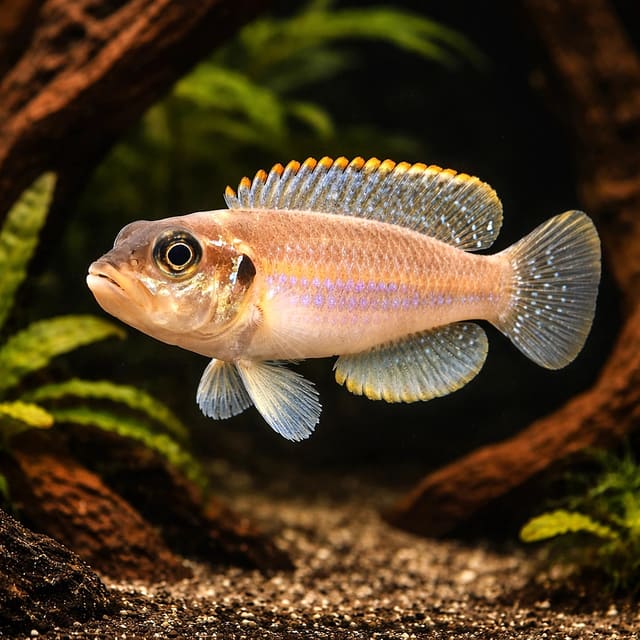
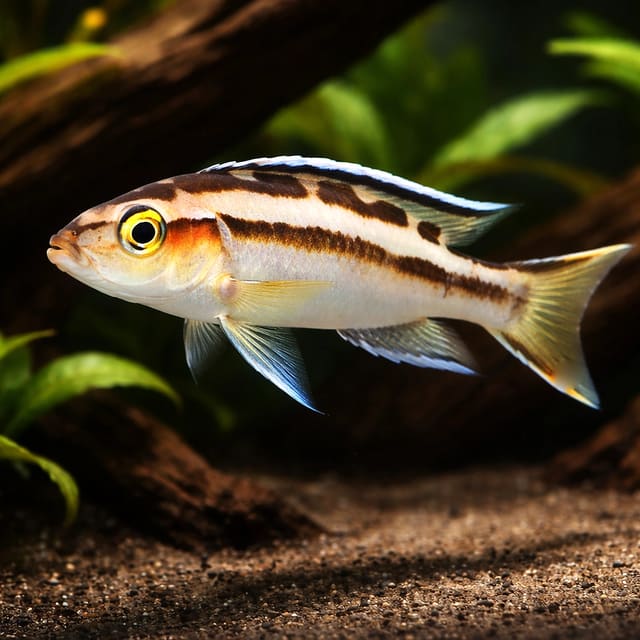
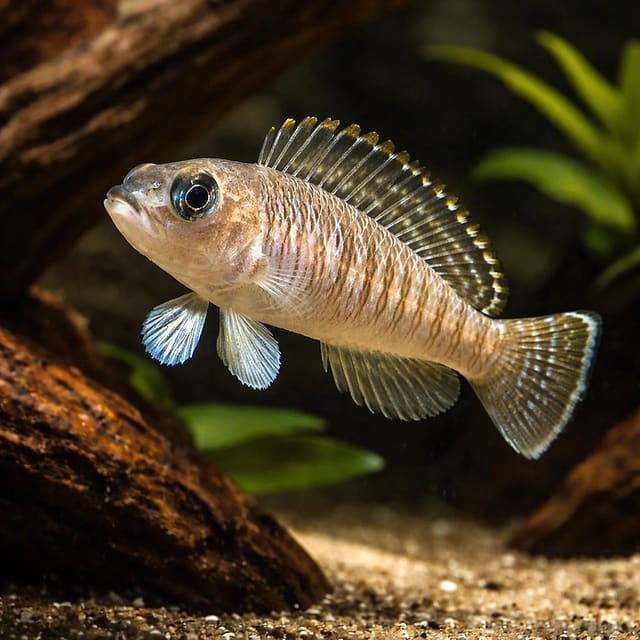
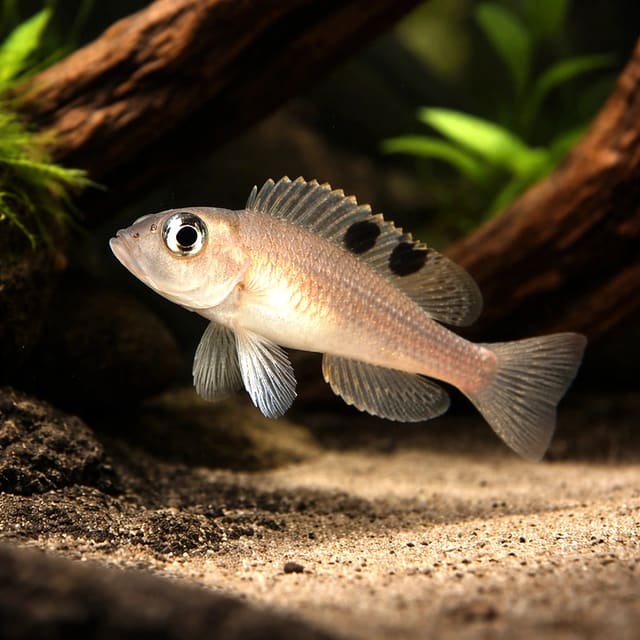
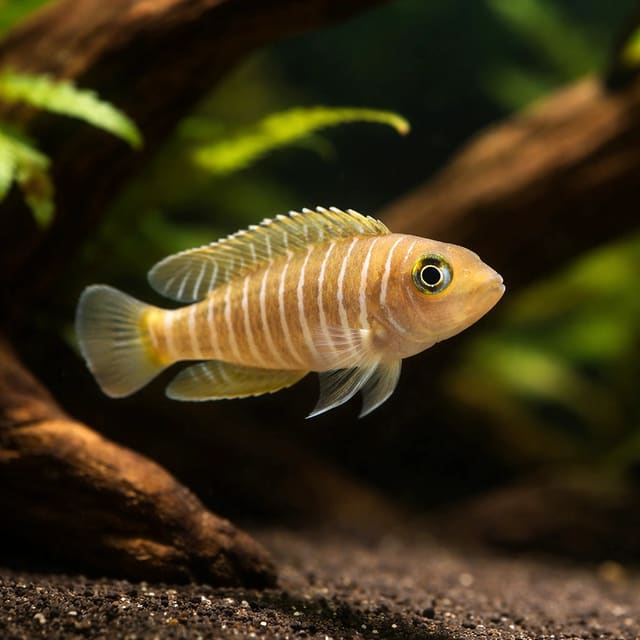
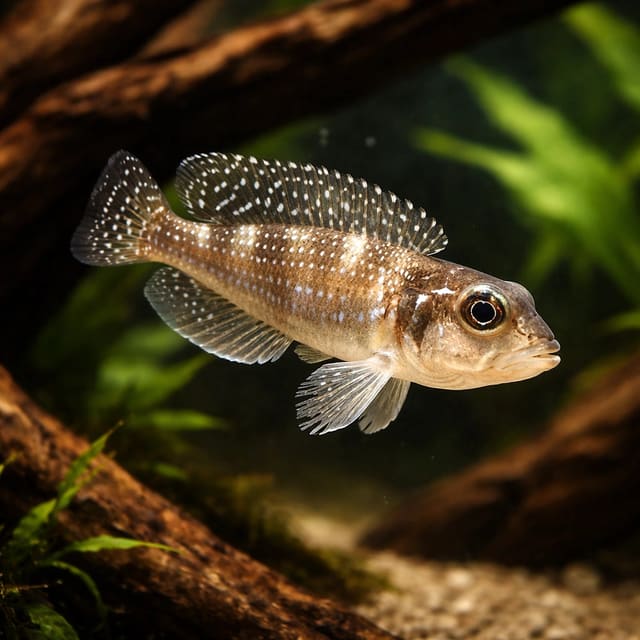
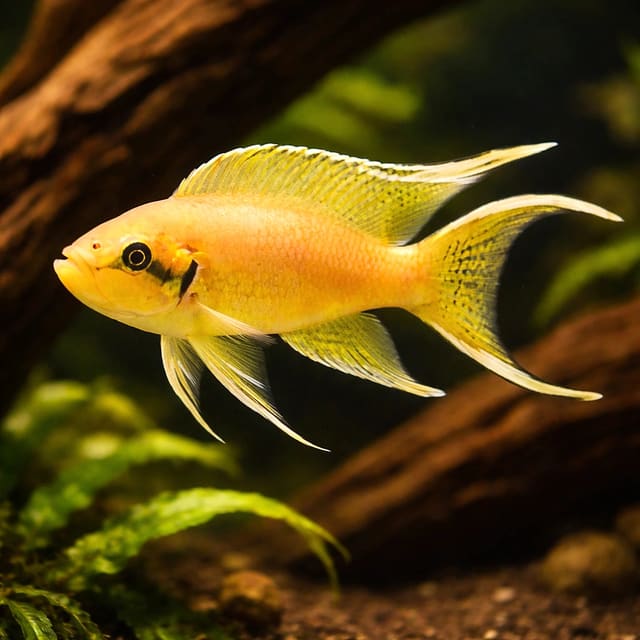
Gallery images have been digitally enhanced to improve image quality. Natural colour, pattern, size and maturity can vary between live animals. Design the aquarium from the fish's care needs rather than copying pictured scenery. Browse the African cichlid collection for comparison, then judge every candidate by water, territory and adult-size requirements.
The FishBase species account anchors the identity and the biological facts used here. It describes a freshwater, benthopelagic cichlid endemic to the Zambian shore of Lake Tanganyika. “Benthopelagic” is useful planning language: the fish works close to the bottom yet also hovers above it to feed. An aquarium needs an open lower layer, rather than treating every centimetre above the sand as unused.
FishBase records 23–25°C, pH 7.5–8.5 and hardness beginning at 15 dH as environmental values for the species. These figures describe its recorded environment; they are kept in that scope rather than presented as a laboratory-tested aquarium optimum. Choose a stable point within these recorded values that your source water and aquarium can maintain. Sudden shifts caused by chasing a number are more disruptive than a carefully monitored, consistent setup.
The OATA African lake cichlid sheet gives broader group guidance of 23–27°C, pH 8.0–8.6 and hard water. That sheet explicitly covers many different cichlids and tells keepers to check species needs, so it does not widen the FishBase range for this listing. Its value is in the general welfare routine: mature filtration, oxygenation, water testing, gradual stocking and regular maintenance.
No single litre figure is used as a guaranteed minimum here. A useful aquarium must have enough base area for fine sand, separate defended spaces, access to food and a route away from an assertive neighbour. A tall tank can hold a respectable volume while providing little extra territory at the bottom. Measure the available footprint and draw the intended territory zones before deciding how many fish or other species it can support.
OATA gives 45 cm length as a broad starting example for a pair of the smallest shell-dwellers, but N. caudopunctatus reaches 6.5 cm and that group example is not a species-specific minimum. Use it as a reminder that horizontal length matters, then increase the aquarium for several territorial fish or any community. A larger footprint also gives filtration and water conditions more stability.
Count adult fish, not just the size arriving. A 3–4 cm individual needs the same long-term territory planning as one sent at a larger size. Include the space demanded by rocks, equipment and sand contours; décor that fills half the floor does not create additional territory simply because the water volume remains unchanged.
Sketch the base as a set of usable areas rather than one open rectangle. Leave feeding lanes between rocks, keep the filter return from stripping sand away, and make sure equipment does not close the only route around a defended patch. The plan should still work when every fish reaches 6.5 cm, not only while the smallest arrivals can pass through narrow gaps.
Observe the aquarium at quiet times as well as during feeding. A fish may appear settled while food is present yet spend the rest of the day displaced from the substrate. Useful territory includes a place to hover, a sand patch it can use and a route to food without continuous confrontation. If one of those functions is missing, extra litres above the fish do not solve the problem.
FishBase says the species needs sand to build its nest. Use a fine, smooth substrate that can be shifted without scraping the mouth. Leave useful open patches rather than covering the whole base with rock. Watch where fish dig and hover; those repeated choices reveal which parts of the layout matter to them.
Place heavy rocks securely before the sand is piled around them. A cichlid moving substrate can undermine décor that appeared stable on day one. Create distinct boundaries and sheltered edges without constructing unstable caves. Equipment, heater guards and filter inlets should remain accessible for checks while staying clear of the principal bottom territories.
Plants can be used around the edges where they tolerate hard alkaline water, but rooted planting should not block the sand the fish needs. Attached plants on secure rock are easier to keep away from active digging. The aim is a functional habitat with open feeding and nest-building space, not a decorative scene that prevents natural substrate use.
A mature biological filter converts toxic ammonia into nitrite and then the safer nitrate end product. The RSPCA aquarium guidance explains why every fish aquarium needs a properly established and maintained filter. Time alone does not prove maturity, so test ammonia and nitrite and confirm they remain at zero before livestock is introduced.
If this is a first aquarium, work through the first tropical tank guide before choosing fish. Record source-water pH and hardness, then compare the measured values with the species record using the water chemistry guide and water matcher. This sequence shows whether the intended Tanganyika setup is realistic without abrupt chemical correction.
Hard alkaline water needs dependable carbonate buffering as well as a pH reading. Test at a consistent time and look for trends between water changes. A falling pH, detectable ammonia or detectable nitrite requires investigation before another fish is added. Nitrate trend, feeding, stocking and maintenance should be considered together rather than corrected by a single additive.
OATA recommends an oversized filter and vigorous aeration for some African lake cichlid communities because crowding increases oxygen and waste demands. Apply that as broad group guidance, scaled to this aquarium rather than as a reason to force every setup into heavy current. The filter should process waste and exchange gases while allowing the fish to hover and feed near the lower zone.
Direct the return so the whole aquarium circulates without blasting sand from the chosen territories. Check that food reaches more than one area and that a subordinate fish is not forced to cross an occupied zone for every meal. Protect the intake where a small arriving fish could be drawn against it. Observe respiration at rest; persistent rapid breathing warrants an immediate water-quality and oxygen check.
When the filter needs cleaning, rinse the media lightly in tank water removed during maintenance rather than running it under the tap. This follows the OATA sheet and protects the beneficial bacteria supporting the nitrogen cycle. Restore the filter promptly and confirm normal flow after reassembly.
OATA strongly recommends a partial water change of 25% at least once every week for African lake cichlids. Match replacement water for temperature and treat it for chlorine or chloramine before it enters the aquarium. Siphon exposed waste while leaving useful sand structure in place; aggressive deep cleaning of every territory at once can cause unnecessary disruption.
Test ammonia, nitrite, nitrate and pH regularly. Add GH and KH testing when source water or remineralisation makes hardness management necessary. Record results rather than relying on memory. A simple log makes gradual changes visible and connects them with feeding, new livestock, filter cleaning or a missed maintenance session.
Healthy observation includes more than colour. OATA advises watching swimming, breathing, appetite, body condition, fins, scales and unusual hiding. For this bottom-oriented fish, also check whether each individual can use the sand, reach food and retreat without continuous pursuit. A repeated pattern matters more than one brief territorial display.
One test result is a snapshot. A weekly record shows whether nitrate is rising faster, pH is slipping between maintenance sessions or a new addition has increased the filter's workload. Note the date, temperature, ammonia, nitrite, nitrate and pH; add GH and KH when hardness is being managed. Link any unusual result to feeding, cleaning or stocking changes made that week.
When a result moves unexpectedly, repeat the test carefully before applying a correction. Check the filter flow, aeration, recent food and the condition of every fish. Replace water with conditioned, temperature-matched water as part of the normal routine and restore stability gradually. This approach protects a mineral-rich system from abrupt swings and gives the keeper a useful history for diagnosing patterns.
FishBase describes N. caudopunctatus hovering above the substrate to feed on zooplankton. Choose appropriately small foods that can be taken in the water just above the bottom. Offer a varied, quality diet suited to a small animal-feeding cichlid, but avoid assigning a rigid ingredient list that the species record does not provide.
Distribute food across more than one point so an assertive resident cannot control every particle. Watch what is actually swallowed and keep portions small enough that leftovers do not collect in sand or behind rocks. OATA's group-level advice is to offer only what the fish can eat within a few minutes and to avoid overfeeding because decomposing food adds toxic waste.
Judge quantity by body condition, feeding response and water quality. A fish that remains excluded from food needs a social or layout correction, not simply more food poured into the same contested area. Reduced appetite combined with altered breathing or behaviour should prompt water tests and a closer health check.
Use the first few minutes after food enters the water to check who eats, where each fish waits and whether one resident controls the only productive feeding point. A varied distribution can reveal a quiet individual that would be missed if every portion fell in the same place. Food size should let the fish swallow cleanly rather than repeatedly take and reject large pieces.
After feeding, inspect the sand and rock edges for persistent remains. Fine particles can disappear into the lower layout and continue breaking down after the fish stop showing interest. Adjust the next portion rather than compensating with a large clean-up later. Stable body condition and clean water are better guides than a rigid scoop size.
FishBase reports a protective and warning group of sexually inactive individuals around the breeding community. That observation establishes social complexity but does not supply a fixed home-aquarium group number. Plan several fish only when the footprint can provide distinct areas and when you can monitor whether every individual participates without chronic exclusion.
The offer is unsexed. Sex cannot be inferred from colour, size or a gallery image. Pairing and breeding behaviour may change territorial pressure, so keep spare space in the plan and watch for a fish that stays high in a corner, loses feeding access or is repeatedly driven from the lower zone.
Sand is biologically relevant because the species uses it to build a nest, but this page does not provide a breeding recipe. A stable, appropriate aquarium comes first. If fry or intensified guarding appears, reassess population, filtration and territory rather than assuming the original stocking plan remains suitable indefinitely.
Short pursuit around a boundary is different from one fish losing normal access for hours. Look for duration, repetition and outcome: does the chased fish return to feed and hover normally, or remain pressed away from the substrate? Check fins, breathing and body condition and act before chronic exclusion becomes a health problem.
A layout change can reset territories, so make adjustments deliberately and monitor all residents afterwards. If the aquarium cannot provide enough separated lower space, reduce the stocking pressure or move fish to a more suitable setup. Adding décor randomly can shrink usable sand and make the conflict harder to read.
Have the aquarium heated, mature, tested and laid out before the delivery day. Arrange for someone to receive the parcel. Before opening, record a continuous unboxing video showing the sealed parcel, the opening and the fish still inside the sealed bag; that evidence is required if a Live Arrival Guarantee claim is needed.
The current delivery and Live Arrival Guarantee policy gives the full claim conditions. During introduction, keep attention on the resident fish as well as the newcomer. A rearranged boundary can trigger chasing even when all animals share the same water requirements.
Compatibility begins with water. OATA advises against mixing Malawi and Tanganyika cichlids because their temperament and behaviour differ, and ordinary soft-water community fish do not share this species' hard alkaline conditions. Similar adult size alone is never enough to make two fish suitable companions.
The second test is use of space. N. caudopunctatus works close to the substrate and needs sand, so another territorial bottom fish competes for the same valuable area. Any companion should leave the principal lower territories available, tolerate the same water and have enough space for its own group and behaviour.
| Arrangement | Decision rule |
|---|---|
| Species-focused setup | Clearest option when the footprint is devoted to several Caudopunk Shell-Dwellers and their separate areas. |
| Larger Tanganyika community | Consider only when other fish use different zones and the aquarium meets every species' full space and social needs. |
| Other bottom-territorial cichlids | Avoid where the fish would contest the same sand, nests or retreats. |
| Malawi or soft-water community fish | Choose a different combination because origin, water and behaviour plans conflict. |
Watch behaviour after every addition. Brief displays can establish a boundary; repeated pursuit, loss of feeding access, rapid breathing or a fish pinned away from the substrate calls for intervention. Do not try to solve inadequate territory by adding still more fish. Reassess the layout and population instead.
Keep food distribution part of the compatibility plan. A fish can appear physically unharmed yet decline if it cannot feed without crossing a defended area. Provide more than one feeding point and check each individual's body condition over time.
FishBase records Neolamprologus caudopunctatus at up to 6.5 cm total length. The 3–4 cm, 4–5.5 cm and over-5.5 cm choices describe the fish sent, so every size needs space planned around the adult record.
Choose by usable floor area rather than a single litre number: provide fine sand, separated territories, mature filtration and room to retreat. OATA's 45 cm example is broad guidance for pairs of the smallest shell-dwellers, not a species-specific minimum for this 6.5 cm fish; several fish or a community require more length.
FishBase describes a protective and warning group around the breeding community but gives no fixed aquarium number. Keep several only where the footprint supports distinct territories, and remember that two unsexed fish are not a guaranteed pair.
It is best treated as an intermediate project. A prepared keeper needs to maintain hard alkaline water, mature filtration, fine sand and territorial space, then notice quickly if one fish loses access to food or the lower zone.
Neolamprologus caudopunctatus hovers above the substrate to take zooplankton in nature. Offer varied, appropriately small quality foods across several points, and remove the cause if one resident is repeatedly excluded rather than overfeeding the whole aquarium.
FishBase records 23–25°C, pH 7.5–8.5 and hardness from 15 dH for the species' environment. Treat these as environmental values rather than a proven aquarium optimum, select stable conditions within them and monitor pH and hardness alongside ammonia and nitrite.
It is a territorial cichlid whose main compatibility risk is persistent defence of bottom space. A general fin-nipping habit is not described for this fish; watch instead for repeated chasing, exclusion from sand or food, damaged fins and rapid breathing.
A carefully enlarged Lake Tanganyika community can be considered when companions use other zones, share hard alkaline water and have their own space. Avoid Malawi cichlids, soft-water fish and other territorial bottom dwellers competing for the sand.
Tropical Fish Co hand-packs live fish in oxygen with insulation and a heat pack when conditions call for it, then uses a licensed live-animal courier. Be present, record a continuous unboxing video from the sealed parcel through opening, float the sealed bag for 20–30 minutes and contact the shop the same day if a claim is needed.
The accepted identity is Neolamprologus caudopunctatus. FishBase supplies the species family, Lake Tanganyika distribution, 6.5 cm maximum total length, zooplankton feeding, sand use, social observation and environmental values. The encyclopaedic species summary independently places it on the Zambian shores of Lake Tanganyika but is not used to invent aquarium-care precision.
The OATA African lake cichlid sheet supports general advice on hard-water setups, filtration, oxygen, testing, weekly partial water changes, gradual stocking and broad compatibility. It covers a varied group, so its numbers remain labelled as general rather than overriding the species record. RSPCA material supports the explanation of biological filtration.
This listing supplies one unsexed fish in the selected dispatch-size band. The store's delivery policy explains packing, the licensed live-animal courier, temperature equalisation and the evidence needed for a Live Arrival Guarantee claim. Dispatch size and delivery procedure are retail details; neither replaces the species-level adult size, environmental record or territorial planning described above.
No reviews for this item yet. Bought one? Honest reviews only, good or bad.
What customers say about ordering from us
I have a small group of long finned mountain minnows. So was delighted to be able to order ten of this variety to increase the genetics in my tank . The ones I recieved are healthy but it’s to early to give a verdict on wether they are of a long finned type since they are small currently.
Gordon Walker · 23 Sept 2026
100% success travel and "installation". Pleased with quality of purchase. The Siamese fighter a bit "shy" so have not yet seen him at his best yet but looking good. Happy customer. GG
George E Garratt · 21 Sept 2026
Reviews of our shop, collected by Judge.me, an independent third-party review collector. Newest first.