−12%
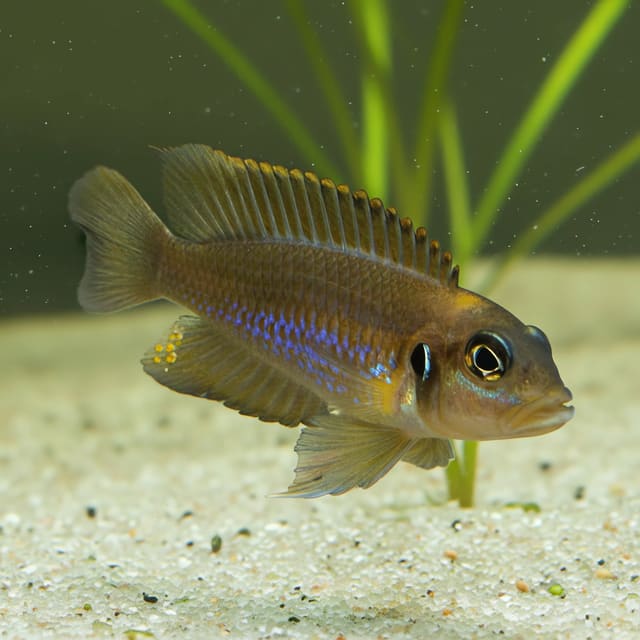
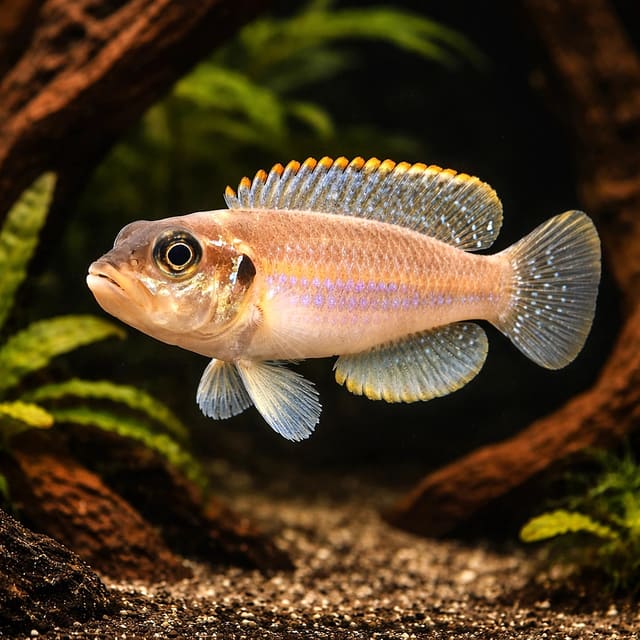
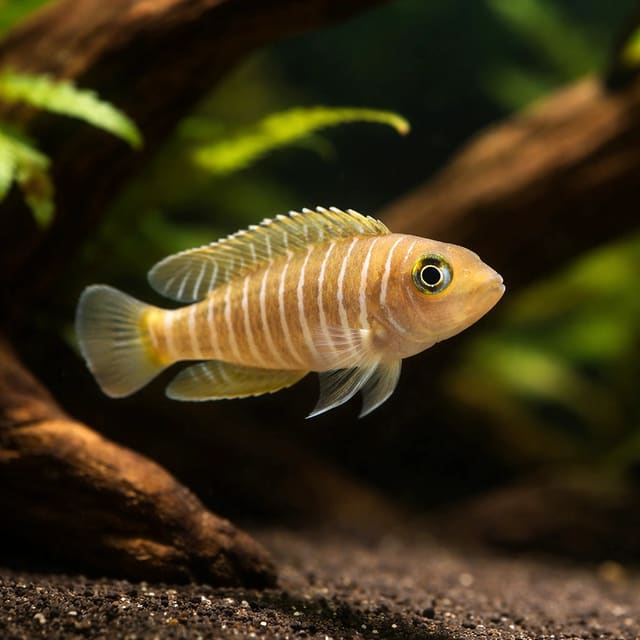
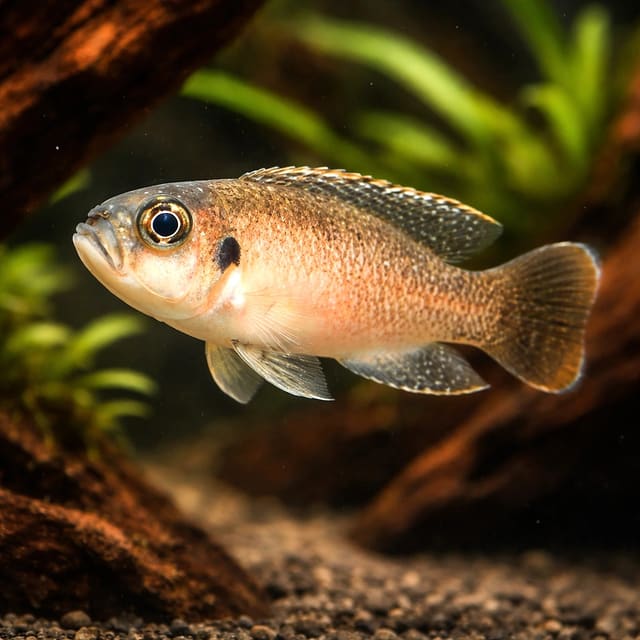
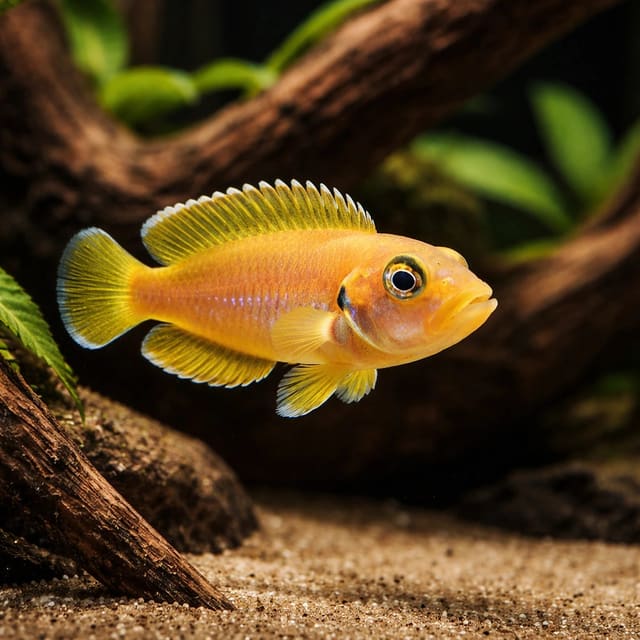
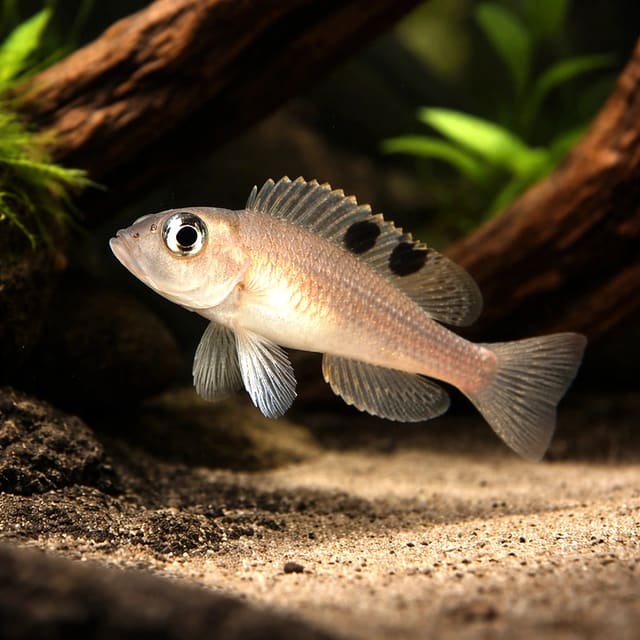
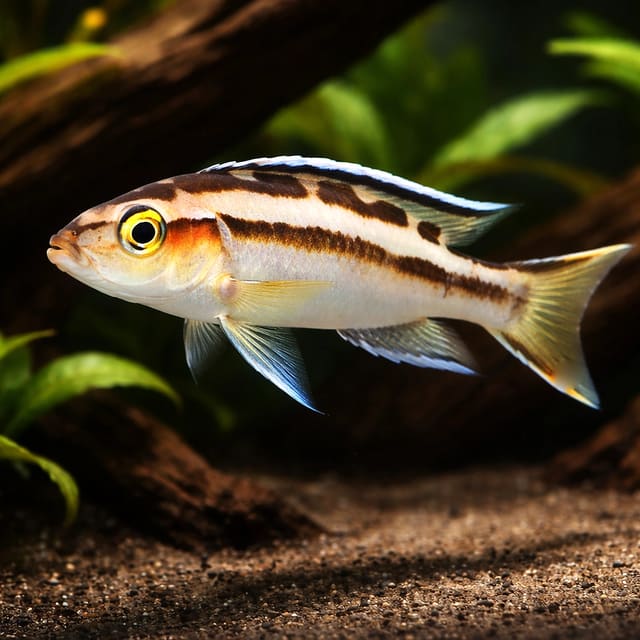
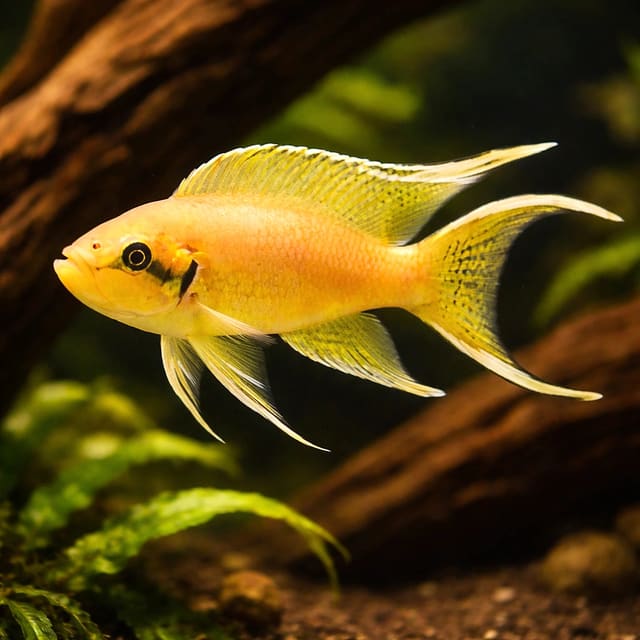
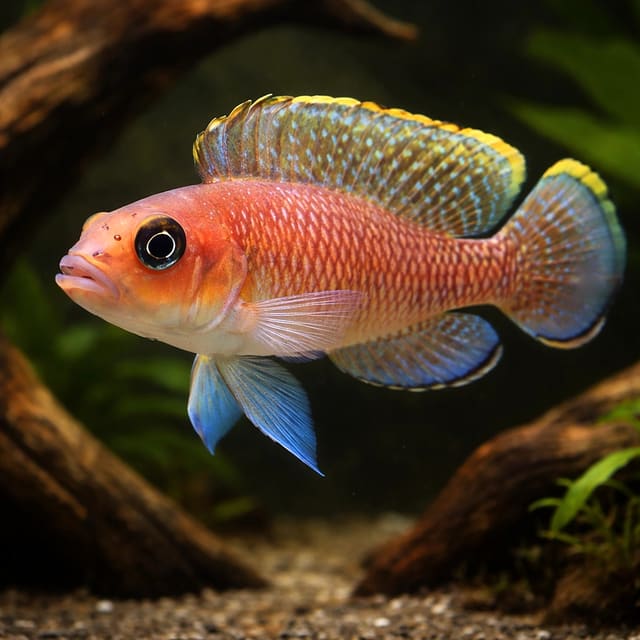
Meleagris Shell-Dweller (Neolamprologus stappersi)
24–27°C · pH 8–8.6
£16.71£18.99

Signatus Shell Dweller is a territorial Lake Tanganyika cichlid for a mature, hard alkaline aquarium with fine sand and more shells than fish. One purchase supplies one fish in the chosen size grade; sex and pairing are not guaranteed.
Adult size is the maximum length this species reaches at full maturity (scientific sources). The livestock you receive will be younger and smaller — pick a size above for the actual shipping size. Product-photo provenance and any image-specific limitations are stated on the listing.
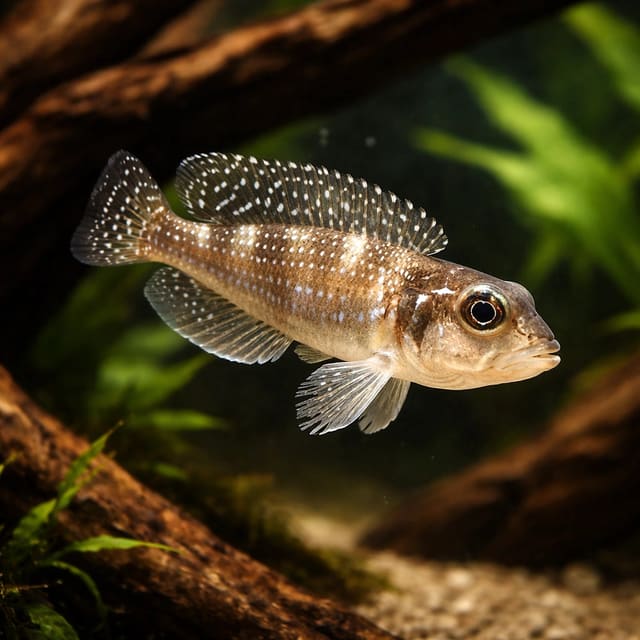
Neolamprologus signatus
Save when buying multiple fish. Each quantity is one fish; sex and pair formation are not guaranteed unless the selected variant explicitly states them.
Signatus Shell Dweller is a territorial Lake Tanganyika cichlid for a mature, hard alkaline aquarium with fine sand and more shells than fish. One purchase supplies one fish in the chosen size grade; sex and pairing are not guaranteed.
Adult size is the maximum length this species reaches at full maturity (scientific sources). The livestock you receive will be younger and smaller — pick a size above for the actual shipping size. Product-photo provenance and any image-specific limitations are stated on the listing.
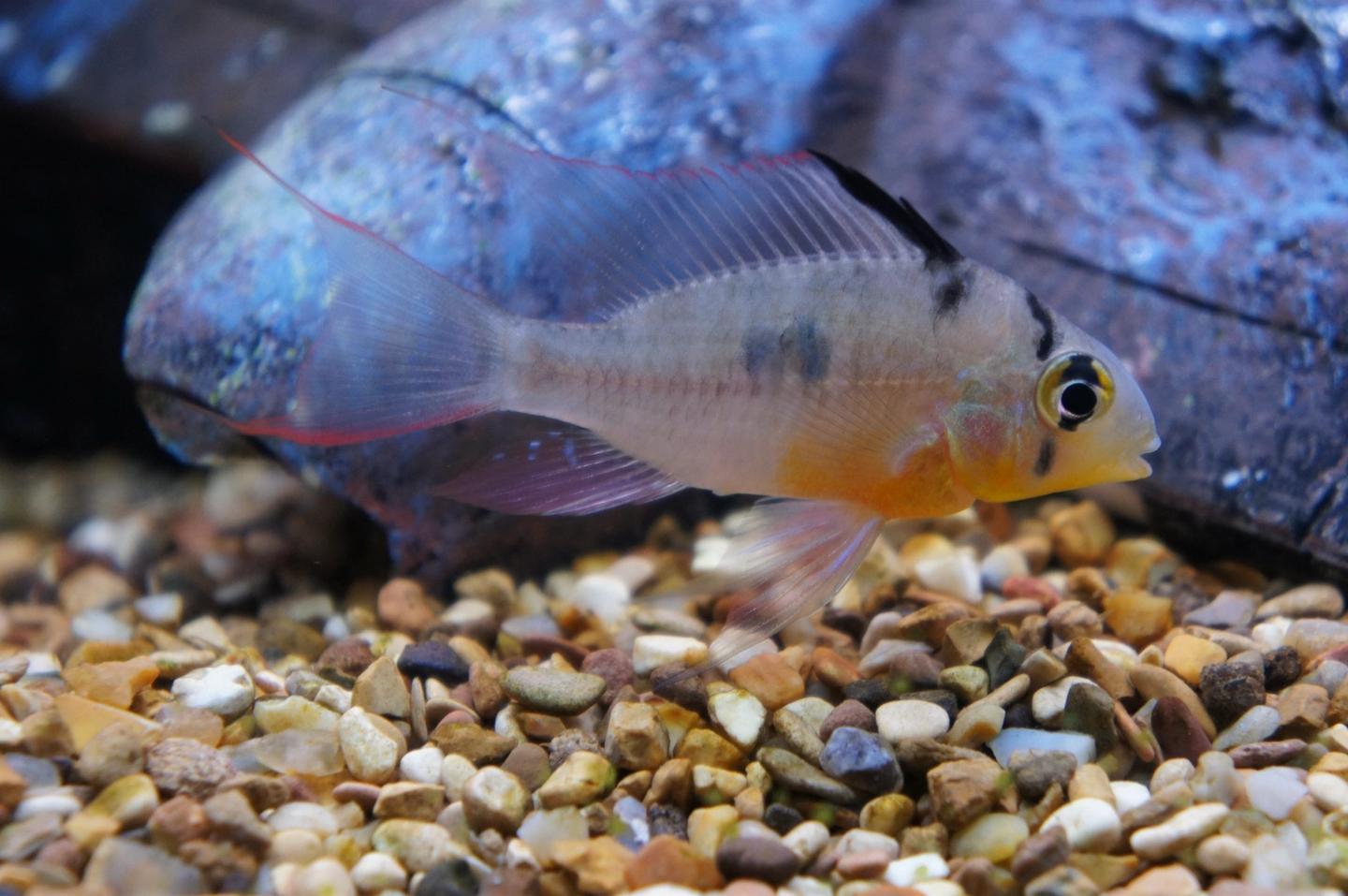
Cichlids are a family of roughly 1,800 accepted species, not one care type. Before buying, identify the exact species and source, then compare adult measurement, usable tank dimensions, social system, territory, tested water, diet and an exit plan. No family-wide minimum tank, water range or tank-mate list is safe.
Maintain these water conditions for optimal health and vibrant colors
Signatus Shell Dweller (Neolamprologus signatus) is a small Lake Tanganyika cichlid whose behaviour centres on a shell and the patch of sand around it. It suits a mature, hard-water aquarium designed around the bottom territory, with enough room and shelter to manage disputes. A compact adult is still a cichlid: it can defend its chosen shell vigorously, especially against another Signatus.
One cart quantity supplies one fish in the selected size grade. The choices are 2,5-3 cm, 3 - 4 cm and 4 - 5 cm; the live selector shows current availability. The size you select is the size supplied, not the adult size. The grade does not select a male, female or established pair. Sex is guaranteed only when the selected option explicitly states male or female. This Signatus Shell Dweller listing has no sex-guaranteed option.
A species husbandry profile describes a 45 × 30 × 30 cm aquarium of about 40 litres for an already compatible pair or trio, with a larger aquarium for a colony. That is a species-specific starting point, not a promise that two unsexed fish bought together will accept each other. Floor area, shell spacing and a safe way to separate incompatible animals matter more than choosing by litres alone. Set up and cycle the aquarium before ordering, with sand, more suitable shells than fish and stable hard alkaline water.
Signatus appeals to a keeper who enjoys observing close-range behaviour: inspecting shells, shifting sand, defending a small boundary and emerging for small foods. It needs regular water testing and deliberate feeding near its lower territory. A keeper planning a species-focused Tanganyika aquarium can control these variables more easily than someone adding a shell dweller to a busy mixed community.
Pause if your tank is new, narrow despite its advertised volume, stocked with fish that need soft acidic water or already full of bottom-dwelling cichlids. More than one Signatus requires extra space and observation; male rivalry can be strong. The species profile advises only one male unless the aquarium is large, but the size choices here do not provide a sexed group. A plan based on an assumed male-to-female ratio is therefore unreliable.
The retail name uses Neolamprologus signatus, a familiar combination in aquarium keeping. FishBase currently lists Lamprologus signatus as accepted and treats Neolamprologus signatus as a synonym. Both names refer to the Signatus fish offered here; the difference is taxonomic placement, not two sale species. A care page for another shell-dwelling cichlid should not be transferred to Signatus simply because its common name also contains “shell dweller”.
FishBase places the species in the central part of Lake Tanganyika and records deep-water soft or muddy bottoms and small shrimp as food. The aquarium profile emphasises fine sand and numerous shells. Natural habitat records are useful context, but they do not mean an aquarium needs actual lake mud or deep-water pressure. Provide the functional features that matter in captivity: a clean, stable floor, defensible retreats and hard alkaline water with safe filtration.
For a broader view of African cichlids, browse the African cichlid collection. Treat other listings as separate species to research, not automatic companions for a small Signatus tank.
FishBase records 5.5 cm total length (TL) for a male or unsexed Lamprologus signatus. The species care profile gives 55 mm standard length (SL), which excludes the tail fin. These are different measurement conventions; neither turns a 2,5-3 cm dispatch grade into a fixed adult-size promise. Plan the aquarium for the adult fish and the territory it may defend.
The species profile's 45 × 30 × 30 cm, roughly 40-litre example is for a pair or trio, with more space required for a colony. A pair or trio in that guidance means a compatible social arrangement, not simply two or three random juveniles. Aquarium length and usable sand area determine how far apart shells and boundaries can be placed. A taller tank with the same volume cannot substitute for floor space. An established pair may change its behaviour around breeding, so continue to watch both fish.
For several unsexed fish, plan a larger footprint from the outset, several separated shell groups and a second mature holding space or safe divider. The profile warns that males can be aggressive towards their own species and advises only one male unless the tank is large. If you cannot identify the sexes in advance, you must be ready for a combination that does not settle. Do not wait until one fish is cornered, excluded from food or visibly injured before arranging separation.
Check the internal aquarium dimensions after substrate and equipment are installed. Shells should be spread across usable sand instead of stacked where a single fish can control them all. Leave a route for every resident to feed and retreat. For a larger Tanganyika community, account for the adult size and occupied zone of every companion; the 40-litre species example is not a general community recommendation.
Seriously Fish recommends large open areas of sand and more empty snail shells than individual fish. The profile describes a sand depth of about 2 inches for a species that likes to dig. Use clean aquarium sand without sharp edges and shells with sound, smooth openings suited to the fish's current size and growth. Empty shells are shelter and potential breeding sites; they should be stable, inspectable and free from paint or sharp broken rims.
Arrange several shell choices in separated patches. This lets a fish choose an entrance and gives another fish somewhere to withdraw. A single pile with many shells may still function as one disputed territory. Keep heavy stones stable before adding loose substrate so digging cannot undermine them. Retain open sand for movement and feeding, and allow access to siphon trapped waste without dismantling the entire layout.
Do not confuse the wild record of soft muddy bottoms with an instruction to add mud to a tank. Decaying organic material in a shell or buried food can foul a small aquarium quickly. Fine sand, stable shells and regular gentle maintenance provide a manageable captive setting. Avoid repeatedly moving an occupied shell merely because the fish has repositioned it; observation is more useful than imposing a decorative pattern.
Plants are optional. If used, choose species and placement compatible with hard alkaline water and keep the main sand-and-shell area functional. A leafy display does not replace the essential retreat structure. Keep the filter intake safe for a smaller size grade, and make sure flow circulates waste without turning every shell entrance into a jet.
The species profile gives 23–27°C, pH 7.5–9.0 and 10–25 dGH for aquarium care. OATA's African lake cichlid sheet gives the broader group guidance of 23–27°C, pH 8.0–8.6 and hard water around 12–18 dGH. FishBase's 24–28°C and 10–12 dH values are environmental records, not a complete aquarium prescription. For routine keeping, aim for a stable point within the overlap, such as 24–26°C and pH around 8.0–8.6, while checking hardness and buffering with reliable tests.
A measured stable system is safer than frequent attempts to hit an exact middle number. Test your tap water and aquarium before buying. If the source water is soft, prepare a repeatable method of maintaining suitable hardness and carbonate buffering. Do not suddenly add large amounts of chemicals to an occupied tank. Review temperature with an independent thermometer rather than relying only on the heater dial.
Ammonia and nitrite should remain at zero in a mature aquarium. Alkaline conditions make an ammonia problem especially urgent, and small rich foods can decay around shells. Check pH, hardness, ammonia, nitrite and nitrate on a regular schedule and after new additions or unusual behaviour. The water chemistry guide explains the measurements; the water matcher helps compare a measured supply with care guidance. Neither replaces testing the actual aquarium.
A mature biological filter converts toxic ammonia through nitrite to nitrate. The RSPCA explains why filters and their beneficial bacteria are central to fish welfare. Select equipment for the real water volume and stocking load, and protect the intake if a smaller Signatus might be drawn against it. Keep useful water movement across the surface for oxygen exchange while leaving calmer space near shells.
Look at flow and fish behaviour every day. A blocked filter, failed heater or power loss can change conditions before water looks cloudy. Observe breathing, appetite, body shape, fins and whether each fish can use its chosen area. Rapid breathing, unexpected surface hovering, repeated hiding after normal feeding or a fish unable to approach food should prompt water testing and a social review.
Change water regularly with treated replacement water matched for temperature and mineral conditions. Use measured nitrate and visible waste to adjust the routine rather than copying a universal percentage. Siphon accessible sand gently and remove food lodged at shell entrances. Clean mechanical media when flow falls, but preserve biological media; avoid washing all mature filter material under chlorinated tap water at once.
Build capacity gradually. Adding several fish or feeding much more increases waste before filter bacteria have adapted. OATA's group guidance recommends checking zero ammonia and nitrite before introducing fish and increasing populations slowly. A filter that has merely run for a number of weeks is not proven mature without measurements. The first aquarium setup guide is useful if you are preparing a new system.
When maintaining a small tank, make changes predictably. Test the replacement water as well as the display if your tap supply varies, and prepare temperature and mineral content before pouring it in. If you must service a filter, retain its established media and avoid combining a major filter clean with a large layout change and new stocking on the same day. This protects the bacterial colony and makes it easier to identify the cause if a fish becomes stressed. A record of dates, tests and observations will show gradual drift earlier than a single isolated reading.
FishBase records small shrimp in the natural diet. The species-care profile says live and frozen foods should form the bulk of the aquarium diet, while dried foods are usually accepted. Offer clean, appropriately sized small invertebrate foods and rotate them for variety. A quality fine dried food can supplement that plan, but do not assume a fish thriving on live or frozen food will immediately take a large dry pellet.
Match particle size to the fish's mouth. Offer modest portions that reach the lower territory without disappearing into a shell or the sand. Watch the fish swallow the food and remove leftovers. In a group, spread feeding enough that a dominant fish cannot monopolise every piece while another gradually loses condition. Increase care rather than quantity when uneaten food collects; decaying food harms water quality.
Do not buy Signatus as an algae eater or a general clean-up fish. Its recorded small-shrimp diet also means tiny ornamental shrimp and young crustaceans should not be assumed safe with it. A fish that misses meals may be stressed by water, food size or territory competition. Review those causes before using medication. A newly arrived fish may need a calm period near a secure shell before feeding openly.
Body condition provides a useful cross-check on feeding. View the fish from the side and above when possible: a consistently hollow belly may mean it is missing food or unwell, while bloating and waste after heavy meals suggest portions need review. A fish darting from a shell to take one morsel can be healthy; a fish that never emerges or is driven away by another needs closer observation. Test water and watch interactions before assuming every appetite change has the same cause.
Prepare the sand-and-shell aquarium before the fish arrives, with stable temperature, zero ammonia and nitrite, and the filter running normally. Avoid a major rearrangement or full filter clean immediately before introduction. The current Tropical Fish Co live-fish delivery policy describes protective packing, a licensed courier, acclimation and the evidence needed for an arrival concern. Be present to receive and inspect the parcel.
The delivery guidance advises floating the bag for 20–30 minutes and keeping transport water out of the aquarium. Move gently and give the fish access to a suitable empty shell. Watch breathing and balance after release, then observe whether an established occupant blocks the shell zone. If a new fish stays out of sight for a while, use quiet observation rather than repeatedly lifting shells. Test water after stocking and make sure it eventually has a chance to feed.
If the fish arrives in poor condition, follow the current policy's same-day contact and continuous unboxing evidence requirements. This is claim evidence, separate from normal aquarium care. For a health problem later, test the environment and review interactions before selecting any treatment; seek qualified aquatic veterinary advice when disease is suspected.
Seriously Fish describes Signatus as a shell brooder and explains that females lay eggs in shells. Breeding guidance in that profile favours several females with one male in a suitably prepared setup, with enough shells for each female. It also notes that males can be aggressive towards other males. These facts do not make the fish sold here a sexed or bonded group.
A breeding plan needs mature adults, room for territorial change, stable hard alkaline water and a way to manage extra fish. Buying two size grades does not guarantee one male and one female. Even an established combination may become less tolerant when guarding a shell. Watch whether each fish can reach food and a retreat. If one is persistently excluded, use the prepared separation option rather than waiting for injury.
Do not lift occupied shells to search for eggs. Keep ordinary feeding and water care consistent, and avoid major disturbance of a defended patch. Fry care is a separate project requiring appropriate small foods, safe filtration and space as juveniles grow; do not assume the main aquarium can house every resulting fish indefinitely.
Signatus usually spends much of its time close to the sand and its chosen shell. The species profile describes vigorous defence of that shell and the small surrounding territory. A short chase at a boundary may be part of its normal behaviour, but constant pursuit, an animal trapped near the surface or one unable to feed is a welfare problem. Small adult length does not remove the need for a territory plan.
Males can be particularly aggressive towards other males. The species profile recommends keeping only one male unless the aquarium is large. That guidance assumes sexes are known; none of the size choices on this listing identifies a male or female. Several unsexed fish therefore need enough separated shells, a larger footprint and a genuine plan to move an incompatible individual. Ordering two does not make a pair.
Social behaviour can change as fish mature or prepare to breed. Watch both animals after each introduction and through growth, even if they initially share space. A fish using the same shell cluster as another may have no alternative rather than a compatible bond. Look for access to food, normal body condition and a retreat each animal can use without persistent attack. Keep a mature spare tank or safe divider available before trying a group.
In a larger aquarium, a planned Tanganyika community can use different habitat zones. Seriously Fish names some rock-dwelling Neolamprologus brichardi or smaller Julidochromis, and open-water Cyprichromis, as possible companions. These are conditional examples from a species-care profile, not guarantees for an individual tank. Their own adult size, social structure and space needs must be checked separately.
A 40-litre pair-or-trio example should remain species-focused. Adding other bottom dwellers or shell competitors to that space can place two territories on top of each other. A larger layout needs separated rock, open-water and shell zones, with no resident able to trap Signatus at an entrance. Observe feeding across the whole display; a faster midwater fish can take food before it reaches a shell dweller.
OATA's broad African lake guidance advises against casually mixing Malawi and Tanganyika cichlids because behaviour and stocking needs differ. Soft-water community fish are also a poor default match for the stable hard alkaline conditions used here. Avoid treating shared continent or shared “cichlid” labels as proof of compatibility. A suitable neighbour must fit the actual chemistry, adult dimensions and territory map.
FishBase records small shrimp as natural prey, so Signatus is not a sound choice for a display intended to raise tiny ornamental shrimp. Larger invertebrates may be treated differently by individual fish, but no shrimp-safe promise is supported. Food-sized animals and fry can be taken even when an adult shrimp seems ignored. Consider the complete lifecycle of every animal you want to keep, not only the adults visible today.
Shell-dwelling cichlids are sometimes described as “nano fish” because of their length. That phrase can hide the importance of floor area. If a tank is short, all shells may fall within one defended patch; in a larger display, a small fish may hold a modest territory. Design the layout so the losing fish in a dispute has somewhere to go. A backup location is part of a group plan, not an afterthought.
Size alone also hides feeding competition. An open-water species may share similar water chemistry yet intercept every food item before it reaches the sand. If a community is attempted, observe meals at different positions and confirm the Signatus actually swallows food. A shell dweller that keeps its shell but gradually loses weight is not thriving simply because fights are rare. Adjust the feeding method or the community rather than repeatedly adding excess food that will decay in the substrate.
Separate fish when repeated attacks prevent feeding or refuge, when fins or mouths are damaged, or when one animal remains pinned away from the bottom. Test ammonia, nitrite and temperature as well: water stress can worsen aggression and similar symptoms can have several causes. Rearranging a few shells may help reset a boundary, but never assume decor alone will solve a persistent conflict.
For a mixed community, write down the adult size, water range, diet and usual occupied zone of each proposed species before purchase. The most optimistic compatibility chart cannot observe the personalities in your aquarium. Introduce deliberately, observe over days and weeks, and be prepared to keep fish separately if the combination fails.
FishBase records 5.5 cm total length for a male or unsexed Lamprologus signatus. The species care profile gives 55 mm standard length, a different measurement that excludes the tail. The selected sale size is a dispatch grade, not an adult limit.
A species profile gives a 45 × 30 × 30 cm aquarium of about 40 litres for a compatible pair or trio, and says a colony needs more. Provide more floor area for unsexed fish or other species, with separated shell territories.
The profile discusses a compatible pair or trio and warns that males can be aggressive towards other males. These fish are not sold as sexed or paired, so plan extra space and a separation option rather than assuming a ratio from the number ordered.
It suits a keeper ready to maintain a mature hard-water Tanganyika aquarium, feed small foods and manage shell territories. An uncycled tank or an improvised soft-water community is a poor starting point.
FishBase records small shrimp as food. The species profile recommends live and frozen small foods as the main diet, with dried foods usually accepted. Feed modest portions that reach the lower territory and remove leftovers.
The species care profile gives 23–27°C, pH 7.5–9.0 and 10–25 dGH. Keep a stable point within that hard alkaline range; OATA's narrower African lake figures are broad group guidance rather than a species-specific optimum.
It vigorously defends its shell and nearby sand, and rival males may fight. Persistent chasing or fin damage means the layout or stocking must change. It is not automatically a peaceful community fish because it is small.
A larger, carefully zoned Tanganyika aquarium may accommodate some rock dwellers or open-water Cyprichromis named in the species profile. Check every candidate's adult needs; a small 40-litre species setup is not space for a mixed cichlid community.
Tropical Fish Co's live-fish policy describes protective packing and a licensed courier. Be present to receive the parcel, follow the current acclimation guidance and check the policy's evidence requirements for any arrival concern.
FishBase supports the Lake Tanganyika identity, the accepted Lamprologus signatus name, the 5.5 cm TL record and the natural small-shrimp diet. Seriously Fish supplies the species-level aquarium profile for shells, sand, water, diet, territory and the 40-litre pair-or-trio example.
The OATA African lake cichlid sheet gives broad group guidance on water, filtration and cautious community planning. The RSPCA aquarium guidance explains mature biological filtration. Store delivery and arrival rules are on the linked delivery page above.
No reviews for this item yet. Bought one? Honest reviews only, good or bad.
What customers say about ordering from us
I have a small group of long finned mountain minnows. So was delighted to be able to order ten of this variety to increase the genetics in my tank . The ones I recieved are healthy but it’s to early to give a verdict on wether they are of a long finned type since they are small currently.
Gordon Walker · 23 Sept 2026
100% success travel and "installation". Pleased with quality of purchase. The Siamese fighter a bit "shy" so have not yet seen him at his best yet but looking good. Happy customer. GG
George E Garratt · 21 Sept 2026
Reviews of our shop, collected by Judge.me, an independent third-party review collector. Newest first.