Moderate
Gold Ocellatus Shell-Dweller (Neolamprologus ocellatus)
23–25°C · pH 8–9
£16.59

The Pearly Compressiceps Gold (Lamprologus calvus) is a cichlid from southwestern Lake Tanganyika that reaches 13.5 cm. It suits a carefully planned Tanganyikan aquarium and can be kept as a pair or colony; keep it at 24–25°C, pH 8.0–8.6 and 12–18°dH, the overlap of FishBase, Seriously Fish and OATA guidance. Sold individually as one live fish per purchase.
Adult size is the maximum length this species reaches at full maturity (scientific sources). The livestock you receive will be younger and smaller. Product-photo provenance and any image-specific limitations are stated on the listing.
Lamprologus calvus
Save when buying multiple fish. Each quantity is one fish; sex and pair formation are not guaranteed unless the selected variant explicitly states them.
The Pearly Compressiceps Gold (Lamprologus calvus) is a cichlid from southwestern Lake Tanganyika that reaches 13.5 cm. It suits a carefully planned Tanganyikan aquarium and can be kept as a pair or colony; keep it at 24–25°C, pH 8.0–8.6 and 12–18°dH, the overlap of FishBase, Seriously Fish and OATA guidance. Sold individually as one live fish per purchase.
Adult size is the maximum length this species reaches at full maturity (scientific sources). The livestock you receive will be younger and smaller. Product-photo provenance and any image-specific limitations are stated on the listing.
Cichlids are a family of roughly 1,800 accepted species, not one care type. Before buying, identify the exact species and source, then compare adult measurement, usable tank dimensions, social system, territory, tested water, diet and an exit plan. No family-wide minimum tank, water range or tank-mate list is safe.
Maintain these water conditions for optimal health and vibrant colors
The Pearly Compressiceps Gold (Lamprologus calvus) is a freshwater cichlid from the southwestern part of Lake Tanganyika. It reaches 13.5 cm and suits a keeper prepared to provide hard, alkaline water, cave-filled rockwork and carefully screened companions. Its deep, laterally compressed body allows it to enter narrow cracks and shallow caves. FishBase now lists it as Altolamprologus calvus.
Keep it at 24–25°C, pH 8.0–8.6 and 12–18°dH. These routine values are the overlap of the recorded environment in FishBase, the aquarium range in the Seriously Fish species profile and OATA’s African lake cichlid group guidance. Hold all three values within that overlap rather than selecting temperature, pH and hardness independently from the wider ranges.
In Lake Tanganyika, this fish stalks through rocky habitat and feeds mainly on shrimps and other crustaceans. That natural history makes rocky cover, meaty food and prey-size screening central to its aquarium care. Although territorial, it is generally peaceful towards fish it cannot fit into its mouth.
| Suits | Not suited to |
|---|---|
| Hard, alkaline Tanganyikan water | Soft, acidic aquarium conditions |
| Rockwork with caves and narrow crevices | An aquarium without suitable rocky shelter |
| A planned pair or colony in suitable space | Unplanned stocking without territory assessment |
| Calm, screened Tanganyikan companions | Mbuna or other aggressive or very vigorous fish |
| Meaty live and frozen foods | Reliance on dried food alone |
One purchase supplies one Pearly Compressiceps Gold. The dispatch grade is 3.5–4.5 cm; this is the fish’s size when supplied, not its adult size. Plan its permanent aquarium around the recorded 13.5 cm adult length, its territorial behaviour and the space required for caves.
Sex is guaranteed only when the selected option explicitly states male or female. This Pearly Compressiceps Gold listing has no sex-guaranteed option. Males are recorded as growing larger and developing longer fins than females, but those traits do not assign a guaranteed sex to the fish supplied.
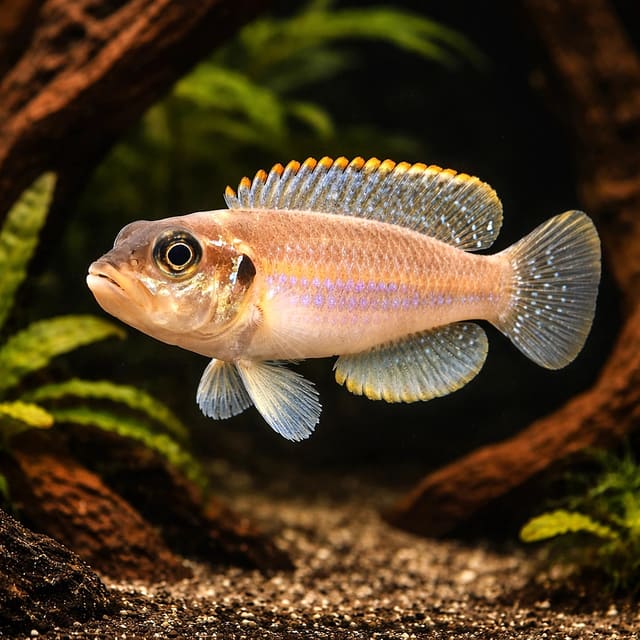
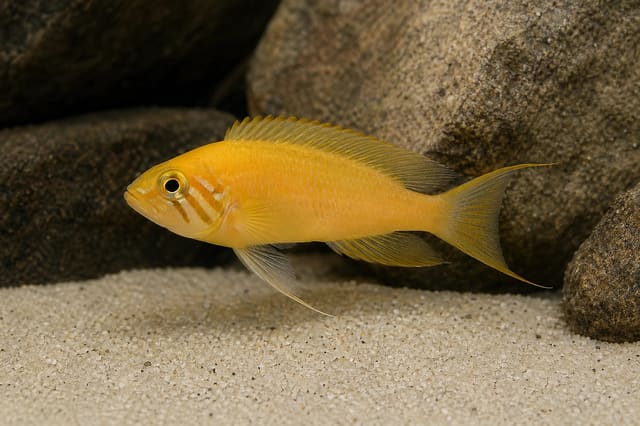
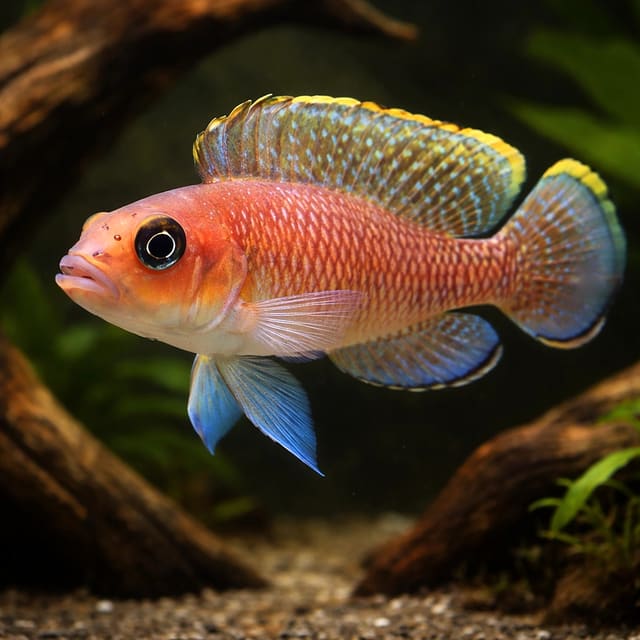
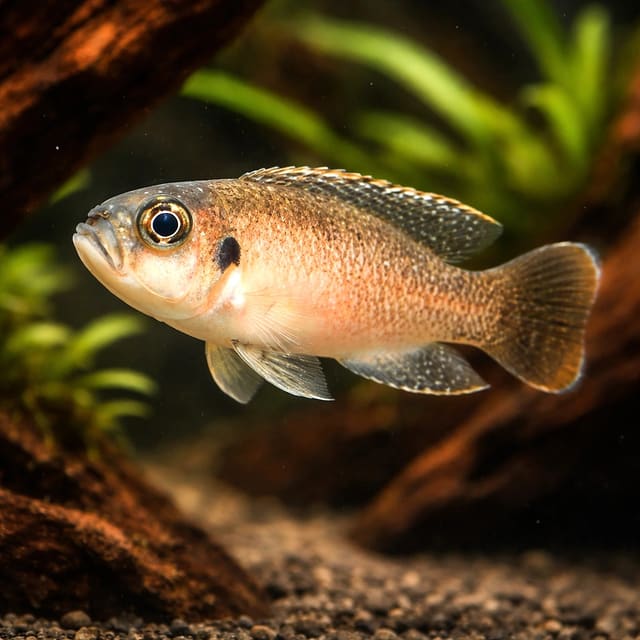
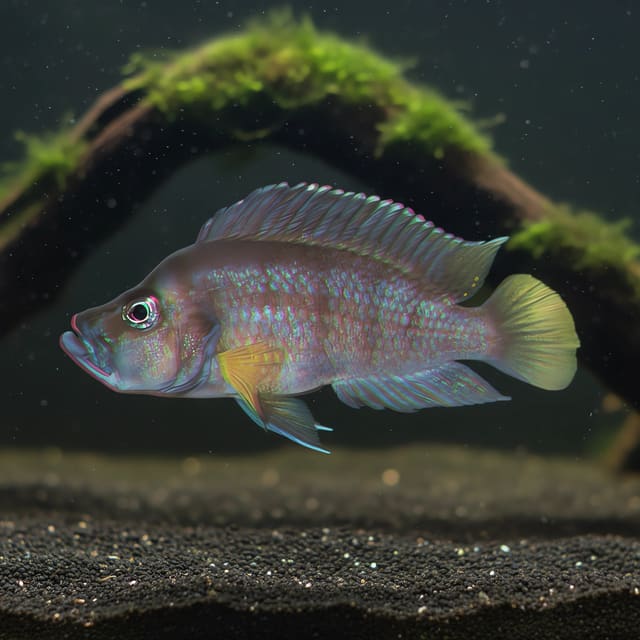
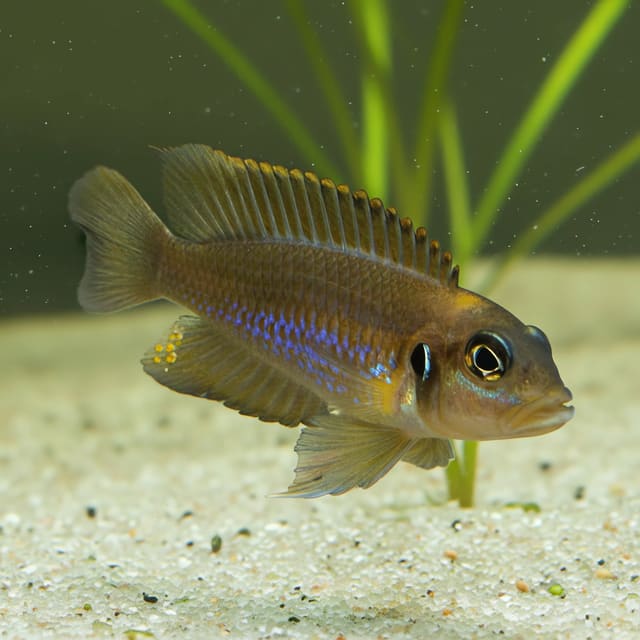
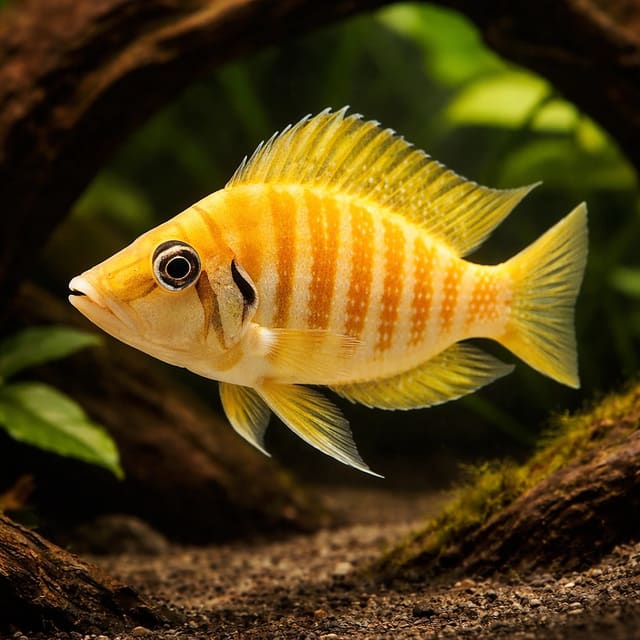
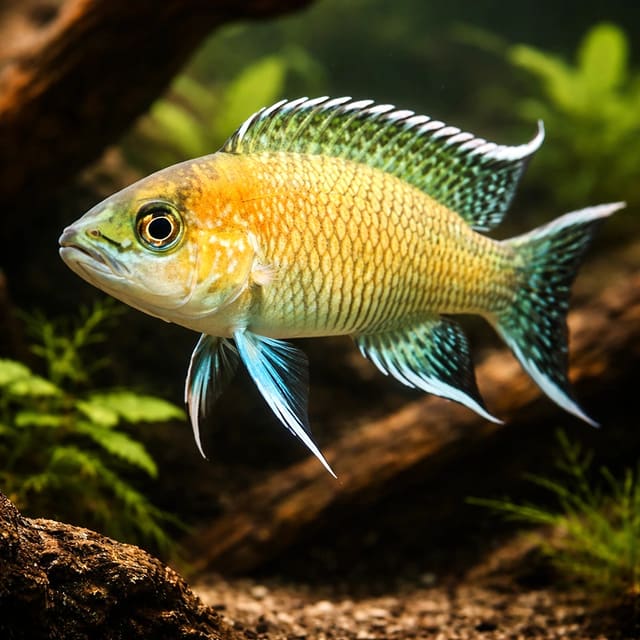
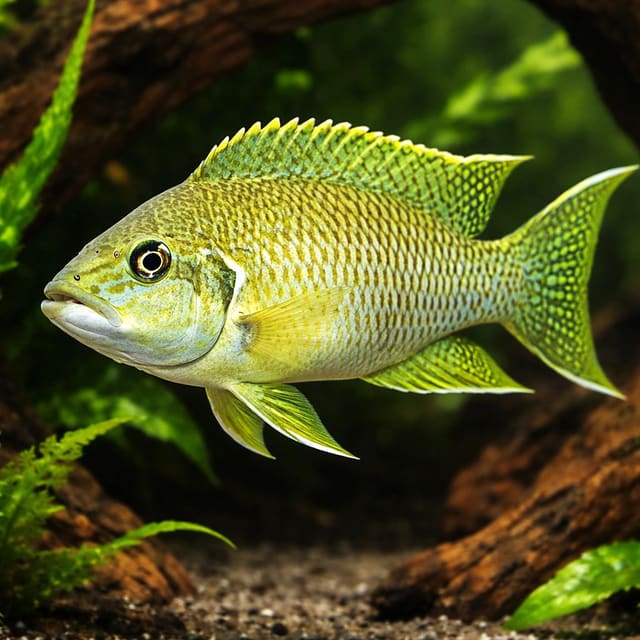
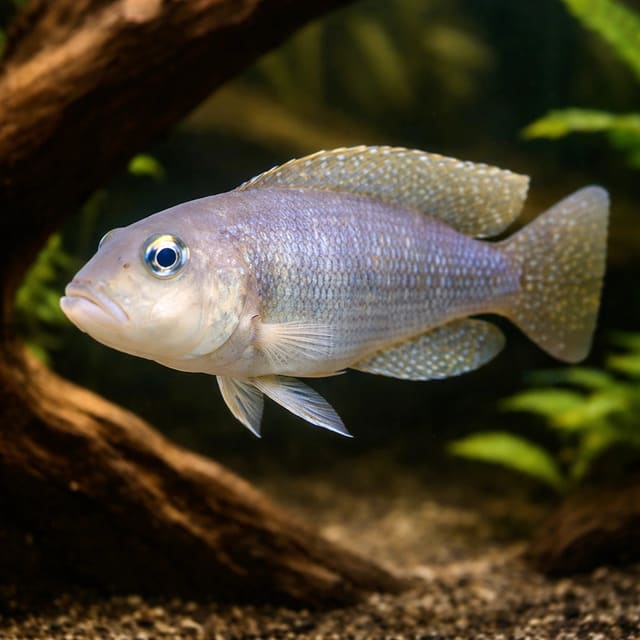
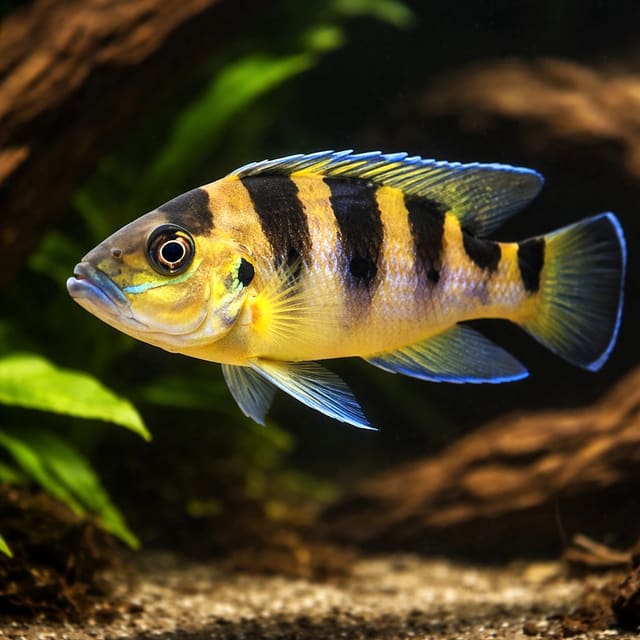
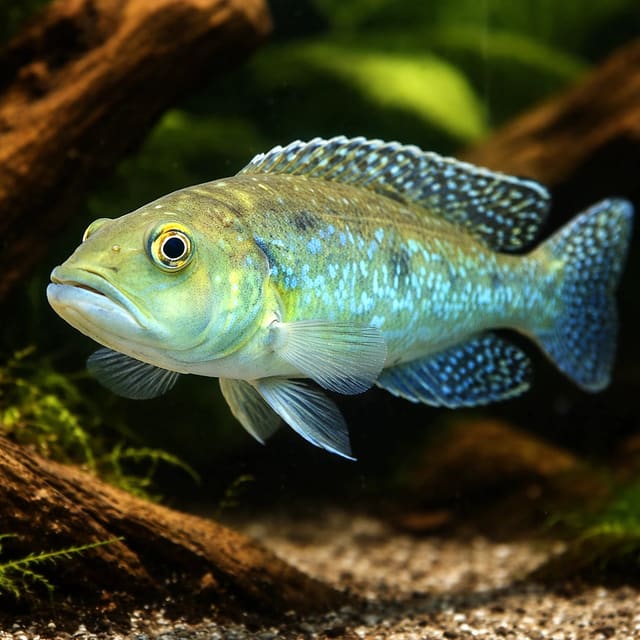
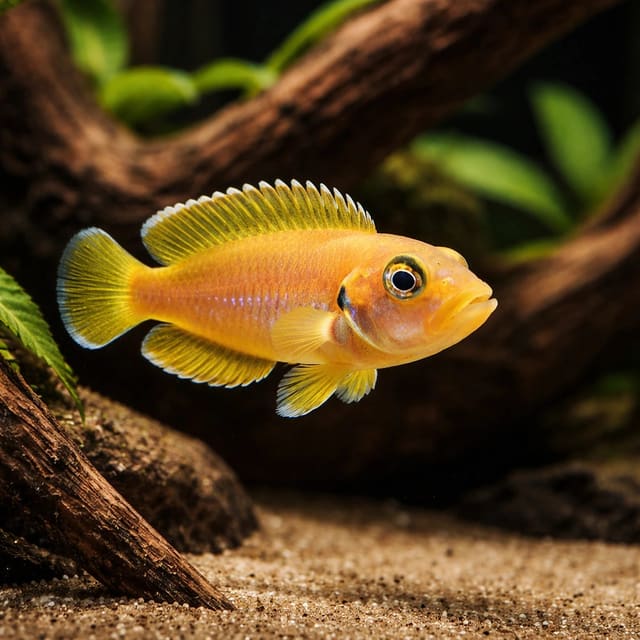
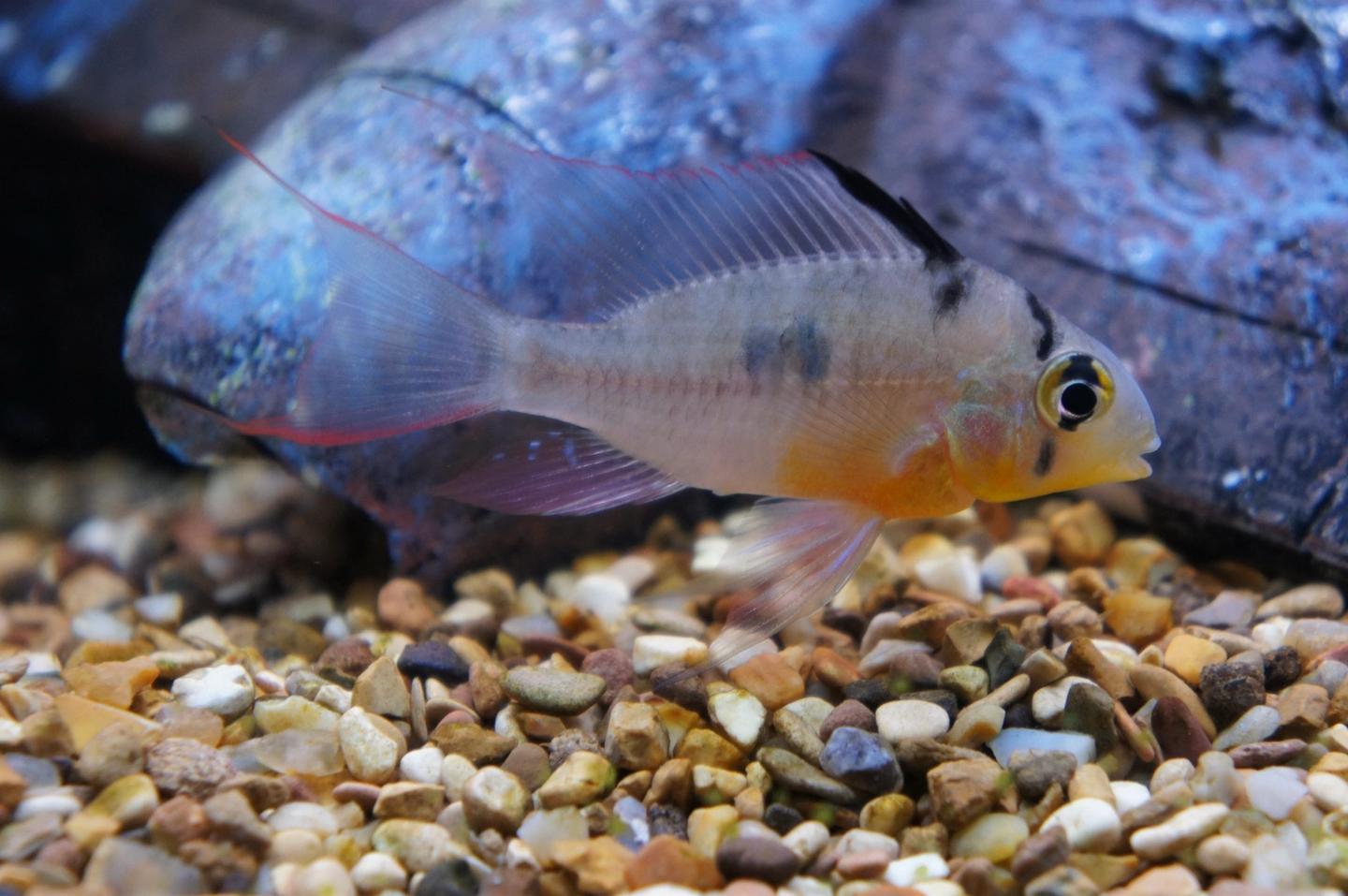
The gallery images are representative, based on reference photographs of this species, so colours can look slightly different from the live animal.
Gold colouring is one of the colour forms associated with this species. Use the name and care requirements to plan the aquarium rather than expecting every individual to reproduce the exact colour, pose or markings shown in an illustration.
Choose this fish when you can maintain the narrow routine range of 24–25°C, pH 8.0–8.6 and 12–18°dH in a mature, filtered aquarium. The setup also needs substantial rockwork arranged as caves and crevices. A bare community aquarium does not provide the structure described for this species.
Plan the social arrangement before adding the fish. Seriously Fish permits either a pair or a colony in a suitably sized aquarium. A colony requires room for several territories, while a pair still needs cave choices and compatibility monitoring. Avoid treating a single purchase as a complete social plan; OATA’s group guidance notes that very few, if any, African lake cichlids do well when kept singly.
Potential companions must match the hard, alkaline conditions and the fish’s relatively shy temperament. Named possibilities include Julidochromis, Neolamprologus, Cyprichromis and Tanganyikan Synodontis catfish, but each combination still needs screening for adult size, vigour and territorial use.
A working biological filter, mature bacterial population and zero ammonia and nitrite are essential before introduction. If you are preparing a new setup, follow our guide to maturing a first tropical aquarium. You can also browse African cichlids while comparing water and compatibility requirements.
If one of these conditions cannot be met, adjust the aquarium before introducing the fish. This sequence links water, shelter and stocking decisions instead of treating any one measurement as proof that the whole setup is suitable.
Plan around an adult length of 13.5 cm. FishBase records that maximum total length for male or unsexed fish. Seriously Fish gives a different figure of 13.8 cm standard length. Use 13.5 cm as the consistent planning figure for this animal while allowing sufficient space for its caves and territories.
The narrow body profile helps the fish enter crevices; it is not a reason to reduce aquarium space. This is a territorial cichlid that may be maintained as a pair or colony only in a suitably sized aquarium. The layout must support the intended social arrangement rather than merely contain the body length of one fish.
Build the plan around piles of rocks that form multiple caves and narrow gaps. In the wild it cruises through rocky habitat, and its compressed body lets it slip into narrow cracks and shallow caves. Rock piles forming caves should fill much of the aquarium so the fish can use the behaviour for which its body is adapted.
OATA advises choosing as large an aquarium as practical because larger aquaria give more stable temperature and water quality. Final dimensions should therefore follow the adult size, number of fish, territorial layout, filtration capacity and total Tanganyikan community plan.
Keep the aquarium at 24–25°C, pH 8.0–8.6 and 12–18°dH. This range lies inside the FishBase environment values, the Seriously Fish aquarium range and OATA’s African lake cichlid guidance. It gives one coherent target for temperature, acidity and general hardness.
| Measurement | Routine instruction |
|---|---|
| Temperature | Keep between 24 and 25°C |
| pH | Keep between 8.0 and 8.6 |
| General hardness | Keep between 12 and 18°dH |
| Ammonia | Maintain at zero mg per litre |
| Nitrite | Maintain at zero mg per litre |
| Nitrate | Do not exceed 20 mg per litre above the normal tap-water level |
Measure the aquarium rather than relying on the values expected from tap water or substrate. Our water chemistry guide explains the role of each measurement, while the water matcher helps compare measured values with this target.
The RSPCA explains that biological filtration supports bacteria that convert toxic ammonia to nitrite and then to the safer nitrate. Add this fish only after that bacterial population is established and tests show zero ammonia and zero nitrite.
OATA recommends an oversized filter for crowded African lake cichlid communities and vigorous aeration to maintain dissolved oxygen. Match the filter to the full stocking plan, then increase fish numbers slowly. Adding several fish and extra food too quickly can leave the bacterial population unable to process the increased waste.
If ammonia or nitrite appears, stop adding fish, review feeding and check the filter for blockages. Carry out a 25% partial water change and continue testing. Water chemistry must be back within the stated targets before the stocking plan progresses.
A temperature of 24°C does not complete the check when pH, hardness, ammonia or nitrite are outside their targets. Record each result at the same testing session so changes can be compared over time. For example, water at 25°C and pH 8.2 still needs general hardness between 12 and 18°dH, zero ammonia and zero nitrite. If one result moves, review recent water changes, feeding, stocking and filter condition before making another livestock change.
Arrange piles of rocks to create caves, crevices and narrow gaps throughout a Lake Tanganyika-style aquascape. Seriously Fish advises a Lake Tanganyika biotope with piles of rocks forming caves that fill much of the aquarium, while FishBase records a compressed body adapted to entering narrow cracks and shallow caves.
Use more than one cave so a pair or colony is not centred on a single refuge. Spread the cave structures through the aquarium and preserve routes around them. In a community, compare where each species lives and shelters before deciding that the same rock pile can meet every fish’s needs.
Dim lighting will encourage this shy fish to be seen more often. Treat that as a visibility and behaviour decision rather than a substitute for caves. The fish still needs physical rock structure even when plants, wood or subdued lighting form part of the wider display.
OATA advises that an African lake cichlid aquarium should have fine coral sand or a similar substrate for buffering. Test the finished aquarium because substrate alone does not tell you whether the water is within 24–25°C, pH 8.0–8.6 and 12–18°dH.
Keep the arrangement practical for maintenance. You must be able to remove solid waste during water changes, inspect the fish and check the filter without dismantling the animal’s entire territory each week. When aggression develops, OATA notes that rearranging décor can help reduce it as fish find new territories.
Make meaty live and frozen foods the main diet. FishBase records shrimps and other crustaceans as the principal wild food, and Seriously Fish reports that most meaty live and frozen foods are readily accepted. Suitable examples from OATA’s carnivorous African cichlid guidance include frozen brine shrimp, prawn and cockle.
Feed only what the fish can eat within a few minutes, twice a day. This schedule comes from OATA’s group guidance and controls the portion rather than defining one fixed number of pieces. Watch the fish eat; food that disappears behind rockwork has not necessarily been eaten.
Seriously Fish notes that dried varieties are not usually taken, so do not rely on dried food as the sole staple. A quality dried product may be tried, but the feeding plan must still fit the recorded preference for meaty live and frozen foods.
Rotate suitable meaty foods rather than feeding one item continuously. Variation must remain within the animal-based diet recorded for this predator. Shrimps and other crustaceans are food in its natural history, so ornamental shrimp and similar invertebrates should not be planned as companions.
Overfeeding has a direct water-quality cost. Uneaten food breaks down and releases waste, adding pressure to the biological filter. A twice-daily schedule therefore does not mean filling the aquarium twice; each meal remains limited to what is eaten within a few minutes.
Watch where each portion lands among the rocks and whether the fish reaches it before companions. If food remains in a crevice after a few minutes, remove what you can and reduce the next serving. If the fish shows less interest than normal, test water quality and check whether territorial pressure is blocking access to food. Keep the twice-daily schedule tied to appetite and waste control rather than increasing portions to compensate for missed feeding opportunities.
At least once every week, change 25% of the aquarium water. Use a siphon to remove solid waste that collects around the substrate and rockwork.
Treat replacement tap water with a conditioner that removes chlorine or chloramine before it enters the aquarium. Continue testing at least once per week so ammonia and nitrite remain at zero and nitrate does not exceed 20 mg per litre above the normal tap-water level.
Inspect the filter for blockages. When cleaning is needed, do not run the filter media under the tap. Rinse it lightly in aquarium water removed during the partial water change; this reduces the number of established beneficial bacteria lost during cleaning.
Filtration and water changes perform different jobs. The biological filter processes waste continuously, while the partial water change removes dissolved waste and the siphon removes solids. Keep both parts of the routine rather than using a stronger filter as a reason to skip water changes.
If a result moves outside the target, review recent stocking, feeding and filter condition before adding another fish. OATA warns that stocking too quickly can produce unhealthy ammonia and nitrite levels because the bacterial population has not grown enough to process the extra waste.
Keep the results in a simple dated log. A repeated rise in nitrate, more solid waste around the rocks or declining feeding response gives you a reason to review portions, stocking and filter performance before the fish deteriorates. Record any filter cleaning and livestock addition beside the measurements so the likely cause of a change is easier to identify. Continue the weekly 25% water change while investigating; do not substitute observation for the measured routine.
Our delivery and Live Arrival Guarantee policy gives the arrival procedure and explains the evidence needed if anything has gone wrong.
OATA advises increasing fish numbers slowly because the mature filter’s bacterial population must expand when stocking and feeding rise. This fish should enter water with zero ammonia and zero nitrite, within the routine temperature, pH and hardness range.
Observe the fish after release without interpreting one moment in isolation. Compare its swimming, breathing, colour, hiding and feeding over time. A shy fish may use its caves, but OATA lists hiding more than normal as a change to watch for; test the water quality and review compatibility if it appears.
Watch the fish for changes in swimming, colour, temperament, breathing, appearance, body condition and feeding. These observations are most useful when compared with the individual’s normal behaviour rather than with an illustration or another fish.
| What you see | What to do |
|---|---|
| Hanging at the surface, sitting on the bottom or erratic swimming | Test water quality and check aeration and filtration |
| Faster or slower gill-cover movement | Check water values and dissolved-oxygen support promptly |
| Darker or paler colour than normal | Review water quality, social pressure and recent changes |
| More hiding or a change in aggression | Check territory use and compatibility as well as water |
| White spots, fluffy growths, lost fins, scales, ulcers or bumps | Test the water and seek prompt guidance before choosing a treatment |
| Reduced feeding or body condition | Check access to food, tank mates and water quality |
Begin with measurements because OATA notes that African lake cichlids can be stressed by even the smallest amounts of ammonia. Confirm ammonia and nitrite are zero, then compare temperature, pH and hardness with the routine range.
A symptom can have more than one cause. Increased hiding may reflect the naturally shy character described for this species, but a change from normal may also follow territorial pressure or poor water quality. Test first, record what changed and send us the results and a description if concern continues.
Do not choose medication solely from one visible sign. Instead, test the water, check filtration and aeration, review compatibility and seek guidance about the specific change.
Build the community around calm Lake Tanganyika species that share hard, alkaline water. Seriously Fish names Julidochromis, Neolamprologus, Cyprichromis and Tanganyikan Synodontis catfish as good possibilities. These names are a starting point for assessment, not universal matches for every aquarium.
Check each proposed fish for adult size, temperament, vigour, water requirements and use of the rockwork. Pearly Compressiceps Gold is generally peaceful towards fish it cannot fit into its mouth, but it remains territorial and naturally preys on eggs, fry and small fish.
| Consider after screening | Avoid |
|---|---|
| Julidochromis | Aggressive or very vigorous fish |
| Neolamprologus | Mbuna and other Malawi cichlids |
| Cyprichromis | Fish small enough to fit in its mouth |
| Tanganyikan Synodontis catfish | Shrimps and other crustaceans treated as companions |
| Calm Tanganyikan community fish with matching water needs | Other colour forms of this species |
Do not mix different colour forms of this species because Seriously Fish warns that they should not be allowed to hybridise. OATA also advises against mixing Malawi and Tanganyikan cichlids because their temperament and behaviour differ. Mbuna are specifically identified as too aggressive or vigorous for this relatively shy fish.
If a fish can fit into this cichlid’s mouth, do not use it as a companion. The species is a predator adapted to entering rock gaps for eggs, fry and small fish, and FishBase records that it feeds mainly on shrimps and other crustaceans.
For combinations outside the named examples, uncertainty remains until adult size, water needs, vigour and territory use have been assessed together. Use a calm Tanganyikan community as the default framework and monitor every introduction.
Keep this species as a pair or as a colony only when the aquarium is suitably sized for that arrangement. Seriously Fish permits both approaches. The practical colony size depends on how many territories, caves and compatible feeding positions the aquarium can support.
Because the offer does not guarantee sex, do not build the stocking plan around an assumed male or female. Assess the actual social behaviour after introduction and be ready to revise the arrangement if one fish is persistently excluded.
Look for increased hiding, reduced feeding, damaged fins or scales, changed colour and a rise in aggression. Test the water as well as reviewing compatibility because poor water quality can alter behaviour and condition.
OATA recommends adding more peaceful African lake cichlids before more aggressive species. It also advises that rearranging aquarium décor can reduce aggression by prompting fish to establish new territories. Apply that step only with continued observation; the revised layout still needs enough caves for the planned pair, colony or community.
A territorial display does not make every companion unsuitable. The useful decision is whether all fish remain able to feed, shelter and maintain normal condition. Remove a proposed combination from the plan when adult size, vigour, prey risk or water requirements fail the screening rule.
A workable arrangement remains stable across feeding, shelter and normal daily movement. Repeated exclusion is a stocking problem even when the water measurements remain within range.
It reaches 13.5 cm. Plan the permanent aquarium around that adult length, cave-filled rockwork and the territories required by the intended pair or colony.
Use a suitably sized Tanganyikan aquarium planned around the 13.5 cm adult size, cave-filled rockwork and the intended pair or colony. OATA advises choosing as large an aquarium as practical because larger aquaria give more stable temperature and water quality.
It can be kept as a pair or as a colony in a suitably sized aquarium. Provide multiple caves and enough territory for every fish, then monitor hiding, feeding and aggression.
It suits a prepared keeper who can maintain hard, alkaline water at narrow routine values, mature a biological filter, build extensive rocky caves and screen every companion for prey size and vigour.
Feed meaty live and frozen foods, including suitable crustacean-based foods such as brine shrimp and prawn. Offer only what it can eat within a few minutes, twice a day, and do not rely on dried food alone.
Keep it at 24–25°C and pH 8.0–8.6, with general hardness of 12–18°dH. These routine values are the overlap of FishBase, Seriously Fish and OATA guidance.
It is territorial but generally peaceful towards fish it cannot fit into its mouth. Avoid aggressive or very vigorous companions such as Mbuna, and monitor all fish for damaged fins, increased hiding or exclusion from food.
Screen Julidochromis, Neolamprologus, Cyprichromis and Tanganyikan Synodontis catfish for the planned aquarium. Avoid prey-sized fish, shrimps and other crustaceans, Mbuna, very vigorous fish and other colour forms of this species.
Tropical Fish Co hand-packs the fish in pure oxygen inside an insulated poly box, adding a heat pack when the weather calls for it, and uses a licensed live-animal courier. Be present to receive the parcel, film continuously from the sealed parcel onward and float the bag for 20–30 minutes before release.
No reviews for this item yet. Bought one? Honest reviews only, good or bad.
What customers say about ordering from us
I have a small group of long finned mountain minnows. So was delighted to be able to order ten of this variety to increase the genetics in my tank . The ones I recieved are healthy but it’s to early to give a verdict on wether they are of a long finned type since they are small currently.
Gordon Walker · 23 Sept 2026
100% success travel and "installation". Pleased with quality of purchase. The Siamese fighter a bit "shy" so have not yet seen him at his best yet but looking good. Happy customer. GG
George E Garratt · 21 Sept 2026
Reviews of our shop, collected by Judge.me, an independent third-party review collector. Newest first.