Moderate
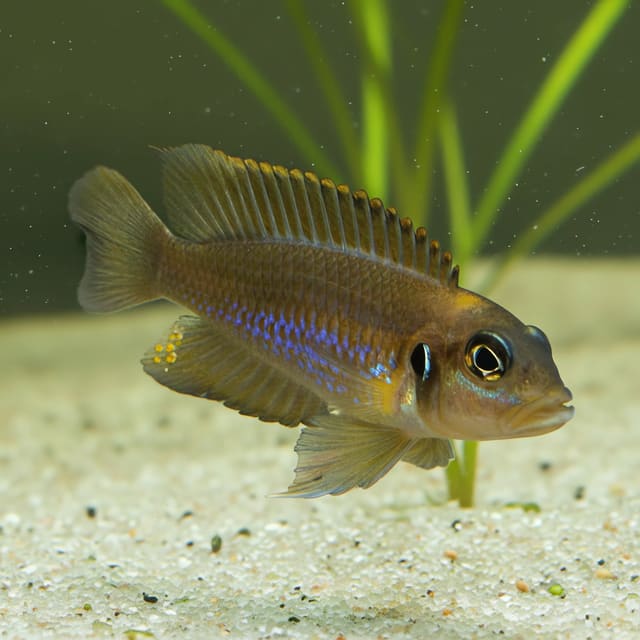
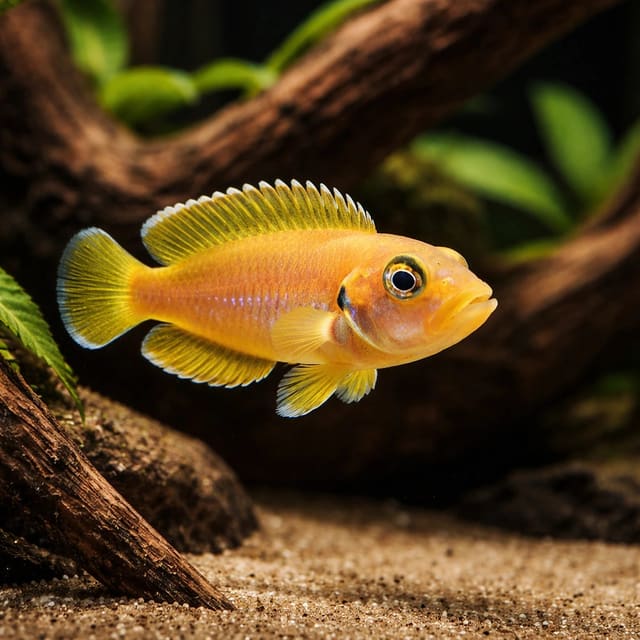
Gold Ocellatus Shell-Dweller (Neolamprologus ocellatus)
23–25°C · pH 8–9
£16.59

Pearly Compressiceps Zaire (Altolamprologus calvus) is a territorial Lake Tanganyika cichlid for stable hard water, rocky shelter and meaty foods. Sold as one fish in the selected 3–4 cm or 4–5 cm size.
Altolamprologus calvus
Save when buying multiple fish. Each quantity is one fish; sex and pair formation are not guaranteed unless the selected variant explicitly states them.
Pearly Compressiceps Zaire (Altolamprologus calvus) is a territorial Lake Tanganyika cichlid for stable hard water, rocky shelter and meaty foods. Sold as one fish in the selected 3–4 cm or 4–5 cm size.
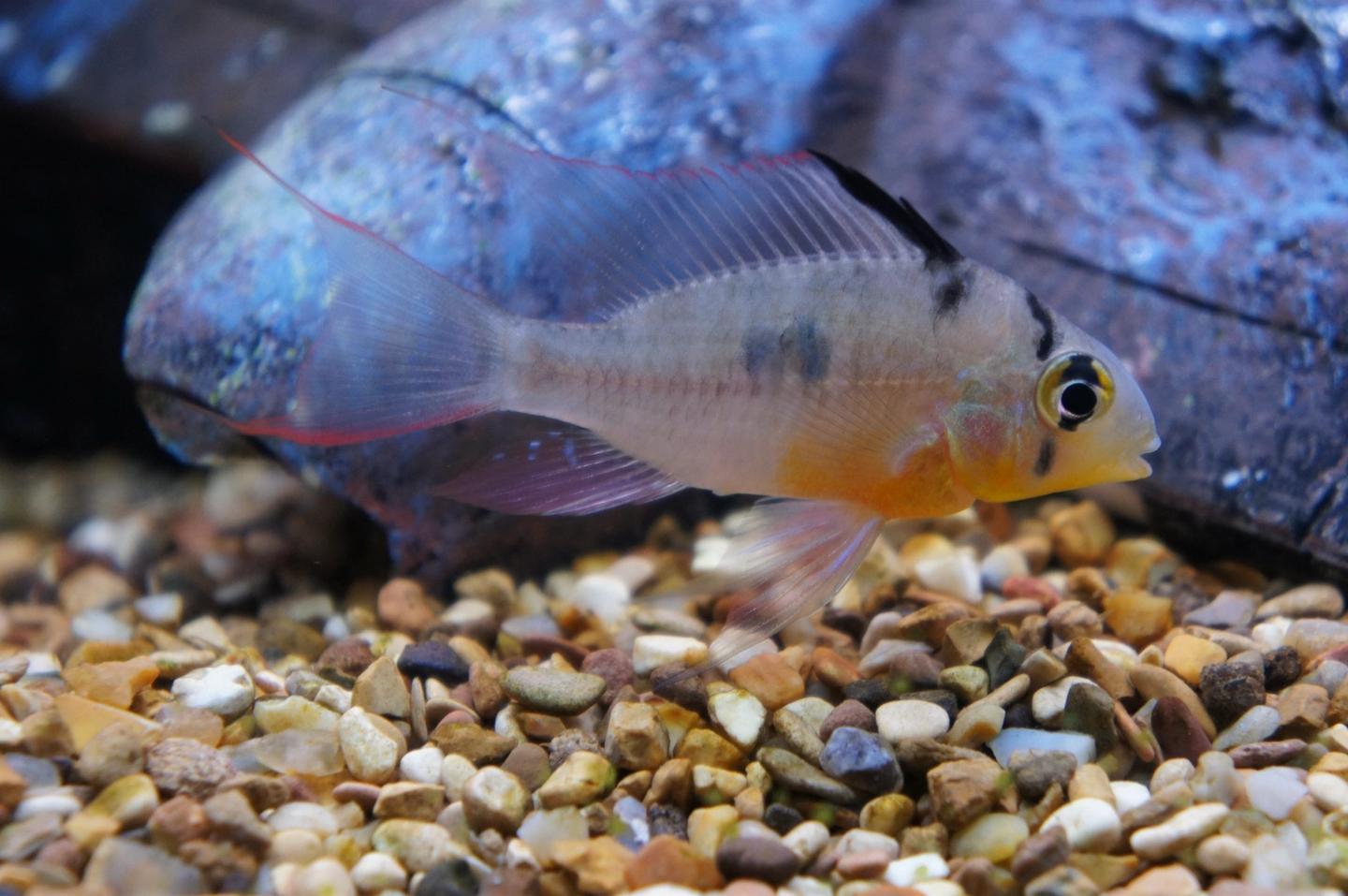
Cichlids are a family of roughly 1,800 accepted species, not one care type. Before buying, identify the exact species and source, then compare adult measurement, usable tank dimensions, social system, territory, tested water, diet and an exit plan. No family-wide minimum tank, water range or tank-mate list is safe.
Maintain these water conditions for optimal health and vibrant colors
Pearly Compressiceps Zaire is the Zaire black fin form sold here as Altolamprologus calvus, a freshwater cichlid from Lake Tanganyika. Its deep, narrow body and deliberate movements make it an absorbing fish to watch around rockwork. The important preparation is a mature aquarium with hard, alkaline water, secure retreats and carefully chosen companions. This is a small-prey predator that can also be shy, so its home must protect it from bullying while keeping vulnerable little fish out of reach.
One purchase quantity supplies one live fish of the selected size. The size choices are 3–4 cm and 4–5 cm. The size you select is the size supplied, not the adult size. Plan the aquarium for its later needs before choosing a smaller fish; a young animal still needs appropriate water, food and protection from larger residents. Check the live size selector when ordering, and match the introduction to the size and behaviour of the fish already at home.
Sex is guaranteed only when the selected option explicitly states male or female. This Pearly Compressiceps Zaire listing has no sex-guaranteed option. If you intend to establish a pair or colony, plan that social arrangement separately from the purchase quantity. Two fish do not automatically become a compatible pair, and a photograph showing two animals does not describe what one order quantity contains.
Lamprologus calvus is an older scientific name for Altolamprologus calvus. You may therefore find care information under either name. Pearly Compressiceps Zaire and Zaire black fin are the trade wording for this offer; the species is calvus. The similarly named Altolamprologus compressiceps is a different species. The distinction matters when comparing measurements and care descriptions, even though both names appear in discussions of compressed Tanganyikan cichlids.
The species is native to Lake Tanganyika, with FishBase recording it from the southwestern lake. That is information about its natural distribution, rather than a statement about the collection place or breeding history of the fish supplied. Keep the trade form together when planning a display: Seriously Fish cautions against mixing calvus colour forms because they may interbreed. A thoughtful species-focused aquarium can show its character without needing a large assortment of similar-looking forms.
Much of the interest comes from how the fish uses its surroundings. Its body is compressed from side to side, allowing access to cracks and shallow caves. Give it places worth exploring and a keeper can watch it pause, inspect an opening and move around a rock face. A bare aquarium offers fewer opportunities for that behaviour and leaves a shy fish exposed whenever another resident approaches.
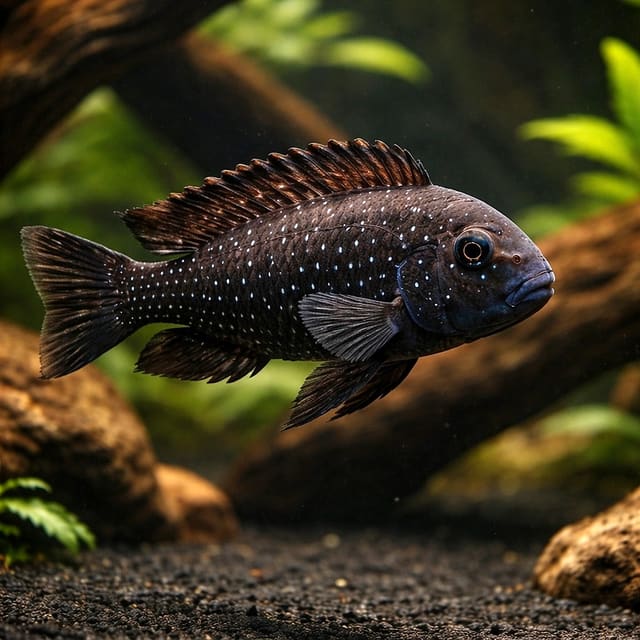
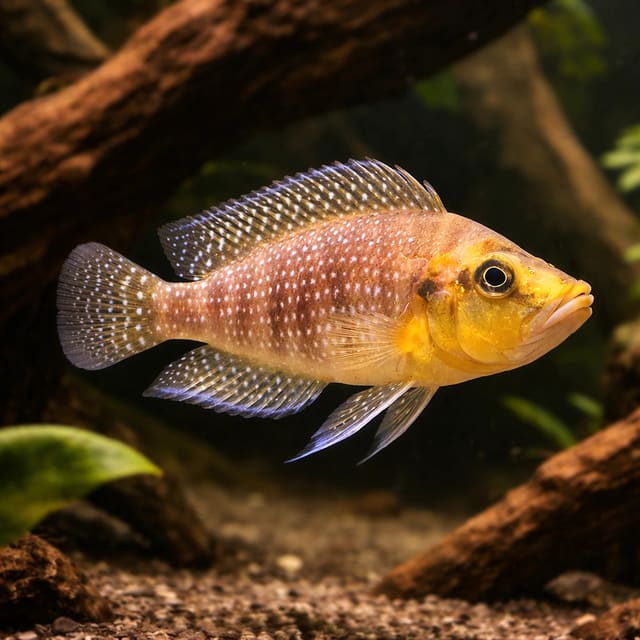
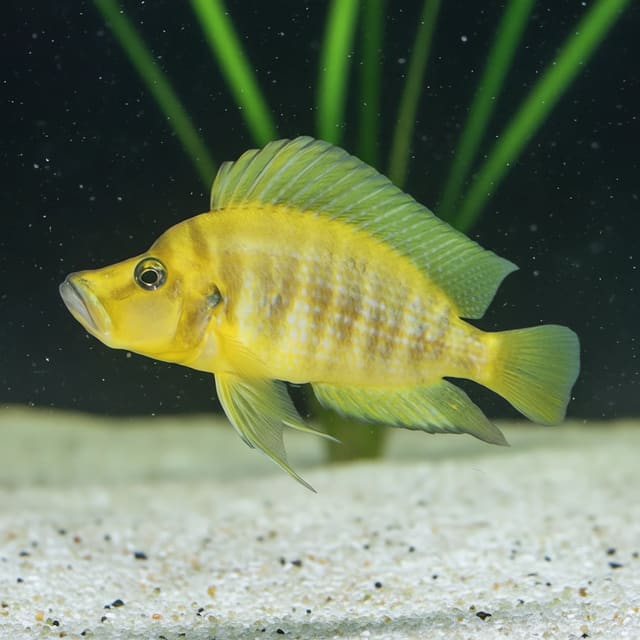
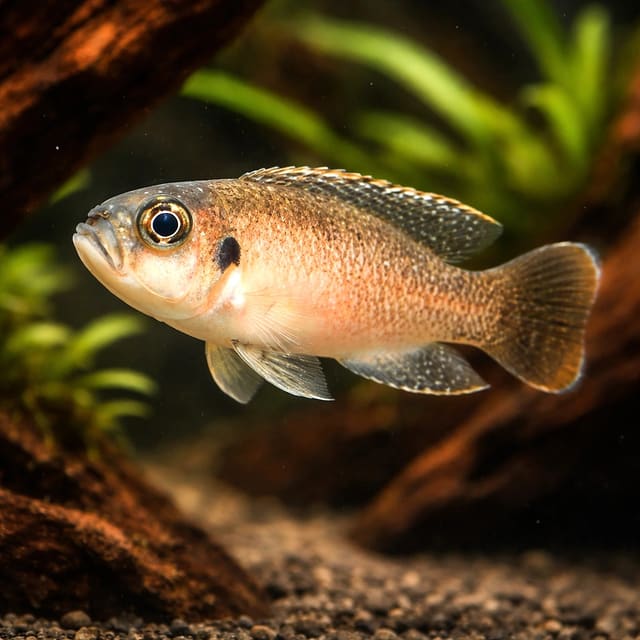
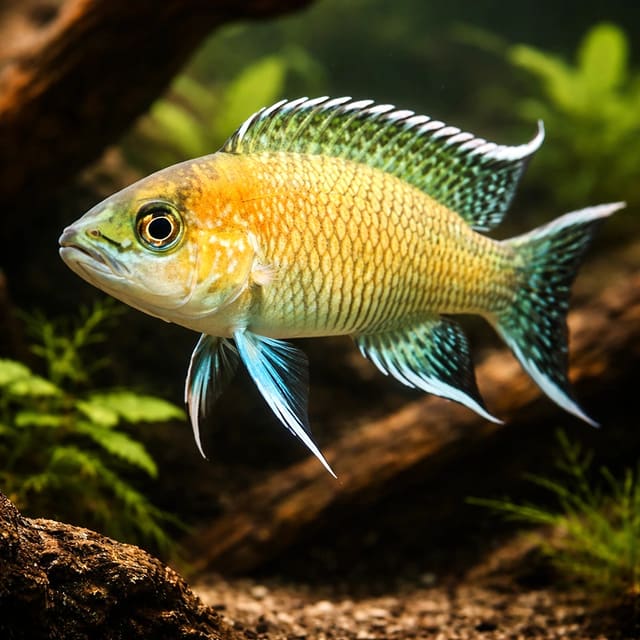
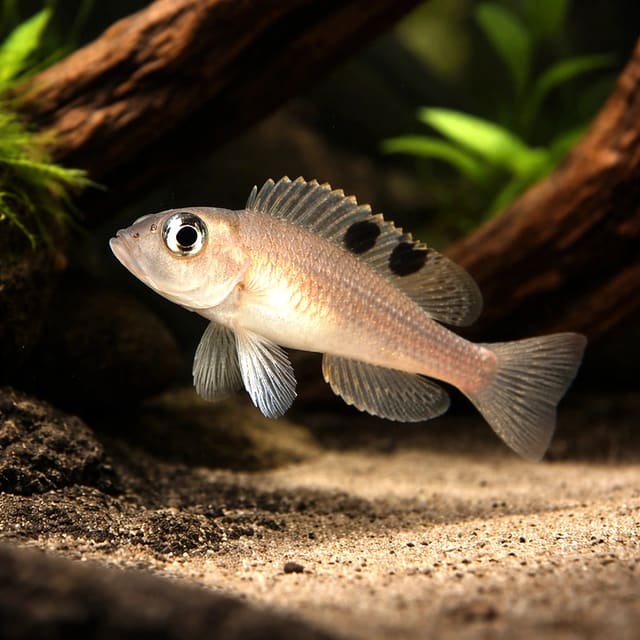
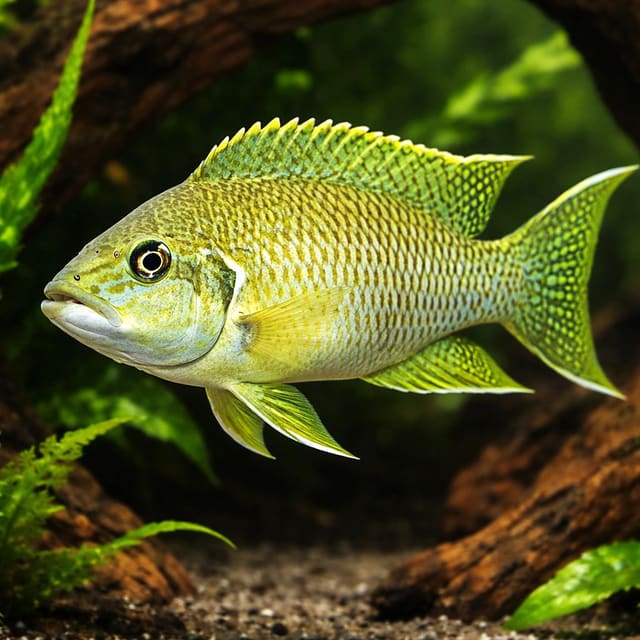
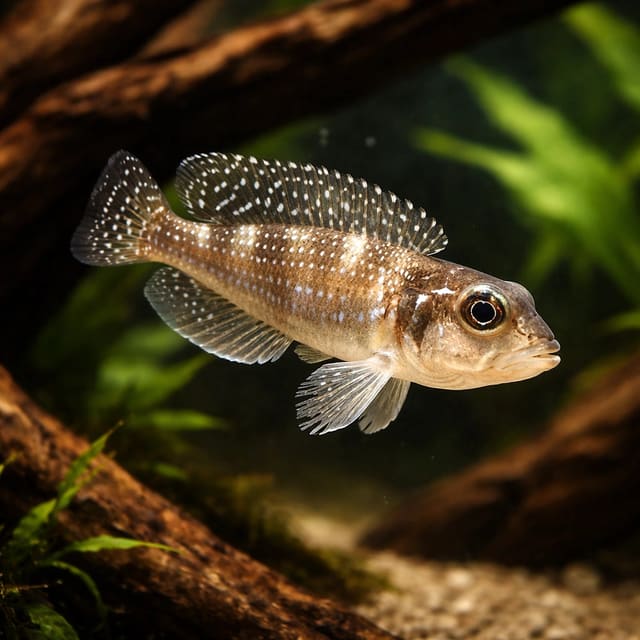
The gallery shows dark, spotted fish with vertical markings, a high dorsal profile and a strongly compressed body. The gallery images are representative of this type of animal rather than photographs of the exact animal supplied, so colours can look slightly different from the live animal. Look at the whole animal and the space it will need, rather than using a pictured fin size or pattern as a promise about an individual fish.
This species makes most sense for someone who enjoys managing a Tanganyika aquarium and observing territory and feeding closely. Its quiet movement should not be mistaken for suitability for every community. Small prey can be eaten, vigorous neighbours can prevent it feeding, and abrupt changes in water chemistry are a concern. If those requirements suit your plans, the detailed care sections below explain how to turn a rocky display into a practical home.
For wider browsing, the African cichlid collection offers other starting points. Choose the intended aquarium community before collecting favourite colours: different African lake cichlids can have quite different diets, levels of aggression and space requirements. The shared category is a way to explore the range, not a stocking list.
FishBase records a maximum length of 13.5 cm TL for male/unsexed Altolamprologus calvus. TL means total length, including the tail. Seriously Fish separately gives 138 mm SL, or 13.8 cm standard length, which excludes the tail. These are differently measured records and should not be treated as interchangeable estimates of the same whole-animal length. Males are described as growing larger than females, but that general difference does not identify the sex of a small fish offered for sale.
The useful planning lesson is that the dispatch grades describe young-sized stock, not the space needed indefinitely. Design for an adult with a tall body, room to turn beside rockwork and access to a retreat. Leave usable routes through the aquarium after the décor is in place. A tank can have plenty of water yet offer very little movement or territorial separation if one solid pile of stone occupies nearly the whole base.
There is no single aquarium volume that guarantees a successful calvus community. The number and size of residents, base dimensions, cave arrangement and their behaviour all affect the decision. Discuss those details with us before ordering, especially if the plan includes a colony or other territorial cichlids. A photograph of the layout and the names and sizes of current inhabitants make that conversation much more useful than capacity alone.
Allow room for more than the dominant animal's favourite shelter. A subordinate fish needs somewhere it can rest without remaining in view of its neighbour, and it needs a route to food. If every retreat opens into the same small space, a dominant fish can effectively control them all. Several separated areas with intervening rock faces are more useful than several holes clustered together.
Think about maintenance access at the planning stage too. You should be able to inspect the fish and remove waste without repeatedly dismantling its home. Keep essential equipment reachable and leave enough open substrate to see uneaten food. A practical aquarium remains manageable as the fish grows, the rocks become established and the keeper settles into a regular routine.
For routine aquarium care, the Seriously Fish species profile gives 24–27°C, pH 7.5–9.0 and hardness of 8–20 dGH. These are aquarium husbandry ranges for calvus. Use them alongside the requirements of the exact companions you intend to keep, with steady conditions as the aim. Do not move the aquarium repeatedly between opposite ends of a range simply because both values appear in a care table.
| Care point | Aquarium guidance |
|---|---|
| Temperature | 24–27°C |
| pH | 7.5–9.0 |
| General hardness | 8–20 dGH |
| Ammonia and nitrite | Zero mg per litre, following OATA general aquarium guidance |
Check the water you actually use, including replacement water. pH describes acidity or alkalinity; general hardness describes dissolved minerals. One result does not stand in for the other. Our water chemistry guide explains the tests and their purpose. Recording the readings helps you spot a change before it becomes a problem for the fish.
FishBase lists environmental conditions of 23–25°C, pH 8.0–9.0 and dH 9–19. Those records describe the species' environment and are not a separate instruction to reset a stable aquarium. For home care, use the aquarium guidance above with its context. The water matcher can help compare measured conditions, but it cannot decide whether the physical layout or the behaviour of the community is suitable.
A working biological filter is essential. As the RSPCA explains, fish release ammonia and the filter's bacteria process it through nitrite to nitrate. Clear water can still contain harmful waste, so visual clarity is not proof that an aquarium is ready. Establish and test the system before livestock arrives; the first aquarium guide is useful if you need to work through that preparation.
Add livestock gradually so the biological filter can respond to the increased feeding and waste. Do not assume that a filter suitable for the existing community can immediately process a much larger load. Check ammonia and nitrite after changes to stocking or filtration, and seek advice if either is detectable. A mature aquarium is a functioning system that needs care, not simply one that has been filled for a particular number of weeks.
Maintain oxygen exchange and keep filtration operating reliably. Arrange the outlet so water circulates around the layout while fish can rest near cover. Check for blocked intakes and areas where waste accumulates behind the rocks. Equipment labels cannot tell you how circulation behaves after a complicated hardscape is installed, so look at the completed aquarium and make adjustments based on what you observe.
Build the display around secure rockwork containing caves and narrow crevices. The species' natural habitat is rocky, and a Tanganyika-style layout gives its compressed shape a practical purpose. Choose stable pieces and support them properly before adding fish. A retreat is only useful if the fish can enter and leave safely and the surrounding structure remains secure during routine care.
Break long sightlines across the aquarium. A fish at one end should not be able to supervise every resting place at the other. Consider the arrangement from fish height rather than only from above: an attractive arch may leave the whole aquarium visible underneath, while a solid rock face may create a useful private space. Keep open routes between those areas so the fish can move without being funnelled into a dead end.
Seriously Fish recommends dim lighting and notes that the black form shows well over a dark substrate. Subdued illumination can make a sheltered fish more willing to emerge. Avoid removing cover simply to get an unobstructed view from the sofa. Often the better viewing arrangement is a shaded retreat beside an open patch, allowing the fish to come forward on its own terms.
Plants can be part of the appearance you enjoy, but the essential structure for this species comes from rock and caves. Select any planting to suit the water and leave access for cleaning. The planted scenes in the gallery are not a requirement to reproduce every decorative element. Make choices according to the aquarium's stability, the fish's movement and your ability to maintain the layout.
Inspect new décor for edges or openings that could trap or injure an animal, and check existing structures as fish grow. A gap that is accessible to a small fish may later become awkward. Avoid creating a display that can only be maintained by chasing fish out of caves. Gentle, predictable maintenance around an established territory is easier when the layout was designed with access in mind.
In nature, calvus feeds principally on shrimps and other crustaceans, and it can take eggs, fry and small fish from sheltered spaces. In the aquarium, Seriously Fish reports ready acceptance of meaty live and frozen foods and warns that dried foods are not usually accepted. Have suitable meaty food ready before the fish arrives and ask what the current fish are eating. Do not build the entire feeding plan around an assumed willingness to eat pellets.
Offer pieces appropriate to the fish's current mouth size and watch the actual feeding response. The ability to hunt does not mean it will rush into the busiest part of a mixed aquarium. A shy individual may wait near its shelter while more vigorous neighbours consume everything. If that happens, change the way food is delivered or reconsider the social pressure; simply adding more food to the same crowded spot can increase waste without feeding the intended fish.
Use small, measured portions. OATA's broad African lake cichlid guidance suggests feeding what fish can consume within a few minutes, twice daily; that is a starting routine for the group rather than a calvus-specific nutritional prescription. Adjust portions with the fish's intake, condition and the amount left behind. The aim is to provide useful meals without allowing scraps to collect unnoticed in caves or behind stones.
Vary suitable meaty foods rather than relying on one item indefinitely. If you try a prepared dried food, observe whether the fish takes and swallows it, and keep an accepted alternative available. A food disappearing from view does not always mean it has been eaten: it may have drifted into a gap. Check around the feeding area afterwards, particularly while learning the flow patterns of a new aquarium.
Make feeding time a daily check of the individual. Look for a consistent interest in food, an appropriate body condition and access without relentless pursuit. A change from its normal behaviour deserves attention even if other fish are still eating. Record what has changed in water readings, companions or routine so advice can be based on useful detail. There is no benefit in repeatedly offering larger meals to a fish that is avoiding food because something else is wrong.
OATA recommends a 25% partial water change at least once every week for African lake cichlids, together with regular testing. Treat that as broad maintenance guidance and respond to the actual aquarium's waste load. Prepare replacement water with conditioner to remove harmful chlorine or chloramine, and check that the change will not cause an abrupt shift in temperature or chemistry. Consistent preparation makes routine maintenance easier for both fish and keeper.
Use the water change to remove accumulated debris from accessible substrate and feeding areas. Check behind the rockwork as far as practical, but avoid making unnecessary major changes to established territories. If the layout repeatedly traps food where it cannot be removed, improve that access. A clean-looking front panel is only a small part of keeping the whole aquarium in good condition.
Clean filter media gently in water removed from the aquarium when it needs attention. OATA cautions against rinsing established media under the tap, which may harm beneficial bacteria. Check the intake and return for obstructions, restore normal operation and make sure equipment is running correctly after maintenance. A short written checklist can prevent an easily missed step becoming an overnight problem.
Watch the individual fish's usual pattern of swimming, sheltering and feeding. A calvus resting near a cave is not automatically unwell, but increased hiding combined with reduced appetite, faster breathing or declining condition deserves investigation. Other concerns include damaged fins, visible growths, unusual spots or a marked change in balance. Observations are clues to act on, not enough by themselves to diagnose a disease.
If concerned, test the water and contact a knowledgeable aquatic retailer or fish-health professional with the readings and a clear description. Include recent additions, maintenance and feeding changes. Avoid choosing a medicine solely from a photograph or a single symptom. Providing the details promptly makes it easier to distinguish a water problem, social pressure, injury or a condition requiring further investigation.
Plan for a fish that needs separation before an emergency happens. The separate accommodation must itself be appropriate and biologically supported; moving a stressed fish into an unprepared container does not solve its underlying needs. Seek advice on isolation and observation for your particular community. There is no universal calendar that makes a new arrival safe to combine with every established aquarium.
The most useful compatibility rule is to select fish that share suitable water, are too large to be swallowed and will not overwhelm a shy calvus. Seriously Fish describes it as territorial but generally peaceful towards animals it cannot fit into its mouth. That distinction explains why it may ignore a suitably sized neighbour yet pose a serious risk to small fish or fry in the same aquarium.
The species profile names Julidochromis, Neolamprologus, Cyprichromis and Tanganyikan Synodontis as possibilities. Treat these as groups to investigate, not blanket approvals. Check the exact species, adult and introduction sizes, behaviour, diet and space needs. Sharing a lake or genus label cannot guarantee that two particular fish will settle together in a particular layout.
Avoid aggressive or very vigorous neighbours such as mbuna. The problem may show up as a fish staying hidden or missing meals rather than a dramatic fight. Observe whether it can leave shelter, feed and return without being chased. If it cannot, the arrangement needs changing even when all fins look intact. A community should allow each fish to function normally throughout the day.
Small ornamental shrimp, eggs, fry and little fish are unsuitable companions for this predator. Rock cracks and shells do not provide dependable protection from a fish adapted to investigate narrow spaces. In particular, a plan to raise other cichlids' young in the same display needs to account for predation. Adult compatibility and fry survival are separate decisions.
Calvus may be maintained as a pair or colony in an appropriately sized aquarium. A colony is not a shoal to pack closely together, and its social arrangement must suit the available space and individual fish. Begin with the space and territory plan, monitor relationships as fish grow, and retain a practical way to separate an individual if necessary. The arrangement that works for young fish may need reassessment later.
Pair formation should be allowed to develop rather than assumed from buying two animals. Seriously Fish describes starting with juveniles and allowing a pair to form, a process that may take considerable time. If breeding is a goal, keep forms separate and discuss space for adults and young before adding fish. Purchasing a certain number cannot guarantee compatibility, spawning or a particular sex balance.
Introduce changes thoughtfully and observe all residents afterwards. A new fish can alter established territories even when the overall number seems modest. Reworking part of the décor may help with territorial conflict, as OATA explains for African lake cichlids, but it also changes the home of existing fish. Base any rearrangement on a clear problem and maintain secure shelter throughout.
This is a substrate-spawning species that uses sheltered cavities. The species account describes a female selecting a restricted cave and guarding the eggs while the male defends the surrounding area. Breeding activity can therefore change how much space neighbours can safely approach. Watch territorial boundaries as well as courtship; a previously relaxed corner may become an area another fish is repeatedly excluded from.
Raising young is a separate project from enjoying adults in a display. Seriously Fish notes that young grow slowly and that predation can occur, including by larger youngsters as sizes diverge. Prepare suitable separate space, appropriate small food and a maintenance plan before trying to raise a brood. Avoid treating a sheltered community cave as a guarantee that all fry will survive. Stable adult care remains the priority whether or not spawning occurs.
Have the aquarium ready before arranging delivery and make sure someone can receive the parcel. Keep the immediate unpacking area clear and have the equipment you need within reach. Read the current delivery and Live Arrival Guarantee policy before the day, including the evidence required if something has gone wrong. Following the packing and acclimatisation guidance is easier when it is familiar before the box arrives.
Inspect the fish while it is still in the bag, follow the supplied acclimatisation instructions and avoid pouring transport water into the aquarium. Keep the surroundings calm while it is introduced, and allow access to the prepared shelter. Afterwards, observe breathing, balance and how other residents respond. It may initially remain near cover; look for the overall pattern rather than trying to make it perform in the open immediately.
FishBase records 13.5 cm total length for male/unsexed fish. Seriously Fish separately lists 138 mm standard length, excluding the tail. These measurements have different scopes; allow adult space rather than planning around the small size supplied.
Plan a generous base with separated rock territories, safe caves and room for every resident to move and feed. The appropriate size depends on the number of fish and companions, so discuss the actual dimensions and stocking plan before ordering.
Pearly Compressiceps Zaire can be kept as a compatible pair or a colony in a suitably sized aquarium. There is no fixed colony count for every setup, and two fish do not automatically form a pair. Watch territorial relationships and have separation space ready.
It suits a keeper ready to manage stable Tanganyika water, a specialised meaty diet and territorial relationships. Seriously Fish advises that calvus is not a good beginner choice because of sensitivity to changing conditions, especially in newly imported fish.
Offer appropriately sized meaty live and frozen foods. The species naturally takes crustaceans and other small prey, and dried foods are often refused. Watch each fish swallow food and remove leftovers rather than assuming pellets will make a dependable staple.
Aquarium guidance for Pearly Compressiceps Zaire is 24–27°C, pH 7.5–9.0 and 8–20 dGH. Maintain steady conditions within an appropriate shared range for the aquarium's residents, and avoid sudden changes to temperature or chemistry.
It is territorial and predatory, but generally peaceful towards fish it cannot swallow. Keep small fish, fry and shrimp out of the community, and avoid vigorous or aggressive neighbours that could keep it hidden or prevent it feeding.
Selected Julidochromis, Neolamprologus, Cyprichromis and Tanganyikan Synodontis are possibilities when exact species, size, water and territory needs fit. None is a universal companion. Monitor feeding access and aggression after introductions.
Tropical Fish Co hand-bags fish with oxygen and uses insulated packaging, with heat packs when weather requires, and a licensed live-animal courier. Be present to receive the parcel and inspect it the same day. A Live Arrival Guarantee claim requires your order number and continuous unboxing video showing the sealed parcel being opened and the fish still in the sealed bag; contact the team the same day.
FishBase: Altolamprologus calvus covers scientific identity, distribution, biological observations and the labelled total-length record. Seriously Fish: calvus husbandry provides aquarium water ranges, habitat, feeding and social guidance, together with the standard-length measurement.
OATA's African lake cichlid care sheet is general guidance for the group. The RSPCA aquarium environment advice explains why suitable filtration and a functioning biological system are essential.
No reviews for this item yet. Bought one? Honest reviews only, good or bad.
What customers say about ordering from us
I have a small group of long finned mountain minnows. So was delighted to be able to order ten of this variety to increase the genetics in my tank . The ones I recieved are healthy but it’s to early to give a verdict on wether they are of a long finned type since they are small currently.
Gordon Walker · 23 Sept 2026
100% success travel and "installation". Pleased with quality of purchase. The Siamese fighter a bit "shy" so have not yet seen him at his best yet but looking good. Happy customer. GG
George E Garratt · 21 Sept 2026
Reviews of our shop, collected by Judge.me, an independent third-party review collector. Newest first.