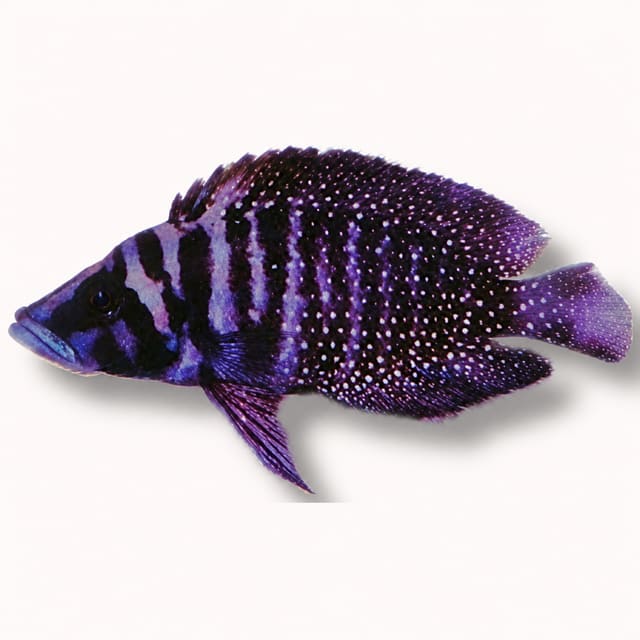
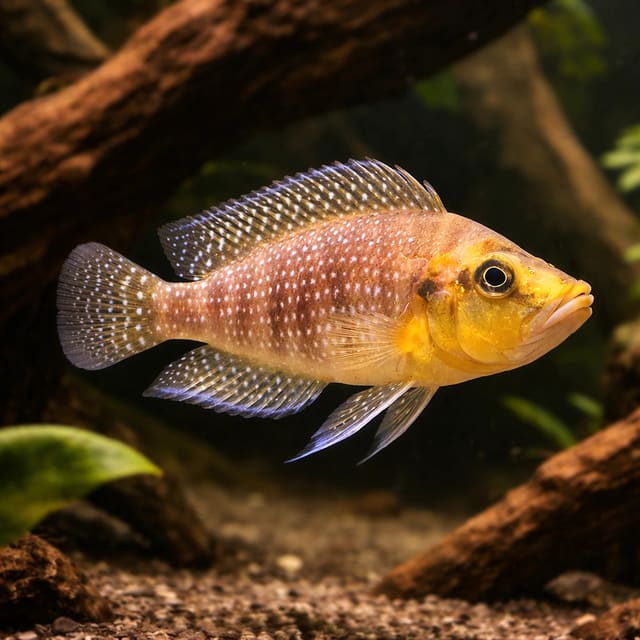
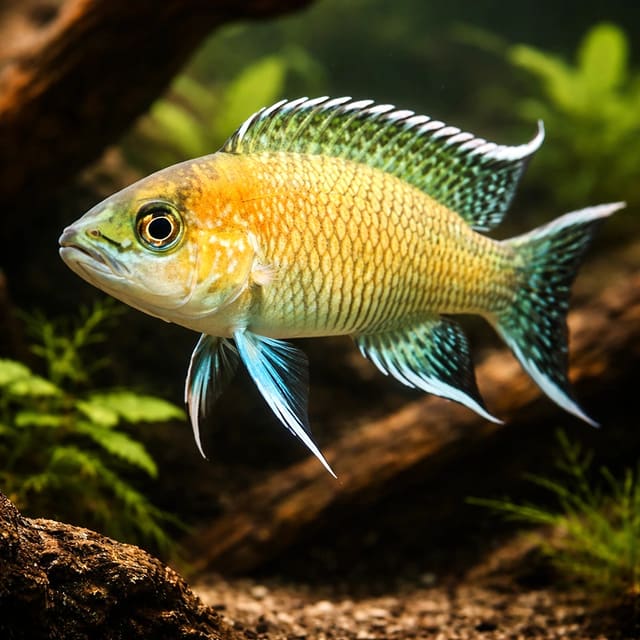
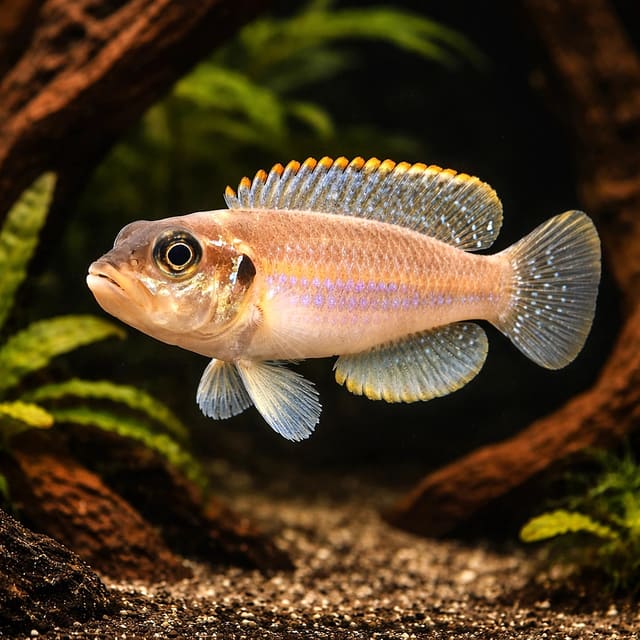
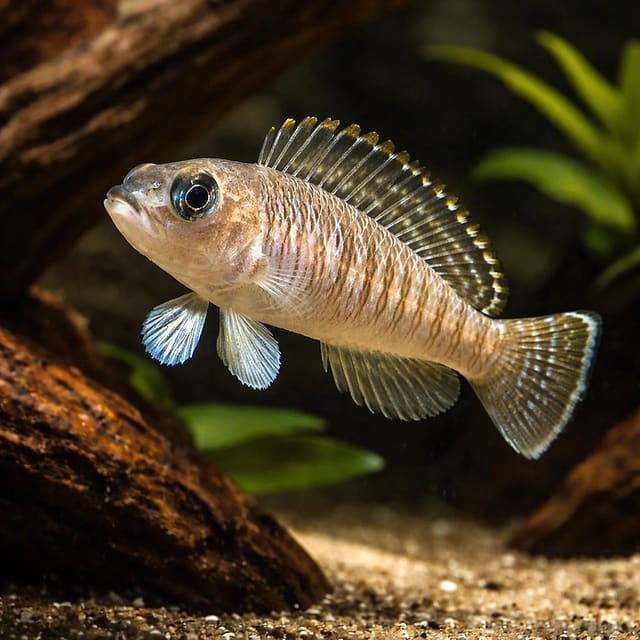
Altolamprologus compressiceps — Kigoma
23–27°C · pH 8–8.6
£20.99

Gold Head Compressiceps (Altolamprologus compressiceps) is a crevice-hunting Lake Tanganyika cichlid for an established hard-water aquarium. It is best planned around a compatible pair, secure rockwork, excellent water quality and a meaty diet; one purchase supplies one fish in the chosen size.
Altolamprologus compressiceps
Save when buying multiple fish. Each quantity is one fish; sex and pair formation are not guaranteed unless the selected variant explicitly states them.
Gold Head Compressiceps (Altolamprologus compressiceps) is a crevice-hunting Lake Tanganyika cichlid for an established hard-water aquarium. It is best planned around a compatible pair, secure rockwork, excellent water quality and a meaty diet; one purchase supplies one fish in the chosen size.
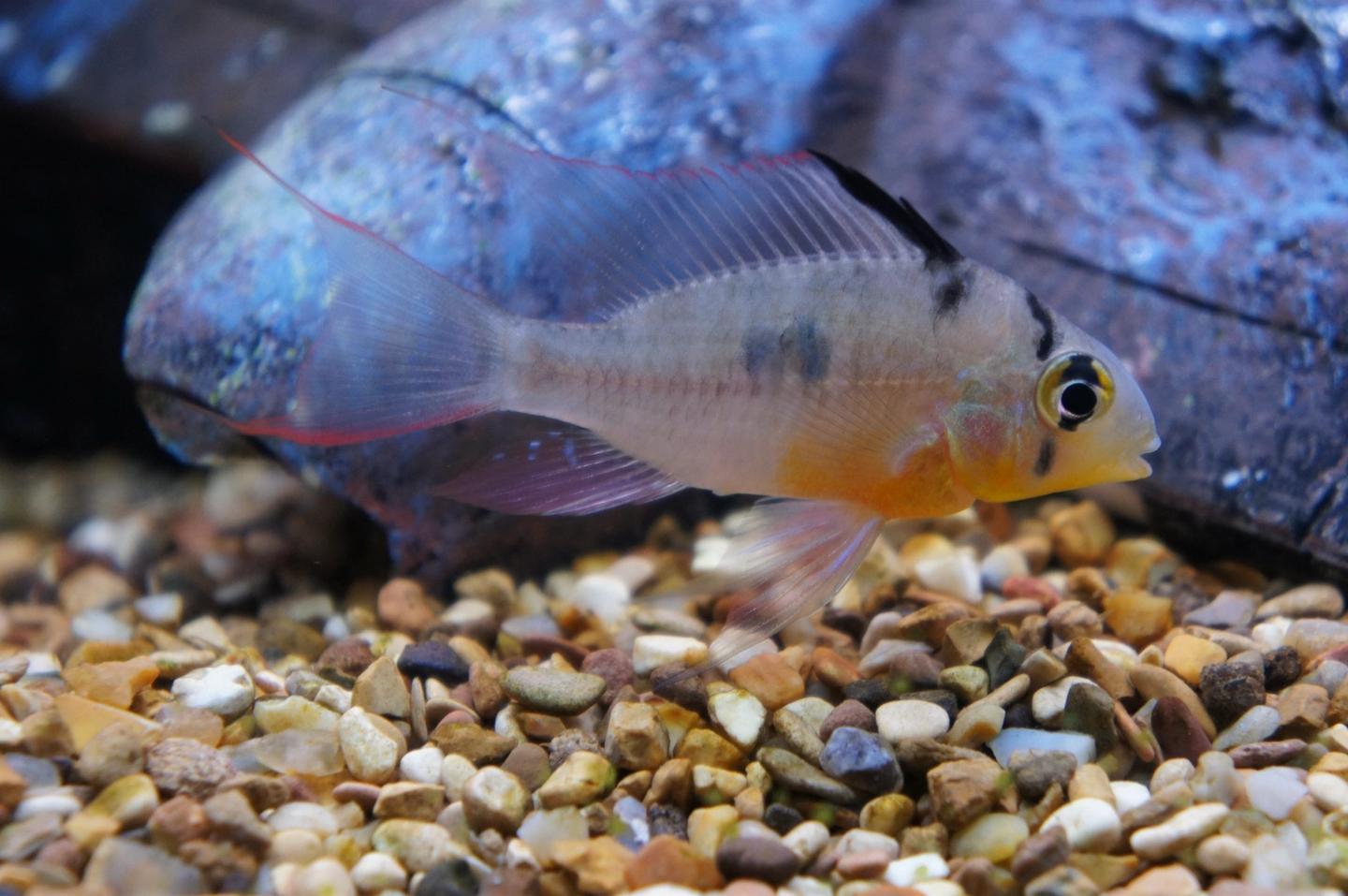
Cichlids are a family of roughly 1,800 accepted species, not one care type. Before buying, identify the exact species and source, then compare adult measurement, usable tank dimensions, social system, territory, tested water, diet and an exit plan. No family-wide minimum tank, water range or tank-mate list is safe.
Maintain these water conditions for optimal health and vibrant colors
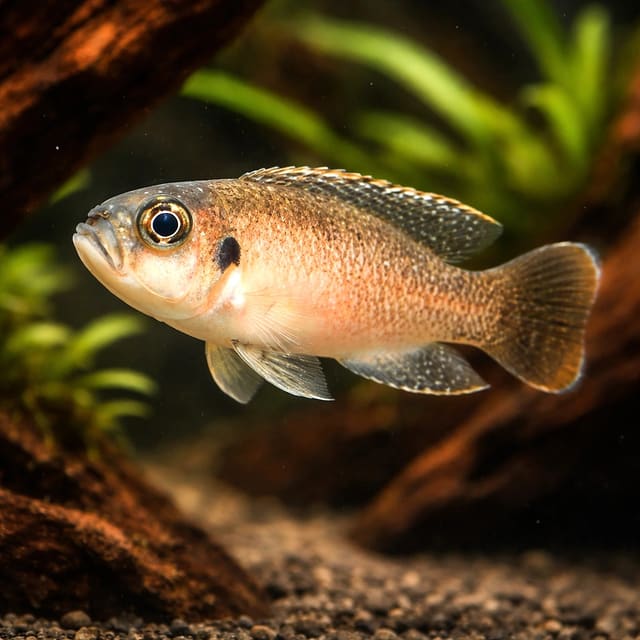
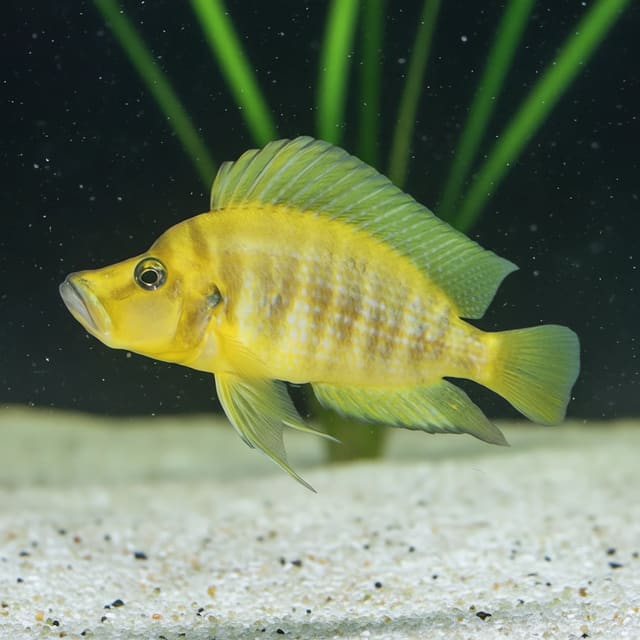
Gold Head Compressiceps is the golden-headed aquarium form of Altolamprologus compressiceps, a deep-bodied Lake Tanganyika cichlid adapted to working along rock faces and into narrow gaps. Its laterally compressed shape, deliberate movement and close attention to crevices make it a very different proposition from an open-water community fish. The attraction is not only colour: this is a patient ambush predator with purposeful behaviour, a specialised mouth and a strong relationship with the structure of its aquarium.
This listing supplies one live fish per purchase. The selectable sizes are 3–4 cm, 4.5–5.5 cm and XL. They describe the fish at dispatch, not its adult measurement. The size you select is the size supplied, not the adult size. Published adult records use two different endpoints: 12.3 cm total length (TL) and about 12.5 cm standard length (SL). Keep those figures separate rather than turning them into one maximum, and plan the aquarium around the adult fish's footprint, filtration and territory.
| Suits | Established Lake Tanganyika aquariums; keepers comfortable with hard alkaline water; a species-focused compatible pair; carefully planned Tanganyikan communities with substantial floor space and rock cover. |
|---|---|
| Not suited to | New or uncycled aquariums; soft acidic communities; tanks with fish small enough to be swallowed; Tropheus-style low-protein feeding plans; cramped rock piles with no retreat route. |
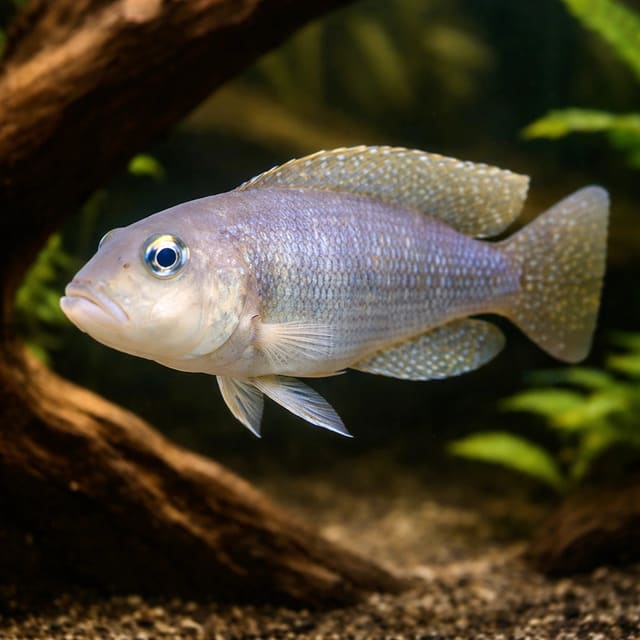
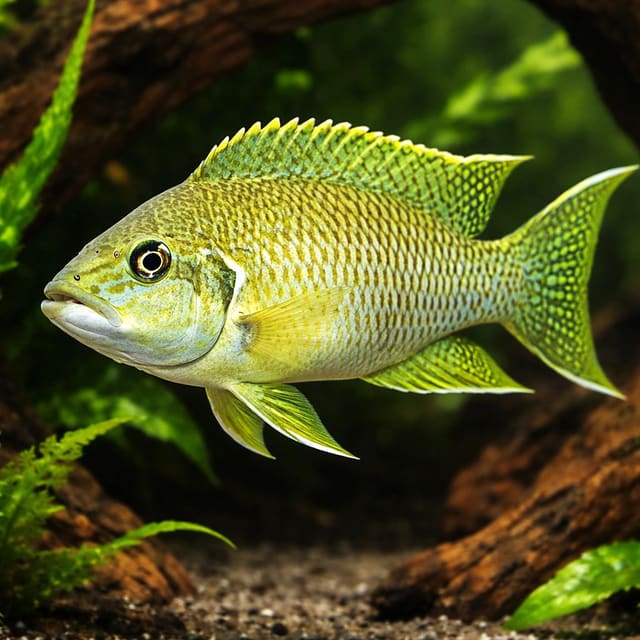
The scientific name is Altolamprologus compressiceps. “Gold Head” is the form name for this fish, not a separate species or a promise of exact collection locality. Colour, pattern and maturity vary naturally between individuals. The underlying species account covers identity and wild biology, while the aquarium care account gives practical footprint, feeding and social guidance.
Sex is guaranteed only when the selected option explicitly states male or female. This Gold Head Compressiceps listing has no sex-guaranteed option. Mature males are reported to grow larger and develop somewhat extended fins, but colour, size or a photograph is not a reliable promise of the sex of an individual juvenile.
Before choosing this fish, picture the aquarium after the juvenile has matured. The limiting features are not simply litres or a decorative cave: the fish needs a broad base, secure three-dimensional rock structure, clean oxygenated water, an appropriate carnivorous diet and a social arrangement that can be changed if compatibility fails. That makes it rewarding for an observant Tanganyika keeper, but a poor impulse addition to a general community. The right preparation is visible in the aquarium itself: stable test results, rockwork that cannot be undermined, several usable retreats, feeding access for each fish and a separate safe place available if a pair or community stops working.
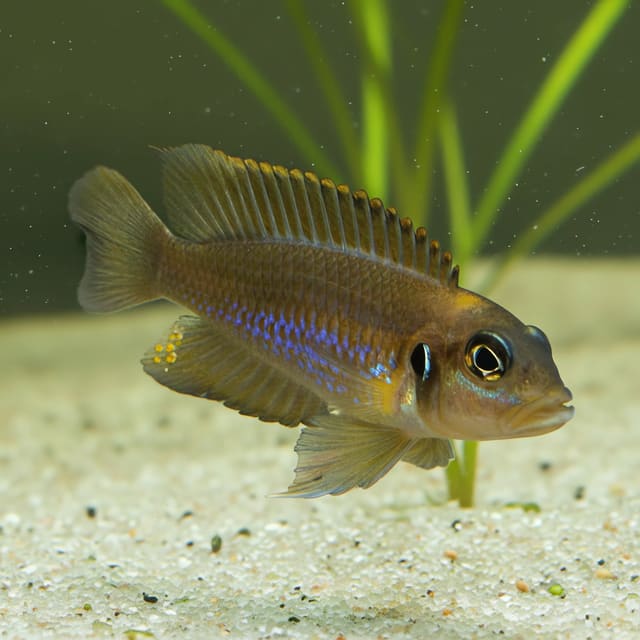
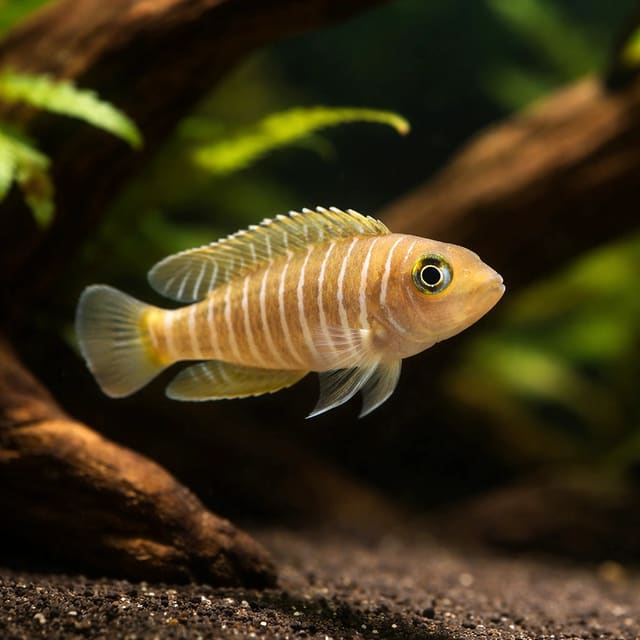
For other current African cichlid listings, browse the African cichlid collection; that collection link is a way to compare offers, not a compatibility recommendation. Gallery images have been digitally enhanced to improve image quality. Natural colour, pattern, size and maturity can vary between live animals.
Begin with footprint, not the juvenile's size at dispatch. Allow a minimum base of 120 × 45 cm or an equivalent usable area; the worked example for those dimensions is about 243 litres. This gives the fish room to hold a crevice, turn without brushing rock and move away from another cichlid. Extra height does not compensate for a short narrow base. If the aquarium will contain additional Tanganyikan fish, increase space for their adult bodies and territories rather than treating the species minimum as spare community capacity.
Measure the clear base after allowing for internal filter bodies, heaters and rock supports. A nominal 120 × 45 cm aquarium can lose useful territory when one end is crowded with equipment or when a single rock pile blocks every route. Sketch the layout from above before filling the tank. Leave a feeding area where both fish can be observed, several crevices that do not share one entrance, and an open route to a divider or net if separation becomes necessary. This practical check is more useful than relying on litres alone, because litres do not show whether a subordinate fish can leave cover without crossing the dominant fish's defended gap.
Use a mature, filtered aquarium. If this is a new system, follow the first tropical aquarium guide before arranging delivery. Cycling is shown by repeated water tests and a working biological filter, not by the number of days the aquarium has contained water. Ammonia and nitrite should remain at zero, and the filter must be able to handle the fish and the protein-rich feeding routine without leaving waste to accumulate.
A sandy substrate with complex piles of rock reflects the habitat and behaviour described for the species. Put load-bearing rocks directly on the aquarium base or an appropriate protective support before adding sand, so digging cannot undermine the structure. Build several stable passages and crevices rather than one decorative cave. Entrances should offer more than one route and the fish must not be able to wedge behind an unstable stone, heater or filter intake.
Keep sight breaks without turning the aquarium into a solid wall. A pair needs to move between feeding space, shelter and open water, while a community needs distinct routes that do not force every fish past the same defended gap. Inspect the structure during maintenance. A shifted stone, trapped waste pocket or narrowed escape route can change the social balance even when the fish have lived together for months.
Use 24–28 °C, pH 8.0–9.0 and 7–25 dGH as the practical aquarium range. Keep temperature, mineral content and alkalinity stable rather than making repeated corrections towards an edge value. Wild occurrence figures are not instructions to move a settled Tanganyikan aquarium towards softer, more acidic water.
Test the aquarium and the source water. The water chemistry guide explains what the readings mean, and the water matcher can help compare measured values with the stated range. Do not add buffers, salts or minerals simply because the species comes from Lake Tanganyika. Work from measured water, use products whose effects you understand, and make adjustments in controlled steps that will not shock the fish or destabilise the filter.
Keep ammonia and nitrite at zero, and keep nitrate no more than 20 mg/l above the tap-water level as set out in the OATA African lake cichlid guidance. Those are broad welfare limits; use the narrower species-specific range above for routine temperature, pH and hardness. Record results before and after maintenance; trends are more useful than a single isolated test.
For the roughly 243-litre example, four to five times nominal turnover corresponds to a filter rating around 970–1,215 litres per hour. Manufacturer ratings are only a starting point: media, lift height, pipework and clogging reduce real flow. Arrange the outlet so the surface moves and oxygen exchange is good without blasting the fish out of its chosen crevice. A separate air stone can add resilience in warm weather or during temporary filter work, but it does not replace biological filtration.
Excellent water quality may require weekly water changes of up to 50%; broad African-cichlid guidance starts at a 25% partial change each week. Use the aquarium's nitrate trend, stocking and feeding to set the actual change, then keep it consistent. Treat replacement water with a suitable conditioner, match temperature and chemistry closely, and siphon trapped food and waste from accessible sand without dismantling the fish's entire territory each week.
Rinse filter media lightly in removed aquarium water when it needs cleaning; do not wash established biological media under chlorinated tap water. Stagger disruptive maintenance so rockwork, filter biology and water chemistry are not all altered at once. The RSPCA aquarium environment guidance explains why a functioning biological filter is central to controlling toxic ammonia and nitrite.
Record temperature, pH, ammonia, nitrite and nitrate in a form that makes trends easy to see. A stable reading within the stated range is more useful than a single perfect-looking number followed by a rapid correction. Test again when feeding, stocking, source water or filter performance changes. If ammonia or nitrite appears, reduce further stress on the fish, check the filter and seek appropriate advice; do not assume a large chemical adjustment will repair the underlying biological problem.
Plan ordinary maintenance before choosing a permanent rock layout. You need access to siphon exposed sand, inspect the heater and intake, and remove trapped food without dismantling every refuge. Replacement water should be dechlorinated and closely matched for temperature and intended chemistry before it enters the aquarium. Small, understood adjustments are preferable to alternating between poorly prepared source water and heavy corrective dosing. Keep spare conditioner, a working thermometer and suitable test supplies available so the routine does not depend on an emergency shopping trip.
Temperature and circulation should be checked where the fish actually lives, not only beside the heater or filter outlet. Large rock structures can create quiet pockets, while a strong outlet can make another route unnecessarily difficult. Confirm that water moves through the aquarium, the surface remains disturbed for gas exchange and the fish can rest without fighting the current. Recheck those conditions after media cleaning, pipe changes or a moved rock alters the flow pattern.
The worked filter and heater figures above are planning examples for a roughly 243-litre aquarium, not universal shopping instructions. Real equipment choice depends on room temperature, aquarium dimensions, media and measured performance. Use a guarded, correctly rated heater arrangement and verify temperature with a separate thermometer. Select filtration for biological capacity and service access as well as headline flow, then maintain it often enough that oxygenation and circulation do not steadily decline between cleanings.
Altolamprologus compressiceps is a specialised carnivore. In the wild it takes invertebrates, crustaceans and smaller fish, and its mouth is adapted to reach into cracks. In the aquarium, use a nutritionally complete food appropriate for carnivorous cichlids as the dependable base, then vary it with safe live or frozen foods such as Artemia, bloodworm, Tubifex, chopped prawn or small earthworm where those foods suit the aquarium and are sourced responsibly.
Do not use live feeder fish. They can introduce parasites or disease and are unnecessary for a sound captive diet. Offer portions the fish can consume without leaving food in crevices, and make sure a shy partner gets access before a dominant fish takes everything. Judge quantity by body condition, feeding response and the aquarium's waste load rather than copying a rigid number of feeds for every age and temperature.
Observe the whole feeding sequence. A fish that approaches food but repeatedly retreats may be losing access to a partner or tank mate; a fish that takes food and spits it out may need a different particle size or a health check. Distribute suitable food so both members of a pair can reach it without forcing the weaker fish into a defended crevice. Remove leftovers that settle behind rocks, because hidden protein-rich waste can affect water quality even when the visible sand looks clean.
Use behaviour, breathing, fins, body profile and feeding response as a daily comparison with the fish's normal pattern. A change is a prompt to test water and inspect equipment, social access and recent husbandry, not a diagnosis by itself. Persistent hiding, rapid breathing, loss of balance, visible wounds or falling condition needs timely attention. Have a suitably heated, filtered separation system or safe divider available before it is needed, especially when keeping a pair or a structured Tanganyikan community.
New livestock should not be allowed to introduce an avoidable health problem to an established aquarium. Use separate equipment for quarantine where practical, keep its filter biologically supported and continue water testing there. Avoid transferring nets, siphons or wet decor between systems without an appropriate biosecurity routine. If treatment may be required, obtain advice that accounts for the fish, diagnosis, product label and UK rules rather than treating the display aquarium from a guessed symptom.
Review body condition from both sides and compare changes over time. A naturally compressed body shape should not be confused with weight loss, but a previously robust fish becoming pinched, failing to take food or remaining separated from its normal refuge deserves investigation. Photographs taken under consistent lighting can help document a change for a retailer or aquatic veterinary professional. They should support observation, not replace current water tests or an examination.
Prepare the aquarium, test it and make the rock structure safe before the parcel is opened. Be present for delivery. Before opening the parcel, begin a continuous unboxing video that shows the still-sealed parcel, the opening and the fish while it remains in the sealed bag. Inspect the fish the same day. Float the sealed bag for 20–30 minutes before release, follow the supplied directions and do not pour transport water into the aquarium.
Check the current delivery and Live Arrival Guarantee policy for the exact packing, receipt and claim steps. After release, keep observation calm and check breathing, balance and access to shelter. A fish that hides initially may still be alert, but persistent surface breathing, loss of balance, wounds or inability to feed needs prompt water testing and appropriate advice. Do not diagnose from one sign or add medication to the main aquarium without understanding the cause.
Gold Head Compressiceps is best maintained as a compatible pair, with groups reserved for larger aquaria. It is not considered especially territorial, yet that does not make it harmless to every tank mate. It is a predator capable of eating smaller fish, it uses rock crevices, and breeding changes how space is defended. Compatibility therefore depends on adult size, diet, water, territory and the aquarium's usable footprint.
| More workable plan | Why it helps |
|---|---|
| One compatible pair in a species-focused aquarium | Clear feeding and territory plan with fewer competing rock users. |
| Carefully selected Tanganyikan community in a larger tank | Shared hard-water needs can align when adult size, diet and space are checked species by species. |
| Several separated rock zones and open routes | A fish can retreat without being forced through one defended crevice. |
| Separation aquarium or divider ready | Persistent exclusion or injury can be addressed immediately rather than watched. |
Do not combine this cichlid with animals small enough to be considered food. Avoid Tropheus and other species whose health depends on a low-protein feeding plan: the carnivorous diet required here is a poor match. Soft-water community fish are also unsuitable because their chemistry target conflicts with the hard alkaline aquarium. Large forceful cichlids can injure or exclude it, while another rock-dweller may compete for exactly the same gaps even if both species are described as Tanganyikan.
Do not casually mix Malawi and Tanganyika cichlids: their behaviour, diets and space requirements can differ even when both prefer hard water. A lake name alone is still not enough. Check the exact species, adult size, diet, group structure and temperament. Shell-dwellers shown elsewhere in the shop are alternatives to compare, not automatic companions for this fish.
Feeding compatibility deserves the same attention as aggression. A community can appear peaceful while one species receives food that is inappropriate for its digestion or while the slower fish misses most meals. Gold Head Compressiceps needs a carnivorous plan; this is why a low-protein Tropheus community is specifically excluded. For any other proposed companion, compare the full diets, decide how each fish will reach suitable food and watch what is actually eaten rather than assuming one cichlid food suits every Tanganyikan species.
When a pair is settled, the female may use a cavity narrow enough that only she can enter. During crevice spawning, incubation lasts about three to five days; the female remains with the brood while the male leaves after fertilisation. That biology explains the need for secure crevices and extra observation around breeding; it is not a promise that two unsexed fish will form a compatible pair or breed.
Groups require more than multiplying the pair plan. A larger aquarium must contain several defensible structures, open routes between them and enough feeding access that one fish cannot control every useful place. Observe at different times of day, including feeding and maintenance, because exclusion may be missed when the aquarium is viewed briefly. If one fish cannot leave cover, loses condition or accumulates damage, use the prepared separation option instead of repeatedly rearranging the same limited space.
Adult records give 12.3 cm total length (TL) and about 12.5 cm standard length (SL). TL includes the tail fin while SL does not, so keep the figures separate rather than turning them into one 12–13 cm maximum. The dispatch size is a juvenile supply size, not an adult measurement.
Allow a base of at least 120 × 45 cm; the worked example for that footprint is about 243 litres. The fish needs stable rock structures, crevices and room to move away from another cichlid, so a tall narrow aquarium is not an equivalent substitute.
A single compatible pair is the clearest starting plan. Groups need a substantially larger aquarium, several usable rock zones and a safe separation plan if one animal is excluded or persistently pursued.
It is better suited to a keeper already comfortable with mature filtration, hard alkaline water, substantial rockwork and cichlid behaviour. A new keeper can succeed after preparing those conditions, but it is not a sensible fish for cycling a new aquarium or learning water testing after livestock arrives.
It is a specialised carnivore. Use a suitable complete carnivorous cichlid food and vary it with safe live or frozen invertebrate foods such as Artemia, bloodworm or chopped prawn. Do not use feeder fish: they add parasite risk and are not needed for a balanced captive diet.
Use 24–28 °C, pH 8.0–9.0 and 7–25 dGH. Keep the aquarium stable within that hard, alkaline range, confirm ammonia and nitrite remain at zero, and change conditions gradually rather than chasing a number with unmeasured additives.
It is not considered especially territorial, but it is still a predatory cichlid and breeding or confined fish can defend access to crevices. Rock layout, footprint, feeding access and the behaviour of the actual fish matter more than a simple peaceful or aggressive label.
A carefully chosen Lake Tanganyika community can work in a sufficiently large, structured aquarium. Avoid animals small enough to be treated as food and avoid Tropheus or other fish that need a low-protein diet; also check adult size, water overlap and competition for rock refuges before mixing species.
Tropical Fish Co uses protective live-fish packing and a licensed live-animal courier under its current delivery policy. Be present to receive the parcel, make a continuous unboxing video from the still-sealed parcel through to the fish in the sealed bag, inspect it the same day and contact the shop promptly with the order number if there is a problem.
For deeper background, consult the FishBase species summary, the Seriously Fish aquarium account, OATA's African lake cichlid care sheet, RSPCA aquarium-welfare guidance and Tropical Fish Co's current delivery policy. The practical advice on this page keeps adult TL and SL measurements separate, treats wild occurrence values as context rather than a captive target, and keeps dispatch size distinct from adult growth.
No lifespan, exact future colour, breeding result, collection locality or sex is promised. The listing supplies one unsexed fish in the selected dispatch size.
No reviews for this item yet. Bought one? Honest reviews only, good or bad.
What customers say about ordering from us
I have a small group of long finned mountain minnows. So was delighted to be able to order ten of this variety to increase the genetics in my tank . The ones I recieved are healthy but it’s to early to give a verdict on wether they are of a long finned type since they are small currently.
Gordon Walker · 23 Sept 2026
100% success travel and "installation". Pleased with quality of purchase. The Siamese fighter a bit "shy" so have not yet seen him at his best yet but looking good. Happy customer. GG
George E Garratt · 21 Sept 2026
Reviews of our shop, collected by Judge.me, an independent third-party review collector. Newest first.