−13%
Moderate
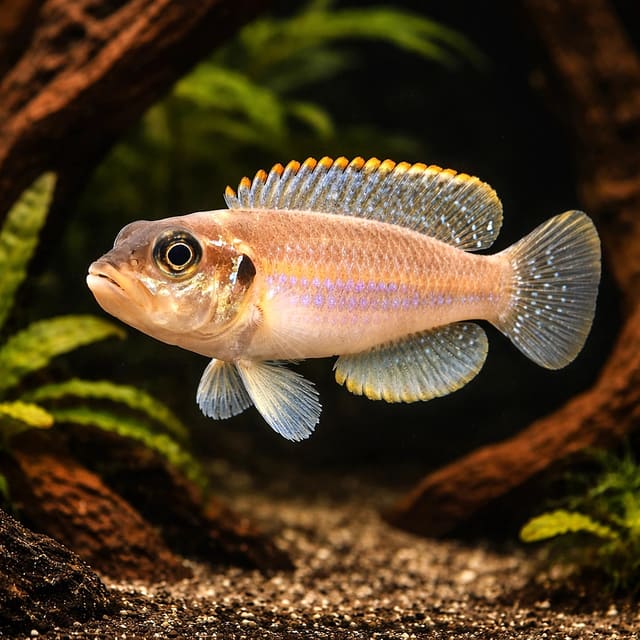
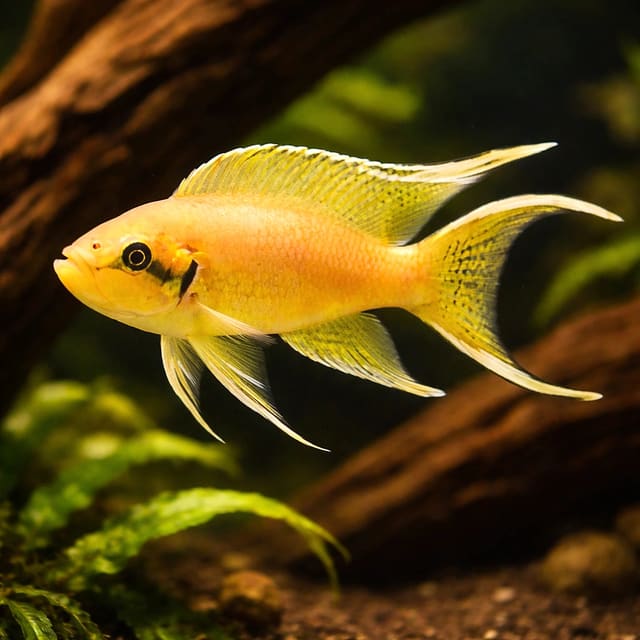
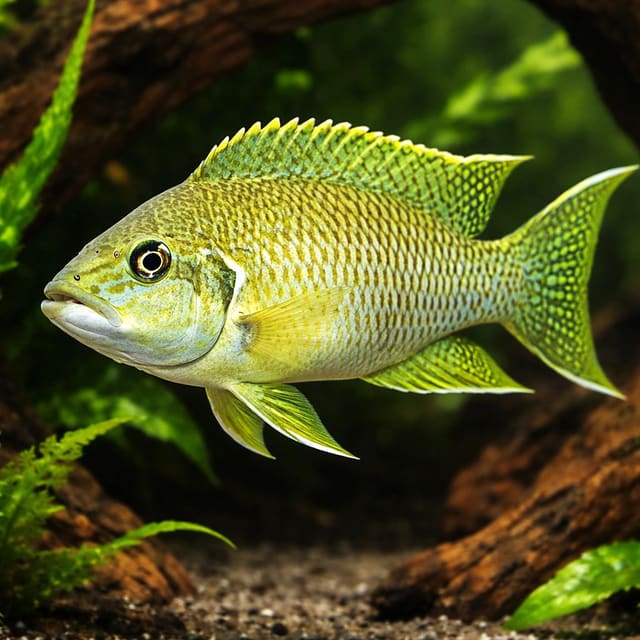
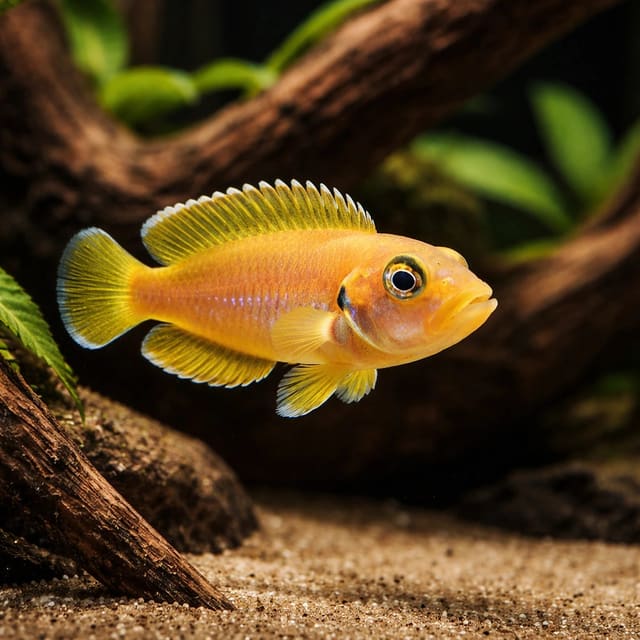
Gold Ocellatus Shell-Dweller (Neolamprologus ocellatus)
23–25°C · pH 8–9
£17.39£19.99

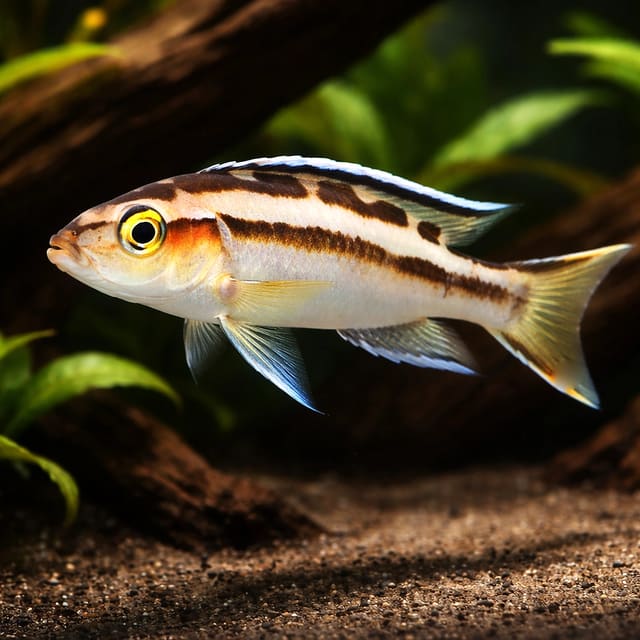
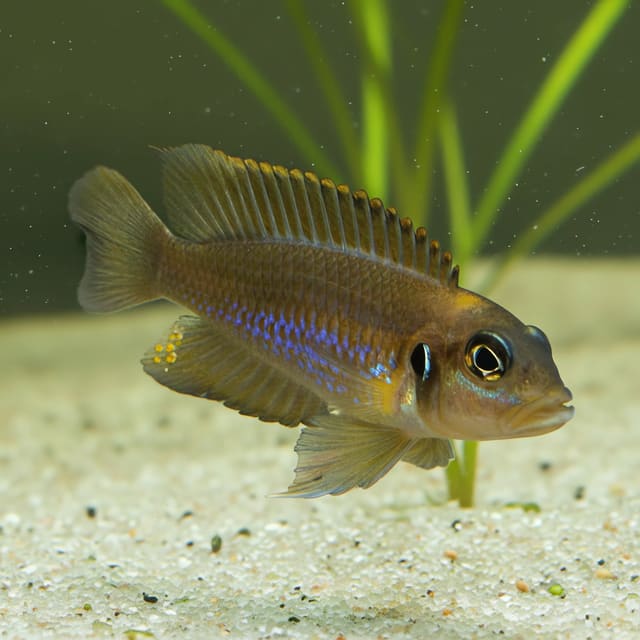
Multifasciatus Cichlid (Neolamprologus multifasciatus) is a tiny Lake Tanganyika shell-dweller sold individually in three dispatch sizes. Allow about 40 litres for a pair and a larger aquarium for a colony, with fine sand, more shells than fish and stable hard alkaline water.
Neolamprologus multifasciatus
Save when buying multiple fish. Each quantity is one fish; sex and pair formation are not guaranteed unless the selected variant explicitly states them.
Multifasciatus Cichlid (Neolamprologus multifasciatus) is a tiny Lake Tanganyika shell-dweller sold individually in three dispatch sizes. Allow about 40 litres for a pair and a larger aquarium for a colony, with fine sand, more shells than fish and stable hard alkaline water.
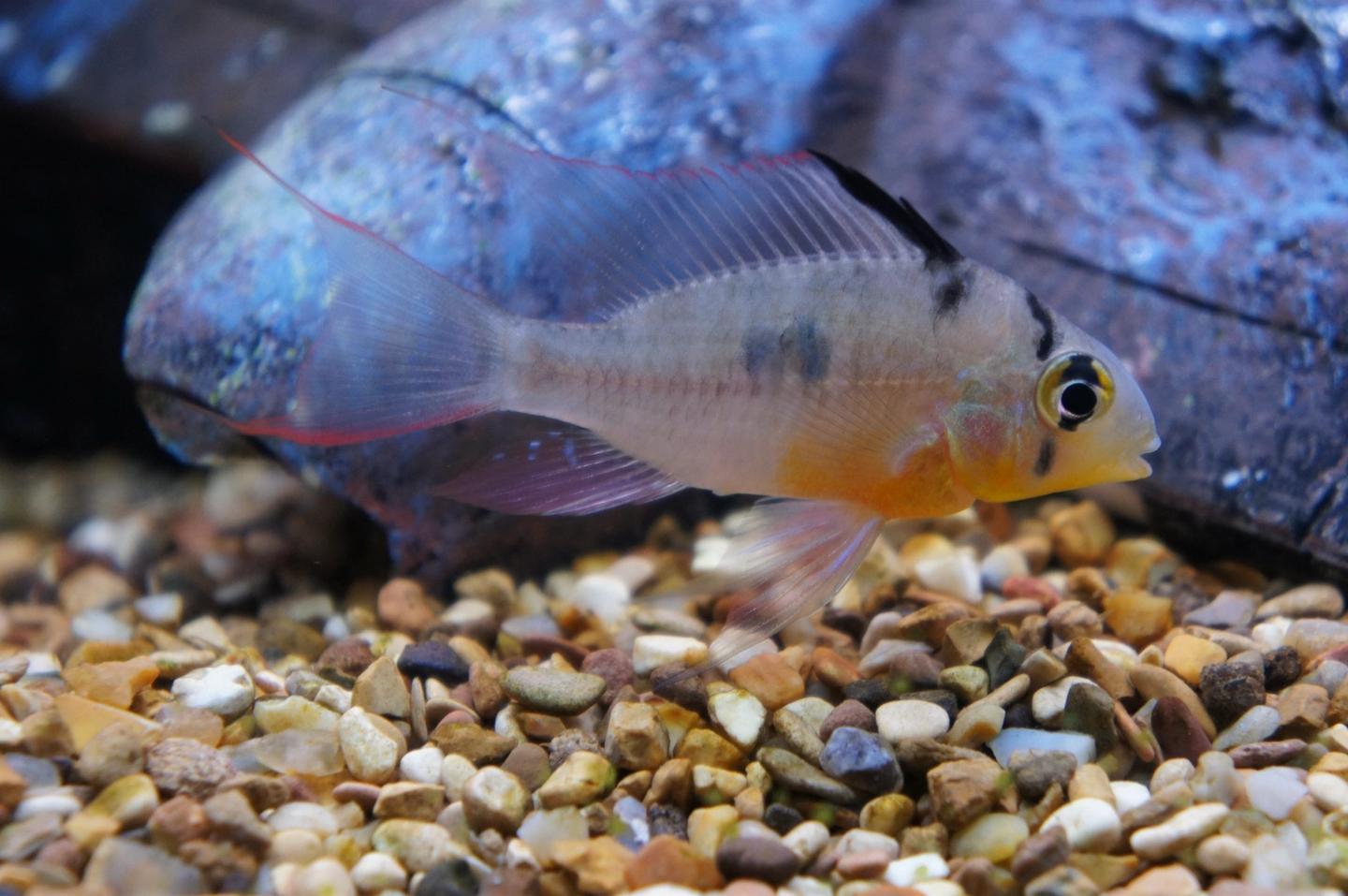
Cichlids are a family of roughly 1,800 accepted species, not one care type. Before buying, identify the exact species and source, then compare adult measurement, usable tank dimensions, social system, territory, tested water, diet and an exit plan. No family-wide minimum tank, water range or tank-mate list is safe.
Maintain these water conditions for optimal health and vibrant colors
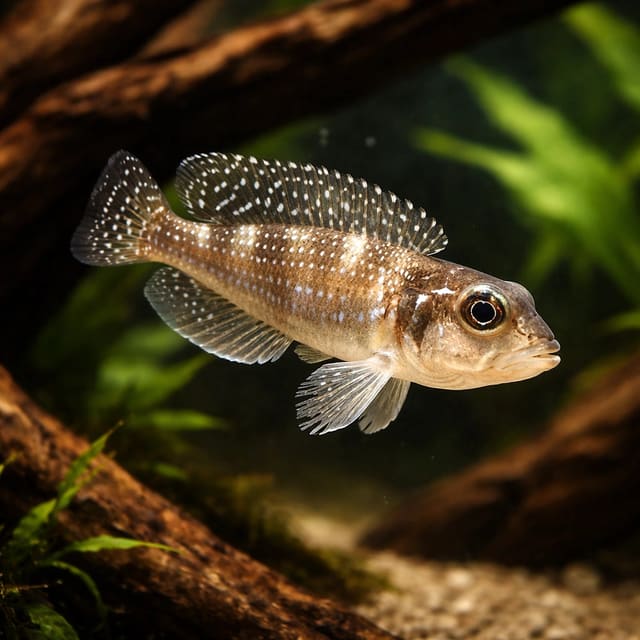
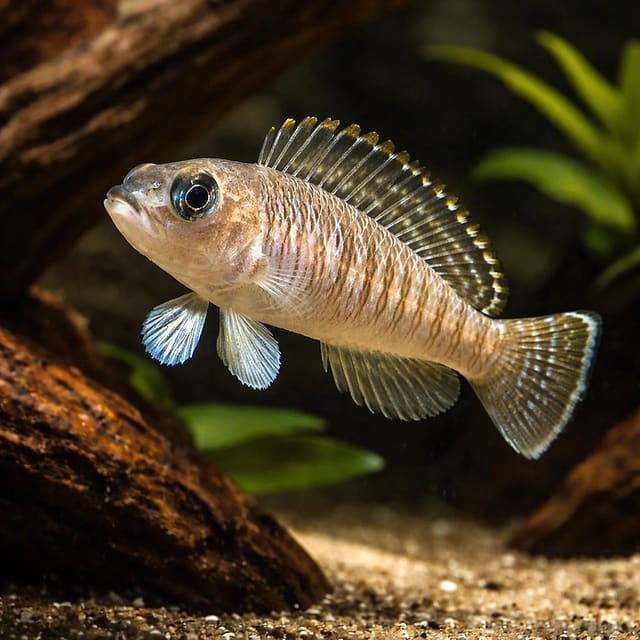
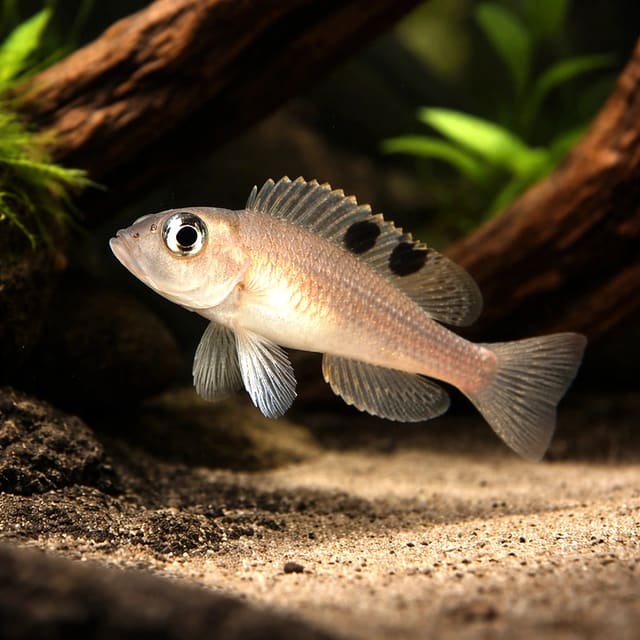
Multifasciatus Cichlid (Neolamprologus multifasciatus) is a tiny, shell-dwelling cichlid found only in Lake Tanganyika. It is also sold as a Multi Shell-Dweller or Many-Banded Dwarf Lamprolog and lives in groups over beds of empty snail shells. Each fish maintains a home shell, excavates sand around it and helps defend the colony's wider territory. This is a small fish with unusually complex behaviour, not a generic peaceful community species.
The scientific name used here is Neolamprologus multifasciatus; older aquarium material may call the same fish Lamprologus multifasciatus. Its compact size makes a specialist Tanganyika aquarium possible without a very large tank, but the setup must provide hard alkaline water, a broad sandy footprint and more usable shells than fish.
This listing is priced per fish. Choose the dispatch size and then the number of fish required. Fish are not sold as sexed or bonded pairs, and ordering two does not guarantee one male and one female. For the most natural social structure, plan a properly sized colony rather than relying on an unconfirmed pair.
| Scientific name | Neolamprologus multifasciatus (Boulenger, 1906) |
|---|---|
| Common names | Multifasciatus Cichlid, Multi Shell-Dweller, Many-Banded Dwarf Lamprolog |
| Family | Cichlidae |
| Natural range | Endemic to Lake Tanganyika, East Africa |
| Adult size | 4.0 cm total length (TL); 45 mm standard length (SL). These are separate measurement conventions. |
| Care level | Intermediate: specialist water, shell habitat and territorial planning are required |
| Social behaviour | Territorial colony cichlid; each individual defends a home shell |
| Recommended aquarium | 40 litres for a pair; a larger aquarium is required for a colony |
| Temperature | 24-27°C; keep the chosen value stable |
| pH | 7.5-9.0 |
| Hardness | 8-25 dGH |
| Diet | Appropriately small live, frozen and quality dried foods |
| Tank region | Bottom zone and shell bed |
The selected size describes the fish's approximate dispatch length, not its adult size or a pack quantity. Natural variation is normal, so measurements are a useful band rather than a millimetre guarantee.
| Dispatch option | What it means |
|---|---|
| 2-3 cm | A young fish with further growth expected |
| 3-4 cm | A larger juvenile or near-adult fish |
| Over 4 cm | A fish dispatched above 4 cm; maturity and sex are not guaranteed |
Choose the dispatch size that suits the planned group and aquarium; each purchase supplies one fish.
Neolamprologus multifasciatus is a strong choice when the aquarium is designed around the species. It is a poor choice when it is being added to an ordinary mixed community simply because it stays small. Size does not cancel a cichlid's territorial instincts or Lake Tanganyika water requirements.
| Suits | Not suited to |
|---|---|
| A mature aquarium whose footprint fits the intended pair or colony | A tiny decorative bowl or an uncycled nano tank |
| Hard, alkaline, mineral-stable water | Soft acidic water for tetras, rams or blackwater species |
| Fine sand and more usable shells than fish | A planted layout where the substrate must remain undisturbed |
| A shell-focused stocking plan with room for colony growth | A reliably placid bottom-dweller for a crowded community |
| Small foods that reach the shell zone | A fish that can compete with fast, boisterous feeders |
If this is your first African cichlid project, read our cichlid care guide and aquarium water chemistry guide before ordering. The fish is manageable; the specialist setup is the part that requires planning.
The size you select is the size supplied, not the adult size. The 2–3 cm, 3–4 cm and over-4 cm choices all represent one fish per purchase; sex is unselected.
Sex is guaranteed only when the selected option explicitly states male or female. This Multifasciatus Cichlid listing has no sex-guaranteed option.
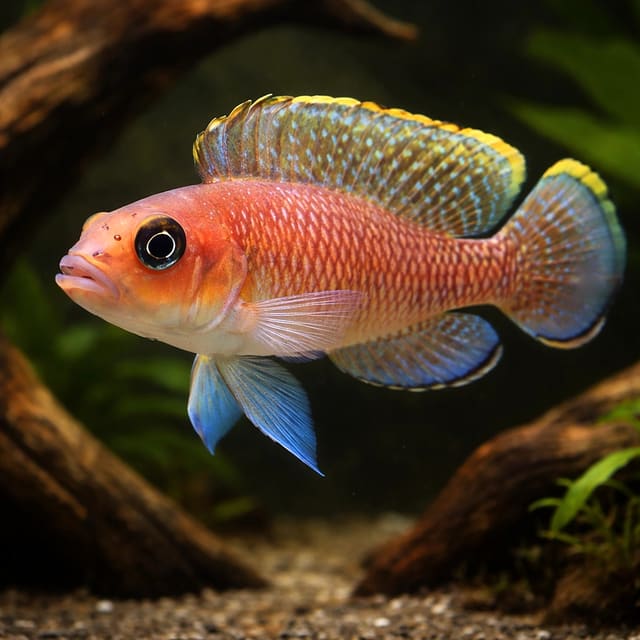
Gallery images have been digitally enhanced to improve image quality. Natural colour, pattern, size and maturity can vary between live animals.
Explore the African cichlid collection only after checking that every candidate shares the same water, space and territorial plan.
Neolamprologus multifasciatus is endemic to Lake Tanganyika. It lives over shell beds in hard alkaline water, gathers in groups and feeds on plankton passing above the colony. Individuals and close neighbours occupy very small territories centred on their shells.
A settled colony can look social without behaving like a placid community. Each resident still needs a refuge, room to feed and space around its shell. Territorial displays are most intense in the bottom zone, so a keeper must judge success by access to shelter and food rather than by the number of fish sharing the aquarium.
Allow 45 × 30 × 30 cm, about 40 litres, for a pair and use a larger aquarium for a colony. Treat that as a pair benchmark rather than a universal answer for every group. The species spends most of its time close to the bottom, so usable shell-bed frontage matters more than unused height.
A compact species aquarium still needs active population management. Multifasciatus cichlids breed readily when settled, and juveniles often remain within the family territory. Watch the number of occupied shells, the intensity of boundary disputes and whether smaller fish can feed without being pinned into a corner. Be ready to move young fish or upgrade the aquarium as the colony expands.
For a mixed Lake Tanganyika display, move well beyond the minimum. Upper-water companions need their own group size, swimming length and escape routes, while the shell colony still needs an uninterrupted bottom territory. Add the requirements together rather than treating the shell bed as unused space beneath another species.
Mark the intended shell field on the empty aquarium base before adding substrate. Leave a clear margin around filter intakes, heaters and rock supports so residents are not forced to defend a refuge beside equipment. The finished layout should let a subordinate fish reach food and cover without crossing every established territory. This top-down planning is especially important in shallow tanks, where a small change in rock or shell position can remove a large share of the usable frontage even though the nominal water volume has not changed.
Shells are not optional decoration. The species lives and breeds in empty snail shells, so provide more usable shells than individual fish. Provide intact shells whose openings allow the fish to enter and retreat fully; remove sharp or unstable pieces rather than counting them as usable refuges.
Provide more suitable shells than fish, with spare choices distributed across the full base. Spare choices reduce the need for every new or subordinate resident to challenge an established shell owner before it can find cover.
Clean escargot-style shells are commonly used because their shape and aperture work well. Exact shell species matters less than safety, internal space and the fish's ability to disappear completely. Do not glue residents into a fixed aquascape: one of the pleasures of keeping multies is watching them excavate and reposition their neighbourhood.
Use smooth, fine sand that can be carried in the mouth without abrasion. Use a sand bed about 5 cm deep so residents can bury shell edges and build ridges. Coarse gravel blocks this behaviour, traps food between large grains and can damage mouths during excavation.
Keep the main shell field open. If rocks are used, place them securely on the tank base before adding sand so digging cannot undermine them. Rock piles belong at the back or side and must not steal the floor area needed for territories. Avoid unstable structures over the shell bed.
Plants are optional. Hardy species attached to rock or wood can survive the hard water, but rooted plants may be exposed, buried or moved as the fish dig. A planted background can look attractive; it should not replace sand and shells or lead to soft, acidic water chosen for the plants. Choose the aquarium layout around the fish: fine sand, open shell space and stable hard alkaline water remain the priorities.
Lake Tanganyika is mineral-rich and alkaline. The everyday goal is not to chase the highest possible pH; it is to maintain a stable combination of pH, GH and KH that does not collapse between water changes.
| Parameter | Working range |
|---|---|
| Temperature | 24-27°C |
| pH | 7.5-9.0 |
| General hardness | 8-25 dGH |
| Ammonia / nitrite | 0 mg/L |
| Nitrate | Keep low and stable |
Test tap water before buying additives. Many hard-water areas of the UK may already provide a useful starting point, while naturally soft-water regions usually need a measured remineralisation plan. Do not raise pH with a quick chemical buffer while ignoring GH and KH. Sudden swings are more dangerous than a stable value near the lower end of the suitable range.
Choose mature biological filtration with good oxygen exchange and no harsh jet directed across the shells. An air-driven sponge filter works well in a species tank and protects small fry. An internal or external filter can also work when the intake is guarded and the return is diffused. The whole tank should circulate, but residents should be able to hover at shell entrances without fighting the current.
Cycle the aquarium fully before livestock is added. Test ammonia and nitrite rather than relying only on the number of weeks the tank has been running. Once stocked, use a consistent maintenance routine:
Make parameter changes gradually and prepare replacement water consistently. A repeatable 8.0 pH is safer than repeatedly pushing the aquarium between 8.0 and 9.0 in pursuit of a perfect number.
Several fish can form a colony, but the sensible number depends on floor area, shell supply and the territories already occupied. Buying two unsexed fish does not create a guaranteed pair. Build the group only where every resident can reach a refuge and food, and retain room for later young.
Do not assume more fish automatically reduces aggression. In a shell colony, density works only while every resident can claim a usable refuge and reach food. A fish hovering high in a corner, breathing rapidly or being prevented from entering the shell zone is not participating comfortably in the colony.
Adding a mature fish to an established colony can be more difficult than introducing juveniles together. Rearrange a small number of unused shells only when necessary, add extra refuges before the newcomer arrives and observe closely. Never remove an occupied shell without checking it for a fish, eggs or fry.
Wild N. multifasciatus take plankton drifting above the colony. In the aquarium, offer small foods that sink or circulate into the lower water without dropping large amounts between shells. "Omnivore" is too vague to guide a good diet for this species.
| Food | Role |
|---|---|
| Appropriately small live foods | Useful variety |
| Appropriately small frozen foods | Useful variety |
| Quality dried food of a suitable size | Accepted alternative |
| Oversized food that misses the shell zone | Poor fit |
Offer small portions that the colony can finish within a few minutes, up to twice daily, adjusting quantity to body condition and water quality. Spread food so subordinate fish can eat without crossing every territorial boundary. Remove persistent leftovers. A small aquarium can be polluted by a "tiny pinch" surprisingly quickly when particles settle where a siphon cannot easily reach.
The species is a shell brooder, and several females may occupy the territory of one male. An order of two unsexed fish must therefore not be treated as a guaranteed pair. A settled colony can grow; keep checking whether filtration, shell supply and usable floor area still match the number of residents.
Young fish are difficult to sex reliably, and adults are distinguished partly because males grow larger. Dispatch size alone therefore does not establish sex. This listing remains unsexed unless an option explicitly says otherwise.
Do not use the 40-litre pair benchmark as a permanent allowance for an expanding colony. Count occupied territories, watch feeding access and preserve more shells than fish. If usable floor area becomes crowded, a larger aquarium or a carefully planned reduction in the group is needed; adding height does not create more shell frontage.
Individuals vary naturally in colour, markings, proportions, size and maturity. Do not use colour intensity or the width of vertical bars as a sex guarantee, especially in young fish.
Adult records give 4.0 cm total length (TL) and 45 mm standard length (SL). TL includes the tail fin while SL ends at the caudal peduncle, so the figures must remain separate. Adult males can grow larger than females, but young fish are difficult to sex reliably and dispatch length alone is not a dependable sexing method; no size choice promises sex.
Prepare the aquarium before delivery. Keep the shell bed, heater, filtration and tests ready, and arrange for someone to receive the parcel. Before opening, record a continuous unboxing video that shows the sealed parcel, the opening and the fish still inside the sealed bag; this is the evidence needed for a Live Arrival Guarantee claim.
Read the current delivery and Live Arrival Guarantee policy before the parcel arrives.
| Observation | What to check first |
|---|---|
| Rapid breathing or fish at the surface | Ammonia, nitrite, temperature and oxygen |
| One fish kept away from all shells | Shell count, usable floor space and aggression |
| Food left between shells | Particle size and portion |
| Faded bars and persistent hiding | Recent disturbance, tank mates and water stability |
| Swelling, stringy waste or refusal to eat | Diet, water quality and possible disease |
| Colony suddenly more aggressive | New brood, crowding or lost territory |
A new keeper can use the first tropical tank guide to understand maturation, then use the water chemistry guide and water matcher to compare measured tap and aquarium values with the hard-water brief.
Start with the intended social arrangement. The 40-litre, 45 × 30 × 30 cm example is a pair benchmark, not a colony allowance or a promise that every aquarium of that nominal volume has the same usable base. A colony needs a larger aquarium, more bottom area and more shells than fish. Place the shells across fine sand before choosing a group size, then check that every fish could reach a refuge without crossing the whole territory.
Next, test the actual source water. Use 24–27°C, pH 7.5–9.0 and 8–25 dGH. These figures work together as a hard, alkaline brief. Choose stable values inside them that can be reproduced at water changes rather than repeatedly altering the aquarium to chase an extreme. The biological filter must already be established because water that looks clear can still contain harmful ammonia or nitrite.
Finally, plan how food will reach the fish. Wild fish take plankton, while captive fish accept appropriately sized live, frozen and good-quality dried foods. Distribute small portions near several territories so one resident does not intercept everything. Check for food trapped among shells and adjust the portion or particle size when waste remains. This feeding pattern, the open shell frontage and the water tests should all be workable before the fish is ordered.
For deeper background, see the species account for natural range, feeding ecology and the 4.0 cm TL record, and the aquarium care account for the 45 mm SL record, shell-bed layout, water and pair-space guidance. TL and SL remain separate because they are not interchangeable measurements.
For wider welfare practice, consult the OATA African lake cichlid care sheet and RSPCA aquarium guidance on mature biological filtration.
At the compact pair benchmark, a species-focused aquarium is the clearest arrangement. Multifasciatus cichlids are not community-safe in the usual soft-water sense. They defend the bottom zone, and their hard alkaline requirements exclude many familiar tetras, dwarf South American cichlids and planted-community fish before behaviour is even considered.
| Possible arrangement | Assessment |
|---|---|
| Multifasciatus species tank | Preferred |
| Upper-water Tanganyika species | Advanced option |
| Another shell-dwelling species | Avoid in compact tanks |
| Large or predatory cichlids | Avoid |
| Soft-water community fish | Avoid |
A larger Tanganyika community can work only when the shell bed remains an uninterrupted territory and the other fish occupy different areas. Possible companions in a suitably planned aquarium include small rock-dwelling Neolamprologus brichardi, smaller Julidochromis and open-water Cyprichromis. These are conditional examples, not universal companions: each species brings its own group, swimming-space and aggression requirements.
Keep Malawi cichlids and ordinary soft-water community fish out of this plan. Avoid other shell-dwellers in a compact setup because they compete for the same bottom zone. Large or predatory cichlids can intimidate adults and take young. A mixed aquarium therefore needs more room than either species would use alone, plus clearly separated rock, open-water and shell territories.
Adult records give 4.0 cm total length (TL) and 45 mm standard length (SL). TL includes the tail fin while SL does not, so the figures must stay separate rather than becoming one 4.5 cm maximum. The selected dispatch size is not an adult-size guarantee.
Allow 45 × 30 × 30 cm, about 40 litres, for a pair and use a larger tank for a colony. Floor area for the shell bed matters more than height, and any mixed Tanganyika community needs substantially more space.
Several can form a colony, but there is no fixed purchase number that fits every footprint. Keep more usable shells than fish, avoid relying on two unsexed fish to form a pair, and increase the group only while each resident can reach shelter and food.
It suits a prepared keeper who can maintain hard alkaline water, a mature filter, fine sand and a shell-centred territory. Its small size is convenient, but its water chemistry and social behaviour make it an intermediate rather than casual community choice.
Wild fish take plankton passing above the colony. In an aquarium, use appropriately small quality dried foods alongside small live or frozen foods, offering portions that residents can collect near their territories without leaving persistent waste.
Use 24–27°C, pH 7.5–9.0 and 8–25 dGH. Keep the chosen values stable, test the source water and aquarium, and avoid rapid chemical swings while trying to reach a particular number.
It is territorial around its shell and can chase intruders from a small defended area. The main risk is bottom-territory conflict rather than a general fin-nipping habit, so supply spare shells and watch that every fish retains refuge and feeding access.
In a much larger specialist Tanganyika aquarium, possible types include smaller Julidochromis rock-dwellers and open-water Cyprichromis. A compact pair or colony setup is clearer as species-focused, without competing shell-dwellers or soft-water fish.
Tropical Fish Co hand-packs live fish in oxygen with insulation and a heat pack when conditions call for it, then uses a licensed live-animal courier. Be present, record a continuous unboxing video from the sealed parcel through opening, float the sealed bag for 20–30 minutes and contact the shop the same day if a claim is needed.
For deeper background, consult the FishBase species account, the Seriously Fish aquarium care account, OATA's African lake cichlid care sheet, RSPCA aquarium-welfare guidance and Tropical Fish Co's current delivery policy. Adult records of 4.0 cm TL and 45 mm SL remain separate because they use different endpoints.
This listing supplies one unsexed fish in the selected dispatch size. The 40-litre figure is a pair benchmark, not a colony allowance; a colony requires a larger aquarium, more usable bottom area and more shells than fish.
No reviews for this item yet. Bought one? Honest reviews only, good or bad.
What customers say about ordering from us
I have a small group of long finned mountain minnows. So was delighted to be able to order ten of this variety to increase the genetics in my tank . The ones I recieved are healthy but it’s to early to give a verdict on wether they are of a long finned type since they are small currently.
Gordon Walker · 23 Sept 2026
100% success travel and "installation". Pleased with quality of purchase. The Siamese fighter a bit "shy" so have not yet seen him at his best yet but looking good. Happy customer. GG
George E Garratt · 21 Sept 2026
Reviews of our shop, collected by Judge.me, an independent third-party review collector. Newest first.