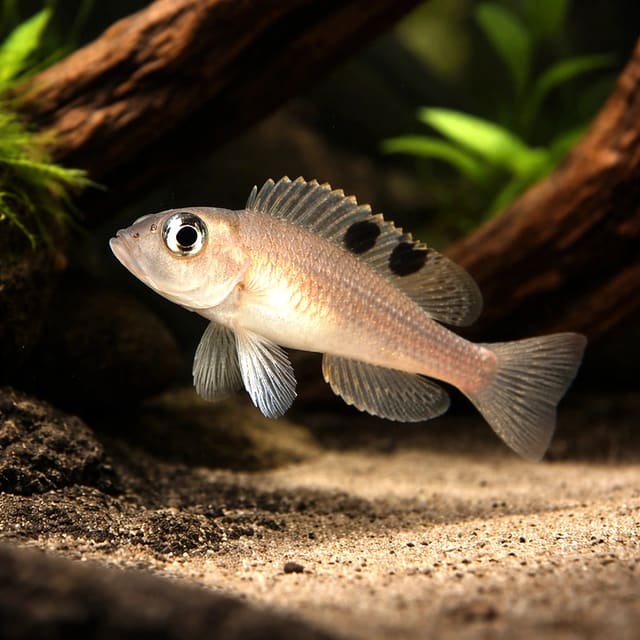
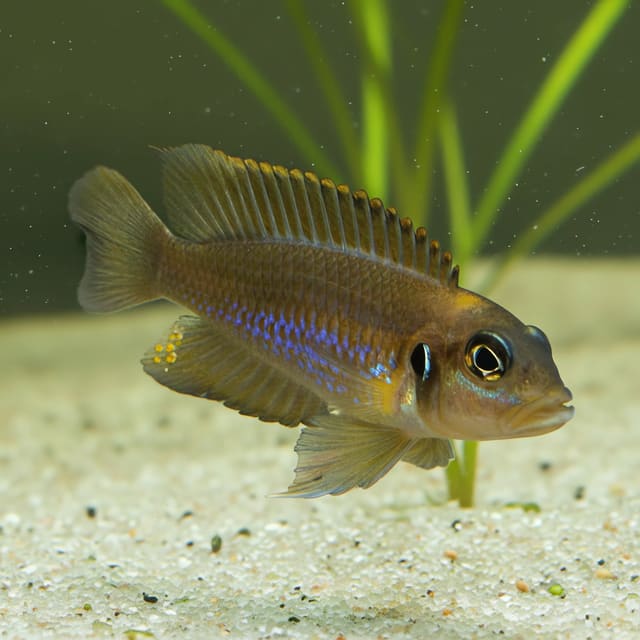
Altolamprologus compressiceps — Kigoma
23–27°C · pH 8–8.6
£20.99

A small, striking Tanganyikan cichlid with bold personality, ideal for hard, alkaline African cichlid setups. Moderate care, semi-aggressive. 22-26C, pH 7.8-9.0.
Adult size is the maximum length this species reaches at full maturity (scientific sources). The livestock you receive will be younger and smaller — pick a size above for the actual shipping size. Product-photo provenance and any image-specific limitations are stated on the listing.
Lamprologus mustax
Save when buying multiple fish. Each quantity is one fish; sex and pair formation are not guaranteed unless the selected variant explicitly states them.
Confirm your email, then we’ll send an availability message for this exact item if it returns within 180 days.
This request is only for this product—no newsletter or other promotions. A mail-provider retry may very rarely duplicate the same availability message. Unconfirmed addresses are removed after 48 hours. See our privacy policy.
A small, striking Tanganyikan cichlid with bold personality, ideal for hard, alkaline African cichlid setups. Moderate care, semi-aggressive. 22-26C, pH 7.8-9.0.
Adult size is the maximum length this species reaches at full maturity (scientific sources). The livestock you receive will be younger and smaller — pick a size above for the actual shipping size. Product-photo provenance and any image-specific limitations are stated on the listing.
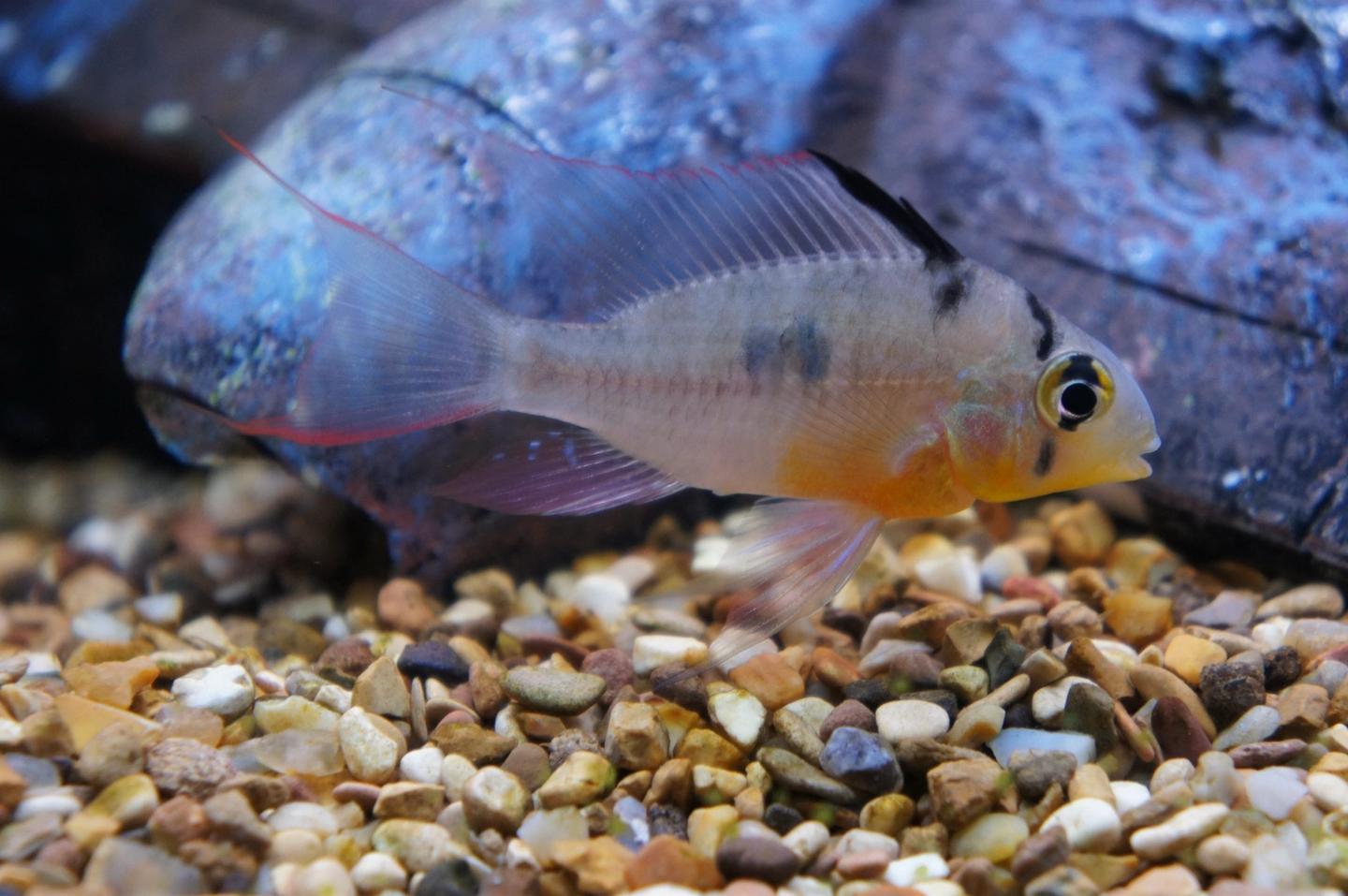
Cichlids are a family of roughly 1,800 accepted species, not one care type. Before buying, identify the exact species and source, then compare adult measurement, usable tank dimensions, social system, territory, tested water, diet and an exit plan. No family-wide minimum tank, water range or tank-mate list is safe.
Maintain these water conditions for optimal health and vibrant colors
Specialists building small-bodied Tanganyika communities rate Lamprologus mustax highly for a simple reason: it concentrates the genus's bold, watchful personality into a 4.5 cm package. Sold here as the Mustax, it is a bottom-dwelling cichlid that quickly learns the geography of its tank — and exactly who else lives in it.
The recorded requirements are firmly Rift Lake in character. Keep the water at 22–26 °C with pH 7.8–9.0 and 10–20 dGH; provide at least 75 litres; and feed it as the carnivore it is. Care sits at moderate. Temperament is semi-aggressive with a territorial side, which is normal for the group and manageable with sensible stocking and a rocky, structured tank floor. The recorded lifespan of eight years rewards keepers who get those basics right from the start.
Where the Mustax particularly suits UK keepers is the maths of it. Seventy-five litres is an ordinary cabinet aquarium, the 22–26 °C band sits at the cooler end of tropical heating, and one species plus a small Synodontis covers the recorded stocking template — no rare equipment, no oversized tank, no exotic foods beyond a carnivore's meaty staples. The challenge is behavioural rather than technical, which is exactly what an intermediate fishkeeper should be shopping for.
Build the floor of the tank as a series of defensible features, hold the water hard and alkaline within the recorded 10–20 dGH and pH 7.8–9.0 window, and the species' territorial side becomes a spectacle instead of a problem.
Its short compatibility list is part of its character: other small Tanganyikan cichlids of similar temperament and small Synodontis catfish are the recorded matches. Exclude large aggressive cichlids, fin-nippers, very timid fish, anything that needs soft acidic water, and species small enough to be bullied or eaten.
A worthwhile step for keepers moving beyond beginner cichlids into the Tanganyikan specialists — small tank, big behaviour. Fish are packed for transit and sent by licensed live-animal courier, with our live arrival guarantee included.
No reviews for this item yet. Bought one? Honest reviews only, good or bad.
What customers say about ordering from us
I have a small group of long finned mountain minnows. So was delighted to be able to order ten of this variety to increase the genetics in my tank . The ones I recieved are healthy but it’s to early to give a verdict on wether they are of a long finned type since they are small currently.
Gordon Walker · 23 Sept 2026
100% success travel and "installation". Pleased with quality of purchase. The Siamese fighter a bit "shy" so have not yet seen him at his best yet but looking good. Happy customer. GG
George E Garratt · 21 Sept 2026
Reviews of our shop, collected by Judge.me, an independent third-party review collector. Newest first.