Moderate
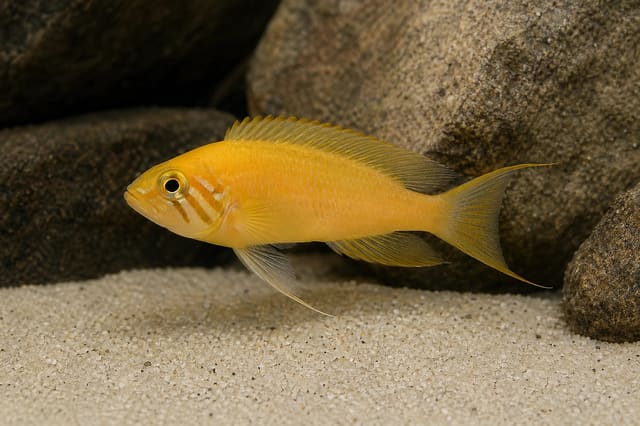
Gold Ocellatus Shell-Dweller (Neolamprologus ocellatus)
23–25°C · pH 8–9
£16.59

Six-Bar Cichlid (Lamprologus sexfasciatus) is an assertive, predatory Lake Tanganyika cichlid supplied as one unsexed fish in either a 4–5 cm or over-5 cm dispatch size. It needs a long, rocky aquarium, sand, hard alkaline water and carefully planned companions.
Lamprologus sexfasciatus
Save when buying multiple fish. Each quantity is one fish; sex and pair formation are not guaranteed unless the selected variant explicitly states them.
Six-Bar Cichlid (Lamprologus sexfasciatus) is an assertive, predatory Lake Tanganyika cichlid supplied as one unsexed fish in either a 4–5 cm or over-5 cm dispatch size. It needs a long, rocky aquarium, sand, hard alkaline water and carefully planned companions.
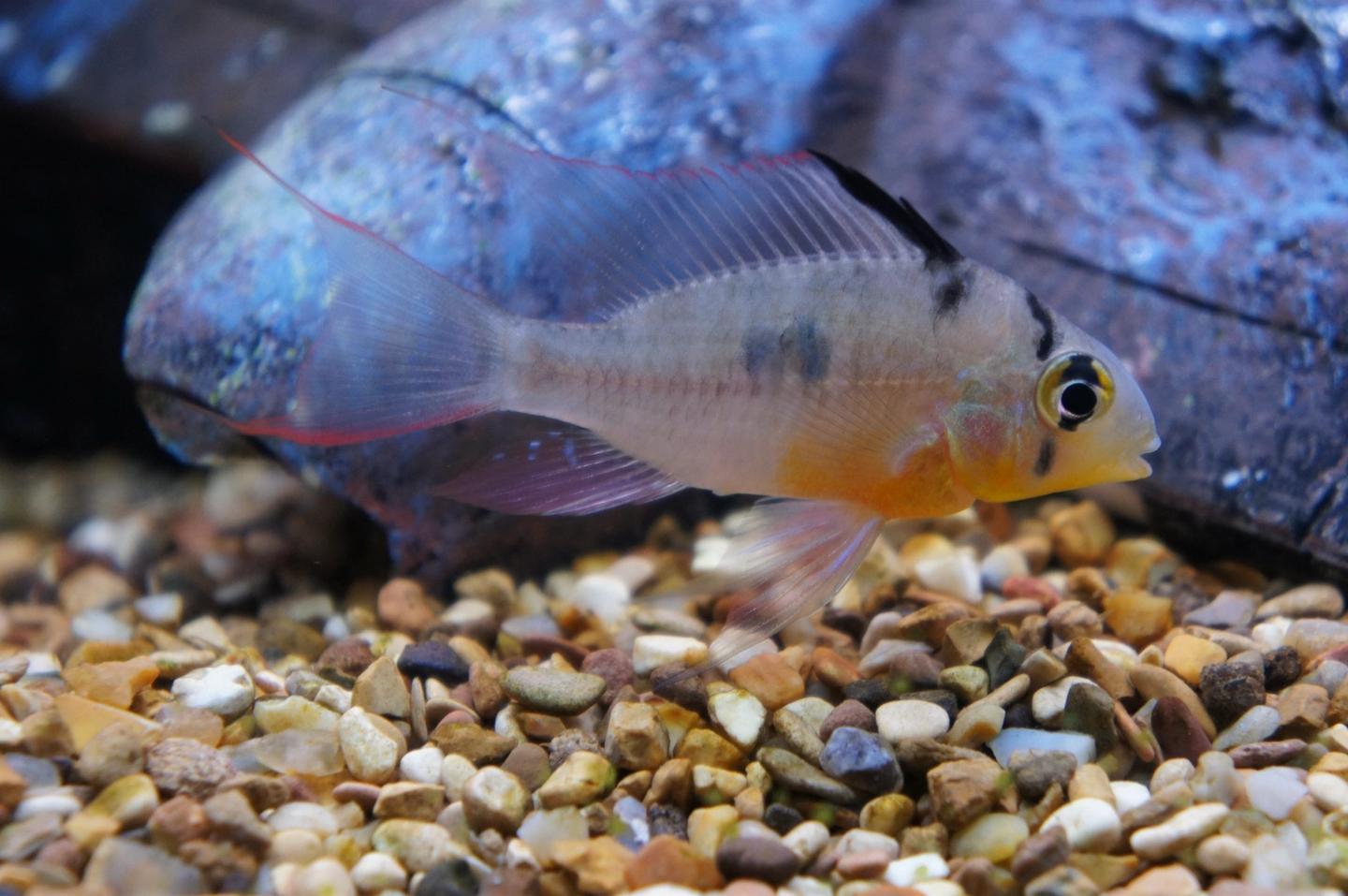
Cichlids are a family of roughly 1,800 accepted species, not one care type. Before buying, identify the exact species and source, then compare adult measurement, usable tank dimensions, social system, territory, tested water, diet and an exit plan. No family-wide minimum tank, water range or tank-mate list is safe.
Maintain these water conditions for optimal health and vibrant colors
The Six-Bar Cichlid (Lamprologus sexfasciatus) is a substantial, cave-oriented cichlid from the southern half of Lake Tanganyika. Its strong vertical bars and purposeful way of moving through rockwork make it visually memorable, but its real character is territorial, predatory and demanding of space. This is a fish for a keeper who enjoys building a habitat around one species' behaviour rather than adding a colourful extra to an ordinary community aquarium.
The supplier identity is Lamprologus sexfasciatus, and that name remains the identity used for this offer. FishBase treats it as a synonym of the currently accepted Neolamprologus sexfasciatus. Both names therefore refer to the same fish here; the accepted-name bridge is useful when comparing modern references, while the supplier name keeps the exact animal tied to the offer.
| What one purchase supplies | One live Six-Bar Cichlid |
|---|---|
| Dispatch sizes | 4–5 cm or over 5 cm |
| Sex | No male or female guarantee |
| Adult length records | 15 cm total length for a male or unsexed fish in FishBase; 150 mm standard length in the Seriously Fish profile |
| Routine aquarium range | 23–27°C, pH 7.5–9.0 and 8–25°dGH |
| Suits | Experienced Tanganyikan keepers able to manage territory, predation and pair dynamics |
The size you select is the size supplied, not the adult size. The 4–5 cm and over-5 cm labels describe dispatch grades, not separate species or guaranteed final sizes. One purchase supplies one fish. Sex is guaranteed only when the selected option explicitly states male or female. This Six-Bar Cichlid listing has no sex-guaranteed option.
Adult length needs a little care when planning. FishBase records 15.0 cm total length for a male or unsexed fish. Total length includes the tail. Seriously Fish gives 150 mm standard length; standard length stops at the base of the tail. The numbers happen to be equal in centimetres, but the measurement conventions are not equivalent, so neither should be silently converted into the other. Allow room for the full-bodied adult described by both records rather than planning around the small dispatch grade.
This species is best understood as an assertive rock-dweller. Seriously Fish describes it as aggressive, territorial and predatory, with particular hostility towards its own kind. It is not recommended for a general Tanganyikan community. A carefully formed single pair can be kept in an appropriately arranged aquarium, while spare conspecifics need a removal plan once a pair forms. Buying two fish, or even buying a known male and female elsewhere, does not guarantee a stable pair bond.
Aquarium planning should begin with footprint and territory. Seriously Fish says a 120 × 30 × 30 cm aquarium, about 110 litres, is only just adequate for a single pair. Treat that as a floor attached to a specific pair context, not as an invitation to squeeze additional rock-dwellers into the same space. More floor area gives you more scope for separate caves, open passages and visual breaks. You can browse the broader African cichlid collection, but similarity of category never proves that another fish is a suitable companion.
The fish comes from Lake Tanganyika and needs the kind of mineral-rich, alkaline conditions associated with that system. It also produces substantial waste on a meaty diet. Mature biological filtration, dependable oxygenation, stable chemistry and regular maintenance are therefore part of the basic setup. This is not a fish to add while a new aquarium is still finding its balance.
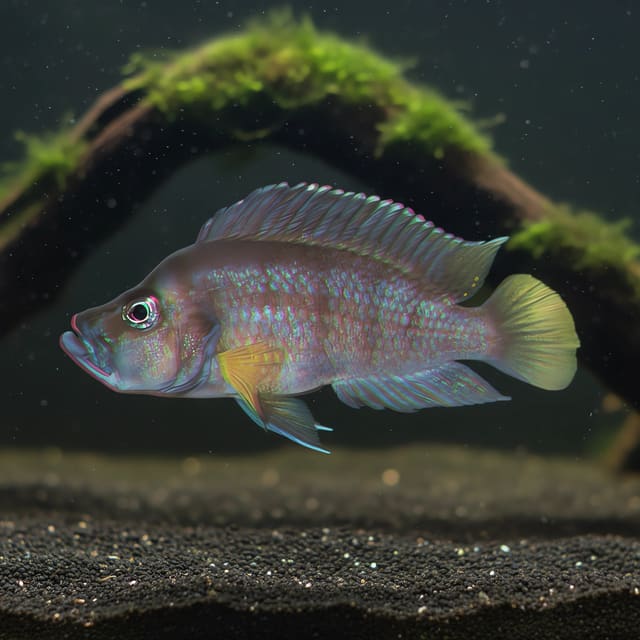
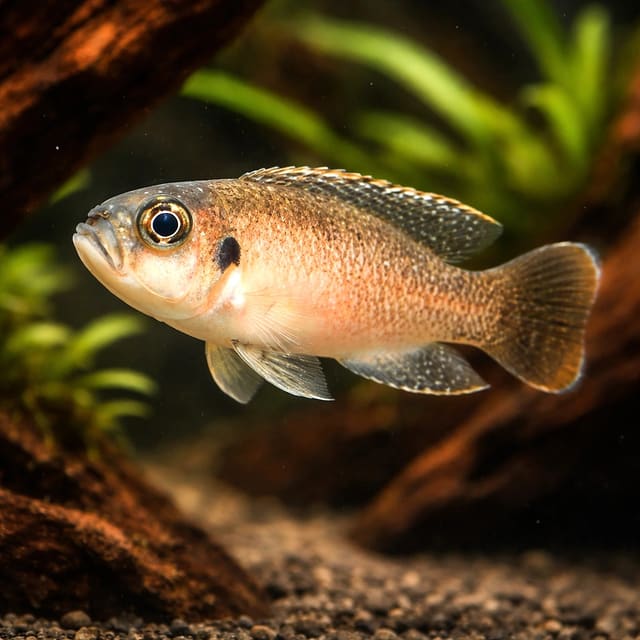
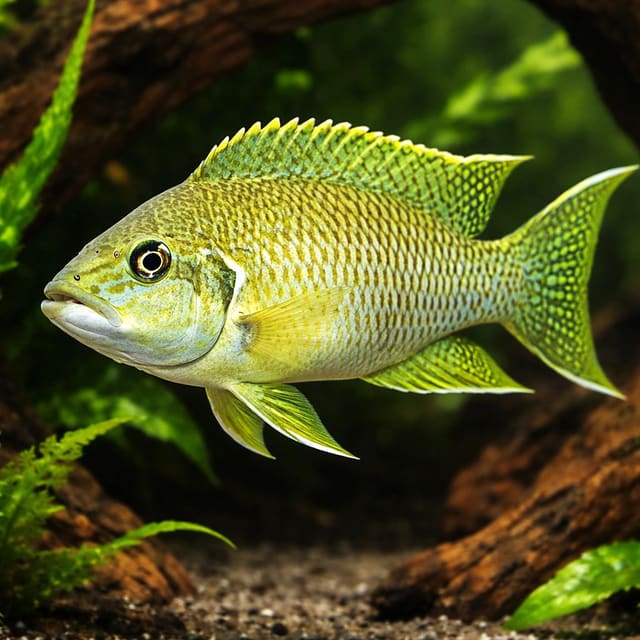
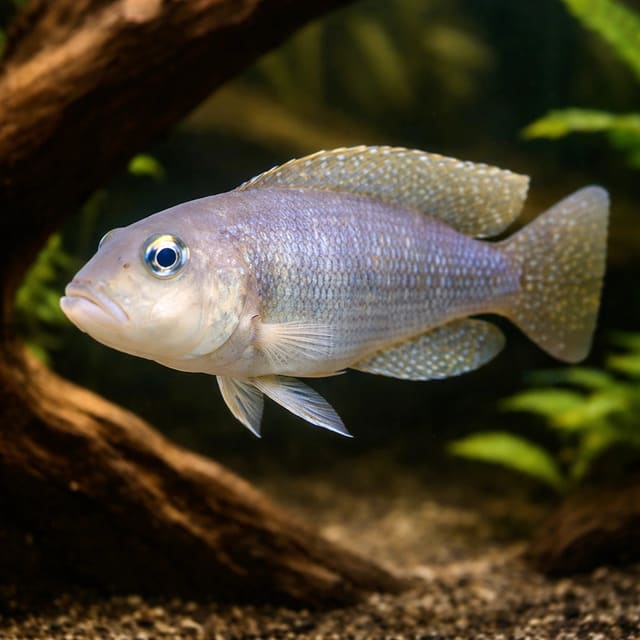
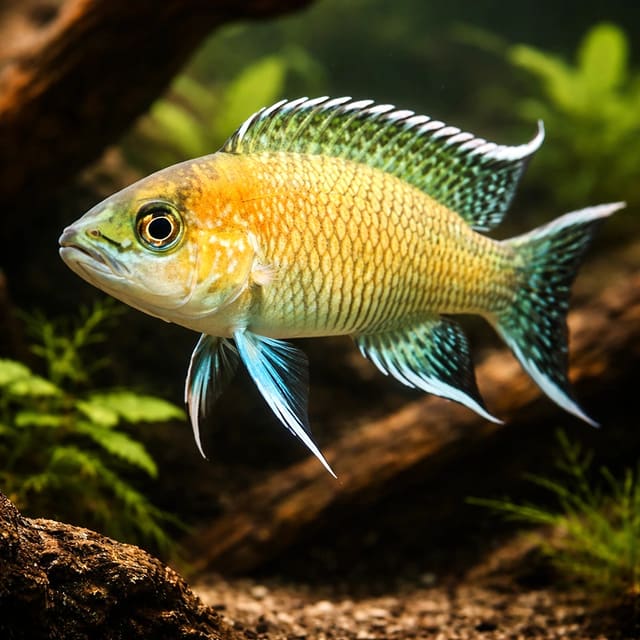
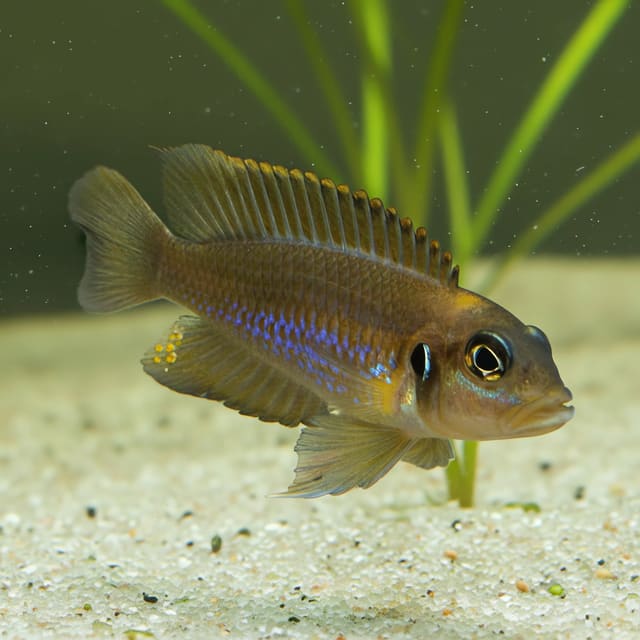
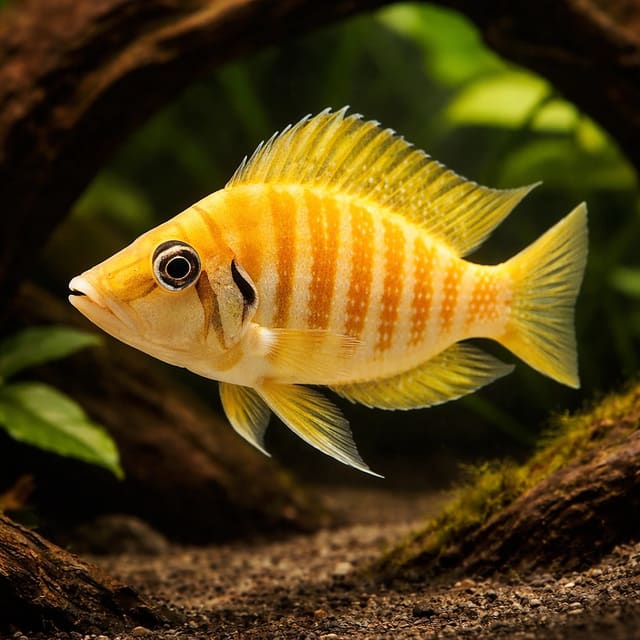
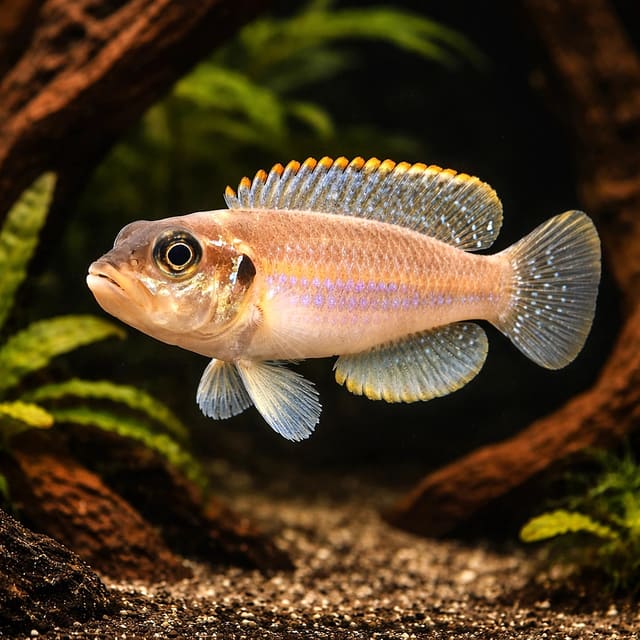
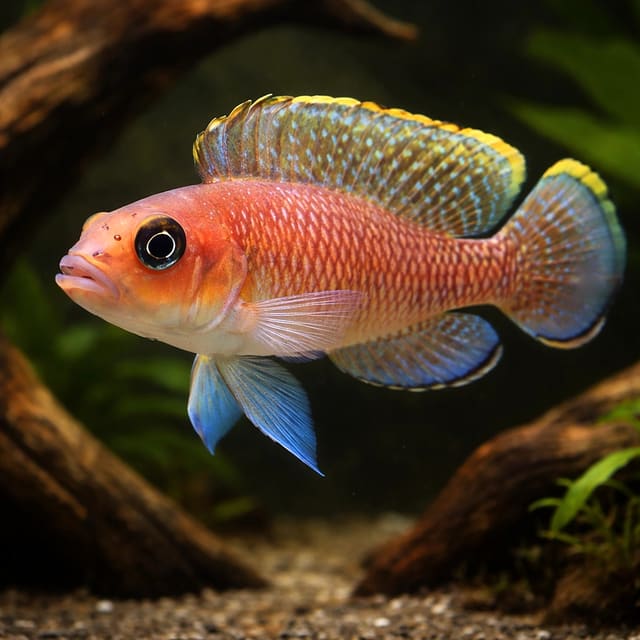
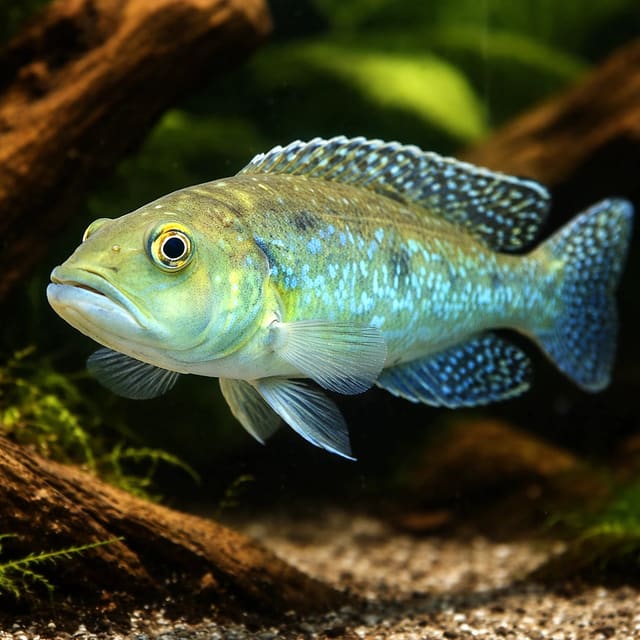
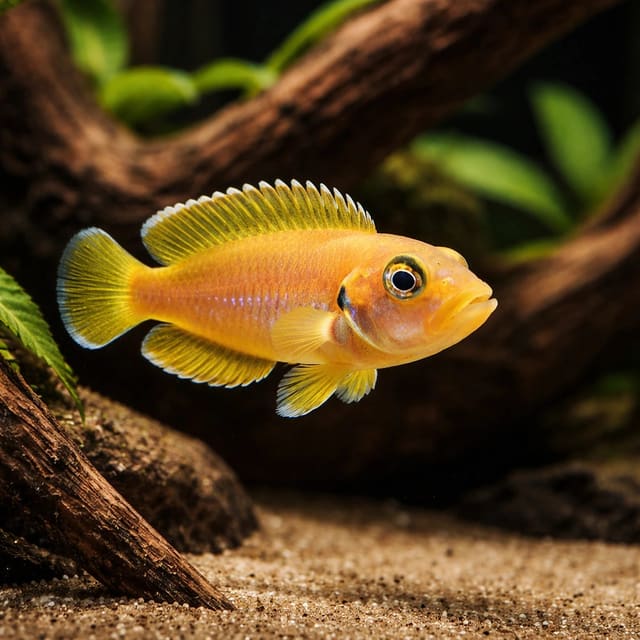
Gallery images have been digitally enhanced to improve image quality. Natural colour, pattern, size and maturity can vary between live animals.
The offer remains anchored to the supplier's Lamprologus sexfasciatus. FishBase lists Neolamprologus sexfasciatus as the accepted name and treats Lamprologus sexfasciatus as a synonym. Keeping that bridge visible helps a buyer recognise that modern husbandry pages headed Neolamprologus concern the same species, without pretending the supplier supplied a differently named animal.
FishBase records the species as endemic to the southern half of Lake Tanganyika. It is a freshwater, benthopelagic cichlid: in practical terms, it is associated with the lower part of the water column and the structures there rather than open-water schooling. Rock piles, caves and open lanes between territories make far more sense than a densely planted community layout.
Seriously Fish notes several geographical forms, including Sambia and Kipili, with base colours that may range from blue through yellow to white. This offer does not name a locality form, and the gallery cannot establish one. Choose the species for its identity and care requirements, allowing natural colour and pattern to vary as the fish matures and settles.
The two length records answer an adult-planning question, while the 4–5 cm and over-5 cm grades answer what size is sent. A fish arriving at either dispatch size still needs accommodation for adult growth and adult territorial behaviour. The larger grade is not a sex guarantee, and body size alone should not be used to label a fish male or female.
Build the aquarium around rock, sand and controllable sight lines. Seriously Fish recommends piles of rocks arranged to form caves, with open water between them, and identifies sand as the best substrate. The aim is not to fill every centimetre with stone. It is to create distinct shelters and routes so a fish can occupy a cave without controlling the whole front of the aquarium.
The species profile gives 120 × 30 × 30 cm, around 110 litres, as only just adequate for a single pair. The length matters because territory is laid out horizontally. A taller but shorter aquarium does not provide the same ability to place separated caves. If companions are contemplated, or if young fish are being grown until a pair emerges, use a materially larger footprint and have spare accommodation ready.
Place heavy rocks so they remain stable if sand is moved around their bases. Caves should offer more than one usable retreat and should not all face into the same narrow corridor. Break direct lines of sight with substantial rock faces. Keep enough clear sand at the front to observe feeding, waste and changes in behaviour.
A sandy substrate suits the species profile and allows a natural transition between shelter and open areas. Avoid a layout in which every route ends in a dead corner. A pursued fish needs to be able to leave the aggressor's immediate view. Open water between rock piles also helps different kinds of Tanganyikan fish use different parts of a suitably large aquarium.
The aquarium should have a working biological filter before the fish arrives. The RSPCA explains that fish release toxic ammonia, which beneficial filter bacteria process first to nitrite and then to the safer nitrate. A newly filled aquarium does not yet have that biological capacity. The first tropical tank guide is useful for planning the cycle, testing routine and first livestock addition.
Seriously Fish calls efficient filtration essential because the carnivorous diet produces high waste. OATA's broad African lake cichlid guidance likewise recommends an oversized filter and vigorous aeration where stocking is demanding. Choose filtration that turns over the aquarium reliably without creating a relentless jet through every cave. Surface movement and clean filter media help maintain oxygen while the biological stage deals with dissolved waste.
Seriously Fish gives the species-level aquarium range as 23–27°C, pH 7.5–9.0 and 8–25°dGH. These are broad ranges, not targets to swing between. Test the water you actually have, choose stable values within the range, and make changes gradually. A keeper whose tap water is naturally soft and acidic needs a deliberate mineral and buffering plan before bringing home a Tanganyikan cichlid.
| Temperature | 23–27°C |
|---|---|
| pH | 7.5–9.0 |
| General hardness | 8–25°dGH |
| Ammonia | 0 mg/l |
| Nitrite | 0 mg/l |
| Nitrate | Keep controlled through testing, feeding discipline and water changes |
A single pH reading is less useful than a record showing whether pH remains stable through the week. Test source water as well as aquarium water. Track temperature, pH, hardness, ammonia, nitrite and nitrate in a notebook or app so small changes are visible before they become an emergency. The water chemistry guide explains what each measurement means, while the water matcher can help compare measured values with the stated range.
Do not chase pH with repeated abrupt additions. If buffering is needed, prepare replacement water consistently and confirm the result before it enters the aquarium. Stability matters particularly in Lake Tanganyika setups because a high pH increases the proportion of more toxic un-ionised ammonia. That makes zero ammonia, controlled feeding and a dependable biological filter especially important.
Set a reliable heater and thermometer within 23–27°C rather than moving the temperature through the whole range. Position the heater where filtered water distributes warmth. Check it during seasonal changes and after maintenance. Fish that suddenly hide, breathe differently or stop feeding should prompt an immediate check of temperature and water quality before assumptions about disease.
FishBase describes the species as carnivorous from examined gut contents, and Seriously Fish calls it piscivorous in nature. In the aquarium, the specialist profile recommends varied meaty live and frozen foods supplemented with a good-quality cichlid pellet. Build the diet around that evidence rather than generic food for every African cichlid.
Rotate appropriately sized meaty frozen or live foods and use a quality cichlid pellet as a dependable supplement. The food must be small enough for the dispatch-sized fish to take cleanly. Watch each fish eat; dominant individuals can intercept food before a subordinate reaches it, especially around defended rockwork.
OATA's African lake cichlid guidance says to offer only what the fish can eat within a few minutes, twice a day. Remove obvious uneaten food and adjust the next portion rather than assuming the filter will absorb the excess. A carnivorous cichlid that is overfed can create a rapid waste burden even when the water still looks clear.
Healthy feeding is not simply a fish rushing to the surface. Look for steady body condition, clear eyes, intact scales and fins, normal breathing and purposeful movement. A sudden loss of appetite, darker or paler colour, unusual hiding, erratic swimming or a change in breathing can be an early warning. Test water quality first and contact the retailer if the fish's health remains concerning.
Waste collects around rock bases and in low-flow pockets. During water changes, siphon accessible sand and open areas while leaving securely placed rockwork intact. Rotate which reachable areas receive close attention instead of dismantling territories every week. Check mechanical filter media and flow for blockages because declining flow reduces both waste capture and oxygen distribution.
OATA strongly recommends a 25% partial water change at least weekly for African lake cichlids, alongside regular testing for ammonia and nitrite. Treat replacement tap water with conditioner for chlorine or chloramine. Match temperature and avoid a sudden chemistry shift. Consistency is more valuable than an occasional very large clean after water quality has already declined.
Check the filter for blockages. When media needs cleaning, rinse it lightly in water removed from the aquarium rather than under the tap. Chlorine or chloramine in tap water can kill the beneficial bacteria that process ammonia and nitrite. Preserve the established biological filter while restoring good flow.
Have the aquarium heated, filtered and tested before delivery. The store's policy says to float the sealed bag for 20–30 minutes before release and never pour bag water into the aquarium. Keep the established layout in place, and observe the new fish without immediately testing it with tank mates or a large meal.
Start a continuous unboxing video while the parcel is still sealed, show the outer box, open it in one take and show the fish while it remains in the sealed bag. Someone must be present to receive live fish, and the parcel must be opened and inspected on the day it arrives. If anything is wrong, contact Tropical Fish Co the same day with the order number and video. The full conditions are on the Delivery and Live Arrival Guarantee page.
A strongly territorial fish can look healthy while a less dominant animal is losing access to food or shelter. Observe the whole aquarium, not only the fish that comes forward first. Look for where each animal rests, which routes it uses, whether it feeds, and whether it can leave a confrontation without being trapped in a corner.
OATA lists several warning signs for African lake cichlids: hanging at the surface, sitting on the bottom, erratic swimming, colour becoming darker or paler, changed aggression, increased hiding, altered breathing, damaged fins or scales, abnormal growths, weight change and reduced feeding. One observation does not diagnose a cause, but it tells you to check conditions promptly.
When behaviour changes, check temperature, ammonia, nitrite, nitrate and pH. Confirm the filter is running and that flow has not fallen because of a blockage. Compare results with recent records. Water quality is a common pressure shared by every fish in the aquarium, and correcting a measurable problem is more useful than choosing a treatment on appearance alone.
A fish that hides only when another animal approaches may be responding to aggression; one that remains withdrawn even when the aquarium is quiet may need a broader health check. Torn fins, missing scales, rapid breathing and weight loss can also result from repeated exclusion. Change the stocking arrangement when the social pattern is the problem rather than expecting extra food to solve it.
OATA notes that rearranging aquarium decor can reduce aggression as fish establish new territories. Use that method deliberately, with stable rockwork and enough caves, rather than repeatedly disturbing the aquarium. It can help when introducing a compatible fish to a suitably large setup, but it does not make an undersized tank or an unsuitable species combination safe.
If water is within range and the fish remains unwell, document what changed, when it last fed and which signs are visible, then contact the retailer. Keep treatment decisions separate from guesswork. The evidence supplied here does not support a disease recipe, and a medication suitable for one problem may be unnecessary or harmful for another.
Seriously Fish describes Neolamprologus sexfasciatus as a biparental cave spawner, but also says breeding is possible yet infrequent in the hobby. That combination matters. A keeper may observe courtship and cave occupation, but the listing should not turn those possibilities into a promise that two purchased fish will breed.
The specialist profile recommends starting with a group of young fish and allowing a pair to form naturally. That approach needs a large aquarium and, crucially, somewhere for the other fish to go. Once a pair forms, the remaining conspecifics are unlikely to be tolerated. Do not begin the process without mature spare accommodation or a confirmed rehoming route.
An adult male and female can still be incompatible. Seriously Fish warns that placing them together may lead to severe harassment of the female. Size difference is not a substitute for observing an actual pair relationship, and this offer does not guarantee the sex of any fish.
Even when a pair forms, the profile characterises the bond as weak and associated with spawning and brood care. The male may become intolerant between spawns. Provide several hiding places and watch whether both fish retain access to food and shelter instead of assuming that earlier courtship makes the arrangement permanently safe.
The fish spawn in a cave and may excavate around the site. Secure rocks before adding sand so digging cannot undermine the structure. Offer more than one plausible cave and keep the entrances visible enough to monitor the pair without repeatedly dismantling the territory.
Seriously Fish gives pH around 8.2–9.0 and 25–26.5°C for the breeding aquarium. Those values sit within the wider species profile but are not a second routine-water recommendation for every keeper. Stable water, efficient filtration, a long aquarium and appropriate caves remain the foundation; changing numbers alone cannot create a compatible pair.
Remove a harassed fish rather than waiting for a breeding attempt to succeed. A failed pairing is a stocking problem that needs action, not a reason to add more caves indefinitely. The valuable behaviour is only worth pursuing when every fish can be protected throughout formation, spawning and the intervals between spawns.
Before ordering, compare the fish's adult planning needs with the aquarium you actually have. Measure the usable footprint after rockwork, test the source water, confirm the filter is mature and identify where an incompatible fish could be moved. The two dispatch sizes do not reduce any of those long-term requirements.
If one of these answers is no, resolve it before the fish arrives. Waiting is safer than asking a newly delivered animal to absorb the consequences of an unfinished aquarium or an improvised stocking plan.
This species is not merely a slightly pushy community cichlid. Seriously Fish describes it as aggressive, territorial and predatory, very aggressive towards its own kind, and unsuitable for a general Tanganyikan community. That assessment should shape the stocking plan before the first fish is ordered.
A single pair is the recommended long-term conspecific arrangement in all but the largest aquariums. The safest route to a natural pair is to begin with a group of young fish in a large setup, allow a pair to form and remove the other fish when they are no longer tolerated. That method requires spare tanks or a confirmed rehoming route. It should not be attempted in a tank that has nowhere for rejected fish to go.
Seriously Fish warns that buying an adult male and female does not guarantee a pair bond and can result in lethal harassment of the female. Even an established bond is described as weak and tied to spawning and brood care; between spawns, the male may become intolerant. Multiple hiding places and close observation remain necessary after pairing.
The specialist profile says other medium-sized Tanganyikan cichlids occupying different parts of a sufficiently large aquarium may work. It names Cyprichromis species as an example, and says larger Julidochromis or Altolamprologus may be possibilities when the aquarium is large enough and enough territories exist. These are conditional examples, not a universal safe list.
Small fish and small invertebrates may be treated as prey. Timid or slow animals can also be excluded from food or shelter even if they are too large to swallow. Long-finned community fish, soft-water species and delicate bottom dwellers do not match the combination of water chemistry, predation and territorial pressure. Observe actual interactions and intervene early rather than waiting for damaged fins or weight loss.
Use one carefully formed pair or one specimen as the centre of the aquarium. Add another species only when its adult size, water needs, swimming zone and temperament are compatible, and only when the footprint permits genuinely separate territory. Have a divider, spare aquarium or rehoming plan available before testing a difficult combination.
Compatibility is a set of conditions, not a label attached to a species name. Work through the adult fish, water, space and feeding questions before combining animals. A proposed companion should fit the hard alkaline water, be too large to treat as prey, occupy a genuinely different zone and be robust enough not to be excluded by a territorial cichlid.
A small juvenile companion can become an incompatible adult, while a small dispatch-sized Six-Bar Cichlid will itself become a much larger territorial fish. Use adult dimensions and behaviour for both animals. Leave enough usable space after rockwork has displaced water and divided the footprint.
Count usable caves and routes, then ask whether one fish can control all of them from a central point. A second rock pile only helps if it is visually and physically separate. Open-water fish still need a route that does not force them through the pair's defended cave entrance.
Decide where a bullied fish will go before introducing it. A divider, mature spare aquarium or confirmed rehoming route turns observation into an actionable plan. Without that exit, the keeper may recognise aggression but still be unable to protect the weaker animal.
A combination that appears calm on day one may change as fish mature or prepare to spawn. Continue checking access to food, resting places and open water. Pair formation is especially important because conspecific tolerance can collapse and even a formed male-female bond can weaken between breeding periods.
FishBase records 15 cm total length for a male or unsexed fish, while Seriously Fish records 150 mm standard length. Total length includes the tail and standard length excludes it, so keep both scoped records in mind and plan generous adult space.
Seriously Fish says a 120 × 30 × 30 cm aquarium, about 110 litres, is only just adequate for a single pair. Use a larger footprint for companions or for young fish being grown until a pair forms.
Keep only a single pair in all but the largest aquariums. If starting with young fish to obtain a natural pair, be ready to remove every fish the pair rejects; buying two fish does not guarantee a bond.
It is better suited to an experienced Tanganyikan keeper. Its hard alkaline water, predatory diet, strong territory and difficult pair dynamics require more planning than an ordinary freshwater community fish.
Offer varied meaty live and frozen foods and supplement them with a good-quality cichlid pellet. Give portions the fish can finish within a few minutes and remove obvious leftovers so a protein-rich diet does not undermine water quality.
The species profile gives 23–27°C and pH 7.5–9.0, with hardness of 8–25°dGH. Choose stable values within those ranges and confirm ammonia and nitrite remain at zero.
Yes, it can be strongly aggressive, territorial and predatory, particularly towards its own kind. Rather than treating fin nipping as the only risk, plan for chasing, exclusion from caves and food, and possible predation on small animals.
In a large, carefully divided Tanganyikan aquarium, medium-sized species using different zones may work. Seriously Fish names Cyprichromis, larger Julidochromis and Altolamprologus as conditional possibilities when space and territories are sufficient.
Tropical Fish Co hand-packs live fish in oxygen with insulation and uses a licensed live-animal courier. Be present, film the sealed parcel being opened in one continuous take, inspect the fish in the sealed bag and contact the store the same day if a Live Arrival Guarantee claim is needed.
Identity, distribution and the total-length record are drawn from FishBase. Species-level aquarium dimensions, water ranges, diet, aggression and pair behaviour come from the Seriously Fish profile for Neolamprologus sexfasciatus.
Broader maintenance and welfare context comes from OATA's African lake cichlid care sheet and the RSPCA's aquarium environment guidance. Packing, arrival and claim steps come from Tropical Fish Co's delivery policy.
No reviews for this item yet. Bought one? Honest reviews only, good or bad.
What customers say about ordering from us
I have a small group of long finned mountain minnows. So was delighted to be able to order ten of this variety to increase the genetics in my tank . The ones I recieved are healthy but it’s to early to give a verdict on wether they are of a long finned type since they are small currently.
Gordon Walker · 23 Sept 2026
100% success travel and "installation". Pleased with quality of purchase. The Siamese fighter a bit "shy" so have not yet seen him at his best yet but looking good. Happy customer. GG
George E Garratt · 21 Sept 2026
Reviews of our shop, collected by Judge.me, an independent third-party review collector. Newest first.