−14%
Advanced
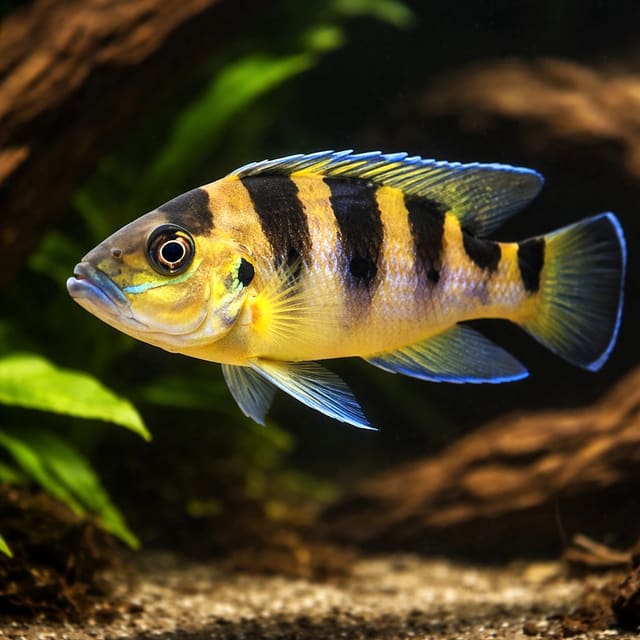
Six-Bar Cichlid (Lamprologus sexfasciatus)
23–27°C · pH 7.5–9 · 110L
£19.77£22.99

Marbled Lamprologus (Lamprologus attenuatus) is a predatory Lake Tanganyika cichlid, accepted by FishBase as Lepidiolamprologus attenuatus and recorded to 15cm total length. One purchase supplies one fish in the chosen 4.5–5.5cm or 6cm dispatch size. It suits a carefully planned, mature hard-water aquarium with sand, secure territories, strong filtration and tank mates selected for Lake Tanganyika conditions and predatory behaviour.
Adult size is the maximum length this species reaches at full maturity (scientific sources). The livestock you receive will be younger and smaller — pick a size above for the actual shipping size. Product-photo provenance and any image-specific limitations are stated on the listing.
Lamprologus attenuatus
Save when buying multiple fish. Each quantity is one fish; sex and pair formation are not guaranteed unless the selected variant explicitly states them.
Marbled Lamprologus (Lamprologus attenuatus) is a predatory Lake Tanganyika cichlid, accepted by FishBase as Lepidiolamprologus attenuatus and recorded to 15cm total length. One purchase supplies one fish in the chosen 4.5–5.5cm or 6cm dispatch size. It suits a carefully planned, mature hard-water aquarium with sand, secure territories, strong filtration and tank mates selected for Lake Tanganyika conditions and predatory behaviour.
Adult size is the maximum length this species reaches at full maturity (scientific sources). The livestock you receive will be younger and smaller — pick a size above for the actual shipping size. Product-photo provenance and any image-specific limitations are stated on the listing.
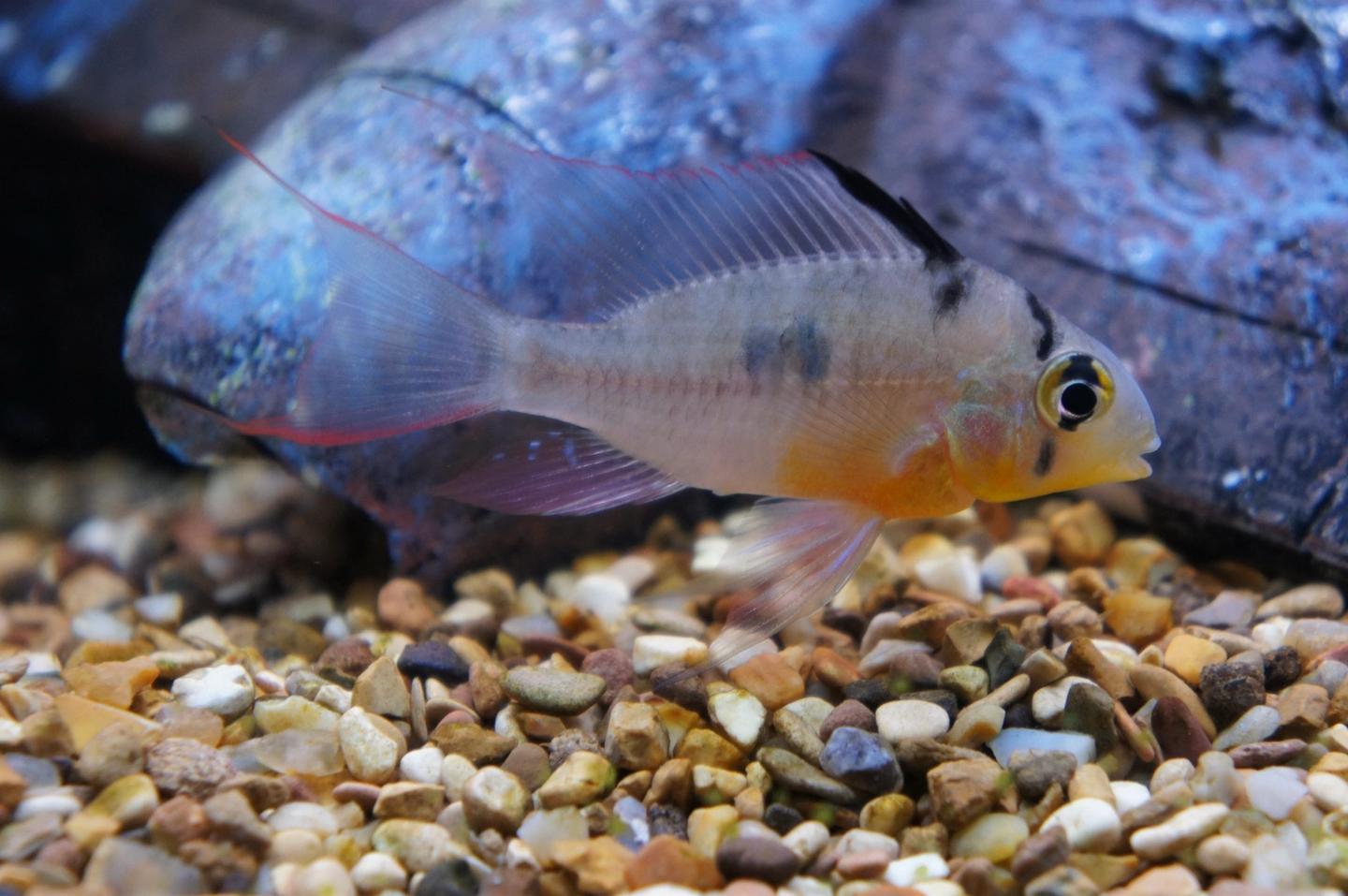
Cichlids are a family of roughly 1,800 accepted species, not one care type. Before buying, identify the exact species and source, then compare adult measurement, usable tank dimensions, social system, territory, tested water, diet and an exit plan. No family-wide minimum tank, water range or tank-mate list is safe.
Maintain these water conditions for optimal health and vibrant colors
Marbled Lamprologus (Lamprologus attenuatus) is a substantial predatory cichlid from Lake Tanganyika. FishBase treats Lamprologus attenuatus as a synonym and uses the accepted name Lepidiolamprologus attenuatus. The familiar offer name remains useful, while the accepted-name bridge makes it clear that both names refer to the same fish rather than two different species.
This is not a small shell-dweller or a routine community cichlid. FishBase records it in shallow intermediate habitat, usually solitary, hovering above the bottom and favouring sand where it digs large crater-shaped nests. It preys on fish and also eats invertebrates. Those natural-history points shape the aquarium decision: allow adult space, retain open sand, provide defensible structure and never use a related trade name as a shortcut for compatibility.
One purchase supplies one live fish. The recurring dispatch sizes are 4.5–5.5cm and 6cm. The size you select is the size supplied, not the adult size. A dispatch grade describes the fish at sale, whereas FishBase records an adult maximum of 15cm total length. Total length includes the tail. Plan for the adult fish from the beginning rather than choosing an aquarium around the juvenile measurement.
| Suits | Experienced Lake Tanganyika keepers prepared for a 15cm predatory cichlid and conditional compatibility |
|---|---|
| One purchase | One fish in the selected dispatch size |
| Accepted name | Lepidiolamprologus attenuatus; Lamprologus attenuatus is the retained offer synonym |
| Adult record | 15cm total length, male or unsexed |
| Natural setting | Lake Tanganyika shallow intermediate habitat, sand and crater-shaped nests |
| Feeding mode | Carnivorous predator of fish and invertebrates |
If you are comparing specialist African cichlids, the African cichlid collection is a useful starting point. Treat each product as a separate husbandry decision. Lake of origin, adult size, feeding strategy, territory and social behaviour matter more than the fact that two animals are both called cichlids.
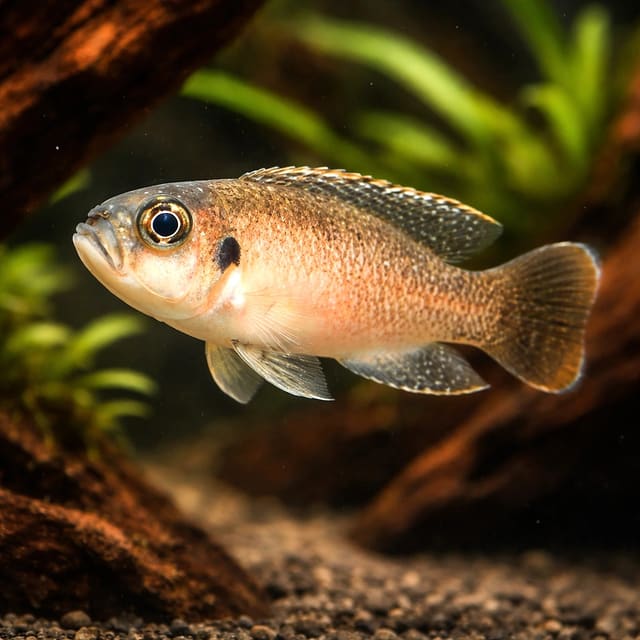
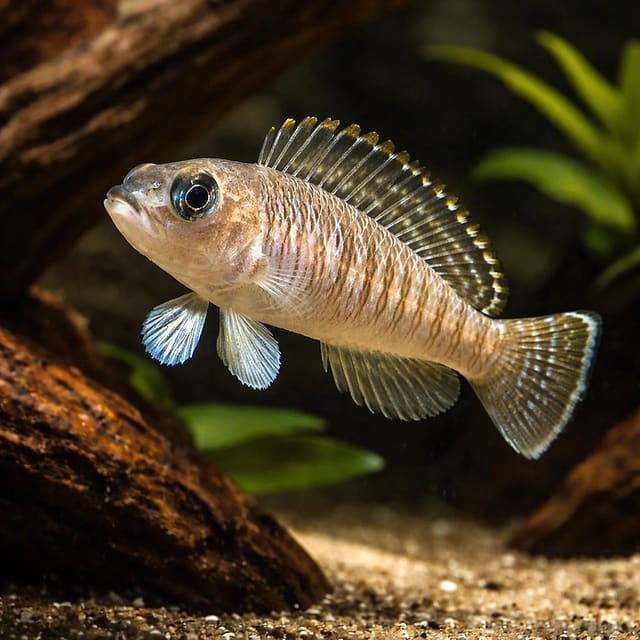
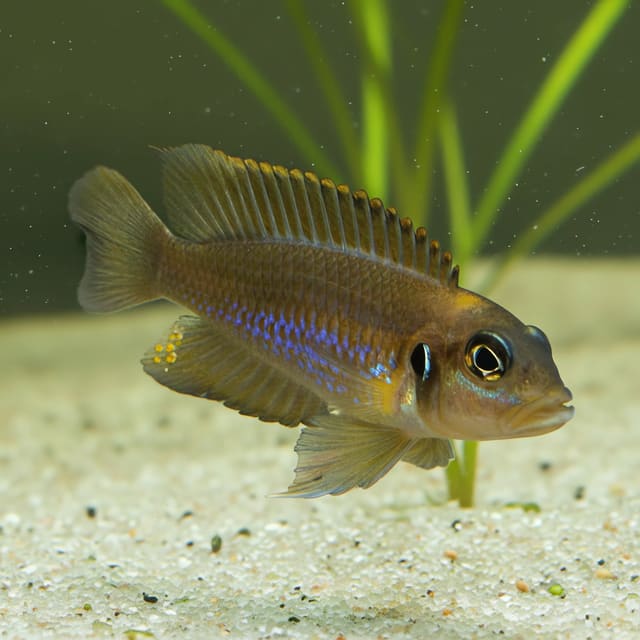
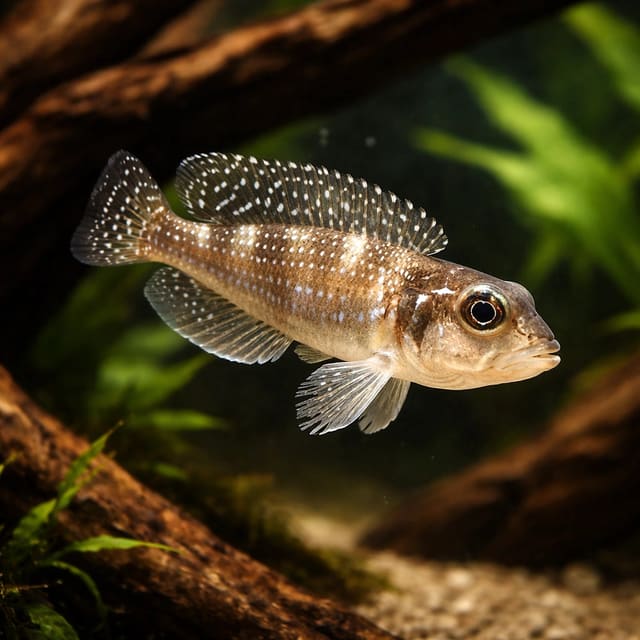
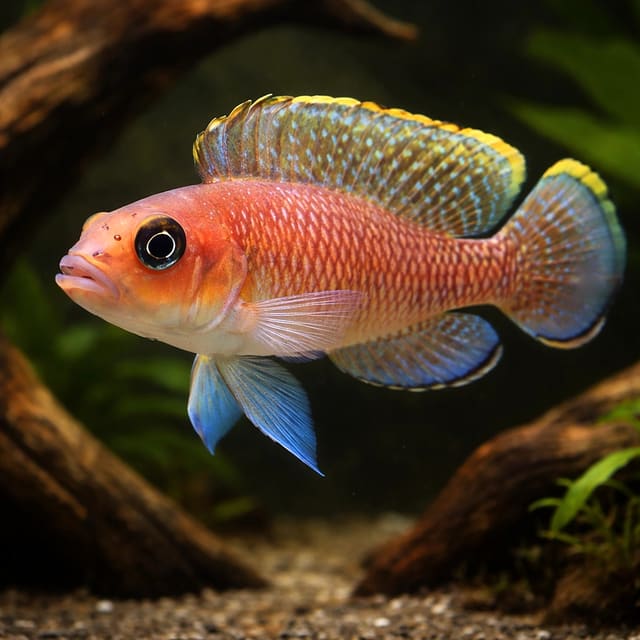
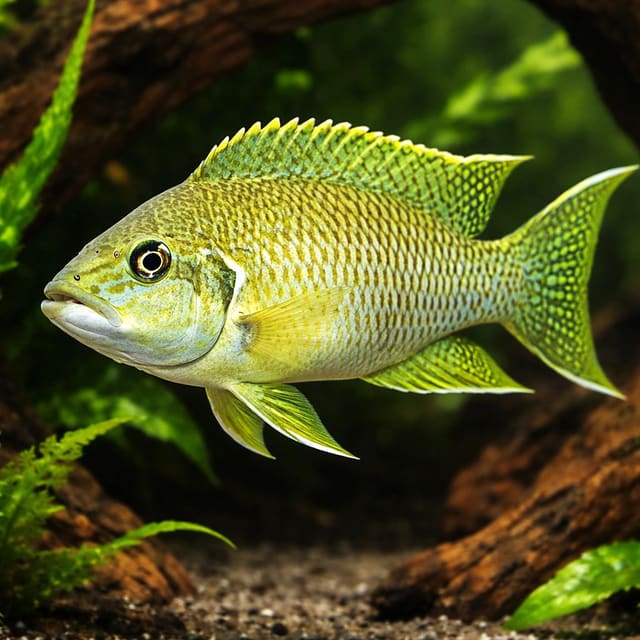
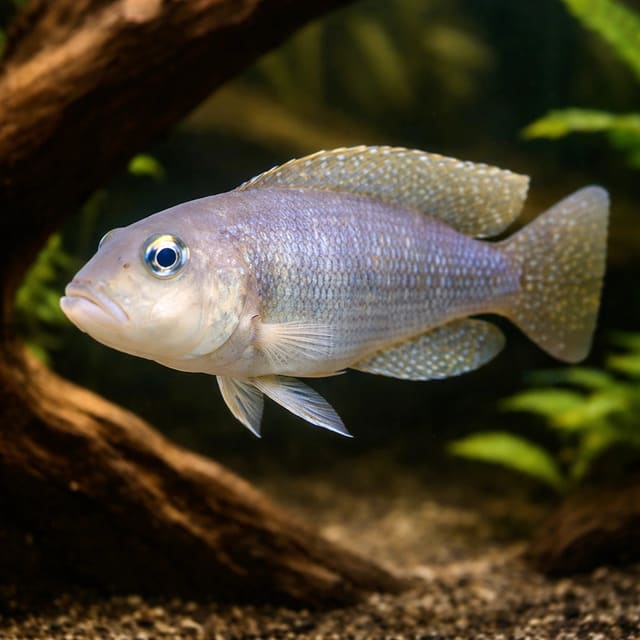
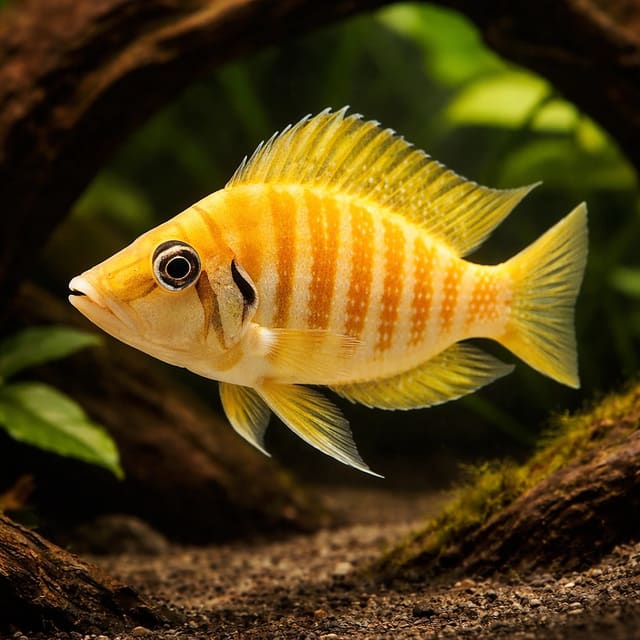
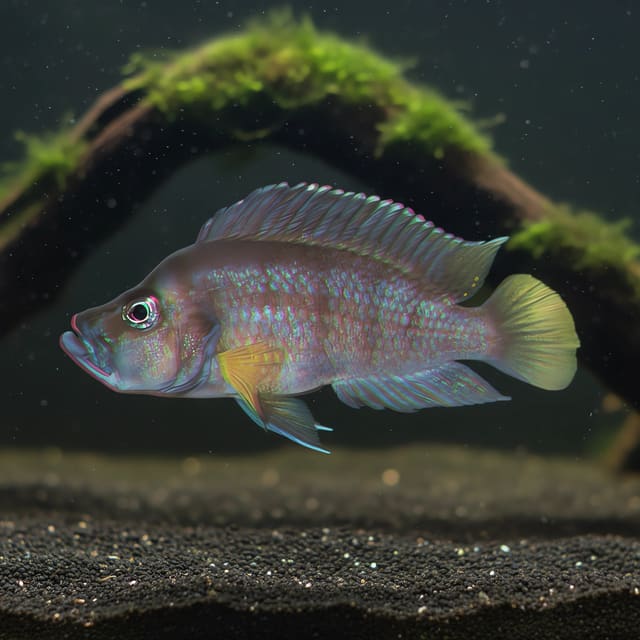
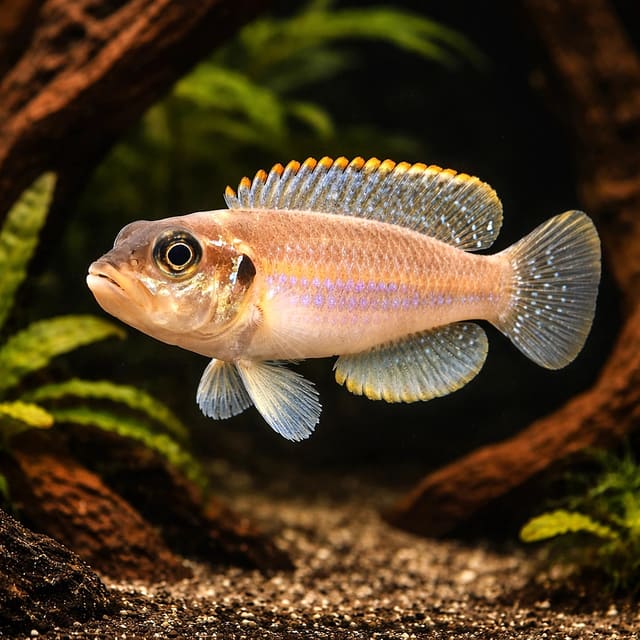
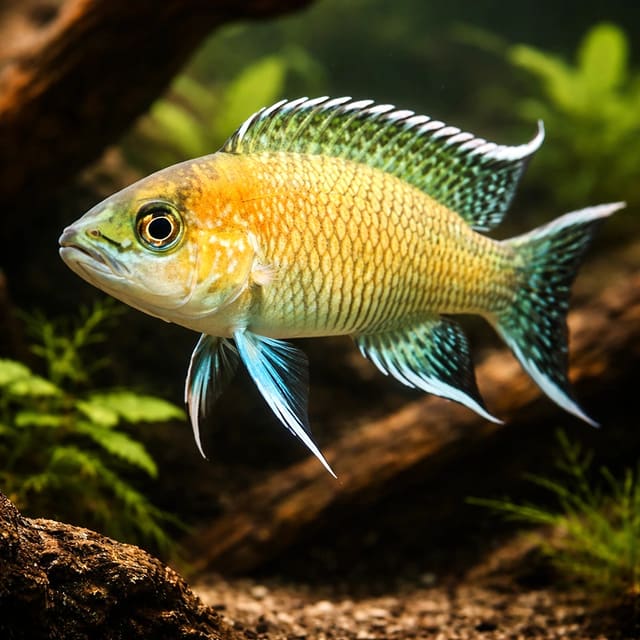
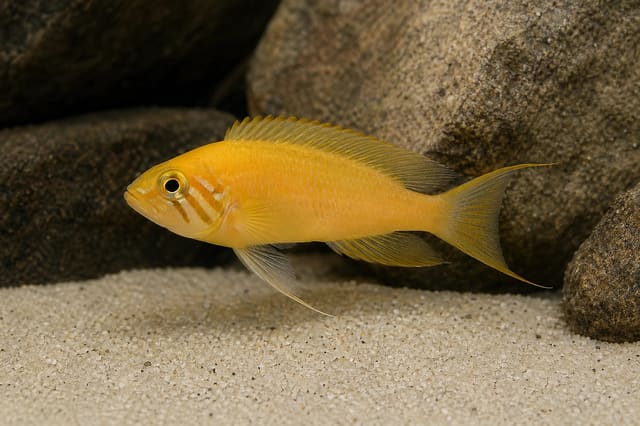
The offer does not promise a pair, a selected sex or a particular adult colour. Sex is guaranteed only when the selected option explicitly states male or female. This Marbled Lamprologus listing has no sex-guaranteed option. The two-fish gallery scene therefore shows two visible fish, not proof of a bonded pair or a two-fish sale.
FishBase's record of usually solitary wild behaviour and OATA's statement that aquarium group numbers depend on the African lake species must be read together with caution. Neither establishes a universal number for this fish in captivity. A buyer should not assume that one, a pair or a group will automatically be correct. The aquarium must be designed so individuals can establish space, and the keeper must be ready to separate fish if persistent conflict develops.
A well-settled specimen should have access to shelter, open sand and feeding without being continually displaced. Judge success by behaviour and condition rather than by seeing the fish in the open every minute. A new cichlid may spend time assessing the aquarium, but repeated frantic escape, refusal to feed, heavy breathing or confinement to one corner needs attention.
The two dispatch measurements allow a keeper to choose a juvenile size that can be introduced sensibly to an existing aquarium, but neither changes the eventual 15cm TL planning record. Compare the new fish with the current residents as they are today and as they will be at maturity. A very small newcomer may be outcompeted, while a larger juvenile can immediately challenge settled territories. Prepare the layout and feeding access before arrival instead of relying on the fish to negotiate unsuitable space.
Gallery images have been digitally enhanced to improve image quality. Natural colour, pattern, size and maturity can vary between live animals.
Plan this aquarium from the 15cm adult total-length record, predatory feeding, usually solitary wild behaviour and use of sand for large crater-shaped nests. A borrowed generic litre figure would hide the decisions that matter. Prioritise a generous floor area that can hold open substrate and separated territories, not a tall display chosen only for its headline volume.
OATA's broad African lake guidance illustrates why one number cannot be transferred between species: the smallest shell-dwellers may use aquariums from 45cm long, while frontosa need around 180cm and potentially more. Marbled Lamprologus sits in neither example. Its aquarium should be planned directly around its own adult size and behaviour, with room for a keeper to adjust boundaries as the fish matures.
The natural record mentions sand even when rocks provide shelters, so a wall-to-wall rock pile misses an important part of the species' ecology. Equally, a completely bare sandy aquarium gives a territorial fish nowhere to withdraw. Use both: open substrate for digging and structured edges for refuge, while preserving swimming room.
The aquarium must be mature before the fish arrives. The first tropical tank guide covers biological maturation and preparation. A cycled filter is not a licence to stock quickly; every addition increases waste, feeding and social pressure, so change the population gradually and test the system after each meaningful step.
FishBase records this species from 23–27°C, pH 7.4–8.4 and 7–30 dH. OATA's broad aquarium guidance for African lake cichlids is 23–27°C, pH 8.0–8.6 and 12–18 dGH. The genuinely shared planning range is therefore 23–27°C, pH 8.0–8.4 and 12–18 dGH. Each figure lies inside both published ranges. This overlap is a cautious planning basis, not a claim that every point is a proven species optimum.
Measure the actual tap and aquarium water before choosing livestock. The water chemistry guide explains the relationship between pH, general hardness, carbonate hardness and the nitrogen cycle. Use the water matcher to compare the measured values with the planning range. A repeatable method is more valuable than forcing water towards a fashionable decimal.
The planning overlap is narrower than the FishBase environmental record and narrower than OATA's group ranges in pH and hardness. That is intentional and mathematically valid; it does not rewrite either record. A keeper with stable values elsewhere in the FishBase range should seek species-experienced advice before changing them, because abrupt correction can be more harmful than a carefully understood established system.
Broad African lake guidance recommends fine coral sand or a similar buffering substrate where appropriate. Buffering materials are useful only when their effect is understood and measured. Do not add minerals blindly to already hard water. Establish the target, measure the source water, choose a repeatable treatment method if one is needed, and verify the result before livestock is exposed.
RSPCA guidance describes a working biological filter as essential because fish produce toxic ammonia, which bacteria convert first to toxic nitrite and then to the safer nitrate. A predatory cichlid and animal-based foods can create a meaningful waste load, so filtration should be chosen for the real aquarium and stocking plan rather than the minimum printed on a box.
OATA recommends oversized filtration and vigorous aeration for some African lake cichlid systems. Arrange the flow so waste reaches the intake and the surface moves well, while leaving sheltered areas where the fish can rest without fighting a constant current. Check the filter's actual output regularly; clogged pre-filters and neglected impellers can reduce circulation long before a unit stops completely.
Maintenance should preserve biological stability while preventing waste accumulation. Cleaning every filter component and every surface together removes too much settled biology and changes the fish's environment abruptly. Stagger work where possible, keep media wet and restore equipment promptly.
Use behaviour as an extra instrument. Hanging at the surface, unusually rapid gill movement, sitting on the bottom, sudden colour change, erratic swimming or loss of appetite all justify a water test and equipment check. Those signs do not identify a disease by themselves. Correct environmental faults first and seek qualified help before applying an uncertain treatment.
FishBase describes Lepidiolamprologus attenuatus as carnivorous, preying on fish and also eating invertebrates. OATA's broad guidance says larger predatory African lake cichlids require pellets with a higher animal content and may take suitable frozen foods such as brine shrimp, prawns or cockles. Build the aquarium diet around nutritionally complete, species-appropriate carnivore foods rather than relying on live feeder fish.
OATA's broad African lake schedule is twice daily in portions consumed within a few minutes. Aquarium temperature, fish size and the energy density of the food affect the practical amount, so observe the individual and water quality. A growing juvenile needs dependable nutrition, but overfeeding does not accelerate healthy growth; it increases waste and can leave a predator over-conditioned.
Live feeder fish add disease and welfare concerns and are unnecessary for establishing predatory identity. Use prepared and frozen foods that give consistent nutrition and can be portioned cleanly. If the fish ignores a new food, introduce it gradually rather than allowing large pieces to decay. A sudden refusal of familiar food deserves a check of water, temperature, social pressure and physical condition.
Feeding reveals territory. If another fish controls the only feeding lane, distribute small portions to separated areas and reassess the layout. Continually feeding extra so a subordinate animal catches scraps burdens the filter and leaves the underlying compatibility problem unresolved.
Prepare the mature aquarium, testing equipment and a clear route from door to tank before delivery. Tropical Fish Co hand-packs livestock in oxygenated bags inside an insulated box, adding a heat pack when conditions call for it, and uses a licensed live-animal courier. Read the current delivery and Live Arrival Guarantee policy before the fish travels.
During the first week, confirm the newcomer can use shelter, open sand and a feeding area. A period of caution can be normal, but the fish should not be trapped, repeatedly struck or excluded from every meal. Test water if breathing or posture changes, and be prepared to separate incompatible fish rather than waiting for visible injury.
Avoid stacking several stressors together. A new arrival should not also face unstable chemistry, a filter overhaul and a complete hardscape rebuild. Have the necessary territory in place, keep the water steady and make only safety-critical changes while the fish settles.
A Marbled Lamprologus purchase should follow an aquarium review, not begin one. Stand in front of the intended setup and assess the space from the fish's perspective. A 15cm predator needs more than water volume: it needs a usable bottom, open sand, secure boundaries and access to food without crossing every other resident's territory. If those elements cannot be mapped clearly, the aquarium is not yet ready for this species.
Then review the existing population. Write down every resident's adult size, lake of origin, water range, feeding mode and usual position in the aquarium. A fish that looks large enough today may remain prey-sized beside a mature Marbled Lamprologus. Another Tanganyikan predator may be too direct a competitor for food or space. This comparison is more reliable than choosing on colour or common name.
Look at the water history rather than one fresh test. Stable results over several weeks show whether the aquarium and maintenance routine can hold hard alkaline conditions. If pH changes markedly between water changes, or nitrate climbs faster than expected, solve that pattern before adding another animal. Confirm the heater, filter and aeration continue to work during the warmest part of the day.
A separation plan needs an actual destination. A net and an empty plastic box are not long-term housing for a warm hard-water cichlid. Keep a suitable divider or a separate mature system available, with compatible temperature, chemistry, filtration and cover. Decide in advance what behaviour will trigger separation: repeated biting, exclusion from food, a fish trapped at the surface or visible injury should prompt action.
Finally, consider the recurring workload. Predatory foods and a growing cichlid add to filter demand, while sand and rockwork require careful cleaning. The aquarium must still be manageable on an ordinary busy week. A setup that depends on perfect daily intervention leaves little margin when equipment fails or behaviour changes. Good preparation makes the species interesting to keep without turning every territorial display into an emergency.
FishBase records this species as usually solitary in the wild and as a predator of fish and invertebrates. Those facts rule out the casual community approach. Small fish and ornamental invertebrates may be viewed as food, while cichlids that require different water or feeding conditions create a separate welfare conflict.
OATA's broad advice is to stock African lake species with animals from the same location, such as a Lake Tanganyika community, and not generally to mix Malawi and Tanganyikan cichlids because temperament and behaviour differ. Shared lake origin is only the first filter. Adult size, territory, diet, aggression and the exact aquarium footprint must still be compatible.
No universal tank mate can be named safely from these records. Even a well-researched combination depends on the individuals, territory and ability to intervene. Arrange boundaries before introduction, add the more peaceful species first where appropriate and keep a divider or separate mature aquarium available.
Watch interactions beyond the first hour. Nesting behaviour, maturity or a changed layout may alter territory later. A workable combination allows every fish to feed, rest and move between areas without continuous pursuit. A fish surviving behind one rock is not evidence of compatibility.
FishBase says the species is usually solitary in the wild, while OATA says very few African lake cichlids do well singly but that the required number depends on species. Those statements concern different contexts. Captive social planning must therefore remain specific to the individuals, aquarium footprint and keeper's ability to intervene rather than being reduced to a presumed pair or group.
If more than one is considered, the aquarium needs enough floor area and structure to prevent one fish controlling every retreat and feeding lane. Sex cannot be selected from this offer, and appearance in a photograph does not establish a compatible pair. Introduce with observation and a separation plan rather than an expectation that two fish will settle permanently.
| Adult scale | Plan around a fish recorded to 15cm TL, not the dispatch measurement |
|---|---|
| Predation | Exclude animals small enough to be taken as prey |
| Water | Keep all residents within compatible Tanganyika-style hard alkaline conditions |
| Territory | Preserve open sand and multiple separated structures |
| Feeding | Ensure each resident can receive its appropriate diet without competition |
| Fallback | Maintain a practical means of separation before conflict occurs |
Introduce new residents at a time when several hours of observation are possible. Brief displays can establish distance, but one fish repeatedly blocking another from the bottom, food or cover is a warning. Inspect fins and body condition daily during the early period. Changes around maturity may require the combination to be reassessed even after a calm start.
The Gold Ocellatus and Duboisi products can appear as shopping alternatives, but neither is a compatibility endorsement. Their size, diet and social ecology differ. Compare their complete needs as alternative purchases, not as additions to the same aquarium.
FishBase records Lepidiolamprologus attenuatus to 15cm total length, male or unsexed. Total length includes the tail. That adult record is separate from the 4.5–5.5cm and 6cm dispatch sizes.
Plan a generous floor area around the 15cm adult record, predatory behaviour, open sand for crater-shaped nests and separated territories. A minimum borrowed from a much smaller shell-dweller would not describe this fish's needs.
FishBase records usually solitary wild behaviour, while broad African lake guidance says social numbers depend on species. Any multi-fish plan needs substantial space, observation and a reliable way to separate incompatible individuals.
It is better suited to a keeper experienced with Lake Tanganyika aquariums. Predatory feeding, adult territorial space, hard alkaline water and the absence of a simple group rule demand more planning than a peaceful general community.
FishBase records a carnivore that preys on fish and also eats invertebrates. In the aquarium, use quality carnivore cichlid pellets with measured suitable frozen foods, feeding only what is consumed within a few minutes.
A cautious overlap between the FishBase species record and OATA's broad African lake guidance is 23–27°C, pH 8.0–8.4 and 12–18 dGH. This is a planning range, not a claimed species optimum.
The records establish usually solitary wild behaviour, predation and nest digging, but do not support a universal fin-nipping label. Treat it as a territorial predator and watch access to space and food rather than assuming community behaviour.
Only consider appropriately sized Lake Tanganyika species whose water, territory and feeding needs fit the same aquarium. Avoid small prey-sized animals and do not generally mix Tanganyikan and Malawi cichlids.
The fish is hand-packed in an oxygenated bag, insulated and given a heat pack when conditions call for it, then carried by a licensed live-animal courier. Record one continuous unboxing from the sealed parcel to the fish still in its sealed bag; the video is required evidence if a Live Arrival Guarantee claim is needed. Contact Tropical Fish Co the same day.
The FishBase species summary supports the accepted-name bridge, Lake Tanganyika distribution, 15cm TL record, habitat, wild behaviour and diet. The species overview for Lepidiolamprologus attenuatus provides a concise cross-check of the accepted name, sandy nesting habitat, carnivory and total length.
Broader aquarium context comes from the OATA African lake cichlid care sheet. The RSPCA fish environment guidance explains filtration and the nitrogen cycle. Group advice is labelled as broad guidance rather than presented as a species-specific optimum.
No reviews for this item yet. Bought one? Honest reviews only, good or bad.
What customers say about ordering from us
I have a small group of long finned mountain minnows. So was delighted to be able to order ten of this variety to increase the genetics in my tank . The ones I recieved are healthy but it’s to early to give a verdict on wether they are of a long finned type since they are small currently.
Gordon Walker · 23 Sept 2026
100% success travel and "installation". Pleased with quality of purchase. The Siamese fighter a bit "shy" so have not yet seen him at his best yet but looking good. Happy customer. GG
George E Garratt · 21 Sept 2026
Reviews of our shop, collected by Judge.me, an independent third-party review collector. Newest first.