Moderate
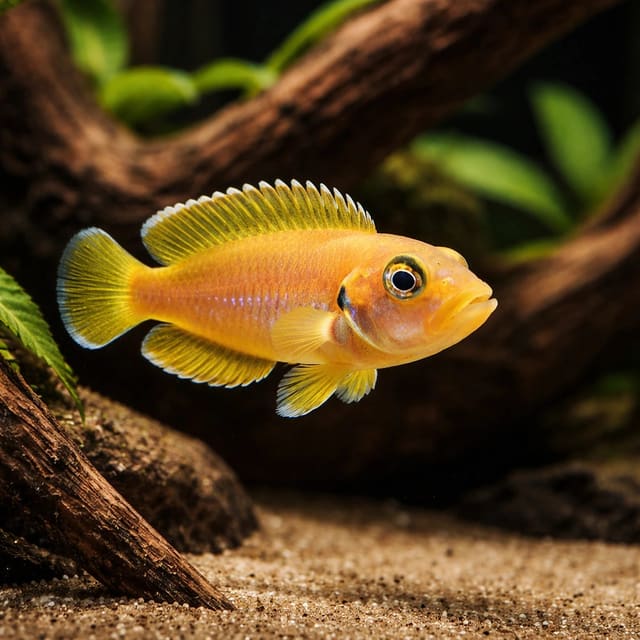
Gold Ocellatus Shell-Dweller (Neolamprologus ocellatus)
23–25°C · pH 8–9
£16.59
Graceful Lamprologus (Lamprologus gracilis) is a 9 cm Lake Tanganyika cichlid for a mature, hard-water aquarium and a carefully researched stocking plan. One purchase supplies one fish; sex is not selectable.
Adult size is the maximum length this species reaches at full maturity (scientific sources). The livestock you receive will be younger and smaller. Product-photo provenance and any image-specific limitations are stated on the listing.
Lamprologus gracilis
Save when buying multiple fish. Each quantity is one fish; sex and pair formation are not guaranteed unless the selected variant explicitly states them.
Graceful Lamprologus (Lamprologus gracilis) is a 9 cm Lake Tanganyika cichlid for a mature, hard-water aquarium and a carefully researched stocking plan. One purchase supplies one fish; sex is not selectable.
Adult size is the maximum length this species reaches at full maturity (scientific sources). The livestock you receive will be younger and smaller. Product-photo provenance and any image-specific limitations are stated on the listing.
Cichlids are a family of roughly 1,800 accepted species, not one care type. Before buying, identify the exact species and source, then compare adult measurement, usable tank dimensions, social system, territory, tested water, diet and an exit plan. No family-wide minimum tank, water range or tank-mate list is safe.
Maintain these water conditions for optimal health and vibrant colors
Graceful Lamprologus (Lamprologus gracilis) is a Lake Tanganyika cichlid for keepers prepared to plan around hard, alkaline water and species-specific social needs. Its modest recorded adult length does not make it an automatic nano-community fish. Water stability, usable aquarium footprint, filtration, oxygenation and the behaviour of every proposed companion matter more than a short body length or an old generic tank label.
One purchase supplies one live fish at a dispatch grade of 3.5–4 cm; FishBase and the species summary record a maximum of 9 cm total length. Those figures describe different life stages. Plan the aquarium around the adult fish, not the smaller animal that arrives. Sex is guaranteed only when the selected option explicitly states male or female. This Graceful Lamprologus listing has no sex-guaranteed option. Do not buy an assumed pair or breeding group from unsexed fish.
| Suits | Keepers with a mature hard-water aquarium and a researched Lake Tanganyika stocking plan |
|---|---|
| One purchase | One live, unsexed fish; supplier dispatch grade 3.5–4 cm |
| Recorded adult size | 9 cm total length |
| Recorded environment | 24–28 °C, pH 7.5–9.0 and 10–25 dGH |
| Native range | Lake Tanganyika, including Cape Kapampa and the coast below the Mahale Mountains |
| Main decision | Choose the social group, aquarium footprint and companions from exact species needs rather than generic cichlid assumptions |
The supplier and shop identity use Lamprologus gracilis. FishBase lists Neolamprologus gracilis as the accepted name and treats Lamprologus gracilis as a synonym. They refer to the same species, not two different products. The product title keeps the supplied name so it remains recognisable to customers and matches the offer, while the accepted-name hint uses Neolamprologus gracilis. This bridge is useful when comparing sources published under different combinations.
“Graceful Lamprologus” is the evidenced common name. It should not be treated as proof of a particular behaviour, diet or breeding method simply because similar lamprologine cichlids are better documented. Closely related animals can differ in social structure and habitat use. Treat the exact species name as the start of research, not a licence to borrow a care sheet from a more familiar relative.
The species is endemic to Lake Tanganyika. The public species summary places it at Cape Kapampa on the western coast and along the eastern coast below the Mahale Mountains; Cape Kapampa is the type locality. FishBase gives a 9 cm maximum total length and records freshwater, benthopelagic conditions. Total length includes the tail fin, so use the cited figure consistently when comparing adult measurements.
A 3.5–4 cm dispatch fish has substantial growth ahead of it. Space, refuge and filtration should be ready for adult needs on arrival rather than upgraded only after social problems or water-quality pressure appear. Juvenile size reveals neither sex, temperament nor a safe group ratio.
The African cichlid collection can help you compare other animals, but collection placement is not a compatibility endorsement. Two cichlids can come from Africa and still require different lakes, diets, territories or social arrangements.
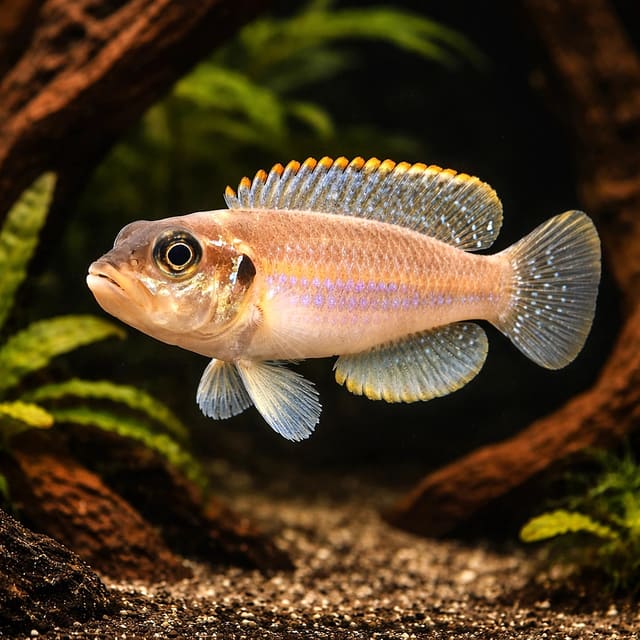
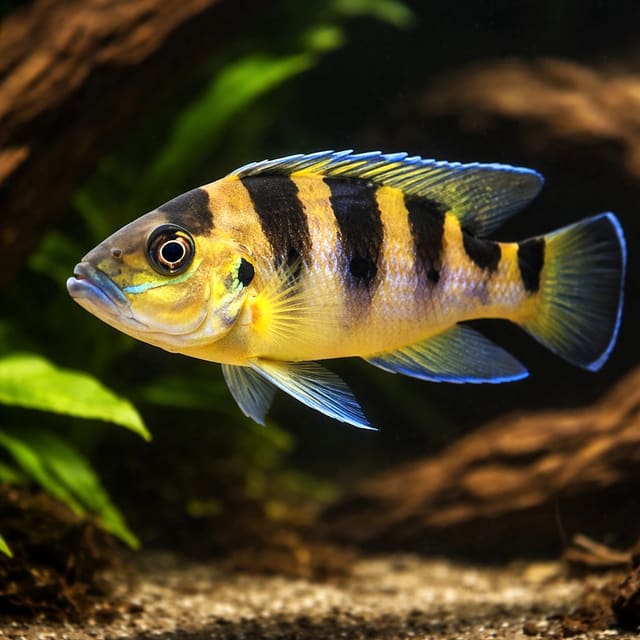
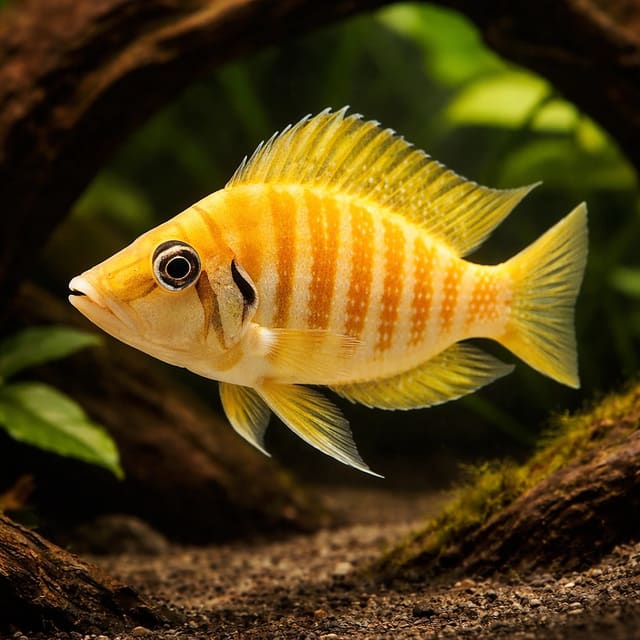
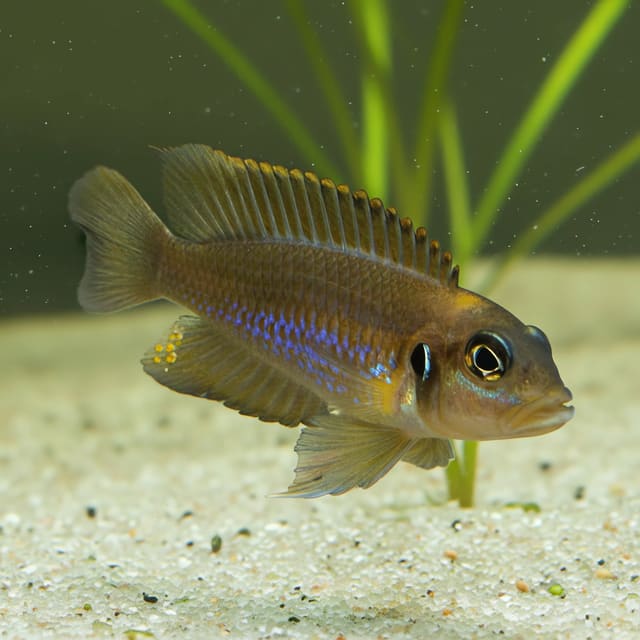
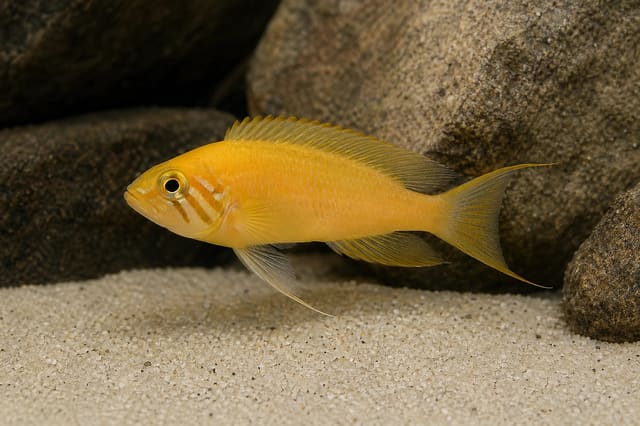
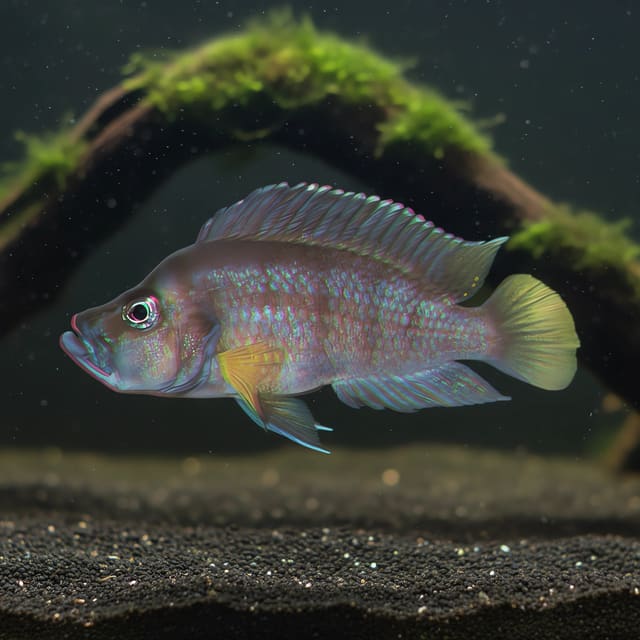
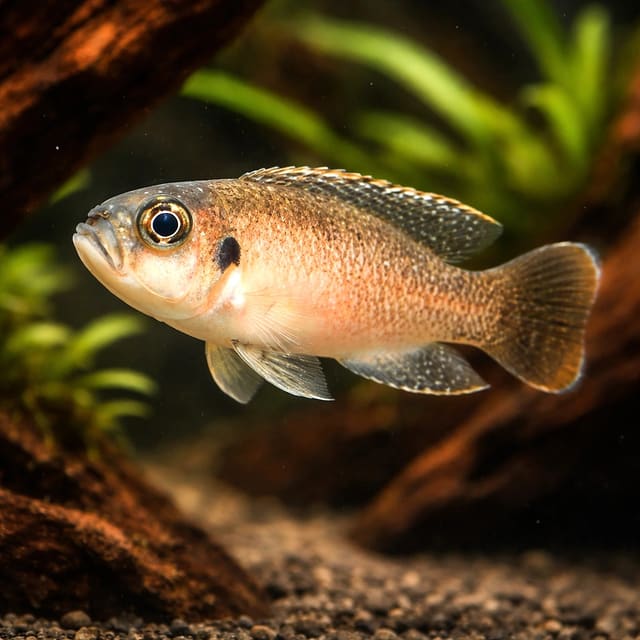
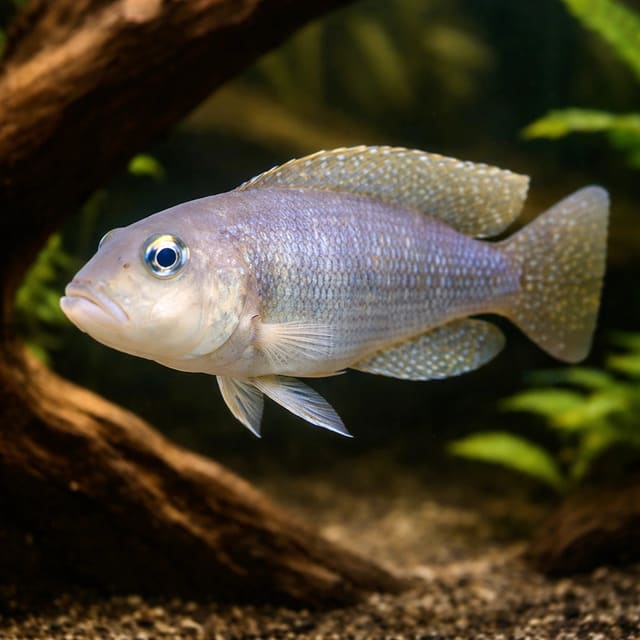
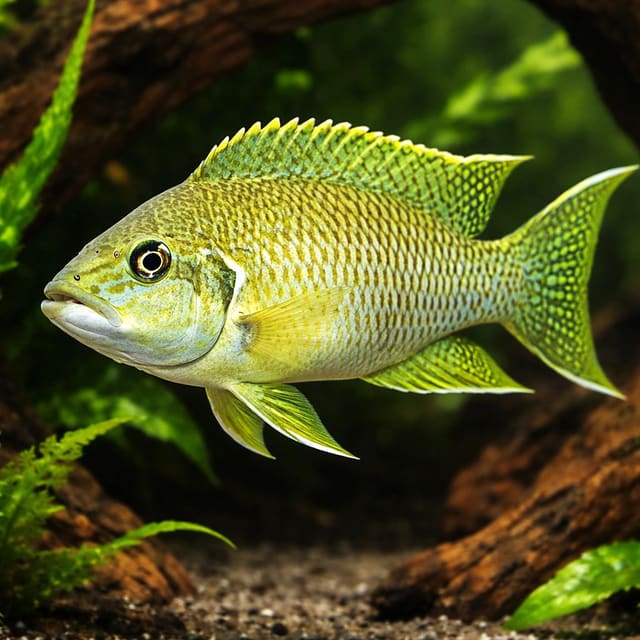
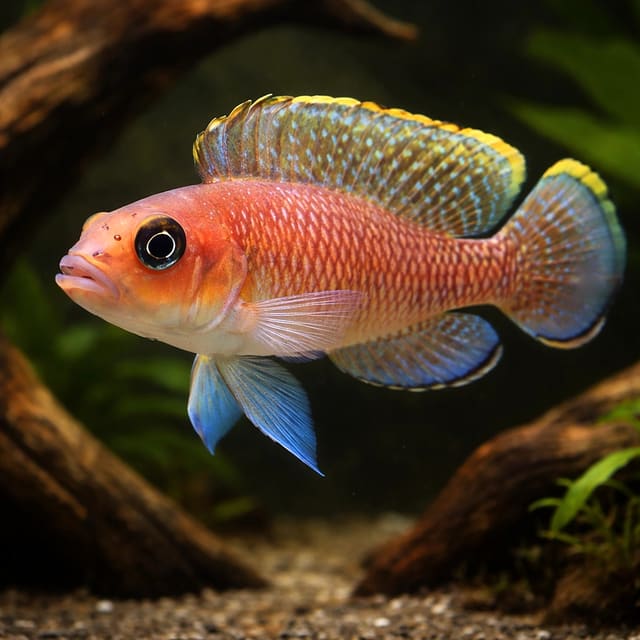
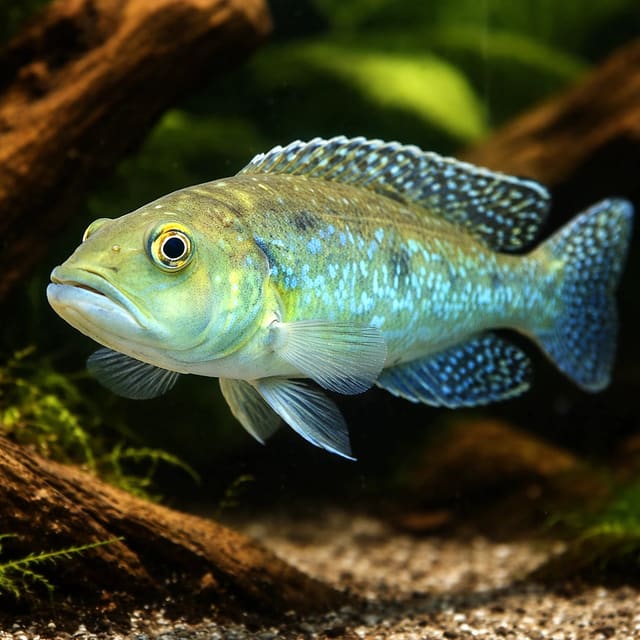
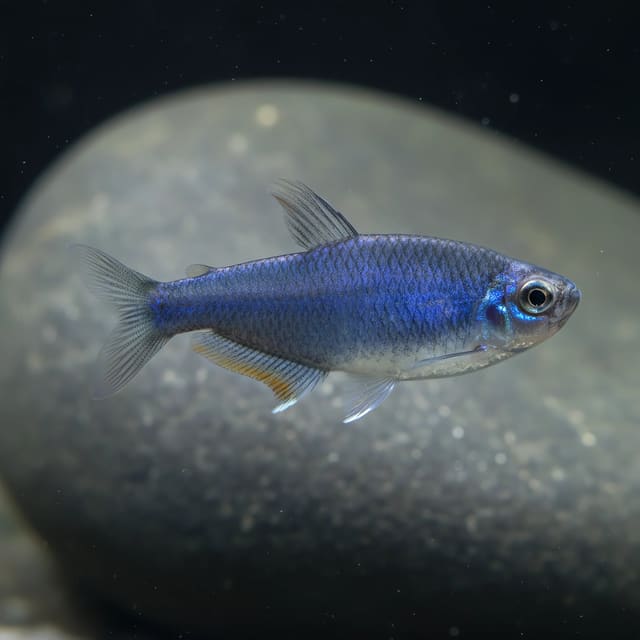
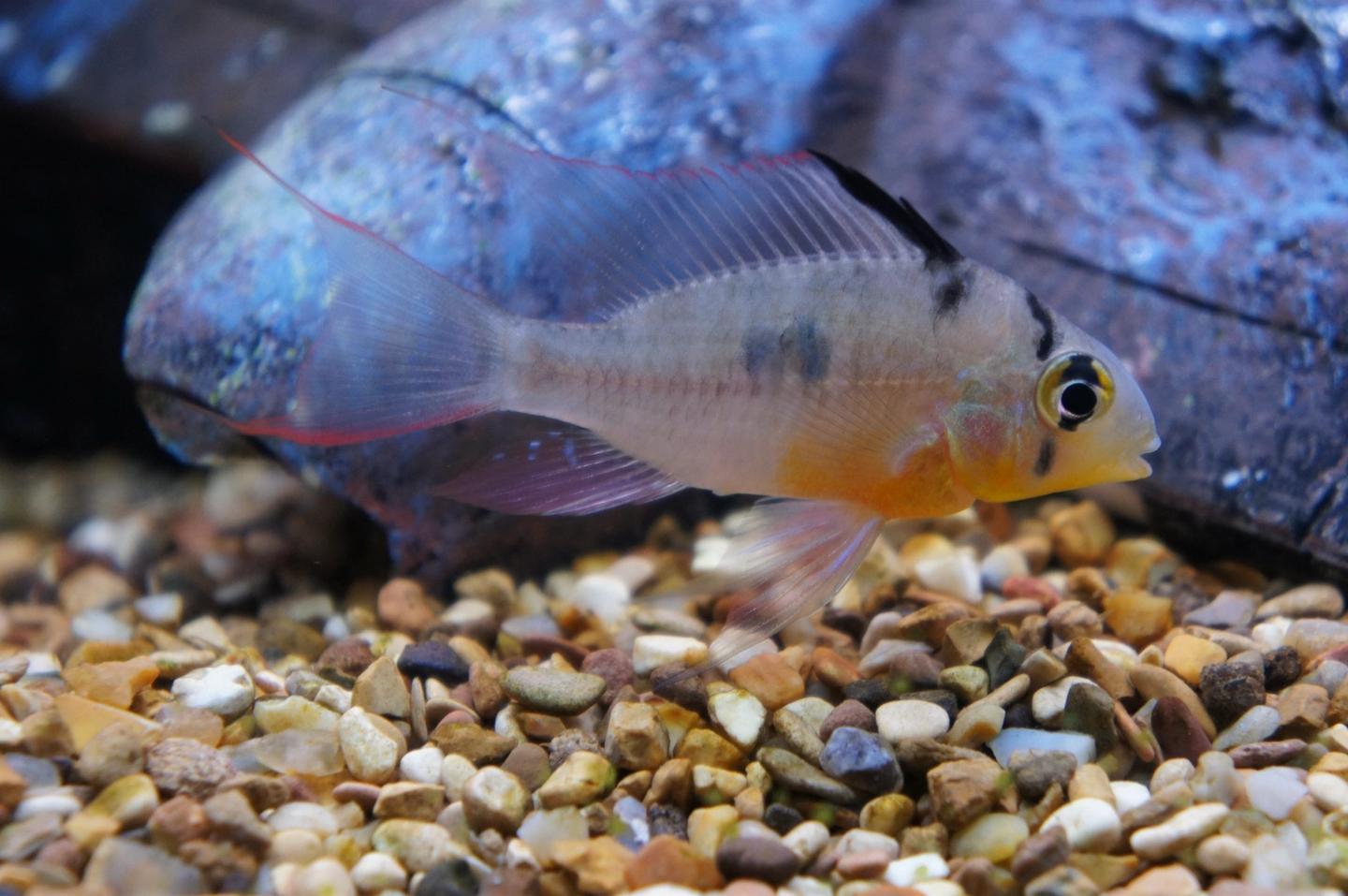
The gallery shows the listing visually but does not promise the exact individual, colour or maturity pictured. Gallery images have been digitally enhanced to improve image quality. Natural colour, pattern, size and maturity can vary between live animals.
Graceful Lamprologus care should begin with the facts established for the species: it is a Lake Tanganyika cichlid recorded at 9 cm total length, in freshwater at 24–28 °C, pH 7.5–9.0 and 10–25 dGH. The broader African-lake care guidance adds reliable welfare practice for filtration, oxygenation, testing and maintenance. Where group guidance varies by species—especially tank size, social number, diet and temperament—make the species-specific decision before purchase rather than filling the gap with a familiar cichlid rule.
Do not reduce the aquarium decision to a generic litre label. A long footprint can provide distinct refuge areas and movement routes in a way that a tall, narrow aquarium of similar volume cannot. The complete group and companion plan determines how much usable floor and rock structure are needed. A single 9 cm length figure cannot reveal the number of territories, safe group ratio or how much distance is required between fish.
Sketch the hardscape before filling the aquarium. Create more than one refuge and make entrances face in different directions. Break direct views across the tank while leaving open routes where fish can move without entering a dead end. Secure rocks on a stable base so burrowing or maintenance cannot cause a collapse. Leave enough access to siphon settled waste and inspect fish that choose sheltered areas.
OATA’s broad African-lake guidance describes fine coral sand or a similar substrate where buffering is appropriate, strong filtration and vigorous aeration. Treat that as group context rather than proof of a single perfect layout for this species. Substrate and décor must work with the measured source water; adding calcareous material without testing can push already hard water farther than intended.
If this will be a species-focused aquarium, decide the number and group structure before choosing the footprint. If it will be a Lake Tanganyika community, allow for the mature territories and feeding access of every species, not just the Graceful Lamprologus. A mature spare aquarium or safe divider makes the plan more resilient if the intended grouping proves incompatible.
| Temperature | 24–28 °C |
|---|---|
| pH | 7.5–9.0 |
| General hardness | 10–25 dGH |
| Ammonia | 0 mg/l |
| Nitrite | 0 mg/l |
The first three values are FishBase’s species environmental record. The zero ammonia and nitrite targets are universal aquarium-welfare requirements reinforced by OATA and the RSPCA’s filtration guidance. Select a stable point within the species range that also suits the complete Tanganyika community. Avoid repeatedly adding buffer to chase an arbitrary midpoint. Measure pH and hardness at the tap and in the aquarium, learn how they change between water changes, and adjust through a consistent plan.
The water chemistry guide explains what the main readings mean, while the water matcher can help compare measured values with the recorded range. Use a reliable thermometer and test kits appropriate to hard water. Keep a simple log so a slow drift is visible before fish behaviour changes.
Match replacement water for temperature and chemistry. Sudden swings in pH or temperature can be more stressful than a stable value away from the centre of the recorded range. If the source water changes seasonally, prepare replacement water consistently and make smaller, controlled corrections rather than one large chemical adjustment.
Fish release ammonia into the water. A mature biological filter supports bacteria that convert ammonia to nitrite and then nitrate, but the first two remain toxic and must test at zero. Filter capacity must be judged under the real bioload, not just from a manufacturer’s aquarium-size claim. Media volume, flow after clogging, head height and maintenance all affect performance.
African-lake aquariums benefit from vigorous aeration and reliable surface movement. Warm water holds less oxygen than cool water, and hardscape can create low-flow pockets where debris accumulates. Direct flow so the surface is disturbed and detritus reaches the filter without turning every shelter into a jet. Check intakes for blockage and make sure a fish cannot become trapped against them.
When filter media needs cleaning, rinse it lightly in water removed from the aquarium and do not run it under the tap. Chlorine or chloramine can kill beneficial bacteria. Clean only what is needed to restore flow; replacing every mature medium at once can remove much of the biological capacity the aquarium relies upon.
For a new aquarium, complete fishless maturation and verify the filter before introducing livestock. The first tropical aquarium guide outlines the setup and maturation sequence. A running filter is not automatically a mature filter, and adding several fish rapidly can exceed the bacterial population even in an established tank.
OATA’s African-lake sheet recommends a partial water change of 25% at least once every week, with regular testing. Use that as a broad group-care baseline, then refine the routine from nitrate, stocking, feeding and actual water stability. Treat replacement water for chlorine or chloramine and match its temperature. Siphon waste from open substrate and behind décor without dismantling every refuge at once.
Watch trends instead of waiting for a crisis. A slowly falling pH may indicate depleted buffering; a rising nitrate pattern can show that stocking or feeding exceeds the current maintenance routine. Write down readings, changes and unusual behaviour. That record is far more useful than trying to remember whether a value “normally” looked different.
African lake cichlid diets vary markedly. OATA’s broad guide contrasts algae-oriented foods for herbivorous groups with more animal-rich pellets and frozen foods for predatory species. That range means the word “cichlid” alone does not establish the right diet for Graceful Lamprologus. Confirm the feeding plan for this exact species before purchase rather than copying a Malawi mbuna or a larger predatory cichlid menu.
Once an appropriate food is identified, choose particles the fish can take easily and offer only what is cleared within a few minutes, following the broader OATA feeding advice. Distribute food so sheltered or slower fish have access. Remove leftovers before they break down into additional waste. Observe body condition and appetite across individuals; food disappearing from the aquarium is different from confirming that every fish ate.
Make diet changes gradually and avoid turning variety into uncontrolled quantity. A sudden refusal to feed can reflect transport, water quality, competition or illness. Check ammonia, nitrite, temperature and social access before reaching for medication. The provided species records do not establish a disease treatment, so persistent concern needs qualified advice rather than a guessed whole-tank remedy.
Prepare the aquarium, test kits, net or transfer container and a quiet receiving area before the courier arrives. Someone must be present to receive live animals. The current delivery and Live Arrival Guarantee page governs packaging, courier, evidence and contact steps.
Do not combine introduction with an unnecessary large chemistry correction or complete filter clean. Stable water and prepared refuge reduce avoidable pressures. Keep the area calm and make sure all equipment remains operating after the transfer.
On arrival day, focus on balance, breathing and the ability to reach cover. At the first feeds, watch the new fish take food rather than assuming it ate because food disappeared. Offer small amounts at more than one point so an established fish cannot control the entire meal. Remove any excess.
Test ammonia and nitrite more often after stocking. A mature filter still faces a higher load when a fish is added. Check pH and temperature against the normal log, and inspect the filter outlet and aeration after any work around the tank. If several fish show rapid breathing, test water and oxygenation immediately.
Review social access after several days. A fish that stays sheltered can be using refuge normally, but one that is driven back every time it emerges or cannot feed needs intervention. Do not wait for severe fin damage before separating incompatible fish. Behavioural labels are less useful than direct observations of food access, pursuit and use of space.
Use observations as welfare signals rather than as instant diagnoses. A fish spending time near shelter may simply be cautious in a new aquarium; the same fish refusing every meal while breathing rapidly deserves immediate checks. Compare what you see with the fish's earlier behaviour and with the rest of the aquarium. If several animals change at once, water quality, temperature or oxygenation moves higher up the list of likely causes.
Record which fish eats, where it rests and whether it is pursued. Short notes make patterns visible: a chase that happens once at feeding is different from one animal being blocked from food throughout the day. Check fins, scales, eyes and body condition during routine observation, but avoid repeatedly disturbing the aquarium to force a hidden fish into view. Use a torch from outside the glass only when needed and keep handling to a minimum.
When a fish shows distress, start with measurable conditions. Test ammonia, nitrite, pH and temperature, confirm filter flow and aeration, and look for social exclusion. Correct a clear environmental problem steadily. If no cause becomes apparent or the fish deteriorates, seek qualified help with the water readings and observations ready. That sequence is more useful than choosing a medicine from one visible symptom.
Revisit the setup as the fish grows from its 3.5–4 cm dispatch grade towards the 9 cm adult record. Refuge entrances, food particle size and the apparent amount of open space all change in relation to a larger body. A route that works for a juvenile can become cramped, and a social arrangement that seems quiet can change with maturity. Schedule periodic reviews rather than waiting for a conflict.
Adult planning also means thinking beyond the fish itself. Check that the filter still has reserve capacity, that maintenance can reach behind larger rock structures and that a separation aquarium remains mature and usable. If future companions are being considered, assess them at adult size as well. Stocking a tank with juveniles does not postpone the need to provide for the adults they will become.
Compatibility for Graceful Lamprologus should be built from location, water, adult size, social structure and observed behaviour. The strongest general rule in the supplied care guidance is to plan African-lake communities by lake: Tanganyika species belong with carefully researched Tanganyika companions, and Malawi and Tanganyika cichlids should not ordinarily be mixed because their behaviour and stocking patterns differ.
A companion must tolerate the same hard, alkaline water, but shared chemistry does not establish social compatibility. Compare adult size, activity, feeding speed, habitat use and group structure. Two species can share 25 °C and still compete for the same refuge or intimidate one another. Conversely, different-looking fish may still fail if one requires a diet or social arrangement that the shared aquarium cannot provide.
Use the complete adult plan. A juvenile that appears harmless at 3.5–4 cm may need more space or behave differently as it approaches the recorded 9 cm total length. Check how many fish of each species are required, whether the sexes need to be managed and whether every animal can reach food. Do not infer a pair from two unsexed fish.
OATA’s broad African-lake guidance says very few cichlids in the group do well singly, but also says the number depends on the species. That is not permission to choose two, three or six at random. Establish the intended social unit for Lamprologus gracilis before ordering multiple fish and match the aquarium footprint to the complete adult group.
The retail offer does not guarantee sex. A social plan that depends on a male-female pair or a precise ratio cannot be promised from this listing. If several fish are purchased, provide more refuge than the expected group appears to need and retain a mature separation option. Social relationships can change with maturity even when juveniles initially coexist.
Start with species from Lake Tanganyika whose documented adult size, water range and habitat use can coexist. Allocate aquarium zones before choosing fish: open-water swimmers, substrate-oriented species and refuge users can still overlap at feeding or around rockwork. Avoid filling every zone simply because a stocking chart lists them separately.
Add more peaceful animals before assertive ones where the species guidance supports that approach, and be prepared to rearrange part of the décor when adding fish so an established resident does not retain every boundary. Do not dismantle the whole mature environment unnecessarily. The goal is to create multiple viable routes and refuges, not temporary confusion.
Related products can be useful alternative purchases without being compatible tank mates. The shell-dwelling cichlids listed in the related field are separate options for keepers comparing Lake Tanganyika fish. Their presence does not say they should share an aquarium with Graceful Lamprologus.
Do not mix this Lake Tanganyika species with Malawi cichlids simply because both prefer hard, alkaline water. OATA specifically advises against routinely combining fish from the two lakes because temperament and behaviour differ. A shared pH range is one condition among many and cannot resolve social or habitat conflict.
Soft-water community fish are also a poor planning direction because maintaining the Tanganyika range would compromise their needs. Avoid choosing companions by colour, price or availability. The correct community begins with welfare requirements and ends with the fish the aquarium can genuinely support.
Persistent hiding, loss of condition, torn fins or repeated targeted chasing means the plan needs action. A careful partial rescape may redistribute access, but it is not guaranteed to make incompatible fish compatible. Permanent separation is sometimes the responsible outcome.
Imagine an aquarium already contains small Lake Tanganyika cichlids. First compare their documented water range with 24–28 °C, pH 7.5–9.0 and 10–25 dGH. Next compare adult size and social number. Then map each refuge and feeding point. If several species depend on the same crevice zone, the theoretical “different species” distinction does not create extra territory.
Now check the filter and maintenance record. Adding fish increases ammonia production and oxygen demand even when the aquarium looks spacious. If nitrate already rises quickly between weekly changes, the system has little welfare margin. Finally, decide what happens if one fish is excluded from food or shelter. Without a ready answer, the stocking plan is incomplete.
This review may end with choosing a different animal or creating a separate species-focused aquarium. That is a successful decision: compatibility planning is meant to prevent a problem, not justify a purchase already decided on.
Every addition changes both the biological system and the social system. The filter receives more waste, while the fish must renegotiate access to food, open water and refuge. Check both in parallel. Use test kits to confirm ammonia and nitrite are zero because water clarity cannot show those compounds. Recheck the group after feeding and territory use begin, since a calm first hour is only an initial observation.
Before the addition, record the normal water values and behaviour of the existing fish. Afterward, use the same feeding points and observation times so changes are easier to spot. If water readings remain stable but one fish loses access to food, address the social problem. If several fish breathe rapidly or become inactive, investigate water and oxygenation immediately rather than assuming every change is aggression.
A partial rescape can create new routes and reduce an established fish's control of a refuge, but preserve secure rock placement and the biological maturity of the aquarium. Never destabilise the entire setup in a rushed attempt to solve one chase. If a targeted fish remains unsafe, use the prepared separation option and reconsider the permanent stocking plan.
Graceful Lamprologus reaches a recorded maximum of 9 cm total length. The supplier dispatch grade for this line is 3.5–4 cm, so the animal supplied is smaller than the adult planning size.
Choose a long, mature Lake Tanganyika aquarium that can provide stable hard water, effective filtration, oxygenation and separate refuge areas for the complete stocking plan. A generic litre figure is not a safe substitute for checking the intended group and companions for this exact species.
Do not assume that one fish or an arbitrary pair is the correct social unit. Broad African-lake guidance says very few cichlids in this group do well singly, while the correct number depends on the species; decide the group structure and space before buying several unsexed fish.
It is best treated as an intermediate choice. A keeper should already be confident maturing a filter, maintaining hard alkaline water, testing ammonia and nitrite, and assessing a Lake Tanganyika stocking plan without relying on generic community-fish rules.
African lake cichlid diets vary widely, so use a feeding plan confirmed for this exact species rather than assuming every cichlid eats the same food. Offer appropriately sized quality food in portions cleared within a few minutes and remove leftovers to protect water quality.
FishBase records 24–28 °C, pH 7.5–9.0 and 10–25 dGH for the species. Keep a stable point inside those values, with ammonia and nitrite at zero, rather than creating repeated swings while chasing a precise midpoint.
Temperament varies among African lake cichlids, so aggression and fin-nipping risk should not be guessed from the family name. Provide separate refuges and broken sight lines, then watch whether every fish can feed and use open water without repeated pursuit.
Start with a carefully planned Lake Tanganyika community whose members share the hard-water range, space and habitat needs. Avoid mixing Malawi and Tanganyika cichlids, and do not treat either related product alternatives or a shared temperature as proof of compatibility.
Tropical Fish Co hand-bags the fish in oxygen, uses an insulated box and adds a heat pack when conditions call for it, then sends it with a licensed live-animal courier. Be present, record the sealed parcel being opened for any Live Arrival Guarantee claim, inspect the fish the same day and follow the current introduction guidance.
The sources below serve different purposes. Species records establish taxonomy, range, size and environmental values. OATA supplies broader African-lake husbandry and compatibility context. RSPCA guidance explains the biological-filter principle. Tropical Fish Co’s delivery page, linked in the care tab, controls packing, introduction and claim steps.
The title retains the supplied synonym Lamprologus gracilis; the stable structured accepted-name hint follows FishBase as Neolamprologus gracilis. The common-name list contains only the evidenced vernacular name Graceful Lamprologus.
No reviews for this item yet. Bought one? Honest reviews only, good or bad.
What customers say about ordering from us
Easy website plenty of info on fish your buying great to pick a time slot
TRACEY DURRANT · 7 Oct 2026
Got some lovely fish thank you
Kevin Mackie · 7 Oct 2026
Reviews of our shop, collected by Judge.me, an independent third-party review collector. Newest first.