−13%
Moderate
Ocellated Shell-Dweller (Lamprologus ocellatus)
23–27°C · pH 7.5–9 · 40L
£16.52£18.99

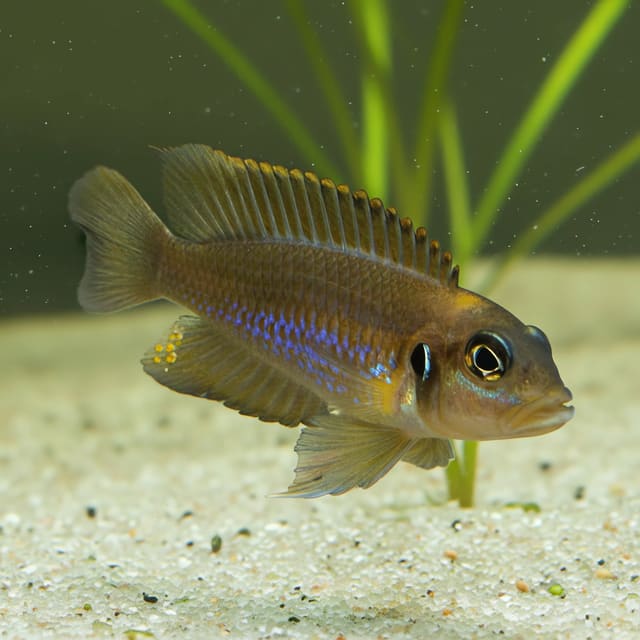
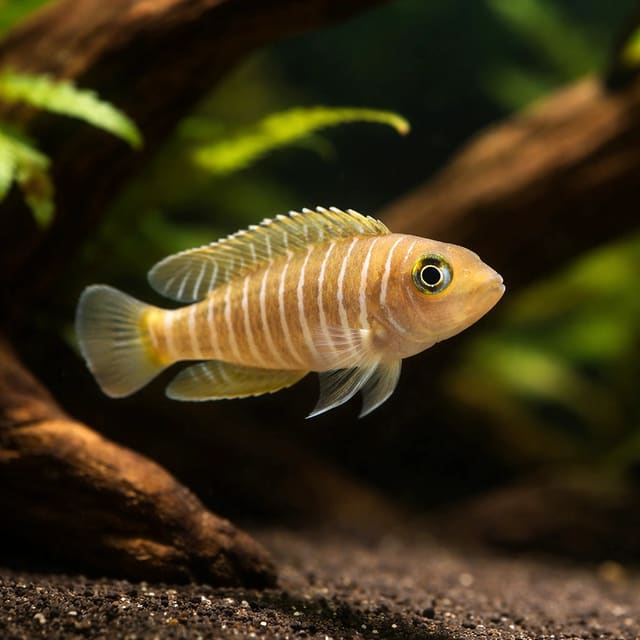
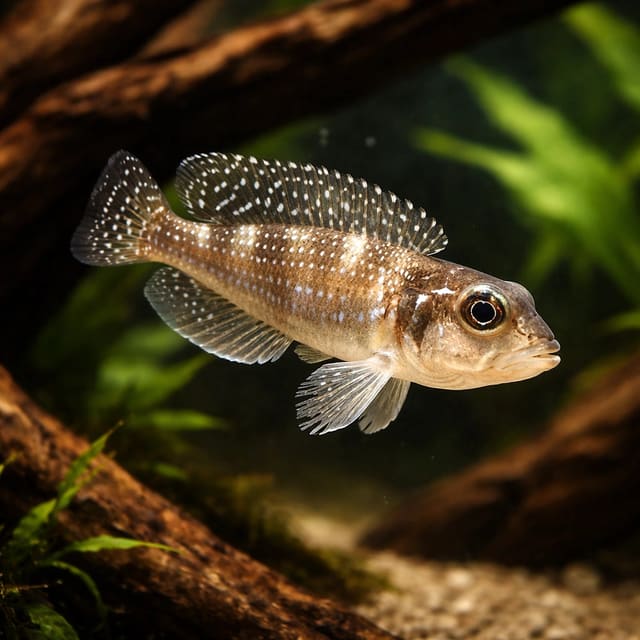
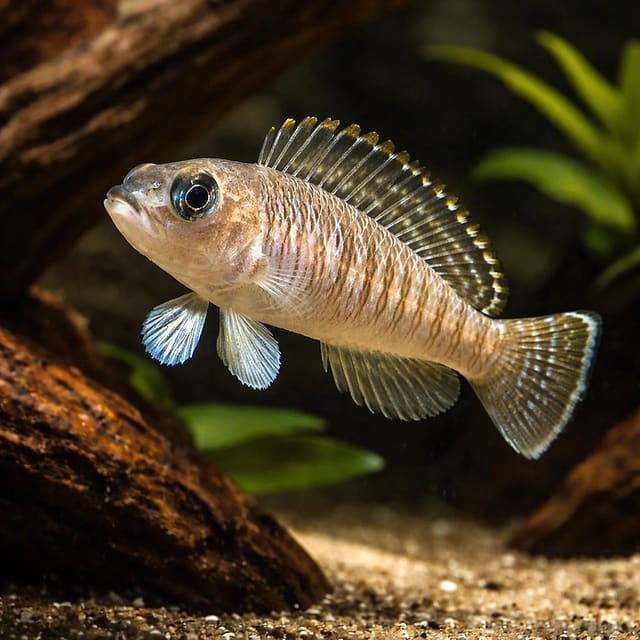
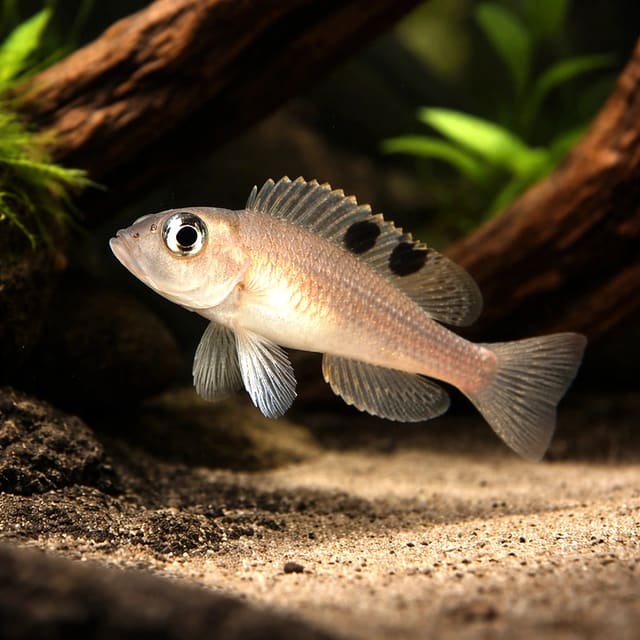
Gold Ocellatus Shell-Dweller (Neolamprologus ocellatus) is a territorial Lake Tanganyika cichlid supplied as one fish in a 2–4 cm or XL dispatch class. Plan a 60 cm+ aquarium with fine sand, more shells than fish, hard alkaline water and carefully separated territories.
Neolamprologus ocellatus
Save when buying multiple fish. Each quantity is one fish; sex and pair formation are not guaranteed unless the selected variant explicitly states them.
Gold Ocellatus Shell-Dweller (Neolamprologus ocellatus) is a territorial Lake Tanganyika cichlid supplied as one fish in a 2–4 cm or XL dispatch class. Plan a 60 cm+ aquarium with fine sand, more shells than fish, hard alkaline water and carefully separated territories.

Cichlids are a family of roughly 1,800 accepted species, not one care type. Before buying, identify the exact species and source, then compare adult measurement, usable tank dimensions, social system, territory, tested water, diet and an exit plan. No family-wide minimum tank, water range or tank-mate list is safe.
Maintain these water conditions for optimal health and vibrant colors
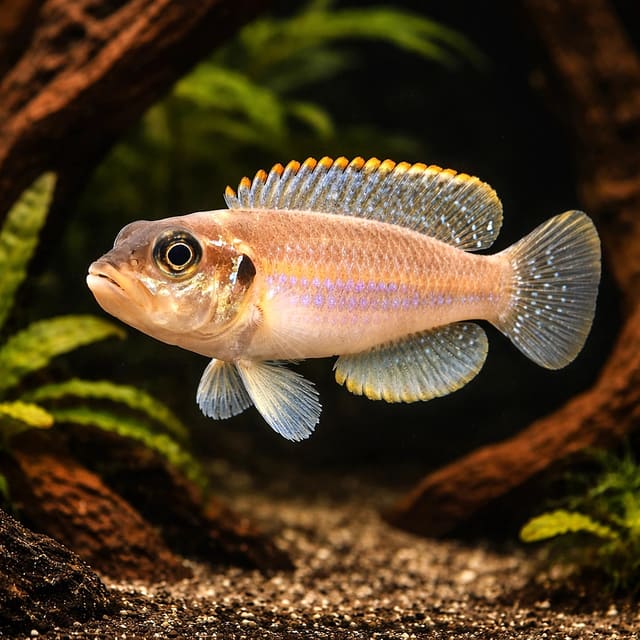
Gold Ocellatus Shell-Dweller (Neolamprologus ocellatus) is a small but territorial Lake Tanganyika cichlid whose aquarium life centres on a usable snail shell. One purchase supplies one live fish in the chosen 2–3 cm, 3–4 cm or XL dispatch class. The size you select is the size supplied, not the adult size. Gold is the recorded trade-form wording; it does not establish sex, locality or an identical finished appearance.
The fish suits a keeper prepared to devote real bottom area to fine sand, more shells than fish and separated territories. Its body remains compact, yet it can defend the shell and nearby sand vigorously. A calm-looking dwarf-cichlid display still needs mature filtration, hard alkaline water and a prompt separation plan if one individual is denied refuge or food.
| Suits | Think twice when |
|---|---|
| A species-focused Tanganyika setup with a base at least 60 cm long, fine sand and several safe shells. | The only aquarium is a new, soft-water community tank or has coarse substrate and no usable shell bed. |
| A keeper who enjoys close observation of digging, shell choice and small territories. | There is no mature spare space for a fish that is repeatedly chased away from the bottom. |
| Measured hard alkaline water and a diet centred on suitably sized live and frozen foods. | The household feeding routine is built around large floating foods that a shy bottom fish cannot reach. |
The accepted name used in the listing is Neolamprologus ocellatus. FishBase and the specialist aquarium profile use Lamprologus ocellatus, reflecting the recorded genus history rather than a different fish. Browse the African cichlid collection to compare other listings, but do not treat a shared lake or family as proof of compatibility.
Sex is guaranteed only when the selected option explicitly states male or female. This Gold Ocellatus Shell-Dweller listing has no sex-guaranteed option.
FishBase records 5.8 cm total length and a 60 cm minimum aquarium length. Seriously Fish reports 6 cm standard length and describes a 45 × 30 × 30 cm aquarium, about 40 litres, for a pair or one male with two or three females, with a larger tank for a colony. Total length and standard length use different endpoints, so keep the two records separate rather than turning them into one adult maximum. Use at least 60 cm of tank length as the safer footprint starting point. More fish need more shell zones and more distance between defended sites.
Routine care uses 23–25 °C, pH 8.0–9.0 and 10–19 dGH, the overlap between the FishBase environmental record and the Seriously Fish aquarium range. Fine sand should be at least two inches (about 5 cm) deep where the fish digs, and shells must outnumber fish. Keep the aquarium mature and filtered, with ammonia and nitrite at zero.
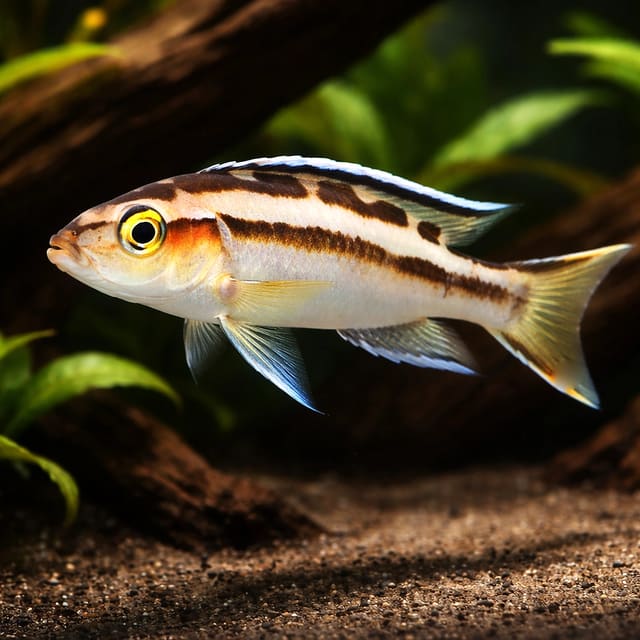
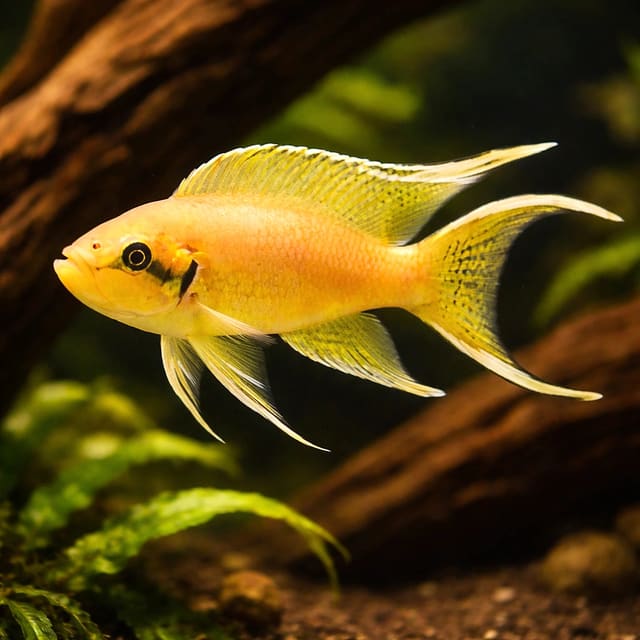
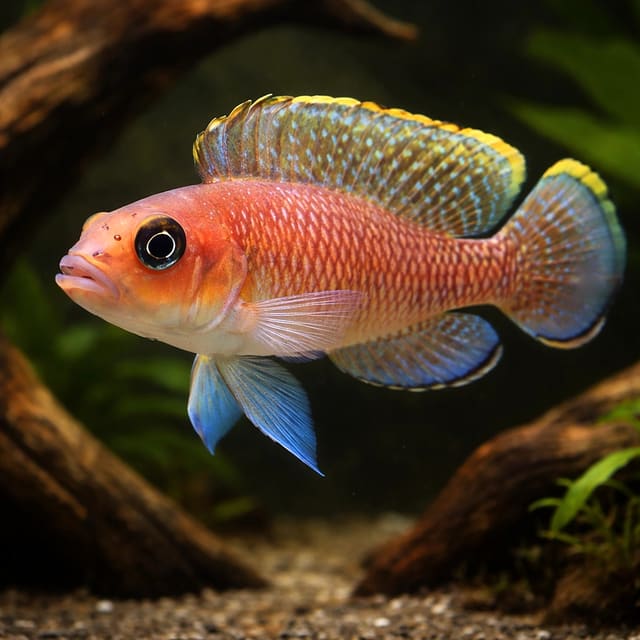
Gallery images have been digitally enhanced to improve image quality. Natural colour, pattern, size and maturity can vary between live animals.
Eschmeyer's Catalog of Fishes treats the species described as Julidochromis ocellatus by Steindachner in 1909 as valid, with genus placement disputed between Lamprologus and Neolamprologus. The approved customer title uses Neolamprologus ocellatus. FishBase and Seriously Fish use Lamprologus ocellatus; those records still describe the same Lake Tanganyika shell dweller.
The trade form is recorded as “Lamprologus / ocellatus gold” and “Ocellated Shelldweller gold.” That supports the Gold offer identity and its dispatch grades, not aquarium parameters or a guarantee of exact colour. Keep appearance expectations flexible: a living animal's colour, markings, size and maturity can differ from another individual even within the same trade form.
| Record | Planning use |
|---|---|
| 5.8 cm TL in FishBase | A species maximum measured as total length; it is separate from the retail dispatch class. |
| 6 cm SL in Seriously Fish | A standard-length record, measured to a different endpoint from total length; it remains separate rather than becoming a shared adult maximum. |
| 2–3 cm and 3–4 cm | Measured dispatch bands, with no information about sex or eventual social role. |
| XL | A trade size class without a centimetre value in this offer; it must not be converted into an unstated measurement. |
Seriously Fish notes that mature males grow much larger than females and describes differences in fin edging. Those adult traits are biological context, not a reliable promise for the fish ordered. Give every individual enough space and shells without designing the aquarium around an assumed sex.
FishBase describes this dwarf cichlid as living in, or at least breeding in, Lake Tanganyika snail shells. Seriously Fish calls for open sandy areas with a good number of empty shells, more shells than fish and at least two inches of substrate because the species digs. These details are functional requirements: a decorative shell that the fish cannot enter does not replace a safe refuge.
Use fine, smooth sand over the working area. The fish will move it around shell entrances and may partly bury a chosen shell. Avoid coarse, sharp gravel that prevents normal excavation or traps food in gaps too large for the fish to clear. Keep major rocks stable on the aquarium base or suitable support so digging cannot undermine them.
The aquarium should be fully prepared and matured before the fish arrives. The first tropical tank guide covers filtration and cycling foundations. For this species, add the shell bed before stocking so a new arrival is never left searching for the only safe cavity while an established fish already controls it.
Plants are optional and must tolerate hard alkaline water. Place them around the edges or attach them to stable hardscape so roots do not occupy the entire sand bed. Keep a broad open area around the shell zones. The fish's ability to dig, enter a shell and leave a neighbour's defended area matters more than recreating a decorative photograph.
Use 23–25 °C, pH 8.0–9.0 and 10–19 dGH as the conservative overlap for routine aquarium care. FishBase records 23–25 °C, pH 8.0–9.0 and 9–19 dH in the species environment. Seriously Fish gives 23–27 °C, pH 7.5–9.0 and 10–25 dGH for aquarium care. The narrower shared band keeps the care card inside both records.
Stable chemistry matters more than repeatedly pushing the aquarium towards an endpoint. Measure tap or prepared water before altering it and keep the method consistent between changes. The water chemistry guide explains GH, KH, pH and nitrogen compounds, while the water matcher helps compare actual results with the care range.
| Measurement | How to respond |
|---|---|
| Temperature changes unexpectedly | Verify with a separate thermometer, inspect the heater and match replacement water gradually. |
| pH falls between maintenance visits | Check KH, organic load and the consistency of new water before using any buffer. |
| Ammonia or nitrite appears | Act promptly, reduce the immediate load and investigate cycling, feeding and filter performance; both should be zero. |
| Nitrate rises faster than usual | Review feeding, stocking and waste trapped around shells, then adjust the maintenance plan. |
| Fish breathe rapidly | Check temperature, oxygenation, ammonia, nitrite and social stress before assuming disease. |
RSPCA guidance explains the biological filter's job: beneficial bacteria convert toxic ammonia to nitrite and then to safer nitrate. Preserve that process. OATA advises rinsing filter media lightly in water removed from the aquarium rather than under the tap, and treating new tap water with conditioner before it enters the tank.
OATA strongly recommends a partial water change of 25% at least once every week for African lake cichlids. Use test trends to judge whether the aquarium needs additional maintenance. Siphon exposed sand lightly and remove food or waste around empty shells without dismantling every defended site at once. Match temperature and chemistry so maintenance improves water quality without creating a sudden shift.
Use effective aeration and circulation, particularly when several fish share a warm, mineral-rich aquarium. Direct flow across the tank without blasting sand into the shell openings. Check actual outlet movement after media is installed; a filter's box rating does not show how much water reaches the aquarium after head height and blockage.
Look for uneaten food inside empty shells, compacted debris behind their openings and sand pushed against the filter intake. Remove waste gently while leaving occupied refuges and stable boundary markers in place. If a shell has rolled beneath rockwork or developed a sharp edge, replace it with another safe choice rather than leaving the fish with fewer usable sites.
After refilling, confirm that temperature and flow return to normal and that each fish can re-enter a refuge. Maintenance can temporarily change territorial boundaries, so watch the aquarium until ordinary feeding and shell use resume. A water change is complete only when the environment is stable again, not simply when the bucket is empty.
FishBase describes L. ocellatus as a microfeeder on invertebrates. Seriously Fish says live and frozen foods should form the bulk of the aquarium diet, although dried food is usually accepted. Use suitably sized, clean aquarium foods that the fish can take near its territory. Large pieces that drift away or lodge in a shell are poor choices for a small bottom-oriented fish.
Offer variety rather than relying on one item. A quality dried granule or pellet can supplement the routine when the fish accepts it, but acceptance should be observed rather than assumed. Feed measured portions and remove leftovers. Food decomposing inside an unused shell affects the same small area the fish uses as a refuge.
OATA's African lake sheet notes that dietary needs vary across the group and recommends feeding only what the fish can eat within a few minutes, twice a day. Keep that group schedule proportional to the actual animals and temperature. The species-specific diet remains invertebrate-led rather than being borrowed from a herbivorous African cichlid.
Entering a shell, moving sand around it, displaying at a neighbour and defending the immediate entrance are characteristic behaviours. Seriously Fish describes the species as territorial and vigorous in defence of the shell and the small area around it. A brief chase can mark a boundary; continuous exclusion means the layout or social group is failing.
| Observation | First response |
|---|---|
| A fish retreats after nearby movement | Allow quiet time and confirm it later emerges, feeds and controls its position normally. |
| One fish remains at the surface or in a top corner | Test water and watch aggression immediately; confirm it can reach a shell and food. |
| Fins are repeatedly torn | Identify active chasing, inspect hardscape and use the prepared separation space. |
| Breathing becomes rapid | Check ammonia, nitrite, temperature, aeration and social pressure before choosing treatment. |
| Body condition declines | Confirm feeding access, portion size and water quality, then seek diagnosis-led help if necessary. |
Do not lift an occupied shell simply to see whether the fish is inside. Observe the entrance, feeding response and breathing from outside the aquarium. If a fish is injured or cannot establish a refuge, move it to mature water with compatible temperature and chemistry. A spare tank or safe divider must be ready before the emergency.
Keep a maintenance record with water results, feeding, filter work and changes to the social group. A trend often reveals more than a single observation: reduced flow, rising nitrate or a new territory boundary can coincide with hiding and appetite changes. Treat the aquarium environment first, then use medication only for a reasoned diagnosis and according to the selected product's directions.
Before delivery, confirm the heater, filter, lid, tests, fine sand and shell zones are ready. Ammonia and nitrite must be zero, and the fish needs immediate access to a usable shell away from an established animal's strongest territory.
Be present to receive the parcel. Start one continuous unboxing video while it is still sealed, keep the outer box visible, and record opening it and the fish still in the sealed bag. Inspect promptly. The policy says to float the sealed bag for 20–30 minutes before release and not to pour transport water into the aquarium.
After release, check balance, breathing and freedom from active attack. Hiding in a shell can be normal, but a fish held away from every refuge needs intervention. For a Live Arrival Guarantee claim, contact Tropical Fish Co the same day with the order number and continuous video. Read the complete delivery and Live Arrival Guarantee policy before the parcel is due.
Seriously Fish describes a pair or a single male with two or three females in a 45 × 30 × 30 cm aquarium, and says a larger tank is needed for a colony. It also advises more females than males when several fish are kept. Those are plans for known social structure. This retail offer does not guarantee sex, so an order cannot be assumed to produce a male-and-female pair or the intended ratio.
Use at least the 60 cm aquarium length recorded by FishBase as the safer species-focused floor, then increase bottom area for more territories. Provide more shells than fish and space them across separate zones. Watch whether every fish can enter a refuge and feed. A nominal head count is not successful if one animal spends the day outside the shell bed.
OATA notes that African lake cichlid numbers depend on the species and that these fish generally do poorly when kept without a suitable social plan. Apply the species profile, the unsexed offer and what the fish actually do in the aquarium. Do not force a pair or colony arrangement merely because it sounded tidy before maturity.
A species-focused aquarium is the clearest starting point. In a larger Lake Tanganyika setup, Seriously Fish says Ocellatus can share with animals using other regions and names rock dwellers such as Neolamprologus brichardi or smaller Julidochromis, plus open-water Cyprichromis. These are conditional examples, not universal tank mates.
| Scenario | Decision rule |
|---|---|
| Species-focused Ocellatus setup | Preferred starting point, with several shell choices and separated territories. |
| Smaller Julidochromis or Neolamprologus brichardi | Consider only in a larger aquarium with distinct rock and shell zones, matching water and a separation plan. |
| Open-water Cyprichromis | Consider only when the tank supports the companion's full social group and leaves genuine swimming room above the shell bed. |
| Another shell-dwelling species | Avoid in the minimum footprint because both need the same bottom refuges and territory. |
| Malawi cichlids or soft-water community fish | Avoid; OATA advises against mixing Malawi and Tanganyikan cichlids, and soft acidic conditions do not match this fish. |
Screen adult size, water, diet, temperament and spatial use for every proposed companion. A fish living higher in the water can still disrupt feeding or descend into the shell bed. Observe the aquarium after lights-on, during meals and when people approach, because different situations can reveal pressure that is hidden during a brief quiet view.
Related product links are comparison tools, not compatibility recommendations. They can help a buyer compare another Ocellatus form, but colour labels do not make two listings separate species, guarantee sexes or establish that fish from different purchases will share a territory.
Measure success by usable space, not by whether the fish fit through the shell openings on the day they arrive. The Ocellatus must retain sand and refuge access as every companion matures. Open-water species need their full swimming area and social group, while rock dwellers need structures that do not collapse into the shell zone.
Feeding styles also have to coexist. A fast open-water shoal can intercept food before it reaches the bottom, while an assertive rock cichlid can turn a route between shells into a defended boundary. Distribute food thoughtfully and observe every animal. If one species can meet its needs only by preventing another from feeding or sheltering, the combination is not working.
FishBase records 5.8 cm total length and Seriously Fish reports 6 cm standard length. These measurements use different endpoints, so keep both labelled rather than treating the numerically larger standard-length record as one adult maximum. Both remain separate from the 2–3 cm, 3–4 cm and XL dispatch classes.
Use at least the 60 cm aquarium length recorded by FishBase for a species-focused setup. Seriously Fish describes 45 × 30 × 30 cm, about 40 litres, for a pair or one male with two or three females, but a larger tank is required for a colony; choose the more generous footprint when in doubt.
Seriously Fish describes a pair or one male with two or three females in a suitable small setup and says a colony needs more space. This offer is not sex guaranteed, so provide more shells than fish, separated territories and a mature plan for any individual that is excluded.
It is an intermediate choice. Small size helps, but the keeper still needs a cycled aquarium, stable hard alkaline water, fine sand, several usable shells and confidence managing territorial cichlid behaviour.
It is a microfeeder on invertebrates. Use suitably sized live and frozen foods as the main diet, with quality dried food when accepted, and give measured portions that each territory holder can reach without leaving waste in the shells.
Use 23–25 °C, pH 8.0–9.0 and 10–19 dGH as the conservative overlap between the FishBase environmental record and the Seriously Fish aquarium profile. Keep the chemistry stable and maintain ammonia and nitrite at zero.
It vigorously defends its shell and the nearby bottom territory. Chasing or fin damage can occur when shells are scarce or territories overlap, so watch access to food and refuge and separate a fish that remains under sustained pressure.
In a larger Lake Tanganyika aquarium, the species profile names rock dwellers such as Neolamprologus brichardi or smaller Julidochromis and open-water Cyprichromis as possibilities. Every combination still needs matching water, adequate adult space and no competition for the shell bed.
Tropical Fish Co hand-packs live fish in pure oxygen and insulated packaging, adding a heat pack when weather calls for one, and uses a licensed live-animal courier. Be present, record continuous unboxing from the sealed parcel, inspect the fish in the bag and contact the store the same day with the video and order number if a claim is needed.
No reviews for this item yet. Bought one? Honest reviews only, good or bad.
What customers say about ordering from us
I have a small group of long finned mountain minnows. So was delighted to be able to order ten of this variety to increase the genetics in my tank . The ones I recieved are healthy but it’s to early to give a verdict on wether they are of a long finned type since they are small currently.
Gordon Walker · 23 Sept 2026
100% success travel and "installation". Pleased with quality of purchase. The Siamese fighter a bit "shy" so have not yet seen him at his best yet but looking good. Happy customer. GG
George E Garratt · 21 Sept 2026
Reviews of our shop, collected by Judge.me, an independent third-party review collector. Newest first.