Advanced
Jumbo Yellow Sardine Cichlid (Cyprichromis sp.)
24–27°C · pH 7.8–9
£39.99
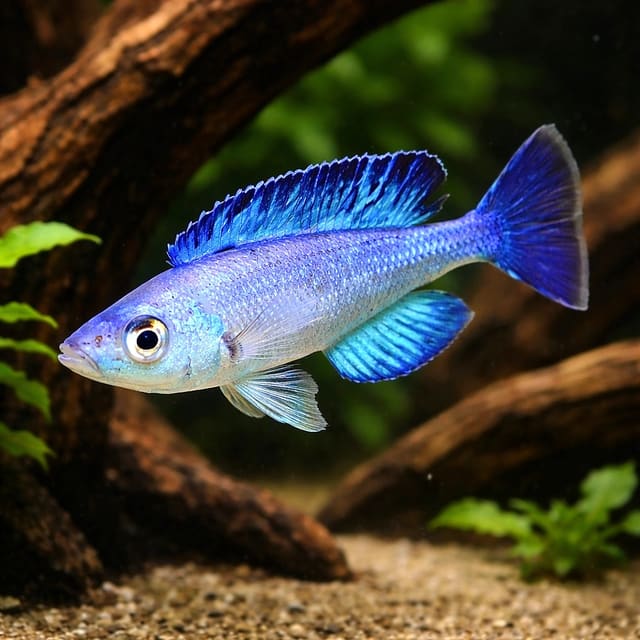
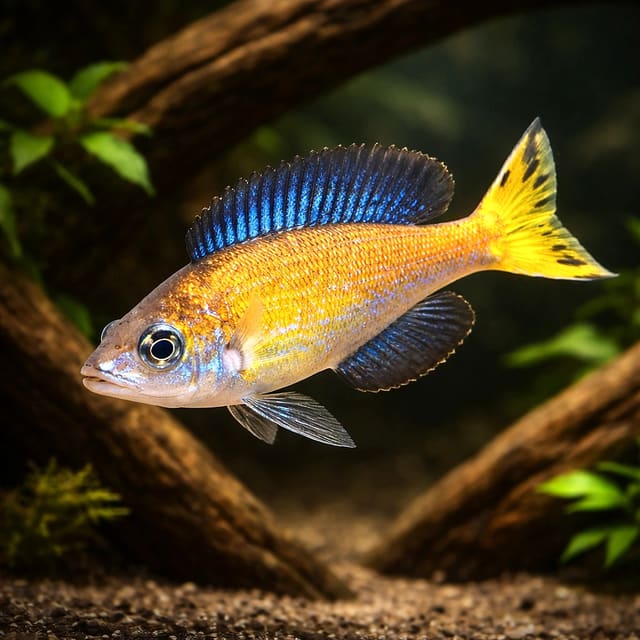
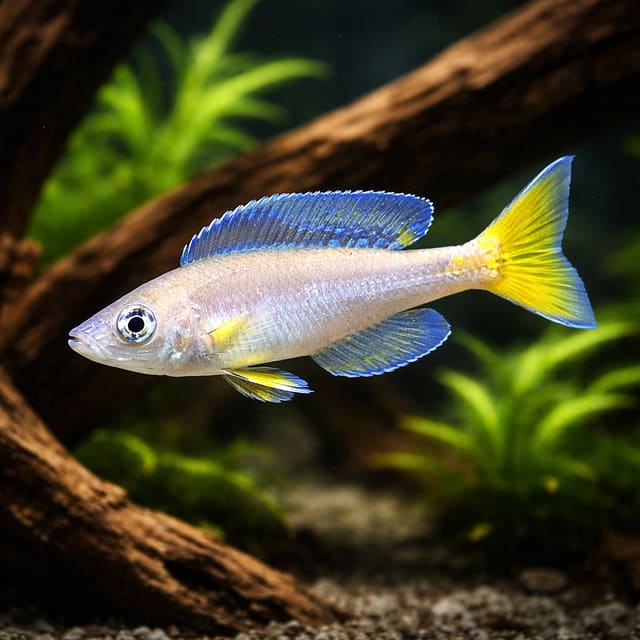
Gold Sardine Cichlid (Cyprichromis leptosoma) is a peaceful, open-water Lake Tanganyika cichlid for a spacious, mature hard-water aquarium. Plan a group of at least eight, abundant upper-water swimming room and calm Tanganyikan companions that use other zones. It is offered as one live fish per purchase in three size choices; sex is not guaranteed.
Cyprichromis leptosoma
Shoaling fish: kept in a group they feel safer, stay calmer and show their best colour.
Gold Sardine Cichlid (Cyprichromis leptosoma) is a peaceful, open-water Lake Tanganyika cichlid for a spacious, mature hard-water aquarium. Plan a group of at least eight, abundant upper-water swimming room and calm Tanganyikan companions that use other zones. It is offered as one live fish per purchase in three size choices; sex is not guaranteed.

Cichlids are a family of roughly 1,800 accepted species, not one care type. Before buying, identify the exact species and source, then compare adult measurement, usable tank dimensions, social system, territory, tested water, diet and an exit plan. No family-wide minimum tank, water range or tank-mate list is safe.
Maintain these water conditions for optimal health and vibrant colors
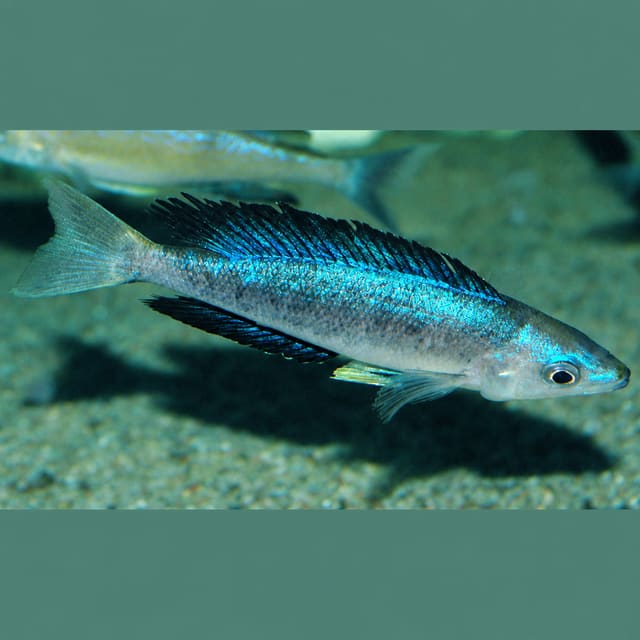
The Gold Sardine Cichlid is the trade form offered here for Cyprichromis leptosoma, a slim, open-water cichlid endemic to Lake Tanganyika. It is very different in manner from a stocky, territory-focused rock cichlid: its space is mainly the open upper water, its security comes from a substantial group, and its small mouth is adapted to taking drifting food. Those three points should shape the aquarium before colour or price enters the decision.
One purchase supplies one live fish in the chosen size. The listing has three genuine size choices, so use the live selector to choose the dispatch grade you need. The size you select is the size supplied, not the adult size. A smaller dispatch grade still needs a plan for the same adult social group and long swimming run.
Sex is guaranteed only when the selected option explicitly states male or female. This Gold Sardine Cichlid listing has no sex-guaranteed option. Colour in Cyprichromis also varies with sex, maturity, social position, mood and geographical form, so neither a photograph nor a bright individual is a safe substitute for an explicit sex option.
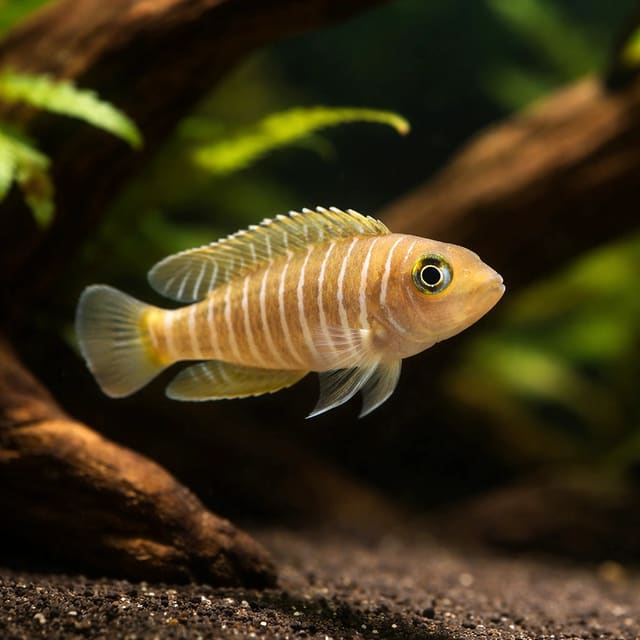
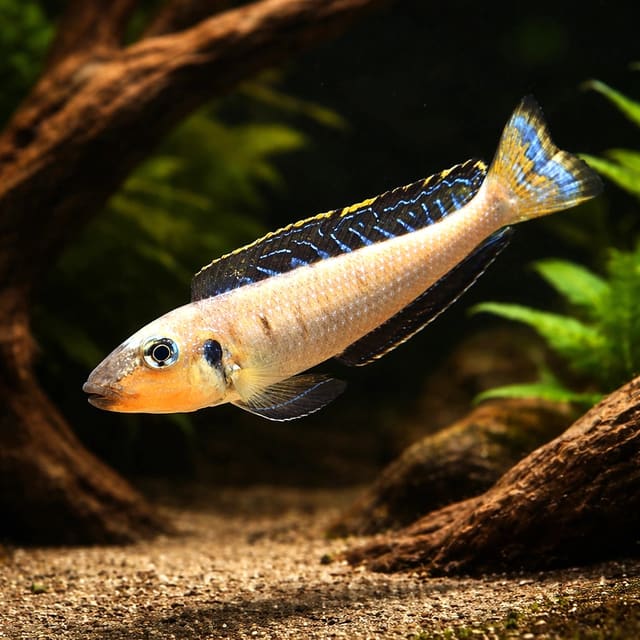
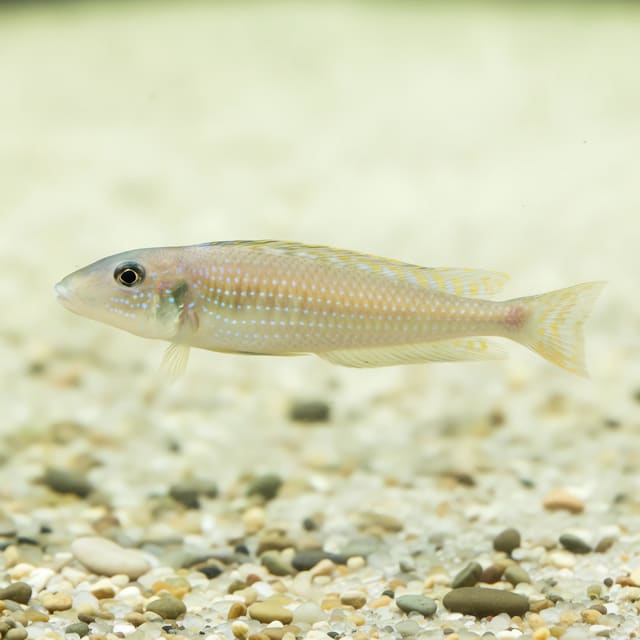
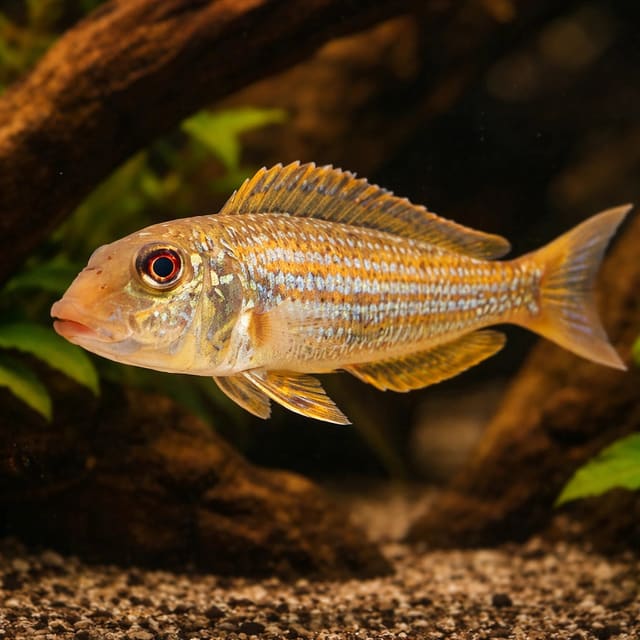
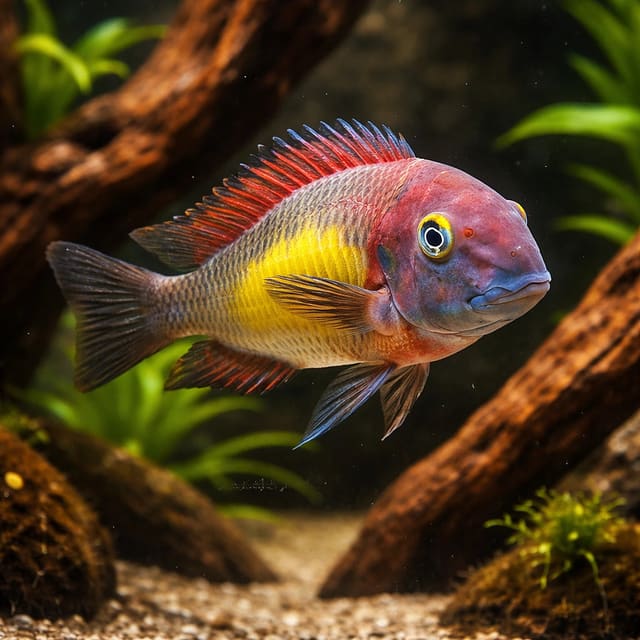
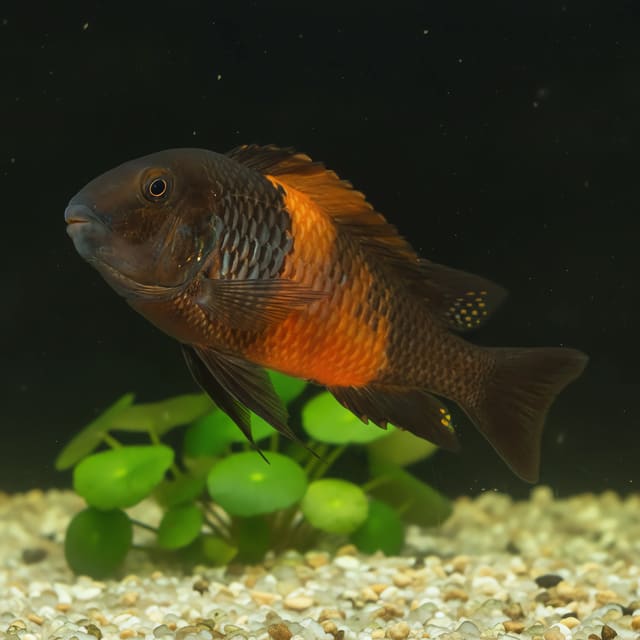
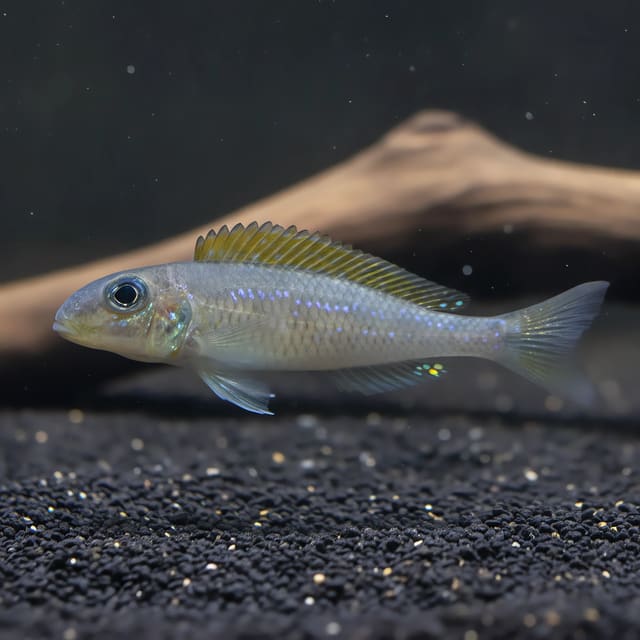
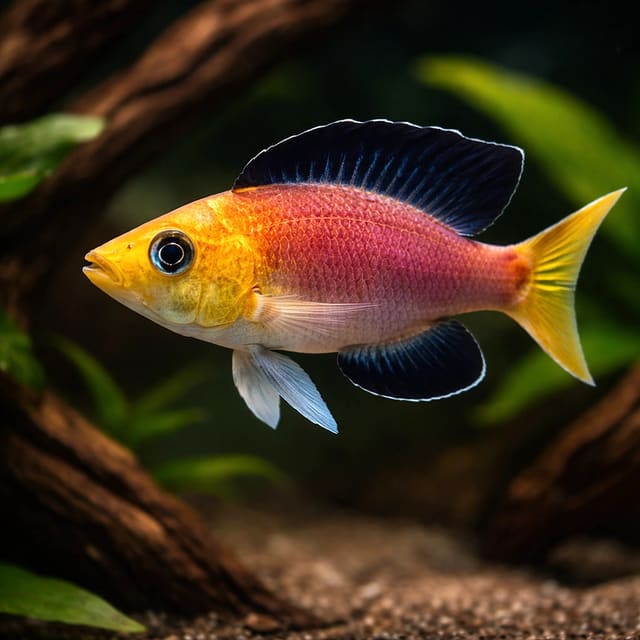
Gallery images have been digitally enhanced to improve image quality. Natural colour, pattern, size and maturity can vary between live animals. They are useful for seeing the slender outline and the kind of open-water presentation associated with the listing, but they do not promise an identical tail shade, fin intensity or individual marking.
| A good match | Reconsider this listing |
|---|---|
| A keeper with a mature, spacious hard-water aquarium and room for at least eight | A small mixed tank with no room for an open-water social group |
| A calm Tanganyika plan with companions using other zones | A boisterous Mbuna community or a collection of mixed Cyprichromis forms |
| A routine built around testing, small foods and close feeding observation | A setup chosen from litre label alone or fed with food too large for the fish's mouth |
If those conditions are not already achievable, this is a fish to plan for rather than squeeze into an existing mixed community. For more suitable stock in the same broad department, browse the verified African cichlid collection, then judge each species by its own water, social and behaviour requirements.
FishBase records the accepted species as Cyprichromis leptosoma in the family Cichlidae and lists it as freshwater, benthopelagic and endemic to Lake Tanganyika. The word “gold” belongs to the trade-form name in this offer; it is not part of the scientific binomial.
Two useful adult-length records differ in scope. FishBase records a maximum of 11.0 cm total length for male or unsexed fish; total length includes the tail. Seriously Fish lists 125 mm standard length; standard length excludes the tail, and its profile notes that the hobby includes multiple geographical forms and “Jumbo” fish under the broader name. Keep those labels attached rather than presenting one bare number as a promise for every individual. For planning, use the larger space recommendation and maintain swimming room throughout growth.
Cyprichromis leptosoma comes from Lake Tanganyika, so its aquarium should be deliberately prepared for stable hard, alkaline water. Seriously Fish gives 24–27°C, pH 7.8–9.0 and 10–25 dGH for aquarium care. These are the working species-profile values used here. Measure the aquarium and source water rather than assuming that hard water comes automatically from a postcode or that a label on a buffering product proves the final result.
Use a reliable thermometer and liquid or otherwise dependable tests appropriate to pH and hardness. Record the values before the fish arrive, then make corrections gradually. A sudden change made in pursuit of a target can be more stressful than a stable value already inside the advised range. If the tap supply varies seasonally or is blended, test the water that actually enters the aquarium.
The Seriously Fish profile gives a base of 120 × 45 cm and an example aquarium of roughly 243 litres. That is a planning reference, not permission to fill any aquarium carrying that litre label. Height can help the open-water display, but it cannot replace swimming length, adequate surface area, filtration or space for the complete group. Rockwork, internal filters and deep backgrounds reduce usable room, so judge the furnished aquarium rather than the manufacturer's nominal figure.
Start with a mature biological filter. General RSPCA aquarium guidance explains why: fish release ammonia, which is toxic; established filter bacteria convert it first to nitrite, also toxic, and then to the less dangerous nitrate. A filter being switched on is not evidence that this biological capacity exists. If this is a new setup, follow the first tropical tank guide and prove the cycle with tests before livestock is added.
OATA's African lake cichlid sheet is group guidance rather than a species-specific optimum. Within that scope it calls for zero ammonia and nitrite, hard alkaline conditions, effective filtration and vigorous aeration. It also advises nitrate no more than 20 mg per litre above the normal tap-water level. Those figures are useful maintenance alarms alongside the species-profile water range, especially in a substantial group where feeding and waste can rise quickly.
For a worked example around 243 litres, Seriously Fish discusses turnover of roughly four to five times aquarium volume per hour. Treat that as an equipment-sizing starting point, not a demand to blast the fish with a single harsh jet. Spread outlets, maintain oxygen exchange and watch how the group holds position. The goal is clean, oxygenated water with open swimming room, not a current that pins fish to one end.
Check the chosen filter's real performance after media, hoses and outlets are installed. A headline flow figure measured on an empty unit may not describe the furnished aquarium. Look for debris collecting in still areas, declining surface movement, a reduced return and fish clustering where oxygen is highest. Correct the cause while tests are still acceptable instead of waiting for a nitrogen-waste reading to rise. Place intakes where they collect suspended waste without pulling fish against a guard, and make every part accessible enough that routine maintenance will actually be done.
Water numbers make more sense when you understand what each test measures. The verified aquarium water-chemistry guide explains ammonia, nitrite, nitrate, pH and hardness, while the water parameter matcher can help compare measured values with the guidance on this page. Neither replaces observation: loss of appetite, unusual breathing or a change in group position should prompt immediate tests even if the normal maintenance day is still several days away.
This species uses the upper levels and needs room to move as a group. Seriously Fish therefore places swimming space ahead of elaborate decor. In a Tanganyikan community, a practical arrangement is open water above, with rock piles kept mainly near the substrate for species that need them. The result should offer visual structure without turning the whole aquarium into a maze of stone that blocks the sardine cichlids' flight paths.
Use a secure, close-fitting lid and cover cable or filter gaps. The species profile specifically warns that males tend to jump during spawning displays. Inspect the entire perimeter and ensure startled fish cannot strike exposed hardware.
Plan a shoal of at least eight. That minimum comes from the species profile, which describes C. leptosoma as very gregarious and notes that larger groups can allow more than one alpha male to show full colour. The aim is to provide enough social context and room for attention to be distributed while every fish can feed and move normally.
FishBase describes wild fish as gregarious off rocky slopes and notes their characteristic head-low posture while they remain in open water. That posture can be normal context for the species, but a new or extreme change still deserves attention. Compare the whole group: breathing, balance, appetite, fin condition and position in the aquarium matter together.
Males form three-dimensional display territories in open water during breeding behaviour. Rival males are chased, while females and other species can pass through. This is one reason both aquarium depth and an adequately sized group matter. It is also why “peaceful” should be read as a compatibility description rather than a promise that no chasing will ever occur.
Keep different geographical forms or morphs of C. leptosoma in separate aquariums. The species profile warns that they may hybridise. That is a lineage and identification issue as well as a stocking issue; similar-looking fish are not automatically appropriate additions. Keep records of what was purchased and avoid relying on colour alone to separate forms.
Introduce fish only after the full group plan and biological capacity are ready. OATA's African lake sheet advises adding livestock gradually because the filter's beneficial bacteria need to respond to increased waste and feeding. For a social species, the sequence still needs judgement so that one or two individuals are not repeatedly left socially exposed. Mature and size the aquarium for the planned group, then agree the introduction sequence before ordering.
FishBase describes wild Cyprichromis leptosoma as feeding on drifting zooplankton and also taking shellfish. Seriously Fish emphasises the small mouth and recommends that live and frozen varieties form the bulk of the aquarium diet, while noting that most foods are accepted. Translate that into a feeding method, not a shopping list: choose suitably small pieces, distribute them where the group feeds and observe every fish.
Large floating items can look generous while remaining unusable. Crush or select foods to match the fish's mouth, offer portions that remain easy to track, and avoid dumping a cloud that disappears into rockwork. Watch newcomers especially closely; the species profile warns that they may miss their share when first introduced. A fish hanging back at every meal needs investigation rather than simply more food added for the dominant animals.
Variety is useful when each food is appropriate and biosecure. Suitable small live or frozen foods can support the zooplankton-feeding pattern described by the sources. A complete prepared food that the fish readily takes can add consistency. Choose captive, aquarium-safe foods and match particle size to the fish rather than relying on a generic cichlid label.
Remove uneaten food before it breaks down. In a hard-water cichlid aquarium, clear-looking water can still carry ammonia, nitrite or rising nitrate. Pair feeding changes with water tests and filter observation. If nitrate rises or fine waste collects, reduce waste at source and improve the maintenance routine.
OATA's African lake guidance recommends a partial water change of about 25% at least weekly, with regular testing. The actual safe schedule can need adjustment for aquarium volume, group size, feeding and test results. Make replacement water suitable before it reaches the fish and keep changes consistent.
Check the filter for blockage and declining flow. If the filter needs cleaning, do not run it under the tap; rinse it lightly in aquarium water removed during the water change so chlorine or chloramine does not kill established bacteria. Preserve biological maturity by avoiding simultaneous replacement of all media.
Use the whole group as a daily comparison. OATA's group sheet highlights changes in swimming, colour, temperament, breathing, appearance, body condition and feeding. Look for an individual that remains apart, repeatedly misses food, breathes differently, holds fins unusually or develops marks or damage. Test water first when something changes, then seek qualified advice rather than diagnosing from one sign.
Stable routine is particularly important after maintenance, a new arrival or a social reshuffle. Note what changed and when. If several fish show the same sign at once, check temperature, oxygenation and nitrogen-waste tests immediately. If one fish is persistently targeted, change the social or layout plan and have a suitable separation option ready.
Have the mature, heated, filtered aquarium stable before dispatch. Test temperature, pH, hardness, ammonia and nitrite, check the lid and ensure the intended group and community plan still fit. The arrival bag is not a place to begin cycling or to discover that the water is unsuitable.
Tropical Fish Co's current delivery and Live Arrival Guarantee policy is the source of truth for delivery days, licensed live-animal courier handling, packing and claim steps. Fish are hand-bagged in oxygen, placed in an insulated box and supplied with a heat pack when conditions call for it. Tracking and the confirmed Thursday or Friday delivery date are sent by email, so someone must be available to receive the parcel.
Open and inspect the parcel on the day it arrives. A Live Arrival Guarantee claim requires one continuous short video showing the parcel still sealed, the outer box, the opening and the fish still inside the sealed bag before anything is disturbed. Contact the business the same day with the order number. The video is evidence for resolving the claim rather than a biological care procedure.
Follow the current acclimation directions. The policy advises slow acclimation and describes floating the sealed bag for 20–30 minutes before release. Avoid sudden knocks and keep transport water out of the aquarium. After release, observe swimming, balance and breathing without crowding the glass or repeatedly chasing the fish for photographs.
A quiet first period still needs careful checks. Confirm that the group is not forcing a newcomer into a corner, that flow is manageable and that every fish can reach appropriately sized food once feeding resumes. If behaviour remains abnormal, test the aquarium and follow the reporting instructions rather than assuming all distress is normal travel fatigue.
Before choosing a dispatch size, confirm that the aquarium already meets the adult group plan: at least eight fish, a 120 × 45 cm base, stable hard alkaline water, open upper-water swimming room, a secure lid and calm Tanganyikan companions. Test the water, inspect filter flow and agree how the selected fish will join the group. The chosen size affects arrival and introduction, while the adult space, feeding and compatibility responsibilities remain the same.
Seriously Fish describes Cyprichromis leptosoma as very peaceful and specifically warns against boisterous fish such as Mbuna. Its recommended community pattern is other Tanganyikan species that use different parts of the aquarium. Suitable rock-dwellers can include carefully chosen Julidochromis or Altolamprologus, and suitable shell dwellers can occupy the lower zone. These are conditional examples rather than a promise that every species or individual within those genera will work.
Begin with water overlap: the companion must genuinely suit hard, alkaline Tanganyika conditions, not merely tolerate the edge of the range. Then compare adult size, territorial behaviour, group needs, feeding speed and aquarium zone. A bottom species still adds waste and may still hold a large territory. An open-water species still needs refuge from persistent attention.
Do not keep Gold Sardine Cichlids with boisterous Mbuna. Lake of origin, behaviour and feeding ecology matter. OATA's group guidance likewise advises against casually mixing Malawi and Tanganyikan cichlids because temperament and behaviour differ. A colourful mixed display fails if one group is repeatedly outcompeted or chased.
Do not keep them with large predatory fish or animals likely to swallow, injure or continually intimidate a slender sardine cichlid. Avoid companions so frantic at the surface that the group cannot feed. The small mouth and open-water feeding style make observation at mealtimes essential. If food vanishes before quieter fish take it, the community needs to change even if no fins are torn.
Keep other Cyprichromis leptosoma forms separate. The species profile warns that geographical forms can hybridise in an aquarium. A different gold, blue or “Jumbo” label is not evidence of a harmless colour-only mix.
The related products field lists two verified Cyprichromis alternatives for comparison. They are alternatives to research, not suggested tank mates and not additions to the same aquarium. Choose one form around the whole stocking plan rather than collecting several forms for colour contrast.
FishBase records 11.0 cm total length for male or unsexed Cyprichromis leptosoma, while Seriously Fish lists 125 mm standard length. Total length includes the tail and standard length excludes it, so keep the measurement label attached and plan with the larger space recommendation.
Seriously Fish gives a 120 × 45 cm base and an example volume of about 243 litres. Treat that as a starting layout: preserve a long open upper-water run, mature filtration, good oxygenation and enough room for the full group.
Plan at least eight. Seriously Fish describes the species as very gregarious and says larger groups are worth considering where the aquarium has the space and filtration to support them.
It is peaceful, but its large social group, spacious aquarium and hard alkaline Tanganyika water make it a deliberate specialist setup rather than a casual first-tank choice. A prepared keeper who can test and stabilise those conditions can make a sound plan.
Use suitably small foods for its small mouth. Seriously Fish says most foods are accepted but live and frozen varieties should form the bulk of the diet; watch closely so every fish, especially a newcomer, gets its share.
Use the species-profile aquarium range of 24–27°C and pH 7.8–9.0, with hardness of 10–25 dGH. Keep values stable, test the actual water and make any correction gradually.
It is described as very peaceful, although males display and rival males are chased away from open-water territories. A sufficiently large group, abundant swimming space and calm companions using other zones help keep that behaviour manageable.
Consider calm Lake Tanganyika species that use different aquarium zones, including suitable Julidochromis, Altolamprologus and shell dwellers after checking the exact species. Avoid boisterous Mbuna, predators and fish that prevent this small-mouthed species from feeding.
Tropical Fish Co hand-bags live fish in oxygen, uses an insulated box and adds a heat pack when the weather calls for it, then sends the parcel with a licensed live-animal courier. Be present on the confirmed delivery day and follow the current Live Arrival Guarantee instructions.
The exact offer establishes one fish per purchase, three size choices and no sex-guaranteed option. Care claims are grounded in the following public references.
This page makes no lifespan promise. Aquarium figures keep their measurement and husbandry scope so dispatch size, adult measurement and planning space remain clear.
No reviews for this item yet. Bought one? Honest reviews only, good or bad.
What customers say about ordering from us
Easy website plenty of info on fish your buying great to pick a time slot
TRACEY DURRANT · 7 Oct 2026
Got some lovely fish thank you
Kevin Mackie · 7 Oct 2026
Reviews of our shop, collected by Judge.me, an independent third-party review collector. Newest first.