Advanced
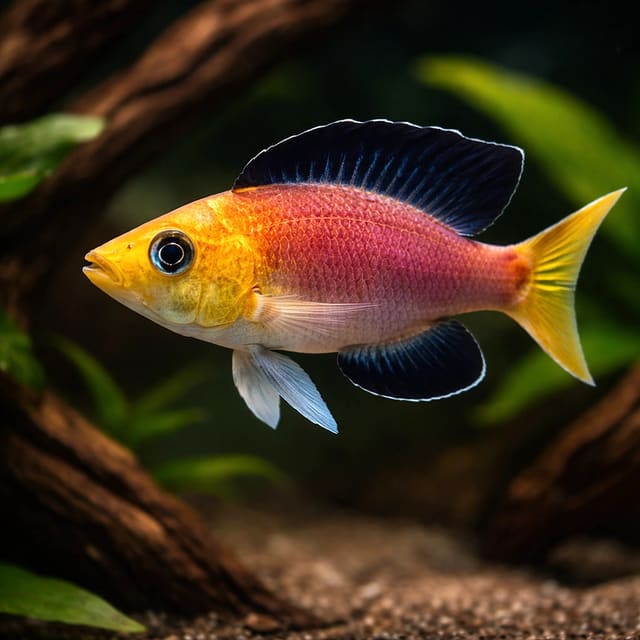
Jumbo Yellow Sardine Cichlid (Cyprichromis sp.)
24–27°C · pH 7.8–9
£39.99

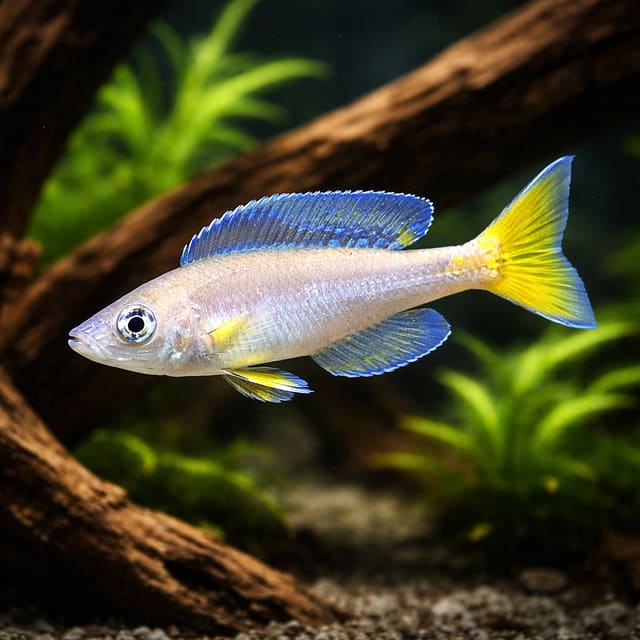
Kiriza Smallscale Cyprichromis (Cyprichromis microlepidotus) is a placid, open-water Lake Tanganyika cichlid reaching a recorded 11 cm. Keep at least 8–10 in a long, securely covered aquarium with abundant upper-level swimming room, hard alkaline water and peaceful Tanganyikan companions that will not dominate feeding. One purchase supplies one unsexed fish in the size selected.
Adult size is the maximum length this species reaches at full maturity (scientific sources). The livestock you receive will be younger and smaller — pick a size above for the actual shipping size. Product-photo provenance and any image-specific limitations are stated on the listing.
Cyprichromis microlepidotus
Shoaling fish: kept in a group they feel safer, stay calmer and show their best colour.
Kiriza Smallscale Cyprichromis (Cyprichromis microlepidotus) is a placid, open-water Lake Tanganyika cichlid reaching a recorded 11 cm. Keep at least 8–10 in a long, securely covered aquarium with abundant upper-level swimming room, hard alkaline water and peaceful Tanganyikan companions that will not dominate feeding. One purchase supplies one unsexed fish in the size selected.
Adult size is the maximum length this species reaches at full maturity (scientific sources). The livestock you receive will be younger and smaller — pick a size above for the actual shipping size. Product-photo provenance and any image-specific limitations are stated on the listing.
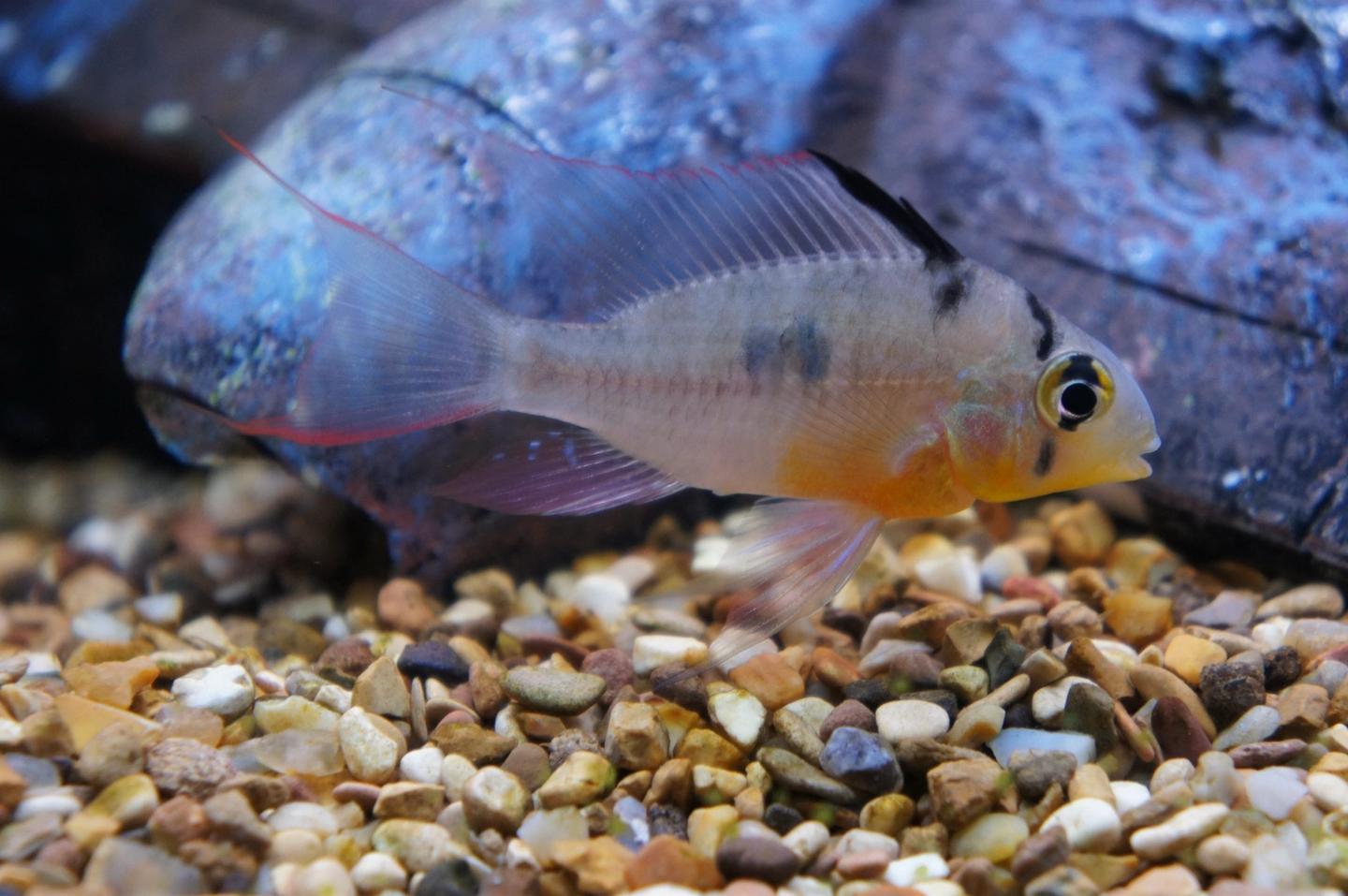
Cichlids are a family of roughly 1,800 accepted species, not one care type. Before buying, identify the exact species and source, then compare adult measurement, usable tank dimensions, social system, territory, tested water, diet and an exit plan. No family-wide minimum tank, water range or tank-mate list is safe.
Maintain these water conditions for optimal health and vibrant colors
Kiriza Smallscale Cyprichromis (Cyprichromis microlepidotus) is a slender, gregarious cichlid from the northern part of Lake Tanganyika. FishBase records it along the north-western and north-eastern shores, occurring in quiet deep water off rocky slopes, where it feeds on drifting plankton. That ecology explains the unusual aquarium plan: rockwork belongs mainly below, while the upper water column must remain open enough for a real group to move together.
FishBase gives a maximum recorded length of 11 cm total length for male or unsexed fish, while the aquarium profile from Seriously Fish gives 110 mm standard length. These are different measurement conventions but agree on the practical point that this is not a tiny nano fish. The group, long swimming run and lower rock zone all need to fit at the same time.
One purchase supplies one live fish from this parent listing. The recurring size labels are S, 3–4 cm, 5–6 cm and XL; use the live selector to choose the size you want when ordering. The size you select is the size supplied, not the adult size. Letter grades are retained as the shop's established dispatch labels and remain separate from the recorded adult measurement.
Sex is guaranteed only when the selected option explicitly states male or female. This Kiriza Smallscale Cyprichromis listing has no sex-guaranteed option. Seriously Fish notes that males are more colourful. Plan a sufficiently large group without depending on a particular sex ratio from this product.
For the recorded biology, see the FishBase species summary for Cyprichromis microlepidotus. If you are comparing rather than choosing tank mates, the African cichlid collection shows the wider range. Similar store categories do not make fish compatible automatically; this animal needs calm Lake Tanganyika companions and open-water feeding access.
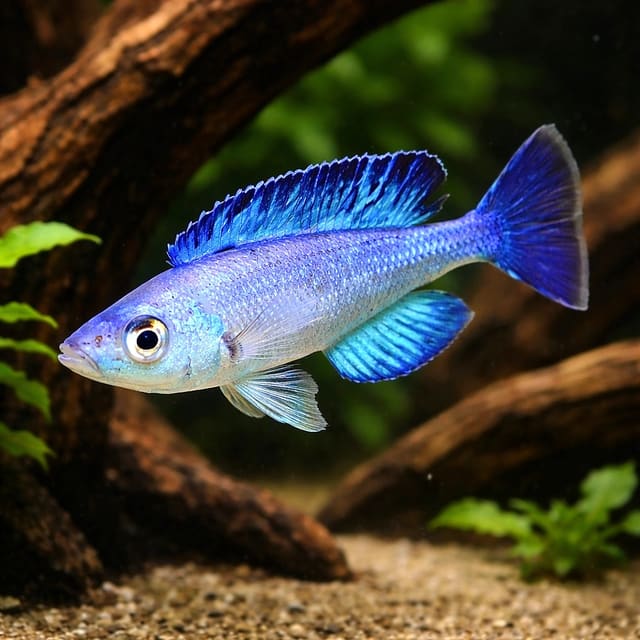
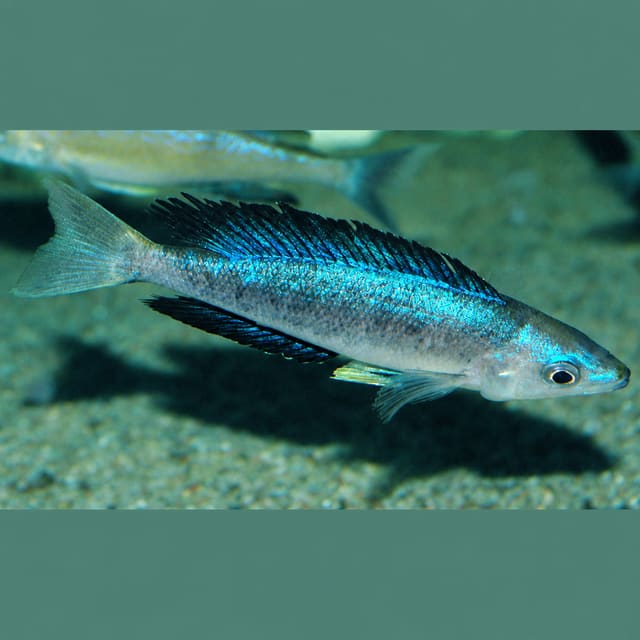
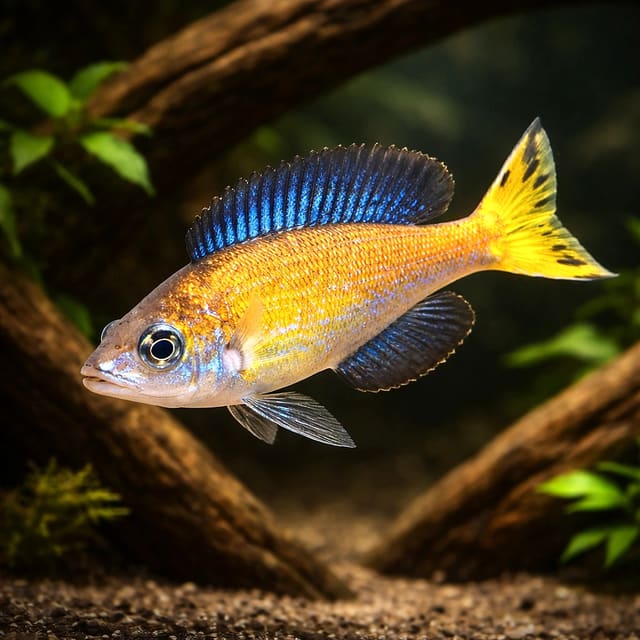
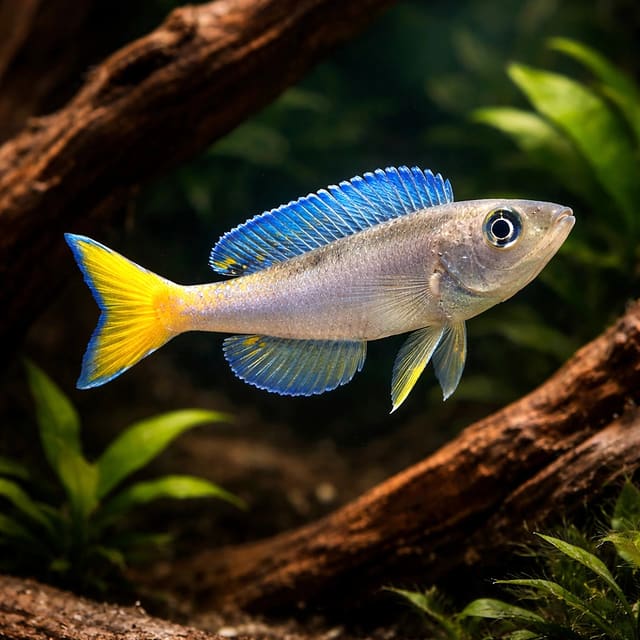
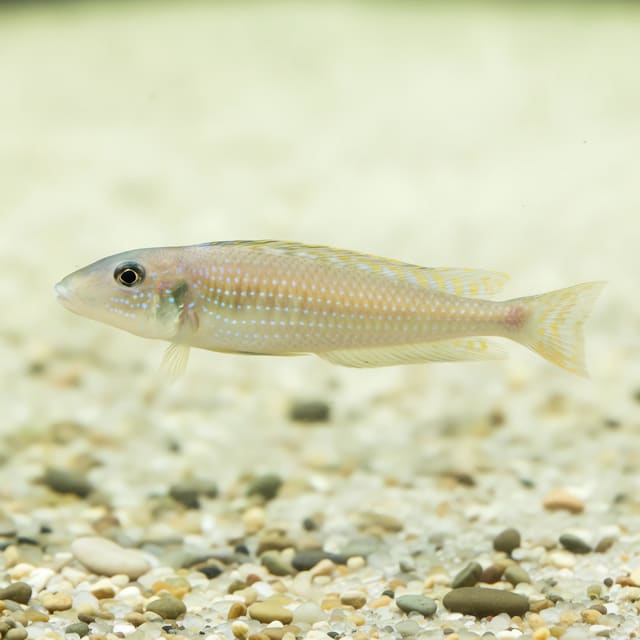
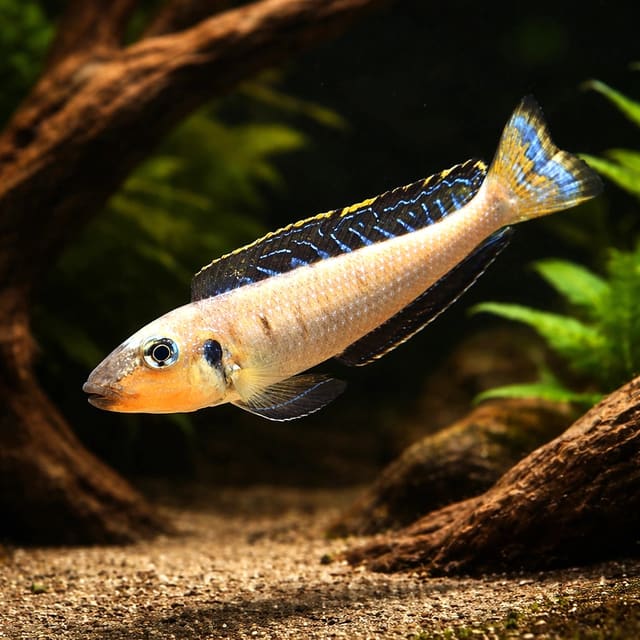
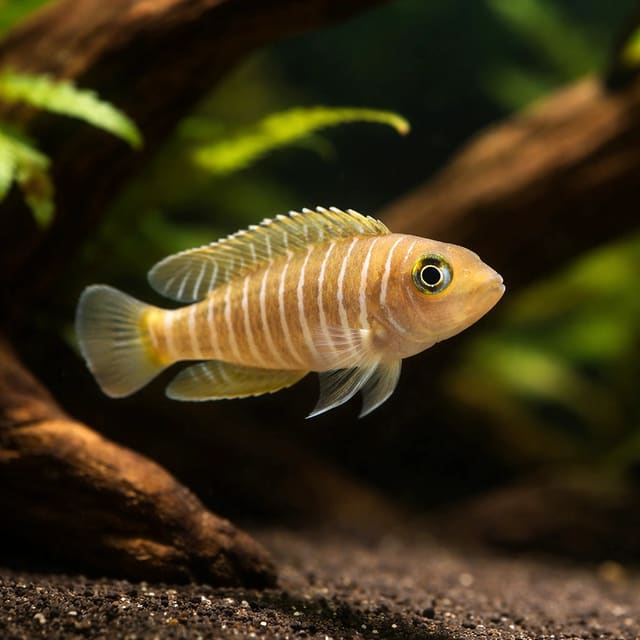
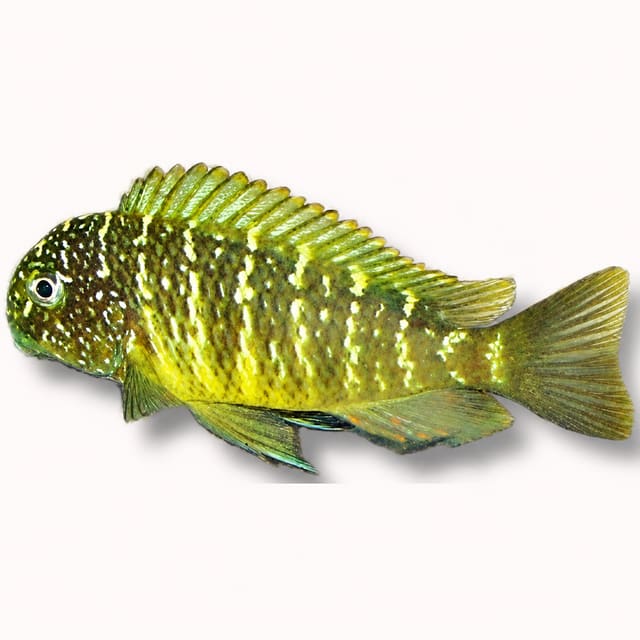
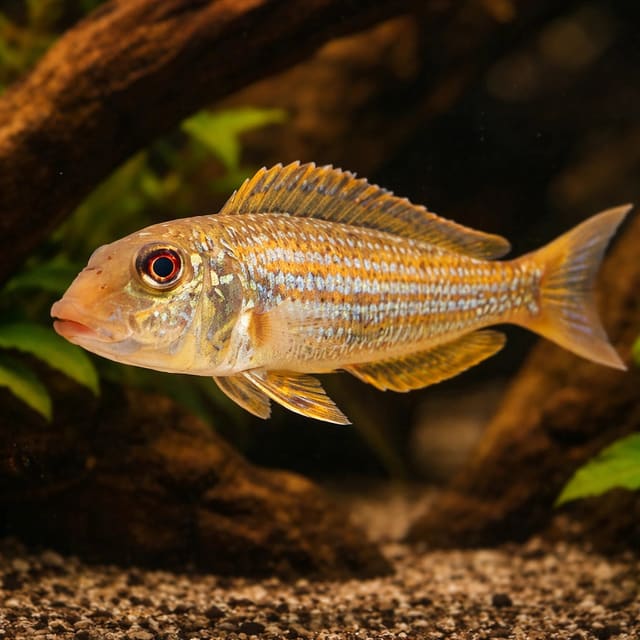
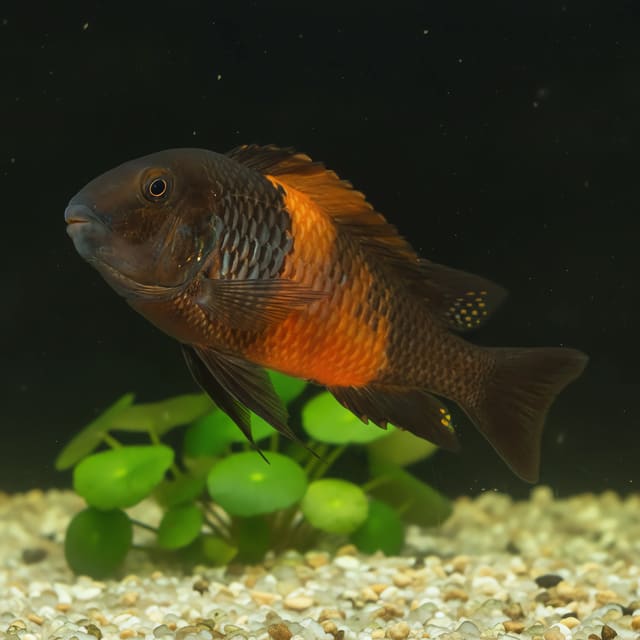
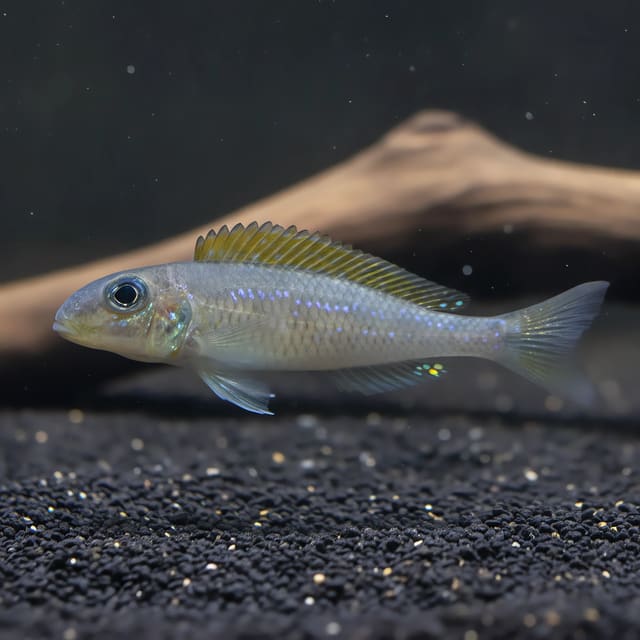
Gallery images have been digitally enhanced to improve image quality. Natural colour, pattern, size and maturity can vary between live animals.
Our store suitability assessment is advanced. The species is described as placid and an unfussy captive feeder, but good care depends on a large coordinated purchase, a long aquarium, specialist hard alkaline water, a secure lid and tank mates restrained enough to let small-mouthed plankton feeders eat. Those demands make the project more involved than keeping a single robust community fish.
| Suits | An established Tanganyika keeper who can house at least 8–10 together and protect a long upper-water swimming lane. |
|---|---|
| Does not suit | A small group, an open-topped aquarium, aggressive mbuna or a busy community that monopolises food. |
| Adult record | 11 cm maximum recorded total length in FishBase; Seriously Fish reports 110 mm standard length. |
| Species aquarium plan | At least a 120 × 45 cm base, about 243 litres, with a larger group benefiting from more space. |
Before ordering, map the complete group and aquarium rather than buying one fish in isolation. Seriously Fish says not to consider fewer than 8–10 and that a larger group is better. A solitary purchase only makes sense when it joins an established, appropriately sized group. Plan the budget, quarantine arrangements and final stock together so the welfare requirement does not become an afterthought.
If the aquarium is new, work through the first tropical tank guide and establish the biological filter before livestock arrives. Clear water in a recently filled tank does not demonstrate that ammonia and nitrite can be processed safely. The group should enter a stable system with its swimming space, cover and filtration already working.
The group requirement affects more than the number in the basket. At least 8–10 fish need space to travel, filter capacity for repeated feeding and enough calm access that subordinate individuals can eat. Work backwards from the final group: confirm the aquarium base, water chemistry, lid, circulation and companion list, then decide how the fish will be introduced without leaving one animal isolated.
Quarantine also needs to respect social behaviour. A holding aquarium must be mature, covered and large enough for safe observation; it cannot be an uncycled container chosen only because it is empty. Use dedicated equipment and match the hard alkaline water closely. If fish join an existing Cyprichromis group later, watch the newcomer at feeding and across the upper swimming lane rather than relying on a head count alone.
Plan for growth as well as arrival size. The smaller dispatch labels may make the first weeks look spacious, yet the recorded adult length, group number and long swimming run define the enduring requirement. Buying a proper group only works when its adult accommodation is already realistic.
Seriously Fish recommends a base of at least 120 × 45 cm, shown as about 243 litres for a 120 × 45 × 45 cm aquarium. The footprint and swimming run matter as much as the nominal volume. This species is pelagic by nature and uses the upper part of the water column, so a deep aquarium can be arranged with rockwork mainly in the lower half and open water above.
Use the rocks to create a convincing Tanganyika foundation without turning the top of the tank into an obstacle course. Secure every piece against digging or accidental movement, leave circulation paths around the structure and keep enough open frontage for the group to travel as one. Calm rock-edge companions can use the lower areas while the Cyprichromis occupy the open zone, reducing direct competition for the same territory.
The aquarium needs a secure, well-fitting cover. Seriously Fish states that the species often jumps when excited. Close gaps around cables, pipes and filter returns, and inspect the lid after every maintenance session. A narrow opening that seems insignificant can be enough for a fast open-water fish to leave the tank.
Keep sight lines into the swimming zone when choosing décor. The keeper should be able to count the group, see whether every fish feeds and notice an individual lingering alone. Dense decoration at the surface can hide a social or health problem. The best layout combines open movement, lower refuge and straightforward observation rather than filling every part of the aquarium.
The Seriously Fish species profile gives aquarium guidance of 24–27 °C, pH 7.8–9.0 and hardness of 10–25 °dH. FishBase reports a wild environmental range of 23–25 °C, pH 7.5–8.5 and 10–18 °dH. Use the aquarium profile for routine husbandry while recognising that wild occurrence data describes where records were made, not a target that needs to be copied point by point.
Stability matters more than chasing a single central value. Test the source water first, then decide how the aquarium will maintain mineral content and carbonate buffering consistently. The water chemistry guide explains the common measurements, and the water matcher can compare your results with the stated range. If the tap supply is soft, establish a repeatable preparation method before the group arrives.
Ammonia and nitrite should remain at zero. OATA's broad African-lake guidance says nitrate should not exceed 20 mg/l above the normal level in incoming tap water. Interpret the nitrogen readings together: a low nitrate result does not excuse detectable ammonia, and a clear-looking aquarium may still be chemically unsafe. The RSPCA aquarium environment guidance explains how beneficial bacteria in a working filter convert ammonia through nitrite to nitrate.
Retest after additions, filter maintenance, a power interruption or an unexplained behavioural change. If a figure shifts, look for the cause—excess food, reduced flow, inadequate aeration, a missed water change or increased stock—before making a large chemical correction. Correcting the source of instability produces a safer recovery than briefly forcing one number into range.
A group of at least 8–10 creates a meaningful biological load, even though each fish is slender. Seriously Fish illustrates four to five aquarium volumes of turnover per hour for the cited 243-litre setup. Use that as practical species-profile guidance, then account for real head height, media resistance and the complete stock when choosing equipment.
Flow should support clean, oxygen-rich open water without forcing the fish to fight a concentrated jet everywhere. Spread the return, maintain surface movement and ensure water circulates around the lower rockwork. OATA broadly recommends oversized filtration and vigorous aeration for African lake cichlids; those principles suit a group whose active swimming and repeated small feeds can raise oxygen demand and waste production.
Check intakes and outlets for reduced flow. Rinse filter media lightly in aquarium water removed during maintenance rather than under the tap, because chlorine or chloramine can damage the beneficial bacterial population. Preserve biological continuity: cleaning is meant to remove blockage, not sterilise the filter.
Prepare for interruptions. A battery air pump can preserve gas exchange during a power cut, and a reliable thermometer makes heater faults easier to spot. Seriously Fish's equipment illustration assumes a particular tank and room temperature, so choose heater capacity for the actual aquarium and use guarded, dependable equipment. After maintenance, confirm that every pump, valve, heater and air line is operating before leaving the tank.
FishBase describes this species as a drifting-plankton feeder and notes copepods in a specimen's stomach. Seriously Fish calls it an adapted zooplankton feeder with a small mouth. In the aquarium it accepts suitably sized live and frozen foods such as brine shrimp, daphnia and bloodworm, as well as appropriately sized dried food. Choose fine particles that remain accessible in the water column rather than relying on large sinking pieces.
Seriously Fish recommends several feeds a day rather than one large meal, reflecting the natural grazing pattern. Keep each feed small enough that the group clears it promptly. Several modest portions are not permission to increase the total amount without limit; uneaten food raises the load on filtration and can lodge behind rockwork.
Distribute food across the open swimming area and observe the full group. A confident male or faster tank mate should not be able to take everything from one spot. The quietest fish needs enough time and space to feed. This is one reason rowdy companions are unsuitable even when their water requirements appear similar.
Track appetite and body condition together. A fish that hangs back, loses fullness or repeatedly spits food may be outcompeted, stressed or unwell. Test water and review social behaviour before simply offering more. Sudden refusal to feed, rapid breathing, erratic swimming or isolation deserves prompt investigation.
Keep new foods proportionate and introduce changes gradually. The sources support plankton-sized animal foods and suitable dried products; they do not justify a cure-all supplement or routine medication. When health concerns persist, use clean dedicated equipment and seek experienced aquatic advice rather than treating from a product description.
The OATA African lake cichlid care sheet strongly recommends that at least once every week, a partial water change of 25% is completed, along with testing at least weekly. Treat that as broad group guidance and adjust carefully for the real feeding, stock and nitrate trend. Condition replacement water for chlorine or chloramine and match it closely enough to avoid a sudden temperature or chemistry swing.
Siphon accessible waste without dismantling the whole lower structure. Inspect behind rocks where fine food can accumulate and keep the open-water zone free of debris. Clean viewing panes and cover glass so behaviour remains easy to observe, then check every lid gap before finishing.
Record temperature, pH, ammonia, nitrite, nitrate and any maintenance or stock change. Trends reveal problems that a single reading misses. A gradual fall in pH may point to depleted buffering, while steadily rising nitrate may mean that portions, water-change volume or stocking need review.
Observe before and after maintenance. Healthy fish should retain controlled swimming, clear eyes, intact scales and fins, regular breathing and interest in food. OATA advises watching for surface hanging, bottom sitting, erratic swimming, colour change, increased hiding, altered breathing, spots, growths, damaged fins or loss of appetite. Test water first when behaviour changes and seek help if the cause remains unclear.
Use a reliable thermometer independently of the heater setting. The species aquarium range of 24–27 °C allows a stable target, but summer room heat, direct sun, a failing thermostat or reduced surface movement can all shift the tank. Check temperature at the warmest part of the day during hot weather and watch oxygenation because warmer water holds less dissolved oxygen.
Choose heater capacity for the real aquarium, room and flow pattern. Seriously Fish illustrates roughly 100–175 W across two heaters for its 243-litre example in a room around 20 °C; that is an equipment calculation for the example, not a universal wattage. Two guarded units can provide more even heating and some resilience, but each still needs routine inspection.
Avoid large sudden corrections. If temperature drifts, restore it gradually while maintaining aeration and investigating the cause. After a power cut, confirm both heat and filter operation before feeding heavily. Behaviour, breathing and group position help show whether the fish are coping while the system returns to normal.
Learn the normal pattern of the group: where it gathers, how quickly it approaches food, which fish display and whether every member maintains position in open water. A change in one fish may indicate local competition, while the whole group breathing rapidly or abandoning its usual zone points more strongly towards temperature, oxygen or water quality.
Count fish during routine observation rather than waiting for maintenance. Rockwork can hide an individual that has withdrawn from the group. Check eyes, fins, scales, body fullness and swimming control, then compare appetite at more than one feed. Early recognition gives the keeper time to test water and arrange separation before a quiet fish becomes severely weakened.
Start with measurable causes. Confirm temperature, ammonia, nitrite, pH, filter flow and aeration; review recent additions and feeding; then inspect interactions. Persistent spots, growths, damage, abnormal breathing or loss of condition needs experienced attention. Keep nets and siphons dedicated where possible so one aquarium's problem is not moved to another.
Do not use colour alone as a health or sex diagnosis. Fish can alter display with social context, maturity and stress. Combine appearance with movement, feeding, respiration and water results, and record what changed before choosing a response.
Prepare the aquarium before delivery: verify temperature and water chemistry, confirm ammonia and nitrite are zero, secure the lid and ensure the established group has open swimming space. Someone must be present to receive live fish. Tropical Fish Co hand-bags livestock with oxygen, uses an insulated poly box and adds a heat pack when conditions call for it, then sends the parcel with a licensed live-animal courier.
The current delivery and Live Arrival Guarantee policy contains the applicable tracking, receiving and claim terms. The video begins while the parcel is sealed because it documents condition before anything is disturbed. After the evidence is captured, continue with the supported temperature equalisation and careful transfer.
Keep observation focused on breathing, balance and social response. A placid species can still be stressed by transport or an established group. Have a safe mature separation space available if a fish cannot join the group or is immediately harassed.
Cyprichromis microlepidotus thrives in the company of its own kind. Seriously Fish says not to consider fewer than 8–10 and that the larger the group, the better. Multiple males may show their full colour in a larger group. The keeper should therefore plan the aquarium, filtration and purchase around a proper social unit from the outset.
Group size and sex are related but separate decisions. This unsexed product does not promise male or female fish; juvenile colour is not a reliable retail commitment. Build enough space for the whole group and allow natural variation. If a precise breeding ratio is essential to a separate project, this product cannot supply it.
Look for cohesion without demanding that every fish stay in a tight formation. A healthy group may spread through the upper water while maintaining social contact. More concerning signs include one fish consistently isolated, unable to feed, pressed into a corner or breathing rapidly after interactions. Those signs require a check of water, companions and the group's available swimming area.
FishBase records the species as gregarious, and the specialist aquarium guidance supplies the practical minimum. This is stronger than treating the word schooling as decoration. The social requirement changes how the aquarium is stocked, filtered, fed and observed every day.
Seriously Fish describes the species as placid and a poor competitor with rowdy fish, specifically ruling out mbuna. Better companions are peaceful Lake Tanganyika species that use different parts of the aquarium. It names less aggressive Julidochromis or Altolamprologus rock dwellers and the various shell-dwelling species as examples.
Those examples remain conditional. Check the exact species, adult scale, territory, diet and temperament before combining them. The purpose of lower-zone companions is to reduce competition for the open swimming area, not to fill every available niche. A peaceful name does not override individual behaviour or an undersized aquarium.
Avoid aggressive mbuna and any cichlid that dominates feeding or continually enters the Cyprichromis group's open-water space. OATA also advises keeping African lake communities within the same location rather than mixing Malawi and Tanganyika species, because their behaviour and temperament differ even when both prefer hard alkaline water.
Seriously Fish warns against mixing geographical forms because they can interbreed and produce hybrid offspring. Keep the Kiriza locality identity separate from other Cyprichromis forms in a breeding-capable group. This is not about the colour value of offspring; it is about preserving a known locality form and avoiding an accidental cross.
Adding fish increases waste and competition at the same time. Confirm that the biological filter can carry the larger feeding load, because beneficial bacteria need time to respond when stock and food rise. Test ammonia and nitrite after an addition instead of assuming the established aquarium is automatically prepared for any number of newcomers.
Introduce calm species before more assertive residents when a community is being assembled, following OATA's broad African-lake advice. For an existing setup, observe where each newcomer enters the water column and whether lower-zone fish begin to patrol above the rocks. A companion that abandons its usual zone can disrupt the Cyprichromis group even without direct attacks.
Feed small amounts across a broad area during the observation period. This reveals whether every fish can reach suitable particles and stops one fast individual from controlling a single point. If a newcomer stays apart, confirm water and physical condition before treating the behaviour as an inevitable settling phase.
Keep a mature separation option ready. Removing a persistent competitor or supporting a weakened fish promptly is safer than waiting for chronic stress to become injury. Any temporary aquarium still needs suitable hard water, filtration, a cover and enough space for controlled movement.
Kiriza identifies the locality form attached to this product. Seriously Fish notes that several geographical variants exist and that populations can contain males with different colour and patterning. Natural variation is therefore expected; a gallery cannot promise the exact colour or maturity of a live fish supplied later.
Keep locality forms separate. The species profile states that different forms should never be mixed because they will interbreed. A general Cyprichromis resemblance is not a reason to combine them in a breeding-capable group. Record what is already in the aquarium before adding another locality form whose identity may become difficult to trace later.
Male colour can become more fully expressed in a larger group, but the display benefit follows suitable social and spatial care. It does not justify crowding beyond the aquarium's filter or swimming capacity. Provide open water, calm companions and enough group members, then let colour develop naturally rather than manipulating the fish through territorial pressure.
Observe displays without assuming every chase is harmless. Brief courtship or positioning differs from one fish being excluded continuously. The welfare test is whether all members can swim, feed and rest without repeated displacement.
A tank mate is suitable only if the Cyprichromis can continue to use open water, feed repeatedly on small items and rest without sustained pursuit. Check access to these resources rather than judging compatibility solely by the absence of visible bites. A rowdy fish may cause chronic stress by winning every feeding encounter even if it never injures another animal.
Review the balance as fish mature. A combination that works with juveniles may change when males display or lower territories become established. Early observation and flexible aquascaping are more effective than waiting for a stressed fish to lose condition.
FishBase records Cyprichromis microlepidotus at a maximum 11 cm total length for male or unsexed fish, while Seriously Fish reports 110 mm standard length. The dispatch size selected is the size supplied, not the fish's final length.
Seriously Fish recommends at least a 120 × 45 cm base, illustrated by a 120 × 45 × 45 cm aquarium of about 243 litres. Preserve a long open upper-water swimming area; a larger group can justify more space.
Keep at least 8–10 together, and use a larger group when the aquarium can support it. A single purchase is one fish, so plan the whole group and filtration rather than treating this social requirement as optional.
Our store assessment is advanced. It needs a sizeable group, a long securely covered aquarium, hard alkaline water, repeated small feeds and calm companions. It is best for a keeper already comfortable with cycling, water testing and social fish.
It is an adapted zooplankton feeder with a small mouth. Offer suitably sized brine shrimp, daphnia, bloodworm and appropriate dried foods in several modest feeds rather than one large meal, while controlling leftovers.
Seriously Fish gives species-level aquarium guidance of 24–27 °C, pH 7.8–9.0 and hardness of 10–25 °dH. Keep conditions stable, test regularly and prepare soft source water consistently before it enters the aquarium.
It is described as placid and does not compete well with rowdy species. The main risk is being stressed or outcompeted rather than acting like aggressive mbuna. Keep a proper group and watch that every fish can swim and feed freely.
Choose peaceful Lake Tanganyika species using different zones, such as less aggressive Julidochromis or Altolamprologus rock dwellers and suitable shell dwellers. Each exact combination still needs matching for size, diet, territory and temperament.
Tropical Fish Co hand-bags fish with oxygen, uses an insulated box and a heat pack when conditions call for it, and sends them by a licensed live-animal courier. Be present to receive the parcel. If anything may be wrong, start one continuous video while it is still sealed, show it being opened and the fish still in the sealed bag, then contact the store the same day with your order number.
Species-profile figures take priority for the aquarium plan, while broad African-lake material supports general maintenance. Dispatch labels remain separate from adult length, and the listing makes no lifespan, guaranteed-sex, disease-treatment or home-breeding promise.
No reviews for this item yet. Bought one? Honest reviews only, good or bad.
What customers say about ordering from us
I have a small group of long finned mountain minnows. So was delighted to be able to order ten of this variety to increase the genetics in my tank . The ones I recieved are healthy but it’s to early to give a verdict on wether they are of a long finned type since they are small currently.
Gordon Walker · 23 Sept 2026
100% success travel and "installation". Pleased with quality of purchase. The Siamese fighter a bit "shy" so have not yet seen him at his best yet but looking good. Happy customer. GG
George E Garratt · 21 Sept 2026
Reviews of our shop, collected by Judge.me, an independent third-party review collector. Newest first.