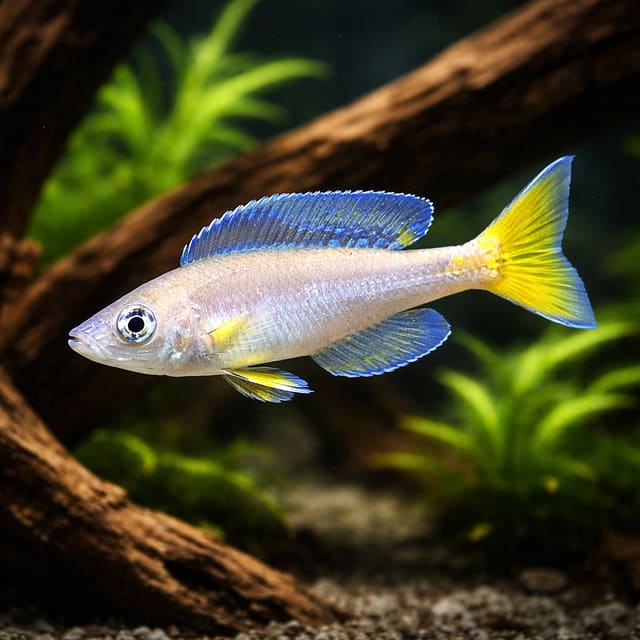
Moderate
Mpulungu Sardine Cichlid (Cyprichromis leptosoma)
24–27°C · pH 7.8–9 · 243L
£13.99

Yellow Head Kekese Cyprichromis for hard, alkaline Lake Tanganyika aquariums with open swimming space, small foods and peaceful group behaviour.
Cyprichromis leptosoma
Save when buying multiple fish. Each quantity is one fish; sex and pair formation are not guaranteed unless the selected variant explicitly states them.
Confirm your email, then we’ll send an availability message for this exact item if it returns within 180 days.
This request is only for this product—no newsletter or other promotions. A mail-provider retry may very rarely duplicate the same availability message. Unconfirmed addresses are removed after 48 hours. See our privacy policy.
Yellow Head Kekese Cyprichromis for hard, alkaline Lake Tanganyika aquariums with open swimming space, small foods and peaceful group behaviour.
24–27°C · pH 7.8–9 · 243L
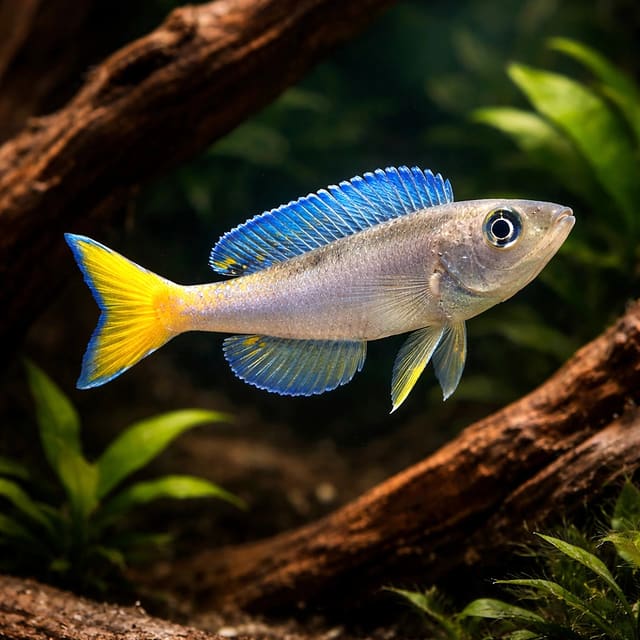
24–27°C · pH 7.8–9 · 243L
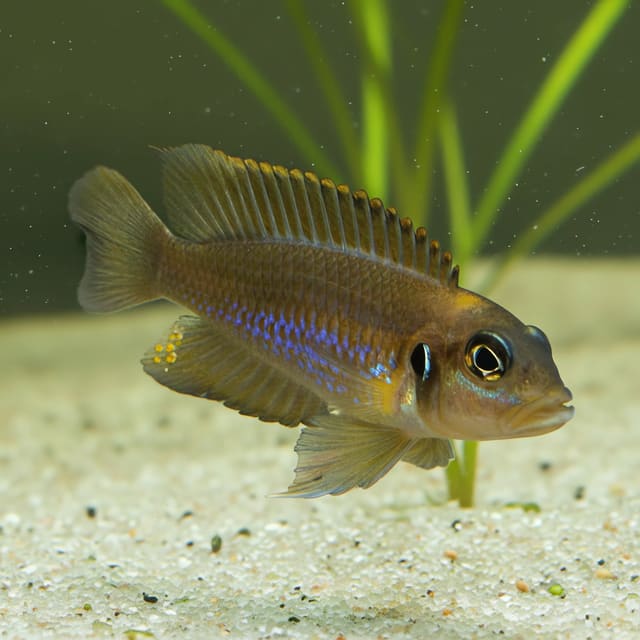
23–25°C · pH 8–9 · 75L

24–27°C · pH 7.5–8.5 · 300L
Maintain these water conditions for optimal health and vibrant colors
Yellow Head Kekese Cyprichromis (Cyprichromis leptosoma) is an open-water Lake Tanganyika cichlid valued for its slim body, active group movement and the yellow-head colour developed by mature males in the Kekese locality form. Unlike many rock-dwelling African cichlids, Cyprichromis spend much of their time in the middle and upper water.
Use the live size selector for current supplied size, stock and price. This species should be planned as a social group rather than a single specimen.
Plan the aquarium around swimming space. Use stable rockwork around the sides and lower areas for structure and sight breaks, but leave a broad middle and upper water column open for the group.
Strong mature biological filtration, good surface movement and high oxygen are important. Ammonia and nitrite must remain at zero and nitrate should be controlled through suitable stocking, measured feeding and regular partial water changes.
Maintain hard, alkaline Lake Tanganyika-style water around 24–27°C and pH 7.8–9.0. Test GH and KH if the source water is soft. If remineralisation is needed, use a consistent measured method rather than repeatedly dosing the occupied aquarium.
Stability is more important than chasing one exact pH. Match replacement water carefully during routine maintenance.
Keep at least six, with a larger group preferred in a spacious aquarium. Social stocking helps the fish behave more naturally and lets males display without focusing all attention on one individual.
Provide enough open water that subordinate fish can move away. A small group crowded into a short aquarium can still create social pressure even though the species is generally considered mild.
Use fine floating or slow-sinking cichlid foods that remain available in the water column. Cyclops, daphnia, baby Artemia and other small frozen or live foods are useful for variety.
Feed small portions once or twice daily. Large heavy sinking meals are a poor match for an open-water planktivore and can simply accumulate in rockwork.
Suitable companions are calm Lake Tanganyika species that share the same hard alkaline water but occupy different parts of the aquarium. Shell-dwellers and carefully selected rock cichlids can work in a sufficiently large, well-zoned setup.
Avoid highly aggressive Mbuna, large predators and soft-water community fish. Sharing an African origin does not make water, diet and social behaviour automatically compatible.
Cyprichromis leptosoma are maternal mouthbrooders. Females carry developing eggs and fry in the mouth and may feed less while holding. A settled group with good water quality and reduced harassment gives breeding females the best chance of completing the brood.
Choose Yellow Head Kekese Cyprichromis if you have a mature hard-water Tanganyika aquarium with enough open swimming length for a proper group. Reconsider if the tank is small, soft and acidic or already dominated by aggressive rock cichlids.
Current size, stock and price are shown by the live product selector so the care description remains accurate when availability changes.
No reviews for this item yet. Bought one? Honest reviews only, good or bad.
What customers say about ordering from us
I have a small group of long finned mountain minnows. So was delighted to be able to order ten of this variety to increase the genetics in my tank . The ones I recieved are healthy but it’s to early to give a verdict on wether they are of a long finned type since they are small currently.
Gordon Walker · 23 Sept 2026
100% success travel and "installation". Pleased with quality of purchase. The Siamese fighter a bit "shy" so have not yet seen him at his best yet but looking good. Happy customer. GG
George E Garratt · 21 Sept 2026
Reviews of our shop, collected by Judge.me, an independent third-party review collector. Newest first.
