Moderate
Xenotilapia spilopterus kipille
23–27°C · pH 8–8.6
£40.99
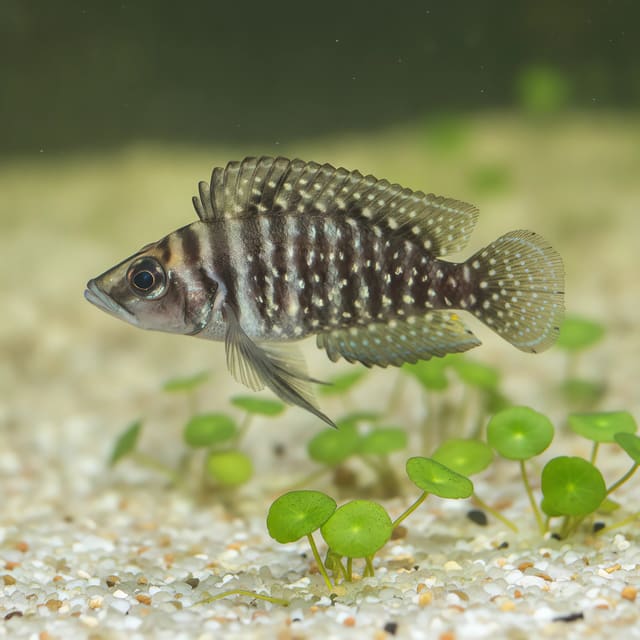
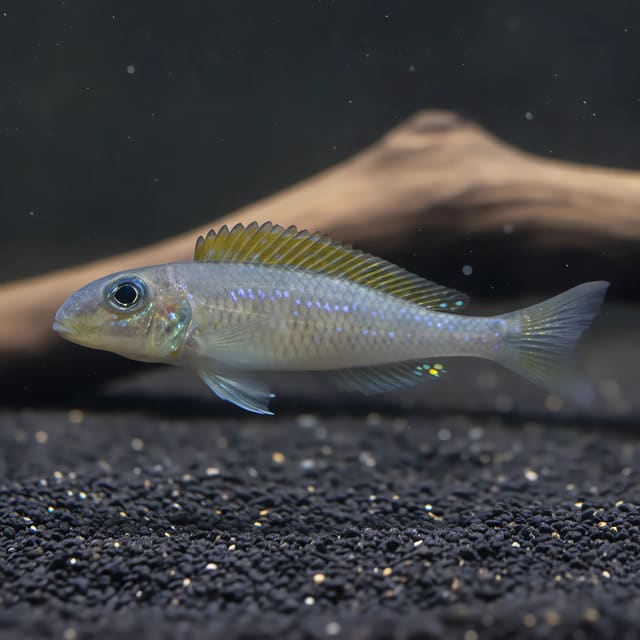
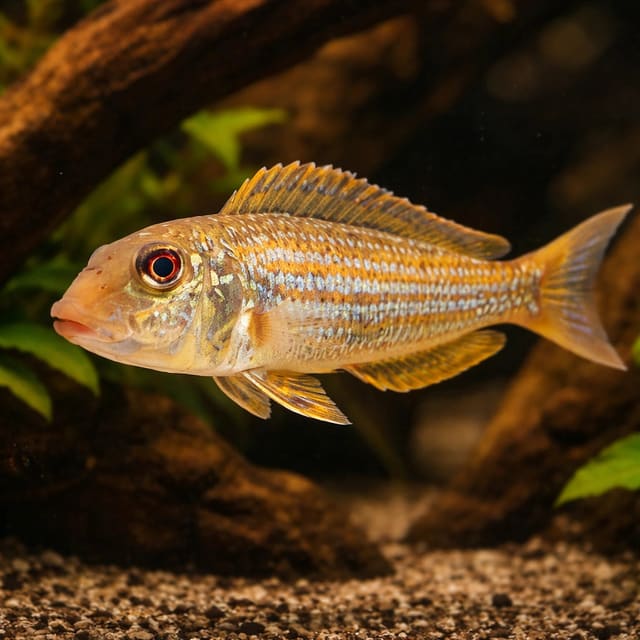
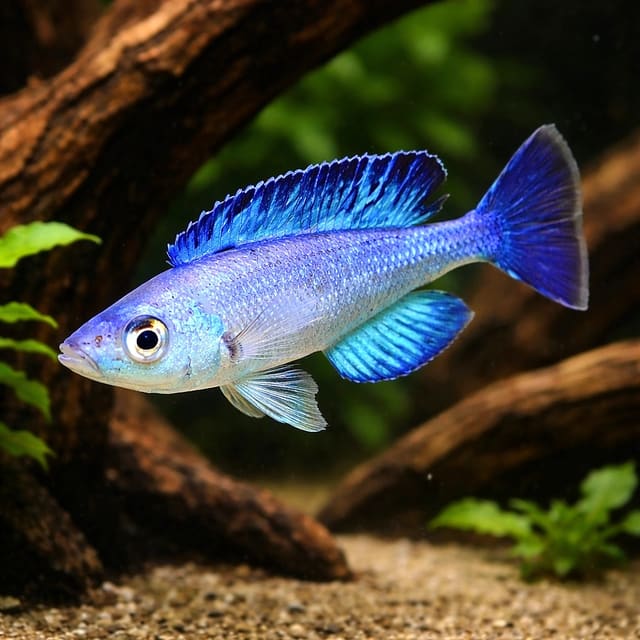
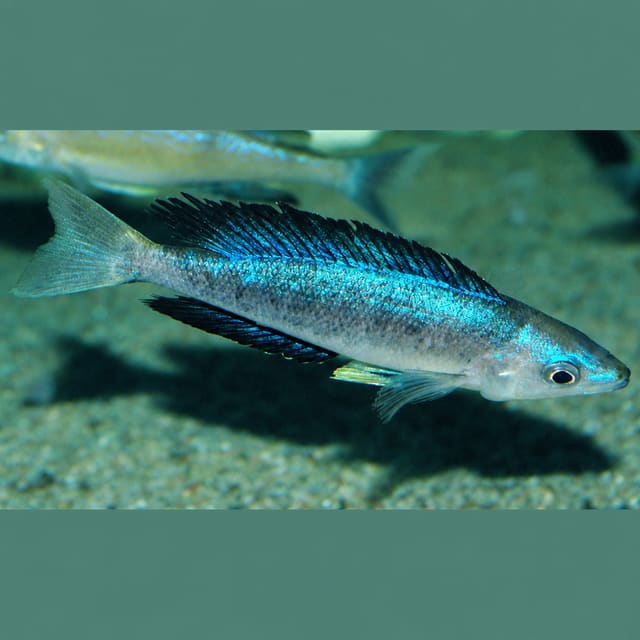
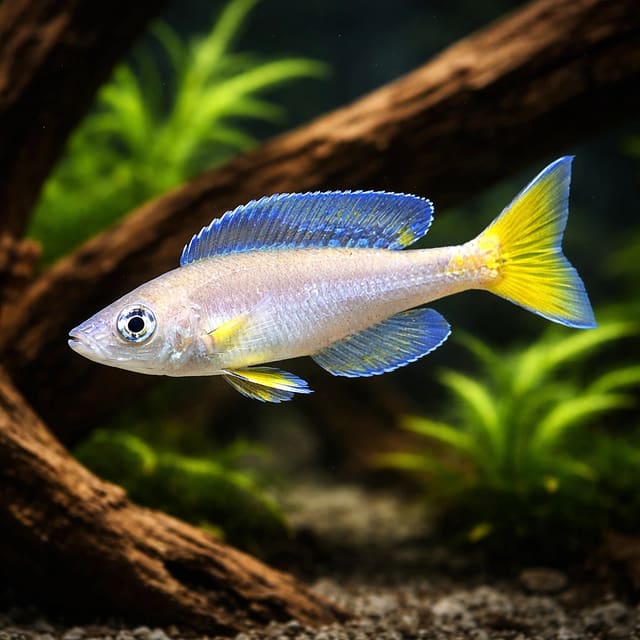
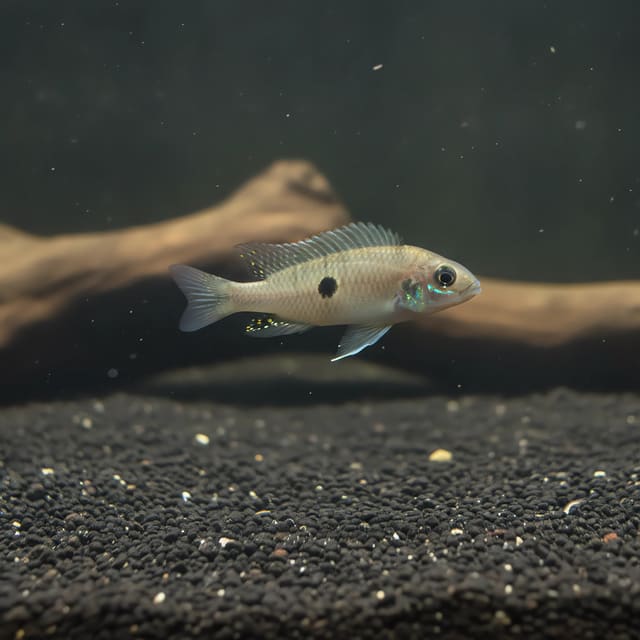
Xenotilapia melanogenys — Kigoma is a peaceful but skittish Lake Tanganyika sand cichlid for an experienced keeper with a long, mature, hard-water aquarium. One purchase supplies one unsexed live fish at the supplier's 4–5 cm dispatch grade; plan for social needs, open sand and an adult around 15–16 cm rather than the size on arrival.
Adult size is the maximum length this species reaches at full maturity (scientific sources). The livestock you receive will be younger and smaller. Product-photo provenance and any image-specific limitations are stated on the listing.
Xenotilapia melanogenys
Save when buying multiple fish. Each quantity is one fish; sex and pair formation are not guaranteed unless the selected variant explicitly states them.
Xenotilapia melanogenys — Kigoma is a peaceful but skittish Lake Tanganyika sand cichlid for an experienced keeper with a long, mature, hard-water aquarium. One purchase supplies one unsexed live fish at the supplier's 4–5 cm dispatch grade; plan for social needs, open sand and an adult around 15–16 cm rather than the size on arrival.
Adult size is the maximum length this species reaches at full maturity (scientific sources). The livestock you receive will be younger and smaller. Product-photo provenance and any image-specific limitations are stated on the listing.
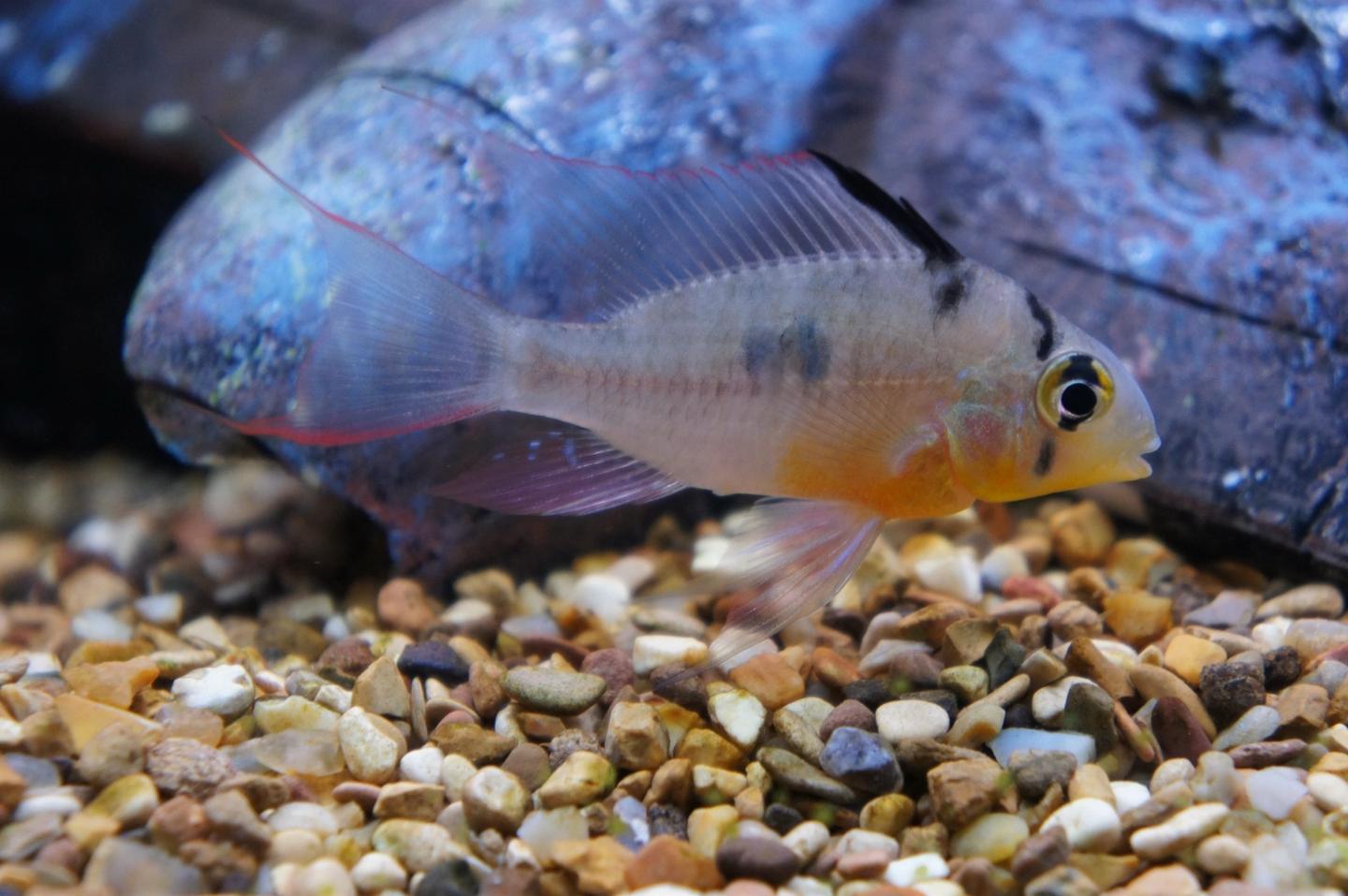
Cichlids are a family of roughly 1,800 accepted species, not one care type. Before buying, identify the exact species and source, then compare adult measurement, usable tank dimensions, social system, territory, tested water, diet and an exit plan. No family-wide minimum tank, water range or tank-mate list is safe.
Maintain these water conditions for optimal health and vibrant colors
Xenotilapia melanogenys — Kigoma is a graceful, sand-associated cichlid from Lake Tanganyika. Older aquarium books and supplier lists often place it under Enantiopus melanogenys; FishBase treats that as a synonym and accepts Xenotilapia melanogenys. The Kigoma wording identifies the trade locality form. This is not a general community fish for a small mixed aquarium: it is best appreciated in a mature, alkaline Tanganyika-style system built around floor space, fine sand, steady water quality and calm companions.
One purchase supplies one live fish. The dispatch grade for this listing is 4–5 cm, which is a dispatch size rather than an adult ceiling. FishBase records a maximum of 15 cm total length, while the specialist aquarium profile lists 160 mm standard length. Those figures use different measuring conventions and do not form a neat conversion, so sensible planning treats this as a substantial 15–16 cm-class cichlid and gives it the footprint recommended for the species rather than sizing the tank around the juvenile that arrives.
| Suits | An experienced Tanganyika keeper able to provide stable hard, alkaline water, a long sandy footprint and a deliberately planned social group |
|---|---|
| One purchase | One live, unsexed fish at the supplier's 4–5 cm dispatch grade |
| Adult planning | 15 cm TL recorded by FishBase; the specialist profile separately lists 16 cm SL |
| Published aquarium starting point | 120 × 38 cm base and about 137 litres, with more floor area for a larger or multi-male group |
| Routine species-profile water | 24–27 °C, pH 7.5–9.0 and 10–25 dGH |
| Defining need | Uninterrupted fine sand for natural sifting, plus calm surroundings and excellent filtration |
The fish feeds close to the substrate and sifts sand through its gills to find small invertebrates and edible particles. That behaviour is central to its welfare. Coarse, sharp gravel frustrates feeding and can expose delicate mouth and gill structures to abrasion; an open bed of fine aquarium sand is therefore an essential part of the setup, not a decorative extra. Rock piles can frame the sand and provide visual shelter, but they should not consume the entire bottom.
Although the species is generally peaceful, it is easily unsettled by boisterous fish, abrupt movement and sudden changes in lighting. Males can defend spawning territories. A successful aquarium therefore balances open foraging space with rockwork that divides sight lines and allows more than one territory when the group plan includes multiple males. The published 120 × 38 cm base is a minimum species-profile reference, not a promise that every social arrangement will fit that footprint.
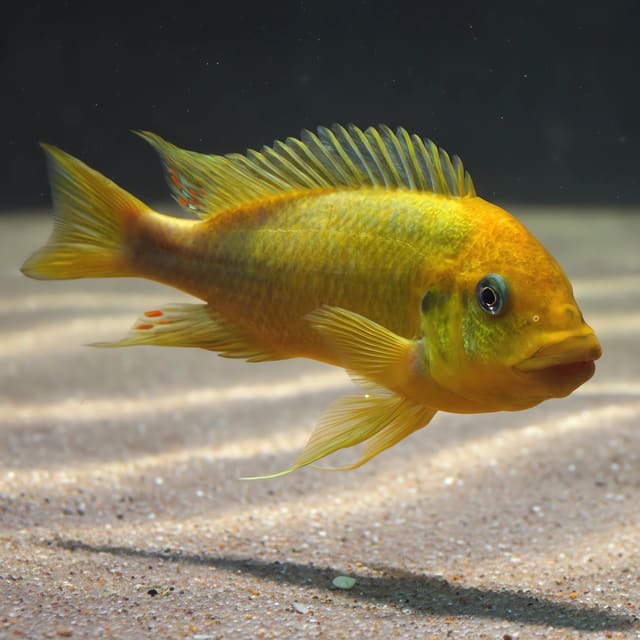
The locality label also needs sensible expectations. The species profile notes slight geographical colour variation, but it does not promise one fixed shade or breeding dress in every juvenile. Colour depends on maturity, sex, social context and condition. Buy for the animal's care needs and behaviour first; the photograph and Kigoma label do not turn an unsexed 4–5 cm fish into a guaranteed adult show male.
Before choosing it, picture the finished adult aquarium rather than the first week. The fish needs room to forage without meeting a rock at every turn, enough companions for a workable social arrangement, and water that can be kept consistently hard and alkaline. A keeper who already knows the tap-water chemistry, has tested the mature filter and has a plan for future territorial behaviour is in a much stronger position than one hoping to adapt a general community after the fish arrives.
Sex is guaranteed only when the selected option explicitly states male or female. This Enantiopus melanogenys kigoma listing has no sex-guaranteed option.
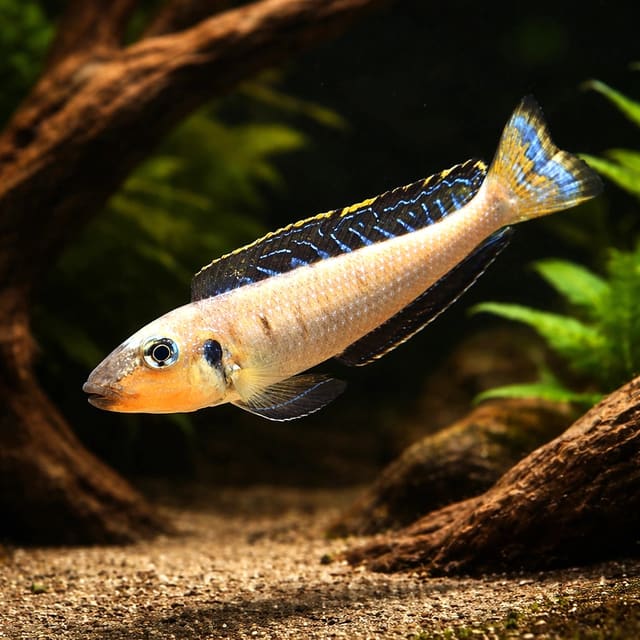
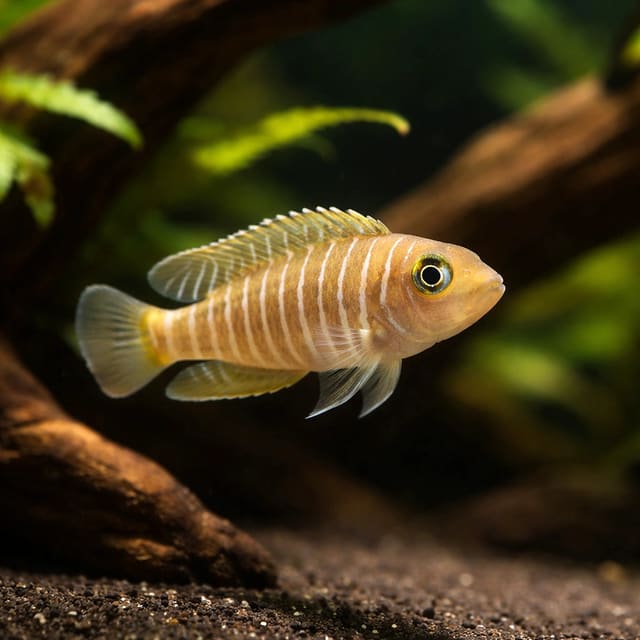
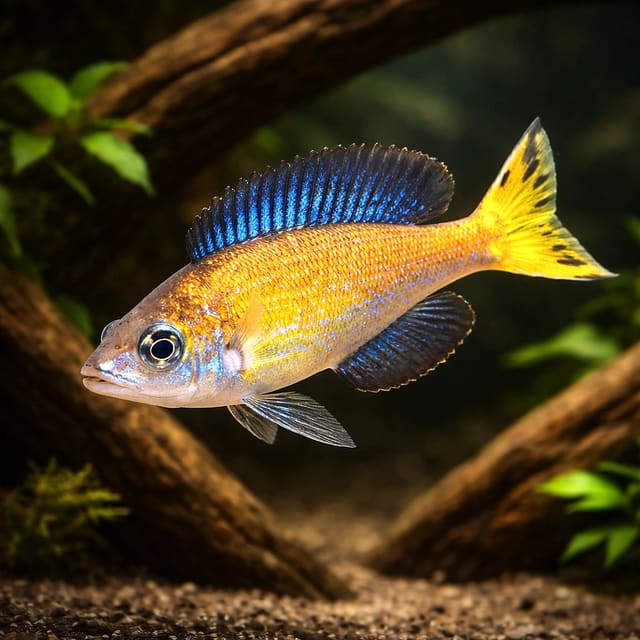
Gallery images have been digitally enhanced to improve image quality. Natural colour, pattern, size and maturity can vary between live animals.
This species demands more planning than its gentle manner first suggests. If you are comparing bottom-oriented fish with very different care needs, the bottom dwellers collection helps you browse the current range, but a shared position in the aquarium never makes two animals compatible. Choose this cichlid because you can build around Lake Tanganyika conditions, sand-sifting behaviour and a social plan—not simply because there is space near the substrate.
The species profile gives a base of 120 × 38 cm and a volume of about 137 litres. The base measurement matters more than a tall display volume because these fish feed, signal and establish space over the substrate. Treat that published footprint as the minimum starting point for the species. Increase it when planning several adults, more than one male, or any community in which rockwork and companion territories reduce the usable sand.
Lay a generous bed of smooth, fine aquarium sand. Leave broad, uninterrupted areas where the fish can take mouthfuls, sift food and expel clean sand through the gills. Arrange stable rock piles towards the back and ends, with caves and broken sight lines, while keeping the central feeding area open. Set every heavy rock directly and securely so digging cannot undermine it. The specialist profile reports that the fish can appreciate bright lighting, but it is also skittish and may react badly to abrupt switching or fast movement outside the glass. A timer, a predictable day-night rhythm and a room position away from repeated shocks make that lighting easier to tolerate.
A secure cover is prudent for any startled fish. Leave clear swimming room above the sand and keep intakes guarded appropriately for juveniles. If this is a new aquarium, use the first tropical tank guide to work through cycling and equipment before livestock is ordered. A newly filled tank is not mature merely because temperature and pH look right on one test.
For routine aquarium care, the applicable specialist profile gives 24–27 °C, pH 7.5–9.0 and 10–25 dGH. FishBase records wild or environmental values including pH 7.5–8.5 and a tropical lower point of 25 °C, while the OATA African lake cichlid sheet gives broader group guidance of 23–27 °C, pH 8.0–8.6 and 12–18 dGH. These are different scopes. The species-profile range is the clearest captive target here; the other figures provide context rather than a reason to chase daily changes.
Lake Tanganyika fish benefit from stability. Measure your source water before deciding how to maintain hardness and alkalinity, then choose a repeatable method. Avoid sudden pH correction with one-off chemicals. If your tap water falls well outside the intended range, plan and test any mineral recipe consistently in replacement water before it reaches the aquarium. The water chemistry guide explains what common readings mean, and the water parameter matcher can help compare measured values with the stated guidance.
OATA's values are deliberately broad for African lake cichlids, but its pollution limits remain useful welfare rules: ammonia 0 mg/l, nitrite 0 mg/l, and nitrate not more than 20 mg/l above normal tap-water levels. It does not mean an absolute nitrate target of 20 mg/l regardless of the incoming water. Test at least weekly and also after adding fish, changing feeding, servicing equipment or noticing behaviour that is out of character.
Hard, alkaline water is not created safely by chasing pH in the display. Test the tap water and prepared replacement water for pH and general hardness, and note how the aquarium changes between maintenance days. If mineral buffering is required, measure the same amount into a known volume of replacement water and confirm the result before the water change. This makes each week predictable and reduces abrupt swings.
Evaporation leaves minerals behind, so top up evaporated water separately from the scheduled water change rather than treating evaporation as waste removal. Continue replacing an appropriate portion of aquarium water to control nitrate and dissolved waste. If readings begin to drift, check the preparation method, test-kit condition, stocking and feeding before making a large correction. OATA's weekly testing advice is especially valuable after new fish are added because biological demand has changed.
The specialist profile's equipment calculation uses four to five tank turnovers an hour for its roughly 137-litre example. Actual filter choice also depends on media capacity, head height and how the outlet moves water around rocks. Aim for complete circulation, vigorous oxygenation and excellent biological capacity while protecting open sand from a constant jet. Position the return so debris reaches the intake without forcing a sand-sifting fish to fight strong point flow all day.
Biological filtration is non-negotiable. The RSPCA explains that fish waste produces toxic ammonia, which established bacteria process first to nitrite and then to the safer nitrate. Rinse biological media lightly in removed aquarium water when flow falls; do not run it under the tap. Check the intake for sand and blockages, because reduced flow can erode oxygenation and waste processing before the water looks dirty.
If pH or hardness moves unexpectedly, repeat the test before changing the water. Check expiry dates, rinse test vessels correctly and compare tap, prepared replacement and aquarium samples. A falling pH in an alkaline setup may point to exhausted buffering, accumulated organic waste or a preparation change; a rising hardness reading can reflect repeated mineral additions or evaporation top-ups. The pattern across several readings is more informative than one surprising colour block.
Correct a confirmed problem in controlled stages. Prepare replacement water consistently, change a measured portion and retest after the aquarium has mixed. Large, rapid swings can be harder on the fish than a value near one edge of the published range. When fish are also breathing abnormally, test ammonia and nitrite immediately and make oxygenation a priority while seeking appropriate advice.
OATA strongly recommends a partial water change of 25% at least once every week for African lake cichlids. Match replacement water for temperature and the planned mineral balance, and treat tap water for chlorine or chloramine before adding it. Siphon waste from exposed areas without deep-stirring the whole sand bed on the same day. A thin surface pass is usually more useful than removing the substrate the fish needs.
Record temperature, pH, hardness, ammonia, nitrite and nitrate so trends are visible. One isolated reading can mislead; a log shows whether alkalinity is being consumed, nitrate is rising faster, or maintenance is drifting. Stable readings and normal behaviour matter more than repeatedly adjusting the aquarium to sit on a favourite number within the accepted range.
FishBase reports copepods, ostracods and shrimps in wild stomach contents, and the species profile says live and frozen foods should form the bulk of the aquarium diet. Offer suitably sized foods that reach the lower water and spread them across more than one patch of sand. Quality frozen foods, live invertebrate foods and an appropriate prepared food can provide variety; watch each fish take food rather than assuming a meal eaten at the surface reaches a shy substrate feeder.
Give small portions that are consumed promptly. Remove persistent leftovers, because food trapped beside rocks becomes a water-quality problem. In a community, faster mid-water fish can intercept everything. Use several feeding points, deliver some food close to the bottom, and check body condition from both sides. A fish that sifts continuously is not necessarily receiving enough nutrition.
A sand-sifting cichlid gives useful daily clues long before a test result becomes alarming. Normal activity includes moving over the substrate, taking and expelling sand, responding to food and using open areas without frantic dashes. A new fish may be cautious, but a continuing refusal to leave one corner, rapid breathing, clamped fins, repeated rubbing, loss of balance or steady weight loss deserves investigation. Test the water first and look at the whole group: the cause may be chemistry, oxygen, aggression or unequal access to food rather than a problem that can be guessed from one symptom.
Learn each fish's normal outline. View from above and from both sides during feeding. A pinched belly suggests that food is not reaching the animal or that appetite is poor; swelling, unusual buoyancy or stringy waste should prompt closer observation and appropriate professional advice. Avoid reaching immediately for a treatment. Many medicines affect biological filtration, and a hard-water cichlid aquarium can react differently to a treatment than expected. Accurate water readings and a clear history are more useful than several products added together.
A 120 × 38 cm base only helps when most of it remains usable. A dramatic wall of rocks can leave a narrow strip of sand that is too small for feeding and social spacing. Build two or more stable rock clusters instead, separated by broad sand lanes. Keep feeding patches visible from the front so you can compare individuals, and create sheltered edges where a nervous fish can pause without disappearing behind an inaccessible structure.
The species profile describes rocks forming caves with open water between them, alongside essential sand. This is compatible with a restrained Tanganyika layout: pale sand, secure stone, clear swimming room and few objects that trap waste. Plants are optional rather than a substitute for hardscape planning. If used, choose positions that do not remove the main sifting area and make sure roots, pots or sharp ties cannot injure a fish working close to the bottom.
One juvenile has a small immediate biomass, yet the intended adult group determines the aquarium's real capacity. Sketch where separate male territories could form, where females and subordinate fish can feed, and where companions will live. If every function relies on the same patch of sand, the layout has no resilience. More base area gives the keeper options when behaviour changes at maturity.
Filtration should also be sized for the eventual stocking plan. A filter can turn water over quickly while offering too little biological media, or hold ample media while leaving dead spots behind rocks. Observe where debris settles and adjust the outlet or rock spacing gently. Oxygen exchange comes from surface movement and circulation as well as the nominal filter rate. During hot weather, dissolved oxygen falls as temperature rises, so watch breathing and maintain strong gas exchange without pushing the fish around the tank.
The species records support an animal-food-led diet and substrate feeding, but it does not prescribe a universal number of meals or an exact branded menu. Start with modest portions and adjust from observation. Rotate appropriate frozen or live invertebrate foods with a suitable prepared food, considering the mouth size of a 4–5 cm juvenile. Thaw frozen food safely and distribute it rather than dropping one dense lump beside the dominant fish.
Watch whether food remains on the surface, drifts behind rocks or reaches every sand patch. Change delivery technique before simply adding more. A feeding tube, pipette or sinking format can help target the lower water, but the goal is equal access and clean water, not equipment for its own sake. Remove persistent leftovers and include the extra waste load in the next water check.
During the first week, compare the newcomer at the same time each day. Note breathing, posture, sand use, feeding and how established fish respond. Recheck ammonia and nitrite after introduction because the filter now carries more waste. Keep food portions conservative until every fish is feeding normally, and remove uneaten material before it disappears among the rocks.
Colour can fade after transit and a skittish fish may rest or hide. Judge the trend, not a single moment. Urgent breathing, loss of balance, injury or a fish that was compromised in the sealed bag deserves prompt contact; normal caution in a new aquarium deserves calm observation and stable conditions.
Xenotilapia melanogenys is described by the specialist profile as peaceful and skittish. FishBase records large wild schools over sand, while the aquarium profile says conspecifics are generally peaceful except that males become territorial when spawning. These points support social keeping, but they do not make an arbitrary number safe in an arbitrary tank. The useful question is whether the aquarium provides enough open floor, feeding access and separable territories for the group you intend to keep.
The species profile advises at least two males for full colour development and several females per male where possible. This listing does not sell sex-selected fish, so a buyer cannot order a guaranteed ratio. Juveniles may also be difficult to sex reliably. Discuss a realistic group plan before purchase, provide more space than the published minimum when keeping multiple males, and be ready to manage an unexpected sex balance as the fish mature.
During breeding, a male excavates a depression in the sand and defends the surrounding area. Use rockwork to separate sections of the floor visually without turning the whole base into caves. More than one male needs genuinely distinct sand territories, not two markers a few centimetres apart. Watch for persistent exclusion from food, a fish held in an upper corner, torn fins or repeated high-speed pursuit. Occasional display is not the same as one fish being unable to rest or feed.
Do not attempt to fix an undersized social layout by simply adding more fish. OATA notes that stocking methods vary widely among African lake cichlids; advice for heavily stocked Mbuna or large Tropheus groups is not automatically appropriate here. Space, species behaviour and filtration must all support the chosen number.
The species profile names Cyprichromis, Cyathopharynx, Julidochromis, Neolamprologus and Altolamprologus species as possible tank mates. Treat those as genera for further research, not a universal approval of every species, size and group. Match water requirements, adult size, feeding speed and temperament, and make sure rock-dwelling companions leave enough open sand. A peaceful mid-water fish can still be unsuitable if it consumes every meal before food reaches the substrate.
Avoid Mbuna and other boisterous fish. Their activity and competitive feeding can keep this skittish cichlid in a chronic state of alarm, while their social and territorial strategies do not match a calm sand community. Also avoid large predators, persistent fin attackers and animals likely to occupy or excavate the same sand territories aggressively.
Small general community fish are not automatically safer. The Tanganyika system's high mineral content and alkaline pH may be outside their routine range, and very small companions could be viewed as food by a mature cichlid even when predation is not the species' defining behaviour. Equally, decorative invertebrates should not be assumed safe merely because wild stomach records include small crustaceans. Plan the whole community from adult behaviour and water needs.
The named Tanganyikan genera contain animals with different adult sizes, feeding styles and territorial habits. A small shell-dwelling Neolamprologus and a larger rock-holding species do not use a tank in the same way, even though the genus appears on a companion list. Check the exact species, the number it needs, its preferred zone and its adult behaviour before combining it with this sand cichlid.
Use the same care when considering Cyprichromis for the upper water. Their different swimming zone can be helpful, but the aquarium must still provide the group size and open-water length that the chosen species needs. Compatibility is strongest when each animal has adequate space on its own terms, not when several minimum figures are squeezed into one footprint.
First compare water. A prospective companion should genuinely thrive in the same warm, hard and alkaline range, not merely tolerate it briefly. Second compare space use. Mid-water fish often leave the sand available, whereas another bottom-oriented cichlid may compete for the same feeding and breeding ground. Third compare pace. A robust but frantic feeder can be a poor match for a gentle fish even when neither species is overtly aggressive.
Then examine the exact individuals after introduction. Peaceful labels describe a general tendency; they do not override size differences, breeding condition or a cramped layout. Look for equal access to food, relaxed use of the aquarium and normal breathing. If one fish is always pale, hidden or displaced, change the environment or separate the incompatible animals rather than waiting for visible wounds.
Adding a companion is not just adding its body length. It takes filtration capacity, feeding opportunity and some part of the visual and physical space. Before expanding the community, ask whether the existing Xenotilapia group still has open sifting lanes and more than one defensible area. A crowded but apparently calm juvenile aquarium can become unstable when several fish mature together.
Compatibility remains conditional throughout the animals' lives. A combination that works among juveniles can change when males colour, breeding starts or body size increases. Reassess the layout and group rather than labelling the species aggressive on the basis of a preventable space conflict.
FishBase records 15 cm total length, while the specialist aquarium profile separately lists 160 mm standard length. Because those measurements do not form a simple like-for-like ceiling, plan for a substantial 15–16 cm-class cichlid and never use the 4–5 cm dispatch grade as its adult size.
The species profile gives a 120 × 38 cm base and about 137 litres as its published starting point. Floor area is crucial for sand feeding and territories, so use a larger footprint when keeping a bigger group, more than one male, or companions that reduce the usable sand.
This is a social sand cichlid rather than a routine solitary display fish. The specialist profile advises at least two males and several females per male where possible, but this offer is not sex-selected. Plan the group and extra floor space before ordering, and be ready to manage the eventual sex balance.
It is better suited to an experienced keeper. The fish needs stable hard, alkaline water, mature filtration, fine sand, calm surroundings and a considered group plan. Its peaceful temperament does not remove those specialised Tanganyika requirements.
It feeds mainly from the substrate. FishBase records small crustaceans in wild stomach contents, and the aquarium profile says live and frozen foods should form the bulk of the diet. Offer varied, suitably sized foods across several sand patches and make sure faster fish do not intercept every meal.
The species aquarium profile gives 24–27 °C and pH 7.5–9.0, with hardness of 10–25 dGH. Keep those values stable. OATA's 23–27 °C and pH 8.0–8.6 figures are broader African lake cichlid guidance rather than a different species-specific target.
It is described as peaceful and skittish, not as a routine fin-nipper. Spawning males can become territorial towards their own kind, so provide separate sand territories, broken sight lines and enough floor space, then intervene if one fish is persistently excluded or chased.
The species profile names suitable possibilities from Cyprichromis, Cyathopharynx, Julidochromis, Neolamprologus and Altolamprologus. Check the exact species and adult size, and avoid Mbuna or other boisterous fish that compete aggressively or keep this shy sand cichlid alarmed.
Tropical Fish Co packs fish in oxygen-filled bags inside an insulated box and uses a tracked, licensed live-animal courier. Someone must receive the parcel. Record a continuous unboxing video from the sealed box to the fish in the sealed bag, and contact the store the same day with the order number and video if a Live Arrival Guarantee claim is needed.
The care plan above separates species-level aquarium guidance from wild records and broad group advice. That distinction matters for a specialised Lake Tanganyika fish: a wild observation can explain behaviour without setting a captive target, and a group care sheet can supply general welfare practice without proving every number for this species.
No reviews for this item yet. Bought one? Honest reviews only, good or bad.
What customers say about ordering from us
Easy website plenty of info on fish your buying great to pick a time slot
TRACEY DURRANT · 7 Oct 2026
Got some lovely fish thank you
Kevin Mackie · 7 Oct 2026
Reviews of our shop, collected by Judge.me, an independent third-party review collector. Newest first.