Advanced
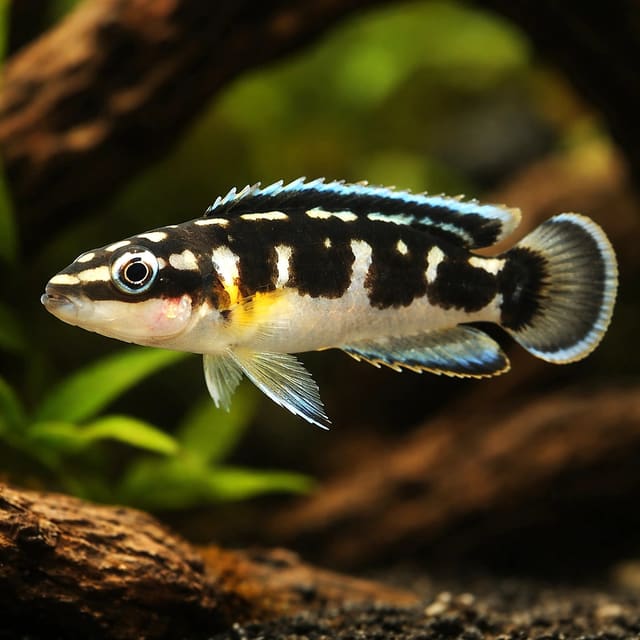
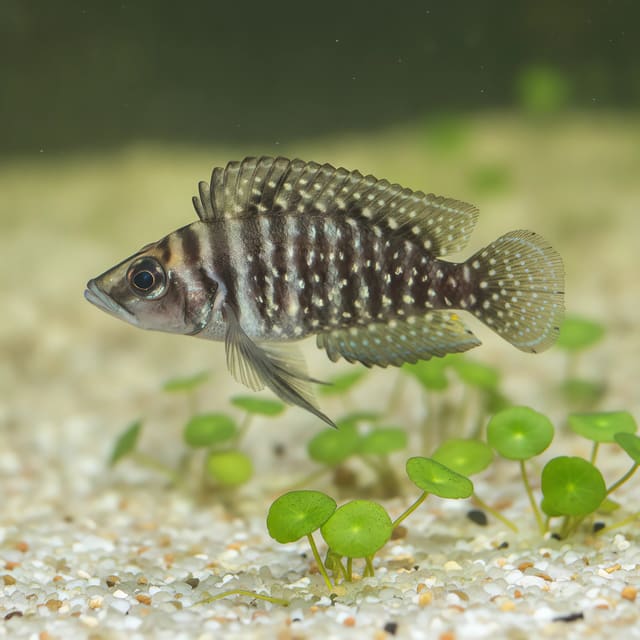
Black Calvus (Altolamprologus calvus)
24–25°C · pH 8–9
£35.99
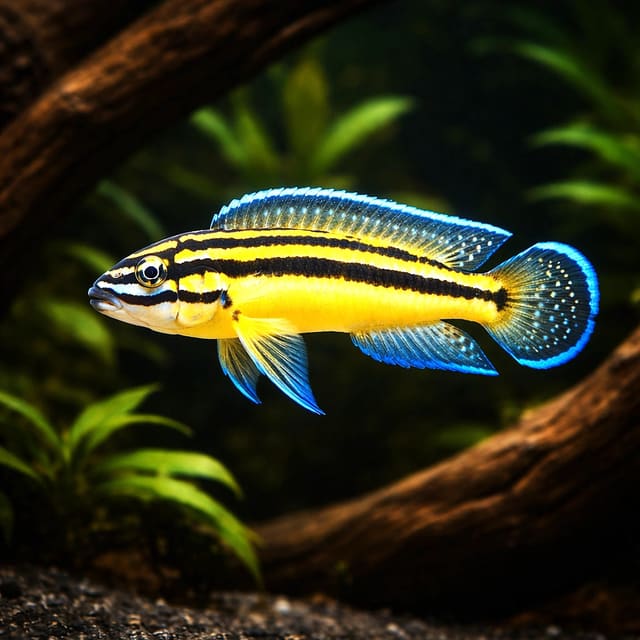
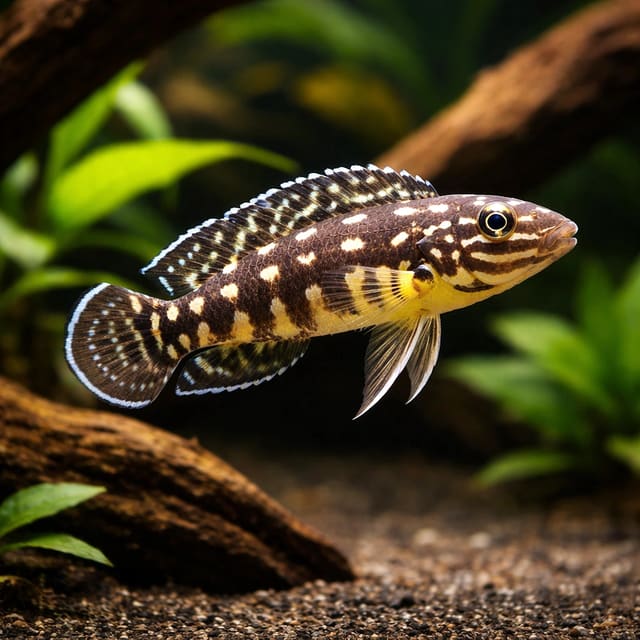
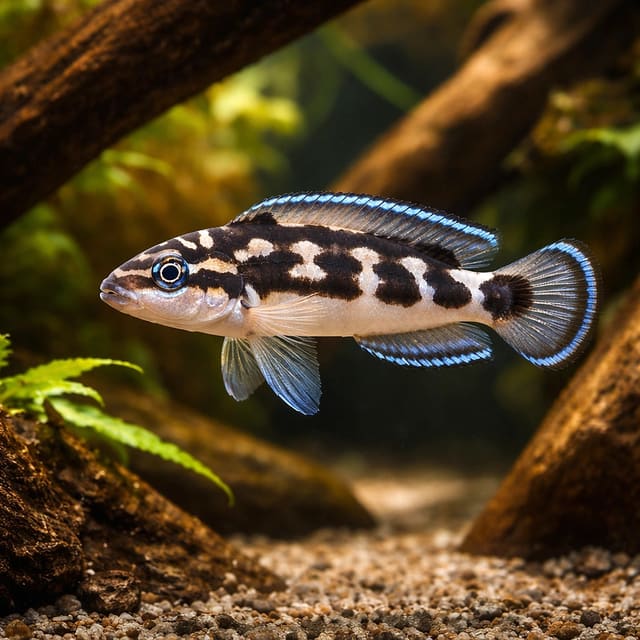
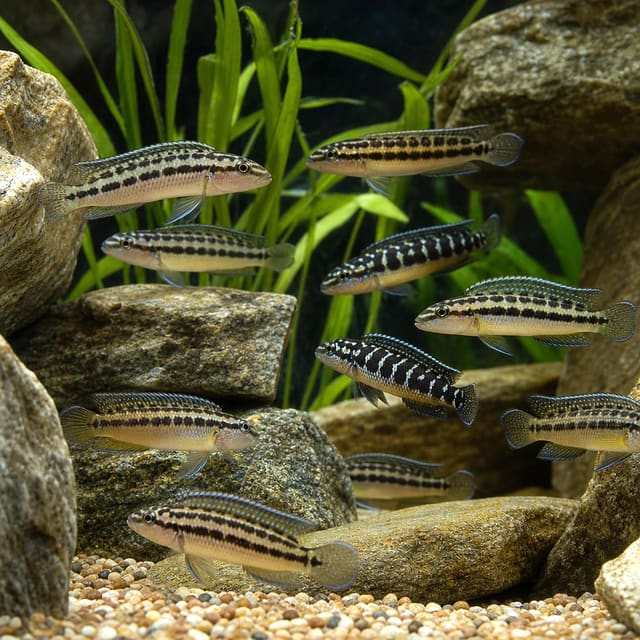
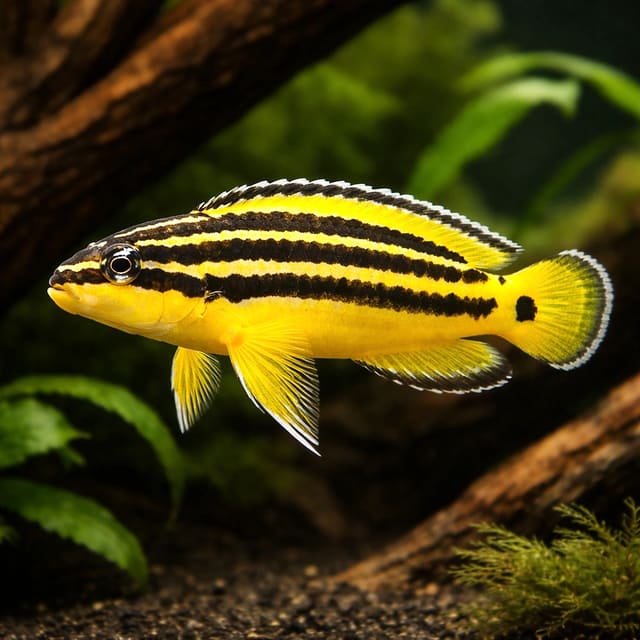
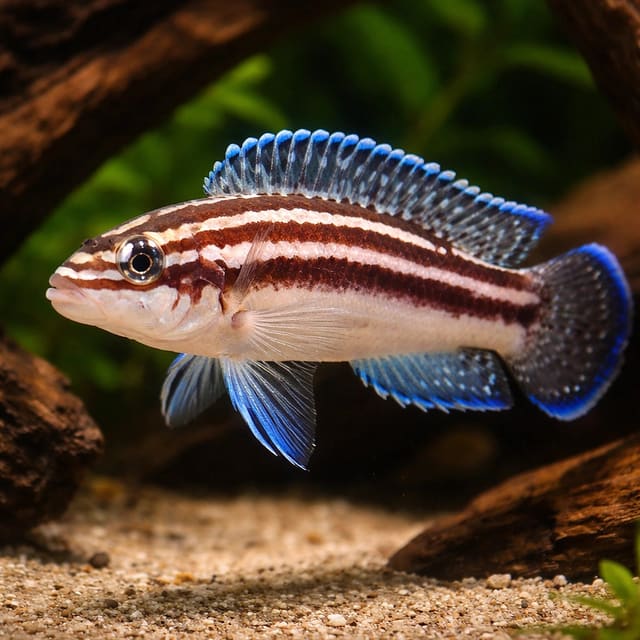
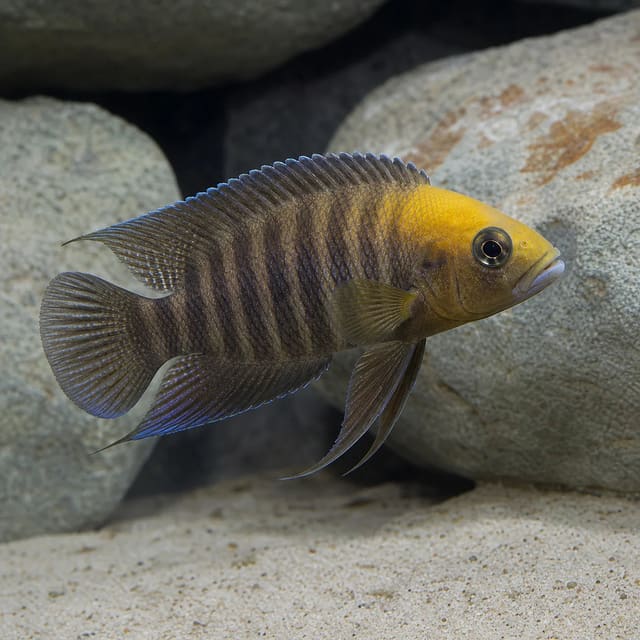
Albino Yellow Ornate Julie (Julidochromis ornatus) is a compact territorial Lake Tanganyika cichlid for mature hard-water aquariums with fine sand and extensive stable rock caves. One purchase supplies one live fish in the 3.5–4 cm dispatch grade.
Julidochromis ornatus
Save when buying multiple fish. Each quantity is one fish; sex and pair formation are not guaranteed unless the selected variant explicitly states them.
Albino Yellow Ornate Julie (Julidochromis ornatus) is a compact territorial Lake Tanganyika cichlid for mature hard-water aquariums with fine sand and extensive stable rock caves. One purchase supplies one live fish in the 3.5–4 cm dispatch grade.
Cichlids are a family of roughly 1,800 accepted species, not one care type. Before buying, identify the exact species and source, then compare adult measurement, usable tank dimensions, social system, territory, tested water, diet and an exit plan. No family-wide minimum tank, water range or tank-mate list is safe.
Maintain these water conditions for optimal health and vibrant colors
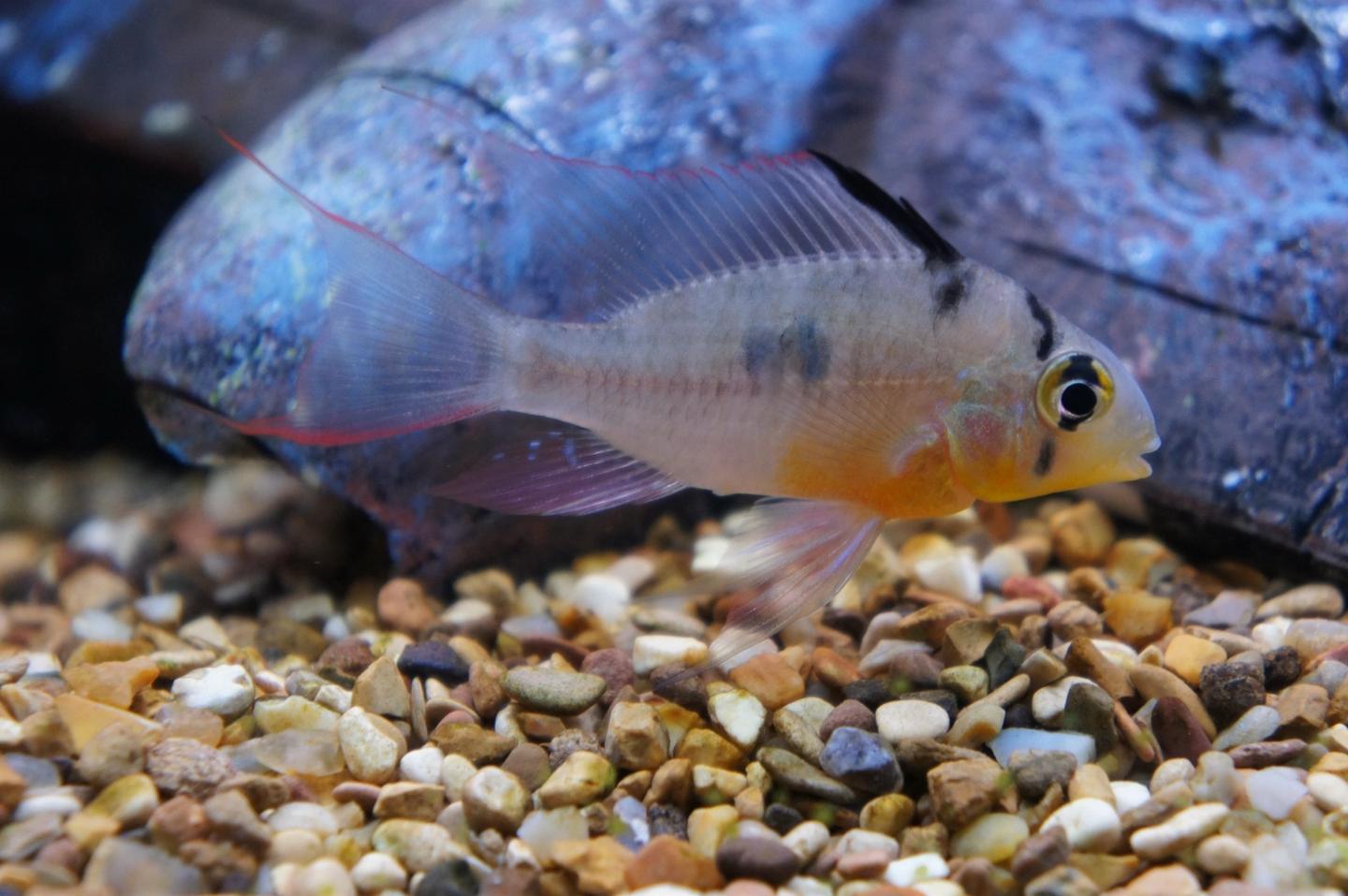
Albino Yellow Ornate Julie (Julidochromis ornatus) is a compact, rock-dwelling Lake Tanganyika cichlid with a bright yellow aquarium form and the close-to-cover behaviour typical of Julies. The accepted species name is J. ornatus, and the species profile recognises an aquarium sport albino form. “Albino Yellow” describes the trade form; it stays outside the scientific parentheses rather than becoming an extra part of the binomial.
This listing supplies one live fish in the 3.5–4 cm dispatch grade. The product has one purchase format. The dispatch grade describes the fish sent, not its eventual size. FishBase records a maximum of 8.5 cm total length (TL), male/unsexed; Seriously Fish separately records 80 mm standard length (SL). Standard length excludes the tail and total length includes it, so the two figures remain labelled rather than being treated as interchangeable.
| Suits | A keeper building a mature, hard-water Lake Tanganyika aquarium with extensive rock caves and a deliberate territory plan |
|---|---|
| One purchase | One live Albino Yellow Ornate Julie in the 3.5–4 cm dispatch grade |
| Adult records | 8.5 cm TL, male/unsexed; separately, 80 mm SL |
| Species aquarium | 70 litres with a 75 × 30 × 30 cm footprint for one compatible pair |
| Practical water interval | 23–24 °C, pH 8.0–9.0 and 10–19 dGH, shared by the two species references |
| Social character | Territorial; usually solitary in the wild, with aquarium husbandry centred on a compatible pair |
J. ornatus is endemic to Lake Tanganyika and lives around rock. Its slender form lets it move close to cave walls and through narrow passages, but a modest body length does not mean it should be kept in a bare nano aquarium. The fish needs a network of stable caves, visual boundaries and a sandy floor. It also needs enough horizontal room for one compatible pair to occupy a territory without every route ending at the same shelter.
The social wording needs care. FishBase describes the species as usually solitary and territorial in the wild, while both FishBase's aquarium note and the Seriously Fish profile point to pair keeping. Seriously Fish also warns that it is aggressive towards its own species. These facts are not contradictory when their setting is kept clear: an aquarium pair is a particular compatible relationship, not permission to crowd several unfamiliar Julies together.
An adult record around eight centimetres can make this fish sound suitable for any small tank. The aquarium recommendation tells a fuller story: a 75 × 30 × 30 cm footprint, about 70 litres, is intended for one compatible pair. That floor area must hold several real caves, passages and boundaries while still leaving room to feed and maintain the tank.
Plan where the pair's rock zone will end. If every cave opens onto the same small patch of sand, one fish can control the whole layout. Separate faces and entrances give a subordinate fish more than one route, and they make it easier to combine the pair with an open-water or shell-zone species in a much larger Tanganyika community.
Sex is guaranteed only when the selected option explicitly states male or female. This Albino Yellow Ornate Julie listing has no sex-guaranteed option.
Gallery images have been digitally enhanced to improve image quality. Natural colour, pattern, size and maturity can vary between live animals.
For a wider look at African species before you settle on a Tanganyika layout, browse the African cichlid collection. Compare the lake of origin, adult territory and social system rather than assuming cichlids from different regions can share one generic set-up.
Albino Yellow Ornate Julie care starts with three connected decisions: mineral-rich alkaline water, secure rockwork and a social plan that recognises territorial behaviour. These fish should go into a biologically mature aquarium with a filter already processing waste. If this is your first aquarium, work through the tropical aquarium set-up guide before arranging livestock. A running heater and clear water are not substitutes for an established biological filter.
| Accepted species | Julidochromis ornatus, family Cichlidae |
|---|---|
| Native range | Endemic to Lake Tanganyika; FishBase places the principal range in the northern lake and notes one southern variety near Mpulungu |
| Adult-length records | 8.5 cm TL, male/unsexed (FishBase); 80 mm SL (Seriously Fish) |
| Species aquarium | 75 × 30 × 30 cm, about 70 litres, for one compatible pair |
| Species aquarium water | 23–27 °C, pH 7.5–9.0, 10–25 dGH |
| Wild environmental record | 22–24 °C, pH 8.0–9.0, 9–19 dH |
| Shared practical interval | 23–24 °C, pH 8.0–9.0, 10–19 dGH |
| Core layout | Fine sand and extensive stable rock piles forming multiple caves |
FishBase gives 8.5 cm TL for a male/unsexed maximum record. Seriously Fish gives 80 mm SL. The first includes the tail and the second stops at the base of the tail. Although the two numbers look close, converting between them would require assumptions about body and tail proportions that the supplied records do not provide. The practical conclusion is simple: plan for the adult territory and the species' pair dynamics, not only the centimetres printed beside a juvenile dispatch grade.
The species is often described as a dwarf cichlid, but “dwarf” is comparative. A 3.5–4 cm fish still has growing to do, and an adult can defend a surprisingly large section of rockwork. Floor dimensions and the arrangement of caves matter more than unused height. A 75 × 30 × 30 cm aquarium of about 70 litres is the species-profile recommendation for a single compatible pair. FishBase separately notes a minimum aquarium length of 60 cm; the larger 75 cm footprint gives the clearer pair-planning benchmark.
FishBase records the species in 22–24 °C, pH 8.0–9.0 and 9–19 dH. That is a wild environmental record. Seriously Fish gives aquarium conditions of 23–27 °C, pH 7.5–9.0 and 10–25 dGH. The genuine shared interval is 23–24 °C, pH 8.0–9.0 and 10–19 dGH. It lies within both records and makes a cautious starting point for routine care.
Do not chase pH with abrupt chemical corrections. Begin with water that can be maintained consistently, understand its general and carbonate hardness, and make replacement water similar in temperature and mineral content. The aquarium water guide explains pH, GH, KH and the nitrogen-cycle tests; the water matcher then helps compare your measured values with the stated interval.
OATA's broad African lake cichlid care sheet gives 23–27 °C, pH 8.0–8.6, 12–18 dGH and 10–15 dKH. It also calls for zero ammonia, zero nitrite and nitrate no more than 20 mg/l above the normal tap-water level. Those are group-level UK husbandry figures rather than a species-specific optimum. They reinforce the need for alkaline, hard, clean water, while the species records above remain the closer guide for J. ornatus.
Fish produce ammonia, and ammonia is toxic. The RSPCA explains that a working biological filter provides a home for bacteria that convert ammonia to nitrite and then nitrate. No fish should be placed in an aquarium without a properly established and maintained filter. Test ammonia and nitrite directly; neither safety nor maturity can be judged from how long a filter has been plugged in.
African lake cichlid aquariums benefit from strong filtration and vigorous aeration. Arrange outlet flow to move water around the rock piles and disturb the surface, while leaving sheltered pockets where a fish can rest. Caves should not become stagnant traps for food and debris. A modest aquarium can still have poor circulation if one large ornament blocks the outlet or if filter media is clogged.
Service the filter in sections. Rinse reusable biological media gently in aquarium water removed during maintenance rather than under chlorinated tap water. Check the impeller and intake for blockages, but preserve the established bacteria. If a filter is replaced, overlap mature and new media where practical instead of removing the whole biological bed at once.
The species profile recommends a Lake Tanganyika-style layout with piles of rocks forming caves through much of the aquarium and a sandy substrate. Build the hardscape for the fish, not merely for a front-view photograph. Include narrow routes, shaded recesses and several cave entrances at different heights. At the same time, leave enough open sand to inspect the fish and remove waste.
Set heavy stones securely before the fish starts excavating. A rock balanced on loose sand can shift when material is moved beneath it. Use aquarium-safe stone with no sharp unstable flakes, and test every structure by hand before filling. The best cave is useless if reaching it risks collapsing the pile.
Visual separation helps a pair define its area and helps any suitable open-water companion avoid it. The aquarium should not offer one central cave that every fish must pass. Divide the rockwork into usable faces and passages, then observe which entrances the Julie actually claims. Avoid repeatedly dismantling a settled territory during ordinary cleaning.
FishBase says J. ornatus feeds on microorganisms. Seriously Fish recommends that live and frozen foods form a large part of the aquarium diet, with dried foods offered less often and some vegetable matter such as spirulina or blanched spinach included. Suitable prepared and algae-based foods can add variety, but food size must suit the mouth of the fish.
Offer food near the rock faces and open edges the fish uses rather than expecting a shy newcomer to compete in the centre. Small frozen items can reach crevices, so feed only what the fish will find and consume. OATA's broad African-lake schedule is what fish can eat within a few minutes, twice daily. It is group guidance, not a controlled species feeding trial; adjust quantity to body condition, fish size and the richness of the food.
Check that a territorial fish is not monopolising every feeding point. For a compatible pair, place small portions at more than one entrance so both fish can eat. Remove obvious leftovers before they decay. Persistent refusal, weight loss or a fish remaining deep in cover can signal water trouble, social stress or illness and should prompt observation and water testing.
FishBase describes the species as usually solitary and territorial in the wild, but its aquarium note says to keep it in pairs. Seriously Fish also recommends pair keeping and warns that J. ornatus is aggressive towards its own species. The key word is compatible. Two fish of presumed opposite sex are not automatically a functioning pair, and the aquarium must allow separation if they reject one another.
Seriously Fish describes natural pair formation from a young group as a patient process and warns that simply buying an adult male and female does not guarantee compatibility. That breeding context should not be turned into a requirement to buy several fish for a 70-litre aquarium. If your goal is one display pair, plan the route carefully and have a safe home for fish that cannot remain in the territory.
Sexual dimorphism is subtle. The species profile describes the genital papilla of males as more extended and pointed and adult females as larger, but those observations do not let a retailer or keeper promise the sex of a juvenile from a general gallery view. Base the purchase on the one-fish offer and make later social decisions from reliable identification and actual behaviour.
OATA recommends a 25% partial water change at least once every week for African lake cichlids. Match the new water for temperature and chemistry, treat chlorine or chloramine and siphon accessible waste. Seriously Fish adds an important Julie-specific caution: large water changes can cause established pairs to turn on one another. Keep maintenance regular enough that a neglected aquarium never needs a sudden extreme correction.
Begin with the 75 × 30 cm floor rather than the front elevation. Mark a substantial rock zone, an accessible sandy strip, the filter intake and the outlet path. Set base stones securely before adding loose sand around them so digging cannot remove their support. Build several low passages and shaded recesses instead of one showpiece arch that offers only a single defendable entrance.
Check cave dimensions against the adult records, not the 3.5–4 cm dispatch grade. A narrow slot may look ideal for a juvenile but become a trap or dead end later. Openings of different widths and orientations let the fish choose cover while giving you a view of breathing and body condition. Keep enough space around the structure to siphon waste without dismantling it.
Water movement should pass the front and rear of the rock pile. Food caught inside an uncirculated crevice can decay unseen, while one direct outlet jet can make an otherwise suitable cave uncomfortable. Use broad circulation and surface agitation, then check with small food particles that flow reaches the area without scouring all the sand away.
The albino form is an aquarium sport of J. ornatus. Its bright appearance does not alter the species' need for Tanganyika water, caves or territorial planning. Natural colour, intensity and maturity can differ among live fish, so judge health by clear eyes, intact fins, controlled swimming, regular breathing and appetite rather than expecting every individual to match one gallery view.
Bright fish can be difficult to assess against pale décor. Include darker rock faces and shaded caves that make the body outline visible during daily checks. This is useful for spotting fin damage, weight loss or a fish remaining withdrawn. It also gives the fish cover without relying on artificial colour enhancement.
Observe the aquarium before feeding. Note which caves each fish uses, whether both animals can cross the open area and whether either remains pressed into a corner. Then feed at two points and confirm that each fish takes food. This simple comparison separates normal cave attachment from exclusion by a dominant partner.
Record temperature, pH, ammonia, nitrite and nitrate on the same day each week. A sequence of readings shows gradual drift better than one emergency test. Link any change to feeding, filter service, additions or a missed water change, and correct the underlying cause while keeping temperature and mineral chemistry steady.
Inspect the rockwork after maintenance and digging. A shifted stone, blocked passage or newly exposed sharp edge can change the territory overnight. Restore stability without unnecessarily stripping every boundary. If a pair's behaviour changes sharply after maintenance, reduce disturbance, verify water chemistry and be ready to separate the fish.
Prepare the mature aquarium, stable heat and finished rockwork before the delivery day. Be present to receive the parcel. For any Live Arrival Guarantee claim, make a continuous video beginning with the parcel sealed and continue through opening while the fish is still in the sealed bag. Float the sealed bag for 20–30 minutes before release, and keep transport water out of the aquarium.
Introduce the fish into a layout with usable cover and watch where it settles. A new Julie may remain close to rock, but it should still be able to breathe normally and reach food. If an established fish drives it continually into one corner, use the separation plan rather than adding more caves and hoping pressure disappears.
Albino Yellow Ornate Julie compatibility is primarily about territory and lake-specific behaviour. It is a small cichlid, but it is neither a general community fish nor a harmless addition to any hard-water tank. The safest plan gives it a defined rock zone and chooses other animals that use a different part of a sufficiently large Lake Tanganyika aquarium.
Seriously Fish advises keeping J. ornatus as a pair because it is aggressive towards conspecifics. A suitably large aquarium is needed if several are kept. In a 75 × 30 × 30 cm, 70-litre aquarium, the recommendation is one compatible pair, not a loose colony. The same cave network cannot serve as neutral ground for repeated territorial disputes.
A fish described as female and a fish described as male can still be incompatible. Pair behaviour has to be observed. Both should be able to feed, use shelter and move without one being trapped. Keep a divider or separate mature aquarium available when attempting introductions; that preparation is part of responsible cichlid keeping.
The species profile names small to medium Tanganyikan cichlids that occupy different aquarium zones, including Neolamprologus shell dwellers and Cyprichromis species, as possibilities. These are examples of ecological separation, not a promise that every species, number or aquarium will work. A shell dweller needs an undisturbed shell bed, while the Julie needs rock; Cyprichromis use open water and generally call for a much larger aquarium than the 70-litre pair set-up.
OATA's broader advice is to keep African lake species with animals from the same location and generally avoid mixing Malawi and Tanganyika cichlids because their temperament and behaviour differ. Water chemistry alone does not make the lakes interchangeable.
Look beyond whether all fish are still visible. A successful combination lets each animal reach food and occupy its own habitat. Repeated chasing, a fish pressed against the surface, rapid breathing, damaged fins, loss of colour or a refusal to leave one crevice all deserve prompt attention. Test the water as well as reviewing the social layout, because poor chemistry can amplify stress.
Rearranging décor can interrupt established territories when a planned introduction is made, but every stone must be secured again. If conflict remains intense, remove or separate fish. More livestock is rarely the answer to a territorial mismatch in a pair-sized aquarium.
A useful community plan can be drawn as three zones: rocks for the Julie, shells and open sand for a suitable shell dweller, and open upper water for an appropriately sized Cyprichromis group. The companion's own group and footprint requirements decide the final aquarium size, which will usually be much greater than the 70-litre pair aquarium.
Feed each zone deliberately. A rock-dwelling Julie may wait close to cover while open-water fish take food first. Small portions delivered near different habitats help every animal eat and let you watch for bullying. If one species repeatedly invades another's breeding or shelter area, the apparent habitat separation is not working and the stock plan needs revision.
FishBase records Julidochromis ornatus at 8.5 cm total length for a male/unsexed record, while Seriously Fish gives 80 mm standard length. Standard length excludes the tail and total length includes it, so both scoped records are more useful than an unlabelled conversion.
Seriously Fish recommends a 75 × 30 × 30 cm aquarium, about 70 litres, for a single compatible pair. FishBase separately notes a minimum aquarium length of 60 cm; the wider 75 cm footprint is the clearer pair-planning guide.
Aquarium care centres on one compatible pair. The species is territorial and aggressive towards its own kind, so extra fish need substantially more space and a removal plan. Two unfamiliar fish are not automatically compatible.
It suits a keeper who can maintain hard alkaline water, mature filtration and secure cave-filled rockwork, and who is ready to manage territorial behaviour. Its basic feeding is straightforward, but forming and protecting a compatible pair calls for more planning than a typical community fish.
Use varied small live and frozen foods as a major part of the diet, offer quality dried food less often, and include some vegetable matter such as spirulina or blanched spinach. Feed near the rock faces the fish uses and remove uneaten food.
A cautious shared interval is 23–24 °C, pH 8.0–9.0 and 10–19 dGH. It sits inside both the FishBase wild environmental record and the Seriously Fish aquarium range; stable mineral-rich water matters more than frequent adjustment.
It is a territorial cichlid and can be aggressive towards other Julidochromis ornatus, especially when space or caves are contested. Watch for persistent pursuit, exclusion and damaged fins rather than treating it as a general community fish.
Seriously Fish lists small to medium Lake Tanganyika cichlids using different zones, such as Neolamprologus shell dwellers and Cyprichromis species, as possibilities. Their adult size, group needs and aquarium dimensions must fit; avoid other Julidochromis species or morphs.
Tropical Fish Co hand-packs live fish in oxygenated bags inside an insulated box, using a heat pack when weather calls for it, and sends them with a licensed live-animal courier. Be present on the confirmed day. For a Live Arrival Guarantee claim, record continuously from the sealed parcel through opening while the fish remains in the sealed bag, then contact the team the same day.
See the current delivery and Live Arrival Guarantee policy for packing, receipt, acclimatisation and claim details.
These references play different roles. Wild distribution and environmental records are kept separate from aquarium husbandry, and broad African-lake advice is labelled as group guidance.
FishBase: Julidochromis ornatus supports the accepted name, family, Lake Tanganyika distribution, rock-dwelling and territorial biology, wild water record, 8.5 cm TL male/unsexed maximum and the aquarium note on pair keeping.
Seriously Fish: Julidochromis ornatus supplies the 80 mm SL record, 70-litre pair aquarium, species aquarium water, cave layout, diet, pair behaviour and named Tanganyikan compatibility examples. It also identifies an aquarium sport albino form, which supports keeping that trade-form wording outside the scientific name.
OATA's African lake cichlid care sheet provides UK group-level context for water quality, filtration, aeration, maintenance and same-lake community planning. Its ranges are broad guidance, not an optimum measured specifically for this Julie.
The exact sold unit and 3.5–4 cm dispatch grade come from this product's current offer. Packing and Live Arrival Guarantee steps come from the store policy rather than the species references.
No reviews for this item yet. Bought one? Honest reviews only, good or bad.
What customers say about ordering from us
Easy website plenty of info on fish your buying great to pick a time slot
TRACEY DURRANT · 7 Oct 2026
Got some lovely fish thank you
Kevin Mackie · 7 Oct 2026
Reviews of our shop, collected by Judge.me, an independent third-party review collector. Newest first.