Moderate
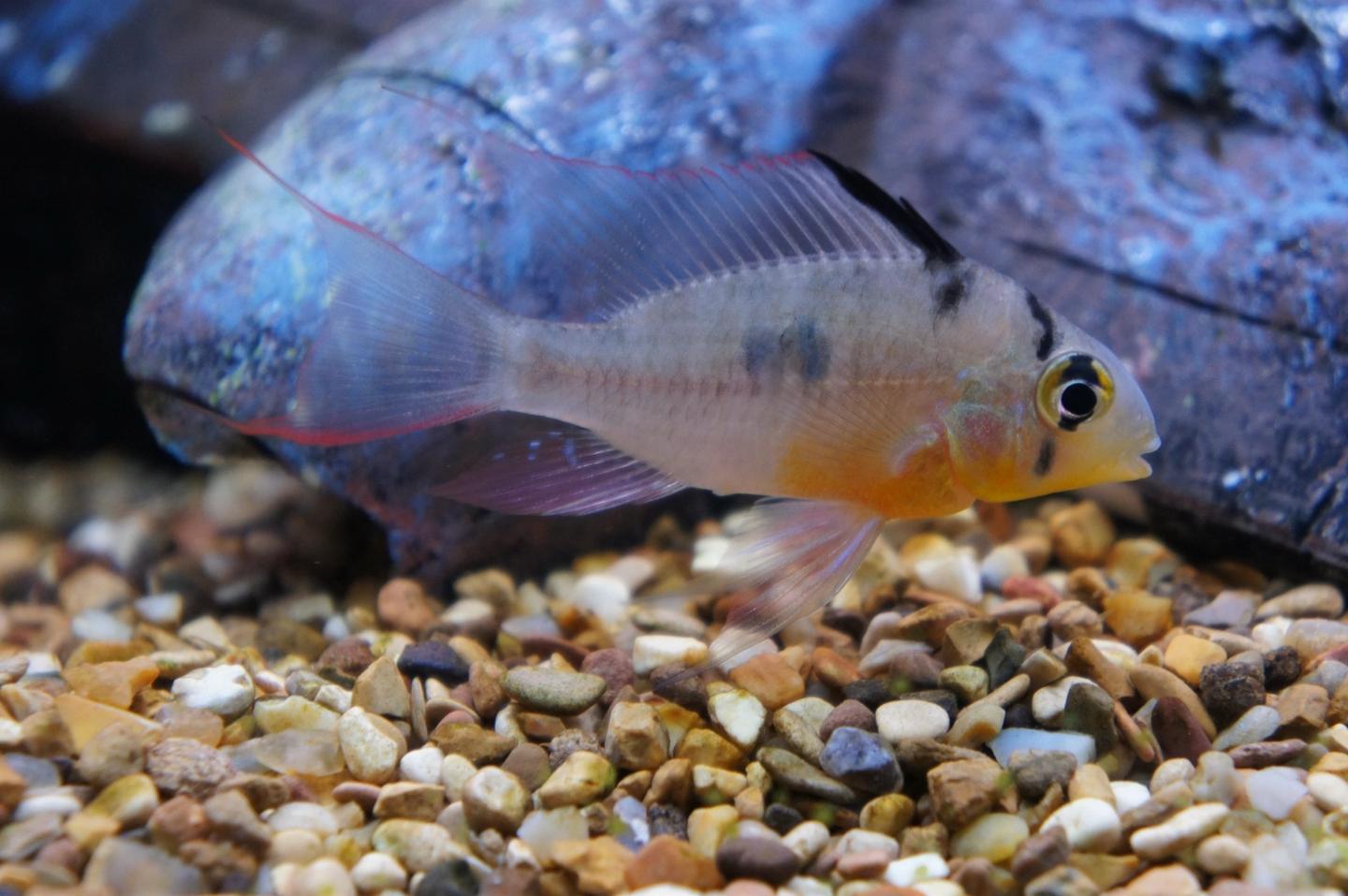
Albino Blue Neon Cichlid (Paracyprichromis nigripinnis)
24–25°C · pH 8–8.6 · 205L
£51.99
The Ammelrooyi Cichlid (Paracyprichromis sp. 'ammelrooyi') is a rare, undescribed deep-water cichlid from the Tanzanian shore of Lake Tanganyika, first seen in 2014. It is a slender, peaceful, free-swimming fish of about 10 cm for a group in a large aquarium with tall rock walls, open midwater, subdued light and hard, alkaline water. One live fish per purchase.
Paracyprichromis sp. 'ammelrooyi'
Save when buying multiple fish. Each quantity is one fish; sex and pair formation are not guaranteed unless the selected variant explicitly states them.
The Ammelrooyi Cichlid (Paracyprichromis sp. 'ammelrooyi') is a rare, undescribed deep-water cichlid from the Tanzanian shore of Lake Tanganyika, first seen in 2014. It is a slender, peaceful, free-swimming fish of about 10 cm for a group in a large aquarium with tall rock walls, open midwater, subdued light and hard, alkaline water. One live fish per purchase.
Cichlids are a family of roughly 1,800 accepted species, not one care type. Before buying, identify the exact species and source, then compare adult measurement, usable tank dimensions, social system, territory, tested water, diet and an exit plan. No family-wide minimum tank, water range or tank-mate list is safe.
Read the full care guidance when planning conditions for your aquarium.
The Ammelrooyi Cichlid is Paracyprichromis sp. 'ammelrooyi', a rare, slender cichlid from the deep rocky slopes of Lake Tanganyika. It is a recent discovery: a Lake Tanganyika species database records that it was first observed in 2014 by Evert van Ammelrooy, and it has not yet been formally described, so "ammelrooyi" is a working label rather than an official species name. Only two Paracyprichromis are described, P. nigripinnis and P. brieni; this is a third, undescribed member of the genus.
It is a peaceful, free-swimming fish for a keeper who wants something unusual and is prepared to plan a quiet, specialised aquarium. The database describes it as less aggressive and less greedy at feeding than its better-known relative, the Blue Neon Paracyprichromis, and more inclined to swim in open water, where P. nigripinnis stays closer to the rocks.
| Fact | What the database records |
|---|---|
| Range | Central to eastern coast of Lake Tanganyika, Tanzania |
| Known sites | Mahale Mountains National Park, Kekese, Luagala Point and Segunga |
| Depth | Mainly 30 to 55 m, deeper than most of its relatives |
| Habitat | Steep rock faces and caves |
| Adult size | About 10 cm total length |
| Breeding | Maternal mouthbrooder |
Compare it with our other Paracyprichromis cichlids, including the Blue Neon Paracyprichromis, the Albino Blue Neon Cichlid and the Dull Slender Cichlid (P. brieni), or browse the full Lake Tanganyika cichlids, our Tanganyika cichlid range and all African cichlids.
One purchase supplies one live Ammelrooyi Cichlid in the standard size we stock. That is a young fish, not the adult size, and its sex is not selected. In the described species, Seriously Fish notes that males grow larger, are more colourful and develop longer tail extensions, so the sexes become easier to tell apart as the fish mature.
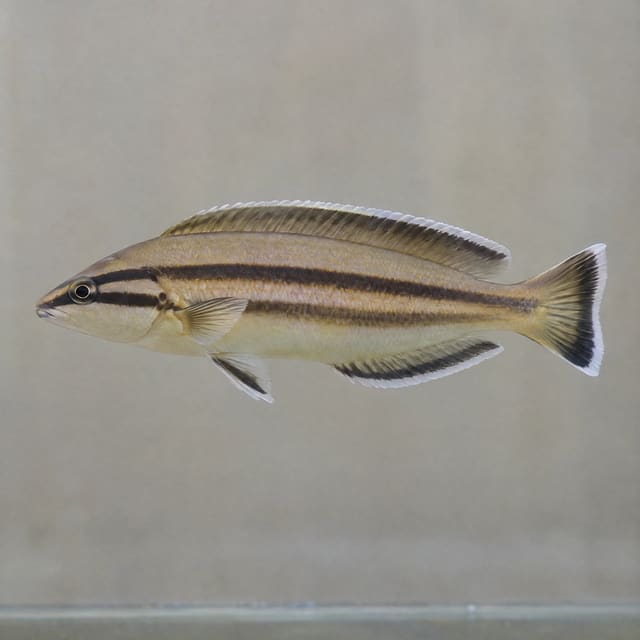
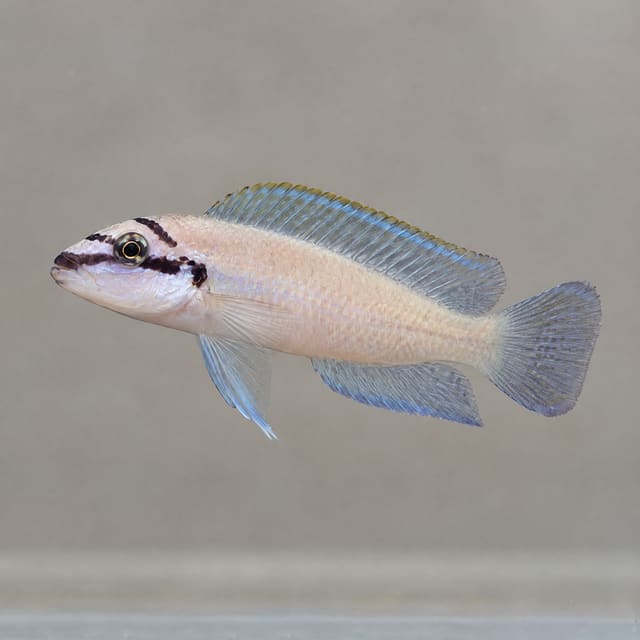
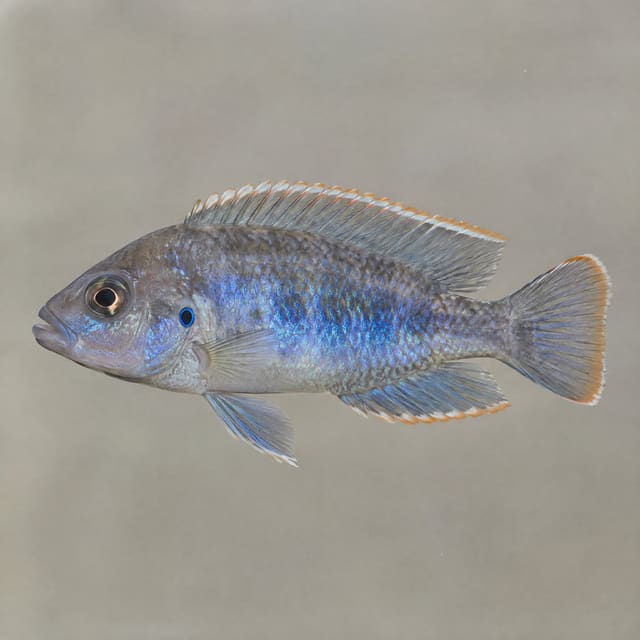
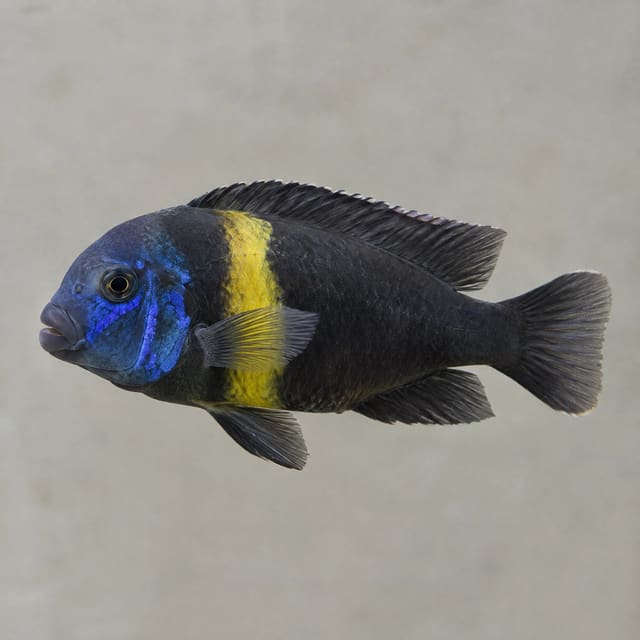
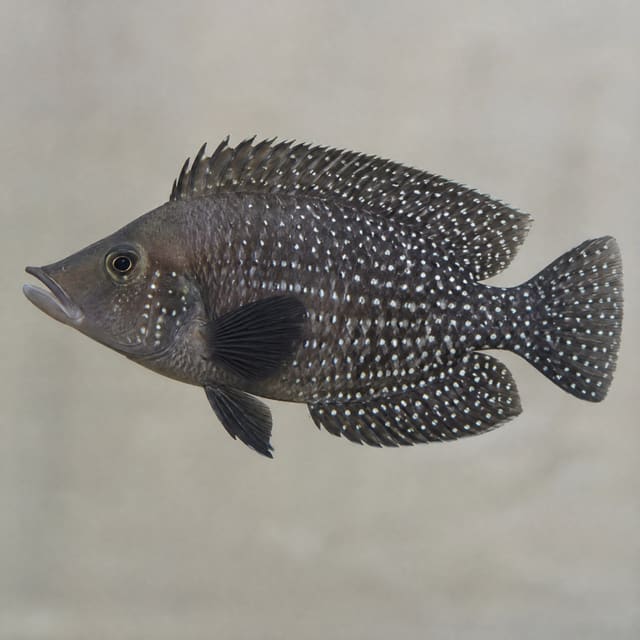
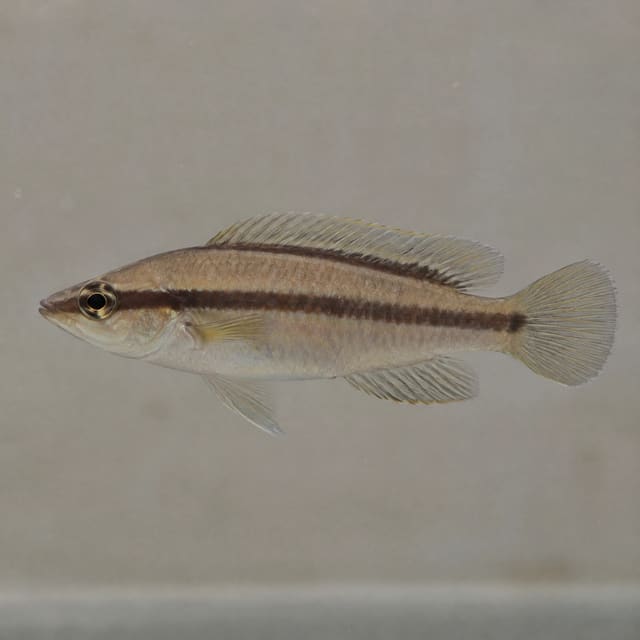
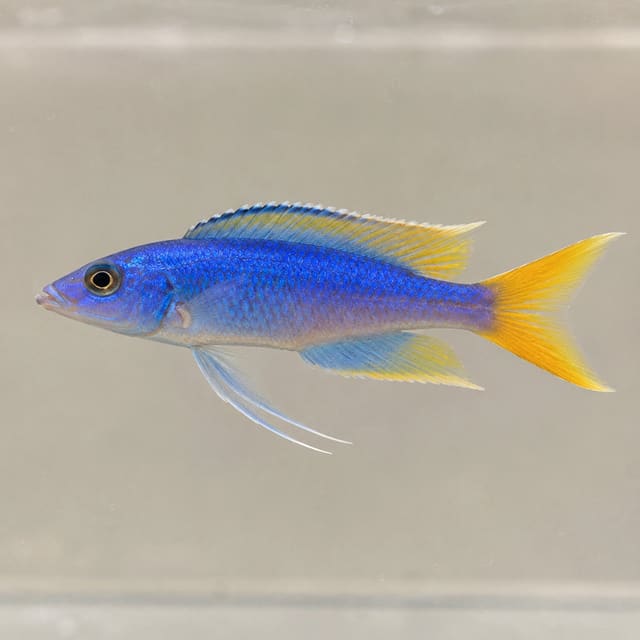
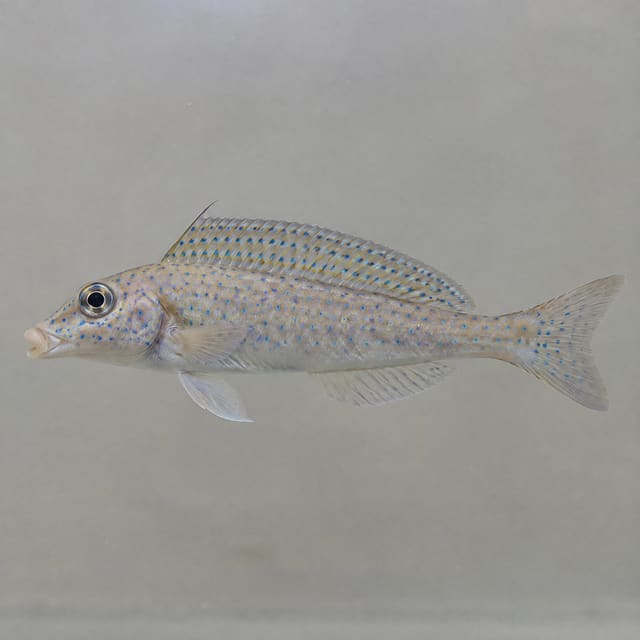
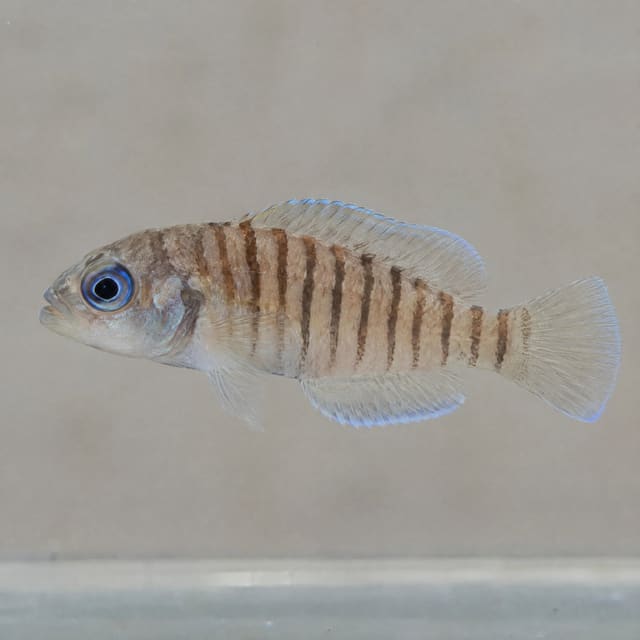
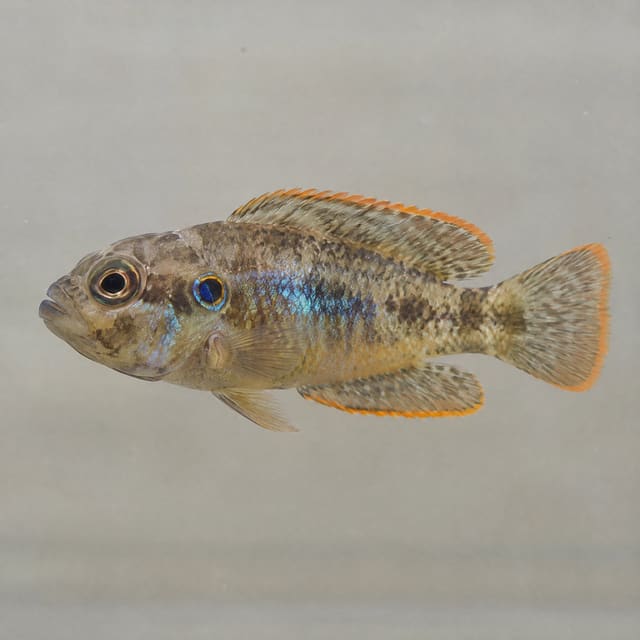
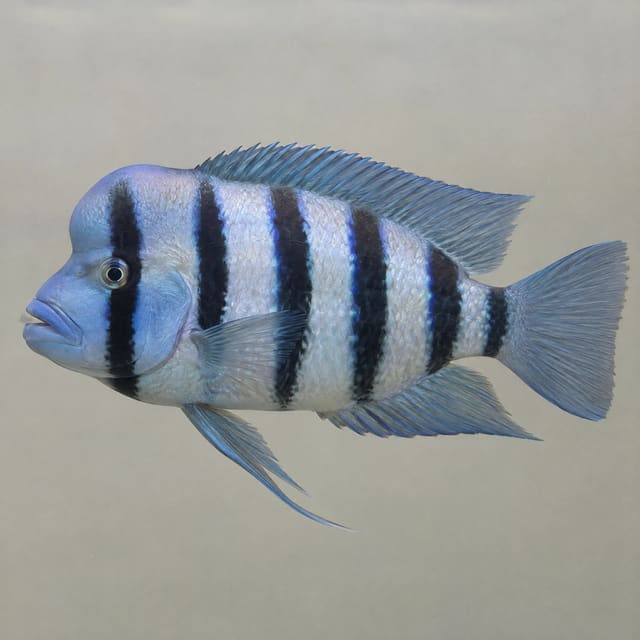
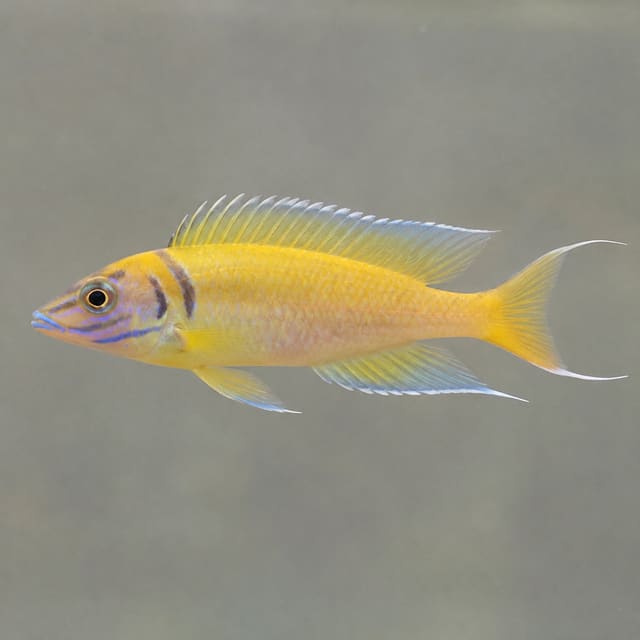
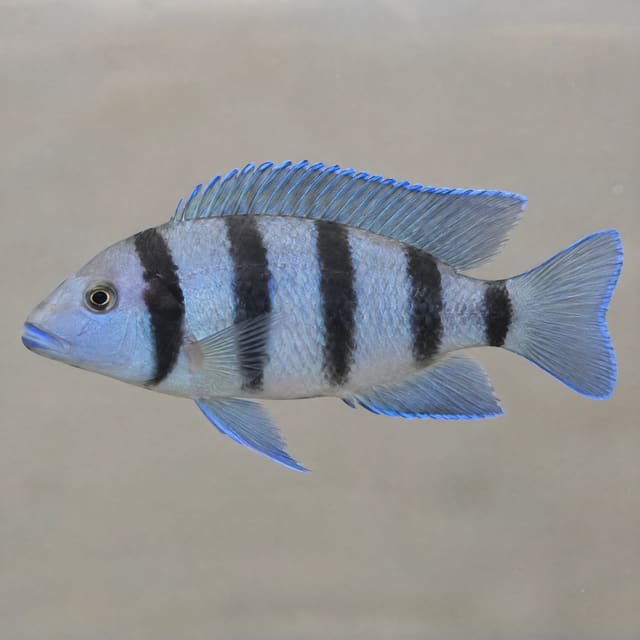
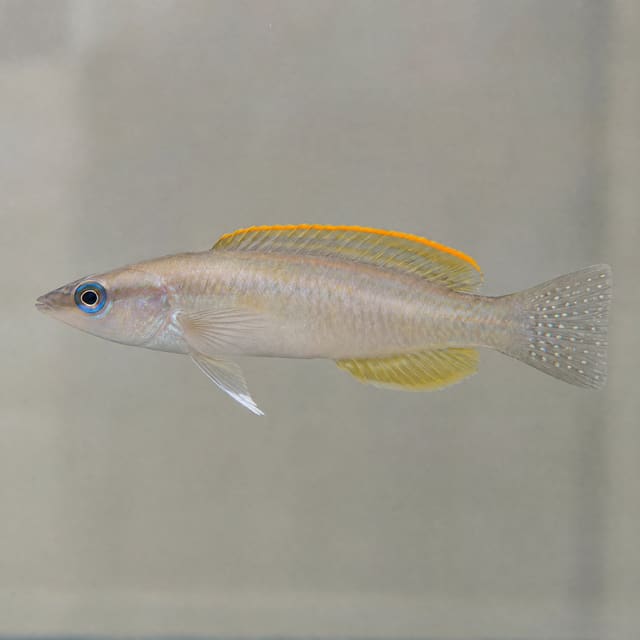
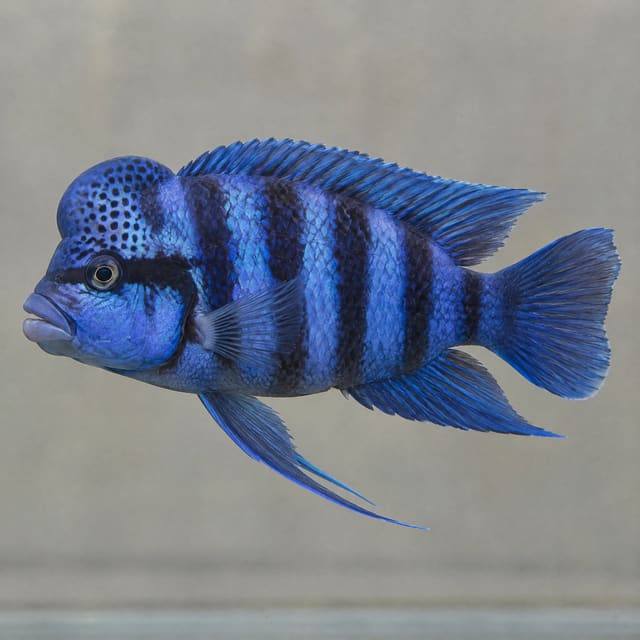
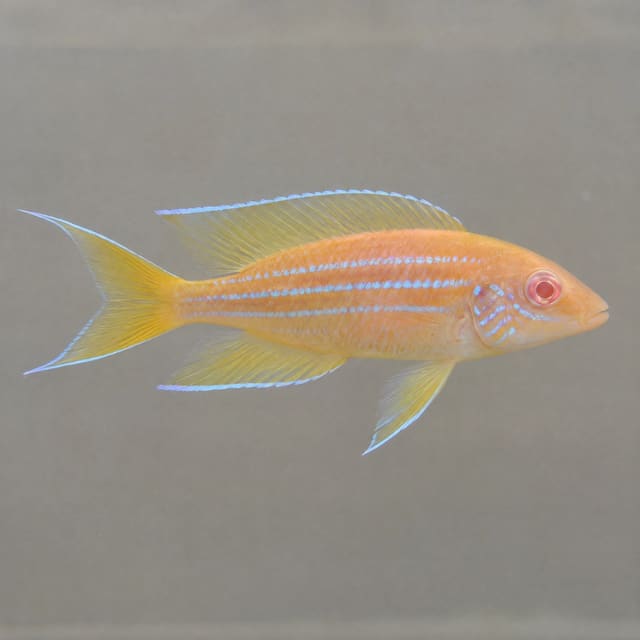
The photographs show the form, not the fish you will receive. Because this cichlid is so newly known, its adult colour is not yet well documented; the database notes that young fish show white bars that darken as they grow. Seriously Fish adds that Paracyprichromis lose their best colour under bright light, with boisterous tank mates or without overhangs to retreat to, so a newly arrived fish will look paler than a settled one.
Read our delivery and Live Arrival Guarantee policy before ordering, and have the aquarium matured and tested in advance.
The species database recommends an aquarium of about 400 litres for this fish, with vertical rock structures and open water for midwater swimming. For the described P. nigripinnis, Seriously Fish gives a minimum of 120 x 45 x 38 cm, about 205 litres, for a small shoal, and recommends a deep tank. Treat the Seriously Fish figure as the floor and 400 litres as the goal, because the Ammelrooyi is a more open-water swimmer than P. nigripinnis.
Height matters more for this fish than for most cichlids. In the wild it lives along steep rock faces, and males of the genus often hang upside down beneath overhangs or vertically against rock walls, while females swim in open water above the rocks.
| Step | What to check |
|---|---|
| Footprint | At least 120 x 45 cm |
| Height | A deep tank with room for tall rock walls and open water above them |
| Volume | About 205 litres as a minimum; about 400 litres recommended |
| Group | Eight or more fish at about 10 cm each |
Our tank volume calculator works out real litres, and the stocking calculator helps you check the group alongside any tank mates.
Recreate a deep rocky slope. Seriously Fish recommends piled rocks forming caves, tall vertical rocks with overhangs, and open swimming space above them; the species database asks for vertical rock structures with open water for midwater swimming. Males court females on near-vertical rock faces, so those walls double as spawning sites.
Keep the lighting subdued. This fish lives mainly 30 to 55 m down, and Seriously Fish warns that bright lighting fades Paracyprichromis colour. Fine sand on the bottom suits Tanganyikan cichlids, and OATA notes that some deeper-water species prefer dimmer light.
| Layer | Purpose |
|---|---|
| Tall rock wall at the back | Courtship and spawning surfaces for males |
| Overhangs and caves | Retreats where males hold small territories |
| Open midwater in front | Swimming space for the group and the females |
| Fine sand floor | A natural base that is easy to keep clean |
Build rock walls on the tank floor, fix them securely and leave a clear path for water flow behind them. Plants are not needed.
No water values have been published for this undescribed fish, so use the values for its genus and for Tanganyikan cichlids in general. The species database stresses good water quality. Seriously Fish says the water-quality demands of P. nigripinnis are no greater than for other Tanganyikan cichlids.
| Reading | Seriously Fish (P. nigripinnis) | OATA lake cichlids | Aim for |
|---|---|---|---|
| Temperature | 24-27°C, steady | 23-27°C | 24-27°C |
| pH | 7.5-9.0 | 8.0-8.6 | 8.0-8.6 |
| General hardness | 8-25 dGH | 12-18 dGH | 12-18 dGH |
| Carbonate hardness | not given | 10-15 dKH | 10-15 dKH |
| Ammonia and nitrite | not given | zero | zero |
| Nitrate | not given | no more than 20 mg/l above tap water | as low as possible |
UK tap water ranges from soft to very hard by region, so test pH, GH and KH first. In a soft-water area, coral sand or aragonite helps raise and hold the hardness; whatever you use, make every batch of new water match the tank so readings stay steady. Our water matcher compares your results with this range, and the water chemistry guide explains GH, KH and pH.
Seriously Fish suggests filtration that turns the tank volume over four to five times an hour, which for a 205-litre tank is about 820 to 1,025 litres per hour. OATA calls an oversized filter and vigorous aeration essential for lake cichlids. Arrange the outlets so the open water is not a torrent: Paracyprichromis are calm fish of deep, still water.
Our guide to aquarium filtration explains how turnover and media work together.
Paracyprichromis are zooplankton feeders with small mouths. The species database lists the foods this fish accepts: newly hatched and adult brine shrimp, daphnia, cyclops, frozen foods, flakes and soft pellets. Seriously Fish recommends that live and frozen foods make up most of the diet of P. nigripinnis.
Because the Ammelrooyi is a less greedy feeder, it can go hungry beside faster tank mates. OATA's general advice for lake cichlids is to feed twice a day, only what is eaten within a few minutes; for this fish, release food into midwater, slowly, so the group can pick it out as it drifts.
Watch the females and the smallest fish at every meal. If they are not eating, spread food more widely or reconsider tank mates.
Check that ammonia and nitrite are zero and that temperature, pH and hardness are in range before the fish arrive. OATA advises adding peaceful species first and more aggressive ones later, so introduce this group before any livelier tank mates, and add fish gradually so the filter keeps up.
| When | What to check |
|---|---|
| Day 1 | Fish have found the rock wall; lights off |
| Days 2-3 | Small midwater meals; every fish feeding |
| Days 3-7 | Group swimming in open water rather than hiding |
| Day 7 | Ammonia and nitrite still zero after the stocking increase |
Our guide to acclimatising new fish explains each step in more detail.
Seriously Fish calls P. nigripinnis very peaceful and retiring, best in a species tank and not suited to beginners. It suggests Julidochromis, Neolamprologus and Altolamprologus as possible tank mates and advises avoiding boisterous fish such as mbuna and species that use the same zone, such as Cyprichromis. The database says the Ammelrooyi can be kept with other Tanganyikan cichlids, given good water and plenty of swimming space.
| Suits | Avoid |
|---|---|
| Rock-dwelling Julies such as Marlier's Julie | Mbuna and other boisterous cichlids |
| Slow, calm Altolamprologus such as the Gold Compressiceps | Cyprichromis sardine cichlids and other open-water species |
| Small Neolamprologus such as the Lemon Cichlid, in a large tank | Other Paracyprichromis forms, which may hybridise |
| A species tank of its own group | Fast, greedy feeders and any Malawi cichlid |
Seriously Fish notes that colour forms of P. nigripinnis hybridise if mixed. The Ammelrooyi is a different, undescribed fish, so keep it apart from other Paracyprichromis to keep the line true. Check a planned mix with our tank mates tool and read our cichlid care guide.
The Ammelrooyi Cichlid is a maternal mouthbrooder. The species database records males courting females on near-vertical rock surfaces, females incubating the eggs for about three to four weeks and broods of 7 to 12 fry, which take newly hatched brine shrimp from the first day. Seriously Fish gives a similar picture for P. nigripinnis: clutches of 5 to 25 eggs, a brood period of about three to four weeks during which the female stops eating, and large, free-swimming fry.
Seriously Fish warns that stress can make a brooding female spit out or eat the brood, so avoid moving her. Seriously Fish gives ideal breeding conditions for P. nigripinnis of pH 8.0 to 9.0 and 24 to 25.5°C. Because the fish is undescribed, keep careful records of any young you raise and never release fish into the wild.
It is Paracyprichromis sp. 'ammelrooyi', an undescribed deep-water cichlid from Lake Tanganyika, first observed in 2014 by Evert van Ammelrooy, whose name it carries as a working label. It is a relative of the Blue Neon Paracyprichromis (P. nigripinnis) and lives on the central to eastern, Tanzanian side of the lake.
About 10 cm total length, according to the Lake Tanganyika species database. Seriously Fish gives 11 cm standard length as the maximum for the two described Paracyprichromis species.
The species database recommends about 400 litres with vertical rock walls and open midwater. Seriously Fish gives 120 x 45 x 38 cm, about 205 litres, as the minimum for a small shoal of the related P. nigripinnis, so treat that as the floor and 400 litres as the goal.
A group. Seriously Fish recommends at least eight of the related P. nigripinnis, with several females for each male, and says more is better. One purchase supplies one fish, so order the group together.
Yes. The species database calls it generally peaceful, and less aggressive and less greedy at feeding than P. nigripinnis. That makes it easy to outcompete, so keep it only with calm Tanganyikan cichlids.
Small foods it can take from open water: newly hatched and adult brine shrimp, daphnia, cyclops, mysis, plus flakes and soft pellets. Paracyprichromis have small mouths and feed on zooplankton in the wild.
Hard, alkaline, very clean Tanganyika water. No species values are published; the overlap of Seriously Fish and OATA for the genus and group is 24 to 27 degrees C, pH 8.0 to 8.6 and 12 to 18 dGH.
Yes. It is a maternal mouthbrooder: males court females on near-vertical rock, the female carries the brood for about three to four weeks, and broods of 7 to 12 fry take newly hatched brine shrimp from the first day.
No reviews for this item yet. Bought one? Honest reviews only, good or bad.
What customers say about ordering from us
Easy website plenty of info on fish your buying great to pick a time slot
TRACEY DURRANT · 7 Oct 2026
Got some lovely fish thank you
Kevin Mackie · 7 Oct 2026
Reviews of our shop, collected by Judge.me, an independent third-party review collector. Newest first.
Moved by UK carriers licensed to handle live animals
Hand-packed with oxygen bags, poly box, heat pack
Email photos the same day; an optional unboxing video helps us review problems faster — claim terms apply
Klarna & PayPal Pay in 3 at checkout