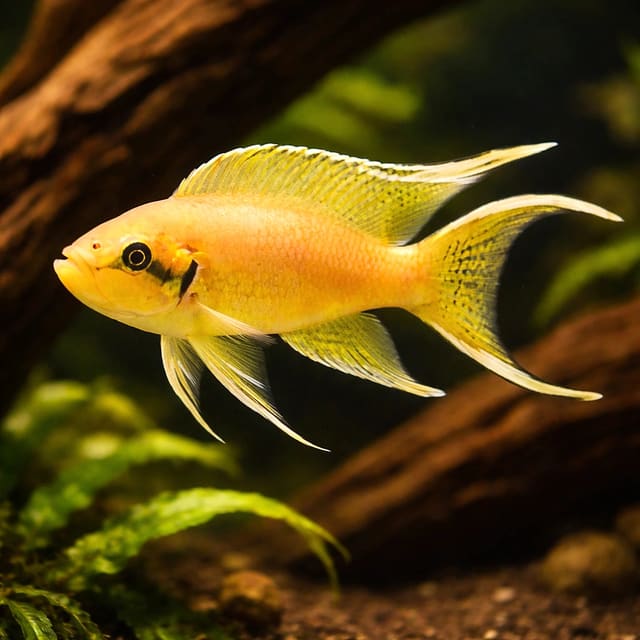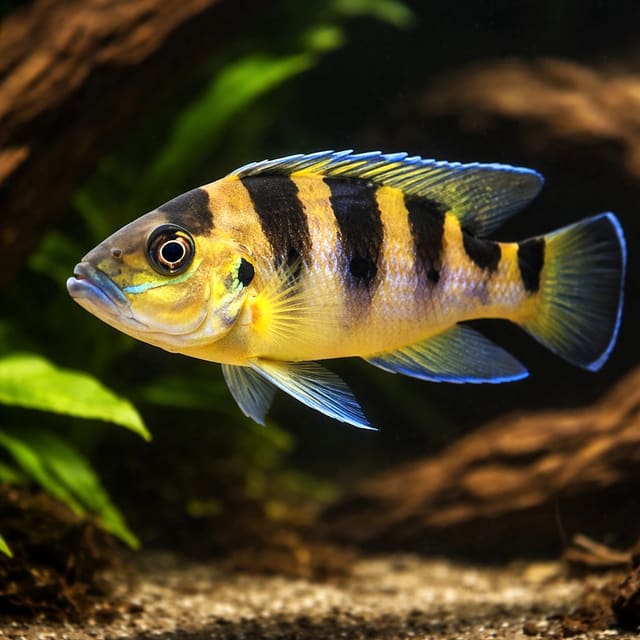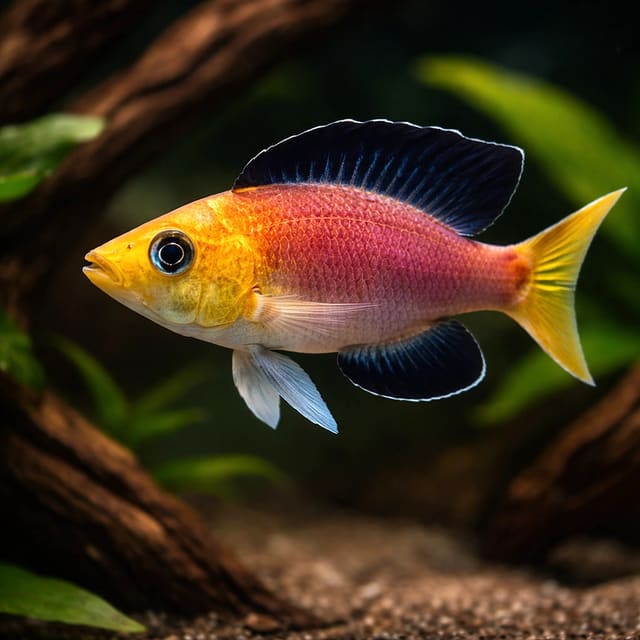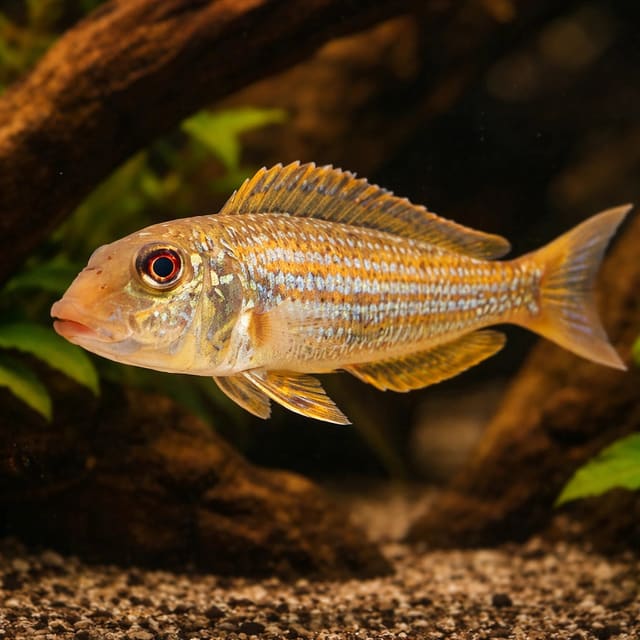
Xenotilapia ochrogenys \"ndole\"
24–26°C · pH 8–8.6
£47.99
Blue Neon Paracyprichromis (Paracyprichromis nigripinnis), a peaceful Lake Tanganyika cichlid for mature hard-water aquariums with groups, vertical rockwork and open swimming space.
Adult size is the maximum length this species reaches at full maturity (scientific sources). The livestock you receive will be younger and smaller — pick a size above for the actual shipping size. Product-photo provenance and any image-specific limitations are stated on the listing.
Paracyprichromis nigripinnis
Save when buying multiple fish. Each quantity is one fish; sex and pair formation are not guaranteed unless the selected variant explicitly states them.
Confirm your email, then we’ll send an availability message for this exact item if it returns within 180 days.
This request is only for this product—no newsletter or other promotions. A mail-provider retry may very rarely duplicate the same availability message. Unconfirmed addresses are removed after 48 hours. See our privacy policy.
Blue Neon Paracyprichromis (Paracyprichromis nigripinnis), a peaceful Lake Tanganyika cichlid for mature hard-water aquariums with groups, vertical rockwork and open swimming space.
Adult size is the maximum length this species reaches at full maturity (scientific sources). The livestock you receive will be younger and smaller — pick a size above for the actual shipping size. Product-photo provenance and any image-specific limitations are stated on the listing.
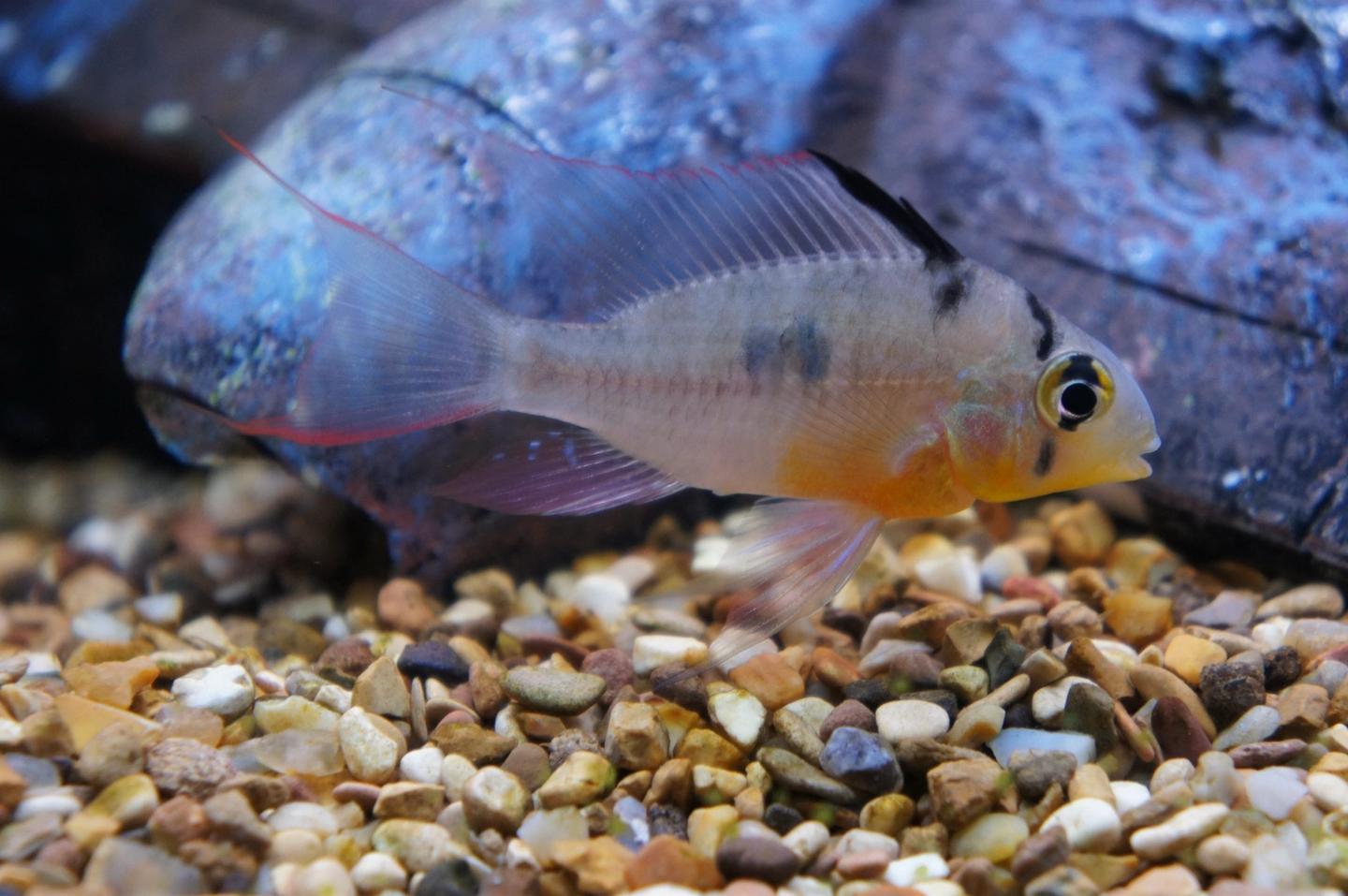
Cichlids are a family of roughly 1,800 accepted species, not one care type. Before buying, identify the exact species and source, then compare adult measurement, usable tank dimensions, social system, territory, tested water, diet and an exit plan. No family-wide minimum tank, water range or tank-mate list is safe.
Maintain these water conditions for optimal health and vibrant colors
Blue Neon Paracyprichromis (Paracyprichromis nigripinnis) is a graceful Lake Tanganyika cichlid for aquarists who want movement, colour and calm behaviour without the aggression associated with many larger African cichlids. Males show the best blue-purple sheen when they are settled in a spacious, hard-water aquarium with vertical rock faces, shaded ledges and open swimming room.
This is a specialist Tanganyikan fish, not a general mixed-community species. It does best in groups, with stable alkaline water, excellent filtration and peaceful tank mates from similar lake conditions. Kept correctly, it becomes one of the most elegant upper and mid-water fish in a Tanganyika display.
| Care point | Best target | Why it matters |
|---|---|---|
| Scientific name | Paracyprichromis nigripinnis | Often sold as Blue Neon Paracyprichromis or Blue Neon Cichlid. |
| Adult size | Usually around 9-11 cm in aquarium planning | Small-bodied for a cichlid, but active and group-oriented. |
| Minimum aquarium | 250 litres, with length and height both valuable | Groups need swimming space and males need display areas. |
| Temperature | 23-27 C | Stable tropical lake temperatures support feeding and immunity. |
| pH and hardness | pH 7.8-8.8; hard, mineral-rich water | Lake Tanganyika species should not be kept in soft acidic setups. |
| Temperament | Peaceful for a Tanganyikan cichlid | Choose calm companions and avoid rough, dominant species. |
| Diet | Small plankton-style meaty foods | They naturally feed in the water column rather than scraping algae or taking large chunks. |
Paracyprichromis nigripinnis is endemic to Lake Tanganyika, where it is associated with open water above rocky areas. In nature, these fish are gregarious and feed on zooplankton in the water column. Males often hold display positions near rocky overhangs or vertical surfaces, while females and groups spend more time in open water close to structure.
That habitat explains the aquarium design. The fish need open swimming room, but they also need vertical rockwork, shaded areas and safe retreat points. A flat pile of caves on the bottom is less useful than secure rock faces and ledges that create height, shadow and display stations.
A 250 litre aquarium is a practical minimum for a stable group. A long, relatively tall tank is better than a short cube because these fish use the middle and upper water, and males display near rock faces. If keeping multiple males, give more length, more height and several separated rock structures.
Use hard, alkaline water and keep it stable. Aim for pH around 7.8-8.8, strong buffering and low nitrate. Sudden swings are more dangerous than a slightly imperfect but stable reading. Regular water changes, mineral stability and mature filtration are essential.
Create secure rock faces, overhangs and shaded zones. Make sure heavy rock is supported safely before sand is added. Use strong filtration and good oxygenation, but avoid blasting the fish around the tank. They should be able to hover, display and feed in the water column.
| Setup element | Recommended | Avoid |
|---|---|---|
| Substrate | Fine sand or smooth pale substrate | Sharp gravel that traps waste |
| Rockwork | Tall secure faces, ledges and shaded overhangs | Loose unstable piles |
| Plants | Optional hardy plants only if they tolerate hard water | Soft-water planted layouts as the main plan |
| Filtration | Oversized, mature and oxygen-rich | Under-filtered tanks with rising nitrate |
This species is best kept in a group rather than as a lone specimen. A group of at least six is a better starting point, with larger groups looking more natural where the aquarium allows. Males are usually more colourful and may defend display positions, but the species is much less brutal than many rock-dwelling cichlids if the tank is spacious.
The blue sheen is often strongest in calm, slightly shaded areas. Bright, exposed tanks can wash out the colour and make the fish nervous. A secure group in the right layout will spend time hovering in the upper and middle water, moving together, and displaying around rock faces.
| Group plan | Use case | Notes |
|---|---|---|
| Single fish | Not recommended | Less natural behaviour and more stress. |
| Pair or trio | Only temporary or very limited setups | Can create pressure on females or weaker fish. |
| Six or more | Best practical starting point | Better confidence and more natural display behaviour. |
| Larger group | Best for large Tanganyika aquariums | Allows multiple males and a more natural social structure. |
Blue Neon Paracyprichromis feed naturally on small food in the water column, especially zooplankton. In aquariums they do best on small, high-quality foods that stay suspended long enough for deliberate mid-water feeding.
Use fine cichlid granules, small pellets, frozen cyclops, daphnia, brine shrimp, mysis and similar foods. Feed small portions once or twice daily, and avoid large fatty foods or oversized pellets. The goal is steady condition, not heavy growth.
| Food | Use | Frequency |
|---|---|---|
| Fine cichlid granule | Staple diet | Daily in small portions |
| Cyclops, daphnia, brine shrimp | Natural small-food response | Several times weekly |
| Mysis | Conditioning food for adults | Occasionally, in small portions |
| Large pellets or chunky foods | Usually unsuitable | Avoid or crush finely |
Choose peaceful Lake Tanganyika fish with similar water needs. Good options can include calm Cyprichromis-type open-water cichlids, suitable shell dwellers, peaceful rock-associated species and Synodontis catfish that are not large enough to harass them. Avoid very aggressive mbuna-style behaviour, large predators, rough Tropheus groups in cramped tanks, or any fish that will dominate feeding.
They are not suitable for soft-water tetras, general tropical community fish, discus, angelfish, or planted low-pH aquariums. The water requirements are too different. Build the aquarium around Tanganyika stability first, then choose compatible companions.
Paracyprichromis nigripinnis is a maternal mouthbrooder. Males display to females around chosen territories, and females carry eggs and young in the mouth. Stable water, calm surroundings and a well-fed group are more important than forcing breeding with sudden changes.
If fry are produced, they need safe cover and very small foods. In mixed Tanganyika aquariums, survival is much better when fry can be separated or protected from predation. Avoid mixing locality forms carelessly, because maintaining clean hobby lines matters with this species.
Healthy fish should be alert, balanced in the water column and responsive to small foods. Watch for clamped fins, rapid breathing, hollow bellies, isolation from the group, or refusal to feed. Most problems come from poor water quality, unstable mineral chemistry, overly aggressive tank mates or too-small groups.
On arrival, keep the aquarium lights low and acclimate gradually. Tanganyikan fish dislike sudden chemistry changes, so match temperature carefully and avoid rushing them into a tank with very different pH or hardness. Offer small foods once they have had time to settle.
| Question | Practical answer |
|---|---|
| Are they aggressive? | They are peaceful for a Tanganyikan cichlid, but still need a lake-style setup and suitable companions. |
| Can they live in soft water? | No. They should be kept in hard, alkaline Lake Tanganyika conditions. |
| Do they need a group? | Yes. A group gives better confidence, display behaviour and long-term stability. |
| Why is height useful? | They use open mid-water and males display near vertical rocky surfaces, so height and structure both help. |
| What should I prepare before delivery? | A mature, buffered aquarium with stable temperature, strong filtration, shaded rockwork and small foods ready. |
The biggest success factor is matching the aquarium to the fish before it arrives. If the tank is new, soft, acidic, under-filtered or already dominated by rough cichlids, wait before ordering. If the aquarium is mature, mineral-stable and designed around Tanganyika fish, Blue Neon Paracyprichromis can settle beautifully and show the hovering, shimmering behaviour that makes the species special.
We handle Blue Neon Paracyprichromis as a specialist Lake Tanganyika cichlid. The listing keeps the practical information aquarists need: group size, hard-water setup, feeding, compatibility and arrival care. Fish are packed for UK livestock delivery with insulated packaging and seasonal temperature protection when needed.
Your order is supported by our Live Arrival Guarantee and practical aftercare guidance. For best results, prepare a mature Tanganyikan aquarium before dispatch day and contact us if you are unsure about group size, water parameters or tank mates.
No reviews for this item yet. Bought one? Honest reviews only, good or bad.
What customers say about ordering from us
Easy website plenty of info on fish your buying great to pick a time slot
TRACEY DURRANT · 7 Oct 2026
Got some lovely fish thank you
Kevin Mackie · 7 Oct 2026
Reviews of our shop, collected by Judge.me, an independent third-party review collector. Newest first.