Moderate
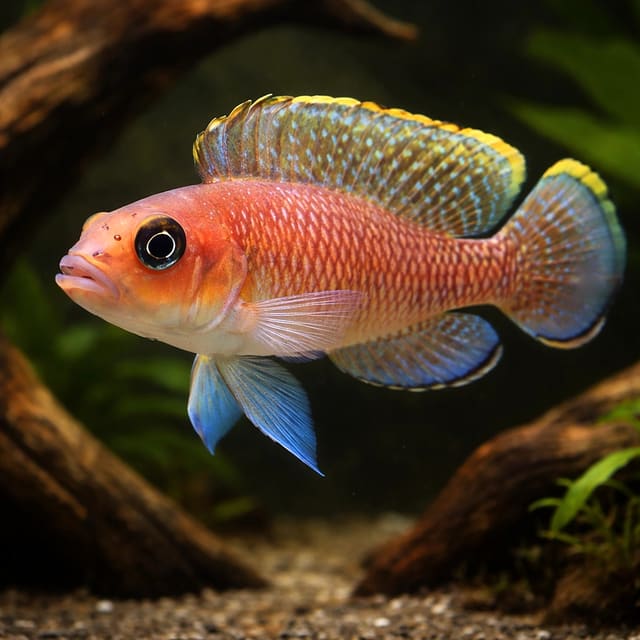
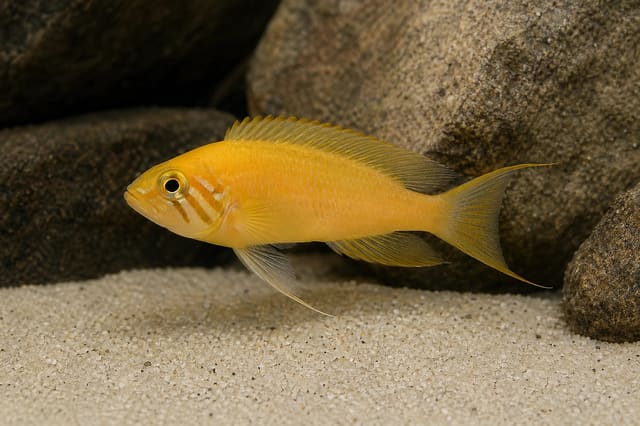
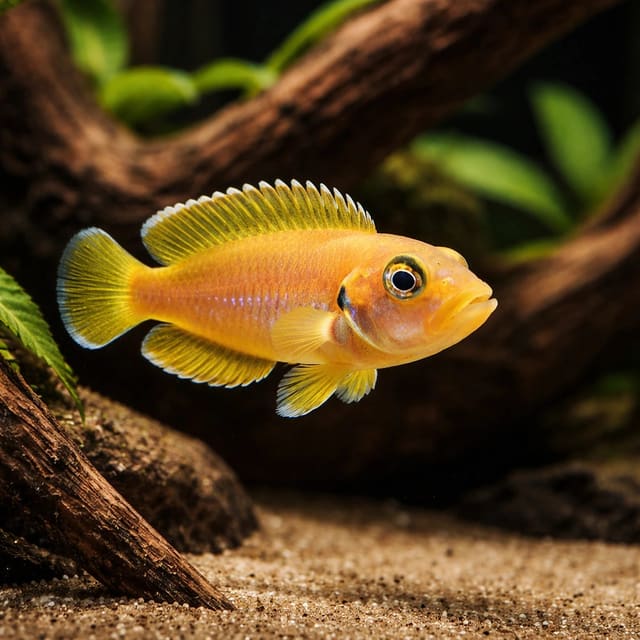
Gold Ocellatus Shell-Dweller (Neolamprologus ocellatus)
23–25°C · pH 8–9
£16.59

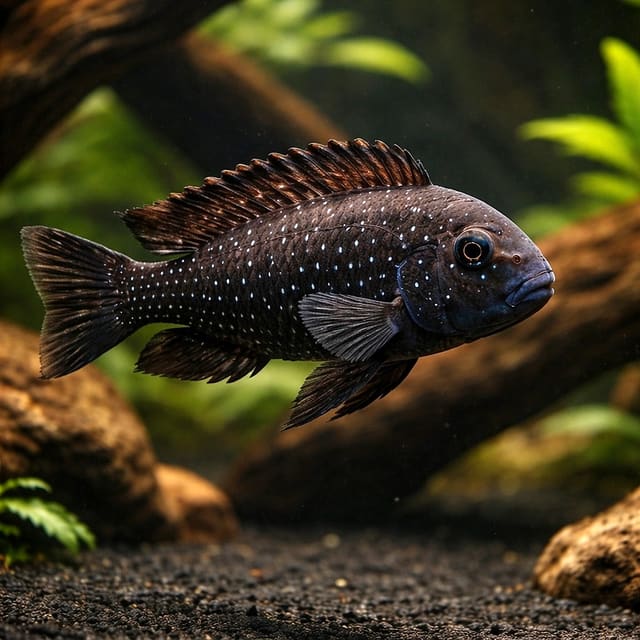
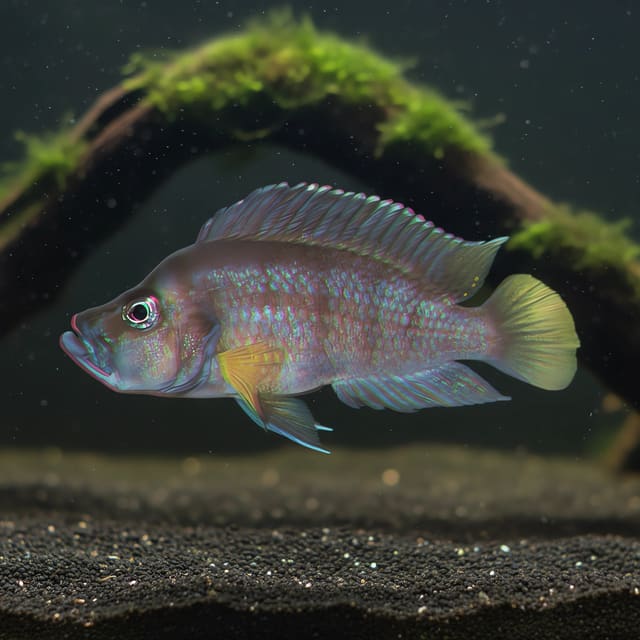
The Black Pectoral Calvus, Pearly Compressiceps (Lamprologus calvus) is a Lake Tanganyika cichlid that reaches a conservative planning length of 13.8 cm standard length. It suits keepers prepared for a rocky aquarium and pair or colony planning; keep it at 24–25°C, pH 8.0–8.6 and 12–18 dGH, the overlap of FishBase, Seriously Fish and OATA’s group guidance. Sold as one live fish per purchase.
Adult size is the maximum length this species reaches at full maturity (scientific sources). The livestock you receive will be younger and smaller. Product-photo provenance and any image-specific limitations are stated on the listing.
Lamprologus calvus
Save when buying multiple fish. Each quantity is one fish; sex and pair formation are not guaranteed unless the selected variant explicitly states them.
The Black Pectoral Calvus, Pearly Compressiceps (Lamprologus calvus) is a Lake Tanganyika cichlid that reaches a conservative planning length of 13.8 cm standard length. It suits keepers prepared for a rocky aquarium and pair or colony planning; keep it at 24–25°C, pH 8.0–8.6 and 12–18 dGH, the overlap of FishBase, Seriously Fish and OATA’s group guidance. Sold as one live fish per purchase.
Adult size is the maximum length this species reaches at full maturity (scientific sources). The livestock you receive will be younger and smaller. Product-photo provenance and any image-specific limitations are stated on the listing.
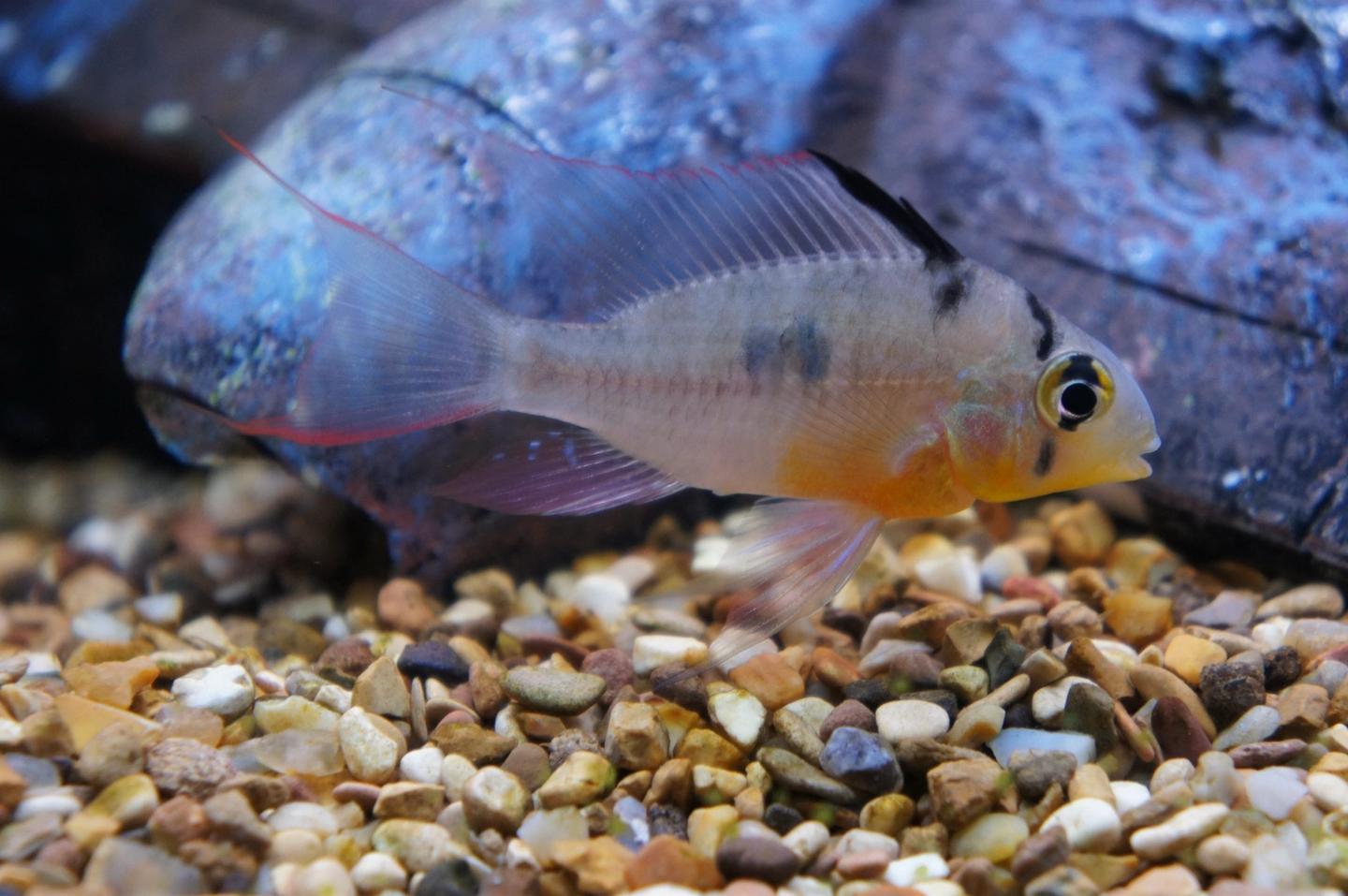
Cichlids are a family of roughly 1,800 accepted species, not one care type. Before buying, identify the exact species and source, then compare adult measurement, usable tank dimensions, social system, territory, tested water, diet and an exit plan. No family-wide minimum tank, water range or tank-mate list is safe.
Maintain these water conditions for optimal health and vibrant colors
Black Pectoral Calvus, Pearly Compressiceps is a freshwater cichlid from Lake Tanganyika. The scientific name retained for this animal is Lamprologus calvus. FishBase now lists it as Altolamprologus calvus and places it in the family Cichlidae. FishBase describes the fish as endemic to Lake Tanganyika, with its distribution in the south-western part of the lake. It suits a keeper prepared to maintain hard, alkaline water, build stable rocky retreats and screen every companion carefully.
The body is laterally compressed, allowing the fish to enter narrow spaces in rocky surroundings. Seriously Fish explains that this shape helps it approach crevices containing eggs, fry and small fish. Thick scales can be turned towards an attacker, while the narrow head-on profile makes the fish harder for both prey and potential predators to see. These adaptations explain why a rock-filled aquarium is functional habitat rather than decoration alone.
This is a deliberate, relatively shy predator rather than a fish for a busy mixed community. It is territorial, yet generally peaceful towards fish it cannot fit into its mouth. A suitable keeper is prepared to maintain hard, alkaline water, build stable caves and screen every companion for size, vigour and feeding behaviour.
| Suits | Not suited to |
|---|---|
| Hard, alkaline Tanganyika aquariums | Soft-water mixed communities |
| Stable rock piles with caves and crevices | Aquariums without secure rocky retreats |
| Carefully screened Tanganyikan companions | Mbuna, vigorous fish or prey-sized fish |
| Keepers able to monitor shy feeding | Setups dominated by fast, forceful feeders |
FishBase records a maximum of 13.5 cm total length for male or unsexed fish. Treat that maximum as the planning reference for the aquarium, feeding access and territory layout. Seriously Fish separately records 13.8 cm standard length. Its IUCN category is Near Threatened, so thoughtful long-term care is especially appropriate.
One purchase supplies one animal. The dispatch size associated with this offer is 3.5–4.5 cm. This measurement describes the fish when dispatched, not its eventual size. Plan the permanent aquarium around the recorded maximum of 13.5 cm total length rather than treating the dispatch grade as a lasting space requirement.
Sex is guaranteed only when the selected option explicitly states male or female. This Black Pectoral Calvus, Pearly Compressiceps listing has no sex-guaranteed option.
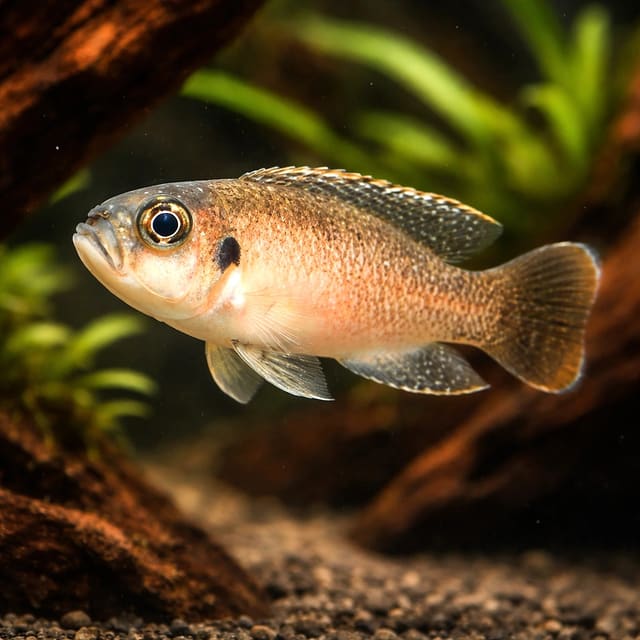
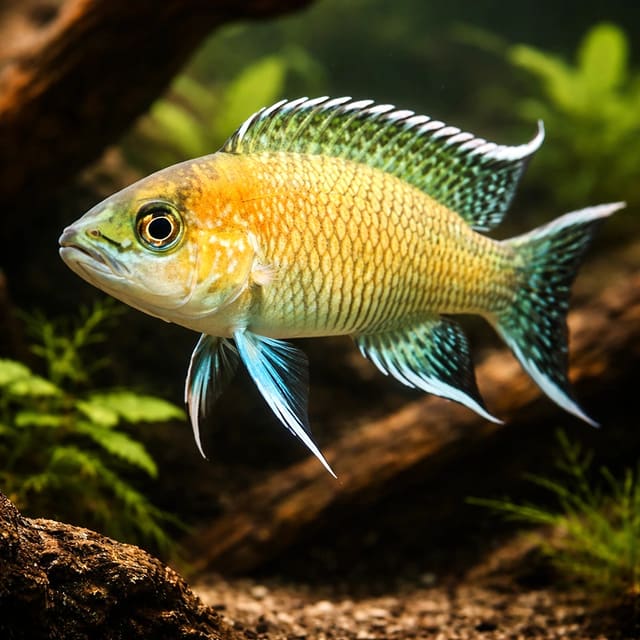
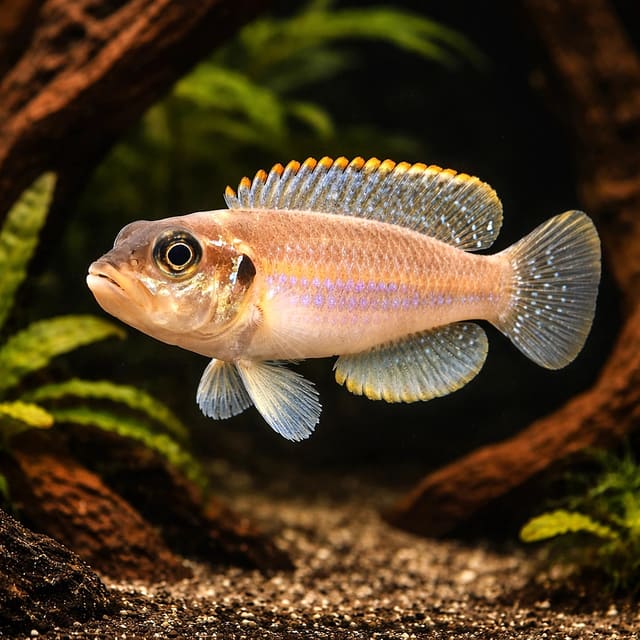
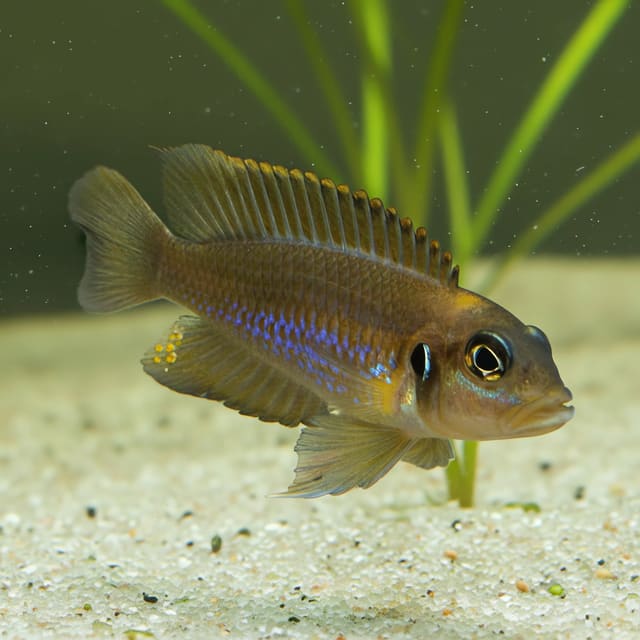
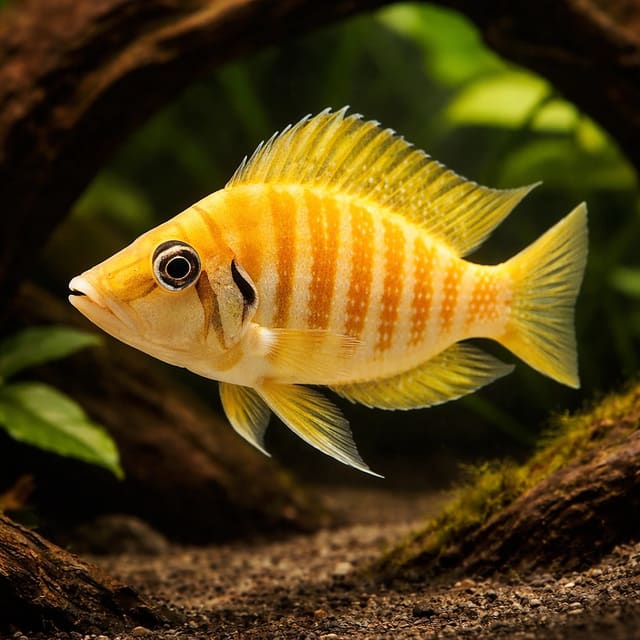
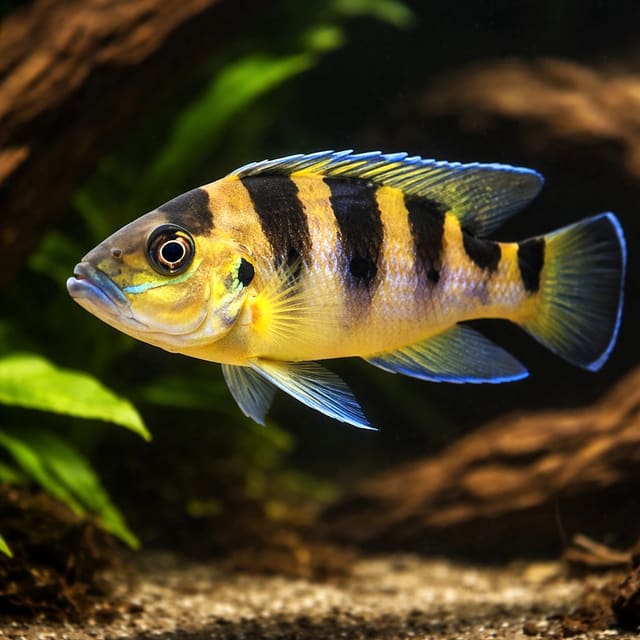
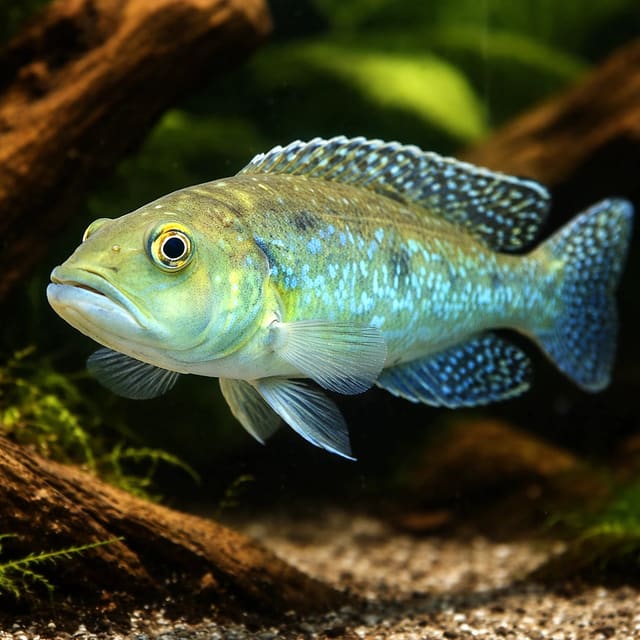
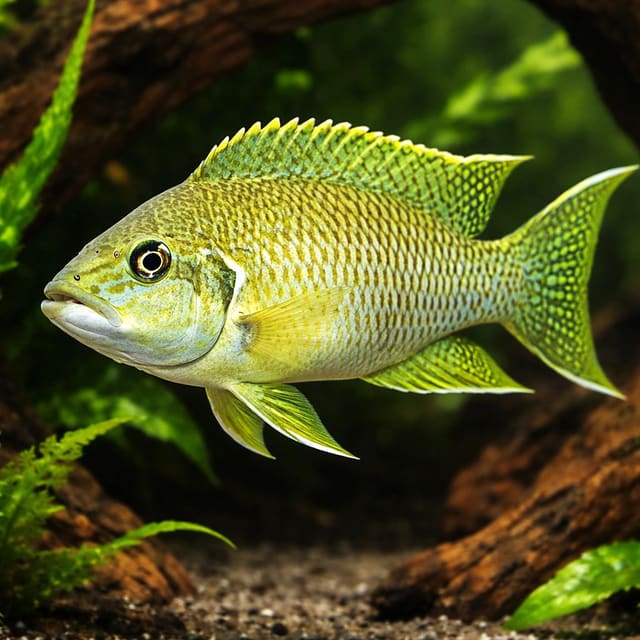
Some gallery images have been digitally enhanced to improve image quality. They show the listed type of animal rather than guaranteeing the exact markings of the individual supplied, so natural colour and pattern can vary.
Choose an aquarium with enough floor area and rock frontage to create several retreats without turning the whole interior into one confined passage. A single cave is a weak plan because a territorial fish can control its entrance. Several caves and crevices allow the fish to withdraw, change position and feed without remaining exposed.
There is no benefit in choosing companions first and trying to fit caves around them afterwards. Start with the Calvus adult size, water chemistry and retreat requirements, then assess each proposed companion. Keepers building a dedicated African display can browse the African cichlid collection, but collection membership alone never establishes compatibility.
Keep Lamprologus calvus at 24–25°C, pH 8.0–8.6 and 12–18 dGH. These figures are the overlap of FishBase’s recorded environment, Seriously Fish aquarium guidance and OATA’s African lake cichlid group guidance. Aim for a stable point within all three ranges rather than chasing a particular number through repeated chemical adjustments. Measure the aquarium and source water before choosing a method for reaching or maintaining the target.
| Value | Routine aquarium range |
|---|---|
| Temperature | 24–25°C |
| pH | 8.0–8.6 |
| General hardness | 12–18 dGH |
| Ammonia | Zero mg per litre |
| Nitrite | Zero mg per litre |
Use our water chemistry guide to understand what each test measures, then enter your readings into the water matcher to compare them with the stated ranges. Record results consistently so a change is visible before it becomes a larger husbandry problem.
A reading can sit within the range and still require attention if it changes abruptly. Compare new results with the aquarium’s recent pattern, check the heater when temperature shifts and repeat an unexpected test before making a large adjustment. When preparing replacement water, treat it for chlorine or chloramine and bring it close to the aquarium’s conditions before the change.
For the wider African lake cichlid group, OATA gives zero ammonia, zero nitrite and nitrate not exceeding 20 mg per litre above the normal tap-water level. This group guidance provides practical pollution limits alongside the routine range above.
Arrange piles of rocks to form caves and crevices through much of the aquarium. Every piece must remain stable when a fish moves around it or when maintenance disturbs the surrounding substrate. Build the load-bearing structure first rather than balancing heavy stones on loose material that may shift.
Combine narrow crevices with larger shaded caves and open routes between them. The compressed body is adapted to entering tight gaps, but the fish also needs room to turn, feed and leave a retreat without meeting a companion head-on. A good layout gives several choices instead of forcing every fish towards one dominant cave.
| Layout feature | Purpose |
|---|---|
| Narrow crevices | Security suited to the compressed body |
| Separate cave groups | More than one potential territory |
| Open feeding lanes | Let a shy fish reach food |
| Accessible gaps | Allow inspection and waste removal |
Dim lighting encourages the fish to appear more often. Seriously Fish also notes that the black form shows its colour particularly well over a dark substrate. Treat colour contrast as secondary to secure construction, usable retreats and access for cleaning.
Before filling the aquarium, press gently on each rock group from several directions. If a piece moves, rebuild it. Once filled, inspect gaps for trapped waste and make sure equipment intakes are not blocked by the arrangement. Do not seal every space into an inaccessible maze: the aquascape should support the fish while remaining maintainable.
Make these decisions before adding fish. Rebuilding unstable stonework around territorial animals creates avoidable disruption, while a secure layout gives them predictable boundaries from the start.
A working biological filter is essential. The RSPCA explains that filter bacteria convert toxic ammonia into nitrite and then into the safer nitrate. The aquarium must therefore be prepared around an established biological process, not simply filled and brought to temperature on the day fish are added.
Follow our first aquarium preparation guide before livestock arrives. Confirm with tests that ammonia and nitrite are both zero mg per litre. A clear-looking aquarium is not enough: dissolved pollutants can be present without making the water cloudy.
Choose a filter that can hold useful biological media and maintain water movement around the rockwork. OATA recommends an oversized filter for crowded African lake cichlid communities and vigorous aeration to support dissolved oxygen. Direct flow so it circulates through open areas without pinning a shy fish in its retreat or leaving all waste behind the rocks.
| Checkpoint | Required result |
|---|---|
| Ammonia test | Zero mg per litre |
| Nitrite test | Zero mg per litre |
| Temperature | Stable within 24–25°C |
| Water movement | Circulates around structure |
| Filter media | Mature and unobstructed |
When fish and feeding are added, the biological load increases. Increase the population slowly so the bacterial community can respond to extra waste. If a test detects ammonia or nitrite after an addition, do not add more fish while the filter and husbandry routine are brought back under control.
Check the filter for blockages, but do not rinse established media under the tap. Chlorine or chloramine may kill beneficial bacteria. Rinse media lightly in aquarium water removed during a partial water change, preserving as much of the bacterial population as possible.
Keep oxygenation running reliably and inspect flow as part of the weekly routine. A sudden reduction may indicate clogged media, an obstructed intake or trapped debris around the rockwork. Restore normal circulation.
OATA strongly recommends a 25% partial water change at least once a week for African lake cichlids. Use that as the baseline routine, then let measured waste levels and the aquarium’s response show whether additional attention is needed. Treat replacement tap water with conditioner to remove chlorine or chloramine before it enters the aquarium.
Weekly testing gives each result context. A single nitrate value matters, but its direction over several weeks is more useful when deciding whether feeding, stocking or waste removal needs adjustment. Sudden pH or temperature movement also deserves attention even when the latest result remains just inside the stated range.
| If you notice | First action |
|---|---|
| Faster breathing | Test water and check aeration |
| Reduced appetite | Test water before changing food |
| More hiding | Check water and social pressure |
| Damaged fins or scales | Assess territories and companions |
| Reduced filter flow | Inspect intake and media |
OATA highlights changes in swimming, colour, temperament, breathing, appearance, body condition and feeding as useful early warnings. Test the water first when any of these changes appears. If the concern continues after immediate husbandry checks, speak to our team or an aquatic veterinary professional rather than selecting a treatment by guesswork.
Do not let cleaning become a complete reset. Preserve mature filter media and avoid dismantling every territory at once. The aim is to remove accumulated waste while keeping the biological filter and established environment stable.
Most meaty live and frozen foods are readily accepted by Lamprologus calvus. Seriously Fish notes that it will not usually take dried varieties, so do not build the feeding plan around flakes or pellets until the individual fish is seen eating them reliably. A quality dried food can be tested as part of a varied routine, but acceptance should guide whether it remains in use.
For African lake cichlids, OATA advises offering only what the fish can consume within a few minutes, twice a day. Apply that schedule while watching whether the shy Calvus receives a fair share. Vigorous companions may finish food before it leaves the open water, so distribute suitable food near more than one retreat rather than dropping the whole portion in one place.
| Observation | Response |
|---|---|
| Food eaten promptly | Keep the portion modest |
| Food left after a few minutes | Remove it and reduce the next portion |
| Companions take everything | Use separate feeding points |
| Dried food ignored | Return to accepted meaty live or frozen food |
| Sudden appetite loss | Test water and observe behaviour |
Uneaten food breaks down and increases the load on the biological filter. Portion control therefore protects both body condition and water quality. A varied diet does not mean adding many foods to every meal; it means rotating accepted, suitable foods while keeping each serving small enough to be consumed cleanly.
Watch the fish throughout feeding rather than judging success by an empty surface. A Calvus may wait beside rockwork while faster fish rush forward. Make sure food reaches its position and confirm that it swallows the food rather than merely approaching it.
After adding a companion, moving rocks or servicing equipment, compare appetite with the established pattern. Reduced feeding can accompany poor water, stronger territorial pressure or competition. Test ammonia and nitrite, inspect social interactions and confirm that food reaches the retreat before increasing the quantity. Adding more food to solve competition often leaves extra waste without helping the shy fish.
Before adding the fish, confirm that the biological filter is mature, ammonia and nitrite are zero mg per litre, and the aquarium remains within 24–25°C, pH 8.0–8.6 and 12–18 dGH. Complete the rockwork before introduction so the fish can select a retreat immediately instead of being exposed while caves are rearranged around it.
Increase the aquarium population slowly. OATA warns that adding too many fish too quickly can exceed the capacity of the nitrifying bacteria and lead to new tank syndrome. After introduction, resist the temptation to add more fish merely because the first water test remains clear. Continue testing as feeding and waste production settle into a new pattern.
| Checkpoint | What to assess |
|---|---|
| Water | Zero ammonia and nitrite |
| Breathing | No marked change in gill movement |
| Retreat use | Access without persistent blocking |
| Feeding | Food reaches and is eaten by the Calvus |
| Social pressure | No relentless pursuit or exclusion |
A shy fish using a cave is not automatically in difficulty. The useful question is whether it can leave, feed and change position without being attacked or outcompeted. Compare behaviour across several quiet observations rather than repeatedly approaching or altering the aquarium.
For dispatch days, guarantee terms and claim steps, read our delivery and Live Arrival Guarantee policy. Keep that policy decision separate from aquarium preparation: the fish still needs stable water, mature filtration and a finished retreat system before it enters the setup.
Seriously Fish states that this cichlid can be maintained as a pair or as a colony in a suitably sized aquarium. Neither arrangement removes territorial behaviour. The correct decision depends on usable space after rockwork, the number of defensible retreats and whether every fish can feed without crossing a dominant individual’s territory.
| Arrangement | Planning priority |
|---|---|
| Pair | Separate retreats and feeding access for both fish |
| Colony | Multiple cave groups and décor that can be rearranged if aggression develops |
| Tanganyikan community | Distinct territories plus restrained feeding competition |
Do not use dispatch size to assume that several fish will continue sharing a small space comfortably. The 3.5–4.5 cm dispatch grade is temporary, while FishBase records a maximum of 13.5 cm total length. Judge the final layout by adult movement, mature territories and the space occupied by rocks.
Sex cannot be identified for the offer through size or photographs. Seriously Fish notes that males grow larger and have longer fins than females, but those general adult differences do not turn a small unsexed fish into a guaranteed male or female. Manage the group according to observed behaviour rather than assigning a role to an individual.
When modifying the layout, change the smallest area capable of solving the problem. Re-arranging part of the aquarium décor may be enough; rebuilding every cave removes all established boundaries at once. Observe after each change and allow the fish to reveal whether access, feeding and territorial separation have improved.
This fish is territorial but generally peaceful towards fish it cannot fit into its mouth. That creates two immediate screens: companions must not be prey-sized, and they must not be so aggressive or vigorous that the shy Calvus is driven away from food and caves. Seriously Fish specifically advises avoiding Mbuna and similarly forceful tank mates.
| Category | Decision |
|---|---|
| Mbuna | Avoid because of aggression and vigour |
| Fish that fit in its mouth | Avoid because they may be treated as prey |
| Other Calvus colour forms | Avoid together to prevent hybridisation |
| Calm Tanganyikan fish | Assess by size, water and territory |
| Fast, forceful feeders | Use caution because the Calvus is shy |
Seriously Fish names Julidochromis, Neolamprologus, Cyprichromis and Tanganyikan Synodontis as good choices. Treat these as starting points for assessment rather than universal pairings: species, adult size, group structure and aquarium layout still matter.
OATA generally recommends keeping African lake species with fish from the same location and advises against mixing Malawi and Tanganyikan cichlids because their temperaments and behaviours differ. Before combining unfamiliar species, speak to our team for a stocking assessment based on the exact aquarium dimensions, mature fish numbers, water readings and rock layout.
Compatibility is a continuing observation, not a one-time label. A combination that appears calm at dispatch size may change as fish grow, territories develop or feeding competition increases. Keep a practical way to separate fish if one becomes excluded from caves or food.
OATA recommends adding more peaceful African lake cichlids before more aggressive species. It also notes that rearranging décor can reduce aggression by requiring fish to establish territories again. Use this carefully: rearranging part of the décor may help, while dismantling all secure retreats can leave a shy Calvus exposed.
| What you see | What to do |
|---|---|
| Brief boundary display | Observe access to other retreats |
| Relentless pursuit | Separate fish and reassess the match |
| Blocked cave entrances | Add separated retreat options |
| Missed meals | Create distinct feeding points |
| Sudden aggression | Test water and inspect territory changes |
Do not judge the relationship only at feeding time. Observe during quiet periods to see whether the Calvus can move between cover and open water. A fish that remains hidden may simply be using its preferred retreat, but a fish that is chased whenever it emerges, loses condition or cannot feed needs intervention.
Black, white and yellow forms occur within this species. Seriously Fish advises keeping the forms apart because they should not be allowed to hybridise. This is a clear compatibility limit even when their water and general behaviour match.
When considering a named Tanganyikan genus, check the exact species rather than relying on a shared lake label. Compare mature size, feeding speed, social structure and territorial zone. A calm fish that occupies open water presents a different challenge from a rock-dweller competing for the same caves.
Keep written notes after a new introduction: which fish fed, which caves were used and whether fins or scales changed. This turns vague impressions into a useful comparison and makes it easier to act before a shy fish loses condition.
Black Pectoral Calvus, Pearly Compressiceps reaches a recorded maximum of 13.5 cm total length according to FishBase, so plan its permanent aquarium and rocky clearances around that adult figure.
Choose an aquarium that can accommodate a 13.5 cm territorial cichlid, substantial rock piles, several caves, open feeding lanes and the intended pair or colony after the rocks have reduced usable space.
Seriously Fish says Black Pectoral Calvus can be maintained as a pair or colony in a suitably sized aquarium; provide multiple territories and make sure every fish can reach food.
Lamprologus calvus suits a keeper prepared to maintain hard, alkaline water at 24–25°C, pH 8.0–8.6 and 12–18 dGH, mature biological filtration, secure rockwork and carefully screened companions.
Black Pectoral Calvus mainly eats shrimps and other crustaceans in nature; offer modest portions of meaty live and frozen foods twice daily, limited to what it can eat within a few minutes, and expect that dried food may be refused.
Keep Lamprologus calvus at 24–25°C, pH 8.0–8.6 and 12–18 dGH, the overlap of FishBase, Seriously Fish and OATA’s African lake cichlid group guidance; keep ammonia and nitrite at zero mg per litre.
This fish is territorial but generally peaceful towards fish it cannot fit into its mouth; avoid Mbuna and other aggressive or very vigorous fish, and intervene if another fish is persistently pursued or excluded from food.
Seriously Fish names carefully screened Julidochromis, Neolamprologus, Cyprichromis and Tanganyikan Synodontis; avoid prey-sized fish, Mbuna, other aggressive or vigorous fish and different Calvus colour forms.
Someone must be present to receive it. Start filming every delivery before opening the sealed parcel, continue as it is opened and show the fish still inside the sealed bag; then float the bag for 20–30 minutes before releasing the fish and never pour the bag water into the aquarium.
No reviews for this item yet. Bought one? Honest reviews only, good or bad.
What customers say about ordering from us
I have a small group of long finned mountain minnows. So was delighted to be able to order ten of this variety to increase the genetics in my tank . The ones I recieved are healthy but it’s to early to give a verdict on wether they are of a long finned type since they are small currently.
Gordon Walker · 23 Sept 2026
100% success travel and "installation". Pleased with quality of purchase. The Siamese fighter a bit "shy" so have not yet seen him at his best yet but looking good. Happy customer. GG
George E Garratt · 21 Sept 2026
Reviews of our shop, collected by Judge.me, an independent third-party review collector. Newest first.