−11%
Advanced
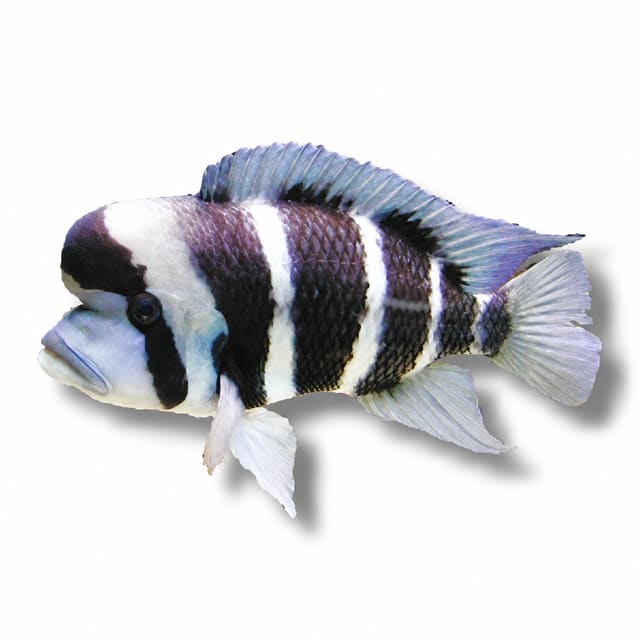
Frontosa Cichlid (Cyphotilapia frontosa)
23–27°C · pH 8–9 · 864L
£38.26£42.99

Black Widow Frontosa (Cyphotilapia frontosa) is a large, social Lake Tanganyika cichlid for an experienced keeper with a spacious, mature aquarium, hard alkaline water and a carefully planned group.
Adult size is the maximum length this species reaches at full maturity (scientific sources). The livestock you receive will be younger and smaller — pick a size above for the actual shipping size. Product-photo provenance and any image-specific limitations are stated on the listing.
Cyphotilapia frontosa
Save when buying multiple fish. Each quantity is one fish; sex and pair formation are not guaranteed unless the selected variant explicitly states them.
Black Widow Frontosa (Cyphotilapia frontosa) is a large, social Lake Tanganyika cichlid for an experienced keeper with a spacious, mature aquarium, hard alkaline water and a carefully planned group.
Adult size is the maximum length this species reaches at full maturity (scientific sources). The livestock you receive will be younger and smaller — pick a size above for the actual shipping size. Product-photo provenance and any image-specific limitations are stated on the listing.
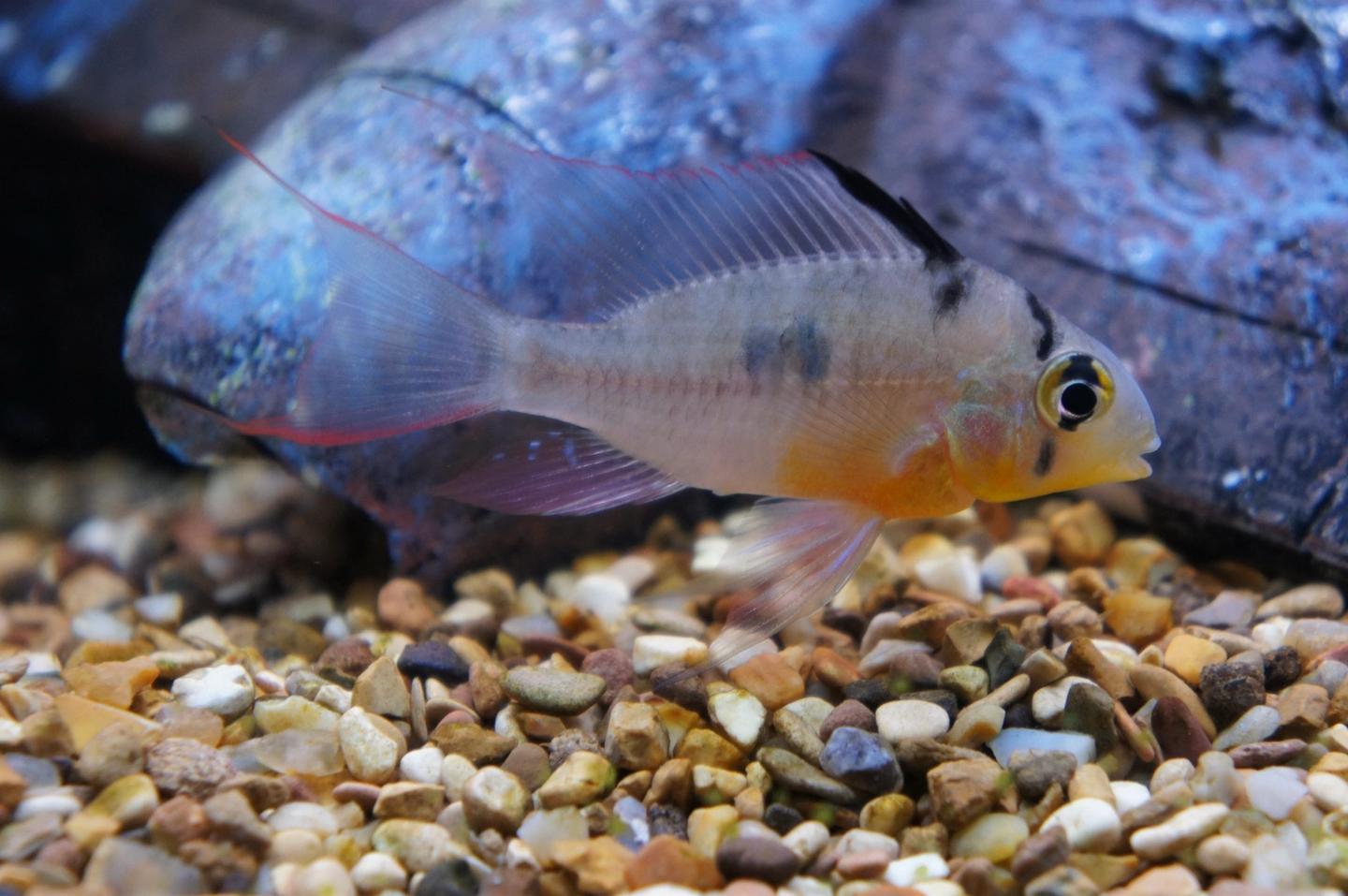
Cichlids are a family of roughly 1,800 accepted species, not one care type. Before buying, identify the exact species and source, then compare adult measurement, usable tank dimensions, social system, territory, tested water, diet and an exit plan. No family-wide minimum tank, water range or tank-mate list is safe.
Maintain these water conditions for optimal health and vibrant colors
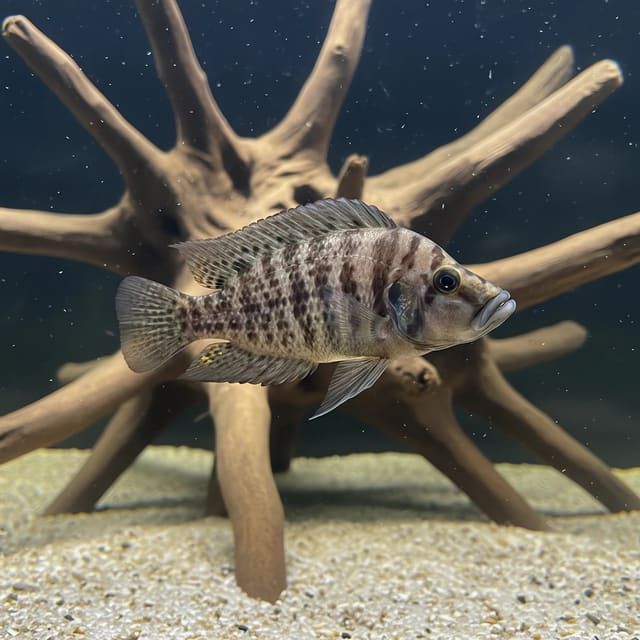
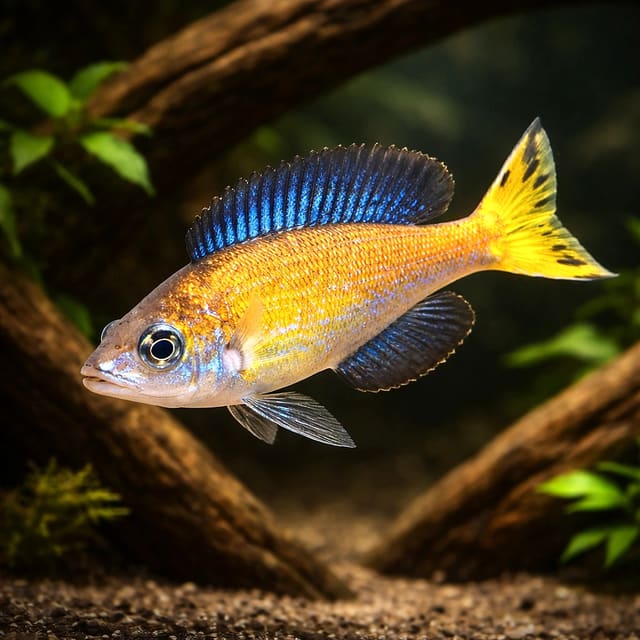
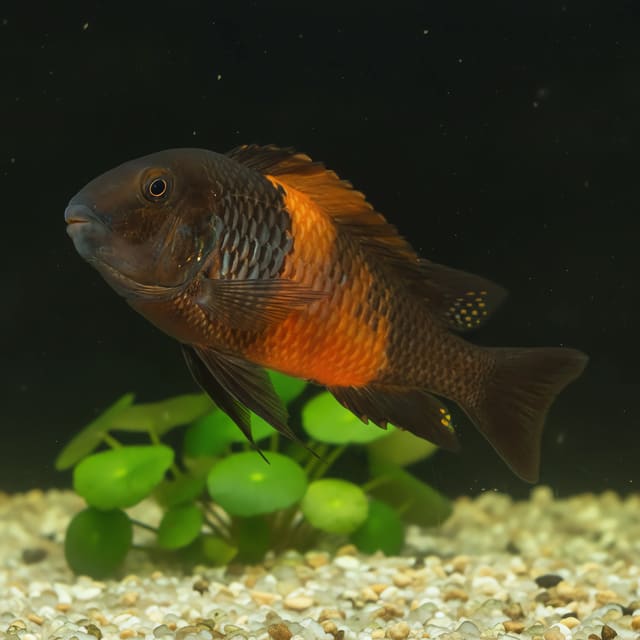
The Black Widow Frontosa Cichlid is an ornamental form of Cyphotilapia frontosa, the humphead cichlid from Lake Tanganyika. Instead of the more familiar regular vertical banding, the Black Widow form is known in the aquarium trade for dark markings reduced into broad, irregular blotches. That pattern makes it immediately distinctive, but the colour form does not turn it into a smaller or easier fish. It remains a deep-bodied, slow-maturing, social Tanganyikan cichlid with the space, water-quality and group-planning needs of the species.
One purchase supplies one live fish in the size chosen. The listing carries six genuine size choices: 2–2.5 cm, 4–5 cm, 5–6 cm, 6–8 cm, 10–12 cm and XXL. Use the live size selector for the choices available when you order. The size you select is the size supplied, not the adult size. None of these options is sold as male or female, so sex is not guaranteed and should not be inferred from a juvenile's colour, hump or photograph.
This is a fish to choose only after planning the adult aquarium. FishBase records a maximum length of 33 cm total length, while the specialist aquarium profile reports 25.5 cm standard length. Those measurements use different end points: total length includes the tail fin, whereas standard length stops at the base of it. Together they describe a substantial cichlid, not conflicting dispatch sizes. Its eventual bulk, social hierarchy and need for open floor area matter as much as the number on a tape measure.
| Identity | Black Widow form of Cyphotilapia frontosa, family Cichlidae |
|---|---|
| Native range | Endemic to Lake Tanganyika in East Africa |
| Recorded adult size | Up to 33 cm total length; specialist profile also gives 25.5 cm standard length |
| Long-term aquarium | Specialist minimum footprint 240 × 60 cm and about 864 litres; greater width and depth are preferable |
| Routine aquarium water | 23–27°C, pH 8.0–9.0 and 10–25 dGH |
| Social plan | At least five together, ideally ten or more, with the aquarium sized for the whole group |
| Feeding style | Generalised predator and omnivorous browser; use varied, appropriate prepared and frozen foods |
| Keeper fit | Advanced long-term project rather than a small community or first aquarium |
A sensible buyer starts with the final footprint, filtration capacity and group rather than buying a small juvenile and intending to upgrade later. The specialist profile regards 240 × 60 × 60 cm, roughly 864 litres, as the minimum long-term dimensions and recommends still more width and depth where possible. FishBase independently gives an aquarium length above 200 cm. These are planning baselines for the species; a group and any companions must all fit without compressing open swimming space or shelter.
Black Widow Frontosa suits a keeper who enjoys deliberate, stable husbandry: a mature biological filter, hard alkaline water that matches the fish before purchase, secure rock structures, a sandy or smooth substrate, and measured feeding. It is a poor match for a new, unstable aquarium, soft acidic water, a short tank, or a busy community containing bite-sized fish. If this is your first livestock aquarium, work through the guide to preparing and maturing an aquarium before choosing the fish.
| Well suited to | An experienced keeper planning a very large, mature Tanganyika aquarium; a deliberately sized frontosa group; stable hard alkaline water; substantial filtration; patient observation and measured feeding. |
|---|---|
| Poor fit for | A first or temporary aquarium; a short or narrow tank; soft acidic water; a mixed collection chosen only by colour; much smaller fish or small invertebrates; a buyer relying on a future upgrade. |
Choosing a larger dispatch size may shorten the time spent at the smallest juvenile stage, but it does not reduce the final aquarium, social or filtration requirement. Choosing a smaller size does not make the species suitable for a small tank. Compare the selected fish with any established group so the newcomer is not at an extreme size disadvantage, and prepare enough shelter for the introduction before the parcel arrives.
Juveniles do not reliably reveal sex. Adult males can become larger, with more extended fins and a more developed nuchal hump, but that biological difference is not a retail sex guarantee. Buy this listing for the animal and size stated, then let the group develop without assuming that a particular small fish will become a chosen sex.
Sex is guaranteed only when the selected option explicitly states male or female. This Black Widow Frontosa Cichlid listing has no sex-guaranteed option.
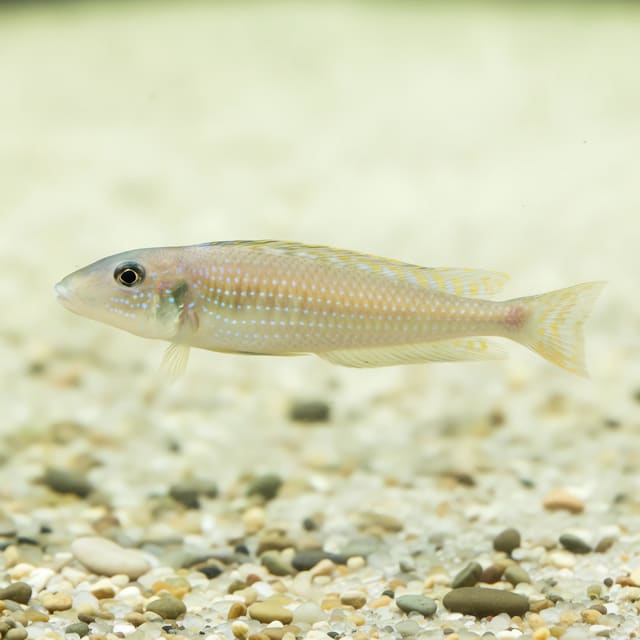
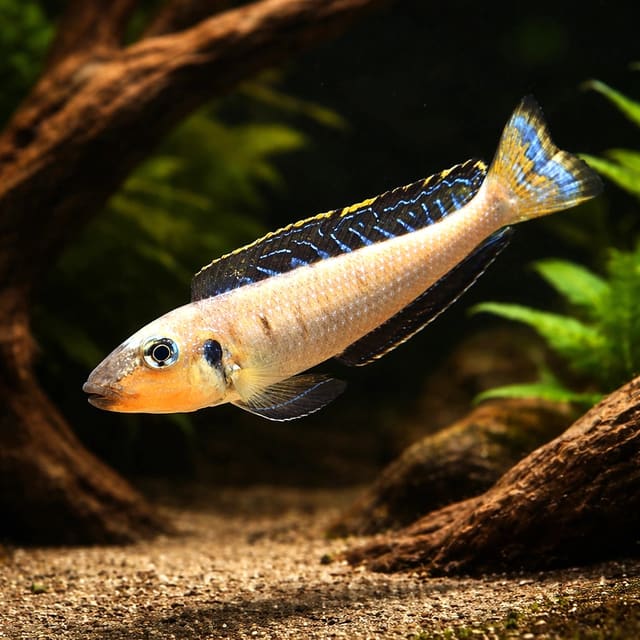
Gallery images have been digitally enhanced to improve image quality. Natural colour, pattern, size and maturity can vary between live animals.
Frontosa are often offered at small dispatch sizes, which can make the long-term commitment easy to underestimate. The specialist species profile gives a minimum base of 240 × 60 cm and a volume of about 864 litres for long-term maintenance, with greater width and especially depth strongly preferred. FishBase's aquarium note also points to a tank longer than 200 cm. Treat those dimensions as a starting point for the species, not a promise that every group and community will fit. A larger group, additional Tanganyikan fish, bulky décor or a particularly dominant adult increases the space required.
Floor area matters because these are deep-bodied fish that use open water while also relying on shelter. A tall but short-fronted aquarium does not replace a long, broad base. Check the route into the room, the floor loading, maintenance access and the ability to lift or anchor rockwork before filling the tank. Planning these details early is kinder and less expensive than moving a growing group between temporary aquariums.
If you are comparing volume claims, remember that nominal litres do not show the whole usable habitat. Rock structures and substrate displace water, and an aquarium's internal dimensions are smaller than its advertised external measurements. Judge the system by its actual footprint, swimming room, shelter, group size and filtration as a whole.
For routine aquarium care, the species profile recommends 23–27°C, pH 8.0–9.0 and hardness of 10–25 dGH. These are useful husbandry targets because they come from a profile specifically about Cyphotilapia frontosa. FishBase reports a narrower 24–26°C environmental range, pH beginning at 8.0 and 8–12 dH from wild records. Wild environmental records and aquarium operating targets answer different questions, so the aquarium range should be used consistently rather than chasing the edge of either range.
Measure the water you can actually provide. The water chemistry guide explains the roles of pH, hardness, ammonia, nitrite and nitrate, and the water matcher helps compare measured aquarium values with the stated range. Stability is more important than repeatedly dosing the tank to hit an attractive number. Any adjustment should be gradual, measured and suitable for every animal in the aquarium.
A mature biological filter is essential. The RSPCA explains that fish produce toxic ammonia, which established filter bacteria convert first to nitrite and then to the safer nitrate. Both ammonia and nitrite should remain at zero in a stocked aquarium. OATA's broad African lake cichlid guidance likewise gives zero ammonia and zero nitrite, recommends regular testing, and advises keeping nitrate no more than 20 mg/l above the normal tap-water level. Those group figures are useful operating guidance, not a substitute for monitoring this aquarium's real trend.
Test before adding the fish, after meaningful stocking changes and whenever behaviour, appetite or breathing changes. Record results rather than relying on memory. A pH reading on its own does not prove that the biological filter is coping, and clear water can still contain harmful nitrogen compounds. Check temperature with a dependable thermometer rather than trusting a heater dial.
A large cichlid group produces a substantial waste load. Use filtration with enough biological capacity and water movement for the finished stock, while preserving calmer areas around shelters. The specialist profile illustrates a turnover of four to five times aquarium volume per hour for its example system. Actual flow at the aquarium is normally lower than the pump's box figure once media, pipework and head height are included, so observe circulation and oxygenation rather than shopping by a headline number alone.
OATA recommends vigorous aeration for African lake cichlid aquariums and an oversized filter where stocking creates a high load. Surface movement is valuable because gas exchange happens there. Keep outlets clear, remove trapped debris, and avoid allowing rockwork to create stagnant pockets. At the same time, do not turn every refuge into a high-velocity channel; the aim is clean, oxygenated water across a varied layout.
Carry out regular partial water changes with replacement water treated for chlorine or chloramine and brought close to the aquarium's temperature and chemistry. OATA gives a broad weekly example of 25%. Use that as a practical starting point, then let measured nitrate, stocking, feeding and the aquarium's behaviour determine whether more frequent or larger changes are needed. A water change is not a cure for chronic overstocking or an undersized filter.
Do not run filter media under the tap because chlorine or chloramine may kill beneficial bacteria. Rinse reusable media lightly in the aquarium water removed during a water change when flow falls. Stagger major maintenance so the filter, substrate and décor are not all aggressively cleaned at once. Keep pumps, heaters and aeration accessible for inspection. A slow decline in flow can be easy to miss in a large display, so make a simple maintenance record.
A biologically mature aquarium is more than a tank that has been filled for a few days. The filter needs an established bacterial population able to process the waste produced by the intended animals, and the keeper needs test results showing that ammonia and nitrite remain at zero. OATA warns that adding livestock too quickly can cause new tank syndrome because the bacterial population has not yet expanded to match the extra waste and feeding.
Complete the hardscape, run the equipment, establish the biological filter and confirm stable temperature and water chemistry before arranging delivery. Test with suitable aquarium kits and keep a written record. If a result is unexpected, repeat it carefully and resolve the cause before adding a large cichlid. A water conditioner makes tap water safe from chlorine or chloramine, but it does not instantly create a mature biological filter.
Plan how the social group will be assembled. Adding fish gradually protects the biological filter, but introducing a lone small fish into a large established hierarchy can create a behavioural problem. The right approach depends on the sizes and history of the fish already present, so balance filtration capacity with social risk and obtain specific advice for the actual group. Never solve one risk by ignoring the other.
After an addition, watch ammonia, nitrite, feeding access and pursuit more closely than usual. The first calm hour does not prove that the hierarchy has settled. Check again after lights-on, feeding and use of shelters, and have a properly prepared separation option if an animal is being injured or permanently excluded.
A natural-style layout can use sand, water-worn rocks, larger boulders and cave-like shelters while retaining generous open space. Smooth gravel can also work. Avoid sharp edges that could injure a startled fish, and make sure every heavy structure rests securely rather than on loose substrate that may shift. Build for the largest adult in the group, not the size arriving in the bag.
Provide several usable shelters rather than one decorative cave. The species profile notes that alpha males often choose a particular cave or protected area and that smaller caves can be used by brooding females. In a non-breeding display, the same principle still helps subordinate fish move out of direct view. Sight breaks reduce constant confrontation, but a maze of rock that removes all swimming room is not a solution to inadequate space.
Subdued lighting can suit the fish's presentation, although the tank still needs a clear day-and-night routine. Secure all covers, cables and equipment. When moving rocks, check that no fish has taken refuge behind or beneath them. Never balance heavy stones where digging or a maintenance knock could cause a collapse.
In nature, FishBase records an omnivorous diet including shellfish and fish, while the specialist profile describes a generalised predator taking smaller fishes, macro-invertebrates and molluscs, with algae and organic detritus also ingested while browsing. In the aquarium, use a high-quality prepared food sized for the fish as the dependable base, with suitable live or frozen foods such as Artemia, mosquito larvae and shrimp for variety. Include some prepared food with vegetable matter, such as Spirulina, rather than treating the species as a meat-only feeder.
Feed measured portions and watch each fish eat. Frontosa can be deliberate feeders, and a fast companion may take more than its share before a quieter individual commits. Spread food across a broad area where necessary, while avoiding food that disappears behind rocks and decays. Adjust quantity to body condition, group behaviour, water temperature and measured water quality instead of relying on a rigid universal schedule.
Do not offer mammalian or avian meat such as beef heart or chicken. The specialist profile warns that some of those lipids cannot be properly metabolised and may contribute to damaging fat deposits. Feeder fish add avoidable disease and nutritional risks and provide no husbandry advantage. Rich foods are not a substitute for variety, clean water or a correctly sized aquarium.
Remove uneaten food and investigate repeated refusal. Appetite can change with social pressure, water quality, transport stress or illness. Check the basics first—temperature, ammonia, nitrite, recent maintenance and whether a dominant fish is excluding others—rather than immediately adding more or different food.
The listing's dispatch sizes span small juveniles to much larger fish, so one pellet or food size cannot suit every option. Offer pieces that can be swallowed comfortably and distribute them so the whole group has a fair opportunity to feed. A large individual still benefits from measured portions; size is not a reason to pour in food until some remains.
Watch body condition from both the side and above where the aquarium allows it. Sudden fullness immediately after a meal is not the same as steady condition, and an apparently slim fish may simply be losing every feeding contest. If one animal repeatedly misses food, review the social arrangement and delivery method before increasing the total amount, which may only feed the dominant fish and burden the filter.
When changing foods, make the transition deliberately and keep water-quality monitoring in place. Frozen food should be handled hygienically and portioned without adding unnecessary thaw water. The species profile supports variety; it does not support a procession of rich treats in place of a balanced staple.
Use the current delivery and Live Arrival Guarantee policy before the delivery day. Someone must be present to receive live fish; they cannot be left unattended. Have the mature aquarium ready and the lights subdued before opening the parcel.
These arrival steps do not replace quarantine planning or compatibility checks. A separate, cycled observation aquarium can be valuable when it is large enough and run to the same water conditions. Never improvise an undersized, unfiltered container for a large cichlid simply because it is called quarantine.
Learn the normal rhythm of the individual group. Frontosa can be comparatively measured in their movements, but each fish should hold position normally, breathe without obvious distress, maintain body condition and participate in feeding. Watch for a subordinate animal that is continually pinned behind décor, excluded from food, darkening or paling unusually, or breathing faster than its companions.
OATA's broad warning signs include surface hanging, bottom sitting, erratic swimming, damaged fins or scales, spots or fluffy growths, changing body condition and reduced feeding. None of those signs identifies one diagnosis by itself. Test the water immediately and seek qualified advice rather than guessing at medication. Treating an unknown problem can add stress and obscure the cause.
Cyphotilapia frontosa is gregarious. The specialist profile recommends at least five and ideally ten or more specimens, provided the aquarium has the footprint and capacity for the complete group. This is a social requirement, not permission to squeeze many juveniles into a tank that cannot house them as adults. Plan the group and adult aquarium together.
A hierarchy forms even though males do not defend small territories in quite the same way as many other cichlids. One or more alpha individuals may develop according to group size and available space. Provide open room, multiple substantial shelters and broken sight lines so a lower-ranking fish can disengage. Continual pursuit, food exclusion or one animal confined to a corner means the social plan or environment needs attention.
FishBase notes several females for one male, while the specialist breeding guidance discusses three to four females per adult male. That information is useful when working with a mature, sexable breeding group, but juveniles cannot be sexed accurately and this retail listing does not guarantee sex. Do not buy a handful of young fish assuming a perfect ratio will emerge, and do not remove individuals casually from an established hierarchy without considering the effect on the group.
The species may be kept in a carefully chosen Lake Tanganyika community when the aquarium is sufficiently large. OATA's broad African lake guidance advises keeping lake communities geographically coherent and generally avoiding a Malawi-and-Tanganyika mix because temperament and behaviour differ. That is a useful screening rule, but a shared lake does not make every species automatically compatible.
Consider adult size, feeding speed, preferred water, use of the tank and temperament. Much smaller fish may be eaten. Delicate, slow or timid species may lose access to food or shelter even if they are not directly attacked. Very aggressive fish can stress frontosa, while boisterous feeding competitors can leave them underfed. Any companion must fit the final aquarium without taking away the open swimming space and refuges the group already needs.
Introduce animals only after checking their own species requirements, not merely a shop category. The African cichlid collection is useful for browsing, but it is not a compatibility list. Research each proposed species and have a safe separation plan before combining valuable adult cichlids.
Calling the fish simply peaceful or aggressive is not very useful. Frontosa can appear calmer than many rock-dwelling cichlids, yet they are large predators with a social hierarchy. Risk rises when space is compressed, shelters are scarce, the group is too small, feeding is uneven or a new fish is inserted without a plan. Observe access to food and refuge over time, not only whether a dramatic fight occurs.
Rearranging some décor can interrupt established sight lines when introducing compatible cichlids, as OATA notes, but it cannot make an incompatible community safe. Additions also increase the biological load. Test ammonia and nitrite after stocking changes and make changes gradually so filter bacteria can respond.
Have a divider or a suitably large, mature backup aquarium available if behaviour becomes dangerous. A bucket, net trap or uncycled spare tank is not a long-term contingency. Frontosa are valuable, heavy-bodied fish; planning an exit route is part of responsible community keeping.
Before adding a newcomer, compare its size with the residents, check that the tank can carry the additional adult and identify several usable refuges. OATA notes that rearranging décor can reduce established territorial pressure for some African lake cichlids. If used, make changes while preserving secure foundations and open swimming room; moving rocks does not erase a fundamental size or temperament mismatch.
Observe the introduction continuously at first, then at repeated intervals around feeding and lighting changes. Brief investigation is different from relentless pursuit. Warning signs include one fish held at the surface or behind equipment, blocked from food, breathing hard after repeated chasing, or suffering torn fins. Separate animals safely when injury is likely; do not wait for a visibly weaker fish to become exhausted.
Adding more fish is not a universal treatment for aggression. The frontosa's recommended group size assumes a suitably large aquarium and coherent plan. Extra animals also add waste, feeding competition and long-term space demand. Address the cause—space, group structure, shelter, introduction method or incompatibility—rather than using stocking density as a reflex.
The species is a maternal mouthbrooder. Mature males are polygynous, females collect fertilised eggs and may hold the brood for a prolonged 35–50 days or more. Sexual maturity can take several years. This explains why a holding female may withdraw or feed differently, but breeding should not be treated as an automatic goal for every display.
Do not strip a female or attempt a detailed breeding intervention from a short product guide. If breeding is intended, research the method thoroughly, work with a mature, correctly structured group and prepare space for juveniles before spawning. The ordinary care priorities remain stable water, low stress, appropriate food and enough shelter.
These are the practical questions to resolve before choosing this fish.
FishBase records Cyphotilapia frontosa at up to 33 cm total length. A specialist aquarium profile also gives 25.5 cm standard length, which excludes the tail fin, so this should be planned as a large, deep-bodied cichlid.
The specialist profile gives 240 × 60 × 60 cm, about 864 litres, as the minimum long-term aquarium and recommends greater width and depth where possible. The final group and any companions may need more space.
Keep at least five Cyphotilapia frontosa together and ideally ten or more, but only when the aquarium is large enough for the full adult group. Juveniles cannot be reliably sexed, and this listing does not guarantee sex.
It is better suited to an experienced keeper. The adult size, very large aquarium, hard alkaline water, social hierarchy, substantial filtration and careful feeding make it an advanced long-term project rather than a first community fish.
Use a varied diet based on high-quality prepared foods, including some vegetable matter, with suitable live or frozen foods such as Artemia, mosquito larvae and shrimp. Avoid mammalian or poultry meat and do not use feeder fish.
Routine aquarium guidance for Cyphotilapia frontosa is 23–27°C, pH 8.0–9.0 and 10–25 dGH. Keep those hard, alkaline conditions stable, with zero ammonia and zero nitrite in a mature filtered aquarium.
It is a large predator with a group hierarchy rather than a harmless community fish. It can be comparatively measured for a cichlid, but cramped space, poor grouping or unsuitable companions can cause chasing, exclusion and injury.
A carefully chosen Lake Tanganyika community of appropriately sized fish can work in a sufficiently large aquarium. Avoid much smaller fish, small invertebrates, soft-water species and default mixes with Malawi cichlids; check every proposed companion individually.
Tropical Fish Co hand-packs live fish in oxygenated bags inside an insulated box, with a heat pack when conditions call for it, and uses a tracked licensed live-animal courier. Be present, inspect the parcel the same day and record the sealed continuous unboxing required for any Live Arrival Guarantee claim.
The care recommendations above separate recorded biological facts, species-level aquarium guidance, broad UK welfare guidance and the shop's current delivery policy. Measurements keep their original scope: total length includes the tail, while standard length does not.
The live product selector governs the dispatch size available at purchase. One purchase supplies one live fish of the chosen size, and no option is sold with a sex guarantee. Delivery, packing, attendance and claim steps are governed by Tropical Fish Co's current policy linked in the care section.
References are provided so keepers can see where the principal identity and husbandry limits come from. A reference range is not a reason to hold the animal at an extreme, and broad group advice does not override the more specific species profile.
No reviews for this item yet. Bought one? Honest reviews only, good or bad.
What customers say about ordering from us
I have a small group of long finned mountain minnows. So was delighted to be able to order ten of this variety to increase the genetics in my tank . The ones I recieved are healthy but it’s to early to give a verdict on wether they are of a long finned type since they are small currently.
Gordon Walker · 23 Sept 2026
100% success travel and "installation". Pleased with quality of purchase. The Siamese fighter a bit "shy" so have not yet seen him at his best yet but looking good. Happy customer. GG
George E Garratt · 21 Sept 2026
Reviews of our shop, collected by Judge.me, an independent third-party review collector. Newest first.