Advanced
Jumbo Yellow Sardine Cichlid (Cyprichromis sp.)
24–27°C · pH 7.8–9
£39.99

Jumbo Kitumba Sardine Cichlid (Cyprichromis sp.) is a Lake Tanganyika cichlid sold as one live fish per purchase, from 3–4 cm to XL. Keep it in a group in a mature, hard and alkaline aquarium with other Tanganyikan fish, not on its own or with Malawi cichlids.
Cyprichromis sp.
Save when buying multiple fish. Each quantity is one fish; sex and pair formation are not guaranteed unless the selected variant explicitly states them.
Jumbo Kitumba Sardine Cichlid (Cyprichromis sp.) is a Lake Tanganyika cichlid sold as one live fish per purchase, from 3–4 cm to XL. Keep it in a group in a mature, hard and alkaline aquarium with other Tanganyikan fish, not on its own or with Malawi cichlids.
Cichlids are a family of roughly 1,800 accepted species, not one care type. Before buying, identify the exact species and source, then compare adult measurement, usable tank dimensions, social system, territory, tested water, diet and an exit plan. No family-wide minimum tank, water range or tank-mate list is safe.
Maintain these water conditions for optimal health and vibrant colors
The Jumbo Kitumba Sardine Cichlid is a cichlid of the genus Cyprichromis. It reaches us under the trade label Cyprichromis lept. kitumba jumbo, grouped with the Lake Tanganyika cichlids, and it belongs in a hard, alkaline aquarium set up for Tanganyikan fish rather than in a general community tank. Each purchase is one live fish. Like most African lake cichlids it should not be kept on its own, so the most important decision is whether your aquarium can hold a group of grown fish in stable, mineral-rich water.
The exact species has not been identified, so the care advice here follows the genus Cyprichromis and its care group. Where a figure depends on knowing the exact species, such as adult length, lifespan or a set group size, this guide leaves it open and gives you the planning steps instead.
| Topic | Detail |
|---|---|
| Name used here | Jumbo Kitumba Sardine Cichlid |
| Scientific name | Cyprichromis sp., a species of the genus Cyprichromis in the family Cichlidae |
| Trade label | Cyprichromis lept. kitumba jumbo |
| Group | Lake Tanganyika cichlids |
| Sold as | One live fish per purchase |
| Sizes at dispatch | 3–4 cm, 4–5 cm, 5–6 cm and XL |
| Keeping | In a group, not singly |
| Water | Hard and alkaline; OATA group guidance of 23–27°C and pH 8.0–8.6 |
| Companions | Other Lake Tanganyika fish only |
All four sizes are the same trade form, sent at different lengths. Whichever you choose, the tank has to be planned for grown fish, so the size mainly changes how long you wait to see the group mature. If you are buying several fish at once, choosing one size for all of them keeps the group evenly matched as it settles, which makes it easier to see that every fish is reaching the food.
| Suits | Less suited to |
|---|---|
| A mature aquarium kept hard and alkaline for Tanganyikan fish | A soft or acidic community tank |
| A buyer planning a group bought and introduced together | Anyone wanting a single fish |
| A keeper who tests the water and changes some of it every week | A new tank whose filter has not matured |
| A community drawn only from Lake Tanganyika | A tank that already holds Malawi cichlids |
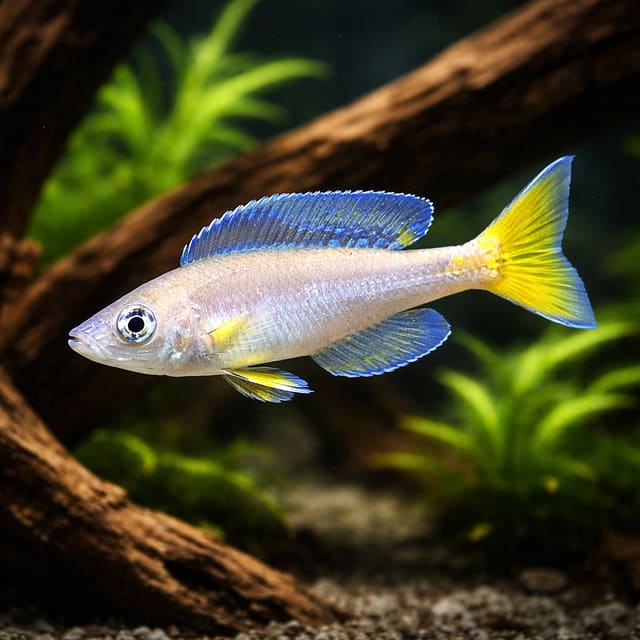
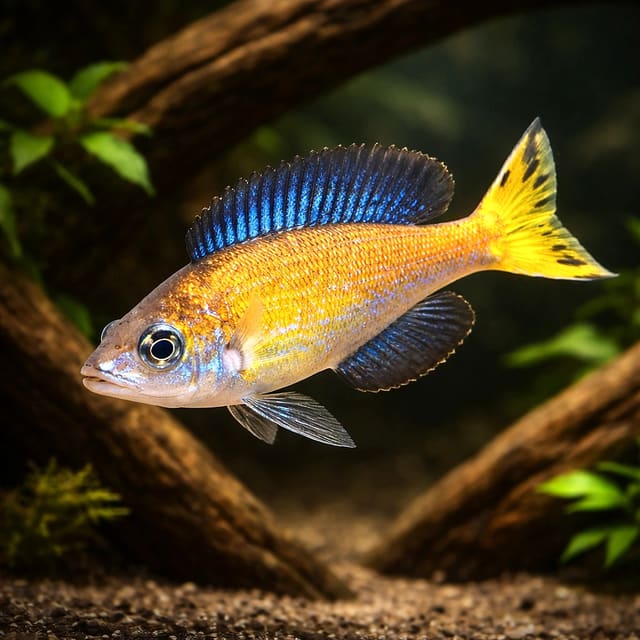
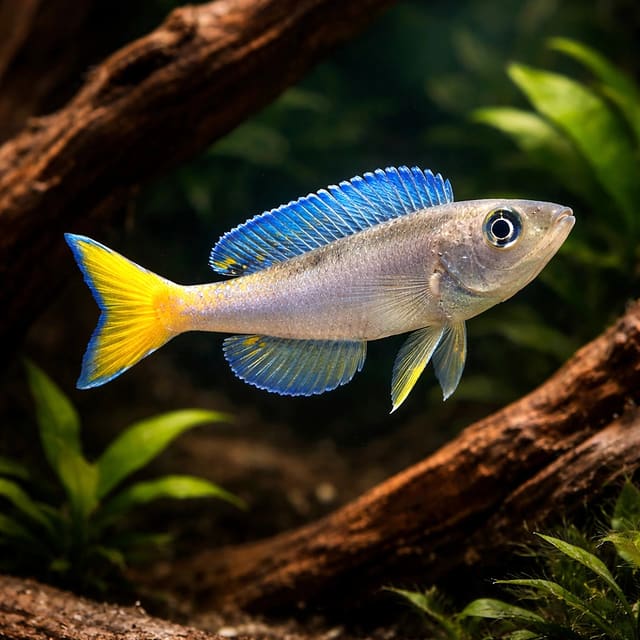
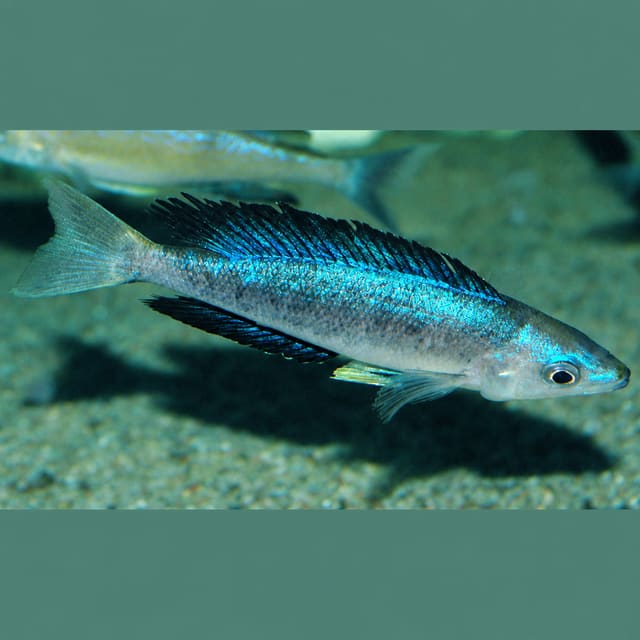
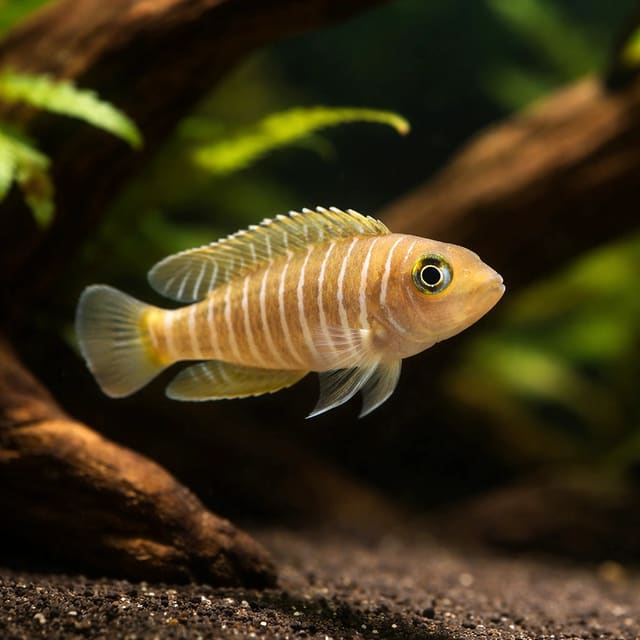
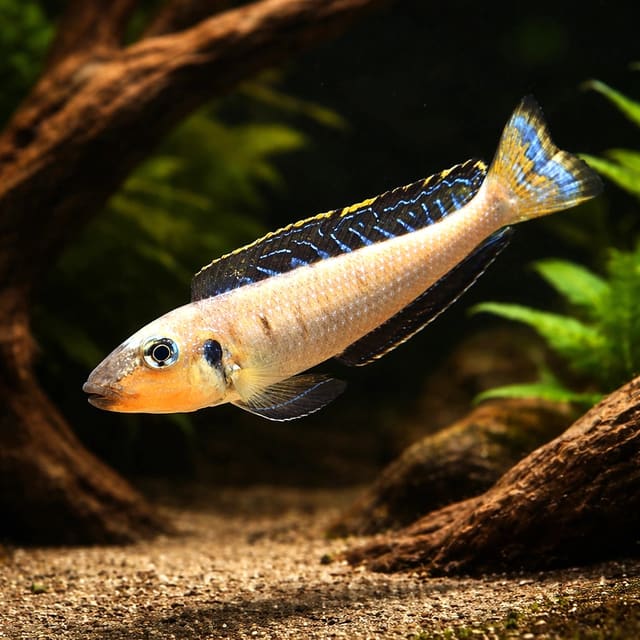
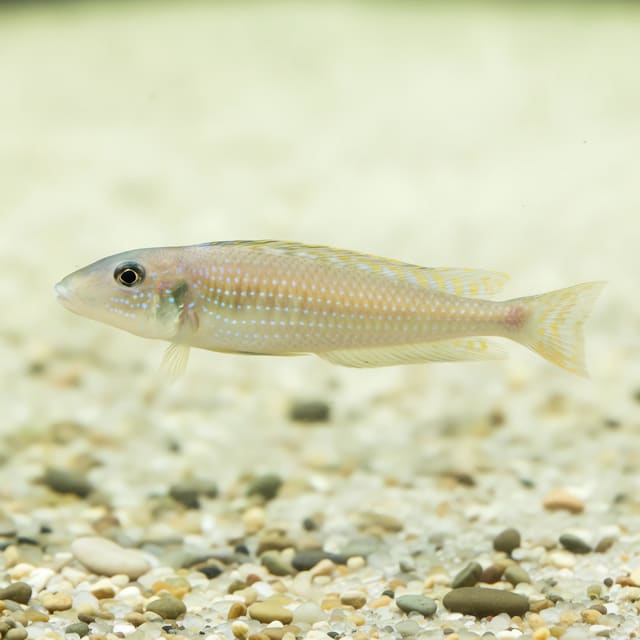
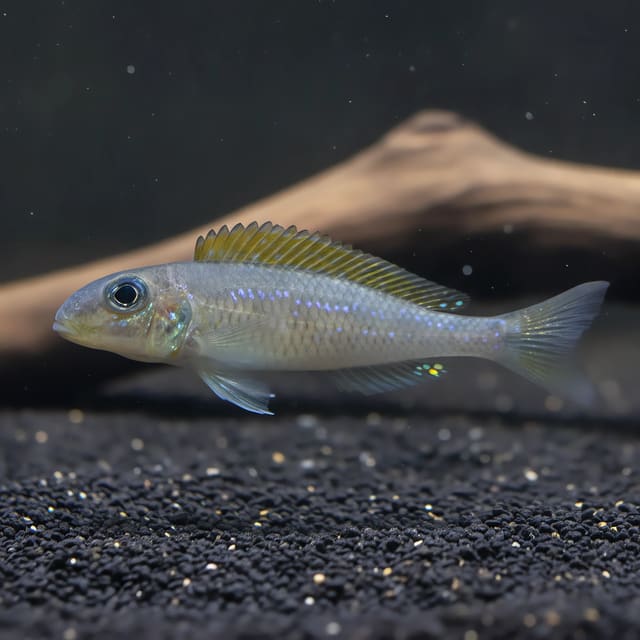
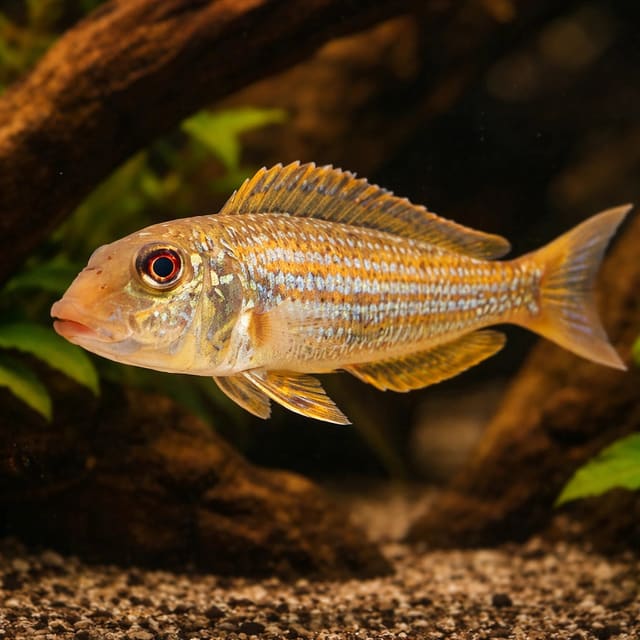
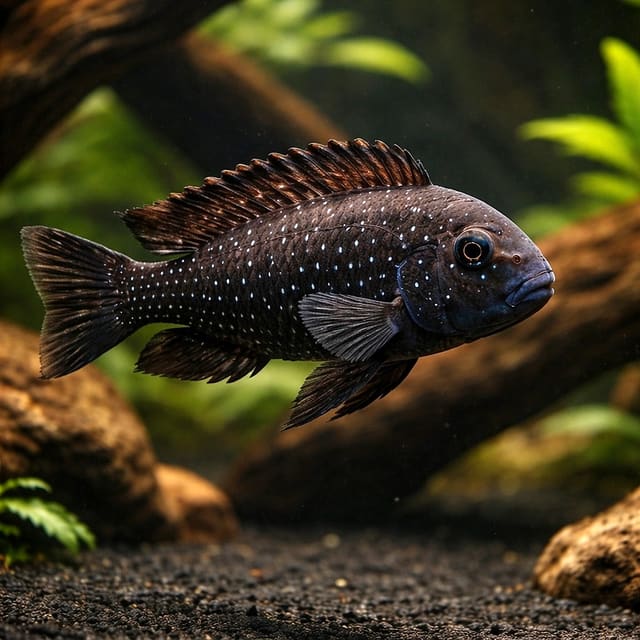
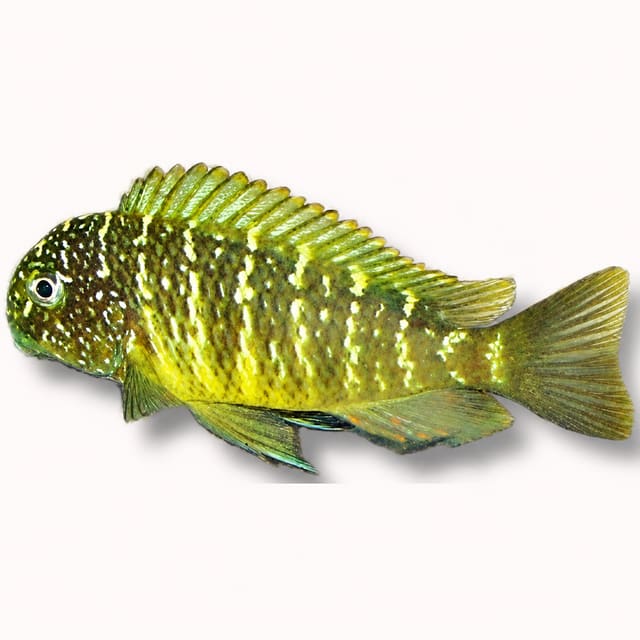
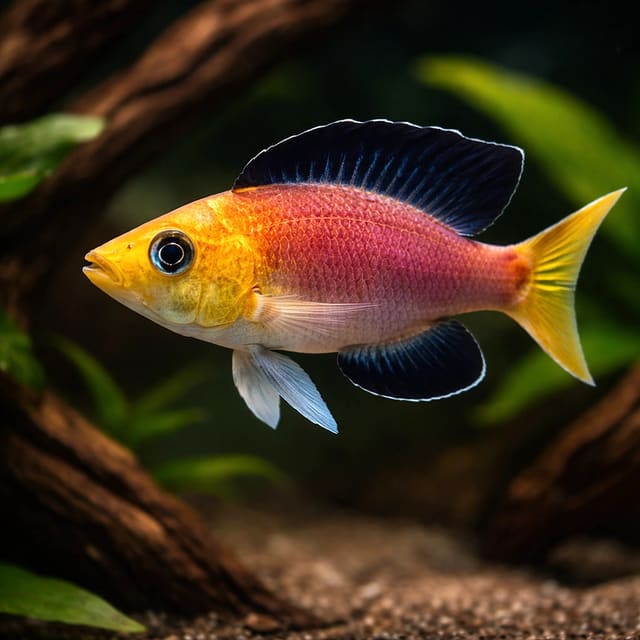
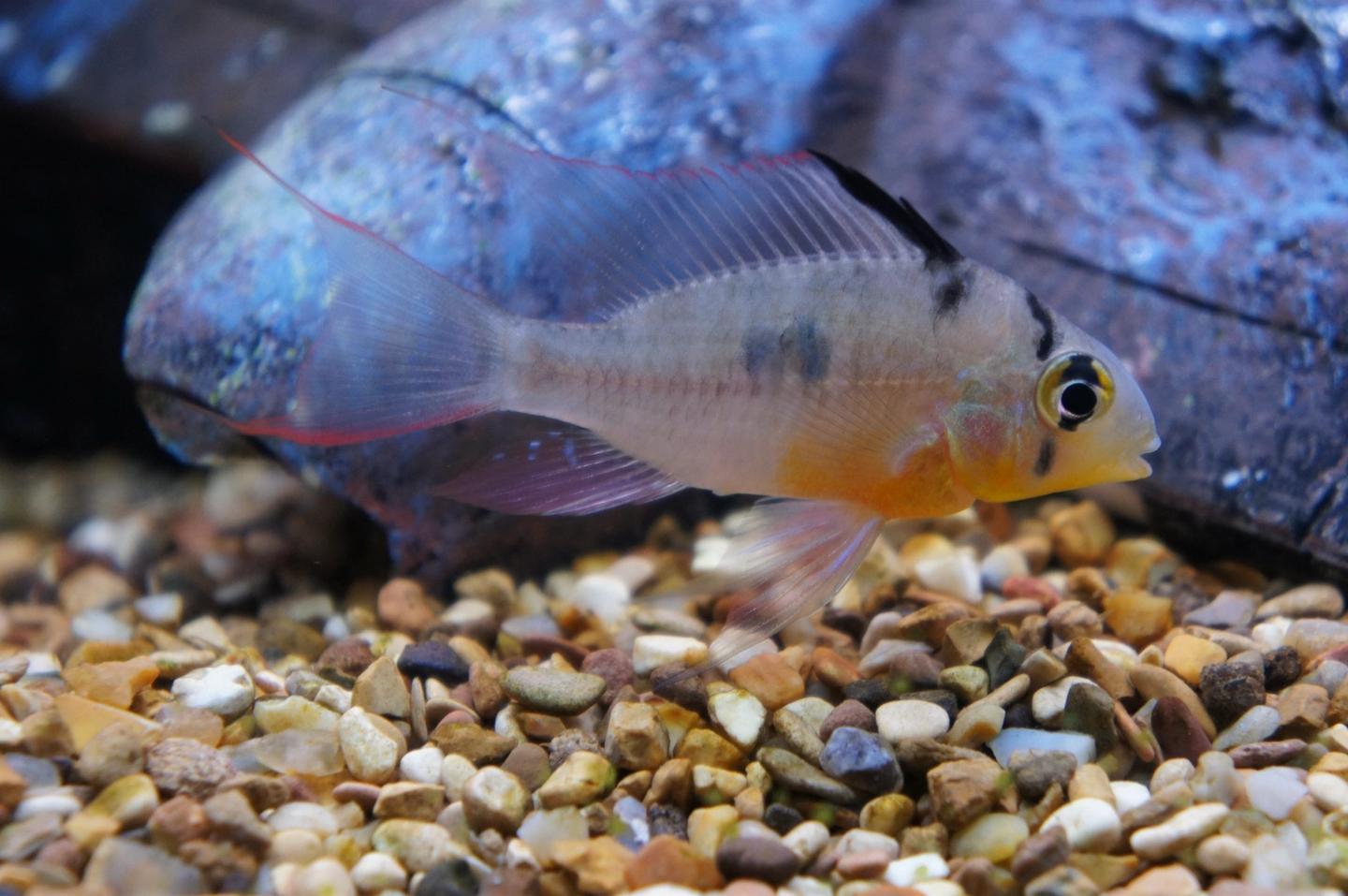
The photographs show a slender, silvery-blue cichlid with deep blue fins. Gallery images have been digitally enhanced to improve image quality. Natural colour, pattern, size and maturity can vary between live animals.
If you are weighing up several lake cichlids, our African cichlids collection lists the other African species we keep. Check which lake each fish comes from before you plan a mix, because Malawi and Tanganyikan cichlids are not generally recommended together.
Lake cichlid trade names often join a genus, a shortened species name and a place or colour name into one label. This fish is sold under the trade label Cyprichromis lept. kitumba jumbo. The first word is the genus, and the World Register of Marine Species entry for Cyprichromis records Cyprichromis as an accepted genus of the cichlid family, Cichlidae.
The rest of the label is trade shorthand. Until the fish is identified to species, we sell it as Cyprichromis sp., which is the standard way of writing “a species of Cyprichromis”, and keep “Jumbo Kitumba” as the trade description that tells this form apart from the other sardine cichlids we list.
If you already keep other Cyprichromis, treat this as a separate trade form in your own records, so that you always know which fish came from which listing.
African lake cichlids are specialised fish that need particular water. OATA’s care sheet for African lake cichlids gives the values below as a general guide for the group and advises checking for species-specific needs before buying. With the species still open for this fish, these group values are the working target for its aquarium.
| Measurement | Group guidance for African lake cichlids |
|---|---|
| Temperature | 23–27°C |
| pH | 8.0–8.6 |
| General hardness (GH) | 12–18°dH, hard |
| Carbonate hardness (KH) | 10–15°dKH, hard |
| Ammonia | Zero |
| Nitrite | Zero |
| Nitrate | No more than 20 mg per litre above your tap water |
General hardness is a measure of the dissolved minerals in the water, mostly calcium and magnesium. Carbonate hardness is the part that buffers pH, which is why a tank with good KH holds its pH more steadily between water changes. Both need to sit in the hard range here, and they are worth testing separately because one can be high while the other is low.
The nitrate limit is measured against your own tap water rather than set as a single figure. Test the tap first, note its nitrate reading, and then keep the aquarium within 20 mg per litre of that baseline. If you are new to these tests, our guide to which aquarium water values to test and why explains each reading, and the water parameter matcher lets you compare your results with a set of targets like this one.
Tap water differs from one supply to another, so start with a full set of readings from your own tap before choosing a method. OATA recommends a fine coral sand or a similar substrate, which helps to buffer the water towards the alkaline, mineral-rich conditions these cichlids need. Whatever method you use, prepare each batch of replacement water the same way, so that weekly changes do not swing the chemistry up and down.
The group range of 23–27°C is warmer than most UK rooms, so the aquarium needs a heater. Use one sized for your aquarium and a separate thermometer you can read at a glance, so you see the real water temperature rather than the dial setting. Check it when you feed, and look again during cold snaps and hot spells, when room temperature can pull the tank towards the edges of the range.
Aim for a steady reading inside each range rather than chasing one exact number. A larger volume helps: OATA points out that the larger the aquarium, the more stable the temperature and water quality will be. Keep a simple written log of temperature, pH, GH, KH, ammonia, nitrite and nitrate, and a gradual drift will show up long before it troubles the fish.
OATA’s general rule for African lake cichlids is to buy an aquarium as large as possible, within reason, and to size it for the species you want to keep. Its examples span the group: a pair of the smallest shell-dwelling cichlids needs an aquarium at least 45 cm long, while large frontosa need one of about 180 cm and may need more room as they grow and hold territories.
Because the species is still open, there is no single tank figure to copy for the Jumbo Kitumba Sardine Cichlid. Plan instead from the group you intend to keep. Decide how many fish you want, remember that they will grow beyond their dispatch size, and choose a tank that leaves room for all of them as adults along with any other Tanganyikan fish you plan to add. If you are torn between two sizes, the larger tank is the safer choice for stability.
A filter is always essential, and the RSPCA’s aquarium welfare guidance explains why: fish release ammonia, which is toxic, and a working biological filter grows beneficial bacteria that convert ammonia to nitrite, which is also toxic, and then to nitrate, which is safer. Some African lake cichlid communities are kept fairly crowded, so OATA recommends an oversized filter and vigorous aeration to keep enough dissolved oxygen in the water.
A fine coral sand or similar substrate supports the water chemistry as well as giving the tank a natural Tanganyikan look. Arrange any décor so it can be moved later: OATA notes that rearranging décor can reduce aggression because the fish have to find new territories, which is easier when rocks sit securely on the base and can be lifted without disturbing everything else.
Set up and mature the aquarium before you order, so the filter bacteria are established when the group arrives. Our step-by-step guide to preparing and maturing a first tropical aquarium walks through setting up a tank and letting it mature before livestock arrives. Only add fish once ammonia and nitrite both read zero.
African lake cichlids do not share one diet. OATA gives the range: herbivorous fish such as tropheus need cichlid foods with a high algae content and fresh vegetables, while larger predatory species need pellets with more animal content and frozen foods such as brine shrimp, prawns or cockles. Which way this unidentified Cyprichromis leans cannot be read from its trade name, so a varied, middle-of-the-road diet is the sensible plan.
A 3–4 cm fish needs much smaller pieces than an XL fish of the same kind. Crush flakes between your fingers or choose a fine granule for the smaller sizes, and move up to larger pellets only as the fish grow into them. Food that is too large tends to be mouthed and dropped, which wastes it and adds to the load on the filter.
Feeding is the best daily health check you have. Count the fish as they come up to eat, and look for any that hang back, spit food out or stop showing interest, since reduced intake is one of the early signs OATA lists. In a group, also make sure the smaller or quieter fish are getting their share rather than being pushed aside by the boldest feeders.
Feeding also affects the filter. OATA explains that the bacteria in a matured filter need time to increase every time more fish are added and feeding increases, so raise portions gradually as the fish grow rather than all at once. If in doubt, feed a little less and watch the water tests.
Good husbandry matters with lake cichlids because, as OATA puts it, they can be stressed by even the smallest amounts of ammonia. A simple weekly routine keeps those readings where they should be.
If the filter needs cleaning, do not run it under the tap. Chlorine or chloramine in tap water may kill the beneficial bacteria living in the media. Instead, rinse the media lightly in some of the tank water you have just removed during the water change. This keeps as much of the bacterial population as possible and protects the water quality the fish rely on.
A short notebook or phone note with the date, test results and anything you changed turns a routine into an early warning system. If a reading moves, you can see whether it followed a heavier feed, a new fish or a missed water change, and put it right calmly.
Every fish behaves and looks slightly differently, so learn what normal looks like for your group in its first weeks. A healthy fish has clear, bright eyes, undamaged fins and intact scales, with no ulcers or bumps. From there, OATA suggests watching for changes in the following.
| Watch for | What a change can look like |
|---|---|
| Swimming | Hanging at the surface, sitting on the bottom or erratic swimming |
| Colour | Turning darker or paler than normal |
| Temperament | More aggression than usual, or hiding more |
| Breathing | Gill covers moving faster or slower than normal |
| Appearance | White spots, fluffy growths, or loss of fins or scales |
| Condition | A gain or loss in body weight and condition |
| Feeding | Eating less, or losing interest in food |
Most of the problems on this list trace back to things in your hands. Water quality comes first, since lake cichlids react to even small amounts of ammonia. A group that is too small leaves fish stressed, a tank that is too crowded for its filter lets waste build up, and unsuitable companions bring chasing and hiding. When a fish looks wrong, run through water, numbers and neighbours in that order.
If you notice any of these changes, test the water straight away, as OATA advises, and put right any problem with ammonia, nitrite, nitrate, pH or temperature. Then contact us with your readings and a description of what you have seen, and we will help you work out the next step.
Your fish is hand-packed by our team, bagged in pure oxygen and sent in an insulated poly box, with a heat pack when the weather calls for it. We email you the tracking number and your confirmed delivery date, and a licensed live-animal courier carries the parcel. Our delivery and Live Arrival Guarantee page sets out the full policy.
Before the fish go in, confirm that ammonia and nitrite read zero. OATA advises raising the number of fish in an aquarium slowly, because overstocking or stocking too quickly can cause new tank syndrome: there are not enough nitrifying bacteria to cope with the extra waste, ammonia and nitrite climb, and fish may become ill or die. That is why the group for this cichlid is best bought together into a tank whose filter is already mature and sized for it, with any later additions made gradually.
Test the water more often than usual for the first couple of weeks, raise portions only gradually, and keep an eye on the watch-list above. Most early problems show up first as a change in feeding or swimming.
African lake cichlids do best with neighbours from their own lake. OATA’s general rule is that they should only be stocked with species from the same location, such as a Lake Tanganyikan community, and it does not generally recommend mixing Malawi and Tanganyikan cichlids because their temperament and behaviour differ. For the Jumbo Kitumba Sardine Cichlid that means a Tanganyika-only tank, planned around hard, alkaline water.
Lake cichlids vary widely in size and temperament, so research each companion species before adding it. Look for fish that come from Lake Tanganyika, want the same water values and will be a similar size and temperament as adults. Because the species of this Cyprichromis is still open, allow a margin: choose companions that are not known for heavy aggression and leave room in the stocking plan to move a fish if the mix does not settle.
| Companion type | Guidance |
|---|---|
| Other Lake Tanganyika fish of similar temperament and size | Suitable in principle; research each species |
| More aggressive Tanganyikan cichlids | Only with care, and added after the more peaceful fish |
| Malawi cichlids | Avoid; mixing the two lakes is not generally recommended |
| Fish from outside Lake Tanganyika | Avoid; they belong in a different aquarium |
Where the Jumbo Kitumba Sardine Cichlid sits in that order depends on the companions you choose, so decide this before you buy rather than after the fish are in the tank.
Very few, if any, African lake cichlids do well when kept singly, and a lone fish is likely to become stressed. OATA adds that the right number depends on the species. With the species open here, plan the group from your tank: decide how many grown fish the aquarium and filter can carry, then buy that group in one order so the fish arrive and settle together.
Watch for one fish being chased constantly, fish hiding more than normal, torn fins or a fish that stops coming up to feed. These are the same changes in temperament, appearance and feeding that OATA lists as early warnings. Act early by rearranging the décor, reviewing numbers or rehoming the fish that is causing or taking the trouble.
The size you choose is its length when it leaves us, not its adult size. Because this Cyprichromis has not been identified to species, we do not quote a maximum adult length for it. Expect it to grow after arrival and plan the aquarium around grown fish rather than the size you unpack.
Choose the largest aquarium you can look after well. OATA’s guidance for African lake cichlids runs from at least 45 cm long for a pair of the smallest shell-dwellers to about 180 cm for frontosa, so the right size depends on the species and the group. A bigger volume also keeps temperature and water quality more stable, and an oversized filter with vigorous aeration is recommended whatever the size.
Plan a group rather than a single fish. OATA notes that very few, if any, African lake cichlids do well when kept singly, and that the right number depends on the species. Introduce the group together so no single fish takes all the attention while they settle, and keep the total within what your tank and filter can support.
It suits a keeper who is ready to run a mature, hard and alkaline Tanganyika-style aquarium and to test the water every week. OATA describes African lake cichlids as specialised fish that need particular water parameters, yet usually undemanding once those conditions and compatible companions are in place. A brand-new tank or a soft-water community is the wrong starting point.
Diets differ between African lake cichlids, from algae grazers to meat-eaters, so offer a varied diet built on a good prepared cichlid food in pieces small enough for the fish, with frozen foods such as brine shrimp for variety. Feed only what the group eats within a few minutes, twice a day, and remove any leftovers.
Use OATA’s group guidance for African lake cichlids: 23–27°C, pH 8.0–8.6, general hardness 12–18°dH and carbonate hardness 10–15°dKH. Keep ammonia and nitrite at zero and nitrate no more than 20 mg per litre above your tap water, and aim for steady readings inside those ranges.
Temperament varies across African lake cichlids, so watch how much chasing and hiding goes on as the group settles. OATA’s ways to keep aggression down are to add lake cichlids in groups, put more peaceful species in before more aggressive ones, and rearrange the décor so the fish have to find new territories.
Choose other Lake Tanganyika fish of similar temperament and size that want the same hard, alkaline water. Mixing Malawi and Tanganyikan cichlids is not generally recommended because their temperament and behaviour differ, and fish from softer water belong in a different aquarium.
We hand-pack every order, bagging the fish in pure oxygen inside an insulated poly box with a heat pack when the weather calls for it, and a licensed live-animal courier brings it on the delivery date we confirm by email with tracking. Someone must be in to receive it. Open the parcel the same day while filming one continuous unboxing video from the sealed box, then float the bag for 20–30 minutes before releasing the fish, and never pour the bag water into your tank.
The care guidance on this page draws on these public sources.
No reviews for this item yet. Bought one? Honest reviews only, good or bad.
What customers say about ordering from us
I have a small group of long finned mountain minnows. So was delighted to be able to order ten of this variety to increase the genetics in my tank . The ones I recieved are healthy but it’s to early to give a verdict on wether they are of a long finned type since they are small currently.
Gordon Walker · 23 Sept 2026
100% success travel and "installation". Pleased with quality of purchase. The Siamese fighter a bit "shy" so have not yet seen him at his best yet but looking good. Happy customer. GG
George E Garratt · 21 Sept 2026
Reviews of our shop, collected by Judge.me, an independent third-party review collector. Newest first.