Advanced
Jumbo Yellow Sardine Cichlid (Cyprichromis sp.)
24–27°C · pH 7.8–9
£39.99
Mpulungu Sardine Cichlid is a peaceful, open-water Lake Tanganyika species best kept in a group of at least eight. One purchase supplies one fish in the selected 3–4 cm, 4–5 cm, 5–6 cm or XL dispatch grade; sex is not guaranteed.
Cyprichromis leptosoma
Shoaling fish: kept in a group they feel safer, stay calmer and show their best colour.
Mpulungu Sardine Cichlid is a peaceful, open-water Lake Tanganyika species best kept in a group of at least eight. One purchase supplies one fish in the selected 3–4 cm, 4–5 cm, 5–6 cm or XL dispatch grade; sex is not guaranteed.

Cichlids are a family of roughly 1,800 accepted species, not one care type. Before buying, identify the exact species and source, then compare adult measurement, usable tank dimensions, social system, territory, tested water, diet and an exit plan. No family-wide minimum tank, water range or tank-mate list is safe.
Maintain these water conditions for optimal health and vibrant colors
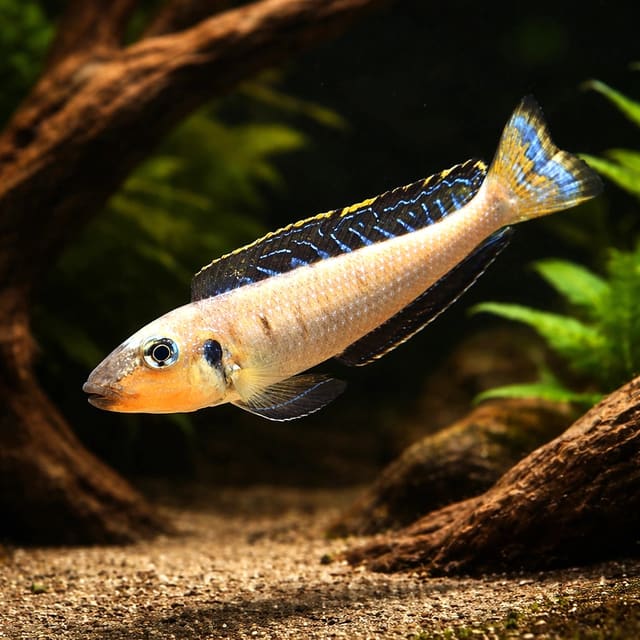
Mpulungu Sardine Cichlid is the supplier's locality-form name for Cyprichromis leptosoma, a slender, social cichlid endemic to Lake Tanganyika. Unlike a cave-defending cichlid that spends most of the day close to rock, this species uses the open water above rocky slopes and feeds on drifting plankton. In a thoughtfully designed aquarium, a group brings constant, light movement to the upper and middle levels while rock- or shell-oriented neighbours occupy other zones.
The name is kept in two parts for accuracy. Cyprichromis leptosoma is the accepted species; “Mpulungu” is the supplied locality-form label. That label helps a keeper compare forms, while the production and collection history of this stock remains unknown. This page describes the accepted species and the exact sale offer without claiming a stock origin.
One purchase supplies one live fish in the chosen dispatch grade. The established choices are 3–4 cm, 4–5 cm, 5–6 cm and XL. XL is a supplier grade and has no guaranteed centimetre measurement. Static page copy cannot say which grade is available at the moment you visit. The size you select is the size supplied, not the adult size. Plan the aquarium around an adult group, not the juvenile or subadult measurement on the order.
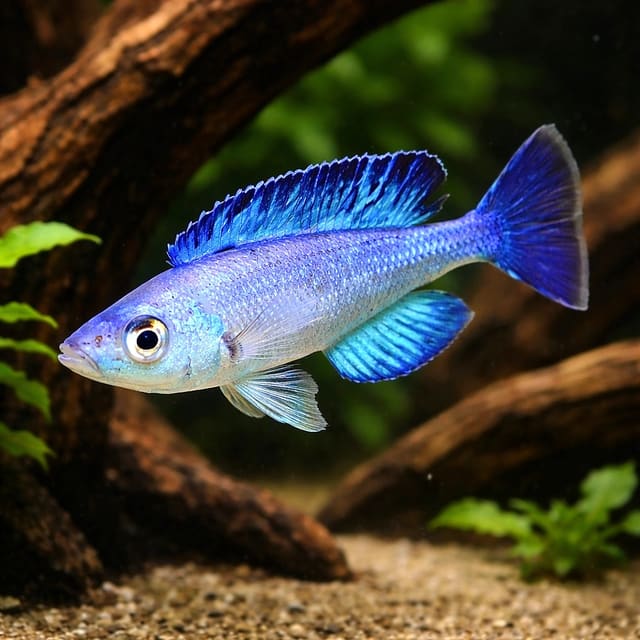
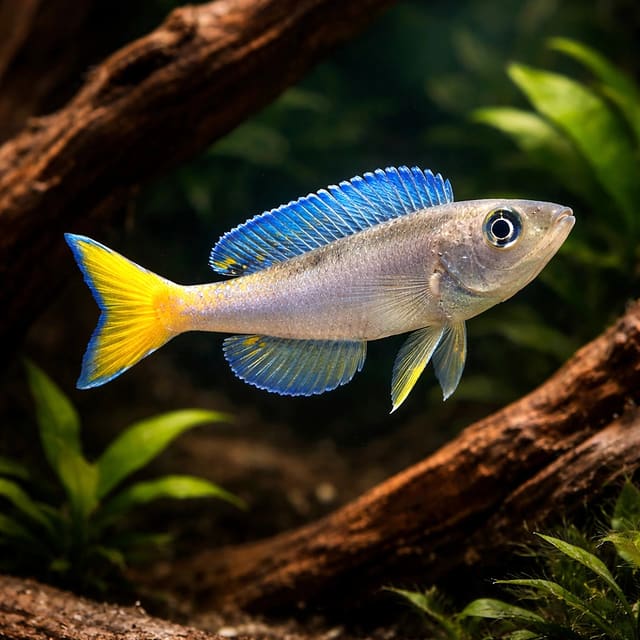
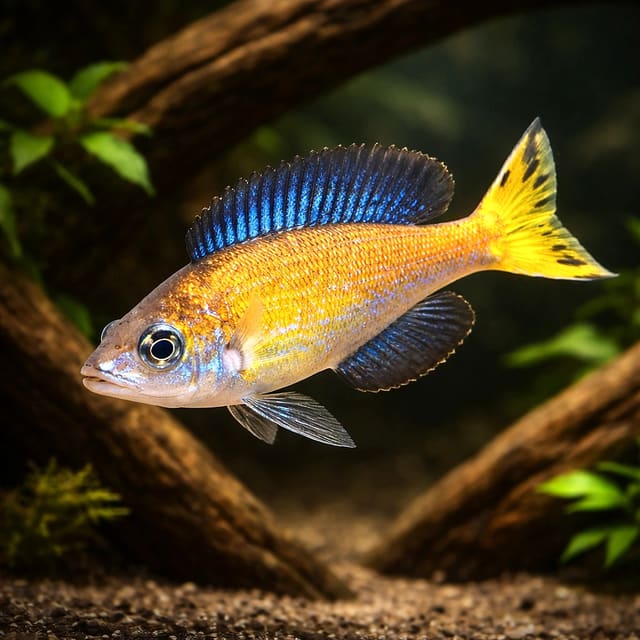
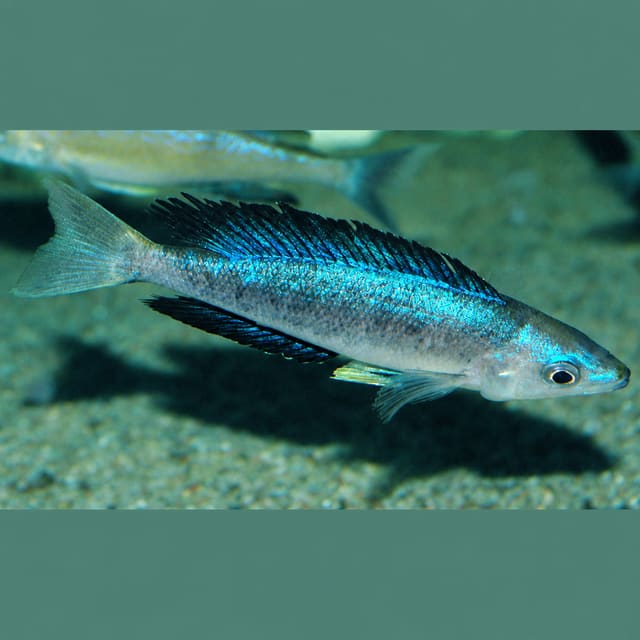
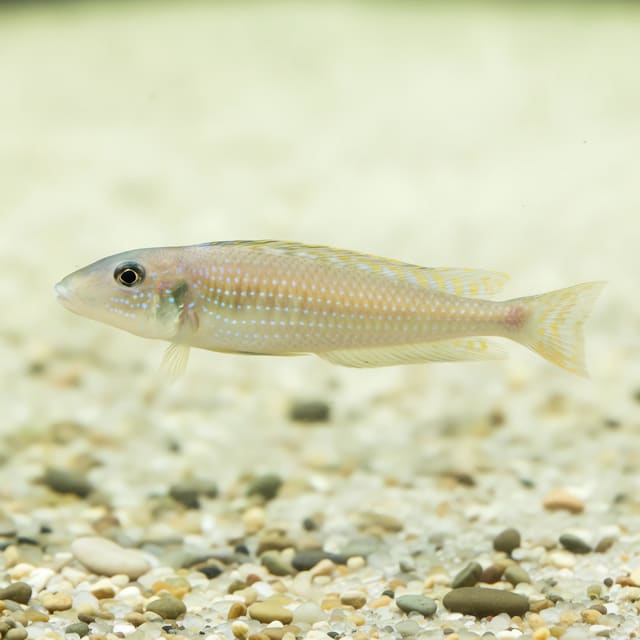
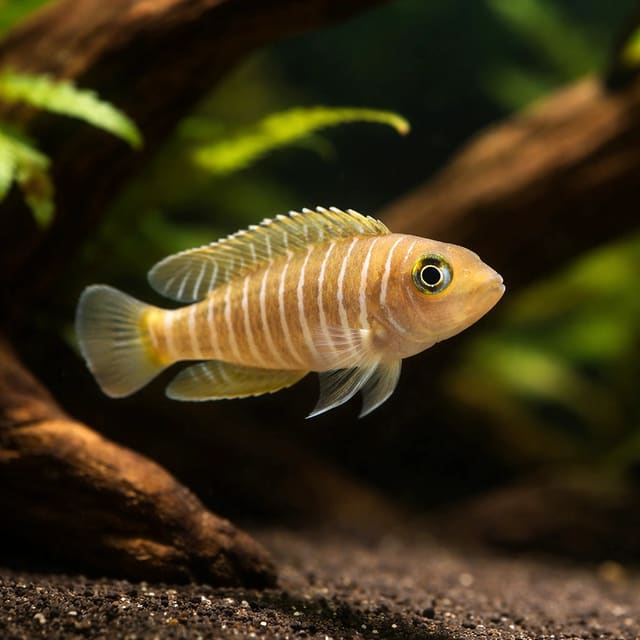
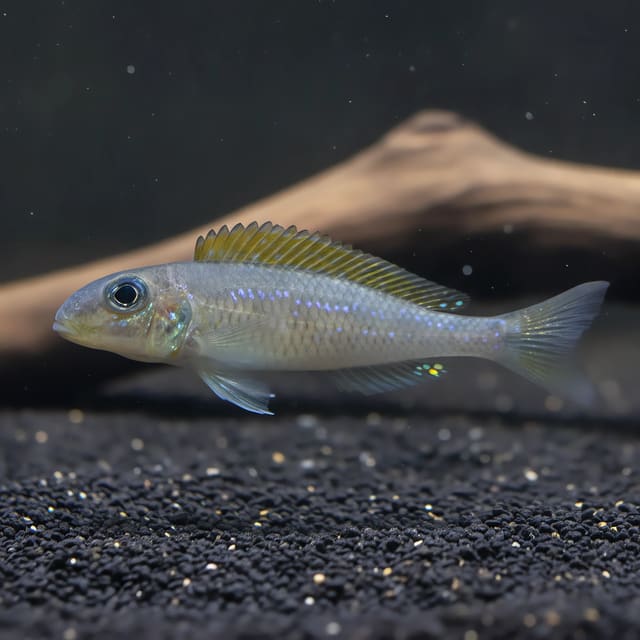
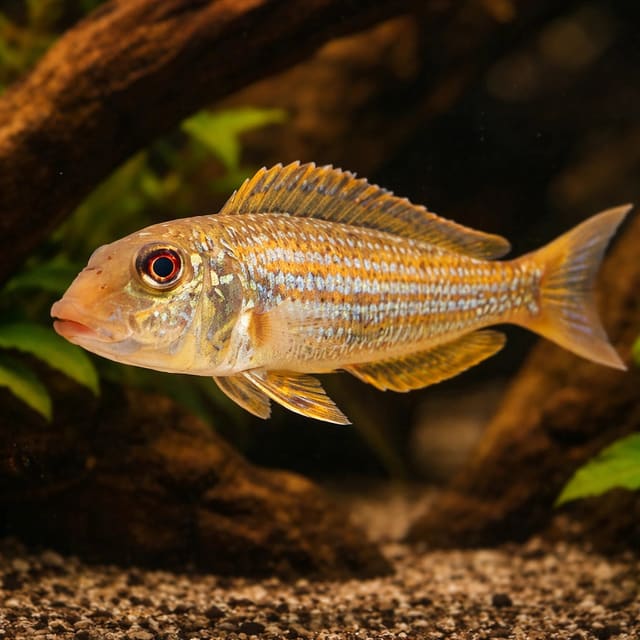
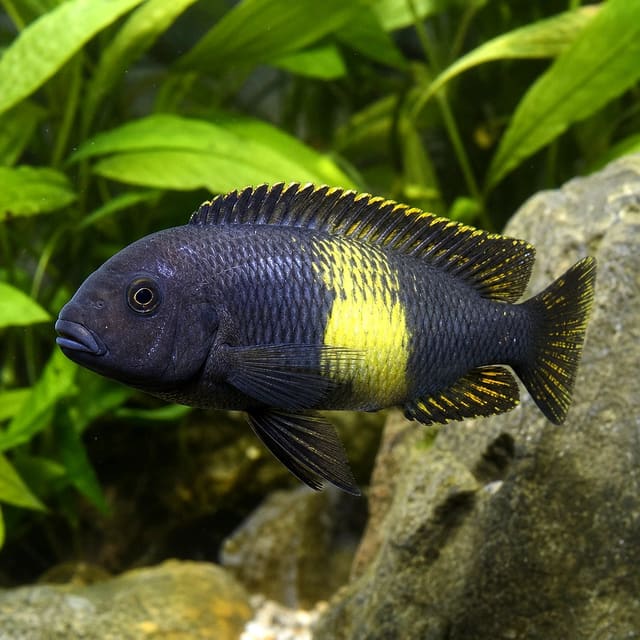
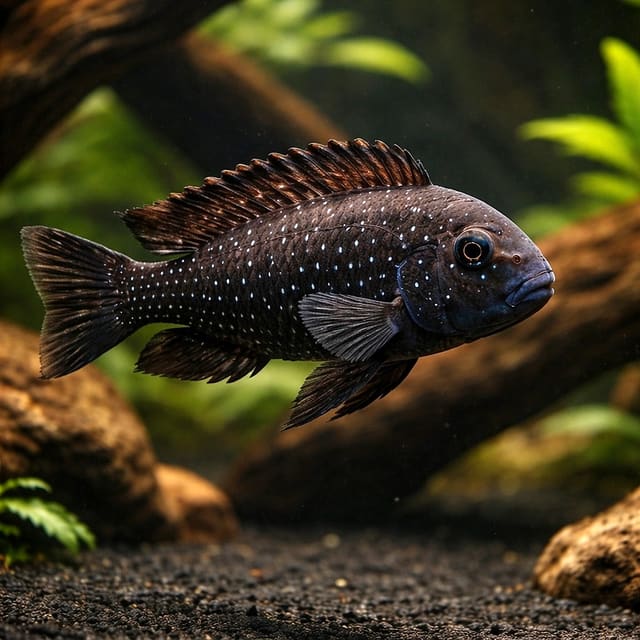
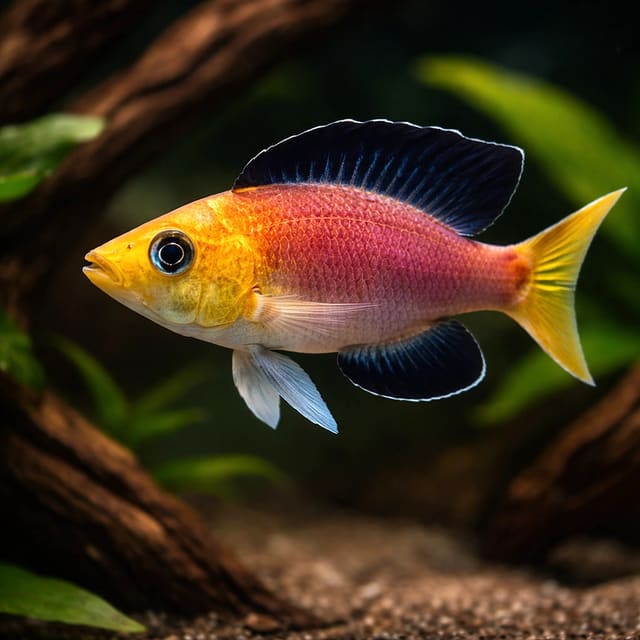
This product does not guarantee male, female, pair or sex ratio. Sex is guaranteed only when the selected option explicitly states male or female. This Mpulungu Sardine Cichlid listing has no sex-guaranteed option. Mature males of the species are more colourful than females, but that biological pattern is not a promise about the fish supplied. Colour in a gallery scene cannot establish sex, age, future colour or exact specimen, and a two-fish scene does not change the sale unit from one fish.
The species is gregarious. Seriously Fish recommends a shoal of at least eight and notes that larger groups can be worthwhile when the aquarium has enough adult swimming room. Buying one because the product is sold individually would not meet that social guidance; purchase quantity and welfare group size are separate decisions. Prepare the whole group, biological capacity and quarantine plan before ordering rather than adding solitary fish one at a time to an unsuitable tank.
| Accepted species | Cyprichromis leptosoma |
|---|---|
| Trade/locality label | Mpulungu; stock collection history remains unknown |
| Sold unit | One live fish in the selected dispatch grade |
| Dispatch grades | 3–4 cm, 4–5 cm, 5–6 cm and XL |
| Social plan | At least eight of the species, with more only where adult space permits |
| Aquarium footprint | Species guidance begins at a 120 × 45 cm base; the 120 × 45 × 45 cm example is about 243 litres |
| Best suited to | Intermediate keepers able to maintain stable hard, alkaline water and a peaceful Tanganyika community |
The adult-size records need careful reading. FishBase records 11 cm total length for male/unsexed fish, while Seriously Fish gives 125 mm standard length. Standard length excludes the tail; total length includes it. These numbers come from different records and potentially different form coverage, so they must not be averaged, converted casually or presented as though the numerically larger figure automatically has the larger measurement scope. Both remain labelled in the care section.
This is an intermediate store-suitability choice. The fish itself is described as peaceful, but its welfare depends on a proper group, a long open-water footprint, a secure lid, stable Tanganyika chemistry, appropriately small food and companions that will not dominate it. If this is your first mature aquarium project, use the tropical tank setup guide to understand cycling before attempting a specialist lake community.
Gallery images have been digitally enhanced to improve image quality. Natural colour, pattern, size and maturity can vary between live animals.
A successful Cyprichromis leptosoma aquarium is designed around open water and group behaviour. This species is not large in the way a frontosa is large, yet eight or more active adults need horizontal room, clean oxygen-rich water and fair access to small foods. The long footprint, social group and water stability matter more than filling the tank with elaborate rockwork.
FishBase gives a maximum of 11.0 cm TL for male/unsexed fish. TL means total length, measured to the end of the tail. Seriously Fish lists 125 mm SL. SL means standard length, measured without the tail. The source values should remain exactly as recorded because there is no approved conversion for this page and the Seriously Fish profile discusses several geographical forms, including jumbo-labelled fish.
| FishBase record | 11.0 cm TL, male/unsexed maximum |
|---|---|
| Seriously Fish record | 125 mm SL; sex/sample scope not stated in the reviewed summary |
| Dispatch sizes | 3–4 cm, 4–5 cm, 5–6 cm and XL supplier grade |
| How to use them | Keep each adult record labelled; never treat a dispatch grade as final size or merge SL and TL into one number |
For practical planning, use the sourced adult footprint and leave margin. The care profile starts with a 120 × 45 cm base and gives a 120 × 45 × 45 cm example of about 243 litres. A larger mixed community or a group above the minimum needs more room. Avoid selecting the smallest tank that can be made to match a single volume figure; the open-water length and width are central to how the fish uses space.
Seriously Fish describes the species as very gregarious and advises a shoal of at least eight. In nature, Cyprichromis occur in large groups; in the aquarium, the point of the minimum is to allow normal social interaction and spread attention. A bigger group can produce a more confident display, but only if the aquarium can support the adults. Do not solve timid behaviour by adding fish beyond the filter's capacity.
Plan the whole group before purchase. Eight fish at a small dispatch grade are not eight tiny fish forever. Reserve enough adult swimming room, estimate the full feeding load and make sure each individual can reach food. If buying the group over more than one order, consider quarantine, existing hierarchy and size differences. A much smaller newcomer may be physically safe yet lose every meal to established fish.
Males can display in three-dimensional territories in open water and may jump during spawning activity, so fit a secure cover. Close cable and pipe gaps without blocking safe ventilation. A lid is not optional decoration here: it is part of keeping an active upper-water species inside the aquarium.
Start from the 120 × 45 cm base. The care profile's 45 cm-high example reaches about 243 litres, but height alone cannot replace swimming length or width. Place rock piles close to the substrate and towards the rear or ends so compatible rock-dwelling fish can form territories without taking over the central water column. Leave a broad lane through the upper and middle levels.
Stable rockwork matters even though the sardine cichlids are not dedicated cave residents. Build heavy structures on a secure base and make sure digging neighbours cannot undermine them. Sand is a practical substrate for a Tanganyika community, but the exact substrate should match the needs of the lower-level species as well. Avoid tall décor that repeatedly funnels the shoal through a narrow channel.
Flow should keep the water clean and well oxygenated without turning the whole swimming space into a treadmill. Seriously Fish's example for an approximately 243-litre aquarium uses turnover of four to five times the volume per hour, around 970–1215 litres per hour. That is a reference point, not a guarantee about a particular filter: real flow drops as media loads, pipework adds resistance and the aquascape redirects water. Check circulation in the finished aquarium and maintain the equipment.
Seriously Fish gives 24–27°C, pH 7.8–9.0 and 10–25 dGH as aquarium conditions for Cyprichromis leptosoma. These are the main routine husbandry values used in the care card. FishBase separately records an environmental range of 23–25°C, pH 8.0–9.0 and 9–19 dH. The FishBase figures describe the recorded natural environment; they are kept separate from the care profile rather than blended into a new range.
| Routine aquarium temperature | 24–27°C from the species care profile |
|---|---|
| Routine aquarium pH | 7.8–9.0 from the species care profile |
| Routine aquarium hardness | 10–25 dGH from the species care profile |
| FishBase environment | 23–25°C, pH 8.0–9.0 and 9–19 dH; retained as a differently scoped wild record |
| Ammonia and nitrite | 0 mg/L |
Stability is more important than repeatedly chasing the middle of a range. Tanganyika fish need mineral-rich alkaline water with enough buffering capacity to resist a pH crash. Test your tap water, aquarium pH, general hardness and carbonate hardness so you understand the starting point and the change between water-change days. The water chemistry guide explains what each test measures, while the water matcher helps compare actual readings with the sourced care range.
If your water needs conditioning beyond dechlorination, establish a repeatable method before buying the fish. Sudden increases or decreases in temperature, pH or mineral content can be stressful even when the final reading looks acceptable. Prepare replacement water consistently, match temperature closely and avoid adding concentrated buffers directly around fish.
No fish belongs in an uncycled aquarium. Fish release ammonia, biological filter bacteria convert it to nitrite and then nitrate, and both ammonia and nitrite must remain at zero. A newly filled tank with a running filter is not automatically mature. Confirm the cycle with tests and understand how the filter was seeded and fed before relying on it.
A shoal spreads feeding through the water column, but all uneaten food and waste still reach the same filter. Provide strong gas exchange and dependable biological media. Keep surface movement clear, inspect air pumps and outlets daily, and clean mechanical stages before blocked media reduces circulation. When reusable biological media needs attention, rinse it gently in removed aquarium water, not under the tap.
OATA broadly recommends a 25% partial water change at least once every week for African lake cichlids. Use that as a sensible starting routine and adjust according to measured nitrate, stocking and feeding. Condition new water, vacuum accessible waste and avoid disrupting the entire filter and substrate on the same day. Recording results is more useful than relying on memory: a slow change in nitrate, pH or hardness becomes obvious on paper before it causes a crisis.
FishBase describes Cyprichromis leptosoma as a drifting zooplankton feeder and also notes shellfish in the wild diet. Seriously Fish emphasises the small mouth and advises that live and frozen varieties should form the bulk of the aquarium diet, even though most foods are accepted. Food size and delivery through the water column are therefore central.
Offer appropriately small items that remain available long enough for the whole group to feed. Suitable live or frozen foods can be alternated with a high-quality fine prepared food for nutritional consistency, but avoid large chunks that cannot be swallowed. Spread several small pinches across the surface rather than dropping one clump into a dominant fish's feeding lane.
Watch each fish during the first weeks. A newly introduced or lower-ranking fish may hang back while confident fish take the first food. Check that its belly and body condition remain appropriate and that it actually swallows food. Feeding more indiscriminately is not the answer if one fish is excluded; change distribution, reduce competition or adjust the group safely. Remove uneaten food before it decays.
Several measured feeds can suit a plankton-feeding pattern better than one oversized meal, but the correct amount depends on food density, fish size and system capacity. Avoid promising a rigid schedule from a general page. The practical test is that all fish feed, little remains, body condition stays healthy and water quality is stable.
Prepare the mature aquarium, quarantine space and group plan before dispatch. On arrival, keep activity around the aquarium calm and inspect the closed bag and follow the current delivery acclimation method. Match temperature and water gradually; do not pour transport water into the aquarium. A fish may show subdued colour after travel, so judge immediate welfare by breathing, balance, body condition and response rather than expecting display colour.
Introduce the group into open, calm water with routes away from established territories. Delay a heavy meal until the fish have settled, then use small food that reaches them easily. Watch the lid gaps because a startled upper-water fish can jump. Over the following days, check that every individual joins the group, feeds and is not pinned behind décor.
Males are generally more colourful than females, and the species occurs in different geographical colour forms. That makes a mature shoal visually appealing, but it also creates a common buying mistake: assuming that a bright gallery fish guarantees a male or a future colour pattern. This offer has no sexed choice. Juveniles may be difficult to sex, and adult colour is influenced by social position, condition and stress.
Cyprichromis leptosoma is a maternal mouthbrooder. Females carry developing eggs and young in the mouth. Breeding behaviour may occur in a settled group, with males displaying in open water, but this listing does not provide a breeding recipe. Protecting a holding female and raising fry require specialist planning, suitable space and a mature rearing system.
Do not house different locality forms or closely related Cyprichromis together merely for colour variety. The species profile warns that forms can hybridise in aquaria. Keep locality identity meaningful and choose related products as alternatives to compare, not as automatic companions.
If behaviour or appetite changes, test the water first and observe the whole aquarium. Sitting apart, rapid breathing or refusing food can have several causes, including poor water, aggression or illness. Seek experienced aquatic-veterinary or retailer help rather than guessing at a treatment. No lifespan or disease-treatment promise is supported for this offer.
Cyprichromis leptosoma is described as very peaceful, but peaceful does not mean suitable for every community aquarium. It needs hard, alkaline Tanganyika water, a social group and unobstructed upper-water space. The safest companions use different levels, do not rush every feeding and cannot swallow or intimidate the sardine cichlids.
Seriously Fish names suitable rock-dwelling Julidochromis, Altolamprologus and shell-dwelling Tanganyika species as good possibilities because they occupy different aquarium zones. Each choice remains conditional. A shell dweller needs enough shells and floor territory; a rock dweller needs secure caves and boundaries; the Cyprichromis shoal still needs a clear water column above them.
| Potentially suitable | Peaceful Lake Tanganyika species using lower, rock or shell zones, including appropriately planned Julidochromis, Altolamprologus and shell dwellers |
|---|---|
| Use caution | Territorial Tanganyika fish, fast feeders, large size differences and any second Cyprichromis form |
| Avoid | Boisterous Malawi mbuna, large predators, soft-water species and fish that dominate the open water |
| Core rule | Match chemistry, adult size, feeding speed, territory and swimming level for every species |
OATA broadly advises building African lake communities from the same location and warns against mixing Malawi and Tanganyika cichlids because their behaviour differs. The explicit species profile reinforces that point by saying not to keep Cyprichromis leptosoma with boisterous mbuna. Similar water hardness is not enough to overcome incompatible social behaviour.
Browse the African cichlid collection to identify possibilities, then research each animal's exact adult size, territory and diet. A collection page is not a compatibility chart. The related products attached to this listing are alternative sardine-cichlid forms to compare, not a recommendation to keep those forms together.
A tank can have enough litres yet still be incompatible if large rocks, roots or tall décor divide the central water column. Keep most hardscape low and peripheral. Watch how proposed rock dwellers defend the upper edge of their territory and whether shell dwellers remain near the floor. The sardine cichlids should be able to cross the aquarium without being intercepted at every pass.
Feeding speed is equally important. A robust companion that shares the water chemistry may take all small drifting foods before the shoal reaches them. Distribute food widely and monitor body condition. Avoid large predators even if they appear calm while young; compare the predator's adult mouth size with the smallest sardine cichlid grade and the species' eventual body depth.
Keep at least eight Cyprichromis leptosoma. Males can display and pursue rivals or females, but a proper group and adequate open space allow attention to spread. The offer does not guarantee sex, so do not order an assumed ratio from colour or size. If the balance becomes clear with maturity, assess persistent pressure and welfare rather than trying to force a breeding arrangement.
Do not mix locality forms simply to increase variety. The care profile warns that forms can hybridise. A buyer comparing Mpulungu with Jumbo Yellow or Kitumba should choose the form that suits the project and keep its identity clear rather than treating them as a colour assortment.
Respond to a fish repeatedly isolated behind equipment, clamped fins, missed meals, damaged scales or frantic dashing at the lid. Also notice quieter problems: a fish can be chronically excluded without obvious injury. Keep a mature separation option available before adding territorial tank mates, and do not wait for severe damage to confirm that a stocking plan has failed.
FishBase records 11 cm total length for male/unsexed fish, while Seriously Fish records 12.5 cm standard length. Standard length excludes the tail and total length includes it, so keep both records labelled and do not convert them into one unqualified maximum.
Use at least a 120 × 45 cm base. The 120 × 45 × 45 cm example is about 243 litres, but a larger group or mixed Tanganyika community needs more space; preserve broad open upper and middle water.
Keep at least eight. Larger groups can be worthwhile when the aquarium has enough adult swimming room, filtration and oxygen, but one fish should not be kept alone simply because each purchase supplies one animal.
It is an intermediate store-suitability choice. The fish is peaceful, but the keeper must provide a proper shoal, long open-water footprint, secure lid, mature filtration and stable hard alkaline water.
It is a small-mouthed plankton feeder. Seriously Fish advises live and frozen foods as the bulk of the diet even though most foods are accepted; offer appropriately small items through the water column and make sure every fish feeds.
Species-level aquarium guidance is 24–27°C, pH 7.8–9.0 and 10–25 dGH. FishBase's 23–25°C, pH 8.0–9.0 and 9–19 dH are retained separately as wild-environment records, kept separate rather than blended into one target.
It is described as very peaceful for a cichlid, although males display within the shoal. Avoid boisterous mbuna, predators and companions that dominate the open water or feeding zone.
Peaceful Lake Tanganyika species using other zones can work. Seriously Fish names suitable Julidochromis, Altolamprologus and shell dwellers; every combination still needs enough separate territory, compatible adult size and fair feeding access.
Tropical Fish Co hand-packs live fish in oxygen with an insulated box and a heat pack when weather requires it, then uses a licensed live-animal courier. Follow the current delivery page, be present to receive the parcel and record the sealed parcel being opened if you need to make a Live Arrival Guarantee claim.
The FishBase species record for Cyprichromis leptosoma supports the accepted identity, Cichlidae family, Lake Tanganyika endemism, 11 cm TL male/unsexed maximum, environmental water record, gregarious open-water behaviour, zooplankton feeding and maternal mouthbrooding. Its temperature, pH and hardness values describe the recorded environment rather than a complete aquarium prescription.
The Seriously Fish species profile supplies the practical aquarium range, 120 × 45 cm base, about 243-litre example, 12.5 cm SL record, minimum group of eight, small-mouth feeding guidance and named compatibility examples. Because SL excludes the tail and TL includes it, the 12.5 cm SL and 11 cm TL records stay separate. The profile also discusses multiple geographical and jumbo forms, so the values are not used to claim an exact Mpulungu stock history.
OATA's African lake cichlid care sheet supports broad biological filtration, oxygenation, weekly-maintenance and same-lake community principles. The RSPCA's aquarium environment guidance supports mature filtration and the ammonia-to-nitrite-to-nitrate explanation.
No approved source proves the offered fish's sex, collection history, production origin, lifespan, exact centimetre value for XL or future adult colour. Those points remain open rather than being inferred from the gallery or supplier locality label.
Fulfilment terms are maintained on the current Delivery and Live Arrival Guarantee. The sealed-parcel video is claim evidence and not an animal-care step.
No reviews for this item yet. Bought one? Honest reviews only, good or bad.
What customers say about ordering from us
Easy website plenty of info on fish your buying great to pick a time slot
TRACEY DURRANT · 7 Oct 2026
Got some lovely fish thank you
Kevin Mackie · 7 Oct 2026
Reviews of our shop, collected by Judge.me, an independent third-party review collector. Newest first.