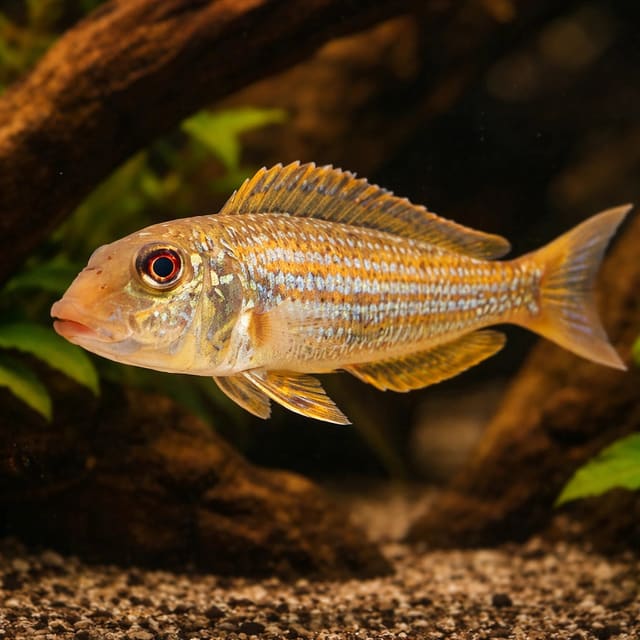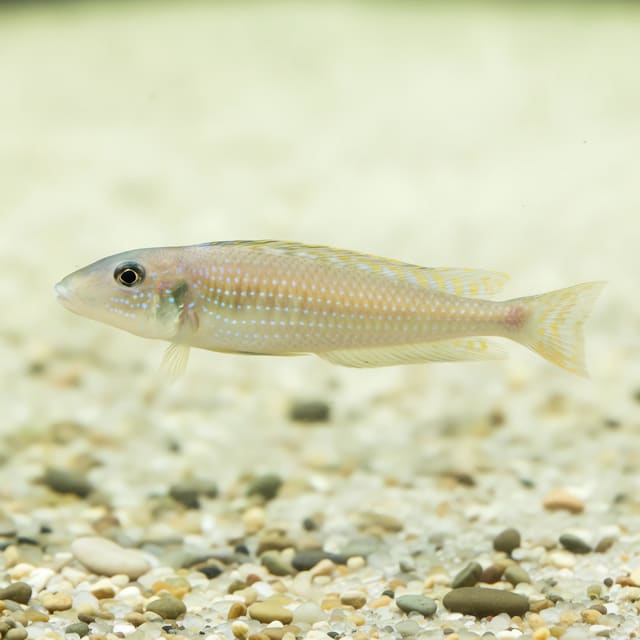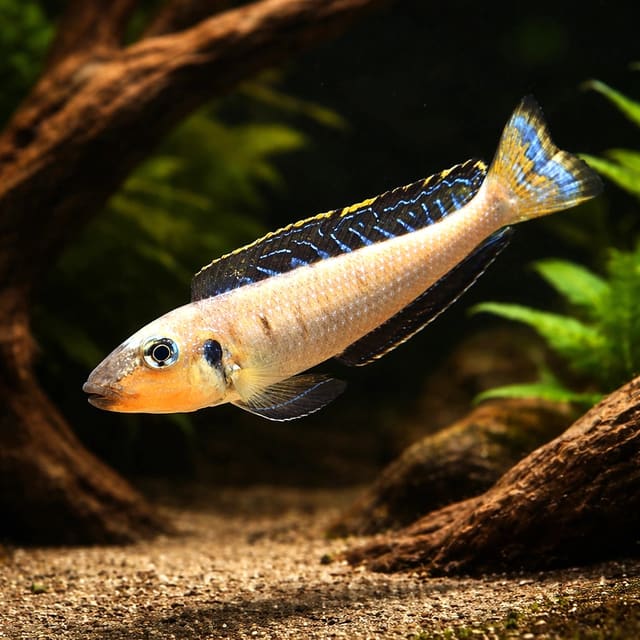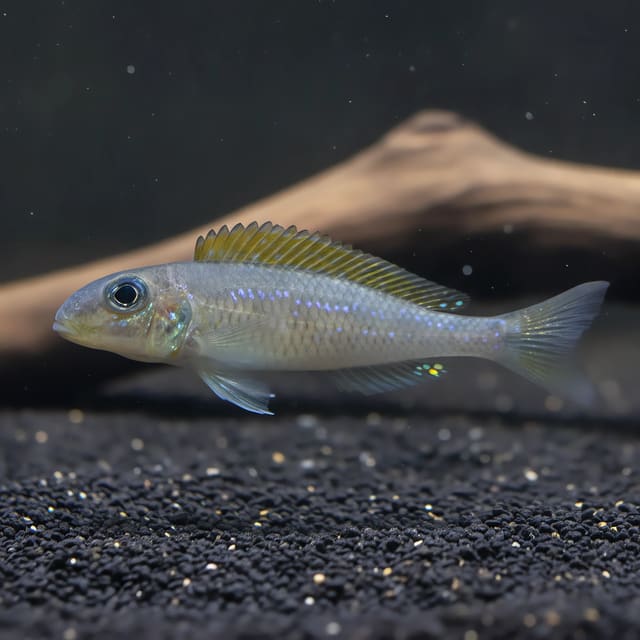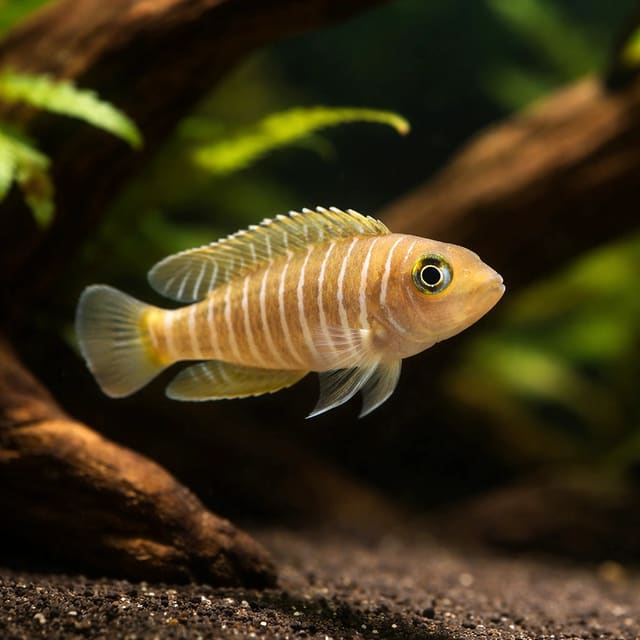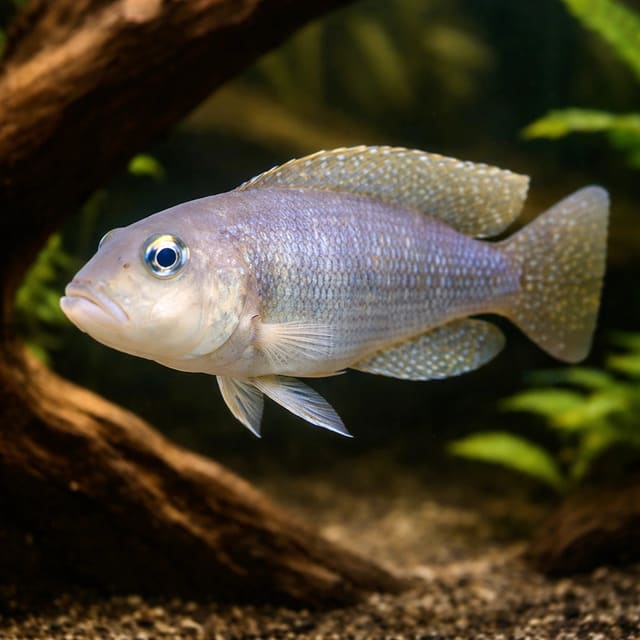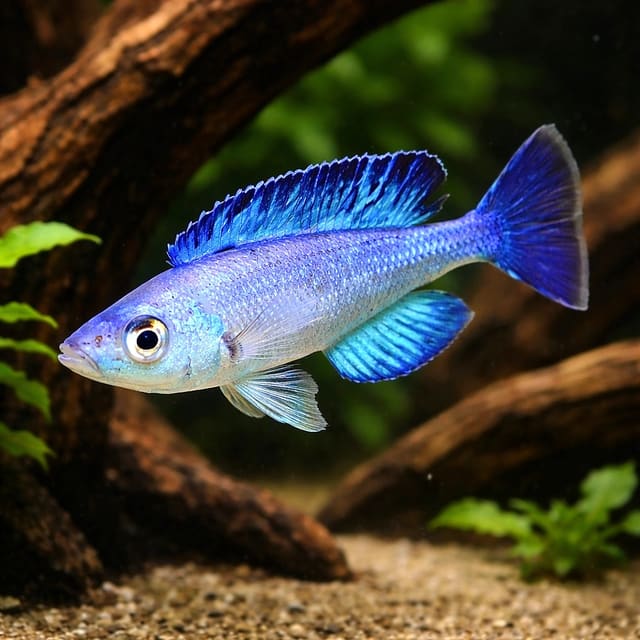
Jumbo Kitumba Sardine Cichlid (Cyprichromis sp.)
23–27°C · pH 8–8.6
From £18.99Some sizes on sale
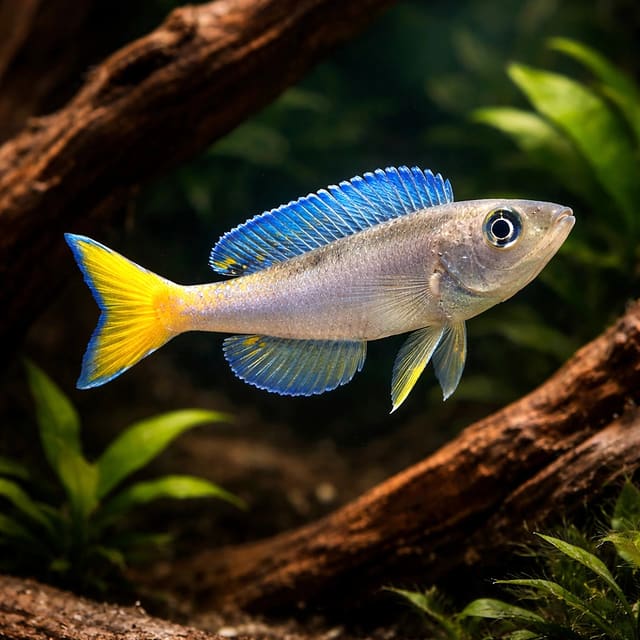
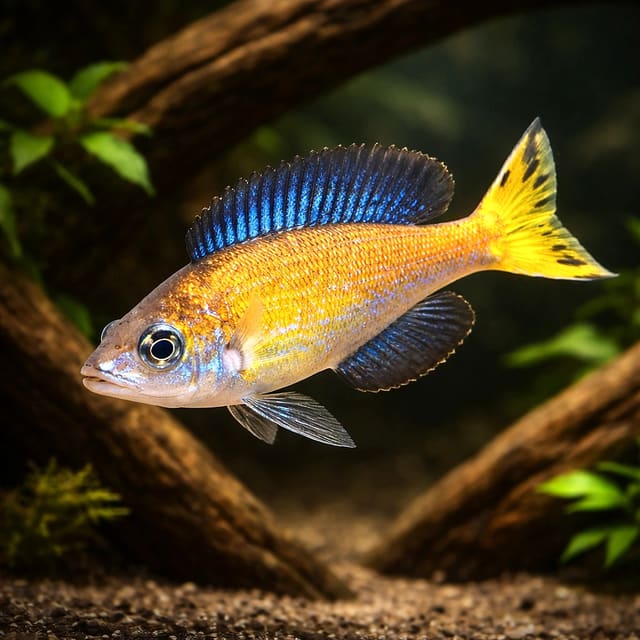
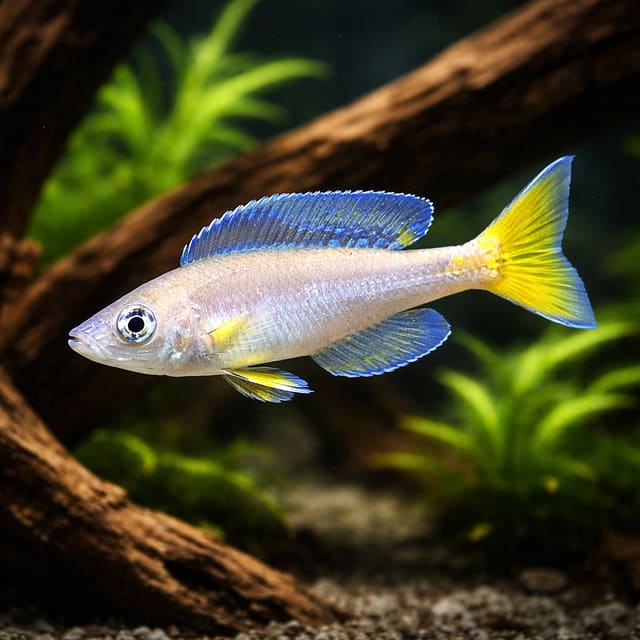
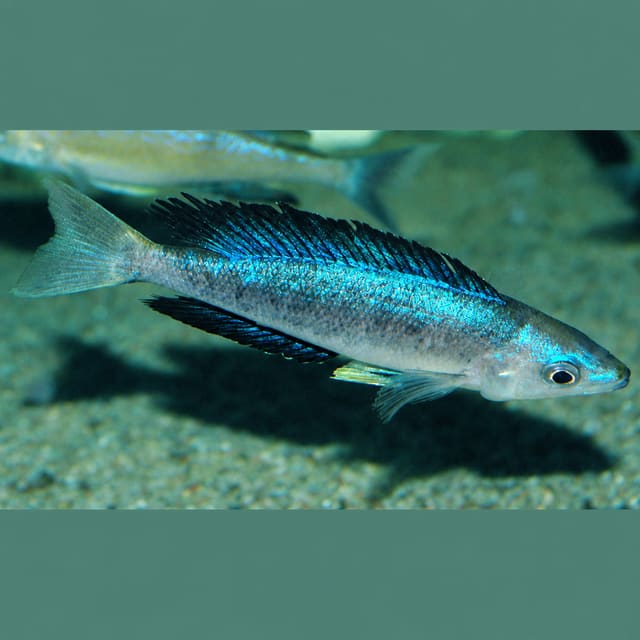
Jumbo Yellow Sardine Cichlid (Cyprichromis sp.) is an unidentified Cyprichromis trade form for a spacious, mature Lake Tanganyika aquarium. Plan hard alkaline water, open midwater, a secure cover and a substantial social group, while avoiding boisterous mbuna. One purchase supplies one live fish in the size chosen.
Cyprichromis sp.
Shoaling fish: kept in a group they feel safer, stay calmer and show their best colour.
Jumbo Yellow Sardine Cichlid (Cyprichromis sp.) is an unidentified Cyprichromis trade form for a spacious, mature Lake Tanganyika aquarium. Plan hard alkaline water, open midwater, a secure cover and a substantial social group, while avoiding boisterous mbuna. One purchase supplies one live fish in the size chosen.
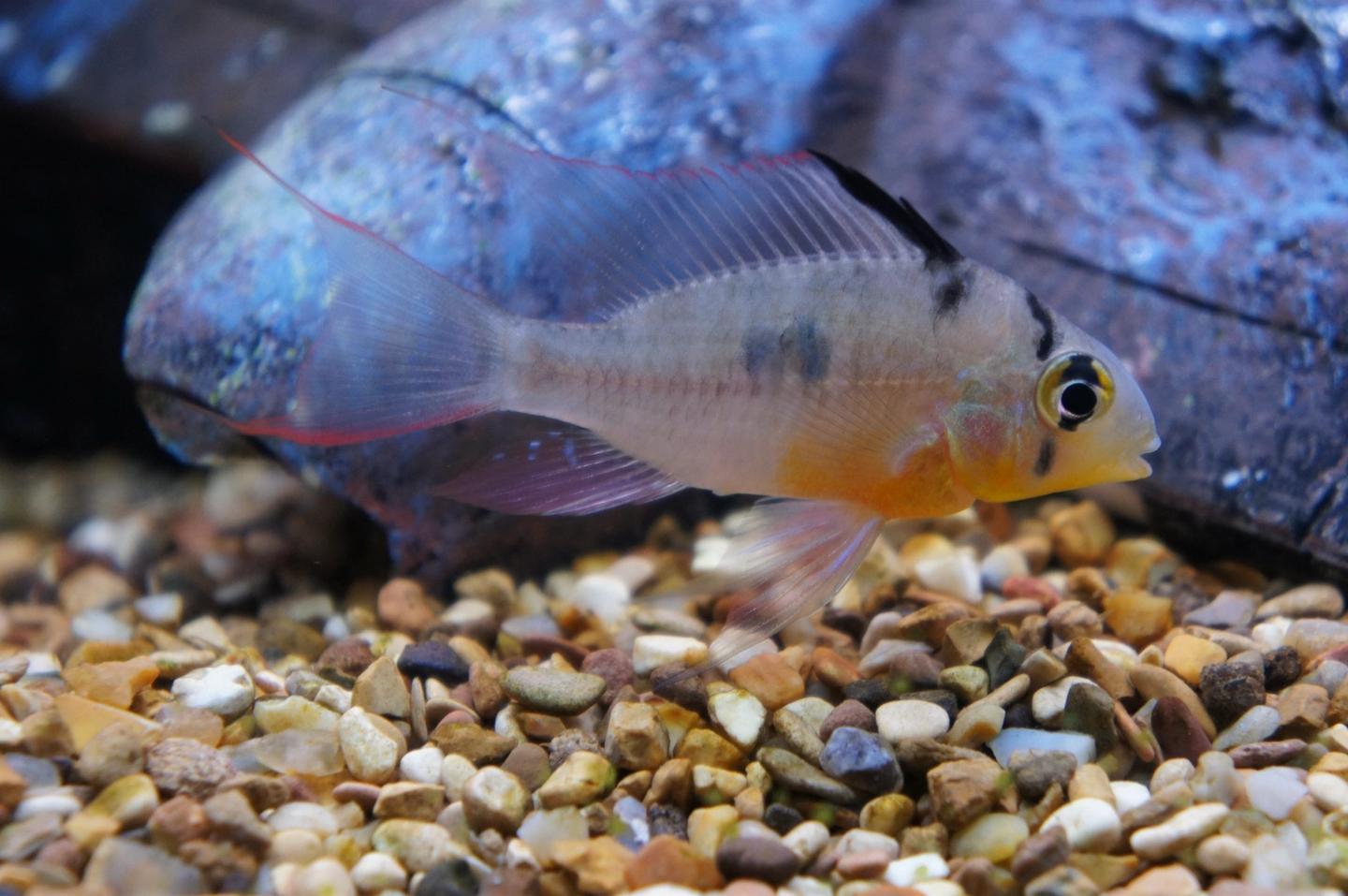
Cichlids are a family of roughly 1,800 accepted species, not one care type. Before buying, identify the exact species and source, then compare adult measurement, usable tank dimensions, social system, territory, tested water, diet and an exit plan. No family-wide minimum tank, water range or tank-mate list is safe.
Maintain these water conditions for optimal health and vibrant colors
Jumbo Yellow Sardine Cichlid (Cyprichromis sp.) is sold as one live fish per purchase, with 4–5 cm and XL sizes forming the established offer. The size you select is the size supplied, not the adult size. Build the adult aquarium before a smaller fish arrives: this is a social open-water cichlid, not a solitary ornament for spare space in a general community.
The exact species has not been identified, so the care advice here follows the genus Cyprichromis and its care group. The established trade label uses the abbreviated wording “lept. jumbo yellow”, while taxonomy safely resolves only the genus. The title therefore uses Cyprichromis sp. rather than declaring it as C. leptosoma. Water, group and aquarium figures from the Cyprichromis leptosoma profile are clearly presented as cautious care-group planning context.
| Suits | An advanced keeper with a spacious mature Lake Tanganyika aquarium, hard alkaline water, open midwater and room for a substantial social group. |
|---|---|
| Needs | Strong biological filtration, excellent oxygenation, a secure cover, a long open swimming area and calm companions using other zones. |
| Avoid | Boisterous mbuna, soft-water community fish, a solitary purchase plan and any aquarium selected only from the dispatch size. |
| Sold unit | One live fish per purchase, in the size chosen; sex is not guaranteed. |
Sex is guaranteed only when the selected option explicitly states male or female. This Jumbo Yellow Sardine Cichlid listing has no sex-guaranteed option. Do not infer sex from colour, size or a gallery image. The care-group source notes that males of C. leptosoma are more colourful, but that biological observation does not identify an individual animal or authorise a chosen sex.
Gallery images have been digitally enhanced to improve image quality. Natural colour, pattern, size and maturity can vary between live animals. The four gallery views remain part of the established presentation; appearance alone is not treated as proof of an exact species.
The World Register of Marine Species records Cyprichromis as an accepted genus in Cichlidae. That supports the parenthetical Cyprichromis sp.; it does not confirm C. leptosoma, a geographical form, a lineage or a precise adult maximum for the fish sold here. The yellow and jumbo wording remains a trade description rather than taxonomic evidence.
The useful biological context comes from the FishBase account for Cyprichromis leptosoma. It describes a gregarious Lake Tanganyika cichlid living off rocky slopes and feeding on drifting zooplankton. That context fits the Tanganyika trade category and explains why this listing prioritises a social group, open midwater and appropriately small foods, but the page keeps the species boundary visible throughout.
An unidentified species needs conservative planning rather than false precision. Do not use the 4–5 cm dispatch size as an adult measurement, and do not translate XL into a centimetre figure that the offer does not provide. Plan from the long 120 × 45 cm care-group footprint, then leave capacity for the complete group and its companions. A spacious long-term setup gives the fish room from the start instead of relying on a cramped temporary plan.
Compare the wider African cichlid collection only as a shopping route. Fish from different lakes can have very different behaviour even when they all prefer mineral-rich water. This product belongs in a Tanganyika-focused plan rather than being mixed with assertive Malawi cichlids because both are labelled African.
The Seriously Fish profile for Cyprichromis leptosoma gives a base of 120 × 45 cm and approximately 243 litres. Use those dimensions as the care-group baseline for this unresolved Cyprichromis offer, not as proof of an exact minimum for an identified species. The profile puts swimming space ahead of decoration because the fish uses upper and open water. A tall aquarium with little length is not equivalent to a long footprint that lets a group spread out.
Arrange rock piles low enough to preserve open midwater while still giving Tanganyika rock-dwellers their own territory near the substrate. Leave clear routes along and across the aquarium. The goal is not a bare box: structure near the bottom creates refuge and zonation, while the upper area remains available to the Cyprichromis group. Secure every stone before fish enter, because later rearrangement can disrupt both safety and established boundaries.
The C. leptosoma profile advises a shoal of at least eight and says larger groups are worthwhile where the aquarium allows. Treat that as care-group guidance for social planning. It means the purchase decision must cover several fish and their adult space; one animal should not be left alone simply because one purchase supplies one fish. Increase the total only when filtration, oxygen, feeding access and usable swimming room all remain adequate.
A mature biological filter is essential before the group arrives. If this is a new system, follow the first tropical tank guide and confirm zero ammonia and nitrite through testing. Each added fish increases waste. Introduce stock in a deliberate sequence and test again after feeding and stocking increase rather than assuming a large volume cannot become unstable.
View the finished layout from the ends as well as the front. A group needs depth to pass and display without every movement becoming a collision. Check the lid around cables and pipework, because a small gap can defeat an otherwise secure cover. Direct strong returns so they oxygenate and circulate without pinning fish into one region. The useful aquarium is the water the group can actually occupy after décor and equipment are installed.
For day-to-day planning, use the Cyprichromis leptosoma care-group profile: 24–27°C, pH 7.8–9.0 and 10–25 dGH. OATA's broad African-lake cichlid guidance overlaps at 23–27°C, pH 8.0–8.6, general hardness 12–18°dH and carbonate hardness 10–15°dKH. These ranges give a practical hard alkaline target while the species remains unresolved; they are not a species-specific optimum for this exact fish.
| Working temperature | 24–27°C from the C. leptosoma care-group profile |
|---|---|
| Working pH | 7.8–9.0 from the same profile |
| General hardness | 10–25 dGH from the same profile |
| Ammonia and nitrite | Zero mg per litre under OATA group guidance |
| Nitrate | No more than 20 mg/l above the normal tap-water level under OATA guidance |
Read the water-chemistry guide, then compare measured source and aquarium values with the plan using the water matcher. Hard alkaline systems depend on consistent mineral content and buffering. Measure the tap supply before changing it, identify why a value has moved and avoid abrupt chemical corrections.
The RSPCA aquarium guidance explains that a working biological filter converts toxic ammonia to nitrite and then nitrate. OATA recommends oversized filtration and vigorous aeration for African lake cichlid communities. Select equipment for the final social group, maintain strong gas exchange and ensure rockwork does not create stagnant pockets. Clear water alone does not confirm that ammonia and nitrite are absent.
OATA strongly recommends a partial water change of 25% at least once every week and regular testing at least weekly. Treat replacement tap water for chlorine or chloramine and match its temperature closely. If filter media needs cleaning, rinse it lightly in water removed from the aquarium; never run it under the tap. Check intakes, impellers, air flow and surface movement before leaving the tank unattended.
Record the source-water nitrate alongside the aquarium result, because OATA's ceiling is relative to the normal tap-water level. A rising trend can reveal excess feeding, inadequate maintenance or more stock than the system can support. Confirm an unusual result, then correct the cause calmly. Sudden large changes to temperature, pH or mineral content can add stress even when the final number looks desirable.
Measure temperature at the fish's swimming level with an independent thermometer. A heater dial is a control setting, not a water reading. In warm weather, watch the upper end of the range and maintain strong surface movement; in a cold room, make sure the heater can hold a stable value without exposing fish to hot spots. The important outcome is even water through the occupied space.
Hardness and carbonate hardness help explain why the system resists a fall in pH. Test both source and aquarium rather than assuming every hard-water-looking setup is adequately buffered. Rock or substrate may influence chemistry, but visual appearance cannot replace measurement. Choose a steady method the whole Tanganyika community can share, then keep water changes consistent enough that replacement water does not create a sudden chemistry swing.
Circulation needs to serve both filtration and the fish. Direct returns across the surface for gas exchange, then check that open-water animals can swim normally throughout the tank. Waste settling behind a rock pile identifies an area for maintenance or flow adjustment. Strong equipment is useful only when its pattern does not confine the group to one sheltered corner.
FishBase describes Cyprichromis leptosoma taking drifting zooplankton and also shellfish. Seriously Fish calls it a zooplankton feeder with a small mouth and advises watching closely to ensure it receives enough food, especially after introduction. Use that biology as care-group context for this Cyprichromis listing: choose appropriately sized complete foods that remain available in open water, with safe small frozen or live variety rather than large hard items.
Distribute the ration across the swimming zone so one bold fish cannot intercept everything. Observe each animal from the side and confirm that it approaches, takes and swallows food. Remove leftovers where practical. Uneaten food trapped behind rockwork breaks down into extra waste, while simply adding more can worsen water quality without helping a fish that is being excluded.
OATA's African-lake sheet notes that dietary needs vary greatly among cichlids. Its twice-daily feeding limit is broad group guidance, while the species profile supplies the more relevant zooplankton-feeding context here. Do not borrow a high-algae mbuna diet merely because both fish come from an African lake, and do not treat rich animal foods as unlimited because the fish feeds on plankton.
A loss of appetite is useful evidence that something has changed. Check temperature, ammonia, nitrite, oxygenation, equipment and social pressure before choosing a treatment. One fish missing food may be excluded by the group; several fish refusing food together may point towards water or equipment. Record the observation and seek qualified help when the cause is unclear.
The aquarium should be mature, heated, covered and tested before dispatch. The current delivery and Live Arrival Guarantee policy controls packing, receiving and claim conditions. Tropical Fish Co hand-bags fish in pure oxygen, uses an insulated poly box and adds a heat pack when the weather calls for one. Tracking and the confirmed Thursday or Friday delivery date are sent by email, and a licensed live-animal courier carries the parcel.
Someone must be present to receive live fish, and the parcel must be opened and inspected on the day it arrives. Report a problem the same day with the order number and continuous video. The policy page carries the full current terms.
During the first days, feed measured portions and observe whether every fish enters open water. Keep normal filtration and aeration running. Avoid redesigning the aquarium around a shy arrival unless a safety problem exists; a social fish may need time to learn the group's movements. Persistent isolation, rapid breathing, loss of balance or repeated chasing calls for water tests and a safe intervention.
Seriously Fish describes Cyprichromis leptosoma as very peaceful and warns against boisterous fish such as mbuna. It names Tanganyika species that use different zones—suitable rock-dwellers and shell-dwellers—as possible companions. Apply that as care-group guidance rather than a guarantee for every animal. The exact candidate still has to match hard alkaline water, adult size, feeding speed and the available footprint.
| Potentially suitable | Peaceful Lake Tanganyika cichlids using lower rock or shell zones, after the exact species and full adult requirements are checked. |
|---|---|
| Avoid | Boisterous Malawi mbuna, aggressive cichlids, soft-water community fish and animals likely to dominate open-water feeding. |
| Monitor | Any fish kept away from the shoal, excluded at meals, breathing rapidly, hiding continuously or repeatedly chased by displaying males. |
OATA's broad guidance recommends keeping African lake species with others from the same location and cautions against mixing Malawi and Tanganyika cichlids because behaviour differs. That geographic screen is useful, but “Tanganyika” alone is not enough. A large predator, an assertive territory-holder and a small open-water feeder can all come from the same lake while needing very different social arrangements.
Choose companions that leave enough midwater volume for the whole Cyprichromis group. Rock-dwellers should have lower territories that do not block the swimming route. Shell-dwellers need suitable substrate and shells without forcing the open-water fish into a narrow strip. Feed in a way that each zone receives appropriate food and confirm that fast bottom or rock fish are not intercepting every small item.
Male C. leptosoma form open-water display territories in the species profile. This listing does not guarantee species or sex, but the behaviour supplies a reason to provide depth, group space and observation. A peaceful label does not mean no chasing occurs. Look for whether a fish can leave a display area, rejoin the group and feed. Repeated pursuit with no escape is a welfare problem even if fins remain intact.
Introduce more peaceful fish before more assertive ones and watch through several feeding periods. Keep a cycled separation option rather than relying on décor to solve every interaction. Compatibility can change as fish mature, so review the stocking plan when body size, colour or territorial behaviour develops.
A stable social group uses open water, approaches food and separates after brief displays. Learn the normal position, breathing and appetite of each fish. An animal persistently below the group, pressed into a corner, missing meals or moving with damaged fins needs attention. Do not wait for severe injury before changing the social plan.
If several animals change together, test temperature, ammonia and nitrite immediately and inspect circulation. If one fish changes, still test the water before assuming an individual disease. OATA advises checking water and contacting the retailer when livestock health is concerning. Accurate observations and test results make later advice more useful than a guessed diagnosis.
Keep brief dated notes on water changes, feeding and behaviour. A trend is often clearer on paper: the same fish may miss food repeatedly, or nitrate may rise after the group grows. Adjust stocking, feeding or maintenance from observed causes rather than adding products at random.
Quarantine new livestock in a separate mature system with dedicated equipment where possible. The quarantine aquarium still needs suitable hard alkaline water, biological filtration and oxygen; it should not be an uncycled small container. Observe eating, breathing, balance, skin and fins before moving an animal into the display. A calm isolation period protects the established group and gives the keeper a clearer view of the newcomer.
When one fish needs separation from social pressure, match temperature and chemistry and continue water testing. Separation should not trade chasing for ammonia or oxygen stress. Record what led to the move and whether the fish resumes normal feeding. That information helps decide whether the cause was group composition, aquarium layout, water quality or an individual health problem.
Review the whole aquarium after any change to rockwork, flow or stocking. A route that was open yesterday may become a display area, and a filter adjustment can alter where drifting food travels. Confirm that the group still has open midwater, that calm companions can reach their own zones and that no fish is forced to choose between feeding and avoiding pursuit. Small early corrections are safer than waiting until body condition declines.
The exact species has not been identified, so an exact adult maximum cannot be promised. The supplied care-group profile for Cyprichromis leptosoma records 12.5 cm SL; use that as cautious space-planning context rather than a verified maximum for this trade form.
The Cyprichromis leptosoma care-group profile gives a 120 × 45 cm base and about 243 litres for a social group. Use that spacious open-water layout as the planning baseline, then increase capacity for the complete group, other livestock and filtration.
The Cyprichromis leptosoma profile advises a shoal of at least eight and notes that larger groups can display more naturally. Because the exact species and sex are not guaranteed, treat eight as care-group planning guidance and monitor how the actual fish share space.
It is better treated as an advanced choice. The keeper must maintain stable hard alkaline water, a large mature aquarium, high water quality, open midwater, a secure cover and an adequate social group while working with genus-level identity.
Cyprichromis leptosoma is recorded as a zooplankton feeder with a small mouth. Use appropriately sized complete foods and safe small frozen or live variety, distribute food through open water and confirm that each fish eats without leftovers accumulating.
Use the Cyprichromis leptosoma care-group profile of 24–27°C, pH 7.8–9.0 and 10–25 dGH. OATA's broad African-lake guidance overlaps at 23–27°C, pH 8.0–8.6 and 12–18°dH; keep stable hard alkaline water and test rather than making sudden corrections.
Cyprichromis leptosoma is described as very peaceful, but a social cichlid group still includes displays and male competition. Provide depth and open swimming room, avoid boisterous fish, and intervene if any animal is excluded from food or repeatedly chased.
The care-group profile suggests peaceful Lake Tanganyika species that use different aquarium zones, including suitable rock-dwellers and shell-dwellers. Match the exact animal for water, adult size, temperament and feeding, and keep aggressive Malawi mbuna out of this setup.
Tropical Fish Co hand-packs live fish in oxygenated bags inside an insulated box, with a heat pack when weather calls for one, and uses a licensed live-animal courier. Start a continuous unboxing video with the parcel still sealed, inspect the fish in the unopened bag, then float the sealed bag for 20–30 minutes before release; the current delivery policy carries the full Live Arrival Guarantee conditions.
The product page defines the sold unit, sizes and sex boundary. Public species material cannot turn the abbreviated trade form into a verified species. Keep each claim within that boundary when planning the aquarium, social group and long-term care.
No reviews for this item yet. Bought one? Honest reviews only, good or bad.
What customers say about ordering from us
Easy website plenty of info on fish your buying great to pick a time slot
TRACEY DURRANT · 7 Oct 2026
Got some lovely fish thank you
Kevin Mackie · 7 Oct 2026
Reviews of our shop, collected by Judge.me, an independent third-party review collector. Newest first.