Moderate
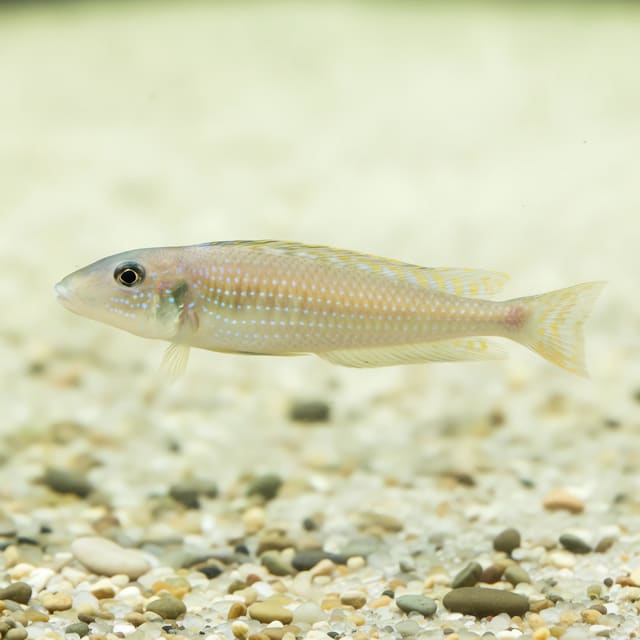
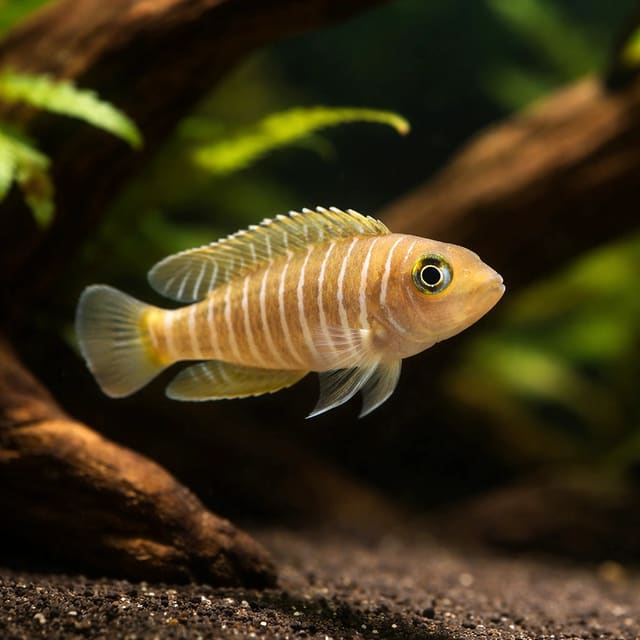
Multifasciatus Cichlid (Neolamprologus multifasciatus)
24–27°C · pH 7.5–9 · 40L
£10.89

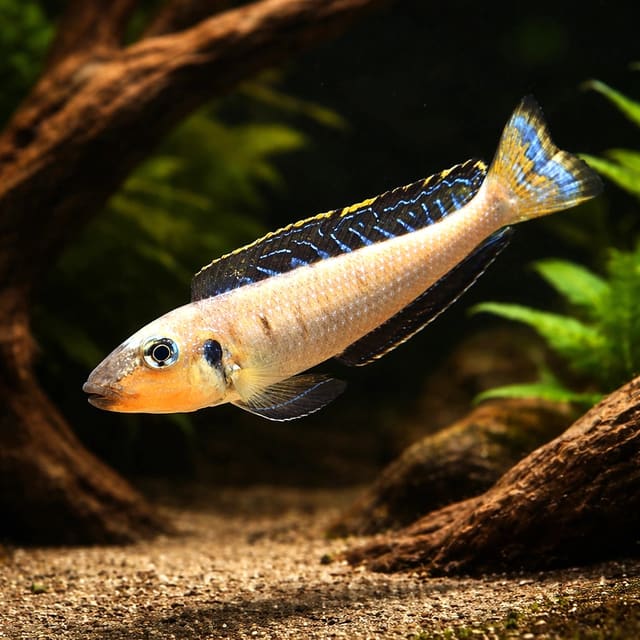
Black Smallscale Cyprichromis is a peaceful open-water Lake Tanganyika cichlid. Keep it in a social group in a spacious, mature alkaline aquarium.
Adult size is the maximum length this species reaches at full maturity (scientific sources). The livestock you receive will be younger and smaller. Product-photo provenance and any image-specific limitations are stated on the listing.
Cyprichromis microlepidotus
Shoaling fish: kept in a group they feel safer, stay calmer and show their best colour.
Black Smallscale Cyprichromis is a peaceful open-water Lake Tanganyika cichlid. Keep it in a social group in a spacious, mature alkaline aquarium.
Adult size is the maximum length this species reaches at full maturity (scientific sources). The livestock you receive will be younger and smaller. Product-photo provenance and any image-specific limitations are stated on the listing.
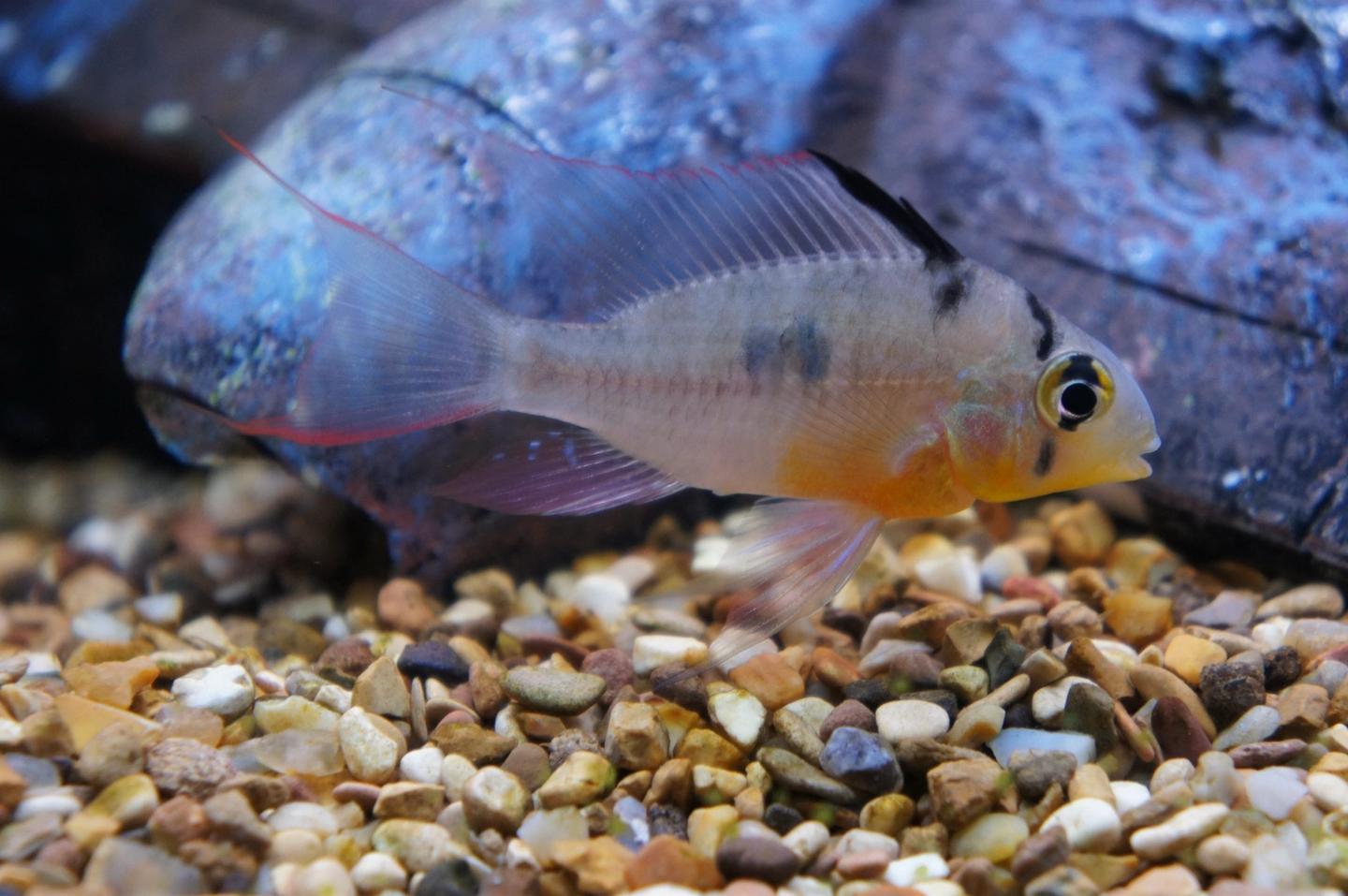
Cichlids are a family of roughly 1,800 accepted species, not one care type. Before buying, identify the exact species and source, then compare adult measurement, usable tank dimensions, social system, territory, tested water, diet and an exit plan. No family-wide minimum tank, water range or tank-mate list is safe.
Maintain these water conditions for optimal health and vibrant colors
The Black Smallscale Cyprichromis is the trade form offered here under Cyprichromis microlepidotus. This Lake Tanganyika cichlid spends much of its time in open water, so plan for a group, generous swimming space and stable alkaline conditions. It is generally peaceful but should be kept with compatible Tanganyika species rather than boisterous fish. The selected quantity should reflect the group you can house long term; the page does not promise a sexed fish or a particular locality.
Cyprichromis microlepidotus belongs to the cichlid family but behaves very differently from the territorial rock-dwelling species many aquarists expect. In the hobby, it is valued as a schooling Tanganyika fish that occupies open water and shows complex social displays. It sits alongside other admired pelagic cichlids such as sardine cichlids and regional variants of Cyprichromis, making it a favourite for aquarists building a specialist Tanganyika display.
The Black Smallscale Cyprichromis comes from Lake Tanganyika, one of the oldest and deepest freshwater lakes in the world. This Rift Valley lake is famous for its mineral-rich, alkaline water and extraordinary cichlid diversity. In nature, Cyprichromis microlepidotus is a pelagic species, meaning it spends much of its life in open water rather than hiding among rocks all day. That single fact explains much of its aquarium care: it needs swimming room, a group, and stable water chemistry.
Wild fish are usually found over rocky shorelines where the water is clear, oxygen-rich, and hard. They feed on tiny planktonic organisms drifting in the water column, which is why the diet should focus on small suspended foods rather than heavy sinking pellets. Males establish display zones in open water, while females move through the group and choose mates. This natural structure is why a proper group size matters so much in captivity.
If you are debating this species or an alternative, think about what you want from the aquarium. If you want schooling movement in the upper levels, this species does something shell dwellers and cave cichlids simply do not. It is one of the best answers for aquarists who want a Tanganyika display with constant motion and elegant social behaviour.
Mimicking the natural habitat improves health and behaviour. Open swimming space above rock piles, strong oxygenation, and hard alkaline water will do more for this species than adding excessive décor.
The most important part of any care plan is understanding that this is a schooling cichlid, not a solitary show fish. The minimum aquarium size is around 240 litres for a modest group. A better aquarium size for long-term success is 240-300 litres, especially if you want to keep them with other Tanganyika species. Because they occupy the upper region, length matters more than height alone. For that reason, the species is especially good for large tank displays where open-water movement can be appreciated.
A group of 10 or more is ideal, which means the aquarium must handle both swimming space and biological load. The recommended group size reduces stress, spreads attention between males, and encourages natural display behaviour. Aquarists asking what is a good size fish tank for a beginner should note that while the fish itself is peaceful, the setup is not a nano project. This is not a fish for a tiny starter aquarium. If you are wondering what size fish should i get, match the fish to the tank you can realistically maintain, not the other way around.
The correct suitable temperature is 24-27°C, with a stable temperature in the middle of that range often working best for mixed Tanganyika communities. pH should stay between 7.8 and 9.0, and the pH should not swing. Hardness should be 10-25 dGH. These fish do not appreciate soft, acidic community water. Stability matters more than chasing the absolute top end of the range.
Use oversized filtration with good oxygen exchange. A quality external filter is ideal because Tanganyika fish prefer clean, mineral-rich water with low dissolved waste. Moderate circulation is useful, but avoid creating a blasting current that forces the fish to fight the flow all day. Surface agitation helps maintain oxygen levels, especially in warmer months.
Fine sand or a smooth pale substrate works well. Rock piles at the back and sides create visual security and territories for any bottom-dwelling companions, while the centre and upper areas should remain open. This species does not need dense caves for itself, but it benefits from the sense of structure that rocks provide. If you are building a Tanganyika setup, pair open water with species such as Utinta Black-Chinned Xenotilapia - Enantiopus Melanogenys or a carefully chosen Mutondwe Compressiceps - Altolamprologu in larger tanks.
Plants can work if they tolerate hard, alkaline water, although open swimming room matters more than dense planting. Use lighting and rockwork to offer security without filling the upper water column.
Add fish only after the aquarium is biologically mature and tests show no ammonia or nitrite. A fixed number of weeks is not a substitute for water testing.
The feeding routine should reflect the fish’s natural role as a plankton feeder. In the wild, these cichlids pick tiny food items from the water column. In the aquarium, they do best on small, high-quality foods that stay suspended briefly. That means crushed flakes, fine granules, baby brine shrimp, cyclops, and similar items are all useful. The full diet should be varied rather than based on one food alone.
Choose a small flake or micro-pellet that stays available in the water column long enough for these upper-level feeders to take it. Check particle size and digestibility as carefully as the ingredients.
Frozen cyclops, daphnia, and baby brine shrimp are excellent supplements. These help maintain body condition and support stronger breeding response. For fish being conditioned for breeding, two or three protein-rich feeds per week can make a visible difference.
Avoid oversized pellets and offer suitably small food that the fish can take in the water column. Vary the diet with appropriately sized prepared, frozen or live foods, and remove uneaten food before it affects water quality.
Feed small amounts 2-3 times daily rather than one large meal. Offer only what the group can finish in around 30-60 seconds. Frequent, light feeding better matches their natural feeding style and reduces waste. This matters in a Tanganyika system where pristine water is part of disease prevention.
| Time | Food | Amount |
|---|---|---|
| Morning | Crushed cichlid flake or micro-granule | Small pinch, fully eaten within 1 minute |
| Evening | Baby brine shrimp or cyclops | Light portion for the whole group |
If you enjoy feeding active open-water Tanganyika fish, this related sardine cichlid thrives on a similar small-particle diet and makes a useful comparison species.
Overfeeding causes ammonia spikes, cloudy water, and digestive stress. With schooling cichlids, it is easy to overestimate how much food they need because the group is so active.
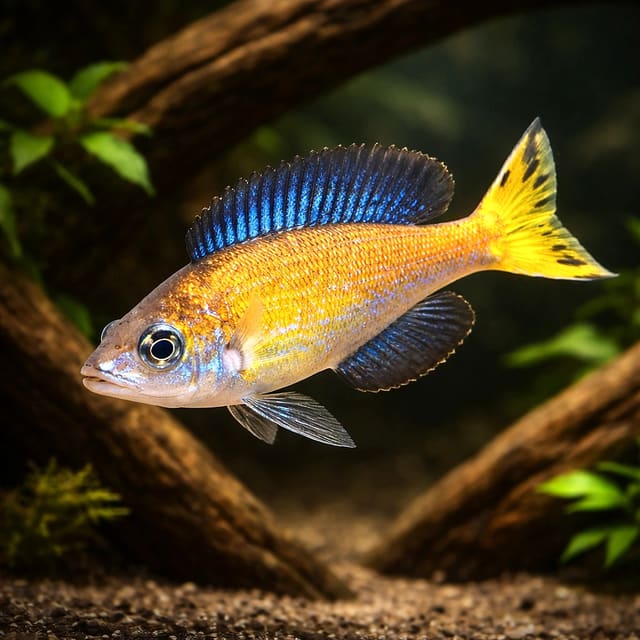
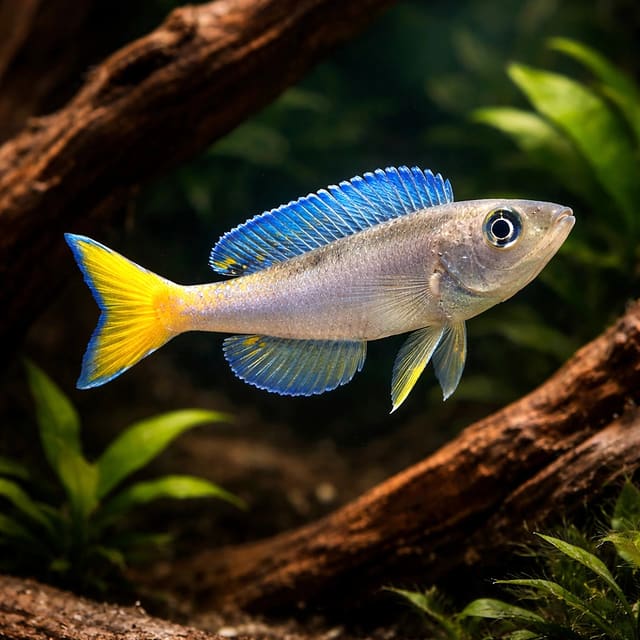
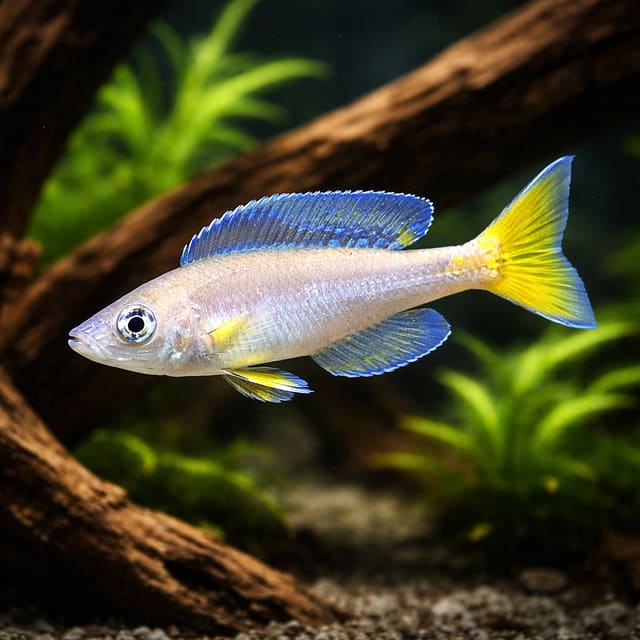
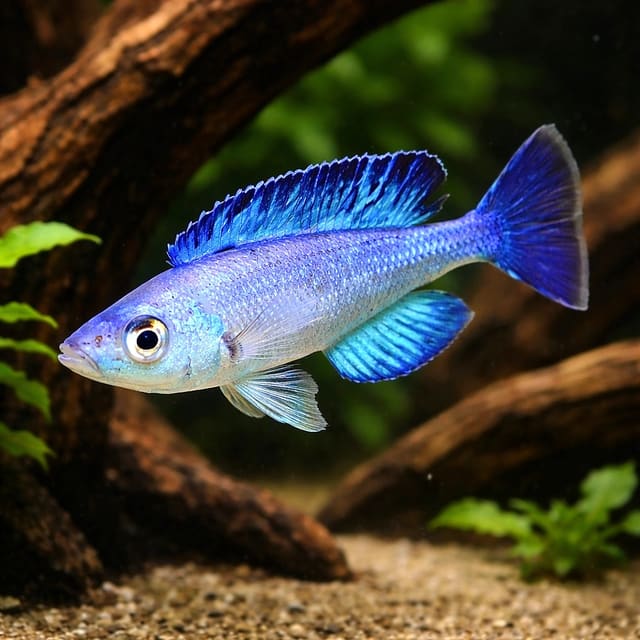
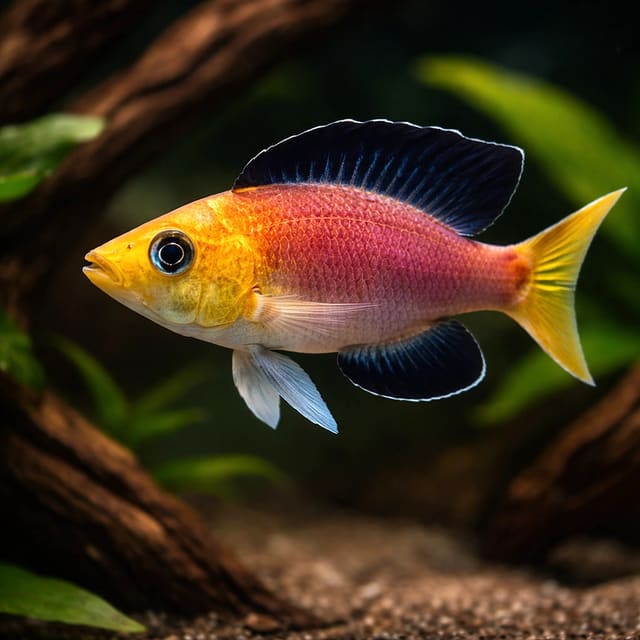
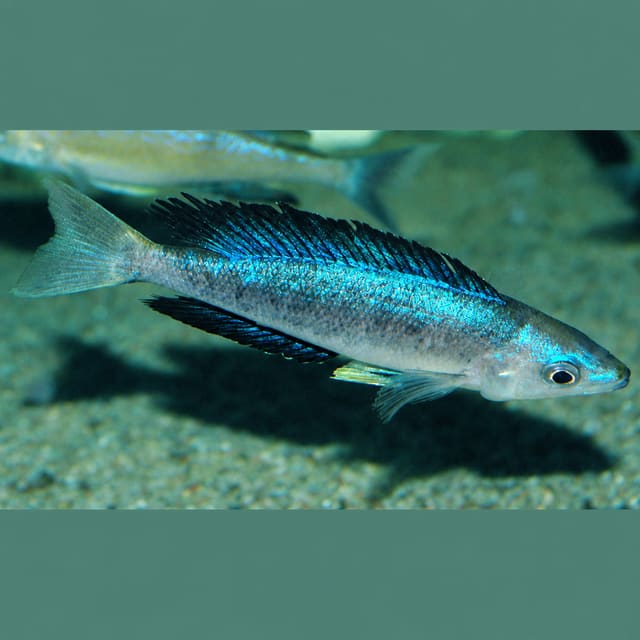
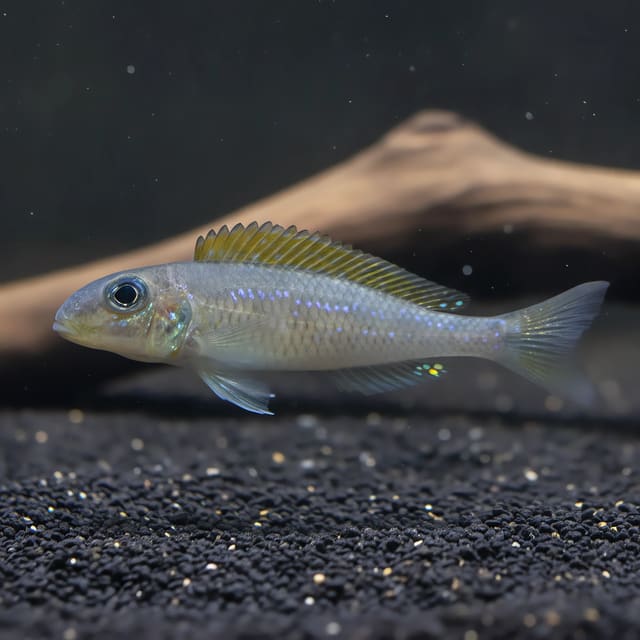
The Black Smallscale Cyprichromis has a slim, torpedo-shaped body built for constant midwater and surface-level swimming. Adults reach about 12 cm, with males usually appearing slightly more elongated and visually striking than females. The body is laterally compressed, the fins are elegant rather than bulky, and the overall look is much more streamlined than many bottom-oriented cichlids.
In good condition, males show deep smoky to chocolate-black tones with a metallic sheen that changes under different lighting angles. Females are usually subtler, with softer silver-brown shades. This contrast helps when selecting a breeding pair or building a display group with several males and more females. The behaviour during display also enhances appearance: confident males intensify in colour as they court.
The unusual streamlined appearance is part of the appeal, but this is a specialist Tanganyika fish. Plan its water chemistry and group before considering it for a first aquarium.
The compatible fish list is better than many cichlid keepers expect. This species is peaceful, social, and best kept in groups, which makes it suitable for a carefully planned community tank. That said, “community” here means a Tanganyika-style setup, not a random mix of soft-water fish. If you are building a true Tanganyika community aquarium, choose tank mates that enjoy hard alkaline water and are not hyper-aggressive.
The best tank mates are other peaceful or moderately assertive Tanganyika species that occupy different zones. Good choices include Kasai Smallscale Cyprichromis - Cyprichromis Microlepidotus for a related comparison, Utinta Black-Chinned Xenotilapia - Enantiopus Melanogenys for lower-level activity, and Black Zaire Calvus - Altolamprologu in larger, carefully managed tanks. More advanced keepers with substantial volume may also consider Gold Compressiceps - Altolamprologu or Mutondwe Compressiceps - Altolamprologu where stocking is balanced and predation risk is assessed realistically.
In a larger Tanganyika aquarium, consider peaceful species that use other swimming levels. Assess adult size, predation risk and temperament individually before combining them.
Avoid aggressive mbuna, large predators and soft-water community fish. These choices differ in temperament or water requirements and can undermine a peaceful Tanganyika group.
In a 240-litre tank, a workable community tank setup could be 10-12 Black Smallscale Cyprichromis with a small group of bottom-oriented Tanganyika companions. In 300 litres or more, you can expand to a stronger display group and add one or two carefully chosen companion species. This is one reason the fish is popular with hobbyists seeking a specialist freshwater fish bundle feel without creating a chaotic mixed aquarium.
| Species | Compatible? | Notes |
|---|---|---|
| Utinta Black-Chinned Xenotilapia - Enantiopus Melanogenys | ✅ Yes | Uses lower levels and suits Tanganyika water chemistry |
| Kasai Smallscale Cyprichromis - Cyprichromis Microlepidotus | ⚠️ Caution | Possible in large tanks, but consider social dynamics and visual competition |
| Aggressive Mbuna | ❌ Avoid | Too territorial and likely to harass schooling open-water fish |
Choose tank mates by water chemistry, swimming level and temperament. Peaceful Tanganyika species occupying other parts of the aquarium are more useful comparisons than unrelated community fish.
Always quarantine new arrivals for 2-4 weeks before adding them to an established Tanganyika aquarium. It protects both the new fish and the stable social structure of the group.
breeding is moderate in difficulty and very rewarding. This species is a maternal mouthbrooder, which means the female carries the fertilised eggs in her mouth until the fry are developed enough to be released. In a settled group with correct water and regular feeding, spawning can happen naturally without extreme intervention.
A separate breeding tank is helpful but not always essential. Use hard, alkaline water at the normal suitable temperature range, excellent filtration, and a calm environment. Condition the group with varied foods, especially cyclops and baby brine shrimp. A ratio of several females per male reduces pressure and improves success. If you are selecting a breeding pair, remember that this species often performs better in a group context than as a forced pair.
Males display in open water. Females collect and hold fertilised eggs in the mouth, so breeding depends on a settled group and stable conditions rather than an advertised pair.
The female may hold for around 3 weeks depending on temperature and individual condition. During this period she may eat very little. Some breeders leave her in the group if the aquarium is peaceful; others move her gently to a separate tank to avoid stress. Avoid chasing or netting her repeatedly, as this can lead to premature swallowing or spitting of the brood.
Once released, fry are large enough to take newly hatched brine shrimp and powdered fry foods. Keep water very clean and feed small amounts several times a day. Growth is steady rather than explosive. If you are managing numbers, plan ahead so fry do not become unwanted tropical fish later. Responsible fishkeeping is better than posting free tropical fish to good home ads after the fact.
Breeding is best approached within a settled group. Stable water, adequate room and suitably small food for young fish matter more than buying a nominal pair; this listing does not offer a guaranteed sex ratio.
Condition a larger group rather than isolating a single pair too early. In Cyprichromis, natural social interaction often produces stronger displays, better female receptiveness, and more reliable mouthbrooding behaviour.
Compared with territorial cave spawners, this species brings schooling movement to the upper water column. Choose it when the aquarium can provide a suitable group and generous open space.
| Feature | Black Smallscale Cyprichromis | Kasai Smallscale Cyprichromis |
|---|---|---|
| Max Size | 12 cm | About 11-12 cm |
| Care Level | Moderate | Moderate |
| Temperature | 24-27°C | 24-27°C |
| Price | £40.64 | Varies by locality |
| Best For | Dark, elegant open-water display | Collectors wanting a related locality form |
| Feature | Black Smallscale Cyprichromis | Jumbo Yellow Sardine Cichlid |
|---|---|---|
| Body Style | Slim, dark, understated | Brighter, more vivid schooling fish |
| Temperament | Peaceful | Peaceful |
| Tank Role | Upper open water | Upper open water |
| Visual Impact | Subtle contrast and movement | Brighter colour pop |
| Best For | Refined Tanganyika aquascapes | Higher-contrast schooling displays |
Choose this fish if you want a peaceful schooling cichlid with dark, sophisticated colour and visible social behaviour. Choose Kasai Smallscale Cyprichromis - Cyprichromis Microlepidotus if you are collecting regional variants, or Jumbo Yellow Sardine Cichlid - Cyprichromis if you prefer a brighter sardine-style display. For aquarists comparing this species or an alternative, the deciding question is simple: do you want elegance and schooling behaviour, or a more territorial show fish?
A healthy Black Smallscale Cyprichromis is alert, schooling confidently, feeding eagerly, and holding its fins well. Good specimens show clean eyes, smooth scales, and steady respiration. If the fish isolate themselves, clamp fins, darken excessively, or stop feeding, check water quality first. In most cases, health issues in this species start with stress, poor acclimation, or unstable chemistry rather than mysterious disease.
Transport and water-quality stress can weaken newly introduced fish. Check water conditions promptly if feeding, breathing or swimming changes, and seek qualified aquatic veterinary advice when illness is suspected.
Maintain pristine water, avoid sudden pH changes, and quarantine all newcomers. If disease appears, move affected fish to a separate treatment tank where you can medicate safely and observe feeding. Keep oxygen high during treatment. Because customers often compare options like tropical fish for sale near ipswich, tropical fish for sale near norwich, or generic local listings, it is worth repeating that specialist conditioning before sale reduces health problems dramatically.
During quarantine, watch feeding and respiration and match the main aquarium's temperature and water chemistry. Make any changes gradually.
Never medicate the main display tank casually. Remove carbon if treating, increase aeration, and remember that copper-based medications can be dangerous in mixed systems with invertebrates.
The most distinctive behaviour is schooling in the upper water column. These fish are active, social, and visibly more relaxed in numbers. A lone specimen or tiny group will often look nervous and washed out, while a proper group shows coordinated movement and more natural confidence.
Males display in open water rather than defending caves, which gives the aquarium a very different feel from typical cichlid tanks. The species is peaceful, but that does not mean inactive. It spends much of the day cruising, feeding, and interacting. This is why the fish suits aquarists wanting a dynamic community tank display rather than a static rock pile.
To encourage natural behaviour, keep them in a group of 10+, provide open swimming space, and avoid boisterous tank mates. In the right setup, this species becomes one of the most graceful examples of a schooling Tanganyika cichlid aquarium fish.
Black Smallscale Cyprichromis need a spacious, mature Tanganyika aquarium and a social group. Check your available swimming space, water conditions and group plan before adding fish. The quantity ordered, dispatch details and current delivery terms are determined by the live offer at checkout.
Build a Tanganyika community around matching water conditions and separate swimming zones. Compare the adult size and feeding needs of any prospective companion before ordering.
For the accepted species name and Lake Tanganyika distribution, see FishBase and Eschmeyer’s Catalog of Fishes. For open-water aquarium layout, social group size and water conditions, see Seriously Fish’s species profile. The trade label “Black” does not establish a collection locality or lineage.
No reviews for this item yet. Bought one? Honest reviews only, good or bad.
What customers say about ordering from us
I have a small group of long finned mountain minnows. So was delighted to be able to order ten of this variety to increase the genetics in my tank . The ones I recieved are healthy but it’s to early to give a verdict on wether they are of a long finned type since they are small currently.
Gordon Walker · 23 Sept 2026
100% success travel and "installation". Pleased with quality of purchase. The Siamese fighter a bit "shy" so have not yet seen him at his best yet but looking good. Happy customer. GG
George E Garratt · 21 Sept 2026
Reviews of our shop, collected by Judge.me, an independent third-party review collector. Newest first.