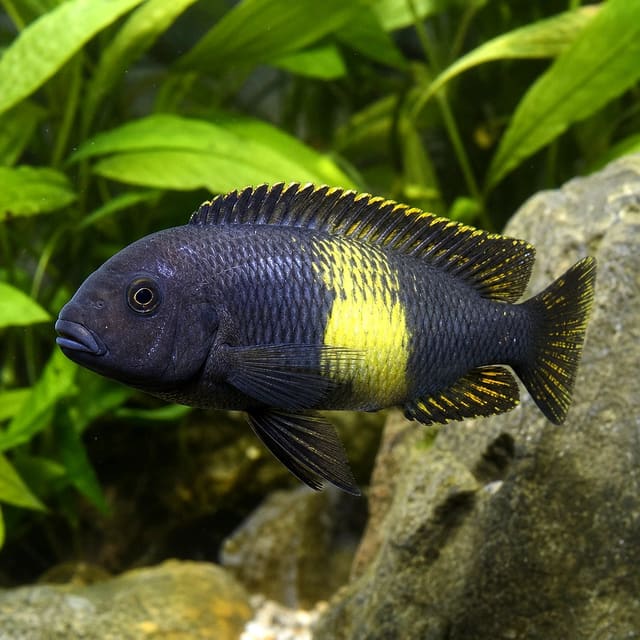

Tropheus moorii
Kiriza Blunthead Cichlid - UK
Striking Kiriza Blunthead Cichlid for experienced tropical fish keepers. A bold freshwater show fish with character. Order today with UK delivery.
Care at a Glance
Premium Quality
Healthy, vibrant fish from trusted suppliers
Expert Care
Detailed care guides and support
Live Arrival Guarantee
Your fish arrives healthy or we'll replace it
Acclimated
Properly quarantined and ready for your tank
Quick Care Guide
Water Parameters
Maintain these water conditions for optimal health and vibrant colors
Why Choose This Fish?
Striking Kiriza Blunthead Cichlid for experienced tropical fish keepers. A bold freshwater show fish with character. Order today with UK delivery.
The Kiriza Blunthead Cichlid, Tropheus moorii “Kiriza”, is one of the most striking Lake Tanganyika cichlids available in the tropical fish for sale UK market. Known for its dark body and bold yellow to cream banding, this African cichlid UK favourite is not a casual impulse buy—it is a specialist herbivorous cichlid with very specific social and dietary needs. Adults reach around 14cm, can live for up to 10 years, and do best in a large, carefully planned colony rather than as a single specimen or pair. If you have been searching for tropical fish for sale online, buy tropical fish UK options, or the best place to buy tropical fish online for a true Tanganyikan showpiece, the Kiriza stands out for colour, activity, and fascinating group behaviour.
See our detailed photos showing the deep body shape, blunt forehead, and contrast-rich banding that make the Kiriza Blunthead Cichlid Fish so popular with experienced keepers. This species is often recommended for aquarists moving beyond tropical fish for beginners and into more advanced Lake Tanganyika cichlid UK setups. With the right kiriza blunthead cichlid Tanganyika setup, stable tropical fish temperature, and a colony structure of 12 or more fish, you can enjoy one of the most rewarding algae-grazing cichlids in the hobby. For aquarists who want movement, hierarchy, colour, and authentic Rift Lake behaviour, this species delivers something very different from standard community tropical fish UK choices.
🔹 Quick Facts
- Scientific Name: Tropheus moorii “Kiriza”
- Care Level: Difficult
- Min Tank Size: 300 litres (66 gallons)
- Temperature: 24-28°C (75-82°F)
- pH Range: 8.0-9.0
- Lifespan: Up to 10 years
- Temperament: Aggressive, highly social within a colony
- Diet: Herbivore
Classification
- Order: Cichliformes
- Family: Cichlidae
- Genus: Tropheus
Tropheus moorii is part of a famous group of rock-dwelling African cichlids from Lake Tanganyika. In the aquarium hobby, Kiriza is valued as a locality-based colour form rather than a separate species. It sits among the most recognisable herbivorous cichlids in the family, alongside other Tropheus variants prized for colony behaviour, algae grazing, and intense regional colour patterns.
Where Do Kiriza Blunthead Cichlids Come From? Natural Habitat Explained
The Kiriza Blunthead Cichlid comes from Lake Tanganyika in East Africa, one of the oldest and deepest freshwater lakes on Earth. This vast rift lake stretches across several countries and produces highly mineral-rich, alkaline water unlike the softer conditions used for many community tropical fish UK species. In the wild, Tropheus moorii lives around rocky shorelines where waves and current keep surfaces oxygen-rich and covered in algae and biofilm. That natural grazing environment explains why this fish is so active, so territorial, and so dependent on a specialised herbivorous diet.
Unlike fish kept in a tropical fish pond UK or tropical fish pond royal oak style outdoor setup, Kiriza cichlids are not pond fish and should always be maintained indoors in a heated, stable aquarium. They are adapted to a very consistent tropical fish tank ecosystem with hard, alkaline water and constant access to rockwork. In nature, they spend much of the day picking at aufwuchs—a mix of algae, microorganisms, and detritus growing on stones. That is why aquarists asking what tropical fish keep the tank clean or what tropical fish clean the tank sometimes notice Tropheus browsing surfaces all day. They do graze, but they are not a substitute for maintenance.
Because these fish evolved in clear, mineral-heavy water, they react badly to unstable conditions. If you are wondering why is tropical fish tank cloudy, why my tropical fish tank is cloudy, or why does my tropical fish tank smell after adding demanding cichlids, the answer is usually not the fish itself but excess waste, poor circulation, or immature filtration. Tropheus need a mature aquarium with excellent oxygenation. They also dislike rapid shifts in chemistry, which is why a proper kiriza blunthead cichlid hard water care routine matters so much.
Many keepers compare the Kiriza to other locality forms and ask about kiriza blunthead cichlid or alternative species. The answer depends on whether you want authentic colony dynamics and algae-grazing behaviour, or a more flexible cichlid that mixes with a wider range of tank mates. For aquarists who want a true Lake Tanganyika cichlid UK display, Kiriza offers one of the most engaging choices available.
💡 Expert Tip
Mimicking the natural rocky shoreline of Lake Tanganyika improves confidence, colour, and social stability. Use piles of secure rockwork, strong filtration, and open swimming lanes so lower-ranking fish can move away from dominant individuals without being trapped.
How to Set Up the Perfect Tank for Kiriza Blunthead Cichlids
A successful kiriza blunthead cichlid care guide always starts with one point: this is not a fish for a small tank. Questions like what size tank for tropical fish, what size tropical fish tank, or what tank do you need for tropical fish have very different answers depending on species, and for Kiriza the minimum is large. The kiriza blunthead cichlid minimum tank size is 300 litres, but that is a true minimum for a young colony. For adults, a longer tank with strong flow and more rockwork is better. A 100cm tropical fish tank can work for a carefully managed starter group, but many keepers prefer larger footprints for long-term success. A 50cm tropical fish tank, 60cm tropical fish tank, 80cm tropical fish tank, 24l tropical fish tank, 10l tropical fish tank, 125l tropical fish tank, and 150l tropical fish tank are all far too small for this species.
Tank Size Requirements
The kiriza blunthead cichlid tank size should be planned around social structure, not just adult length. These fish are aggressive, but they spread that aggression through numbers. A kiriza blunthead cichlid school size of 12+ is strongly recommended, which means the aquarium must provide both swimming room and visual barriers. This is why the species is often described as a kiriza blunthead cichlid for large tank setup rather than a general cichlid for mixed displays. A tropical fish tank beginner's guide may suggest starting with easier fish, and that is sensible—Kiriza are best for aquarists ready to manage colony dynamics and water quality together.
Water Parameters
The kiriza blunthead cichlid ideal temperature is 24-28°C, with 25-26°C often being a practical target for long-term care. If you have ever asked what should tropical fish tank temperature be, what temp is tropical fish tank, what temp tropical fish tank, or what temperature should a tropical fish tank be kept at, remember that Rift Lake cichlids need species-specific answers. The tropical fish tank ideal temperature for Kiriza is warmer and more stable than many mixed tanks. Keep the tropical fish tank water temperature steady with a reliable tropical fish tank heater, and check the tropical fish tank heater setting with a separate thermometer rather than trusting the dial alone.
For UK homes, a tropical fish tank temperature uk celsius reading of 25-26°C is usually ideal. The temperature of tropical fish tank water should not swing sharply overnight. If the tropical fish tank temperature too hot rises above 28°C for long periods, oxygen levels can drop and aggression may increase. If you use a tropical fish tank temperature chart for multiple species, do not assume Kiriza can be mixed with fish needing softer, more acidic water. Questions such as tropical fish tank temperature for tetras or tropical fish tank temperature guppies are useful for those species, but they are not a guide for Tanganyikan cichlids.
When customers ask what ph for tropical fish tank, what should tropical fish tank ph be, what should my tropical fish tank levels be, or what should tropical fish tank levels be, the answer here is clear: pH 8.0-9.0, hard water, and low nitrogen waste. Consistency matters more than chasing tiny daily adjustments.
Filtration and Flow
A strong tropical fish tank filter and heater combination is essential. Because Tropheus are active grazers kept in large groups, they create significant waste despite a mostly vegetable diet. Choose a high-capacity external filter or a robust tropical fish tank heater and filter setup that turns the tank over several times per hour. Good surface movement improves oxygenation and helps prevent dead spots behind rocks. If you are planning a tropical fish tank complete setup, prioritise filtration before decorative extras.
Heater placement matters too. The best tropical fish tank heater position is near flow so warmed water circulates evenly. In a long aquarium, some keepers use two smaller heaters rather than one large unit. That gives more even heat and extra security if one unit fails.
Substrate, Plants, and Decor
Use sand or fine gravel with lots of secure rock piles. Rounded stones and stacked rock formations create territories and line-of-sight breaks. Kiriza are not ideal for lush planted layouts, so kiriza blunthead cichlid for planted aquarium setups are usually limited to hardy species attached to decor rather than rooted gardens. If you are asking what plants for tropical fish tank displays with Tropheus, choose tough options such as Anubias or Java fern attached to rockwork, and expect occasional nibbling. Avoid delicate stems that need heavy tropical fish tank plant food dosing, as excess nutrients can worsen tropical fish tank algae problems.
Many keepers worry about tropical fish tank green algae, tropical fish tank brown algae, tropical fish tank black hair algae, or tropical fish tank hair algae. In a Tropheus tank, a light film of natural algae on rocks is actually useful because the fish graze it. The goal is balance, not sterile surfaces. If growth becomes excessive, review lighting duration, feeding, and flow before reaching for tropical fish tank algae treatment.
Lighting and Setup Checklist
Moderate lighting works well. A 90cm tropical fish tank light can be suitable on longer systems, but avoid blasting the tank with intense light for 12 hours a day. A tropical fish tank blue light may look dramatic for evening viewing, yet natural white-spectrum lighting shows the Kiriza banding more accurately. Keep lights on for around 7-9 hours daily to support viewing and controlled algae growth without encouraging nuisance blooms.
Quick Setup Checklist
- Tank volume of at least 300 litres
- Colony of 12 or more juveniles for best social balance
- Stable tropical fish tank temperature range of 24-28°C
- pH 8.0-9.0 with hard, mineral-rich water
- Powerful filtration and strong surface agitation
- Rock piles with open swimming space
- Mature, fully cycled tank before stocking
💡 Pro Tip
Always cycle the aquarium for 4-6 weeks before adding Tropheus. If you are learning how to test tropical fish tank water, monitor ammonia and nitrite until both stay at zero, then confirm nitrate is under control before introducing the colony.
What Do Kiriza Blunthead Cichlids Eat? Complete Feeding Guide
The kiriza blunthead cichlid diet is one of the most important parts of long-term success. This species is a specialised herbivore, not a general omnivore. In the wild, it spends hours scraping algae and associated microorganisms from rocks. In captivity, that means the staple diet should be spirulina flakes, high-fibre vegetable pellets, and other plant-based foods designed for herbivorous cichlids. Protein-heavy foods are a common cause of digestive stress and the dreaded bloat that Tropheus keepers work hard to avoid.
A good feeding plan includes small, regular meals rather than large portions. Feed two to three times daily in amounts the colony clears quickly. This keeps fish active without flooding the aquarium with waste. Overfeeding does not just cloud the water; it can trigger tropical fish tank algae, worsen tropical fish tank water treatment demands, and make it harder to keep the colony stable. If you are researching how to keep tropical fish tank water clear or how to keep tropical fish tank clean, careful feeding is one of the biggest factors.
Staple Foods
Choose spirulina-based flakes, herbivore cichlid pellets, and algae-rich formulas as the daily core diet. Because Kiriza constantly browse in nature, foods that sink slowly or remain available for short grazing periods can work well. Avoid rich meaty cichlid sticks meant for predators. If you are also keeping a display with natural rock algae, the fish will supplement their diet by grazing surfaces through the day.
Supplemental Foods and Treats
Blanched spinach, courgette, shelled peas, and high-quality vegetable wafers can be offered in moderation. Some keepers ask what tropical aquarium fish eat snails, but Kiriza are not snail hunters and should not be bought for that purpose. They are also not tropical fish tank bottom feeders or tropical fish tank algae eaters in the same sense as plecs or certain catfish; they are specialised grazers that feed throughout the water column and on rock surfaces.
For colour support, use foods with spirulina, kelp, and natural carotenoids rather than high-animal-protein “conditioning” foods. During breeding conditioning, increase feeding frequency slightly rather than switching to fatty treats.
| Time | Food | Amount |
|---|---|---|
| Morning | Spirulina flake or herbivore pellet | Small portion eaten in 1-2 minutes |
| Evening | Vegetable-based pellet or algae wafer | Small portion, no leftovers |
A useful comparison species if you want another Tropheus colour form with similar herbivorous feeding needs and colony-based care.
Another Tropheus option for keepers researching locality forms, diet planning, and long-term Tanganyika colony management.
⚠️ Feeding Warning
Overfeeding and protein-rich foods are two of the biggest causes of digestive trouble in Tropheus. Uneaten food quickly drives ammonia upward, contributes to cloudy water, and can trigger serious health problems in this species.
What Does the Kiriza Blunthead Cichlid Look Like? Colors, Patterns & Varieties
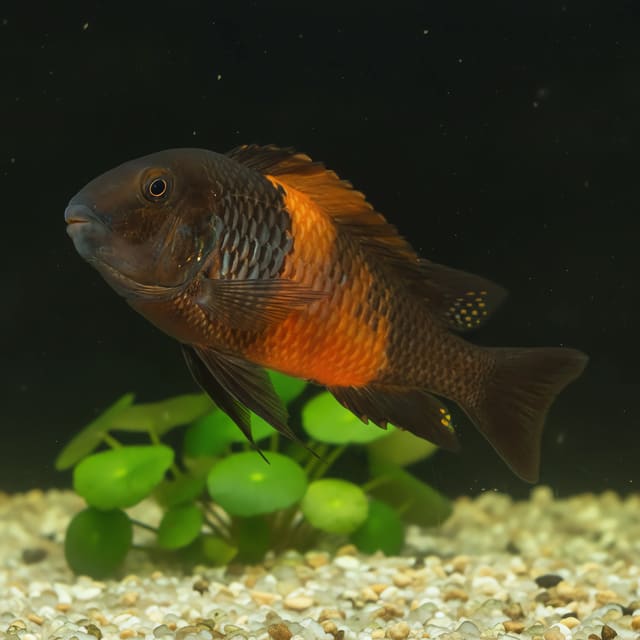
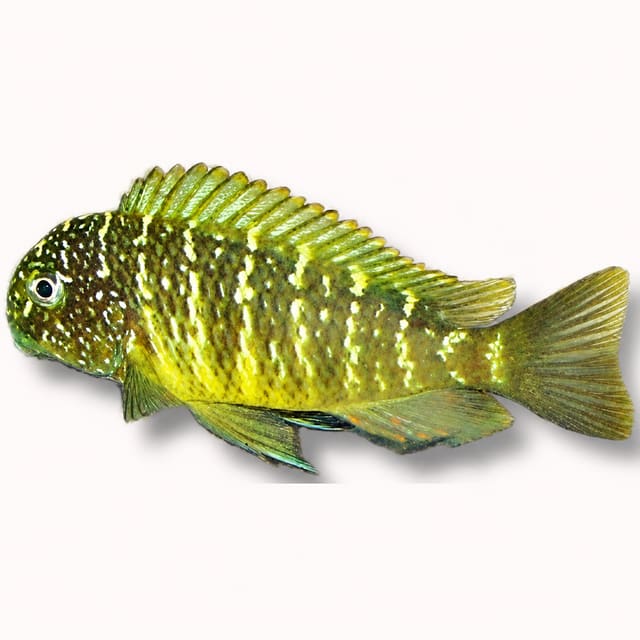
The Kiriza Blunthead Cichlid has a compact, deep-bodied shape with a rounded forehead that gives the “blunthead” name. Adults reach about 14cm, with a sturdy, muscular build suited to life in rocky surge zones. The base colour is usually dark brown to black, crossed by a broad yellow, cream, or pale gold band through the mid-body. Under good care, the contrast becomes especially intense, making this one of the most recognisable Tropheus forms in the hobby.
Our photos show the strong body depth, clean band placement, and colour contrast that aquarists look for when comparing locality variants. Good diet, low stress, and correct tropical fish temperature all help maintain stronger colour. A dark background, rock-heavy layout, and balanced lighting often make the band appear brighter. While a tropical fish tank blue light can create a dramatic evening effect, natural daylight-spectrum lighting usually gives the most accurate view of the fish’s true pattern.
Sexual dimorphism is subtle. Males may become slightly larger, more assertive, and more intense in display behaviour, but females can be just as colourful. This is one reason many keepers start with a group of juveniles and allow natural pairing and hierarchy to develop. If you are comparing kiriza blunthead cichlid vs tropheus variants from other localities, the Kiriza is especially valued for its clean horizontal band and high-contrast body colour.
Because this is a colony fish, appearance is also linked to social stability. In cramped or understocked tanks, dominant fish can suppress weaker individuals, leading to washed-out colour and damaged fins. A proper kiriza blunthead cichlid tank size, stable water chemistry, and a mature setup do more for appearance than any “quick fix” additive.
What Fish Can Live With Kiriza Blunthead Cichlids? Compatibility Guide
If you are searching for kiriza blunthead cichlid compatible fish, the honest answer is: very few. This is not a standard kiriza blunthead cichlid community tank species, and it is rarely the right choice for a mixed community tropical fish UK aquarium. Tropheus are aggressive, territorial, and socially complex. They do best with their own kind, ideally the same species and colour form, in a large colony where aggression is spread across the group. That is why the best tank mates for kiriza blunthead cichlid are usually other Kiriza or carefully managed same-species Tropheus groups.
Questions like kiriza blunthead cichlid for community tank or kiriza blunthead cichlid community tank come up often because the fish is so attractive. However, most other fish are a poor fit. Slow fish, timid fish, long-finned fish, and soft-water species should all be avoided. Even many robust cichlids from other lakes can cause trouble because they need different diets, different social structures, or different water chemistry.
Ideal Tank Mates
The safest option is a species colony. If you are exploring related fish, compare this species with Kiriza Yellow Cichlid - Tropheus Moorii or Orange I Blunthead Cichlid - Tropheus to understand how locality forms differ. Some advanced keepers maintain carefully selected Tanganyikan companions in very large tanks, but this is not beginner territory. If you prefer a more flexible African cichlid UK setup, species such as Aulonocara Sp Neon Red Calico Peacock, Rubin Red Peacock Cichlid - Aulonocara, or Aulonocara kandeense may suit a different style of aquarium better, though they are not direct tank mates for Kiriza in most home systems.
Species to Avoid
Avoid delicate tetras, guppies, bettas, shrimp, and most peaceful catfish. Searches like tetras for sale uk, tetra fish for sale uk, buy siamese fighting fish online uk, or siamese fighting fish pets at home reflect very different aquarium goals. Kiriza are not compatible with those fish. They are also not suitable with home aquarium sharks uk species, which need very different conditions and often much larger systems. Invertebrates such as shrimp and snails are not ideal companions either; while Kiriza may ignore some snails, they are not reliable with ornamental invertebrates.
People often ask what tropical fish can live in a small tank or what tropical fish clean the tank. Kiriza are the opposite of a small-tank solution. They need space, numbers, and structure. They also do not replace maintenance, so if you are looking for which tropical fish clean the tank, focus instead on improving husbandry.
| Species | Compatible? | Notes |
|---|---|---|
| Kiriza Yellow Cichlid - Tropheus Moorii | ⚠️ Caution | Possible only for advanced keepers; mixing colour forms can increase conflict and hybridisation risk. |
| Orange I Blunthead Cichlid - Tropheus | ⚠️ Caution | Similar care needs, but same warnings apply regarding aggression and purity of lines. |
| Tetras, guppies, bettas, shrimp | ❌ Avoid | Too delicate, wrong water chemistry, and unsuitable temperament match. |
For keepers researching a tropical fish tank mates chart, Kiriza sits firmly in the specialist category. The right approach is not to ask for the widest compatibility list, but to ask how to maintain a stable colony. That means learning how to change tropical fish tank water, how to clean tropical fish tank, how to maintain tropical fish tank systems with heavy rockwork, and how to keep tropical fish tank water clear without causing sudden chemistry shifts. Weekly partial water changes, strong filtration, and regular testing are essential. If you are wondering what chemicals do i need for a tropical fish tank or what chemicals do you need for a tropical fish tank, keep it simple: dechlorinator, mineral support if needed, and accurate test kits are more useful than “fix-all” bottles.
💡 Quarantine Tip
Always use a tropical fish quarantine tank for 2-4 weeks before adding new fish to a Tropheus colony. This reduces the risk of introducing parasites or bacterial problems into a socially sensitive group where stress can spread quickly.
How to Breed Kiriza Blunthead Cichlids: Complete Breeding Guide
Kiriza blunthead cichlid breeding is achievable in the home aquarium, but it works best for aquarists who already understand Tropheus social behaviour. Breeding difficulty is moderate rather than easy. The good news is that once a stable colony is established, natural spawning can occur without extreme intervention. The challenge lies in maintaining a healthy group, identifying a compatible kiriza blunthead cichlid breeding pair within that group, and raising fry without upsetting the colony structure.
Breeding Setup
Start with a mature colony in a large tank, hard alkaline water, and a stable tropical fish tank temperature of around 25-27°C. If you are asking what do you need for a tropical fish tank to breed this species, the answer includes excellent filtration, lots of rockwork, vegetable-rich feeding, and social stability. A single pair in isolation often performs worse than a settled group because Tropheus rely heavily on colony dynamics.
Spawning Behaviour
Like other Tropheus, Kiriza are maternal mouthbrooders. Courtship usually involves chasing, circling, and displaying over chosen spawning areas. The female lays eggs, gathers them into her mouth, and then incubates them. If you notice tropical fish tank eggs scattered around the substrate, they are unlikely to be Kiriza eggs because this species does not leave eggs exposed in the typical way. Searches for yellow eggs in tropical fish tank setups usually relate to snails or other species, not mouthbrooding Tropheus.
Egg Care and Hatching
Once the female is holding, avoid unnecessary netting or tank disruption. Incubation generally lasts around 3-4 weeks depending on temperature and individual fish. During this period, the female may eat very little. Good water quality is critical. That means knowing how to test tropical fish tank water and keeping ammonia and nitrite at zero throughout the holding period.
Fry Care and Growth
When released, fry are relatively well developed and can take finely crushed spirulina foods, powdered herbivore fry diets, and small vegetable-based preparations. Keep the environment calm and maintain frequent small water changes. If you are learning how to keep tropical fish tank clean during fry rearing, siphon waste carefully without disturbing rock structures or young fish.
Advanced Breeding Tip
Many experienced keepers let the female hold and release fry in the main colony if the tank is heavily structured and the group is stable. This often produces stronger, less stressed juveniles than repeated stripping or moving females too early.
Kiriza Blunthead Cichlid vs Similar Species: Which Should You Choose?
Comparing Tropheus forms is important because they may look similar in care sheets but differ in colour impact, availability, and how you want the finished aquarium to look. If you want a bold, banded Tanganyika display, the Kiriza is a standout. If you want more flexibility, another cichlid might suit you better.
| Feature | Kiriza Blunthead Cichlid | Kiriza Yellow Cichlid |
|---|---|---|
| Max Size | 14cm | Around 14cm |
| Care Level | Difficult | Difficult |
| Temperature | 24-28°C | 24-28°C |
| Price | £50.32 | £50.32 |
| Best For | High-contrast Tropheus colony displays | Keepers wanting a brighter yellow Tropheus look |
| Feature | Kiriza Blunthead Cichlid | Yellow Elongatus Cichlid |
|---|---|---|
| Lake Type | Lake Tanganyika | Lake Malawi |
| Diet Focus | Strict herbivore | More flexible mbuna-style feeding |
| Social Structure | Large colony of 12+ | Different group dynamics |
| Temperament | Aggressive within colony hierarchy | Aggressive but managed differently |
| Best For | Dedicated Tropheus keepers | Malawi cichlid enthusiasts |
Choose the Kiriza if you want authentic Tropheus behaviour, a bold banded pattern, and a species-focused Tanganyika setup. Choose Yellow Elongatus Cichlid - Chindongo Elongatus if you prefer a Malawi-style rock tank with different feeding flexibility. If you are looking at non-Tropheus display fish such as Thorichthys Maculipinnis - Elliot'S Cichlid - or Guianacara Dacrya - South American Cichlid, remember those are very different projects with different water chemistry, temperament, and aquascaping needs. For pure Tanganyika character, Kiriza remains the more specialised and more rewarding option.
Common Health Problems in Kiriza Blunthead Cichlids & How to Prevent Them
The biggest health risks in Kiriza blunthead cichlid care guide planning are not random—they are predictable. Poor diet, unstable water quality, and social stress cause most serious problems. Healthy fish are alert, active, constantly grazing, and hold strong colour with clear eyes and intact fins. They should interact with the colony, not hide continuously or gasp near the surface.
Common Diseases and Symptoms
The most feared issue is digestive trouble often referred to as bloat. This is commonly linked to excess protein, overfeeding, stress, or poor water quality. Other concerns include external parasites, bacterial infections after fighting damage, and general tropical fish tank diseases associated with overcrowding and poor maintenance. If you notice clamped fins, stringy waste, loss of appetite, isolation, or rapid breathing, act quickly.
Treatment and Prevention
Prevention is far easier than cure. Maintain the correct kiriza blunthead cichlid temperature, hard alkaline water, and a strict herbivore diet. Learn how to change tropical fish tank water safely with regular partial changes rather than large, erratic ones. If the tank turns milky and you are asking why is my tropical fish tank going green or why is tropical fish tank cloudy, review feeding, lighting, and filtration immediately. A stable routine is the foundation of kiriza blunthead cichlid hard water care.
Use a tropical fish quarantine tank for all new arrivals. Quarantine also helps if you need to monitor a fish after bullying or suspected illness. Because Tropheus are sensitive to disruption, avoid unnecessary medication in the display tank. Test first, diagnose carefully, and correct husbandry before reaching for treatments.
⚠️ Health Warning
Do not use random “general cure” products without checking suitability for cichlids and your full stock list. Misdiagnosis, sudden chemistry changes, and unnecessary medication often do more harm than the original problem.
Quarantine Protocol
- Use a separate heated, filtered tank for 2-4 weeks
- Match pH and hardness closely to the main aquarium
- Observe feeding response, waste, breathing, and skin condition daily
- Test water frequently and keep ammonia and nitrite at zero
- Only introduce fish once they are eating strongly and behaving normally
Understanding Kiriza Blunthead Cichlid Behavior in the Aquarium
Kiriza are active, intelligent, and constantly engaged with their environment. They spend much of the day grazing rocks, displaying to rivals, and maintaining a shifting social order. This is not a shy fish that disappears into the background. In a well-designed setup, the colony becomes the main event in the aquarium.
The key behaviour point is that aggression is normal—but must be managed through numbers, space, and structure. A single fish or tiny group often becomes hyper-aggressive or chronically stressed. In a proper colony, dominant fish still chase, but the pressure is spread out. This is why people asking whether the kiriza blunthead cichlid for beginners label is accurate should understand that the fish is fascinating, but only manageable when its social needs are respected.
To encourage natural behaviour, provide broad rock faces for grazing, open lanes for movement, and a stable hierarchy. Once settled, you will see constant browsing, ritualised sparring, and mouthbrooding behaviour from females. For aquarists who enjoy observing social fish rather than just colour alone, Kiriza offers exceptional personality.
Why Buy from Tropical Fish Co?
When you buy live fish online UK, specialist species matter more than generic listings. Kiriza are not the sort of fish that should be bagged and shipped without preparation. Each fish needs to arrive in strong condition, feeding well, and ready for a properly planned Tanganyika setup. That is especially important for customers comparing tropical fish for sale near me, aquarium fish shop near me for sale, aquarium fish shop near me home delivery, or the best place to buy tropical fish uk for rarer cichlids.
Our approach for this species focuses on stability and condition. Kiriza are held in appropriate hard-water systems, observed for feeding response, and checked for body condition before dispatch. We pack them with insulated materials, secure fish bags, and heat packs in winter when required. Tracked delivery reduces transit uncertainty, and careful packing helps maintain the tropical fish tank ideal temperature range during travel. That matters far more for a specialist Lake Tanganyika cichlid than for many hardier general species.
If you have been comparing tropical fish pets at home options, fish for sale pets at home searches, free tropical fish listings, or broad marketplace offers, the difference with a demanding species like this is aftercare and suitability. We strongly recommend that buyers have the full tropical fish tank how to set up process completed before ordering. If you are also browsing cold water fish for sale, cold water fish for sale uk, or buy cold water fish online uk, note that Kiriza are not coldwater fish and require a heated, alkaline aquarium. For keepers ready to move ahead, this is a serious show fish and a long-term commitment worth doing properly.
Order your Kiriza Blunthead Cichlid today with confidence if you are ready for a dedicated Tropheus colony and want one of the most distinctive tropical fish for sale UK choices available.
Why Choose Tropical Fish Co for Kiriza Blunthead Cichlids
- Stock selected for active feeding response on herbivore-based diets before sale
- Prepared for hard, alkaline aquarium conditions suited to Tanganyika cichlids
- Packed for safe UK transit with insulated materials and seasonal heat protection
You Might Also Like
If you are building a Rift Lake collection, compare the Kiriza with Kiriza Yellow Cichlid - Tropheus Moorii for a brighter colour form, or Orange I Blunthead Cichlid - Tropheus for another bold Tropheus variant. If you want to explore other African cichlid UK options, take a look at Rubin Red Peacock Cichlid - Aulonocara and Aulonocara Sp Neon Red Calico Peacock for very different display styles. For keepers comparing lake systems, Yellow Elongatus Cichlid - Chindongo Elongatus shows how Malawi mbuna differ from Tropheus. If you are browsing the wider Lake Tanganyika cichlid collection, stay with species that match the same hard-water, rock-dwelling conditions.
You Might Also Like


Aulonocara sp. 'Firefish' - Tropical Fish for Sale UK

Best Food for Tropical Fish - White Worms (90 ML) | UK

Orange Venezuelan Cory (Corydoras venezuelanus var. 'Orange') - UK

Yellow Lepturus Cichlid - UK

Apistogramma agassizii “Super Red” - UK

X Neon Green Rasbora - UK

Rasbora Heteromorpha (Trigonostigma heteromorpha) - UK
Popular Right Now

Endler Gold Guppy Breeding (Poecilia wingei) - UK

Chindongo saulosi 'Coral Red' - UK
10x Assorted Swordtails – Xiphophorus Hellerii

Glass Catfish (Kryptopterus vitreolus) - UK

Blood Red Dwarf Gourami - UK

Striped Kribensis Dehane - Tropical Fish for Sale UK