Advanced
Duboisi, White-Spotted Cichlid (Tropheus duboisi)
23–27°C · pH 8–8.6 · 110L
From £17.39Some sizes on sale

Masked Julie, Black and White (Julidochromis transcriptus) is a small territorial Tanganyika cichlid for a mature, rocky aquarium with hard, alkaline water. Sold individually with three size choices.
Julidochromis transcriptus
Save when buying multiple fish. Each quantity is one fish; sex and pair formation are not guaranteed unless the selected variant explicitly states them.
Masked Julie, Black and White (Julidochromis transcriptus) is a small territorial Tanganyika cichlid for a mature, rocky aquarium with hard, alkaline water. Sold individually with three size choices.

Cichlids are a family of roughly 1,800 accepted species, not one care type. Before buying, identify the exact species and source, then compare adult measurement, usable tank dimensions, social system, territory, tested water, diet and an exit plan. No family-wide minimum tank, water range or tank-mate list is safe.
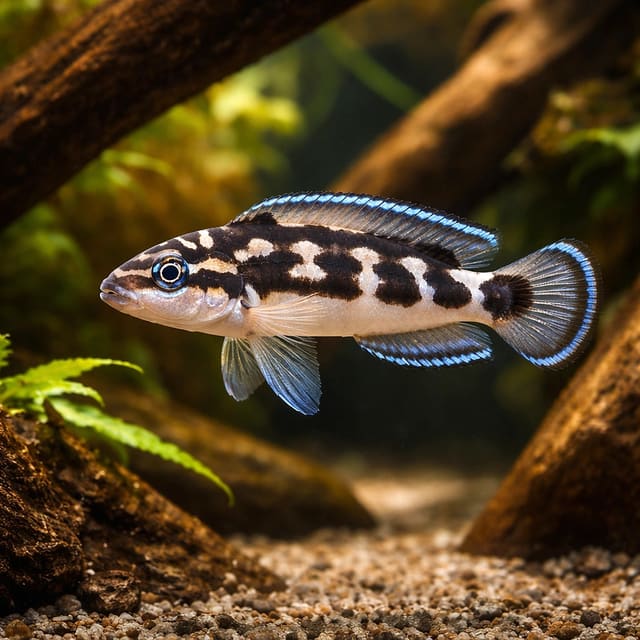
Masked Julie, Black and White (Julidochromis transcriptus) is a small Lake Tanganyika cichlid for an aquarium built around rocks, shelter and hard, alkaline water. Its pale body and bold dark markings give a clear contrast against stone, while its interest lies as much in its use of a territory as in its appearance. This is a fish to watch around the rockwork: a compact body does not make it an open-water shoaler or remove its need for personal space.
One purchase quantity supplies one live fish of your chosen size. The size choices are 3.5–4 cm, 4.5–5.5 cm and over 6 cm. The size you select is the size supplied, not the adult size. Choose a grade to suit the aquarium and its existing occupants, then allow for continued growth and territorial behaviour. Buying a larger grade cannot tell you that the animal will accept another fish already occupying a shelter.
Sex is guaranteed only when the selected option explicitly states male or female. This Masked Julie, Black and White listing has no sex-guaranteed option. Two fish ordered together should therefore be planned as two individuals requiring observation, rather than assumed to be an established breeding partnership. Where a pair is your aim, arrange the accommodation and a way to separate incompatible fish before bringing them home.
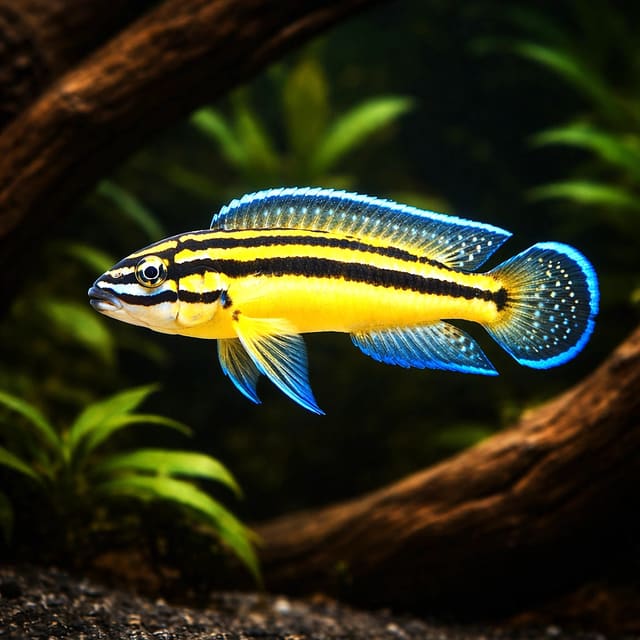
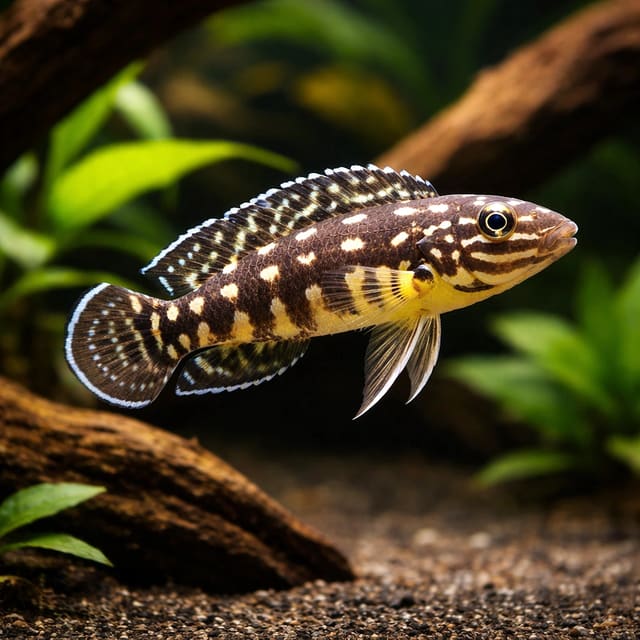
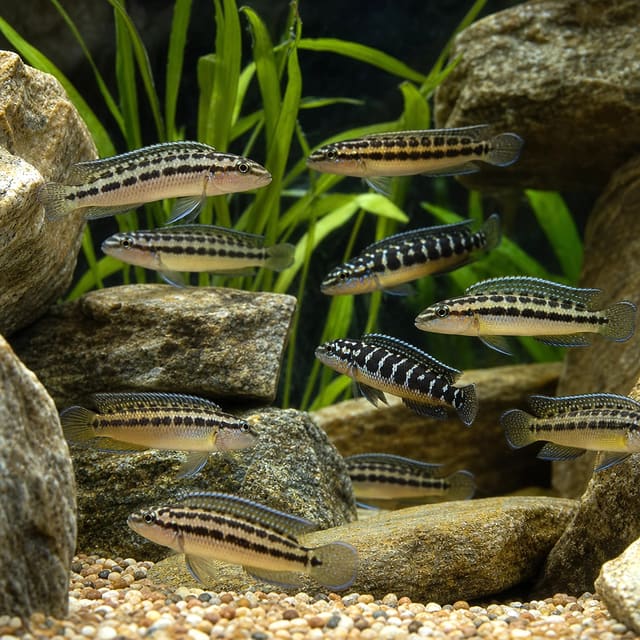
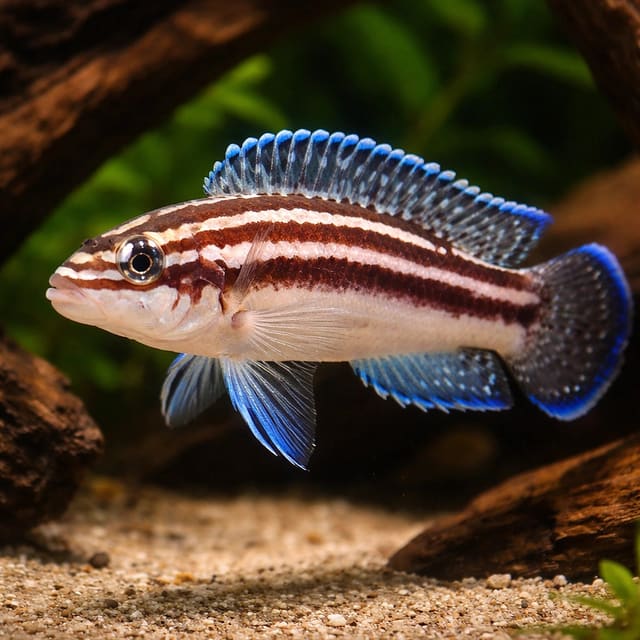
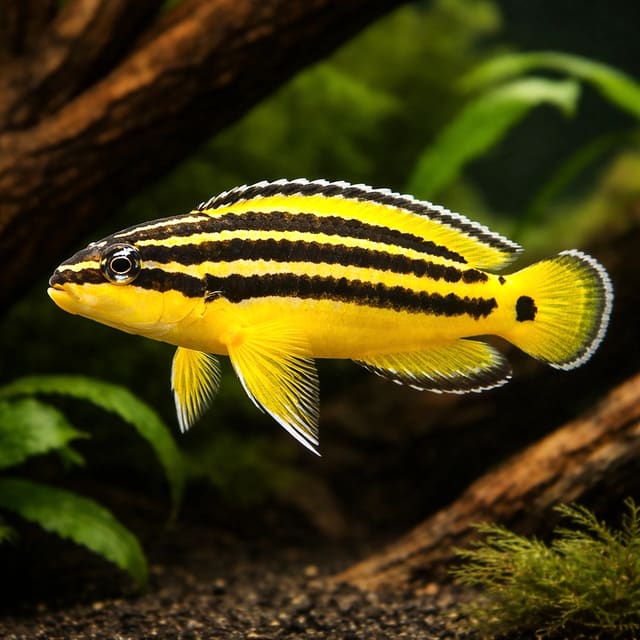
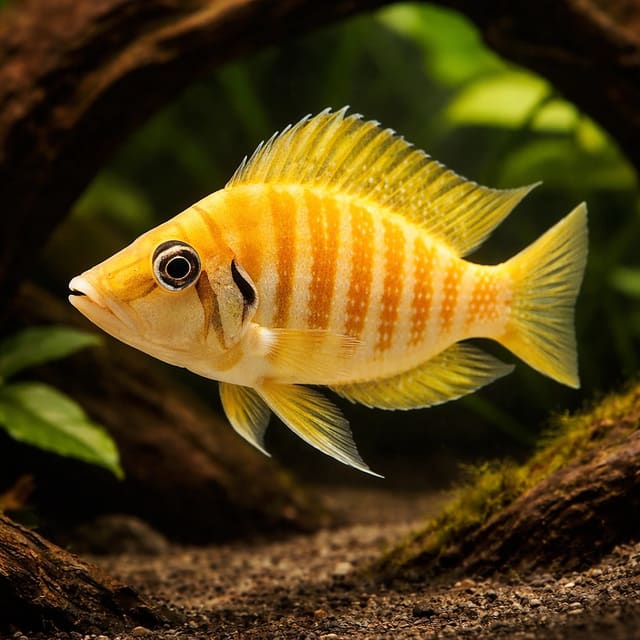
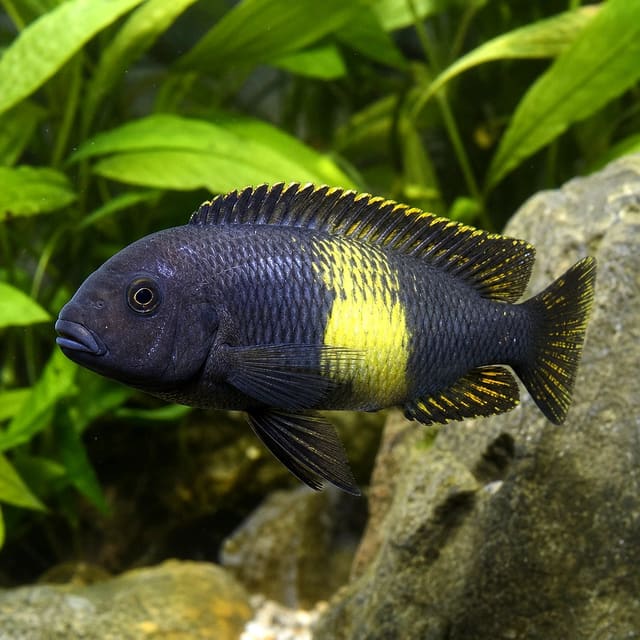
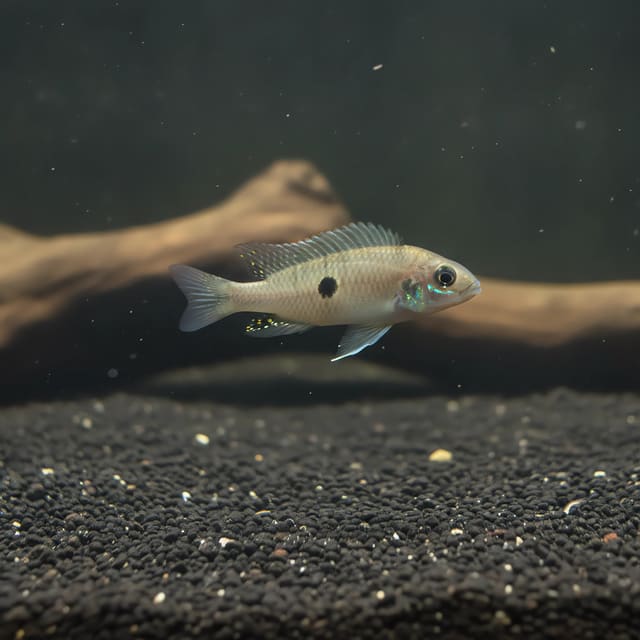
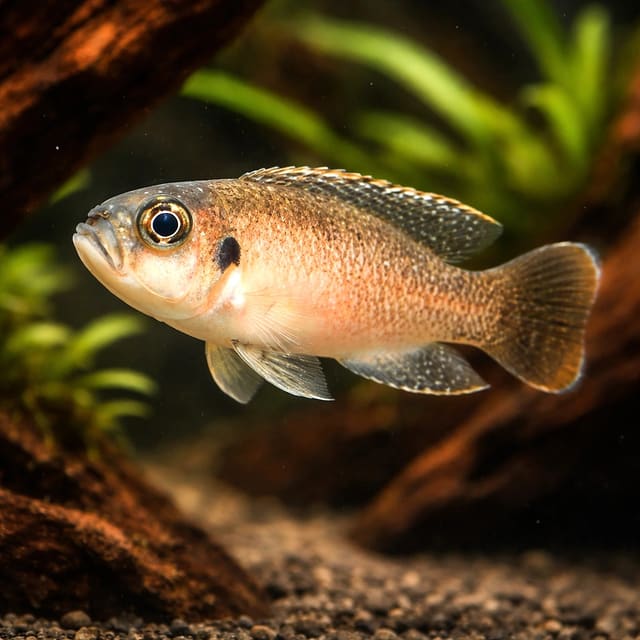
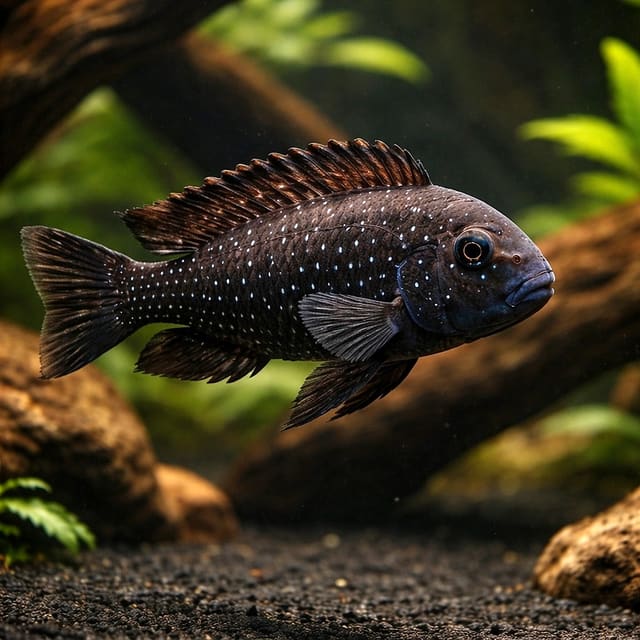
The gallery images are representative of this type of animal rather than photographs of the exact animal supplied, so colours can look slightly different from the live animal. The pictures show dark markings over a pale body, fine blue edging on the fins, and the fish viewed both individually and with another fish. Use them to examine the appearance of the listed type; the choice of plants or wood in a picture is not a complete aquarium plan.
The species comes from the rocky northwestern shore of Lake Tanganyika, between Luhanga and Makabola in the Democratic Republic of the Congo. That geographical range describes the species in nature. Its practical relevance is the combination of a rock-associated lifestyle and mineral-rich water: those are the features to think about when deciding whether your aquarium suits this fish.
It is a rewarding choice for a keeper who enjoys planning a relatively quiet specialist display, observing how fish use cover and maintaining consistent water conditions. The space between shelters, the ability to inspect each fish, and the amount of territory remaining after decoration all matter. A crowded pile of decorative rocks can look impressive while leaving very little useful room for the fish or access for cleaning.
Before ordering, check three things together: the aquarium's footprint, your measured water chemistry, and the likely behaviour of its occupants. Hard water on its own cannot tell you compatibility with every African cichlid. Equally, a fish of similar length can use the same sheltered areas and cause repeated conflict. Build the stocking plan around the Julie's territory rather than adding it as a final accent to an already busy tank.
Our African cichlid collection helps you compare the different kinds of fish offered, but the individual care requirements should decide which direction you take. For this species, a considered rock-based Tanganyika aquarium is the useful starting point. Its small size makes close observation possible; it does not make husbandry, water testing or social planning optional.
FishBase reports a maximum recorded length of 7 cm total length for male or unsexed fish. Total length includes the tail. Seriously Fish lists 65 mm standard length, equivalent to 6.5 cm, which excludes the tail. These are differently scoped measurements, so they should not be read as competing guarantees of the length every individual will reach. They establish a small cichlid, while the aquarium still needs to accommodate its territorial habits.
For aquarium planning, FishBase gives a minimum aquarium length of 60 cm and pair-based keeping guidance. That is a length measurement, not a 60-litre recommendation. Look at the actual base dimensions and the space left around the rocks. A tall tank with a small base can contain plenty of water without providing the separate sheltered areas that help you manage territorial fish. Extra floor area gives you more options as the fish settle.
Think through the maintenance access as carefully as the display. You should be able to see whether every fish is eating, remove accumulated waste and reach equipment without dismantling the whole layout. Leave enough room to work a siphon around the main rock structures. A tank that is easy to maintain consistently is a better prospect than one whose narrow gaps collect food but cannot be cleaned without disturbance.
Hard, alkaline water is central to the aquarium plan. OATA's guidance for African lake cichlids gives the following group ranges; they are broad aquarium guidance for the group, not a species-specific optimum for every Julie. Check your own tap and aquarium water and discuss the match before buying, particularly if you normally keep soft-water fish.
| Parameter | OATA African lake cichlid group guidance |
|---|---|
| Temperature | 23–27°C |
| pH | 8.0–8.6 |
| General hardness | 12–18°dGH |
| Carbonate hardness | 10–15°dKH |
| Ammonia and nitrite | Both zero mg/l |
| Nitrate | No more than 20 mg/l above the normal tap-water level |
FishBase separately records environmental values of 22–25°C, pH 8.5–9.2 and hardness 8–14°dH. These describe the species' recorded environment and should not be turned into an instruction to drive an aquarium to the upper limit of every range. Use an agreed aquarium plan and steady replacement-water preparation. The water chemistry guide explains what the different tests tell you.
A pH reading tells you whether water is acidic or alkaline; it does not tell you all you need to know about hardness. Include both general and carbonate hardness in your preparation. Recording the values makes a conversation about suitability much more useful than describing the water as simply local tap water. It also helps you see whether a change appeared after maintenance or was already present beforehand.
Set up a repeatable way to prepare replacement water before the fish arrive. Treat tap water with a suitable conditioner, check the temperature and make sure it matches the aquarium's planned chemistry. Avoid making large unmeasured adjustments in the occupied aquarium. If the source water needs substantial alteration, get advice on a consistent method you can maintain over time rather than experimenting around the fish.
The filter is part of the fish's life-support system. Fish release ammonia; beneficial bacteria in a mature biological filter process it into nitrite and then nitrate. Ammonia and nitrite are both harmful, so clear-looking water cannot tell you that a new tank is ready. The first aquarium setup guide is useful if you are preparing the equipment and learning how maturation works.
Confirm that the filter can handle the intended waste load before stocking. A calendar estimate is less informative than the tank's test results and its preparation history. Add livestock gradually, with testing and observation as the load changes. A filter established for a lightly stocked aquarium does not automatically have enough bacterial capacity for a sudden increase in fish and food.
OATA recommends generous filtration and vigorous aeration for African lake cichlid systems. Arrange circulation so that the aquarium is well oxygenated without leaving the fish with no sheltered area out of a direct outlet. Keep the intake accessible and check it for obstruction. If the flow visibly declines, examine the equipment rather than compensating by feeding less and hoping it will recover by itself.
Position the heater and thermometer where the reading represents the water the fish occupy. Check the temperature after setup and during ordinary maintenance. A heater setting is a control setting, not proof that the whole aquarium is at that temperature. Reliable equipment and simple routine checks are especially helpful when the aquarium contains substantial decoration that can conceal a blocked intake or obstruct circulation.
The natural habitat is rocky, and the aquarium should provide secure rock shelters and gaps the fish can use. Assess the stability of the arrangement before filling the tank or adding livestock. Follow the aquarium manufacturer's guidance on supporting heavy decoration. A fish should not be put at risk by a stone that moves during cleaning or by a stack balanced on a small contact point.
Arrange cover so that there is more than one useful retreat, with interrupted sight lines between areas. If all the shelters open onto the same exposed front corner, they may function as one contested area. Look at the layout from the fish's level as well as from above. A separate entrance and a visual barrier can be more useful than another decorative object added to an already cramped patch.
OATA discusses fine coral sand or similar substrates that can help buffer African lake cichlid water. Substrate choice must fit your measured water and maintenance method. Check the aquarium chemistry regularly even when you use a buffering substrate. Choose an aquarium-safe substrate, keep waste accessible and avoid making the bed so awkward to clean that routine maintenance becomes a major disruption.
Plants can be part of your display if their needs fit the water and layout, but prioritise the fish's shelter and movement. Keep equipment access and open routes around the rockwork. Do not copy a planted photograph without checking what its decoration would do in your own water. A thoughtful layout can be attractive while still allowing you to observe feeding and carry out ordinary tasks safely.
FishBase describes this species feeding on microorganisms in its natural habitat. That helps explain why the feeding plan should consider small accessible food items rather than assume that any pellet labelled for cichlids is suitable. Ask which prepared food the fish are accepting and use an appropriately sized aquarium food for a small cichlid. Watch the fish actually take it before judging the meal successful.
OATA emphasises that African lake cichlid diets vary between species. Its examples range from algae-focused feeders to predators, so a feeding recommendation for another Tanganyika cichlid cannot simply be transferred here. A varied suitable diet should still be measured. Large pieces disappearing behind rocks are wasted food unless you can see the fish eating them; they should not be treated as evidence that the tank needs a larger portion.
The OATA group feeding guide recommends modest meals twice daily, limited to what is eaten within a few minutes. Treat that as a starting framework and adjust the amount to the fish's appetite and the food used. Observe from a little distance so you can see whether a more hesitant fish gets a share. If food distribution is uneven, consider where you place the food before increasing the total.
Keep the feeding method simple enough for another person to follow when you are away. Explain the food and modest portion, and show where to watch the fish eating. Repeated extra pinches are easy to add when a fish appears interested. Uneaten food increases the waste load, particularly when it settles in inaccessible gaps, so a predictable routine supports both nutrition and water quality.
As general African lake cichlid advice, OATA recommends a partial water change of 25% at least once every week and regular testing at least weekly. Use this as a baseline routine, with the results and condition of the aquarium guiding any further action. Compare nitrate against the normal source-water reading. Testing only the aquarium without knowing what arrives in the replacement water can make the result difficult to interpret.
Use a siphon to remove accessible waste during the water change. Inspect the areas where food is delivered and where water movement leaves particles behind. You do not need to pull apart established shelters at every clean to maintain useful observation and access. If the layout repeatedly traps waste out of reach, plan a careful practical improvement rather than allowing the problem to accumulate.
Check the filter for blockages and follow its maintenance instructions. When biological media needs rinsing, OATA advises using water removed from the aquarium rather than tap water, because chlorine or chloramine can harm the bacterial population. Preserve the established biological filtration while removing excess debris. A visibly clean filter is not useful if the cleaning process has destroyed the bacteria on which the fish depend.
Keep a short record of temperature, test results, water changes and any change in appetite or behaviour. This need not be complicated. A few dated observations can distinguish a one-off disturbance from a continuing trend, and give a retailer or aquatic vet something concrete to work from if a fish becomes unwell. Consistency is easier when the routine is clear and achievable.
Watch each fish for changes in breathing, posture, appetite and fin condition. OATA also highlights altered colour, unusual swimming, increased hiding, visible spots or growths and changes in body condition. The important signal is a change from the individual fish's usual behaviour. A rock-associated fish using shelter is different from one that can no longer emerge to feed because another fish repeatedly drives it back.
If something changes, test the water and inspect the equipment promptly. Record what you see and seek advice with the actual results. Avoid treating a symptom as a diagnosis: rapid breathing, reduced feeding or pale colour does not identify a single cause. Health advice should take the whole aquarium into account, including other occupants and any recent additions or maintenance.
Plan how you would separate a fish if social conflict or illness required it. A spare empty container is not equivalent to suitable filtered accommodation. Discuss quarantine arrangements before adding new stock and keep any observation tank appropriate to the same water and welfare needs. This is especially useful in a decorated aquarium where catching a fish later may otherwise require dismantling much of its shelter.
Read the delivery and Live Arrival Guarantee policy before the delivery date. Tropical Fish Co uses oxygen-filled bags, an insulated box and a heat pack when the weather requires it, with a licensed live-animal courier. The confirmed date and tracking are sent by email. Arrange for someone to receive the parcel and open and inspect it on the day it arrives.
For a Live Arrival Guarantee claim, keep a continuous unboxing video showing the sealed parcel, its opening and the fish still in the sealed bag, and contact the team the same day with your order number. This video provides evidence for the claim. It is separate from the aquarium care the fish needs after transport, and should be planned before opening if you may need that evidence.
Follow the arrival instructions, including floating the bag for 20–30 minutes for temperature adjustment and acclimatising slowly. Do not pour transport water into the aquarium. Prepare the destination beforehand so the fish can enter an established, suitable environment without an improvised rearrangement. Observe breathing and movement after release and give the fish a calm opportunity to use the shelter you have provided.
Review the layout when you notice a practical problem rather than waiting for the next fish purchase. If one shelter cannot be inspected, consider how you will check its occupant without moving the stones. If equipment servicing requires reaching through an occupied territory, plan a safer access route. These small decisions are easiest to make while the aquarium is still being prepared, and can prevent unnecessary disturbance later.
Consider the needs of the person caring for the aquarium as well as the display itself. Keep the test kit, conditioner and feeding instructions easy to find, and make sure anyone helping understands that the replacement water needs preparation. Show them what ordinary feeding and breathing look like in your own fish. A useful handover explains what to observe and whom to contact, rather than simply leaving an instruction to feed every day.
When seeking help with an unsettled fish, include the aquarium dimensions, number and identity of occupants, recent test results, foods offered and any recent changes. A short description of where the fish spends its time can also help distinguish a shelter preference from exclusion by another occupant. The more concrete the information, the easier it is to decide whether the next step concerns water quality, the layout or the social arrangement.
Julidochromis transcriptus is territorial. Pair-based aquarium guidance is no assurance that two unfamiliar individuals will live peacefully together, and it is not a recommendation to assemble a shoal. Judge the actual relationship after introduction: whether both fish can use shelter, reach food and move around without one being permanently excluded matters more than their being the same species or size.
OATA generally recommends keeping African lake cichlids with species from the same location, and advises against casually mixing Malawi and Tanganyika cichlids because their temperaments and behaviours differ. For a Julie, that means starting with a Tanganyika plan and checking each proposed addition individually. A shared lake of origin is a useful screening step; it cannot ensure that every species from that lake will share this particular tank.
Compare the way each fish uses space. A prospective companion might require a different type of shelter, but you still need to examine whether its routes, feeding position and adult territory overlap with the Julie's. A tank that provides enough space for one pair may not have spare usable territory for another species. Count occupied areas and escape routes, not just the number of fish visible in open water.
Use the water parameter matcher to help compare measured conditions with stated guidance, then assess behaviour and space separately. Numerical overlap cannot account for persistent chasing or a fish blocking access to food. The final plan should allow every occupant to behave normally, receive suitable nutrition and withdraw from unwanted contact.
Brief displays and continuous exclusion are different situations. Watch which fish controls access to shelters and feeding areas, and whether the other fish resumes ordinary activity once a disturbance passes. Fin damage, repeated cornering, failure to feed or a fish remaining at the surface because it cannot enter the rockwork call for action. Extra food alone will not solve a physical barrier to feeding.
Have an appropriate separation plan ready rather than relying on the fish to settle every disagreement. Increasing crowding is not a universal remedy: OATA describes that approach for some African cichlid communities, not as a blanket rule for this species. A new addition should improve a carefully considered community, not be used as an experiment to distract an established territorial fish.
If you are deciding between a rock-focused Tanganyika display and one built around shells, compare the Gold Ocellatus Shell-Dweller. It represents a different shelter-based aquarium choice. Read its own requirements before deciding which approach suits your space; the link is a comparison of possible displays, not an instruction to combine the two in one tank.
Choose the overall type of aquarium first and add detail afterwards. That helps avoid buying an appealing fish whose needs conflict with the inhabitants already present. For the Julie, a stable specialist arrangement with clear boundaries is more useful than a long list of nominally compatible species. Leave room for adjustment as individuals grow and their use of the aquarium changes.
FishBase records 7 cm total length for male or unsexed fish. Seriously Fish gives 65 mm standard length, which excludes the tail. Keep those measurement scopes distinct when planning for an adult.
FishBase gives a minimum aquarium length of 60 cm. This is not a 60-litre minimum. Assess the footprint, rockwork and usable territories, with more space needed for additional occupants.
Species guidance describes aquarium keeping in pairs, but two unfamiliar fish are not automatically compatible. Observe both individuals and have suitable separate accommodation ready if one cannot feed or use shelter safely.
It suits a prepared keeper who can maintain hard, alkaline water, a mature filter and carefully managed territories. A first aquarium needs those foundations established before this fish is added.
Use appropriately sized prepared food for a small cichlid and establish what the fish is already accepting. OATA's African lake cichlid group guidance suggests modest meals twice daily, eaten within a few minutes; check that each fish receives food.
OATA's broad African lake cichlid aquarium guidance is 23–27°C and pH 8.0–8.6, with 12–18°dGH general hardness. These are group ranges, not a species-specific optimum; check the intended conditions before purchase.
It is territorial, especially where shelter and feeding space are contested. Watch for persistent exclusion, damage or missed meals and separate incompatible fish when needed.
Assess suitable Tanganyika species individually for water, territory and feeding needs. OATA advises against casual Malawi–Tanganyika mixing. Shared origin or similar size alone does not establish a safe combination.
Tropical Fish Co packs fish in oxygen-filled bags within insulated boxes, with heat packs when needed, and uses a licensed live-animal courier. Be present on the confirmed date. A Live Arrival Guarantee claim requires same-day contact and continuous video of the sealed parcel being opened with the fish still in the sealed bag.
FishBase: Julidochromis transcriptus provides the species identity, native range, habitat and labelled maximum-length record, along with aquarium-length and pair guidance. Seriously Fish: Masked Julie gives the separate standard-length measurement and rocky habitat context.
OATA: African lake cichlid care supplies the explicitly labelled group guidance on water, feeding, maintenance and community planning. RSPCA: a suitable environment for fish explains the role of established filtration in aquarium welfare.
No reviews for this item yet. Bought one? Honest reviews only, good or bad.
What customers say about ordering from us
I have a small group of long finned mountain minnows. So was delighted to be able to order ten of this variety to increase the genetics in my tank . The ones I recieved are healthy but it’s to early to give a verdict on wether they are of a long finned type since they are small currently.
Gordon Walker · 23 Sept 2026
100% success travel and "installation". Pleased with quality of purchase. The Siamese fighter a bit "shy" so have not yet seen him at his best yet but looking good. Happy customer. GG
George E Garratt · 21 Sept 2026
Reviews of our shop, collected by Judge.me, an independent third-party review collector. Newest first.