Advanced
Petrochromis sp. "Kazumbe" Cape Kabogo
23–27°C · pH 8–8.6
£62.99
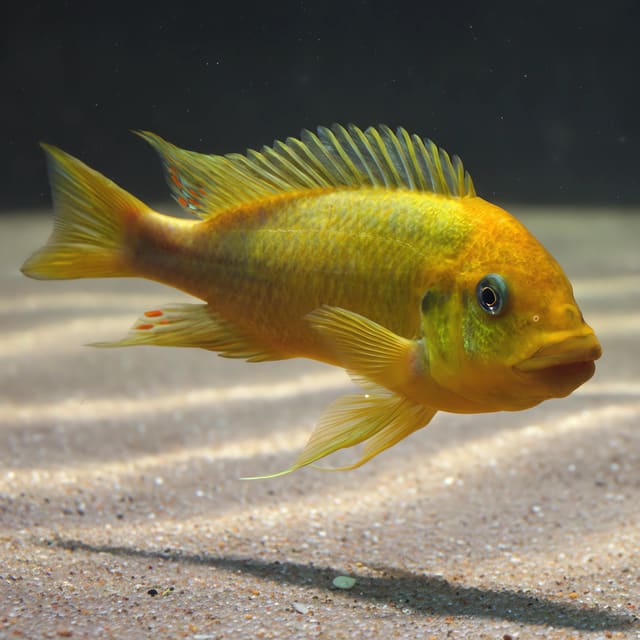
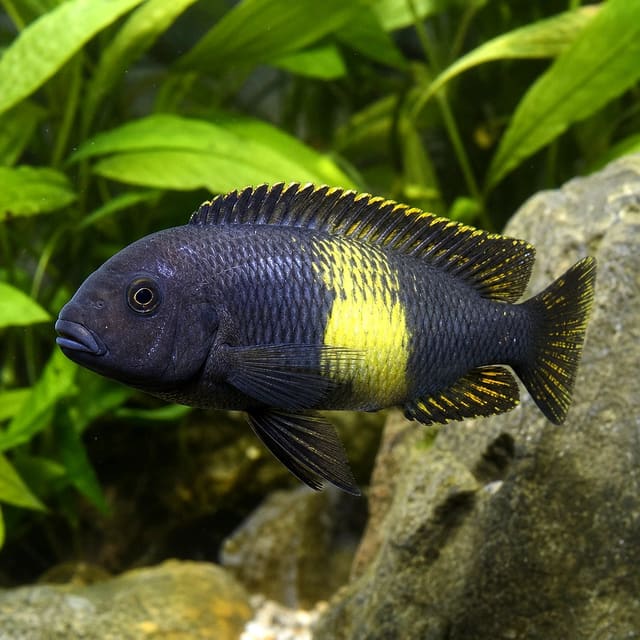
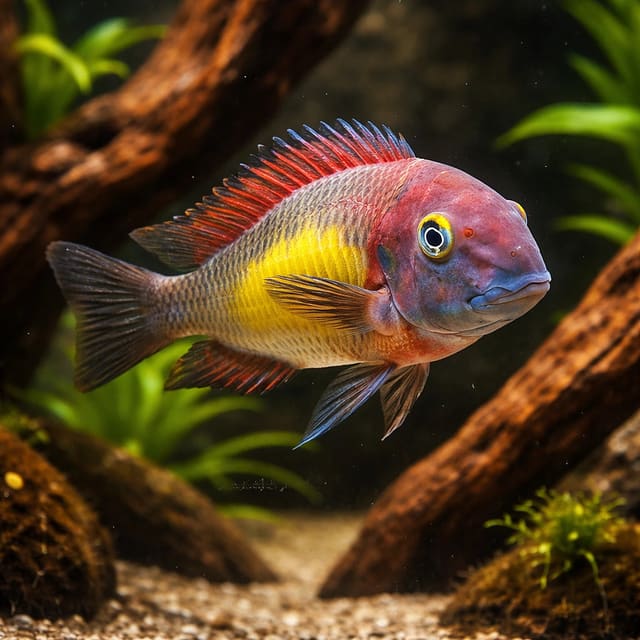
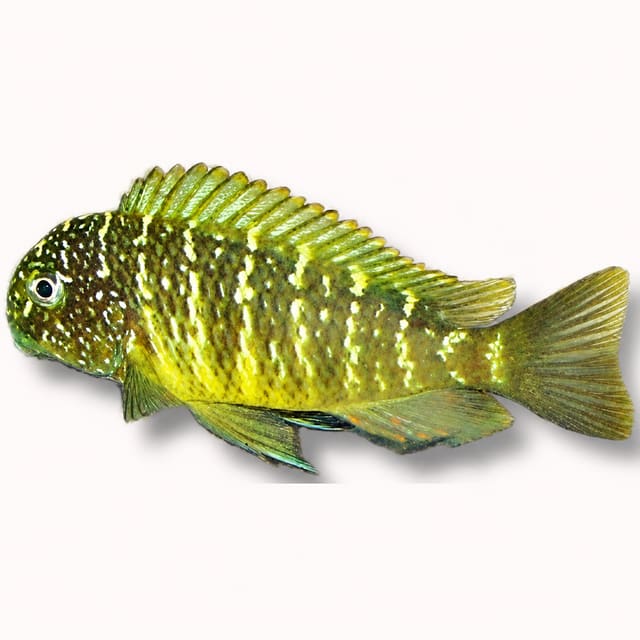
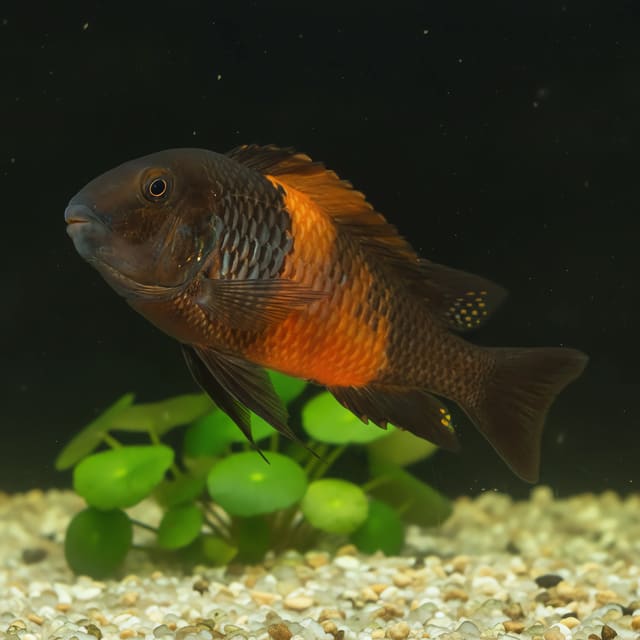
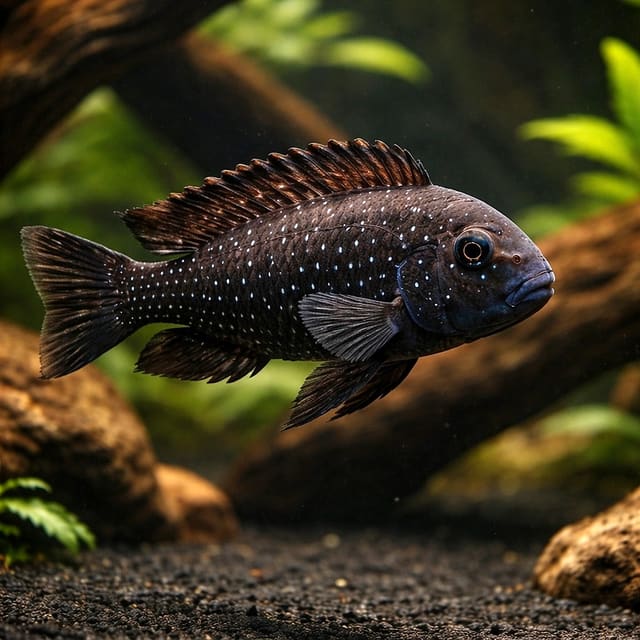
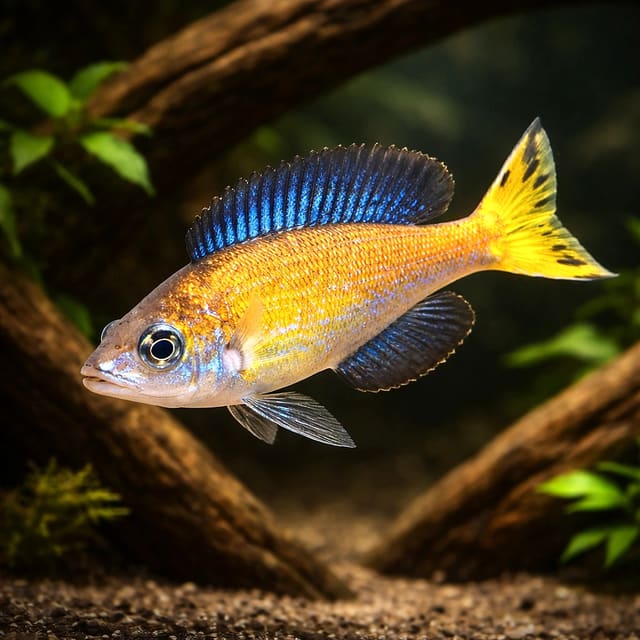
Trewavas' Petrochromis (Petrochromis trewavasae) is a substantial Lake Tanganyika rock grazer for advanced cichlid keepers. It reaches 18 cm total length, is usually found in groups and needs a spacious, mature, well-filtered hard-water aquarium planned around rocks, feeding access and social behaviour. One purchase supplies one unsexed fish in the size selected.
Adult size is the maximum length this species reaches at full maturity (scientific sources). The livestock you receive will be younger and smaller — pick a size above for the actual shipping size. Product-photo provenance and any image-specific limitations are stated on the listing.
Petrochromis trewavasae
Save when buying multiple fish. Each quantity is one fish; sex and pair formation are not guaranteed unless the selected variant explicitly states them.
Trewavas' Petrochromis (Petrochromis trewavasae) is a substantial Lake Tanganyika rock grazer for advanced cichlid keepers. It reaches 18 cm total length, is usually found in groups and needs a spacious, mature, well-filtered hard-water aquarium planned around rocks, feeding access and social behaviour. One purchase supplies one unsexed fish in the size selected.
Adult size is the maximum length this species reaches at full maturity (scientific sources). The livestock you receive will be younger and smaller — pick a size above for the actual shipping size. Product-photo provenance and any image-specific limitations are stated on the listing.

Cichlids are a family of roughly 1,800 accepted species, not one care type. Before buying, identify the exact species and source, then compare adult measurement, usable tank dimensions, social system, territory, tested water, diet and an exit plan. No family-wide minimum tank, water range or tank-mate list is safe.
Maintain these water conditions for optimal health and vibrant colors
Trewavas' Petrochromis (Petrochromis trewavasae) is a specialised Lake Tanganyika cichlid for an aquarist who enjoys building a system around the fish rather than adding a fish to an ordinary community. It comes from shallow rocky habitat in the south-western part of the lake, where it browses the living coating on stone. The combination of a substantial adult body, constant grazing, group-oriented behaviour and mineral-rich water makes it a rewarding project for an experienced African-cichlid keeper.
One purchase supplies one live fish in the size selected. The shop carries 5–6 cm and XL size choices; those labels describe dispatch size rather than maturity. The size you select is the size supplied, not the adult size. FishBase records a maximum of 18 cm total length, so the aquarium, filtration and social plan must be prepared for a much larger adult than the smallest dispatch grade. The XL label remains a shop size label rather than a promise of a particular centimetre measurement.
This is an unsexed offer. Sex is guaranteed only when the selected option explicitly states male or female. This Trewavas' Petrochromis listing has no sex-guaranteed option. Colour, pattern, body depth and maturity vary between individuals. Females are known to mouthbrood, but that natural-history fact is not a way to sex a young fish at purchase. Choose this species for its ecological character and behaviour, not because a particular sex, breeding result or exact future appearance is promised.
| Suits | Think carefully if |
|---|---|
| An advanced keeper planning a dedicated hard-water Tanganyika aquarium | You need a peaceful mixed community or soft, acidic water |
| A spacious layout with stable rockwork, open grazing faces and clear retreat routes | The aquarium footprint cannot separate feeding areas and social pressure |
| A mature biological filter, dependable testing and strong oxygenation | The system is new, unstable or maintained by large swings in chemistry |
| A keeper willing to plan a group and observe interactions over time | You want a fish with a guaranteed sex or a simple fixed stocking formula |
Petrochromis trewavasae is endemic to Lake Tanganyika. Scientific records describe it in shallow rocky habitat, usually in groups, scraping rock biocover and algae with a digestive tract adapted to that grazing lifestyle. The threadfin cichlid natural-history summary independently describes the same endemic lake identity, rocky setting and 18 cm length. That tells the keeper what the aquarium should prioritise: extensive stable surfaces, room to move between them, food that suits a grazer, and clean oxygen-rich water. It does not turn the fish into a general algae-control tool. An adult cichlid still produces waste, needs deliberate feeding and can contest access to valuable surfaces.
FishBase records wild environmental values of 23–25°C, pH 7.5–8.5 and hardness beginning at 10 dGH. Treat these as species-level environmental context, with stability and suitability taking priority over chasing a daily number. The important buyer decision is whether the home aquarium can remain consistently hard and alkaline while also providing the filtration, floor area and rock structure a robust 18 cm cichlid needs.
Aquarium size and group number must be chosen together. A single volume would hide the variables that matter: length and width of the tank, usable grazing surface, number and placement of rock structures, oxygen delivery, filter capacity, the size and temperament of every resident, and the keeper's ability to intervene if one fish is pressured. Plan the adult stocking arrangement first, then choose the largest practical footprint that gives the intended group room to distribute itself.
For a broader view of suitable stock, browse the African cichlid collection, but treat every listing as its own compatibility decision. Similar origin does not make two fish automatic tank mates. Petrochromis alternatives belong in the related-products area as other buying possibilities, not as proof that they should share an aquarium.
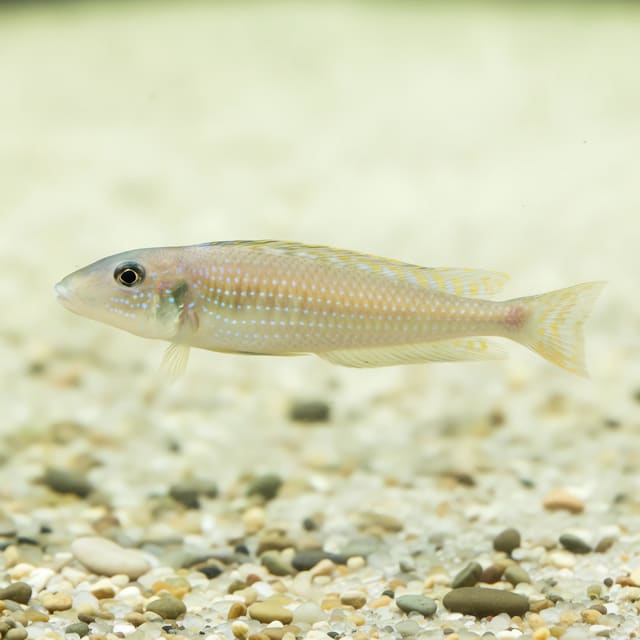
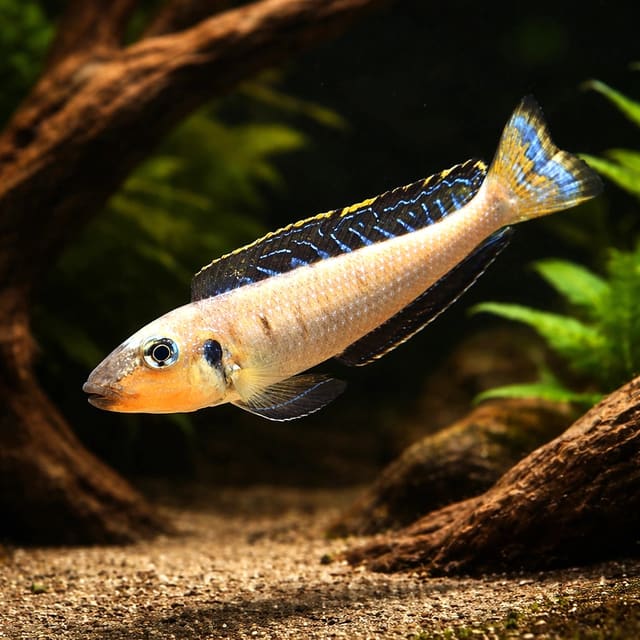
Gallery images have been digitally enhanced to improve image quality. Natural colour, pattern, size and maturity can vary between live animals.
The natural setting is a shallow rocky part of Lake Tanganyika, so the aquarium should offer a broad, stable rockscape rather than a decorative pile balanced on loose substrate. Set the main rocks securely before livestock is introduced. Create several routes around and between structures, leave enough open water for a full-grown fish to turn comfortably, and avoid narrow dead ends in which a subordinate individual can be trapped. Several separate rock areas and open routes make it easier to observe which fish can reach space and food, while exposed stone gives the group places to browse.
Use a substrate and mineral-management method that suit a hard, alkaline Tanganyika system. OATA's African lake cichlid guidance mentions fine coral sand or similar buffering substrate, but the aquarist should still test the actual source and aquarium water rather than assuming a substrate will produce the right result. If you need a refresher on pH, hardness, ammonia, nitrite and nitrate, the aquarium water-parameter guide explains what each reading means. The water matcher can then help compare measured values with the ranges considered here.
Keep the design serviceable. A beautiful wall of stone is a poor long-term layout if detritus accumulates behind it, the filter intake is blocked or a fish cannot be observed. Leave access for siphoning and make sure circulation reaches the whole footprint. Rockwork must be stable enough that routine maintenance, digging or a startled fish cannot bring it down. Plants are not necessary to explain this species' appeal; the important living surface is the rock biocover that a grazer can explore.
FishBase records 23–25°C, pH 7.5–8.5 and at least 10 dGH for the species' wild environment. These are not a licence to swing between endpoints. Select a stable point that suits the whole planned Tanganyika stock, and match new water carefully during maintenance. A mature aquarium should have zero measurable ammonia and nitrite. OATA's broad African lake cichlid guidance also describes hard, alkaline water and says nitrate should not exceed 20 mg per litre above the level in the incoming tap water.
Test source water before buying the fish, then test the aquarium under its real feeding and stocking load. If the tap water changes seasonally, record the trend and adjust replacement water consistently rather than reacting after the fish show stress. Do not alter pH abruptly with improvised doses. Stable mineral content, temperature and gas exchange are more useful than repeatedly pushing a reading up and letting it fall again.
Use a properly matured biological filter. The RSPCA fish-environment guidance explains that beneficial bacteria convert toxic ammonia first to nitrite and then to safer nitrate; both ammonia and nitrite must be controlled by an established system. Petrochromis is not a sensible fish with which to test whether a new filter has cycled. If the aquarium itself is new, follow the step-by-step aquarium setup guide and prove that the filter can handle waste before the animal arrives.
OATA recommends oversized filtration and vigorous aeration for crowded African lake cichlid communities. Apply that broad advice thoughtfully: the correct equipment is the equipment that keeps ammonia and nitrite at zero, controls accumulating solids, maintains good circulation and leaves a margin for a substantial adult fish. Filter turnover figures alone do not show how well water reaches behind rocks or how much biological media remains effective. Observe flow through the actual layout and add aeration where gas exchange is weak.
Arrange outlets so there is movement without forcing every fish to hold station in one exposed jet. Surface agitation is particularly useful in a warm, heavily stocked cichlid aquarium because dissolved oxygen can become a limiting factor. Watch breathing rate and position in the tank. A fish repeatedly hanging at the surface, hiding more than usual, darkening or refusing food is a prompt to test water and inspect circulation immediately, not simply a personality quirk.
Inspect the filter for blockages during maintenance. If filter media needs cleaning, rinse it lightly in removed aquarium water rather than running it under the tap, which can damage the beneficial bacterial population. Preserve the biological capacity of the system while removing enough trapped waste to keep flow reliable.
OATA's broad African lake cichlid routine calls for a partial water change of 25% at least once every week. That is a sensible starting rhythm for planning, but readings and stocking load decide whether the aquarium needs additional attention. Siphon accessible debris, inspect rock stability, clean viewing panes without contaminating the water and check that intakes, outlets and air delivery remain clear. Treat replacement tap water for chlorine or chloramine before it enters the aquarium.
Record temperature, pH, hardness, ammonia, nitrite and nitrate, especially while the group is settling or growing. A short log turns a vague impression into an early warning: rising nitrate may show that feeding or water-change volume needs adjustment, while a pH trend may reveal inadequate buffering or a change in source water. Make changes gradually and re-test. A consistent routine is safer than occasional large corrective interventions.
Do a head count and visual health check at feeding time. Look for clear eyes, intact fins and scales, steady breathing, an even body condition and confident access to space and food. Pay attention to a fish that is repeatedly displaced or restricted to one corner. Social stress can appear before physical injury, so the layout and stocking plan should be reviewed while all fish are still feeding.
Begin the routine by watching the fish before putting hands in the aquarium. Note where each individual is swimming, whether every fish approaches food, and whether one animal is spending longer than usual behind equipment or at the surface. Behaviour observed before disturbance is often more informative than behaviour during a water change. Follow with temperature and water tests, writing down the results so gradual drift is visible.
Next, inspect the working parts of the system. Confirm that the filter outlet has its normal force, the air supply is producing reliable surface movement and no intake is obstructed. Look behind accessible rocks for settled waste and check that the structure has not shifted. Siphon debris while removing the planned water volume, but leave stable useful biocover on grazing faces rather than sterilising every surface.
Prepare replacement water to a closely matched temperature and suitable chemistry, using conditioner before it enters the aquarium. Refill without undermining the rock base. Once equipment is running again, check for leaks, trapped air and restored circulation across the full footprint. Test again whenever a result or fish behaviour gives a reason, rather than assuming that completing the change has solved the cause.
Finish by feeding a measured portion and watching access. If one fish repeatedly loses every feeding opportunity, respond to the social pattern as well as the diet. The goal is a repeatable routine that connects water readings, equipment performance, appetite and group behaviour. That record is especially useful as juveniles approach adult size and the load on filtration and space increases.
Scientific natural-history records describe P. trewavasae scraping rock biocover and feeding on algae. Build the aquarium diet around an appropriate algae-rich or plant-forward African-cichlid staple rather than treating the fish as a general omnivore. Choose foods whose particle size matches the fish at its current dispatch size, and distribute them across enough space that one individual cannot monopolise every mouthful.
OATA's group-level guidance names high-algae specialised cichlid foods and fresh vegetables for herbivorous African lake cichlids. Use that as broad practical context rather than a species-specific recipe. Introduce any new food gradually, observe what is actually eaten and remove persistent leftovers. Feed only an amount the fish can consume within a few minutes, twice a day, as stated in that group guidance. The aim is regular controlled feeding, not a heavy meal that leaves waste to break down among the rocks.
Natural grazing behaviour and prepared food serve different purposes. Allowing biocover to develop gives the fish something to browse and encourages characteristic movement, but it does not guarantee a complete diet. Equally, a fish that scrapes algae does not keep the aquarium clean by itself. Maintain the surfaces, filtration and feeding plan as parts of one system.
Avoid abrupt changes to rich, high-animal-protein foods. The evidence here establishes a long digestive tract and algae-focused grazing but does not authorise a disease claim or treatment recipe. If appetite falls, test water, examine social access and review recent food changes before adding remedies. Persistent symptoms need diagnosis rather than speculative medication.
A 5–6 cm fish places a different immediate demand on space and food size from an 18 cm adult, but the small starting size should not decide the permanent aquarium. Leave room in the rock design for a wider-bodied fish to turn and graze. Check that narrow gaps will remain usable as the animal grows, and make sure no route ends behind a fixed structure. The aquarium should not need disruptive rebuilding each time the fish reaches a new stage.
Growth also changes the biological load. Watch the trend in nitrate between water changes and the amount of solid waste collected during siphoning. If readings worsen as the fish develops, improve the maintenance or filtration plan before compensating with less food. Feeding must remain appropriate, but underfeeding a growing animal is not a water-quality strategy. A sound system handles the waste created by a suitable diet.
Review the social arrangement as body size changes. A route that allowed juveniles to pass may become a contested bottleneck, and a feeding area that once served the group may become easy for one larger fish to control. Compare behaviour across several days and at more than one feeding point. Where one fish is consistently disadvantaged, adjust the management plan promptly rather than waiting for obvious injury.
On arrival day, note breathing, balance, skin and fin condition before introduction. During the first week, check whether the fish begins to use the rockwork, responds to food and maintains an even body condition. Test ammonia and nitrite more frequently after the stocking change because the filter now has more waste to process. Keep other changes to a minimum so any problem has fewer possible causes.
Across the next few weeks, record appetite, preferred areas and interactions at roughly the same times of day. A single shy moment matters less than a worsening pattern. Repeated surface hanging, isolation, darkening, rapid breathing or missed feeds should trigger water testing and a review of flow, feeding access and social pressure. If readings are unsafe, correct the water problem with controlled maintenance; if one fish is being excluded, use the prepared separation plan.
This period is also the right time to refine food size and distribution. The fish should be able to take each portion readily without a cloud of uneaten material entering crevices. Spread the ration over useful rock areas, observe which individuals feed and stop once the measured portion has been consumed. Consistent observation connects husbandry decisions to the fish in front of you instead of relying on a generic timetable.
Prepare the aquarium, quarantine plan and testing equipment before delivery day. The store's delivery and Live Arrival Guarantee page contains the current policy. Someone must be present to receive live fish, the parcel must be opened and inspected on the day it arrives, and claim evidence must be captured before the bag is disturbed.
Arrival is not the time to reconstruct the rockscape. Finish heavy layout work beforehand and confirm that the system is stable. During the first days, prioritise water quality, access to food and freedom from sustained harassment. A newly arrived grazer may explore cautiously; what matters is a trend towards steady breathing, confident movement and normal feeding rather than an instant display.
FishBase describes Petrochromis trewavasae as usually found in groups. OATA likewise warns that very few African lake cichlids do well singly, while making clear that the number depends on the species. Those statements support a group-oriented plan but not a universal head count. The practical task is to match the number of fish to a suitably large footprint, a stable rockscape, feeding distribution and the aquarist's ability to respond if pressure becomes one-sided.
Do not assume that buying one fish creates a complete social arrangement. One purchase supplies one animal, so the total number must be chosen deliberately. Equally, adding several without sufficient space is not a welfare shortcut. Decide the intended adult group and any other residents before ordering, then evaluate whether the aquarium can provide multiple usable areas at the same time.
OATA's broad guidance advises keeping African lake cichlids with species from the same location and generally avoiding a Malawi–Tanganyika mix because temperament and behaviour differ. For this fish, the clearest starting point is therefore a deliberately planned Lake Tanganyika aquarium whose residents share hard, alkaline water and whose adult sizes and feeding styles have been considered together.
That is a screening rule, not a list of universally safe companions. Another Tanganyikan cichlid may still be too timid, too aggressive, too small, too similar in resource use or unsuitable for the available footprint. A robust resident that can live in the same water may compete directly for rock and food. Review the complete adult stocking plan, not just the origin label.
Avoid soft-water community fish and any animal likely to be overwhelmed by a substantial territorial cichlid. Avoid casual mixing with Malawi cichlids. Treat other Petrochromis and similarly assertive rock grazers with particular caution because they may value the same surfaces and feeding zones. Avoid small community fish and delicate invertebrates; treat any catfish as a separate compatibility decision rather than an assumed companion.
Build several separate rock structures rather than one prize cave. Use separate rock areas without creating traps, and leave open routes between feeding areas. Spread food so more than one fish can feed at once. These choices do not remove natural cichlid behaviour, but they make it easier to see whether one fish is controlling every key resource.
OATA suggests adding more peaceful residents before more aggressive ones and notes that rearranging decor can help when territories need to be reset. Apply that broad advice cautiously and only when the rockwork can be moved safely. Never destabilise heavy stone around fish. Add livestock slowly so the biological filter can adjust to the increased waste, and monitor ammonia and nitrite after every meaningful stocking change.
Before adding any companion, compare four things on paper: the adult size of both species, their water requirements, where and how they feed, and which physical areas they are likely to defend. A fish that passes only the water test has not passed the compatibility test. Two rock-associated grazers can share chemistry while competing for exactly the same surface and food.
Then compare that plan with the real aquarium. Count the separate usable areas, not the number of ornaments. Check whether food can be delivered to more than one area and whether a fish can move away without entering another defended site. Leave capacity in the filter and maintenance routine for adult biomass rather than filling the system around juvenile sizes.
Add fish slowly, retest ammonia and nitrite, and observe beyond the first dramatic minutes. The decisive pattern is whether every resident can use the aquarium, rest and eat over repeated observations. If the plan fails, separation is a responsible management action. Adding extra fish merely to spread aggression changes both the social pressure and biological load, so it should never be an improvised response in an aquarium that was not designed for it.
Brief displays and movement around valuable areas can be part of cichlid communication. The concern is sustained exclusion: one fish repeatedly pinned behind equipment, unable to graze or feed, breathing hard, losing condition or showing accumulating fin and scale damage. If that pattern develops, act before injury becomes severe. Separate fish safely if necessary, review group composition and rebuild the plan around usable space rather than merely adding another ornament.
Do not use colour or size alone to declare sex or status. This offer carries no sex guarantee, and a photograph cannot turn an unsexed fish into a sexed purchase. Judge suitability by the aquarium and the observable welfare of the whole group.
| Compatibility checkpoint | Decision |
|---|---|
| Water | All residents must suit stable hard, alkaline Tanganyika conditions. |
| Adult scale | Plan for an 18 cm Petrochromis, not the dispatch size. |
| Space | Provide enough floor area and rock faces for the intended group. |
| Feeding | Ensure every fish can reach an appropriate diet without constant displacement. |
| Behaviour | Have a safe intervention plan if one individual is persistently excluded. |
FishBase records Petrochromis trewavasae at a maximum of 18 cm total length. The 5–6 cm and XL shop labels are dispatch sizes, not adult sizes, so the aquarium and stocking plan must allow for a robust adult.
Use a genuinely spacious, long-fronted aquarium planned for an 18 cm rock-grazing cichlid, stable rock structures, strong filtration and the intended group. A fixed species-specific litre minimum is not available here, so choose the adult stocking plan first and prioritise footprint, usable territories and water quality rather than a bare volume.
Petrochromis trewavasae is usually found in groups, and broad African lake cichlid guidance warns that few members of the group do well singly. There is no universal aquarium head count: select the number only after the adult footprint, rockwork, feeding access and intervention plan are settled. One purchase supplies one fish.
It is best treated as an advanced fish. Its 18 cm adult size, specialised rock-grazing diet, hard alkaline water, group-oriented behaviour and need for carefully managed space make it a better match for an experienced Tanganyika cichlid keeper.
Trewavas' Petrochromis scrapes algae and rock biocover in nature. In the aquarium, use an appropriate algae-rich or plant-forward African-cichlid staple, with fresh vegetable foods as broad group guidance suggests. Offer controlled portions the fish can finish within a few minutes and distribute food so every group member can feed.
Species-level wild records give 23–25°C, pH 7.5–8.5 and hardness beginning at 10 dGH. Keep the aquarium stable within a hard, alkaline Tanganyika plan, with zero measurable ammonia and nitrite, rather than allowing values to move repeatedly between endpoints.
It is a substantial cichlid that can compete for rock, grazing space and food. Its central compatibility risk is competition for rock, grazing space and food, so the group and layout need active management. Watch for sustained exclusion, damaged fins, rapid breathing or a fish unable to feed, and intervene early.
Start with carefully researched Lake Tanganyika cichlids that share hard alkaline water and suit the adult footprint, while screening each species for size, temperament and feeding competition. Avoid soft-water community fish, casual Malawi–Tanganyika mixing and any companion likely to be overwhelmed.
Tropical Fish Co hand-packs live fish in oxygen with an insulated box and uses a licensed live-animal courier. Someone must receive the parcel. For a Live Arrival Guarantee claim, make a continuous unboxing video from the sealed parcel through to the fish still in its sealed bag, inspect it the same day and contact the shop with the order number before release.
The biological identity, adult length, wild environmental values, rocky habitat, grouping and grazing behaviour are drawn from the FishBase species account for Petrochromis trewavasae. The threadfin cichlid summary provides a second concise account of its endemic Tanganyika identity, rocky habitat and 18 cm length.
General aquarium practice comes from OATA's African lake cichlid care sheet and the RSPCA's fish environment and filtration guidance. These are broader welfare references, not proof of a species-specific tank volume or group count. Delivery, receiving and claim steps follow Tropical Fish Co's current delivery and Live Arrival Guarantee policy.
No reviews for this item yet. Bought one? Honest reviews only, good or bad.
What customers say about ordering from us
Easy website plenty of info on fish your buying great to pick a time slot
TRACEY DURRANT · 7 Oct 2026
Got some lovely fish thank you
Kevin Mackie · 7 Oct 2026
Reviews of our shop, collected by Judge.me, an independent third-party review collector. Newest first.