−13%
Moderate
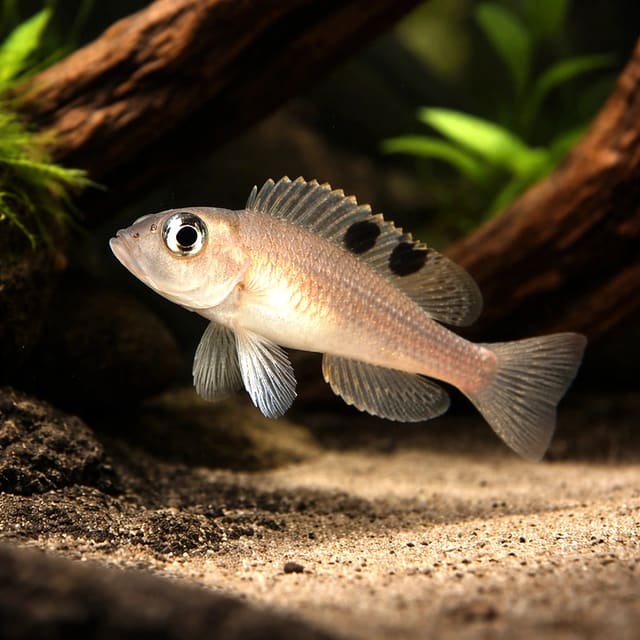
Gold Ocellatus Shell-Dweller (Neolamprologus ocellatus)
23–25°C · pH 8–9
£17.39£19.99

Brichard’s Chalinochromis is a Lake Tanganyika cichlid for experienced hard-water keepers who can provide secure rockwork, stable mineral-rich water and a plan for territorial conflict. One fish is supplied in the chosen size; sex is not guaranteed.
Adult size is the maximum length this species reaches at full maturity (scientific sources). The livestock you receive will be younger and smaller — pick a size above for the actual shipping size. Product-photo provenance and any image-specific limitations are stated on the listing.
Chalinochromis brichardi
Save when buying multiple fish. Each quantity is one fish; sex and pair formation are not guaranteed unless the selected variant explicitly states them.
Brichard’s Chalinochromis is a Lake Tanganyika cichlid for experienced hard-water keepers who can provide secure rockwork, stable mineral-rich water and a plan for territorial conflict. One fish is supplied in the chosen size; sex is not guaranteed.
Adult size is the maximum length this species reaches at full maturity (scientific sources). The livestock you receive will be younger and smaller — pick a size above for the actual shipping size. Product-photo provenance and any image-specific limitations are stated on the listing.
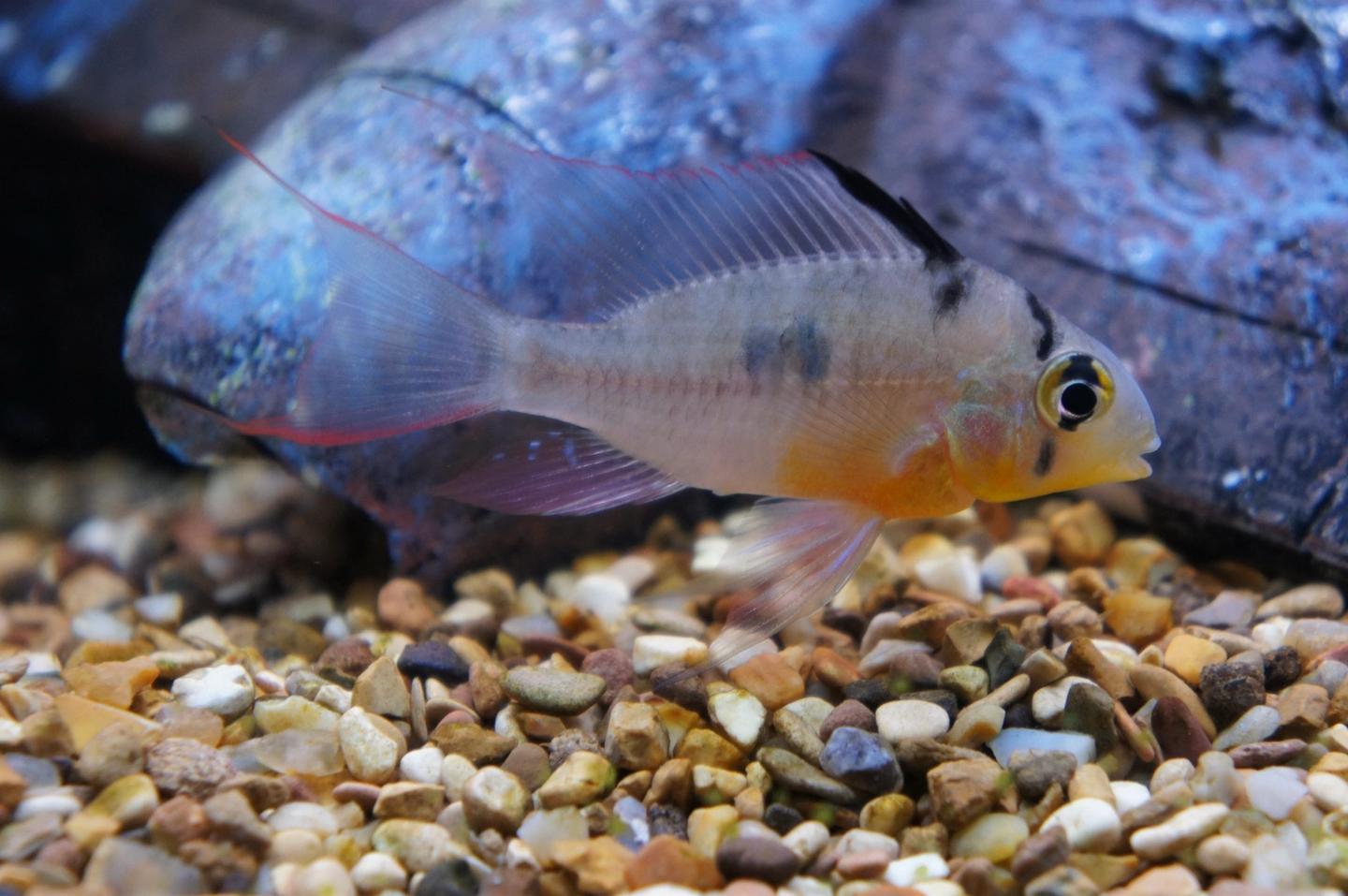
Cichlids are a family of roughly 1,800 accepted species, not one care type. Before buying, identify the exact species and source, then compare adult measurement, usable tank dimensions, social system, territory, tested water, diet and an exit plan. No family-wide minimum tank, water range or tank-mate list is safe.
Maintain these water conditions for optimal health and vibrant colors
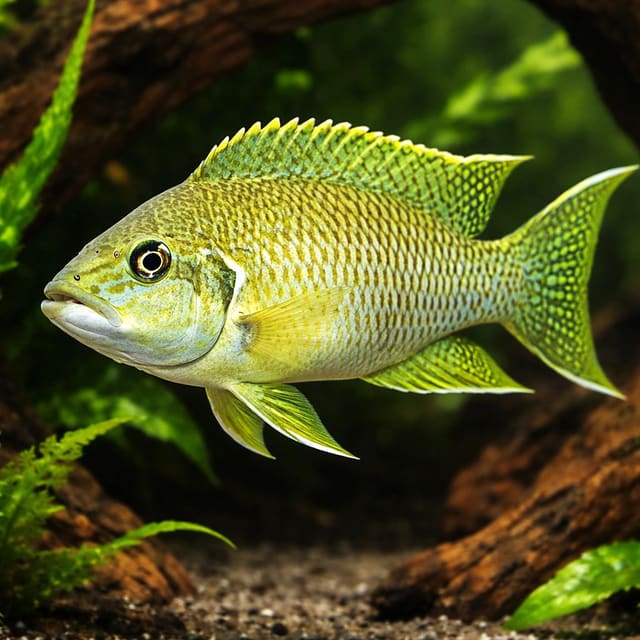
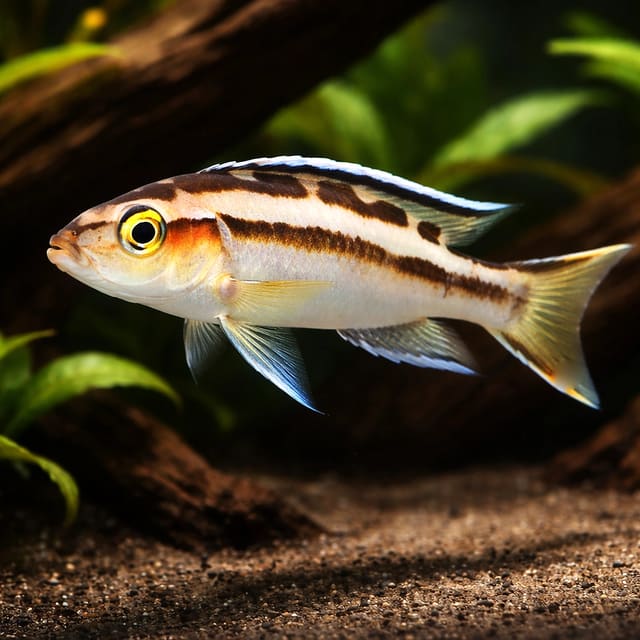
Brichard’s Chalinochromis (Chalinochromis brichardi) is a freshwater cichlid found only in Lake Tanganyika. It is associated with rocky and rubble habitat, where FishBase records it feeding on invertebrates growing on rock surfaces and within the biocover. This is therefore a specialist hard-water choice rather than a fish for a typical soft-water community. Its appeal lies in its slim cichlid form, purposeful behaviour around cover and the challenge of building a stable Tanganyika-style environment around it.
One purchase supplies one live fish. The listing has three genuine size choices: 4–5 cm, 5–7 cm and over 8 cm. Use the live selector for the current price and availability of each choice. The size you select is the size supplied, not the adult size. FishBase records a maximum of 12.0 cm total length for a male or unsexed fish. Total length includes the tail, so that record must not be read as a guarantee that every individual will reach exactly 12 cm.
Sex is guaranteed only when the selected option explicitly states male or female. This Brichard’s Chalinochromis listing has no sex-guaranteed option. Do not order two on the assumption that they will be one male and one female, or that they will automatically form a compatible pair. Plan social numbers around the aquarium footprint, territory and the behaviour of the individual fish. A sensible purchase begins with the aquarium’s available territory and a realistic separation plan, not with a promised social outcome.
The strongest species-level environmental record gives 24–27°C, pH 8.0–9.0 and 9–19 dGH. These are FishBase wild-environment values, not proof of a single perfect aquarium setting. They nevertheless show why this fish is unsuitable for a soft, acidic community assembled around tetras or other species with very different chemistry. Measure your own tap and aquarium water before ordering; the water matcher can help you compare those readings with the stated guidance.
A species-specific minimum volume is unavailable in the reviewed care references, so aquarium planning here uses footprint, structure and welfare needs rather than a fixed litre claim. Plan for a long, usable footprint, secure rock structures, several retreats, strong biological filtration and enough room to break lines of sight. Territorial fish need spatial choices. A nominal volume alone does not tell you whether two cave-oriented fish can avoid one another or whether a keeper can remove a fish safely if behaviour changes.
This is an intermediate store suitability rating, not a scientific fact. The fish needs stable alkaline, mineral-bearing water, mature filtration and deliberate territorial planning. Keepers already comfortable testing pH and hardness, securing stonework and observing cichlid behaviour are better placed than someone setting up a first aquarium on the same day. If the tank is new, work through the first tropical aquarium guide before livestock is considered.
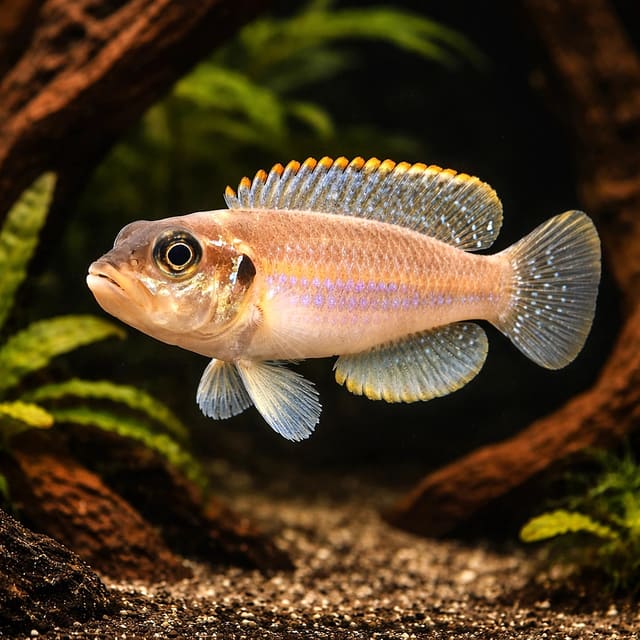
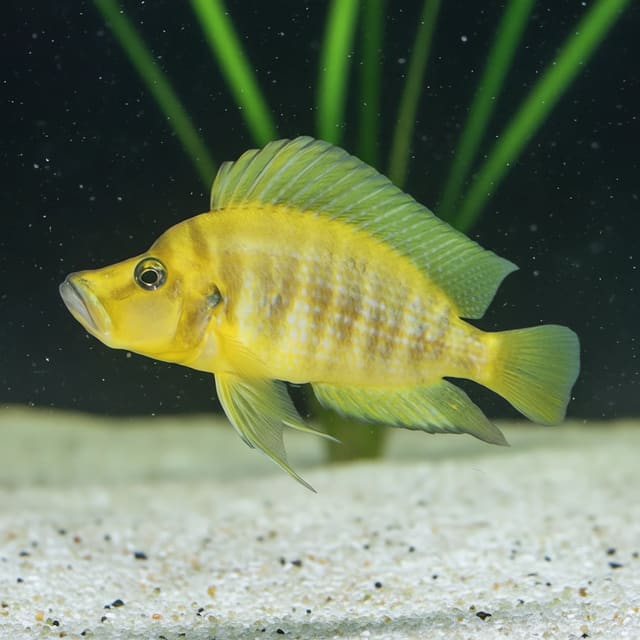
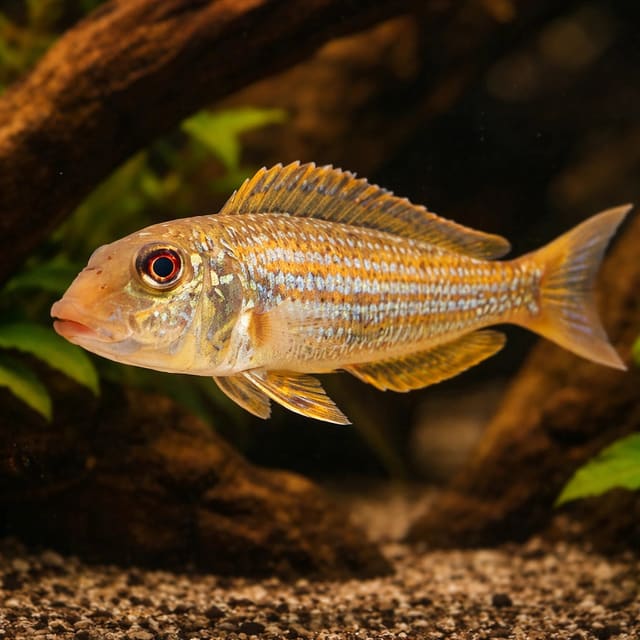
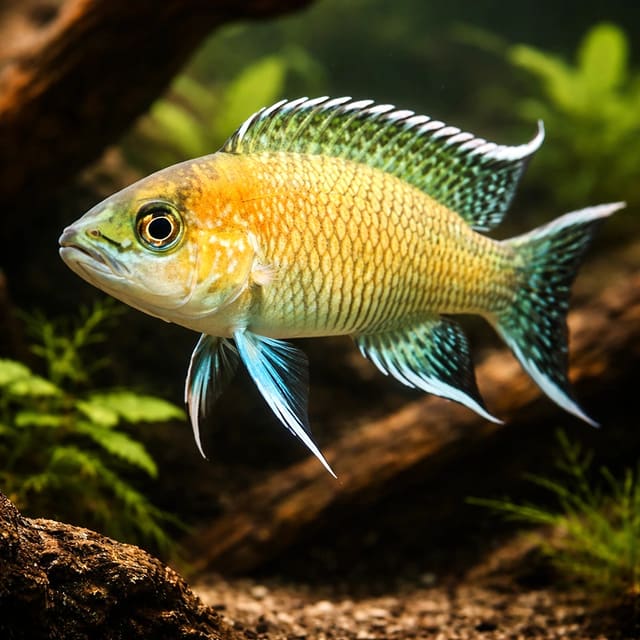
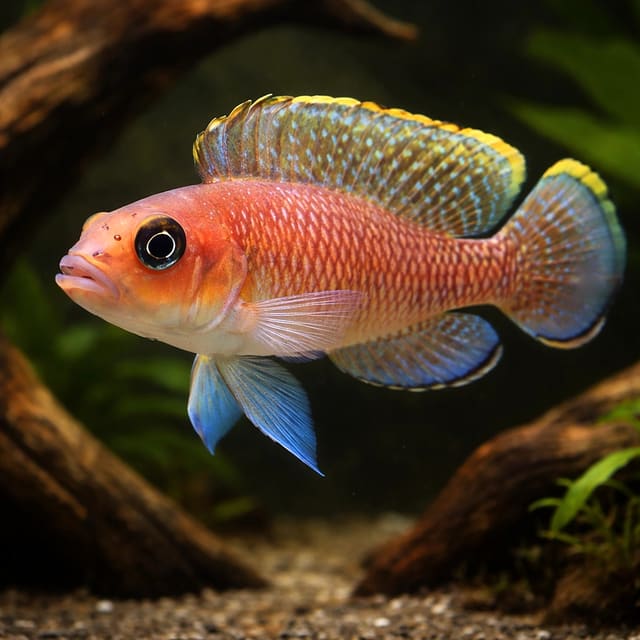
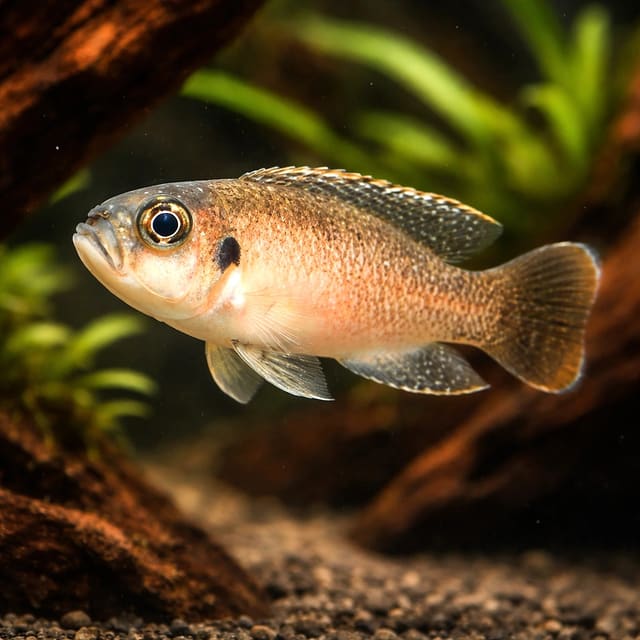
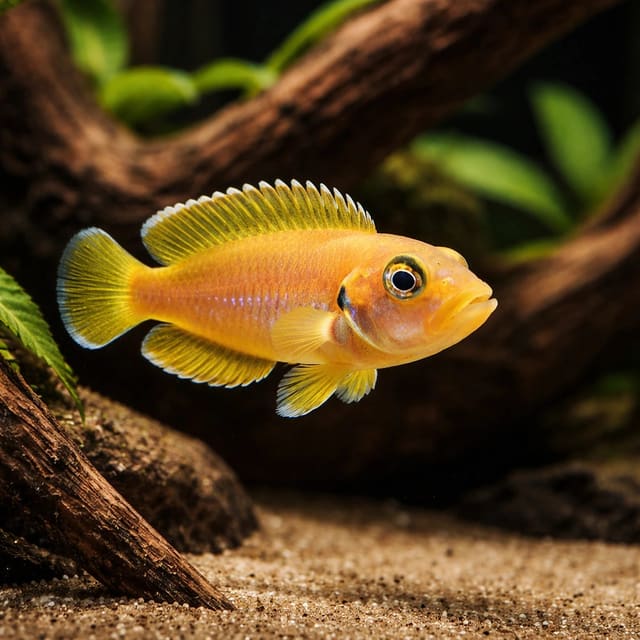
Gallery images have been digitally enhanced to improve image quality. Natural colour, pattern, size and maturity can vary between live animals. The image files are retained in their original order. Use the images as a visual presentation of the listing; colour, markings, sex and individual appearance can vary.
| Question | Practical answer |
|---|---|
| What is sold? | One live Brichard’s Chalinochromis in the chosen size. |
| How large can it grow? | FishBase records 12.0 cm TL for male/unsexed fish. |
| What water does it need? | Plan around stable hard, alkaline water; FishBase records 24–27°C, pH 8.0–9.0 and 9–19 dGH in the species environment. |
| Is it a general community fish? | No. Choose companions and space around matching water chemistry and territorial use of rock habitat. |
| Who is it for? | A prepared keeper with a mature filtered aquarium, secure rockwork, test results and a separation plan. |
Lake Tanganyika is the defining context for Chalinochromis brichardi. FishBase identifies the species as endemic to the lake and associated with rubble and rocky habitat. That evidence supports a layout built around stable stone structures, crevices and visual barriers. Build an open, secure arrangement rather than a tightly packed wall of unstable rocks. Each heavy piece should sit securely so burrowing, maintenance or an accidental knock cannot make it fall. Leave routes that allow a fish to leave another’s sight rather than forcing every encounter through one narrow cave.
Build the hardscape before adding the fish. Use broad foundations, check that the structure cannot rock, and keep equipment access in mind. A retreat is useful only if it remains accessible and does not trap waste. Several differently oriented shelters are more useful than one decorative cave in the centre because they give a fish options when another individual claims a particular surface. Open areas still matter for feeding, observation and siphoning. A natural-looking layout can be practical as well as attractive.
Plants are optional and should be chosen for the actual hard-water conditions of the aquarium. If plants are used, choose them for the actual hard-water conditions and position them without blocking all crevices or maintenance routes. Do not soften the water simply to suit a plant selection. The fish’s chemistry comes first. Browse the verified African cichlid collection for category context, but do not assume that every fish in the category shares the same behaviour or can live with this species.
FishBase records a temperature range of 24–27°C, pH 8.0–9.0 and hardness of 9–19 dGH for the species’ environment. OATA’s broad African lake cichlid sheet overlaps that picture, giving 23–27°C, pH 8.0–8.6 and hard water for the wider group. The FishBase values are species-level environmental records; OATA’s values are group-level aquarium guidance. Neither source proves that one number within those ranges is a unique optimum for every captive fish.
Use a consistent value inside an appropriate range rather than chasing a moving target. Before ordering, test pH and general hardness from the aquarium itself, not only from a water-company average. Test carbonate hardness where it helps explain whether the system can resist a pH swing. The water chemistry guide explains what the common readings mean. Record results over time so a normal pattern is visible; one isolated reading cannot show whether the aquarium is stable.
If your source water is naturally soft, do not improvise with occasional handfuls of buffer or rapid corrective doses. Choose a repeatable remineralisation method, measure it, and match replacement water before it enters the aquarium. Large, abrupt changes in mineral content or temperature can be more stressful than a stable value toward one end of a suitable range. Any adjustment should be gradual and based on tests. A fish should never be used as the instrument that tells you whether a new chemistry plan works.
Temperature should be checked with an aquarium thermometer independent of the heater dial. Position flow so warmed water circulates through the usable footprint. In a rock-heavy aquarium, pockets behind structures can collect waste or receive less circulation. Watch how debris moves during feeding and maintenance. Rearrange flow carefully if one area repeatedly traps food, while avoiding a jet that prevents the fish from resting or feeding normally.
The RSPCA explains that fish release toxic ammonia and that an established biological filter supports bacteria which convert ammonia to nitrite and then to less harmful nitrate. OATA states that ammonia and nitrite should be zero for African lake cichlids. Those are general welfare and group-care principles, not a special biological claim about this one species, but they are directly relevant to any aquarium holding it.
A large filter label does not compensate for an immature biofilter. Cycle the aquarium before the fish arrives and confirm the result with water tests. Add livestock at a pace the filter can support. Test again after a change in feeding, stocking or maintenance. In alkaline water, poor waste control is especially dangerous, so the combination of measured feeding, strong biological capacity and regular observation matters more than a decorative promise of crystal-clear water.
Provide good gas exchange. Surface movement and appropriate circulation help maintain oxygen, while clean mechanical media stops trapped debris from becoming a hidden source of pollution. Do not sterilise all biological media at once. When media needs rinsing, use removed aquarium water rather than untreated chlorinated tap water, following the broad OATA maintenance advice. Service different parts of a mature system in stages so useful bacterial capacity is not needlessly stripped away.
Plan water changes from measured need and a consistent routine. OATA broadly recommends a weekly 25% partial change for African lake cichlids, but actual management should also consider test results, stocking, feeding and the aquarium’s stability. Condition new tap water where required, match temperature and chemistry closely, and siphon material from accessible gaps. If a rock structure makes routine waste removal impossible, redesigning that structure is safer than accepting a permanent dirt trap.
FishBase records C. brichardi feeding on invertebrates growing on rocks and hidden by the biocover; Wikipedia’s species summary also describes a primarily invertebrate diet. That supports an invertebrate-oriented feeding plan, while the captive menu still needs a complete appropriately sized staple and measured portions. Use an appropriately sized, complete cichlid food as the dependable base and add suitable invertebrate-based variety without letting one rich food dominate the diet.
Offer portions small enough to be eaten promptly. Watch whether the fish takes food comfortably and whether pieces reach the areas it uses. Rockwork can hide uneaten food, so inspect crevices after feeding and remove persistent waste. Appetite is useful information: a sudden refusal, frantic competition or a fish that cannot approach food can indicate water-quality, health or social trouble. Respond by checking conditions and interactions before adding more food.
Avoid using the word “omnivore” as an excuse to feed anything. The natural record is more specific than that: the fish takes invertebrates associated with rocky surfaces. Captive foods still need to be nutritionally complete and appropriately sized. Variety should be controlled, safe and compatible with water quality. There is no need to turn the aquarium into a cloud of food to make sure a territorial fish eats; targeted observation is better than surplus.
The source packet supports rubble association and nest building, while the broad African lake guidance warns that temperament and suitable numbers differ by species. Social planning therefore remains specific to the individuals and aquarium. Observe access to food, breathing, fin condition, colour changes, hiding and repeated displacement from shelters. A brief chase and relentless exclusion are not the same event. Record which fish controls which area and whether the other animal can still rest and feed.
Provide more than one plausible retreat and break the direct view across the aquarium. If one fish pins another into a corner, blocks all feeding routes or causes physical damage, the layout has not solved the problem. Use the separation plan. A spare mature system or a secure established divider is much safer than trying to find emergency accommodation after aggression escalates. Adding more fish can increase social pressure and must never be used as an automatic aggression fix.
Do not repeatedly dismantle the entire aquarium for every short chase. Stable territory can reduce constant renegotiation. At the same time, “they are establishing a hierarchy” must not become an excuse to leave an injured or starving fish in danger. The practical threshold is welfare: every fish must be able to feed, rest, breathe normally and avoid sustained attack. Have nets, containers and a destination ready before a territorial cichlid is introduced.
Prepare the aquarium before dispatch, with temperature and chemistry already stable. On arrival, use the current arrival steps on the store’s delivery and Live Arrival Guarantee policy. Keep the transport bag out of prolonged bright light and do not leave a live-fish parcel unattended. The policy, not a generic internet routine, is the authority for the current packing, delivery and claim steps.
For a Live Arrival Guarantee claim, the store requires a continuous unboxing video showing the sealed outer parcel, the opening and the fish still inside the sealed bag, together with the order number and same-day contact. That video is evidence for a claim; it is not a biological care requirement and should not delay action needed to protect a live animal. Once the arrival check is complete, acclimatise according to the current store directions and avoid pouring transport water into the aquarium.
After release, keep observation calm and purposeful. Confirm normal breathing, balance and access to shelter. Resist heavy feeding immediately after transport. Check the aquarium’s temperature, ammonia and nitrite rather than blaming every change in appearance on shipping. If a fish remains distressed, is injured or cannot maintain posture, document the condition and seek appropriate retailer or veterinary advice instead of applying an unprescribed treatment recipe.
A useful weekly routine treats water, maintenance and behaviour as connected evidence. Before a water change, note appetite, breathing, body condition and which shelters are being used. Test the water and record the result. During siphoning, look for food lodged behind rocks and for areas where circulation is failing. After replacement water is added, confirm that temperature and pH have not shifted unexpectedly. This short record makes gradual changes easier to recognise and gives a retailer or vet much better context if a problem develops.
Watch both the fish and the equipment. A heater light does not prove the aquarium is at the intended temperature, and visible filter flow does not prove ammonia is being processed. Likewise, a fish that is visible is not necessarily thriving if it is excluded from food or unable to rest. Use independent measurements and repeated observations, especially after adding livestock, changing food, servicing the filter or rearranging rockwork.
Keep the tank’s purpose clear. Decorative changes should not remove essential cover, and new livestock should not be added merely because there appears to be empty water. The limiting resource may be a cave face, a feeding route or the biofilter’s capacity rather than litres. Review those constraints before every addition. A restrained, well-observed aquarium is usually safer than a visually busy community whose inhabitants share incompatible needs.
Know where a separated fish would go and make sure that destination is heated, filtered and chemically appropriate. Do not rely on an uncycled container as a long-term solution. A secure divider may help in a suitable aquarium, but it must not leave one side without flow, cover or feeding access. Spare mature media, fish-safe containers and current contact details are most useful when prepared in advance.
This contingency planning is not a prediction that aggression must occur. It is a practical response to uncertainty: the listing does not guarantee sex, pair compatibility or a fixed social number. Having a safe route out lets the keeper observe calmly and act promptly if one fish loses access to food or shelter, rather than waiting for injury while emergency accommodation is arranged.
A compatible aquarium begins with hard, alkaline water. A fish that looks similar in size but needs soft acidic water is not a sound companion. OATA’s broad guidance is to keep African lake species with fish from the same location and not to mix Malawi and Tanganyika cichlids casually because temperament and behaviour differ. Even within Lake Tanganyika, shared origin is only the first screen. Species may still compete for the same cave, feeding zone or line of retreat.
Think in three dimensions. C. brichardi is associated with rubble and rocky habitat, so another fish that must occupy every crevice can create constant overlap. A species using a different area may reduce direct contact, but no named animal is guaranteed safe in every tank. Aquarium footprint, rock placement, individual behaviour, maturity and stocking sequence all change the result. Introduce only when you can watch closely and remove a fish if access to food or shelter is lost.
Consider appropriately sized Lake Tanganyika species only after comparing adult size, water range, diet, territory and swimming zone. Use a long footprint, multiple broken sight lines and more retreats than obvious territorial centres. Add fish deliberately rather than as a cure for aggression. Monitor feeding and resting access during the first days and again as fish mature. Behaviour can change when an individual claims a nest site or when the layout is altered.
The related listings shown elsewhere on this page are comparisons for shoppers, not automatic tank-mate recommendations. Shell-dwelling cichlids have their own space, substrate and social requirements. Read each product’s care information on its own merits. A useful comparison asks whether a different Tanganyika niche better suits the aquarium you can provide; it does not imply that both products belong together.
No sex is guaranteed on this listing. The evidence confirms nest building on rubble but does not supply a reliable visual sexing method or a complete aquarium breeding protocol. Do not promise that colour, size or fin shape identifies the sex of the fish received. Do not buy two solely to create a pair. If fish show coordinated territorial behaviour, continue to watch the welfare of every individual and keep the separation plan available.
Breeding behaviour can intensify territory defence. Protecting other fish matters more than obtaining fry. The supported breeding context is limited to rubble nest-building. A keeper interested in breeding should seek current specialist guidance for this exact species and first provide stable water, mature filtration and enough space to manage incompatible outcomes.
FishBase records Brichard’s Chalinochromis at up to 12.0 cm total length for a male or unsexed fish. Total length includes the tail, and the figure is a recorded maximum rather than a promise that every animal will reach exactly 12 cm.
No species-specific minimum volume is available in the reviewed care references. Choose the largest practical mature aquarium with a long usable footprint, secure rockwork, broken sight lines, several retreats and enough spare capacity to separate incompatible fish.
No fixed species-specific number is supported by the packet. This listing supplies unsexed fish, so two fish are not a guaranteed pair; plan around territory, observe every fish’s access to food and shelter, and keep a separation option.
It is rated intermediate by the store because it needs stable hard alkaline water, mature filtration, secure rockwork and active management of territorial behaviour. A keeper should be comfortable testing water and responding to conflict before ordering.
Wild records describe invertebrates growing on rocky surfaces and within biocover. In an aquarium, use an appropriately sized complete cichlid food with suitable invertebrate-based variety, feed controlled portions and remove food trapped in the rockwork.
FishBase records 24–27°C, pH 8.0–9.0 and 9–19 dGH in the species’ environment. Treat these as scoped planning values rather than a single proven aquarium optimum, and keep measured conditions stable.
Plan for territorial cichlid behaviour around rocks and nest sites rather than assuming a peaceful community fish. Judge compatibility by repeated pursuit, injury and whether every fish can feed and rest.
Only consider appropriately sized Lake Tanganyika fish that share hard alkaline water and do not all depend on the same cave zone. Shared lake origin does not guarantee compatibility, and soft-water fish, tiny animals and crowded cave competitors are poor choices.
Tropical Fish Co hand-packs live fish in oxygenated bags inside an insulated box, using a heat pack when conditions require it, and sends them with a licensed tracked live-animal courier. For a Live Arrival Guarantee claim, follow the current delivery policy, including same-day contact and a continuous video from the sealed parcel to the fish still in its sealed bag.
FishBase: Chalinochromis brichardi supports the accepted identity, family, Lake Tanganyika distribution, 12.0 cm TL male/unsexed record, environmental water values, rubble association and invertebrate feeding. Its environmental figures are not presented as proof of one captive optimum.
Wikipedia’s species summary is used only as supporting natural-history context for endemic distribution, rubble nest building and invertebrate feeding. It is not the source of the store’s offer or a substitute for specialist husbandry evidence.
OATA’s African lake cichlid care sheet provides clearly labelled group-level guidance on water, filtration, maintenance, feeding and compatibility. RSPCA aquarium guidance supports the general welfare explanation of mature biological filtration.
The product controls show the one-fish sold unit, size choices and lack of a sex-guaranteed option. Biological guidance comes from the linked references. Aquarium volume, social grouping and breeding should therefore be planned conservatively for the individual fish and setup.
No reviews for this item yet. Bought one? Honest reviews only, good or bad.
What customers say about ordering from us
I have a small group of long finned mountain minnows. So was delighted to be able to order ten of this variety to increase the genetics in my tank . The ones I recieved are healthy but it’s to early to give a verdict on wether they are of a long finned type since they are small currently.
Gordon Walker · 23 Sept 2026
100% success travel and "installation". Pleased with quality of purchase. The Siamese fighter a bit "shy" so have not yet seen him at his best yet but looking good. Happy customer. GG
George E Garratt · 21 Sept 2026
Reviews of our shop, collected by Judge.me, an independent third-party review collector. Newest first.