Advanced
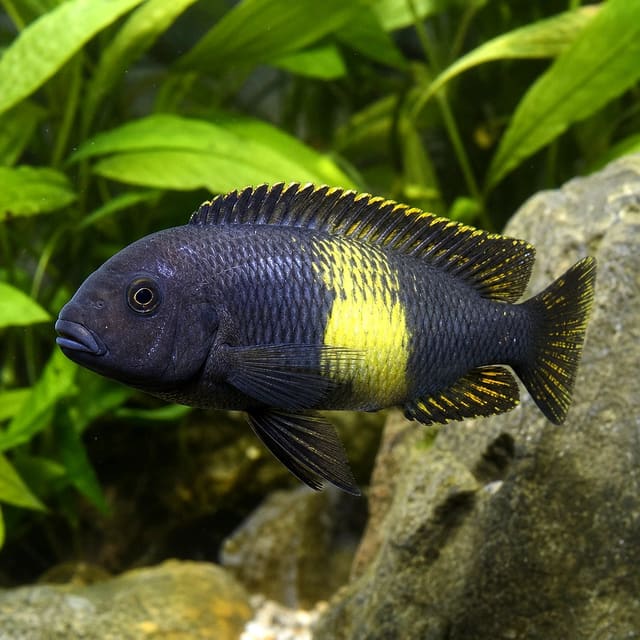
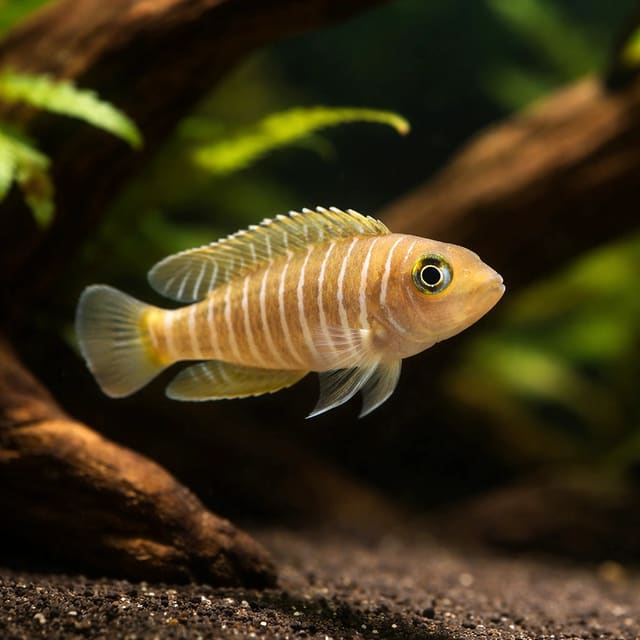
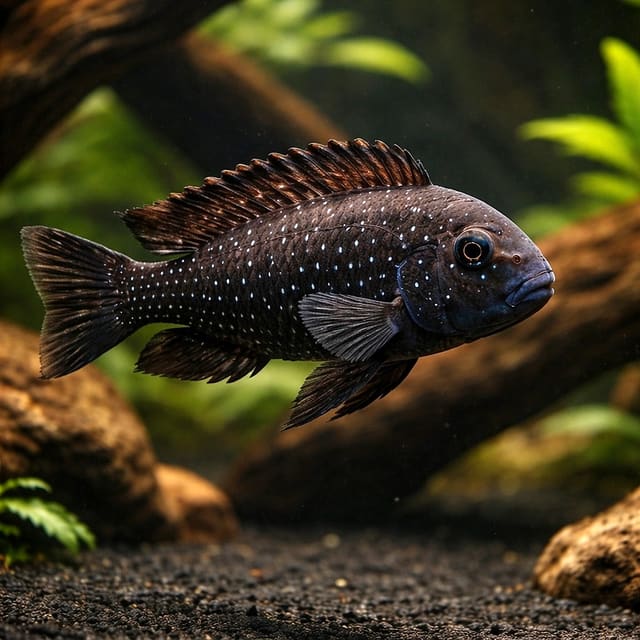
Duboisi, White-Spotted Cichlid (Tropheus duboisi)
23–27°C · pH 8–8.6 · 110L
From £17.39Some sizes on sale

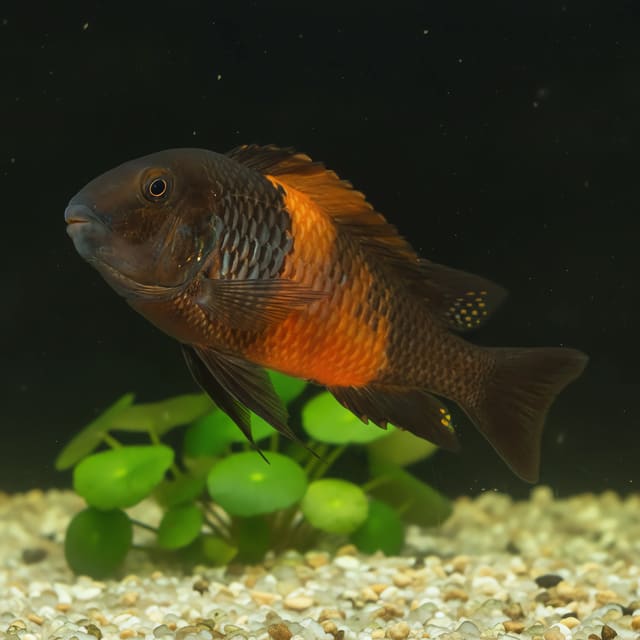
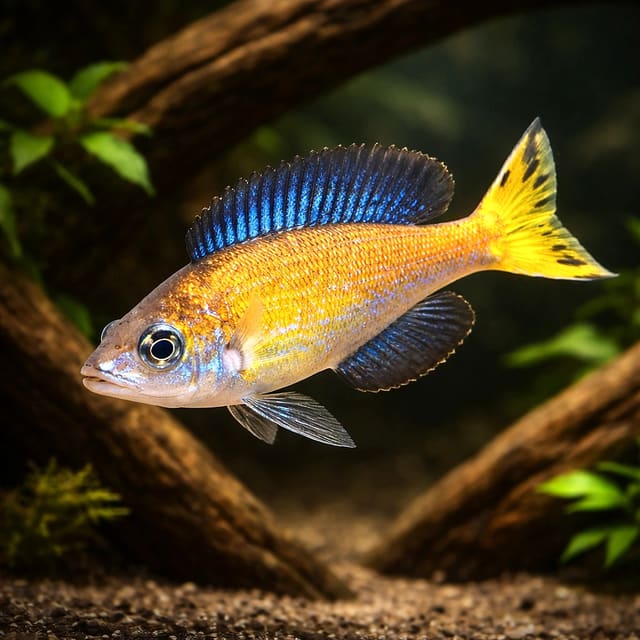
Red Rainbow Tropheus (Tropheus moorii) is a Lake Tanganyika cichlid recorded to 14.5 cm and supplied as one live fish per purchase in the chosen listed size. It suits experienced keepers with a mature hard-water aquarium and a deliberate social-group plan.
Adult size is the maximum length this species reaches at full maturity (scientific sources). The livestock you receive will be younger and smaller — pick a size above for the actual shipping size. Product-photo provenance and any image-specific limitations are stated on the listing.
Tropheus moorii
Shoaling fish: kept in a group they feel safer, stay calmer and show their best colour.
Red Rainbow Tropheus (Tropheus moorii) is a Lake Tanganyika cichlid recorded to 14.5 cm and supplied as one live fish per purchase in the chosen listed size. It suits experienced keepers with a mature hard-water aquarium and a deliberate social-group plan.
Adult size is the maximum length this species reaches at full maturity (scientific sources). The livestock you receive will be younger and smaller — pick a size above for the actual shipping size. Product-photo provenance and any image-specific limitations are stated on the listing.

Cichlids are a family of roughly 1,800 accepted species, not one care type. Before buying, identify the exact species and source, then compare adult measurement, usable tank dimensions, social system, territory, tested water, diet and an exit plan. No family-wide minimum tank, water range or tank-mate list is safe.
Maintain these water conditions for optimal health and vibrant colors
Red Rainbow Tropheus (Tropheus moorii) is a Lake Tanganyika cichlid for experienced hard-water keepers. The Red Rainbow wording identifies the trade form on this product; the accepted species name is Tropheus moorii, which FishBase also calls the Blunthead cichlid. It is a highly active grazer with demanding social dynamics, so it should be chosen for a prepared Tanganyika aquarium rather than added as a colourful extra to a general community.
One purchase supplies one live fish in the chosen listed size. The recurring dispatch grades are 3.5–4 cm and over 8 cm. The size you select is the size supplied, not the adult size. Use the live purchase controls for the current choice rather than assuming that every grade is available at all times. Sex is guaranteed only when the selected option explicitly states male or female. This Red Rainbow Tropheus listing has no sex-guaranteed option.
FishBase's Tropheus moorii record gives a maximum length of 14.5 cm total length; Seriously Fish also reports 145 mm, expressed as standard length. The matching number gives a useful adult planning figure, but dispatch size remains separate. A small juvenile still needs an aquarium and social plan suitable for the adult group.
| Suits | Think carefully if |
|---|---|
| Experienced keepers with stable hard, alkaline water | You are still learning the basics of cycling or mineral management |
| A planned Tanganyika aquarium at least 150 cm long | The permanent aquarium is based only on a juvenile's current size |
| Aquarists prepared for a generally recommended group of 15–20 | You intend to buy a casual pair or small group without a backup plan |
| An algae-led feeding routine and strong oxygenation | Existing fish need a rich meaty diet or are easily intimidated |
Seriously Fish says Tropheus moorii is not a good beginner species. It requires excellent water quality, careful feeding and deliberate handling of hierarchy. The profile notes that small groups of five or six may fail to settle and can fight to the death, while groups of 15–20 are generally recommended to distribute territorial behaviour. Exceptions exist, which is precisely why the keeper needs space and a response plan rather than relying on a number alone.
Natural and captive behaviour need to be read carefully. FishBase describes adults as solitary in nature, while aquarium husbandry commonly uses a larger group to manage pressure in a confined space. These statements are not contradictory instructions: one describes wild biology and the other a practical captive-management method. The fish do not school naturally, and an aquarium group develops a pecking order.
For a broader comparison of hard-water cichlids, browse the African cichlid collection. The collection is not a tank-mate list. Tanganyika and Malawi fish can share a preference for alkaline water while differing in diet, movement and social behaviour.
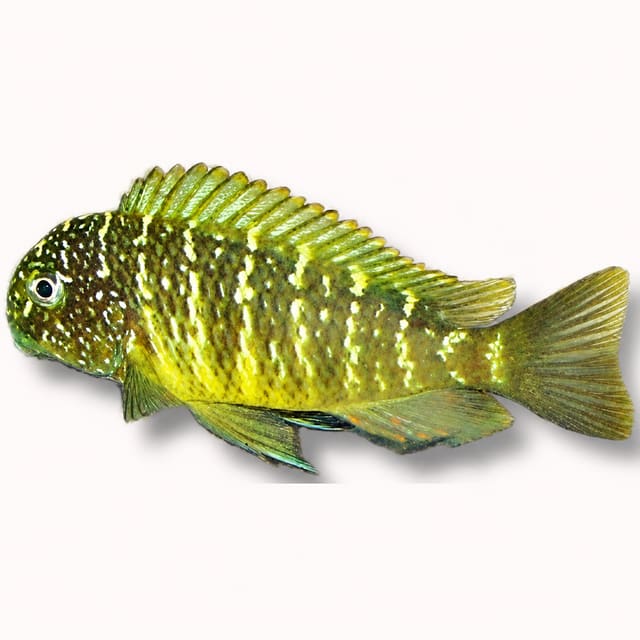
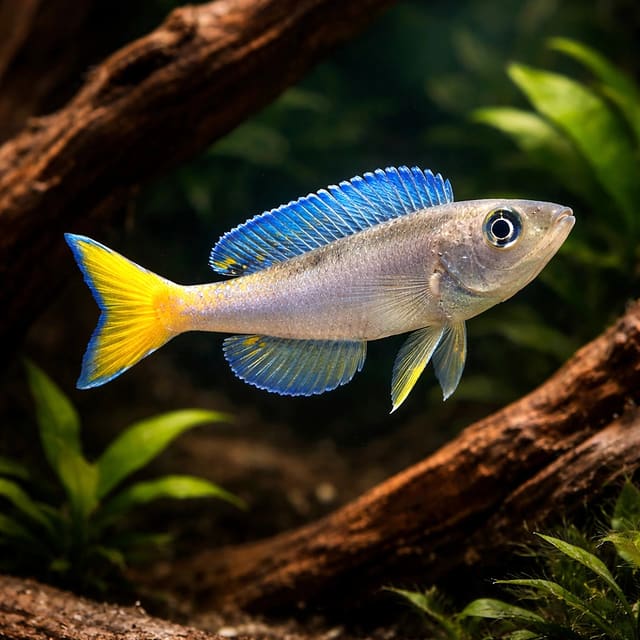
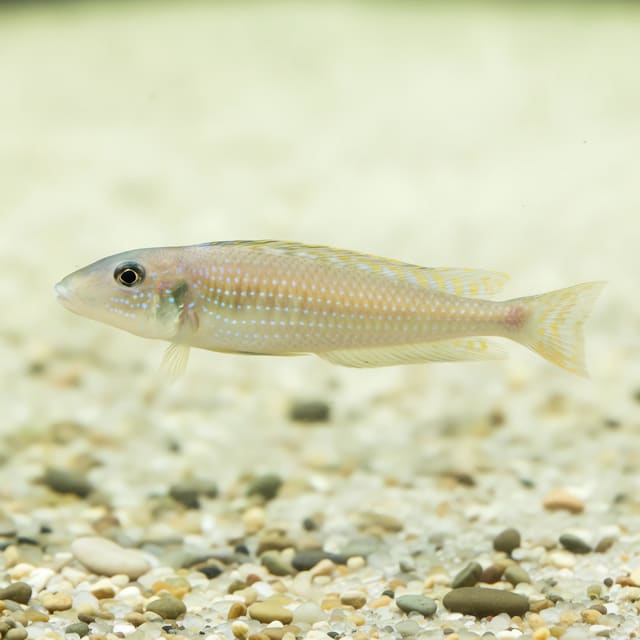
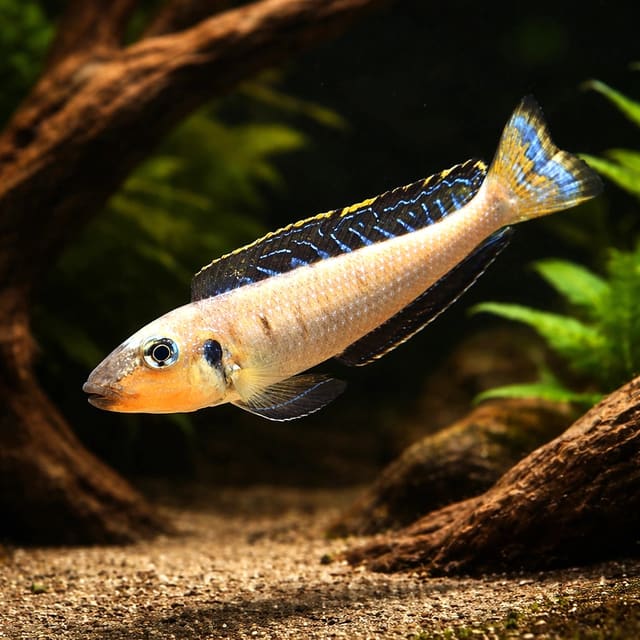
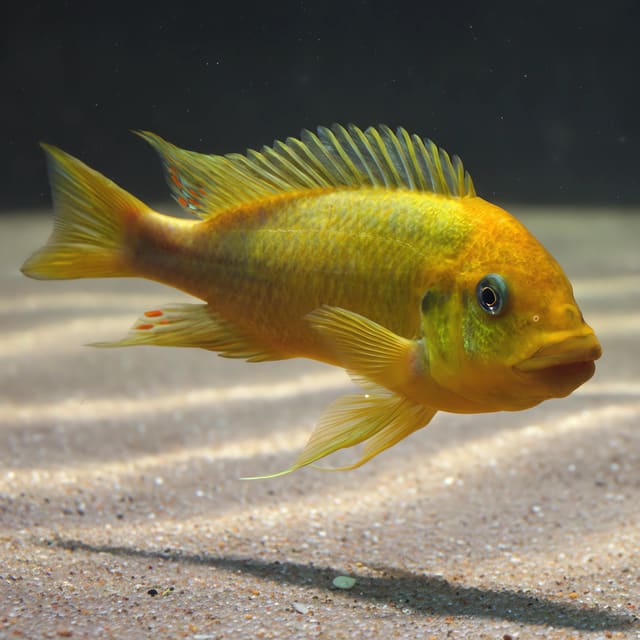
Gallery images have been digitally enhanced to improve image quality. Natural colour, pattern, size and maturity can vary between live animals.
Begin with the permanent aquarium. FishBase gives a minimum aquarium length of 150 cm for this species. Seriously Fish describes a 120 × 30 × 30 cm aquarium, about 110 litres, only for a single specimen and states that a group needs a much larger tank. Since ordinary long-term Tropheus husbandry is built around social management, do not use the single-fish example as the target for a 15–20 fish group.
Measure more than volume. Length and floor area create feeding space and room for territories; rock placement changes how fish meet each other; filtration and aeration determine how much biological load the aquarium can support. Prepare a way to separate a fish if aggression becomes sustained. Adding livestock first and improvising later leaves little room to respond.
The two dispatch grades help size-match a new fish, but size matching does not guarantee acceptance. An established hierarchy can make any later addition difficult. The group should be considered as one stocking project, with the aquarium, filtration and intervention route ready from the start.
The Seriously Fish species profile gives 23–27°C, pH 8.0–9.5 and 8–25 dGH as aquarium conditions for Tropheus moorii. FishBase records a narrower wild environmental range of 24–26°C, pH 8.0–9.0 and 9–19 dH. For routine aquarium planning, use the Seriously Fish species range; the FishBase figures describe the recorded environment rather than a reason to chase a different number every day.
Hard, alkaline water must also be stable. Test the tap source and aquarium for pH, general hardness and carbonate hardness, and keep a note of the trend. Carbonate hardness supports buffering, while general hardness reflects dissolved minerals. The water chemistry guide explains the common readings, and the water matcher helps compare measured values with the stated care range.
RSPCA aquarium guidance explains that a biological filter provides a home for bacteria that convert toxic ammonia to nitrite and then nitrate. A running pump is not enough if this bacterial community has not developed. Use the first tropical tank guide to prepare and mature the system before ordering any livestock.
OATA's African lake guidance sets ammonia and nitrite at zero and warns that stocking faster than the filter bacteria can adjust can cause new tank syndrome. Tropheus add a further reason for caution: Seriously Fish describes water quality as extremely important and notes susceptibility to bloat. A clear-looking tank can still contain dissolved waste, so use reliable tests after stocking changes and whenever appetite or breathing alters.
Both Seriously Fish and OATA emphasise good oxygenation for this kind of aquarium. Use strong biological filtration with enough mechanical capacity to collect solid waste, and arrange outlets so the surface moves well. Vigorous aeration helps meet the needs of fish and filter bacteria, especially in a large, active group.
Check filter flow and air delivery daily. A partially blocked intake, clogged prefilter or failed air pump can reduce oxygen before the water looks dirty. If filtration stops, restore circulation and aeration promptly, test ammonia and nitrite and feed cautiously until the aquarium is stable again.
When filter material needs cleaning, OATA says not to run it under the tap because chlorine or chloramine may kill beneficial bacteria. Rinse it lightly in water removed during a partial water change. Clean enough to restore flow while protecting the biological function; sparkling media is not the goal.
Lake Tanganyika husbandry depends on mineral content as well as temperature. If the source water is already hard and alkaline, a repeatable conditioning routine may be straightforward. If it is soft or poorly buffered, prepare replacement water consistently before it enters the aquarium. Do not add products by habit without measuring the result, because a label dose cannot account for every tap-water starting point.
Compare pH and hardness at the same point in the maintenance cycle. A result taken immediately after a water change may differ from one taken a week later. The trend shows whether buffering is holding and whether the routine is repeatable. Keep any change gradual and compatible with the other Tanganyika species, rather than steering the aquarium to a number that suits only one inhabitant.
Temperature also affects oxygen demand. Stay within the 23–27°C aquarium range and use a reliable thermometer rather than relying only on the heater dial. Check the reading after seasonal room-temperature changes or equipment work. Stable warmth with strong surface movement is more useful than repeatedly moving between the ends of the range.
Seriously Fish allows either a bare arrangement used by some experienced Tropheus keepers or a decorated aquarium. For a decorated display, it recommends piles of rockwork forming many cave-like structures and hiding places, broken up with open swimming areas. Sand is the stated substrate and the water should be well oxygenated.
Stability matters. Rest heavy rocks securely so digging cannot undermine them, keep access for siphoning and avoid narrow traps where a chased fish cannot turn. A single continuous rock wall can allow one dominant animal to control the whole face of the aquarium. Several separated structures create more choices, although layout alone cannot repair an unsuitable group.
Lighting should make observation easy and support the intended aquarium without turning feeding into a rush at one bright spot. Because Tropheus graze surfaces, allow accessible rock faces while still providing shelter. Do not depend on naturally grown algae as the only food source; use a consistent prepared diet.
The OATA African lake cichlid care sheet strongly recommends a partial water change of 25% at least once every week. Siphon accessible waste, condition replacement water and match temperature and chemistry closely. Test at least weekly, and more often after adding fish, changing filter work or seeing unusual behaviour. Nitrate should not exceed 20 mg per litre above the normal tap-water level under the cited group guidance.
Keep a simple log of test results, water changes, filter work, feeding changes and social events. The record helps distinguish a gradual water-quality decline from a conflict that began after a new addition. When several people care for the tank, it also prevents double feeding and makes equipment checks consistent.
Rapid corrections can be as disruptive as the original drift. Confirm surprising results, then make controlled adjustments. A verified ammonia or nitrite reading still needs urgent action, because the target is zero. If fish show fast breathing, hanging near the surface or a sudden refusal to eat, test first and seek appropriate aquatic advice rather than guessing at a treatment.
OATA recommends watching swimming behaviour, colour, temperament, breathing, appearance, condition and feeding. These signs need context. A brief chase during feeding is different from an animal that remains hidden, loses weight and cannot approach food. A darker or paler colour can accompany social stress, while rapid gill movement can also point to water-quality or oxygen trouble.
Look at the aquarium before feeding, during feeding and after the group settles. This makes it easier to see whether a subordinate fish is excluded only at one location or throughout the tank. Count the animals periodically, inspect fins and eyes, and note any fish using an unusual level of the aquarium. Tropheus are active, so a sudden reduction in movement deserves attention.
Begin with water tests and the recent maintenance record when several fish change at once. When one animal is affected, also review its social position and feeding access. Persistent symptoms need informed fish-health advice. The goal is to identify the cause, not to expose a sensitive digestive system to a succession of speculative products.
Diet is one of the central differences between a Tropheus aquarium and a generic cichlid display. FishBase records that wild Tropheus moorii eat plant matter as well as worms, crustaceans and insects, and its aquarium note says to feed epiphyton. Seriously Fish translates that into practical captive care: vegetable matter should form the basis of the diet, supported by a quality dried product and an algae-based food.
Seriously Fish names spirulina flakes, blanched spinach and nori as appropriate vegetable foods. Use a complete product suitable for Tropheus as the dependable base rather than improvising a mixture of treats. OATA similarly describes Tropheus as herbivorous and recommends specialised high-algae cichlid feeds and fresh vegetables.
Offer only what the group can eat within a few minutes, up to twice daily under OATA guidance. Divide food across enough of the aquarium that subordinate fish have access, while keeping the portion controlled. Uneaten food breaks down, increases the filter load and makes it harder to judge whether every animal is feeding.
Seriously Fish permits small feeds of live and frozen varieties as supplements. The word small matters: these foods do not replace the vegetable-led staple. Introduce any dietary change gradually, observe faeces and body condition, and do not use rich food to push rapid growth.
Never feed beefheart or any other animal meat. Seriously Fish explicitly warns that it interferes with the digestive system of these fish. That rule is more specific than the observation that wild fish consume some small animal material; beefheart and mammal meat are not equivalents of naturally grazed invertebrates.
A new arrival may have eaten a different prepared food before dispatch. Begin with small, familiar-looking portions and move towards the chosen staple gradually. Sudden large changes make it harder to tell whether reduced appetite comes from transport, hierarchy or the food itself. Keep the basic composition algae-led throughout the transition.
Blanched vegetables and nori should be clean, appropriately prepared and offered in quantities the group can finish. Remove leftovers before they soften and foul the water. A clip or feeding position can help the keeper see which fish graze, but place food so one dominant animal cannot guard the only access point.
Body condition matters more than rapid growth. Compare the fish with its own recent appearance rather than trying to force every member of the group to grow at the same rate. A fish that becomes hollow-bellied, swollen or persistently uninterested in food needs a water, diet and social review.
A dominant fish can take more than its share while a subordinate animal hangs back. Spread small portions and observe who approaches. Reduced appetite, spitting food, hiding or a change in body condition deserves attention, especially because Seriously Fish highlights susceptibility to bloat and the importance of water quality.
Do not assume that a swollen fish simply needs less food or that a thin fish simply needs more. Test the water, review social pressure and seek fish-health guidance for persistent signs. Avoid improvised home treatments; the same symptom can have dietary, environmental, social or infectious causes.
Seriously Fish's suggested companions—Julidochromis, Eretmodus and Tanganicodus—are named partly because they can share a similar diet. That does not make every species in those genera universally compatible, but it highlights why a tank mate that requires frequent rich meaty feeds is a poor practical fit. Feeding compatibility belongs in the stocking decision from the beginning.
Avoid using food as a distraction from chronic aggression. Extra feeding may temporarily scatter fish while worsening waste and digestion. Correct group planning, space, structure and observation are the tools for social management; the diet should remain measured and consistent.
Tropical Fish Co's policy says fish are hand-bagged with oxygen, placed in an insulated box and supplied with a heat pack when the weather calls for it. A licensed live-animal courier carries the parcel, and tracking plus the confirmed delivery day are sent by email. Someone must be at the address to receive live fish.
Record before opening, not only after a problem is visible. Opening or floating first would lose the continuous sealed-parcel evidence described by the policy. Once the video and inspection are complete, temperature equalisation and careful transfer protect the receiving aquarium.
Read the current delivery and Live Arrival Guarantee policy before the confirmed day. It contains the full claim and courier terms; this care section focuses on the practical order of receiving and introducing the fish.
Tropheus moorii is socially complex rather than simply aggressive. Seriously Fish describes it as relatively peaceful towards other species but prone to squabbling with its own kind. FishBase describes adults as solitary in the wild. In an aquarium, keepers generally use a larger group so territorial pressure is not concentrated on a few individuals; the fish still do not become a natural schooling species.
Seriously Fish generally recommends 15–20 fish to reduce territorial behaviour and warns that groups of five or six may fight to the death. It also notes exceptions, including successful small groups or pairs. Those exceptions are not a safe purchasing plan for an unknown mix. Start with the aquarium, filtration and full group strategy, then monitor the animals in front of you.
Sexes are difficult to distinguish, and this listing does not offer a guaranteed male or female. A planned sex ratio therefore cannot be promised from these product choices. Do not infer sex from juvenile colour, size or a gallery image. If sex selection is essential, use livestock explicitly sold by sex.
Seriously Fish names Julidochromis, Eretmodus and Tanganicodus species as possible tank mates because they can share a similar diet. Evaluate the exact species for adult size, territory, water and feeding needs. The presence of a genus on a list does not guarantee that any individual combination will work.
Do not keep Tropheus with shy species. Their constant activity can prevent timid fish from feeding or resting even without direct attacks. OATA's broad African-lake guidance also says to build communities from the same lake and does not generally recommend mixing Malawi and Tanganyika cichlids because their temperament and behaviour differ.
Seriously Fish notes that Tropheus moorii has many geographical colour forms and says they should not be mixed because they hybridise freely. Keep Red Rainbow separate from other Tropheus forms in a breeding-capable aquarium. Visual variety is not worth losing lineage clarity or creating avoidable social complications.
The related products shown elsewhere on this page are shopping alternatives, not proposed companions. A different Tropheus form may need similar water and food while still being an unsuitable tank mate because of hybridisation and intraspecific behaviour.
A fish entering an established Tropheus group meets animals that already know their places and territories. Similar body size may reduce an obvious disadvantage but does not guarantee acceptance. Observe continuously during the early period and have the prepared separation route available; waiting for severe injury is not a management plan.
Adding several fish also changes the biological load. The filter bacteria must process more waste at the same time as social behaviour changes. Test ammonia and nitrite, keep feeding measured and resist the temptation to overfeed simply to scatter aggression. Water quality and social management have to succeed together.
If décor is rearranged to disrupt territories, keep rocks secure and maintain open swimming routes. A layout change can reduce the value of a defended location, but it can also remove a refuge if done carelessly. Watch where subordinate animals move after the change rather than assuming the new arrangement has worked.
A functioning group allows every fish to reach food, use the aquarium and maintain condition. Some display and chasing can occur while the pecking order operates, but persistent isolation, damaged fins, rapid breathing after pursuit or a fish that stops feeding needs intervention. Watch at different times, not only when food distracts the group.
Rockwork should offer multiple defended areas and escape routes without trapping a subordinate fish. Open water is equally important for movement. If one animal controls all feeding space, changing the layout may help disrupt established territories, but it cannot compensate for a tank that is too small or a poorly chosen group.
| Combination | Guidance |
|---|---|
| Other Red Rainbow Tropheus | Plan the group deliberately; 15–20 is generally recommended, with close monitoring |
| Julidochromis, Eretmodus or Tanganicodus | Possible where the exact species shares water, diet and space requirements |
| Shy fish | Do not keep with this very active cichlid |
| Other Tropheus geographical forms | Do not mix because hybridisation can occur |
| Malawi cichlids | Not generally recommended in a Tanganyika community |
FishBase states that females brood young in the mouth, and Seriously Fish also identifies the species as a maternal mouthbrooder. That biology can change social pressure, but it does not provide a universal home-breeding recipe. Maintain stable water, an appropriate group and enough territory; seek specialist advice before intervening with a holding female.
FishBase records Tropheus moorii to 14.5 cm maximum total length, while Seriously Fish gives 145 mm standard length. Use 14.5 cm as the planning maximum carried in this listing, and remember that the dispatch grade describes the fish supplied now rather than its adult size.
FishBase gives a minimum aquarium length of 150 cm. Seriously Fish describes 120 × 30 × 30 cm, about 110 litres, for a single specimen but states that a group needs a much larger aquarium. Because social group management is central to routine Tropheus care, plan from the 150 cm minimum length and the needs of the whole group, not the single-fish volume.
Seriously Fish generally recommends 15–20 Tropheus to reduce territorial pressure and warns that groups of five or six may not settle and can fight severely. Exceptions exist, so the number is not a guarantee of harmony. Prepare the full aquarium and an intervention plan before assembling the group.
No. Seriously Fish specifically describes Tropheus moorii as a poor beginner species. It needs stable hard alkaline water, excellent oxygenation, an algae-led diet and active management of aggression within the group. Choose it when those systems and skills are already in place.
Base the aquarium diet on vegetable matter such as spirulina foods, blanched spinach and nori, supported by a suitable quality dried food. Seriously Fish permits small live or frozen supplements but says never to feed beefheart or other animal meat. Offer small amounts and avoid sudden rich-diet changes.
Seriously Fish gives 23–27°C, pH 8.0–9.5 and 8–25 dGH as species-level aquarium guidance. FishBase records a narrower wild environmental range of 24–26°C, pH 8.0–9.0 and 9–19 dH. Keep hard alkaline conditions stable and maintain ammonia and nitrite at zero.
It is relatively peaceful towards many other species but quarrels within its own kind while a hierarchy forms. Small Tropheus groups can be dangerous, and the fish are too active for shy companions. Watch feeding access, chasing, fin damage and any animal that is repeatedly isolated.
Seriously Fish names Julidochromis, Eretmodus and Tanganicodus species as possible companions because they can share similar diet needs. Each species still needs an individual check for size, water and temperament. Do not keep them with shy fish, and do not mix geographical Tropheus forms because they can hybridise.
Tropical Fish Co hand-packs live fish in oxygenated bags inside an insulated box, adding a heat pack when weather calls for it, and uses a licensed live-animal courier. Be present for delivery. Start a continuous video before opening the sealed parcel, inspect the fish in its sealed bag, float the closed bag for 20–30 minutes, then transfer carefully without adding transport water to the aquarium.
The identity, adult planning figure and routine husbandry on this page draw on species-level records wherever available. FishBase supplies accepted identity, maximum recorded length and wild environmental context. Seriously Fish supplies detailed aquarium conditions, dimensions, diet and social-management guidance. OATA and RSPCA provide broader UK welfare context for filtration, maintenance and African-lake aquariums.
FishBase states 14.5 cm total length while Seriously Fish reports 145 mm standard length. Both support the same numeric maximum used for planning, but the measurement conventions are retained here rather than treated as interchangeable. Seriously Fish's 110-litre example is explicitly for one specimen; a social group requires substantially more room, and FishBase gives at least 150 cm aquarium length.
No reviews for this item yet. Bought one? Honest reviews only, good or bad.
What customers say about ordering from us
I have a small group of long finned mountain minnows. So was delighted to be able to order ten of this variety to increase the genetics in my tank . The ones I recieved are healthy but it’s to early to give a verdict on wether they are of a long finned type since they are small currently.
Gordon Walker · 23 Sept 2026
100% success travel and "installation". Pleased with quality of purchase. The Siamese fighter a bit "shy" so have not yet seen him at his best yet but looking good. Happy customer. GG
George E Garratt · 21 Sept 2026
Reviews of our shop, collected by Judge.me, an independent third-party review collector. Newest first.