Spindle Hap Cichlid (Protomelas taeniolatus)
24–26°C · pH 8–8.6 · 205L
£13.99

A territorial Lake Tanganyika haplochromine, supplied under the Ctenochromis horei trade name and best kept by experienced cichlid keepers in a large hard-water aquarium.
Adult size is the maximum length this species reaches at full maturity (scientific sources). The livestock you receive will be younger and smaller — pick a size above for the actual shipping size. Product-photo provenance and any image-specific limitations are stated on the listing.
Shuja horei
Save when buying multiple fish. Each quantity is one fish; sex and pair formation are not guaranteed unless the selected variant explicitly states them.
Confirm your email, then we’ll send an availability message for this exact item if it returns within 180 days.
This request is only for this product—no newsletter or other promotions. A mail-provider retry may very rarely duplicate the same availability message. Unconfirmed addresses are removed after 48 hours. See our privacy policy.
A territorial Lake Tanganyika haplochromine, supplied under the Ctenochromis horei trade name and best kept by experienced cichlid keepers in a large hard-water aquarium.
Adult size is the maximum length this species reaches at full maturity (scientific sources). The livestock you receive will be younger and smaller — pick a size above for the actual shipping size. Product-photo provenance and any image-specific limitations are stated on the listing.
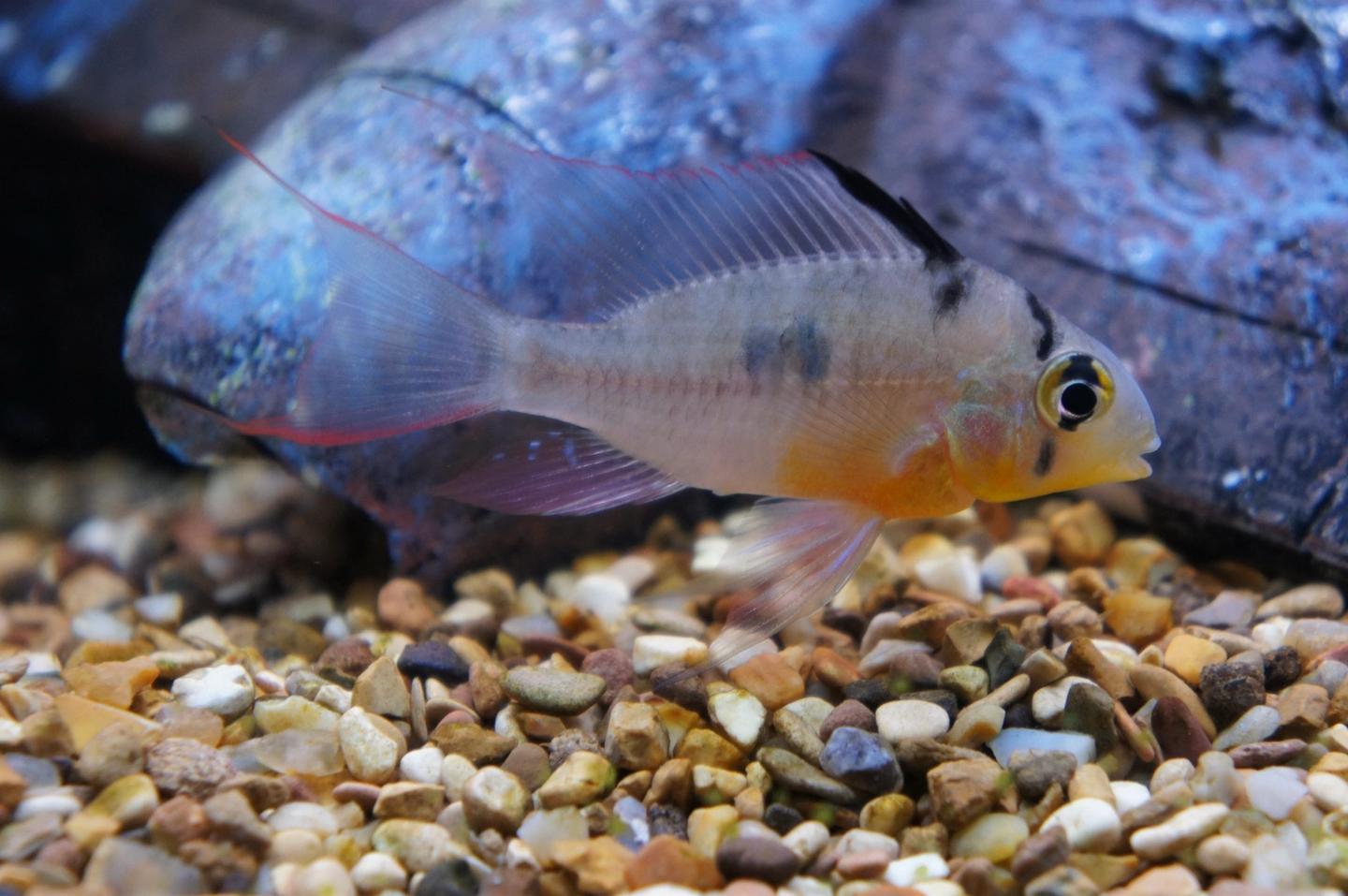
Cichlids are a family of roughly 1,800 accepted species, not one care type. Before buying, identify the exact species and source, then compare adult measurement, usable tank dimensions, social system, territory, tested water, diet and an exit plan. No family-wide minimum tank, water range or tank-mate list is safe.
Maintain these water conditions for optimal health and vibrant colors
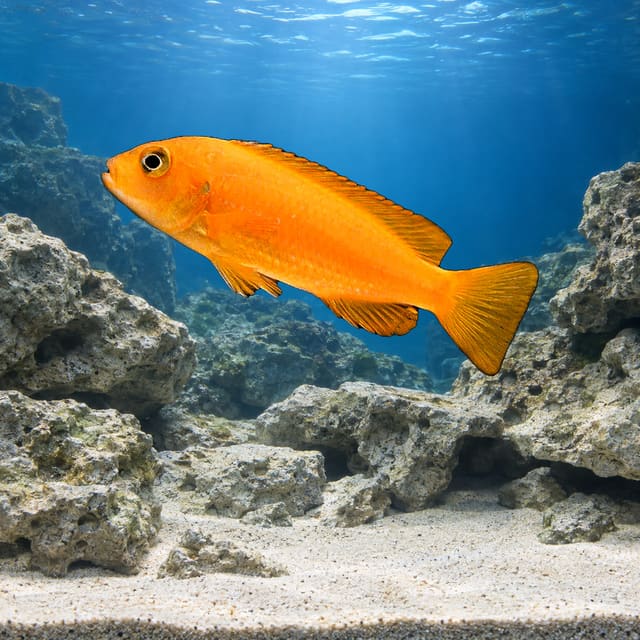
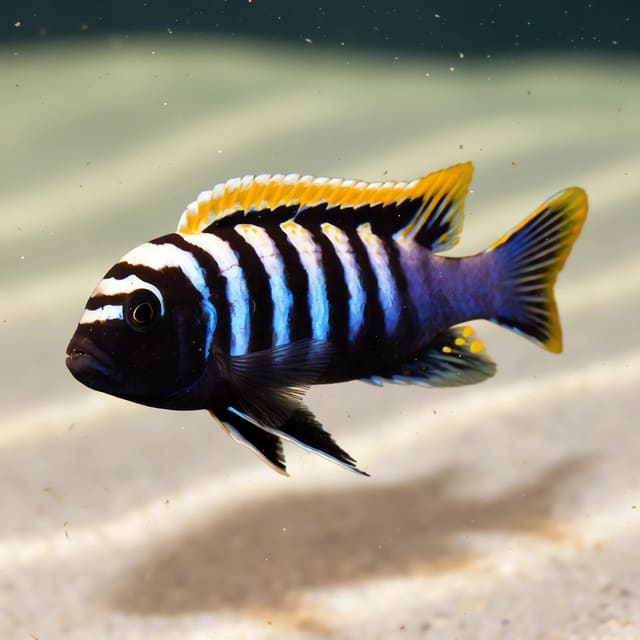
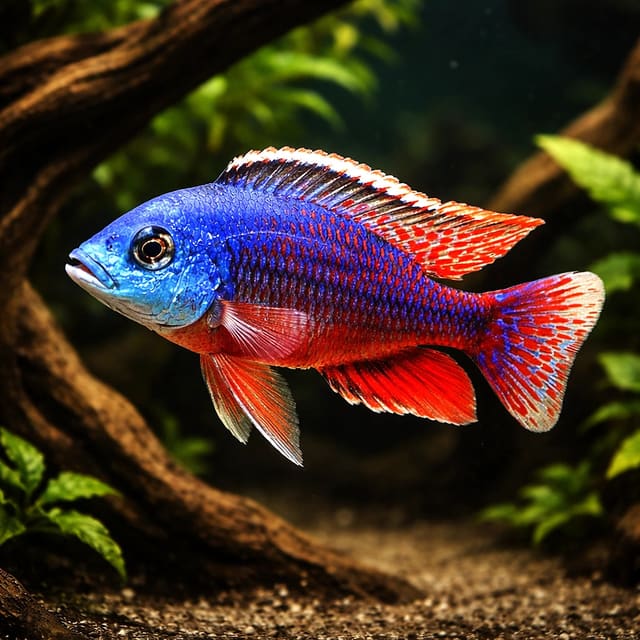
The Red-Spotted Spothead Hap is a specialist Lake Tanganyika cichlid supplied in the aquarium trade under the long-standing name Ctenochromis horei. Recent taxonomic work places this fish in Shuja, so we use Shuja horei for the cleaned listing while keeping the trade name visible for keepers comparing labels, invoices and older care references. This is not a tiny community fish. The 3-4 cm, 5-6 cm and XL options are sale sizes, not final adult sizes, and the fish should be planned as a territorial Tanganyikan haplochromine that can reach roughly 15 cm in normal aquarium references, with larger males reported close to 20 cm.
A good Red-Spotted Spothead Hap listing should help the right keeper buy confidently and should also discourage unsuitable purchases. This fish is best for experienced aquarists who already understand hard, alkaline rift-lake water, robust filtration, rockwork, sand and cichlid social management. In the right setup it is a bold, interesting fish with mottled head markings, a barred flank, a searching feeding style and the classic intelligence of a Tanganyika cichlid.
The size selector on this product describes the size of the fish when supplied, not the size of the aquarium it can live in permanently. A 3-4 cm juvenile still needs to be bought with adult behaviour in mind. It may look manageable on arrival, but it will grow into a confident cichlid that needs territory, visual breaks and room to avoid constant pressure on tankmates. The 5-6 cm option is already moving toward the more assertive juvenile stage, and an XL fish should be treated as a strong cichlid from day one.
For long-term care, plan a large Tanganyika-style aquarium rather than a small general tropical tank. A 55 US gallon footprint is a sensible minimum reference for a carefully managed individual or compatible group, and larger aquariums around 300-350 litres give much more margin if you want a male with females or other robust Tanganyikan cichlids. Space is not only about swimming length. It gives subordinate fish somewhere to move away, lets you build separate territories with rocks and caves, and keeps water chemistry more stable.
Shuja horei is associated with the Lake Tanganyika basin, where stable, mineral-rich water shapes every part of its care. Published accounts describe it from shallow marginal lake areas and immediate riverine habitats rather than soft, acidic forest streams. The aquarium should therefore be built around alkaline buffering, clean oxygen-rich water, sand and rock structure. The supplier name Ctenochromis horei remains useful because many aquarium lists, invoices and older references still use it, but the cleaned listing avoids pretending that the old name is the only accepted placement.
For SEO and for keeper clarity, both names are kept naturally: Shuja horei for the current heading and Ctenochromis horei for the trade-name bridge. That still helps customers who search either scientific name. It also prevents accidental confusion with Malawi or Victoria haps. This is a Tanganyikan species and its water, rockwork and stocking plan should follow that direction.
Use a sand substrate with stable rock piles, caves and open lanes between territories. The fish may dig or shift sand, so rockwork should be secure before the substrate is added and should not rely on sand for support. Build several sight-line breaks rather than one central cave. A dominant fish should not be able to see the whole tank from one perch, because that often increases constant chasing. Hardy plants can be used if they tolerate alkaline water and occasional digging, but the core layout should be sand, rock, clean water and space.
Filtration should be strong enough for cichlid feeding and waste output, with good surface movement and no dead spots behind rock piles. Aim for zero ammonia and nitrite at all times and keep nitrate controlled with regular water changes. Match new water for temperature, pH and hardness before adding it. Sudden swings are more dangerous than a slightly imperfect but stable number. This species is a poor fit for soft-water community aquariums, blackwater aquariums or small tanks where pH and aggression can swing quickly.
Red-Spotted Spothead Haps are territorial cichlids. They are not monsters, but they are not peaceful centrepiece fish for a small mixed community. Males can be especially hard on one another, and breeding condition can make the dominant fish more forceful. If you keep more than one, avoid cramped male-to-male competition and give females or subordinate fish genuine escape routes. A common specialist approach is one male with several females in a larger aquarium, but the exact plan depends on tank size, layout and the individual fish.
Tankmates should be chosen for the same hard, alkaline water and similar robustness. Suitable companions are usually other Tanganyikan fish that are too large to be swallowed, not excessively aggressive and not so timid that they will stop feeding. Avoid soft-water tetras, long-finned fish, tiny fry-sized fish, slow delicate species and aggressive mbuna-style combinations that create needless pressure. If you are unsure, a species-focused setup is the safer and more responsible route.
This species is best treated as an omnivorous predator-leaning cichlid. Offer quality Tanganyikan or general cichlid pellets as the staple, then rotate frozen or live foods such as mysis, brine shrimp, daphnia, chopped krill and small insect larvae. Include some vegetable or spirulina content through balanced pellets rather than feeding a purely meaty diet every day. Feed small portions once or twice daily and watch every fish eat. In territorial groups, a dominant individual may claim the best feeding position, so scatter food across the tank rather than dropping it all in one place.
Do not overfeed to force growth. Heavy feeding in alkaline cichlid aquariums quickly damages water quality, and this fish depends on clean, oxygen-rich water. Remove uneaten food, keep the filter maintained, and use regular water changes as part of the feeding plan rather than as an afterthought.
When available, this fish should be acclimated slowly into a mature aquarium with already-stable Tanganyika-style chemistry. Check pH, temperature and hardness before release, dim the lights, and give the fish quiet time to settle. Avoid moving it from transport water into soft or acidic conditions. A slow introduction is especially important for juveniles because small fish have less reserve if temperature or chemistry shifts suddenly.
If you live in a soft-water area, use a consistent mineral and buffering method before ordering specialist rift-lake cichlids. Guessing with occasional buffer additions is not enough. Stability is the goal: the same pH, KH and temperature after every water change, not a chase for perfect numbers that rise and fall during the week.
Shuja horei is reported as a maternal mouthbrooder. Females brood the eggs and developing fry in the mouth, and stress during this period can cause broods to be swallowed or released too early. If breeding is a goal, keep the aquarium calm, avoid constant netting or rearranging, and provide multiple retreats. Fry will need tiny foods at first, then newly hatched brine shrimp and finely crushed prepared foods as they grow. Breeding should not be attempted in a crowded display tank where the female cannot avoid harassment.
Choose the Red-Spotted Spothead Hap if you want a characterful Tanganyikan cichlid and can provide a mature, hard-water aquarium with room for adult behaviour. It suits keepers who enjoy observing social structure, territorial displays and natural cichlid feeding behaviour. It is not the best choice for a first aquarium, a soft-water community, a nano tank or a mixed setup built around delicate fish.
When this product is in stock, our checkout and product-page delivery information will show the available live-fish courier options. Eligible first-time customers can use the current first-order offer when it is active, and live arrival cover applies according to the delivery terms shown at checkout. Because the current variants may be out of stock at times, we keep the wording conditional rather than pushing an order promise when a size is not available.
Tropical Fish Co focuses on matching the right fish with the right aquarium. For specialist cichlids like the Red-Spotted Spothead Hap, that means clear naming, honest adult-size guidance, careful packing and support that does not hide the demanding parts of care.
No reviews for this item yet. Bought one? Honest reviews only, good or bad.
What customers say about ordering from us
I have a small group of long finned mountain minnows. So was delighted to be able to order ten of this variety to increase the genetics in my tank . The ones I recieved are healthy but it’s to early to give a verdict on wether they are of a long finned type since they are small currently.
Gordon Walker · 23 Sept 2026
100% success travel and "installation". Pleased with quality of purchase. The Siamese fighter a bit "shy" so have not yet seen him at his best yet but looking good. Happy customer. GG
George E Garratt · 21 Sept 2026
Reviews of our shop, collected by Judge.me, an independent third-party review collector. Newest first.