Moderate
Acei Cichlid (Pseudotropheus sp. “acei”)
24–26°C · pH 7.5–8.5 · 300L
£7.99

The Yellow Belly Hap (Haplochromis sp. yellow belly) is a Haplochromis cichlid from a genus associated with the East African Rift. It suits keepers planning an aggressive African cichlid community using OATA’s group guidance that Malawi cichlids can be kept in groups of at least 15 at 23–27°C, pH 8.0–8.6 and 12–18°dH. Sold individually in 2–3 cm, 3–4 cm, 4–5 cm and 6–7 cm sizes.
Haplochromis sp. yellow belly
Save when buying multiple fish. Each quantity is one fish; sex and pair formation are not guaranteed unless the selected variant explicitly states them.
The Yellow Belly Hap (Haplochromis sp. yellow belly) is a Haplochromis cichlid from a genus associated with the East African Rift. It suits keepers planning an aggressive African cichlid community using OATA’s group guidance that Malawi cichlids can be kept in groups of at least 15 at 23–27°C, pH 8.0–8.6 and 12–18°dH. Sold individually in 2–3 cm, 3–4 cm, 4–5 cm and 6–7 cm sizes.
Cichlids are a family of roughly 1,800 accepted species, not one care type. Before buying, identify the exact species and source, then compare adult measurement, usable tank dimensions, social system, territory, tested water, diet and an exit plan. No family-wide minimum tank, water range or tank-mate list is safe.
Maintain these water conditions for optimal health and vibrant colors
The Yellow Belly Hap (Haplochromis sp. yellow belly) is a ray-finned cichlid in the family Cichlidae. It belongs to a genus associated with the East African Rift and suits a keeper prepared to plan around hard, alkaline water, strong biological filtration and potentially high cichlid aggression. This is a specialist community decision rather than a fish to add casually to a mixed aquarium.
WoRMS recognises Haplochromis as an accepted genus within Cichlidae. The exact species has not been identified, so the care advice here follows the genus Haplochromis and its care group. Plan space, companions and feeding conservatively instead of assigning traits from a different named species.
The Wikipedia overview of Haplochromis places the genus among the East African Rift haplochromine cichlids. It also explains that Haplochromis has historically been used very broadly for related cichlids, which is why a genus-level label needs careful handling. Aquarium keepers commonly call members of this wider group “haps” or “haplos”.
Use the live size selector to choose 2–3 cm, 3–4 cm, 4–5 cm or 6–7 cm. One purchase supplies one animal in the selected size. The size you select is the size supplied, not the adult size.
These measurements describe the fish at dispatch. They are not life-stage labels, growth forecasts or evidence of sex, so plan the permanent aquarium before choosing among them. A larger dispatch measurement also does not replace the need for a gradual introduction to a mature biological filter.
Sex is guaranteed only when the selected option explicitly states male or female. This Yellow Belly Hap listing has no sex-guaranteed option.
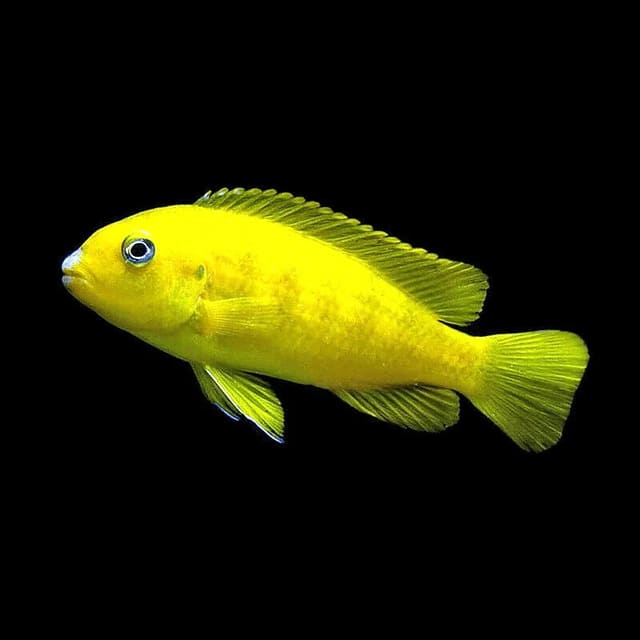
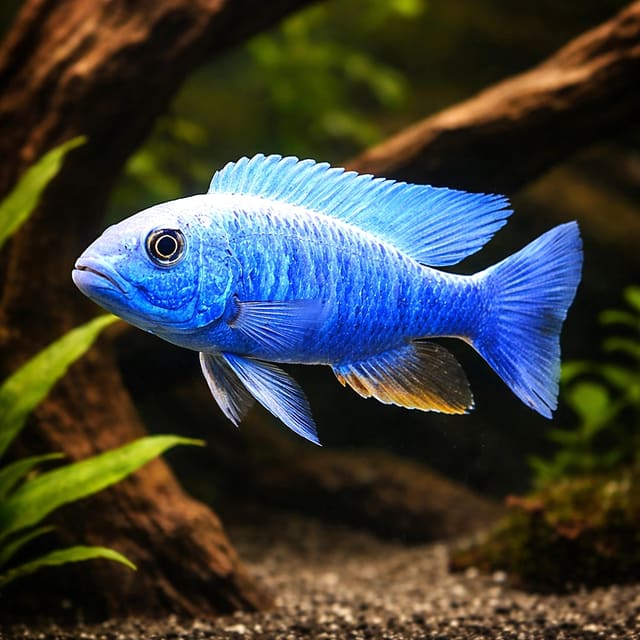
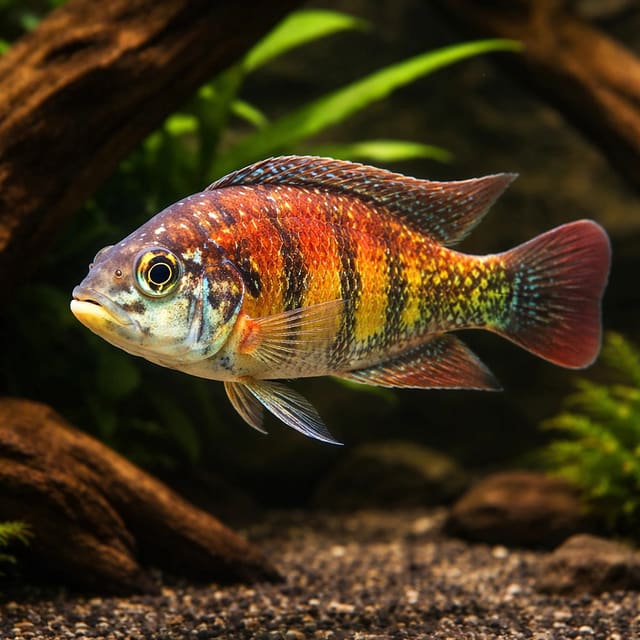
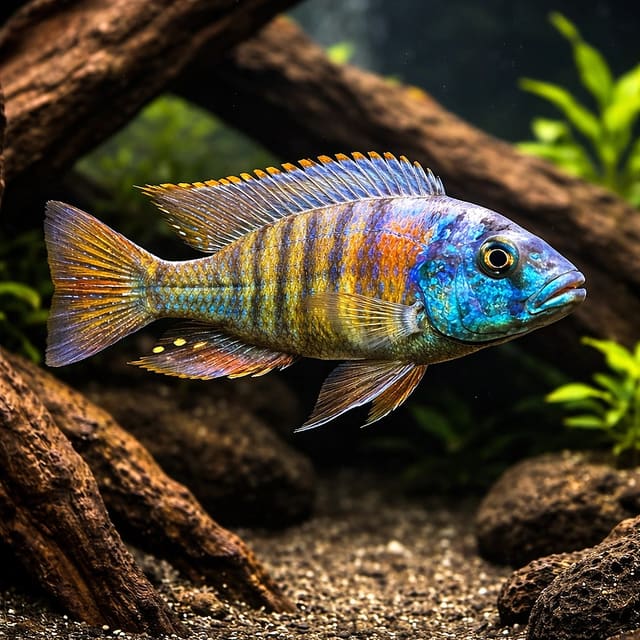
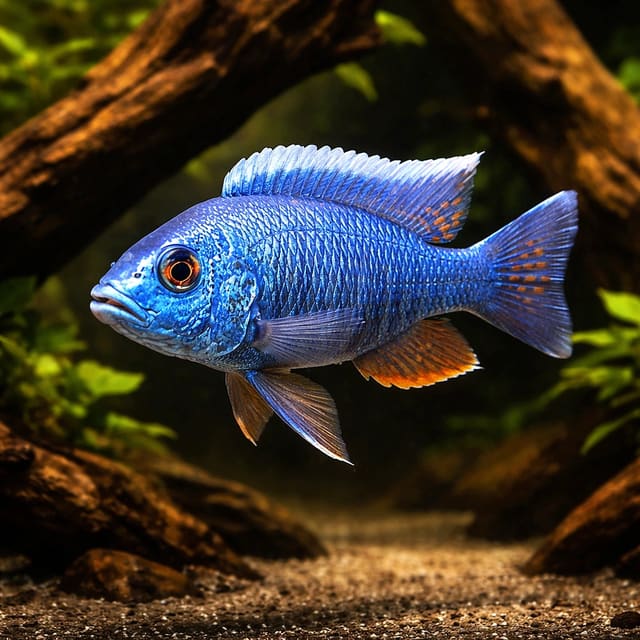
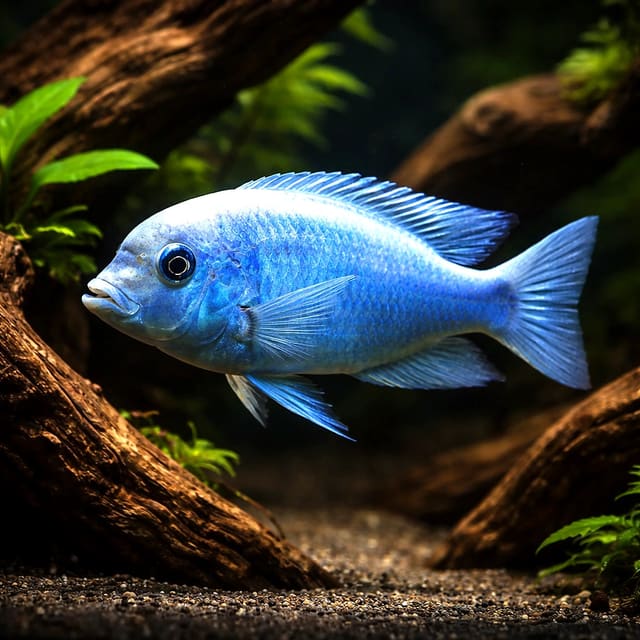
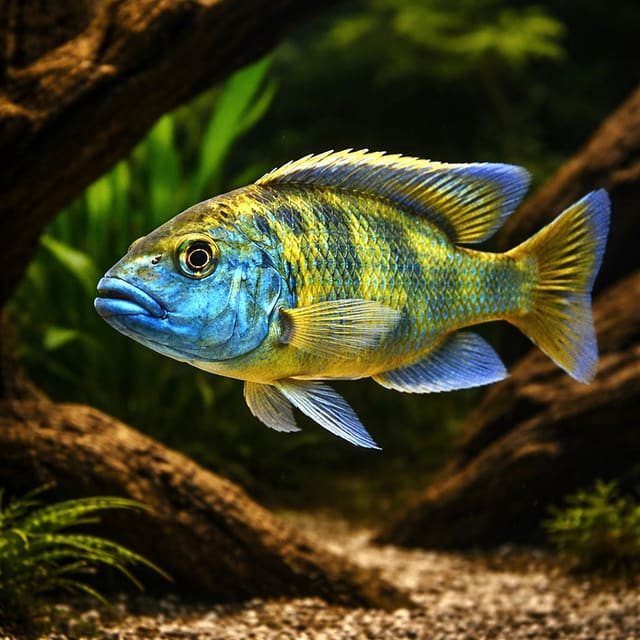
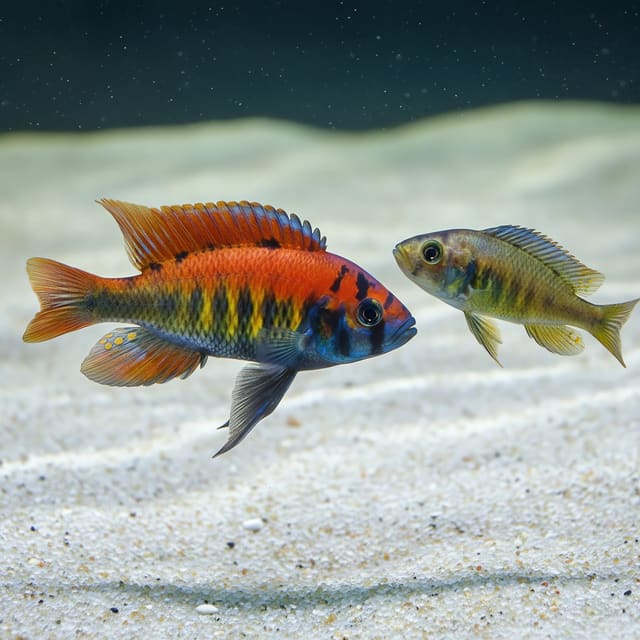
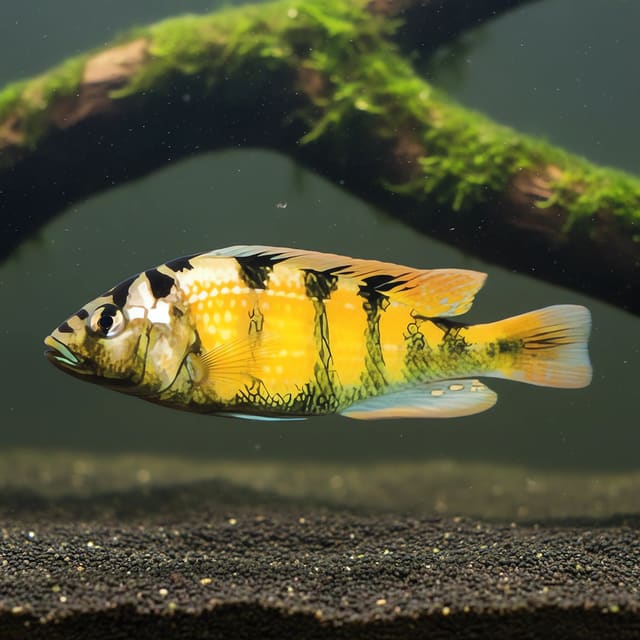
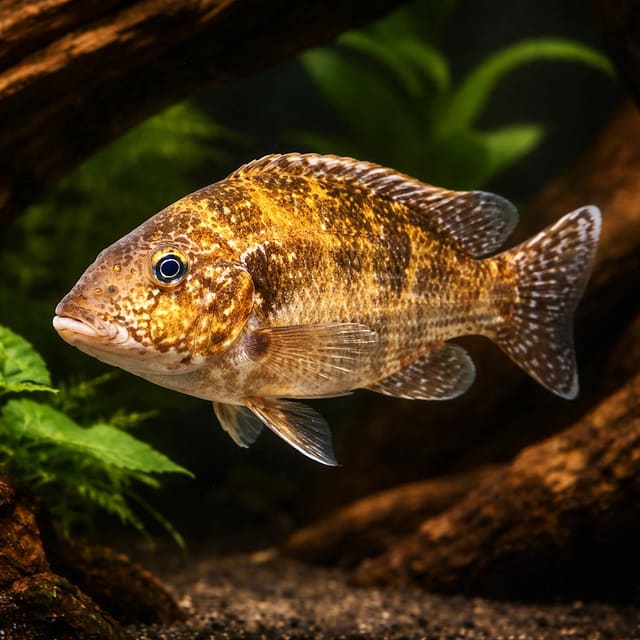
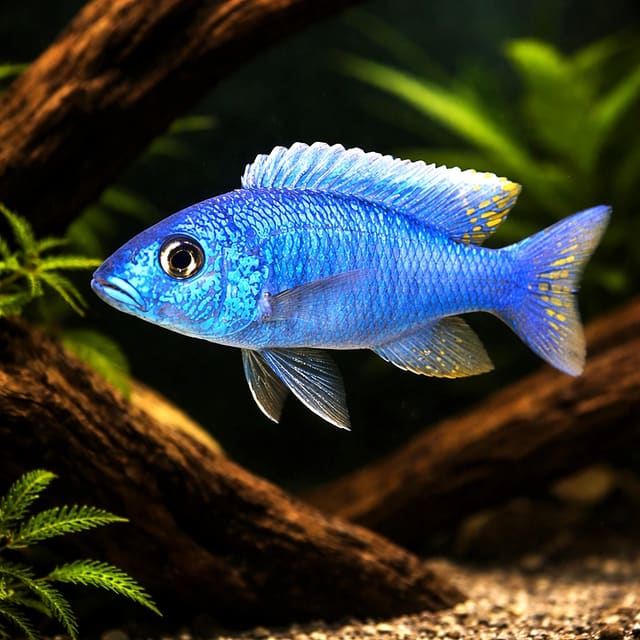
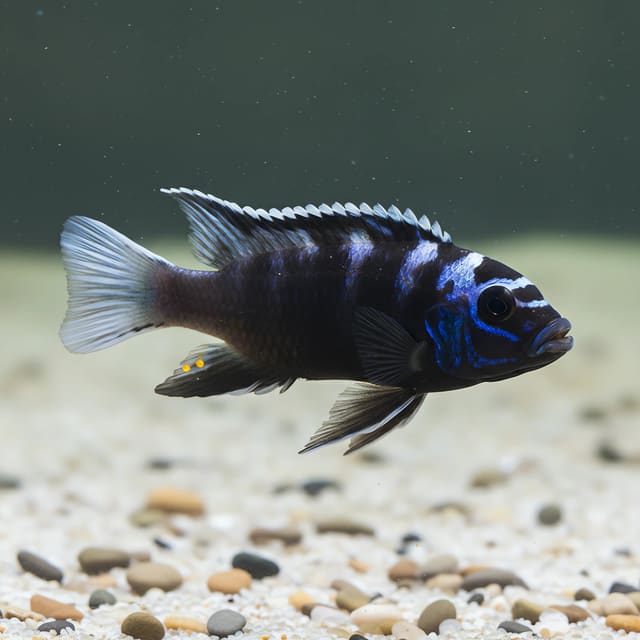
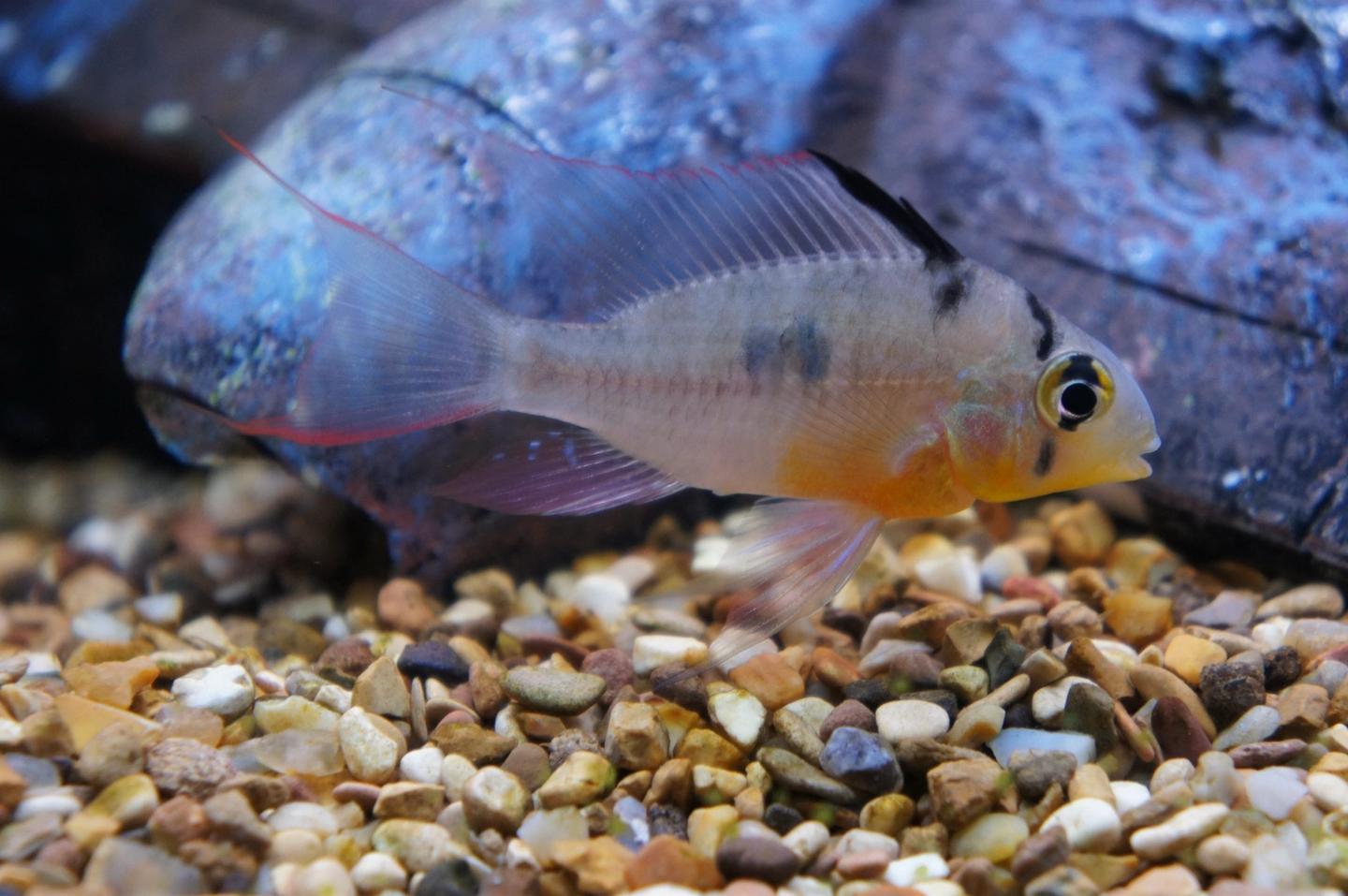
Some gallery images have been digitally enhanced to improve image quality. They show the listed type of animal rather than guaranteeing the exact markings of the individual supplied, so natural colour and pattern can vary.
Use the gallery to understand the intended visual identity, but base husbandry decisions on the genus label, the African cichlid care framework and the measured conditions in your aquarium. Colour shown in an illustration does not establish sex, age, origin or future appearance.
Keep this fish at 23–27°C, pH 8.0–8.6 and 12–18°dH. The OATA African Malawi cichlid guidance gives these as broad group values. Hold the temperature and chemistry steady, with ammonia and nitrite at zero.
For a reasonable community, use an aquarium of at least 200 litres as the OATA planning reference. Malawi cichlids can be kept in groups of at least 15. Malawi cichlids kept in small groups will often fight. Treat the volume and group figure as connected community decisions: filtration capacity, aggression and the species mix must all fit together.
| Suits | Not suited to |
|---|---|
| A mature, well-filtered aquarium | An unfiltered or newly stocked aquarium |
| Hard, alkaline water at 23–27°C | A soft, acidic aquarium plan |
| A carefully assessed Malawi cichlid community | A casual mixed community |
| A keeper prepared to monitor aggression | A small group assembled without an aggression plan |
| Weekly testing and partial water changes | Irregular maintenance or unchecked waste |
The decisive question is whether the whole aquarium can support the planned cichlid population. A suitable result combines enough space, an established filter, strong aeration, compatible water needs and a stocking order designed to spread aggression.
Maintain 23–27°C, pH 8.0–8.6 and general hardness of 12–18°dH. OATA also gives carbonate hardness of 10–15°dKH for the African Malawi cichlid group. Check all of these against the aquarium you intend to use rather than changing several values after the fish arrives.
The nitrate limit is relative to the source water. If the tap water measures 10 mg/l nitrate, the OATA ceiling works out at 30 mg/l in the aquarium. If the tap level is 20 mg/l, the equivalent ceiling is 40 mg/l. Measure the tap and aquarium separately instead of assuming that one fixed aquarium number applies to every home.
Use our water chemistry guide to understand which measurements to take and why. Once you have current test results, the water matcher can help you compare them with the stated planning range.
Test before adding fish, then test at least weekly. A result above the stated waste limits is a reason to pause further stocking and restore the routine through testing, partial water changes and filter checks. Record the results so that a gradual shift can be seen before it becomes a larger problem.
Use coral sand or a similar substrate where buffering is needed for this care framework. Keep the measurement itself as the decision point: substrate choice is useful only when testing shows that the aquarium remains within the intended hard, alkaline range.
Use a well-set-up and maintained biological filter from the start. The RSPCA’s aquarium guidance explains that fish release toxic ammonia and that beneficial bacteria in a working filter convert it first to nitrite and then to the safer nitrate. A filter therefore needs an established bacterial population, not merely moving water.
Prepare and mature the aquarium before livestock arrives. Our first tropical aquarium guide covers the setup sequence, while the measurable readiness test remains simple: ammonia and nitrite must both be zero.
OATA recommends an oversized filter for crowded Malawi cichlid communities and aggressive aeration to maintain dissolved oxygen. Match the filter to the planned population and feeding load, not just the aquarium’s stated volume. A 200-litre community reference does not make every filter intended for a nominal 200-litre aquarium adequate for a heavily stocked cichlid plan.
Adding fish too quickly can create new tank syndrome because the bacterial population has not grown enough to process the increased waste. Treat every addition as a change to the filter’s workload. Do not use clear-looking water as a substitute for ammonia and nitrite tests.
Filter cleaning must preserve those bacteria. Inspect the equipment for blockages during maintenance, but rinse filter media lightly in aquarium water removed during a partial water change. Do not rinse it under the tap.
Use at least 200 litres as the OATA planning reference for a reasonable Malawi cichlid community. The figure applies to the community framework rather than to this unidentified Haplochromis alone. Aquarium shape, filtration, the number of fish and the aggression profile still need to work as one plan.
A larger aquarium helps keep temperature and water quality more stable. It also gives you more scope to organise décor and manage territories, but volume never cancels the need to screen the fish being combined. Ask us to assess the proposed stocking list, aquarium dimensions, filter and measured water together.
Rearranging décor can reduce aggression by disrupting established territories. Make that change deliberately and then observe the whole group for altered swimming, hiding or chasing. Do not add more fish simply because the aquarium looks visually open; the filter’s waste capacity and the behaviour of the existing population are the limiting checks.
Do not divide 200 litres by a group number to create a litres-per-fish rule. OATA’s guidance joins a reasonable community volume to groups of at least 15 and slight overstocking as an aggression-management approach, but the safe result still depends on filtration and the particular cichlids chosen. A stocking assessment must consider those factors together.
Keep access clear for weekly siphoning and filter inspection. A layout that cannot be maintained will allow solid waste to gather even when the display looks well structured.
Feed twice a day, offering only what the fish can finish within a few minutes. Remove the cause of repeated leftovers by reducing the next portion. Uneaten food breaks down and adds toxic waste, so portion control protects the same ammonia and nitrite targets used to judge filter performance.
OATA separates Malawi cichlid feeding into two broad patterns. Because this animal carries a genus-level identity, choose the pattern that matches the way the fish is being managed rather than assigning a diet from another named Haplochromis species.
| If managed as | Use this feeding pattern |
|---|---|
| Smaller mbuna type | Specialised Malawi cichlid food with a high algae content, with fresh vegetables for variety |
| Larger utaka type | Pellets with a higher animal content, with frozen brine shrimp, prawns or cockles for variety |
Use variety within the appropriate branch, not as a reason to combine every food type. A high-algae Malawi food and vegetables belong to the mbuna guidance, while higher-animal-content pellets and the named frozen foods belong to the larger-utaka guidance.
Observe feeding response as a health check. Reduced intake or loss of interest in food is one of the changes OATA advises keepers to watch. When appetite changes, test the water values and compare the result with the fish’s swimming, breathing, colour and body condition before changing the menu.
Do not use extra food to encourage faster growth from one dispatch size to another. The selected measurement is only the size at supply, and overfeeding increases the waste load without resolving the unanswered adult-growth question.
Change 25% of the aquarium water at least once every week. Use a siphon to remove solid waste from the substrate during the change.
Never run filter media under the tap. Chlorine or chloramine may kill part of the beneficial bacterial population established in the media. Cleaning lightly in removed aquarium water reduces bacterial loss while allowing accumulated material to be loosened.
Compare nitrate with the normal tap-water level rather than looking at the aquarium result alone. Keep the aquarium no more than 20 mg/l above that baseline. Continue to require zero ammonia and zero nitrite; nitrate control does not make either of those toxic waste compounds acceptable.
Weekly records show whether waste is rising as fish and feeding are added. If results begin moving in the wrong direction, pause further stocking, check the filter for blockage and restore the maintenance routine. Adding livestock slowly gives the filter bacteria time to increase with the new waste load.
Inspect the substrate after the fish have dug or rearranged it. Move the siphon to areas where solid waste has collected, but keep the planned décor available for territory management. Maintenance access and aggression management both need to remain practical.
Before the parcel arrives, have the mature aquarium running within the stated range and confirm that ammonia and nitrite are zero.
Tropical Fish Co hand-packs live fish in pure oxygen inside an insulated poly box, with a heat pack when the weather calls for it. The current delivery and Live Arrival Guarantee policy gives the steps to follow when the parcel reaches you.
Begin filming every arrival with the parcel still sealed and continue without interruption while opening it and showing the fish inside the sealed bag.
After release, return to the established care plan: stable hard, alkaline water, a mature filter, strong aeration and observation of swimming, breathing, colour, appetite and aggression.
Observe the fish at each feed and during routine maintenance. Healthy fish should have clear, bright eyes, undamaged fins, intact scales, no ulcerations or bumps, an appropriate swimming pattern and regular feeding interest. Learn the normal appearance and behaviour of the individual so a change is easier to notice.
| If you see | Do this |
|---|---|
| Hanging at the surface, sitting on the bottom or erratic swimming | Test water quality and check filtration and aeration |
| A darker or paler colour than normal | Compare water results, appetite and aggression |
| More aggression or hiding | Review the group, stocking order and territory layout |
| Faster or slower gill-cover movement | Check water quality, filter operation and aeration |
| White spots, fluffy growths, or loss of fins or scales | Test the water and seek guidance before choosing a treatment |
| Weight change or reduced feeding interest | Review portions and test ammonia, nitrite and nitrate |
Water testing is the first practical response because ammonia and nitrite must remain at zero and Malawi cichlids can be stressed by even small amounts. Check nitrate against the tap-water baseline as well, then compare the result with recent stocking, feeding and filter maintenance.
For aggression changes, look at the whole community rather than only the fish being chased. Malawi cichlids added in small or poorly ordered groups will often fight, while rearranging décor can reduce established territorial pressure. Record what changed before the behaviour appeared.
A visible sign does not identify its cause or select a treatment by itself. Test the aquarium, preserve filtration and contact us for guidance when a health change continues or involves damaged tissue, unusual breathing or loss of feeding interest.
Treat the Yellow Belly Hap as part of an aggressive African cichlid community. OATA describes Malawi cichlids as non-social fish that can be highly aggressive, while also saying they can be kept in groups of at least 15. Malawi cichlids kept in small groups will often fight, so the group number, aquarium capacity and filter load must be planned together.
Slight overstocking is used in the OATA framework to spread aggression, but it increases the demand on filtration, aeration and maintenance. Never use it as permission to exceed the capacity of the mature biological filter. Ammonia and nitrite must stay at zero as the population and feeding load increase.
Where possible, OATA recommends keeping more females than males of each species so one female is not subjected to repeated harassment. This offer does not provide a sex-guaranteed option, so do not make the success of the initial plan depend on receiving a particular sex.
Grouping decisions cannot be separated from space. Use at least 200 litres as the broad reference for a reasonable community, then assess aquarium dimensions, filtration, aeration and the proposed fish together. A group of 15 is not an automatic target for every aquarium, and 200 litres is not permission for every combination.
Keep weekly records after additions. Rising waste values, increased hiding or persistent aggression are reasons to pause further stocking and review the plan rather than adding more fish immediately.
Use a narrow companion rule: OATA says Malawi cichlids should be kept only with other Malawi cichlids or some species of Synodontis catfish that naturally inhabit Lake Malawi. Avoid fish and invertebrates outside those categories.
The exact Haplochromis species is unidentified, so no named companion should be treated as an automatic match. Screen each candidate for the same hard, alkaline water, the planned community volume, filter capacity and likely aggression before combining it with the Yellow Belly Hap.
| Suitable only after screening | Avoid |
|---|---|
| Other Malawi cichlids | Fish outside the Malawi cichlid category |
| Some Synodontis species that naturally inhabit Lake Malawi | Synodontis that do not meet that Lake Malawi rule |
| A planned group supported by the aquarium and filter | Small, casually assembled Malawi cichlid groups |
| Fish introduced in an aggression-aware order | Other fish or invertebrates outside the two permitted categories |
When comparing candidates in the African cichlid collection, treat collection placement as a browsing aid rather than a compatibility decision. Match the individual product identity and care requirements before making a stocking plan.
Add the more peaceful species first and more aggressive species later. Introduce Malawi cichlids in groups where the aquarium can support them, and rearrange décor to interrupt established territories. These steps reduce the chance that one newcomer receives all of the settling-in aggression.
After the introduction, monitor swimming, hiding, appetite, colour, breathing and damage to fins or scales. If aggression rises, review the stocking order and territory layout, then rearrange décor where appropriate. Also test ammonia and nitrite because additional fish and feeding increase the biological filter’s workload.
Plan the aquarium around an unidentified Haplochromis rather than a fixed adult length. Use the community’s space, aggression and water needs to decide capacity, and do not treat the 2–3 cm to 6–7 cm dispatch measurements as growth forecasts.
Use at least 200 litres as OATA’s broad planning reference for a reasonable Malawi cichlid community. Aquarium dimensions, filtration, aeration, group size and the aggression profile must still be assessed together.
OATA says Malawi cichlids can be kept in groups of at least 15. Malawi cichlids kept in small groups will often fight. Treat that as community guidance and match the final number to aquarium capacity, filtration and the complete cichlid mix.
OATA describes Malawi cichlids as usually undemanding but also aggressive and dependent on particular water conditions. A new keeper should prepare a mature filtered aquarium, maintain 23–27°C and pH 8.0–8.6, and have a complete stocking plan before choosing this fish.
Feed only what it can finish within a few minutes, twice daily. OATA recommends high-algae Malawi food and vegetables for smaller mbuna types, or higher-animal-content pellets with frozen brine shrimp, prawns or cockles for larger utaka types; use the branch chosen for this fish’s management.
Keep the Yellow Belly Hap at 23–27°C, pH 8.0–8.6 and 12–18°dH. OATA gives these as broad African Malawi cichlid values; ammonia and nitrite must remain at zero.
Treat it as a potentially highly aggressive cichlid. OATA advises group planning, adding peaceful species first, introducing Malawi cichlids in groups and rearranging décor to reduce territorial aggression; monitor chasing, hiding and fin damage.
Keep this fish only with other Malawi cichlids or some Synodontis catfish species that naturally inhabit Lake Malawi, after screening water needs, space and aggression. OATA excludes animals outside those categories from its Malawi cichlid compatibility rule.
Tropical Fish Co hand-packs it in pure oxygen inside an insulated poly box, with a heat pack when the weather calls for it, and uses a licensed live-animal courier. Be present to receive the parcel, film continuously from the sealed box, inspect it the same day and float the bag for 20–30 minutes before releasing.
Public references used for the identity, natural-history context and aquarium-care framework:
No reviews for this item yet. Bought one? Honest reviews only, good or bad.
What customers say about ordering from us
I have a small group of long finned mountain minnows. So was delighted to be able to order ten of this variety to increase the genetics in my tank . The ones I recieved are healthy but it’s to early to give a verdict on wether they are of a long finned type since they are small currently.
Gordon Walker · 23 Sept 2026
100% success travel and "installation". Pleased with quality of purchase. The Siamese fighter a bit "shy" so have not yet seen him at his best yet but looking good. Happy customer. GG
George E Garratt · 21 Sept 2026
Reviews of our shop, collected by Judge.me, an independent third-party review collector. Newest first.