−11%
Moderate
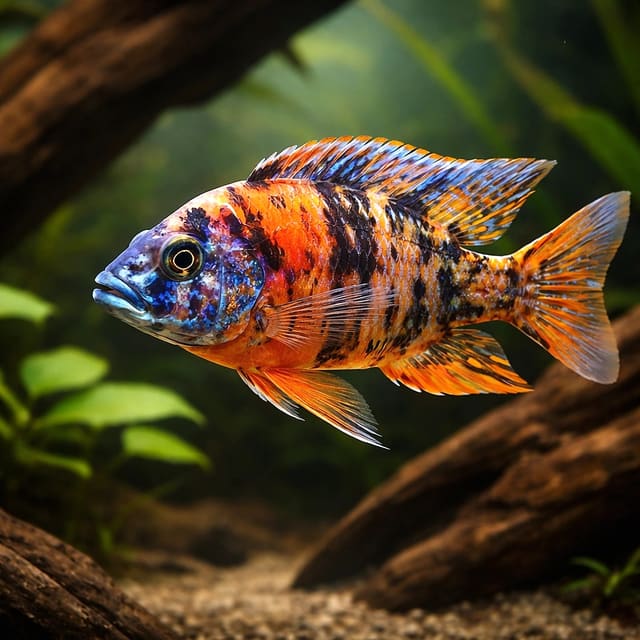
Calico Peacock Cichlid (Aulonocara sp. calico)
24–28°C · pH 7.5–8.5 · 200L
£17.79£19.99

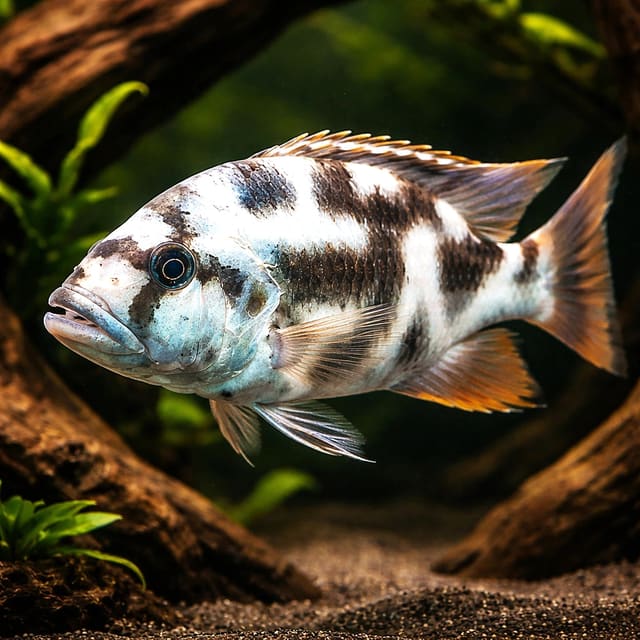
Iceberg Electric Blue Hap (Haplochromis fryeri) is an unsexed live cichlid for a carefully planned hard, alkaline Malawi aquarium. One purchase supplies one fish in the chosen dispatch size; use broad Malawi-group care values cautiously and plan the whole community before adding it.
Haplochromis fryeri
Save when buying multiple fish. Each quantity is one fish; sex and pair formation are not guaranteed unless the selected variant explicitly states them.
Iceberg Electric Blue Hap (Haplochromis fryeri) is an unsexed live cichlid for a carefully planned hard, alkaline Malawi aquarium. One purchase supplies one fish in the chosen dispatch size; use broad Malawi-group care values cautiously and plan the whole community before adding it.
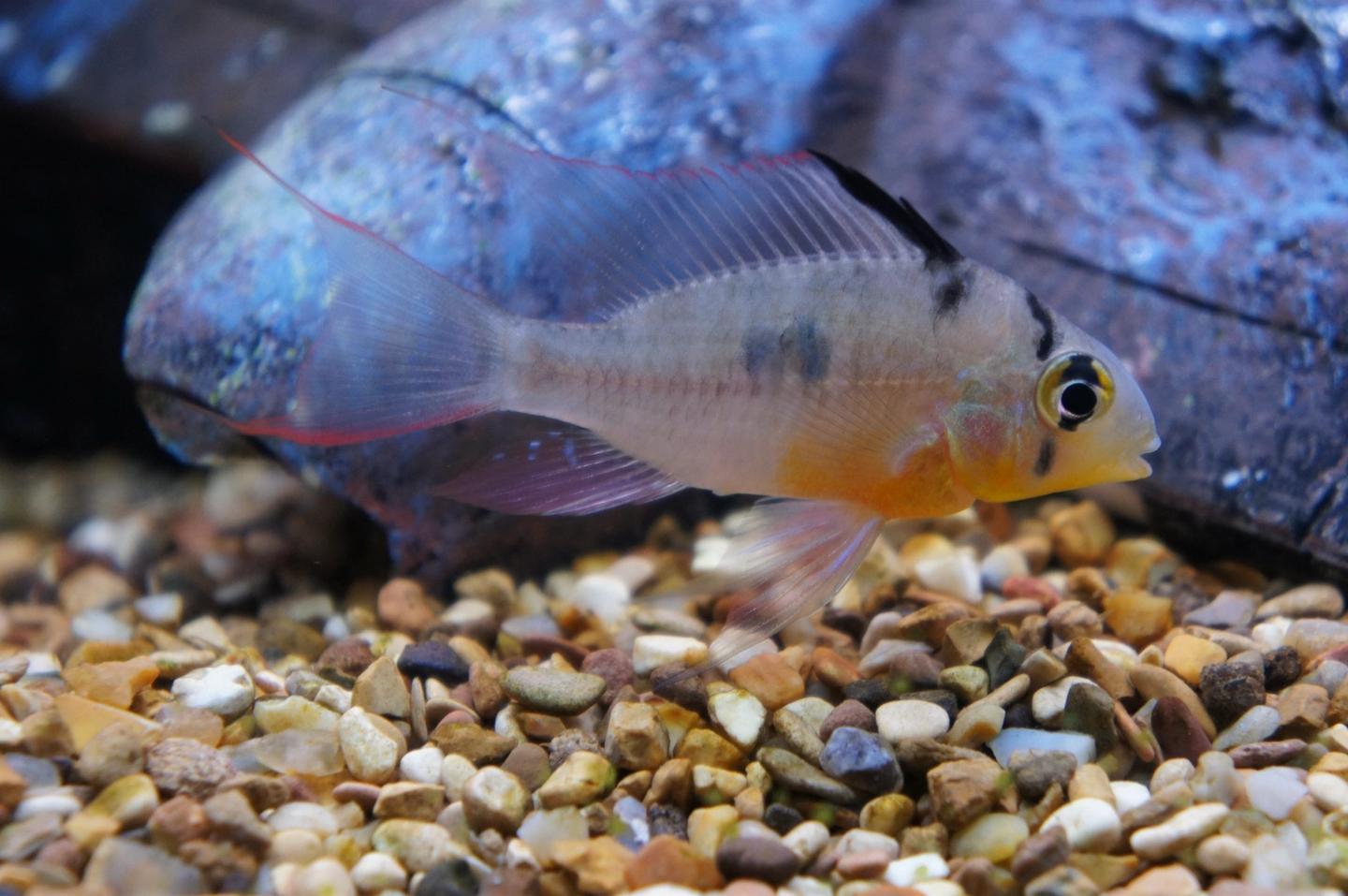
Cichlids are a family of roughly 1,800 accepted species, not one care type. Before buying, identify the exact species and source, then compare adult measurement, usable tank dimensions, social system, territory, tested water, diet and an exit plan. No family-wide minimum tank, water range or tank-mate list is safe.
Maintain these water conditions for optimal health and vibrant colors
Iceberg Electric Blue Hap (Haplochromis fryeri) is a live cichlid trade line supplied for hard, alkaline Malawi-style aquariums. Its appeal begins with the Iceberg Electric Blue name, but the practical decision is about water, space and community structure. Malawi cichlids are active, aggressive fish whose needs should be planned as a group rather than treated like a peaceful mixed community.
One purchase supplies one live fish in the size chosen. The size you select is the size supplied, not the adult size. The four dispatch labels are 3–4 cm, 4–5 cm, 5.5–7 cm and 7–9 cm. These figures describe the fish at dispatch; they must not be used as a mature-size forecast. Sex is guaranteed only when the selected option explicitly states male or female. This Iceberg Electric Blue Hap listing has no sex-guaranteed option.
| Suits | Keepers who can run a mature, strongly filtered hard-water aquarium and manage cichlid aggression |
|---|---|
| Sold unit | One unsexed live fish in the chosen dispatch size |
| Broad group water guide | 23–27 °C, pH 8.0–8.6 and 12–18 dGH for Malawi cichlids generally |
| Community starting point | OATA recommends at least 200 litres for a reasonable-sized Malawi community, while specialist fish may need a different plan |
| Filtration | Mature biological filtration, strong aeration and regular testing for zero ammonia and zero nitrite |
| Main caution | Build the entire Malawi community deliberately; aggression, adult space and dietary type need checking before mixing fish |
The offer and catalogue use Haplochromis fryeri, and the common trade name is Iceberg Electric Blue Hap. Haplochromis is a cichlid genus within Cichlidae, and aquarium keepers commonly shorten related haplochromine names to “haps”. The genus has historically held many East African Rift cichlids, so a familiar hap label does not by itself establish exact adult size, diet, sex, breeding behaviour or wild habitat.
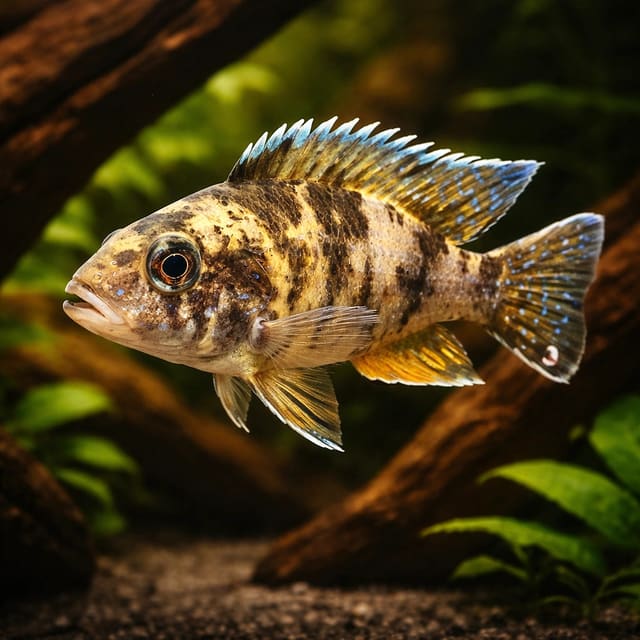
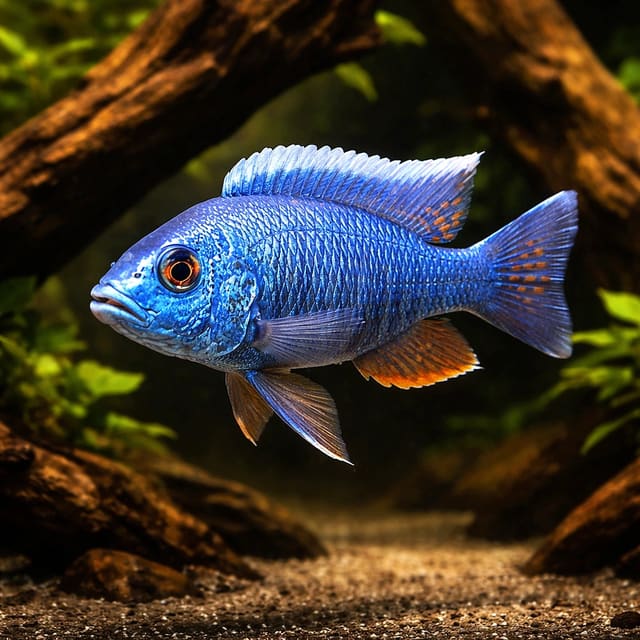
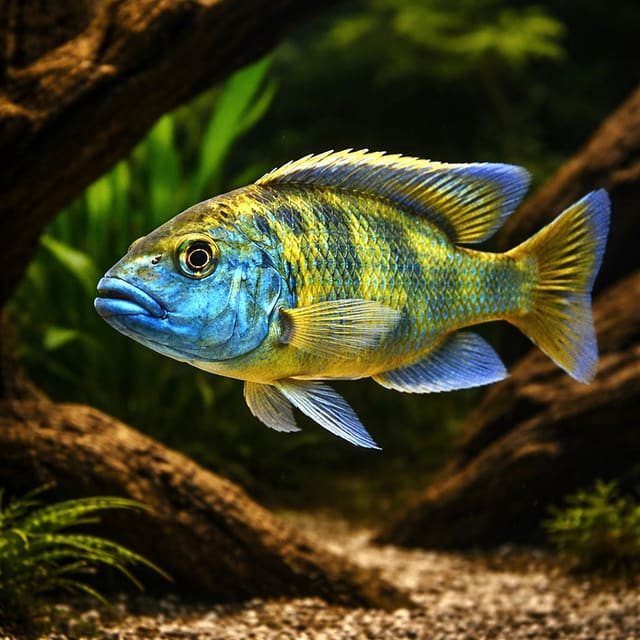
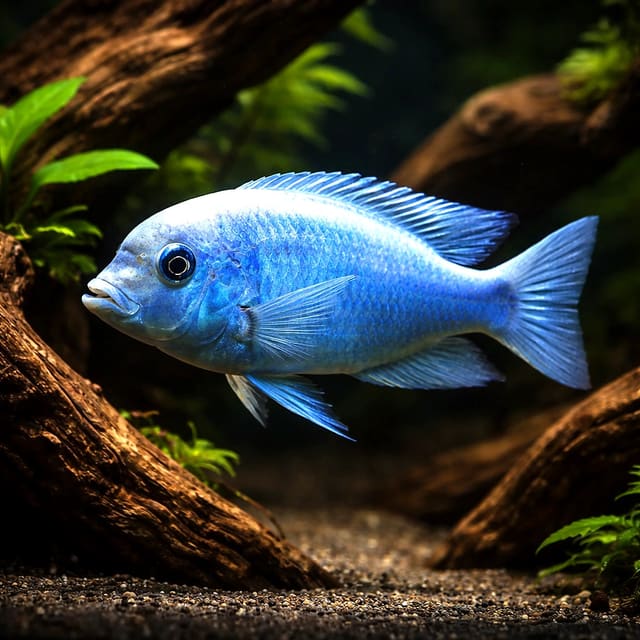
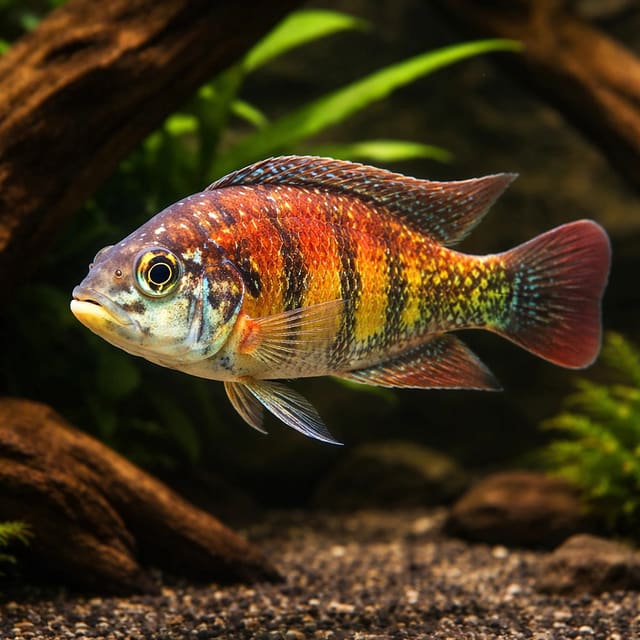
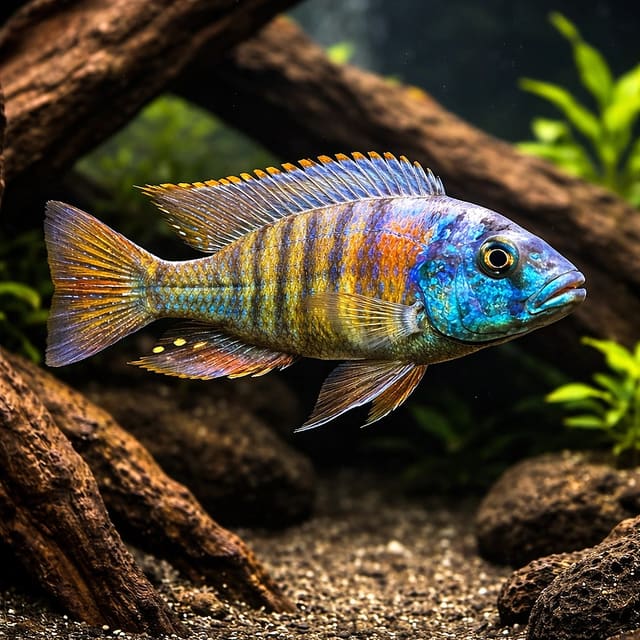
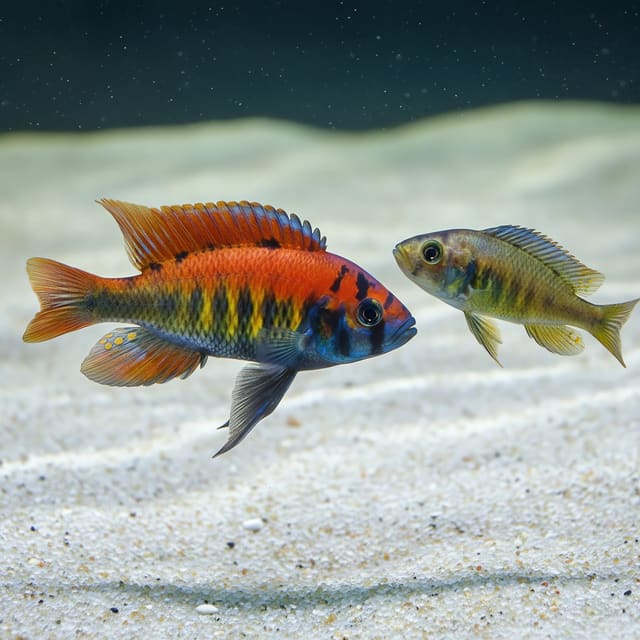
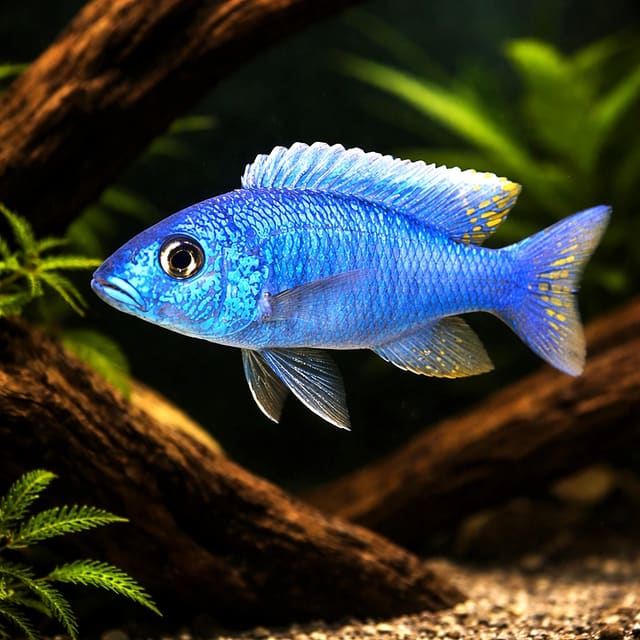
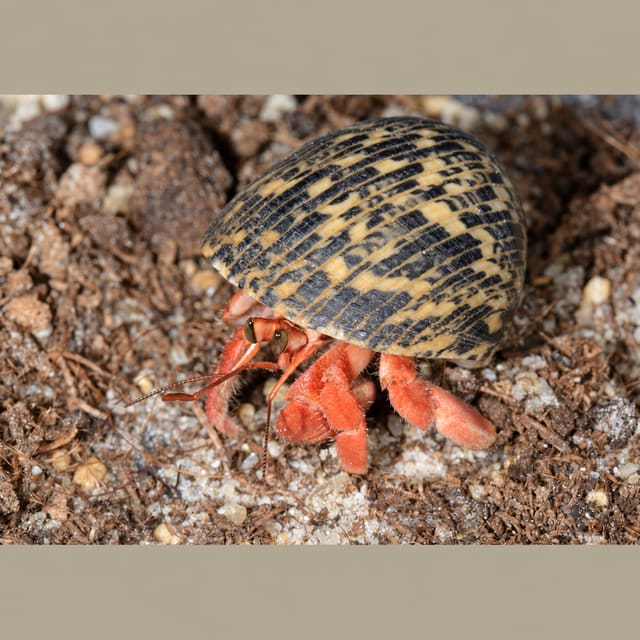
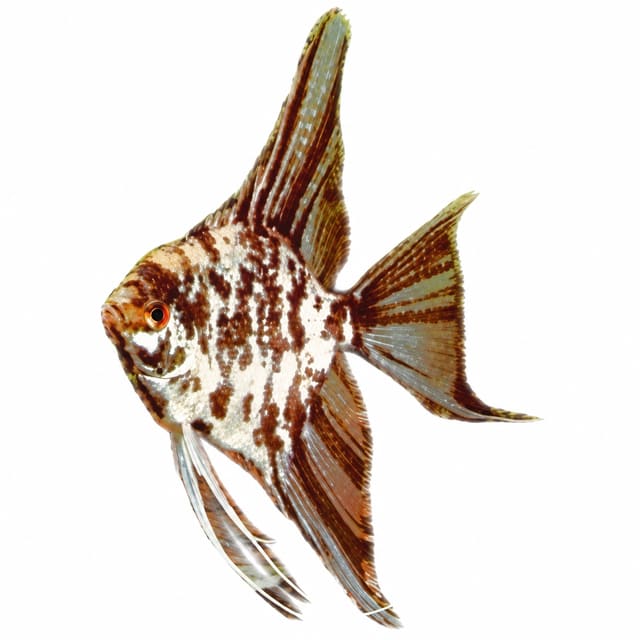
Use the approved name consistently when matching the fish to its order and care notes. Colour alone is not a sex test, and the gallery is not a way to select an individual. The fish supplied may differ in tone, pattern and maturity from a polished display image.
This listing suits someone already committed to a Malawi-style setup or prepared to build one properly. The aquarium should be mature before arrival, the water should remain hard and alkaline, and there must be enough capacity for the intended community rather than only the new fish. The keeper needs a plan for aggression, feeding access, observation and separation if one fish becomes a target.
It is a poor impulse purchase for a small new aquarium or a soft-water community. OATA describes Malawi cichlids as colourful, diverse and aggressive. Many can be undemanding once the system is right, but the combination of group stocking, water chemistry and territorial behaviour makes advance planning essential.
Browse the African cichlid collection only after defining the aquarium's water and social plan. Shared geography or chemistry does not automatically make two cichlids good companions.
Gallery images have been digitally enhanced to improve image quality. Natural colour, pattern, size and maturity can vary between live animals.
All four gallery items remain part of the existing product presentation. Use them for general orientation, while relying on the live size label for dispatch size and on a verified stocking plan for long-term care.
OATA's Malawi cichlid care sheet gives 23–27 °C, pH 8.0–8.6 and general hardness of 12–18 dGH, with carbonate hardness of 10–15 dKH. These are broad group-level values rather than a species-specific optimum for Haplochromis fryeri. They provide a sensible Malawi framework, but they do not establish a precise preferred point for this trade line.
Test the water that will actually fill the aquarium. The water chemistry guide explains what the readings mean, and the water matcher helps compare measured values with the stated group guide. A steady hard, alkaline result is more useful than repeated chemical swings made to hit one number.
Temperature, pH, general hardness and carbonate hardness are related to aquarium stability but are not interchangeable. A heater holds temperature; it does not add mineral content. A single pH reading says little about how well the water resists change. Record all relevant values, prepare replacement water consistently and watch the trend across weekly maintenance.
OATA recommends at least 200 litres for a reasonable-sized community of Malawi cichlids, while noting that specialist species may require different arrangements. Treat 200 litres as broad community guidance, not a product-specific minimum. Final aquarium length, footprint and volume must reflect the mature fish, number of cichlids, territorial pattern and filtration load.
The four dispatch sizes do not answer the adult-space question. A 3–4 cm fish still needs an aquarium planned for maturity, and choosing 7–9 cm does not make the same tank automatically suitable. Confirm an adult planning figure for the exact trade line before purchase, then assess the whole population rather than allocating litres to one fish in isolation.
A larger aquarium usually offers more stable temperature and chemistry and more room to manage aggression. Space remains useful only when the layout and stocking plan make it accessible. A tall empty tank does not substitute for sufficient footprint, refuge and swimming room.
OATA recommends coral sand or a similar substrate for buffering Malawi water. Malawi cichlids often dig and rearrange the substrate, so place heavy décor securely and expect the bottom layout to change. Rockwork can create refuge and territory, while open areas allow movement and make feeding easier to observe.
Build the structure on a stable base and check that it cannot topple if sand is moved. Keep filter intakes and outlets clear. Avoid a solid wall of rock that traps waste or prevents circulation behind the décor. The precise balance between caves and open water depends on the fish in the community, so do not label this animal mbuna or utaka from appearance alone.
Malawi cichlids often dig and rearrange the substrate, which will uproot plants; hardy plants attached to rock are more practical than delicate rooted stems. Plants are optional; stable water, filtration, oxygenation and safe territory take priority. Any plant choice must also tolerate the hard alkaline conditions used for the cichlids.
A filter is essential. Fish excrete ammonia, which is toxic; beneficial bacteria in a mature biological filter convert ammonia to toxic nitrite and then to the safer nitrate. The RSPCA's aquarium environment advice explains this cycle and why no fish should be placed in an unfiltered, immature aquarium.
Use the first tropical tank guide when preparing a new system. Add fish only after the filter is mature and ammonia and nitrite test at zero. Increase stocking gradually so the bacterial population can respond to a higher waste and feeding load. “New tank syndrome” is especially dangerous when several active cichlids are added faster than the filter can adapt.
OATA recommends oversized filtration and vigorous aeration for managed Malawi communities. Check surface movement, circulation around rocks and flow through the media. Strong equipment still needs maintenance: reduced output, a blocked intake or compacted debris can lower performance without obvious warning.
OATA's broad Malawi guide sets ammonia at zero, nitrite at zero and nitrate no more than 20 mg per litre above the normal tap-water level. Test at least weekly and after any unusual feeding, new addition or change in behaviour. Compare results with the source water because the nitrate goal is expressed relative to that baseline.
A partial water change of 25% at least once every week is strongly recommended in the group care sheet. Treat replacement water for chlorine or chloramine and match it closely for temperature. Siphon waste from the substrate and around accessible rock bases. Keep the routine regular so water quality does not deteriorate until a disruptive rescue change is needed.
Check the filter for blockages. If cleaning is required, never run the media under the tap; rinse it lightly in water removed from the aquarium instead. This helps retain the beneficial bacteria responsible for processing nitrogen waste. Clean enough to restore flow without turning maintenance into a complete reset of the biological system.
Malawi cichlid diets vary. OATA describes smaller mbuna as more herbivorous, while some larger utaka are more predatory and may take pellets with a higher animal content plus frozen brine shrimp, prawn or cockle. The trade name “hap” and an electric-blue colour do not by themselves establish which menu is correct for this individual line.
Choose a complete Malawi cichlid food that matches the confirmed feeding type, then use the fish's body condition and response to guide portion size. OATA advises feeding only what the fish consume within a few minutes, twice a day. Remove leftovers where practical because uneaten food breaks down and adds to the filter's workload.
Watch every fish during meals. Aggression can prevent a subordinate fish reaching food even when plenty is added. Spread suitable portions across more than one feeding point, then check that no individual is consistently excluded. Feeding more to compensate for competition can worsen water quality without helping the targeted fish.
Be present at the delivery address. Before opening or disturbing the parcel, begin a continuous unboxing video showing the sealed parcel, the outer box, the opening and the fish still in its sealed bag. The store uses that record if a Live Arrival Guarantee claim is needed. Inspect the animal on the day it arrives and contact Tropical Fish Co that day with the order number and video if something is wrong.
The delivery and Live Arrival Guarantee policy explains current packing, receipt and claim conditions. Fish are hand-bagged in oxygen, placed in an insulated box with a heat pack when weather calls for it, and carried by a licensed live-animal courier. Tracking and the confirmed delivery date are sent by email.
Healthy fish should have clear bright eyes, intact scales, undamaged fins and an appropriate body condition. Changes that deserve attention include hanging at the surface, sitting on the bottom, erratic swimming, faster or slower gill movement, darker or paler colour, unusual hiding, increased aggression, white spots, fluffy growths, damaged fins or reduced feeding.
Start by testing water quality and reviewing recent stocking, feeding and maintenance. Aggression can produce physical damage and stress signs; poor water can affect multiple fish at once. If the cause remains unclear, seek informed help with the test results and a description of the behaviour rather than selecting medication by guesswork.
OATA describes Malawi cichlids as aggressive fish that should be mixed cautiously. A successful community is not a random collection of colourful individuals. It is a managed population whose adult sizes, behaviour, dietary needs, sex structure, territory and swimming zones have been considered together.
Do not assume the smallest fish will remain the least demanding. Dispatch size affects the animal that arrives, while social pressure often changes with growth and maturity. Build the aquarium for the long-term population and prepare a separate mature space or another safe route if one fish is repeatedly attacked.
The OATA group sheet says Malawi cichlids can be kept in groups of at least 15 and slightly overcrowded to spread aggression, while small groups often fight. It also recommends more females than males where possible. These are broad Malawi-community practices, not an instruction to buy 15 Iceberg Electric Blue Haps or to infer sex from juvenile colour.
Any deliberate overstocking depends on excellent filtration, vigorous aeration, regular maintenance and enough aquarium capacity. It is not a shortcut for an undersized tank. A group approach also works only when the chosen species and individuals are compatible. Confirm the complete stocking plan before adding fish rather than using a head count as the only rule.
OATA advises keeping Malawi cichlids with other Malawi cichlids or certain Synodontis catfish that naturally inhabit Lake Malawi. That statement defines a broad pool, not a universal tank-mate list. Each combination still needs a check for adult size, diet, aggression, available territory and total waste load.
Fish from soft, acidic community aquariums are a poor starting point because the water plan differs. Small or timid animals can also struggle in a forceful cichlid community. Even another Malawi fish may be unsuitable if it competes for the same space or requires a conflicting feeding strategy.
OATA recommends adding more peaceful species before more aggressive fish and adding Malawi cichlids in groups so that one newcomer does not receive all the attention. Rearranging décor before introduction can disrupt old territorial boundaries. Make every rock secure again and keep the filter flow clear after the change.
Observe beyond the first few minutes. A fish may appear calm while unfamiliar and begin defending territory after it settles. Check feeding access, respiration, fins, colour and whether each animal can move away from pursuit. Brief display behaviour is different from repeated pinning into a corner or exclusion from food.
This listing supplies an unsexed fish. OATA notes that many Malawi cichlids show sex differences only as adults and that the exact differences vary between species. Neither dispatch size nor gallery colour guarantees male or female. A female-heavy group may be useful for some species, but it cannot be planned from unsexed fish by assumption.
If a stocking design depends on a particular sex ratio, use explicitly sexed fish and an appropriate species plan. For this product, start with the truthful offer: one animal per purchase, no sex guarantee, and four dispatch-size choices.
A combination that passes only the water check is incomplete. Behaviour and diet often decide whether a Malawi community remains workable over time.
Use the 3–4 cm, 4–5 cm, 5.5–7 cm and 7–9 cm labels only as dispatch sizes. Confirm the mature planning size for the exact Haplochromis fryeri trade line before choosing the aquarium; the broad Malawi guide spans many species and is not an adult-size record for this fish.
OATA recommends at least 200 litres for a reasonable-sized Malawi cichlid community and notes that specialist fish may need a different arrangement. Treat that as broad group guidance and choose the final footprint and volume from the confirmed adult plan and complete population.
Do not turn OATA's broad group advice into a fixed same-species number. Malawi communities may use at least 15 cichlids and careful overstocking to spread aggression, but the exact number of this trade line depends on confirmed adult behaviour, aquarium capacity and sex structure.
It is best for a prepared keeper who can maintain hard alkaline water, mature filtration and a deliberately stocked cichlid community. The routine is manageable once established, but aggression and community design make it a poor impulse fish for a first small aquarium.
Use a complete Malawi cichlid diet matched to its confirmed feeding type. OATA distinguishes more herbivorous mbuna from more predatory utaka, so colour and the word “hap” are not enough to choose between them; feed only what is eaten within a few minutes, twice daily.
OATA's broad Malawi-group guidance is 23–27 °C, pH 8.0–8.6 and 12–18 dGH. Keep those values stable, with zero ammonia, zero nitrite and strong oxygenation, while recognising that the range is not a species-specific optimum.
Malawi cichlids are broadly described as aggressive and should be mixed with caution. Watch for sustained pursuit, fin damage, blocked feeding and a fish pinned away from refuge; those signs require a change to stocking or separation, not simply more food.
The OATA group sheet limits the broad companion pool to other Malawi cichlids or certain Lake Malawi Synodontis. Every exact pairing still needs compatible adult size, diet, behaviour, territory and total filtration load.
Tropical Fish Co hand-bags fish in oxygen, packs them in an insulated box with a heat pack when weather calls for it, and uses a licensed live-animal courier. Be present, record continuous video from the sealed parcel through opening with the fish still bagged, inspect it that day, then float the sealed bag for 20–30 minutes and transfer the fish without adding transport water to the aquarium.
The name Haplochromis fryeri identifies the exact line offered here, while the wider Haplochromis genus contains a complicated range of East African cichlids. That history makes careful wording useful: retain the listed name for the animal and use verified Malawi-group guidance for routine planning, without borrowing an adult size, diet or breeding pattern from another blue hap.
This approach helps at every decision point. The dispatch label answers how large the fish is when supplied. The broad water guide supports preparation of a Malawi aquarium. The complete stocking review answers whether the community can accept another aggressive cichlid. None of those answers replaces a confirmed mature plan for the exact line.
Run the aquarium at its normal temperature and filtration load for long enough to see whether pH and hardness remain stable between water changes. Test ammonia and nitrite at zero. Record the tap-water nitrate so the OATA goal of no more than 20 mg per litre above that baseline can be interpreted correctly. Confirm that the filter flow still reaches the surface after rocks and substrate are in place.
Review the existing fish one by one. Write down their adult planning size, diet, usual zone and aggression risk. A new cichlid should not be added simply because the water values overlap. The community must also have room, feeding access and a workable introduction plan. Prepare a mature alternative space in case territorial pressure becomes unsafe.
Observe from a distance before assuming hiding is a problem. Check breathing, balance, fin condition and whether the newcomer reaches food. Test water after feeding and whenever behaviour changes. A single dominant fish controlling the feeding point can leave a quieter animal thin even when the total ration looks generous.
Keep the routine steady: suitable portions, predictable lighting, regular observation and no unnecessary décor disturbance after the introduction. If aggression becomes sustained, separate the threatened fish rather than waiting for visible injury. If several fish show distress together, investigate temperature, oxygen, ammonia, nitrite and pH first.
Compare the current readings with the previous record. Inspect filter output, debris around rocks and any movement in the substrate. Carry out the recommended 25% partial change with treated, temperature-matched water. Check that the structure remains secure and that every fish still has an accessible route to food and refuge as the community settles.
The OATA Malawi cichlid care sheet is the basis for these broad community checkpoints. Apply its group guidance consistently while keeping exact-animal questions—mature size, feeding type and social structure—attached to the confirmed trade line.
List the territories already in use before creating another. Note which fish occupy rocks, open areas and the bottom, and watch an entire feeding rather than a brief display. If one resident already controls the only refuge or feeding route, adding another cichlid increases pressure even when the nominal tank volume seems generous.
Start from the largest credible adult plan in the group, the strongest aggression risk and the heaviest filtration demand. OATA's at-least-200-litre and at-least-15-fish examples describe a reasonable Malawi community approach, not automatic targets. Equipment, footprint and fish selection must all support the chosen population.
Maturity and settlement can alter territorial behaviour. Recheck combinations after growth, décor changes and new additions. Torn fins, repeated pursuit, missed meals and persistent hiding are reasons to intervene. Move fish to a prepared aquarium when the social arrangement fails; water chemistry alone cannot make an incompatible group safe.
The accepted customer-facing label is Iceberg Electric Blue Hap with the parenthetical Haplochromis fryeri. The genus-level Haplochromis summary supports placement in Cichlidae and explains the broad aquarium use of the word “hap”; it is not used to assign species-level adult size or husbandry.
The OATA Malawi cichlid care sheet supplies broad group guidance for water, community volume, substrate, filtration, aeration, maintenance, feeding categories, aggression and compatibility. Values taken from it remain labelled as Malawi-group guidance throughout this listing.
The RSPCA aquarium environment guidance supports the explanation of biological filtration and nitrogen waste. Tropical Fish Co's delivery page supplies the packing, licensed-courier, sealed-parcel video, same-day inspection, 20–30 minute float and careful-transfer instructions.
No reviews for this item yet. Bought one? Honest reviews only, good or bad.
What customers say about ordering from us
I have a small group of long finned mountain minnows. So was delighted to be able to order ten of this variety to increase the genetics in my tank . The ones I recieved are healthy but it’s to early to give a verdict on wether they are of a long finned type since they are small currently.
Gordon Walker · 23 Sept 2026
100% success travel and "installation". Pleased with quality of purchase. The Siamese fighter a bit "shy" so have not yet seen him at his best yet but looking good. Happy customer. GG
George E Garratt · 21 Sept 2026
Reviews of our shop, collected by Judge.me, an independent third-party review collector. Newest first.