−11%
Moderate
Calico Peacock Cichlid (Aulonocara sp. calico)
24–28°C · pH 7.5–8.5 · 200L
£17.79£19.99

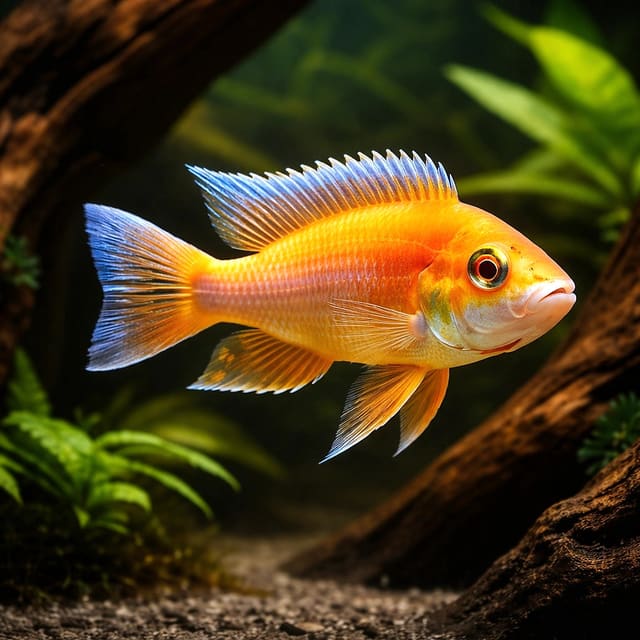
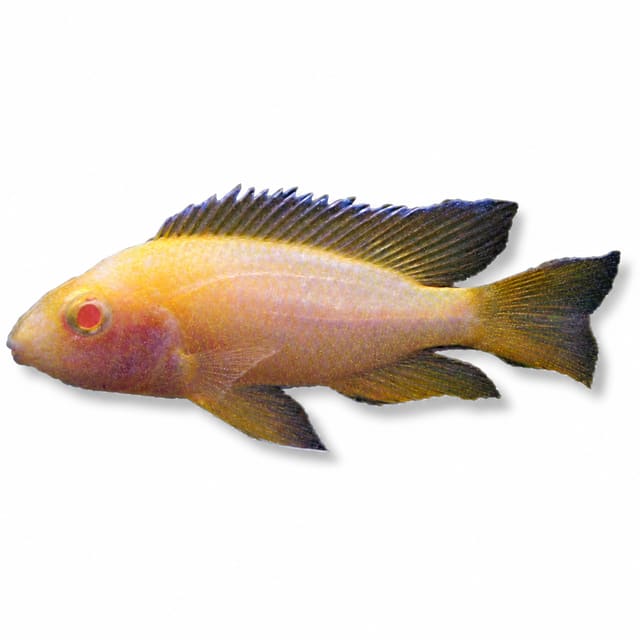
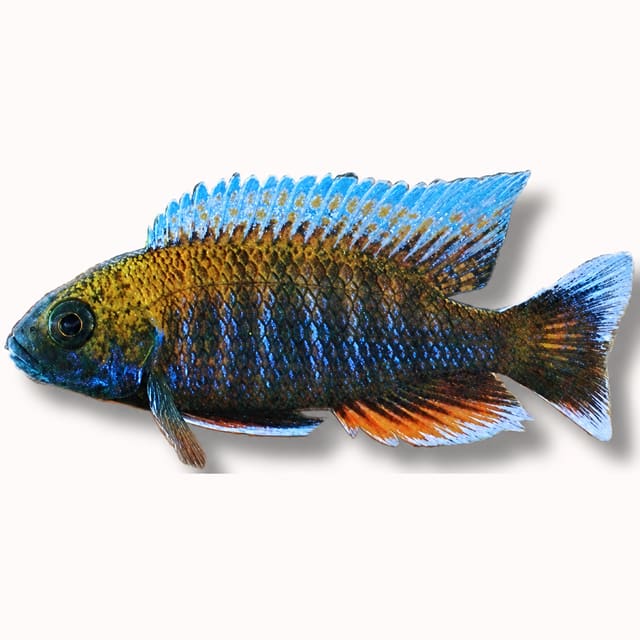
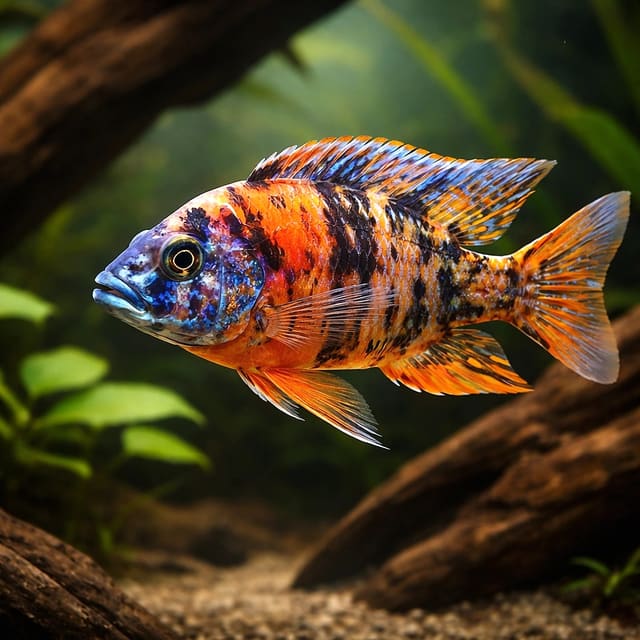
Orange Blanche Peacock Cichlid (Aulonocara sp.) is a Lake Malawi peacock sold as one fish in the selected size grade. The exact species and sex are not guaranteed. Prepare a mature, spacious aquarium with stable hard, alkaline water and plan every companion carefully.
Aulonocara sp.
Save when buying multiple fish. Each quantity is one fish; sex and pair formation are not guaranteed unless the selected variant explicitly states them.
Orange Blanche Peacock Cichlid (Aulonocara sp.) is a Lake Malawi peacock sold as one fish in the selected size grade. The exact species and sex are not guaranteed. Prepare a mature, spacious aquarium with stable hard, alkaline water and plan every companion carefully.
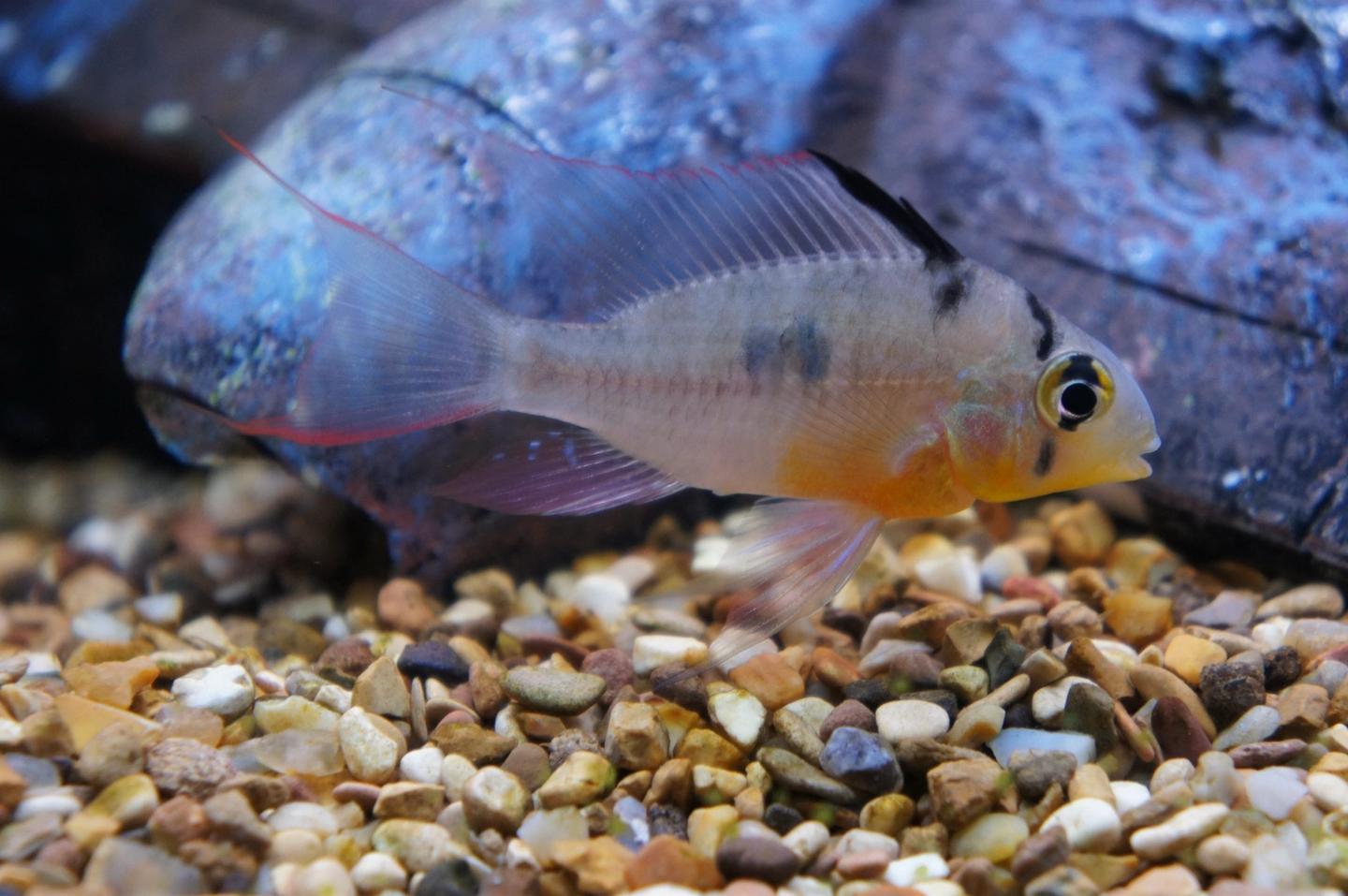
Cichlids are a family of roughly 1,800 accepted species, not one care type. Before buying, identify the exact species and source, then compare adult measurement, usable tank dimensions, social system, territory, tested water, diet and an exit plan. No family-wide minimum tank, water range or tank-mate list is safe.
Maintain these water conditions for optimal health and vibrant colors
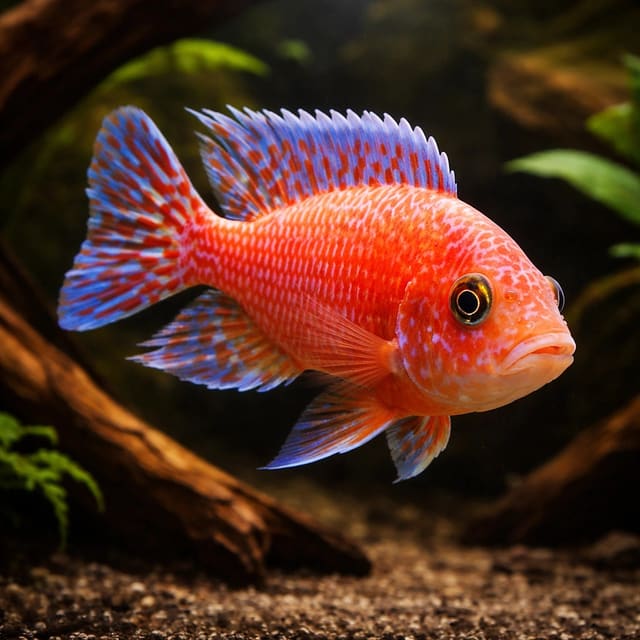
Orange Blanche Peacock Cichlid is the trade name for this Aulonocara fish. It is a Malawi cichlid for a keeper prepared to manage a spacious, mature aquarium with hard, alkaline water and to watch social behaviour closely. Its orange and pale trade description is useful when choosing a look for the aquarium, but it does not establish an exact species, a fixed adult pattern or a guaranteed sex. The exact species has not been identified, so the care advice here follows the genus Aulonocara and its care group.
One purchase supplies one live fish. The product has four size choices: 3–4 cm, 4–5 cm, 6–7 cm and XL. Choose from the live selector to see the current offer for each grade; the labels should not be treated as four different species or promises about future appearance. The size you select is the size supplied, not the adult size. XL is a trade grade rather than a measured length here, so ask for the current measurement if centimetres matter to your stocking plan. Sex is guaranteed only when the selected option explicitly states male or female. This Orange Blanche Peacock Cichlid listing has no sex-guaranteed option.
This is a decision to make around the aquarium you already run or are genuinely ready to build. The UK trade body's Malawi guidance describes the group as specialised and potentially aggressive. It recommends at least 200 litres for a reasonable community, but that is a group-level planning guide, not a proven minimum for this unidentified species or permission to fill 200 litres with any combination of fish. An aquarium's length, usable floor area, filtration, cover, established animals and observed behaviour can make the same nominal volume work very differently. If you are starting from scratch, establish the filter and test the water before planning a delivery.
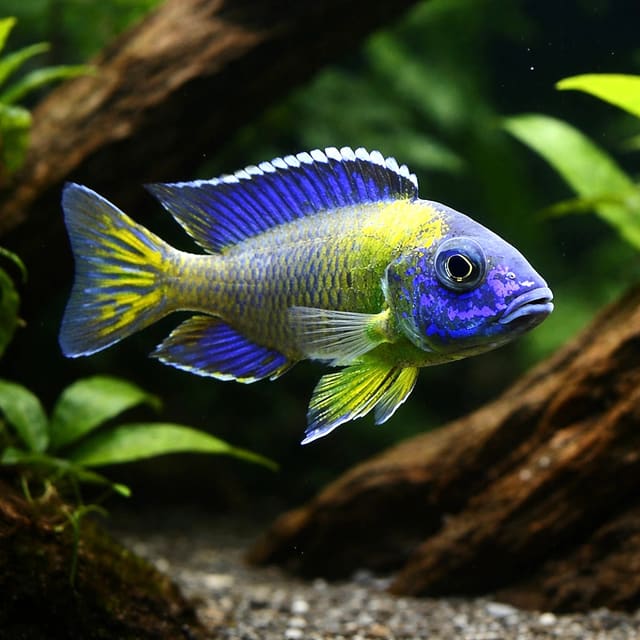
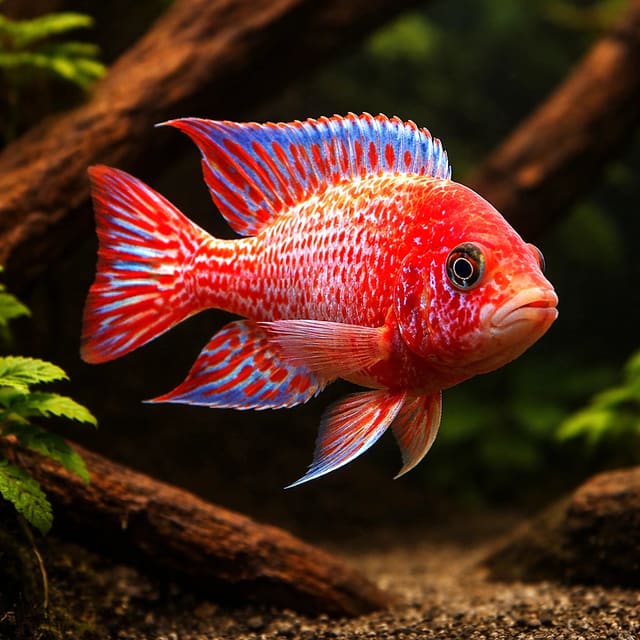
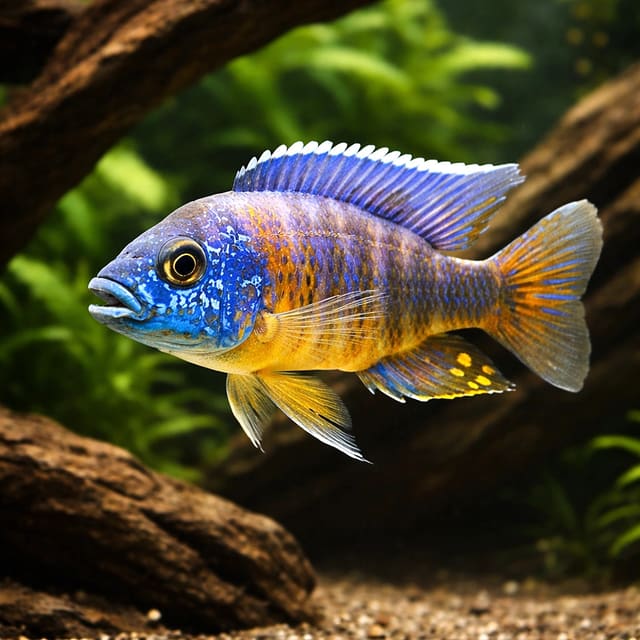
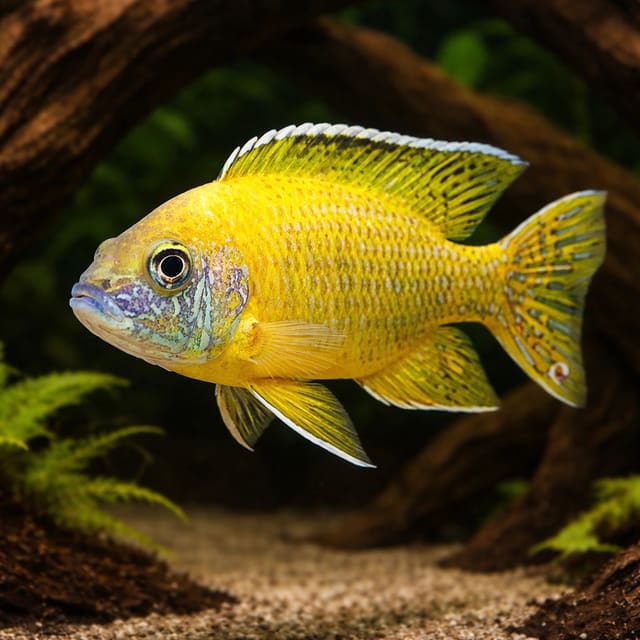
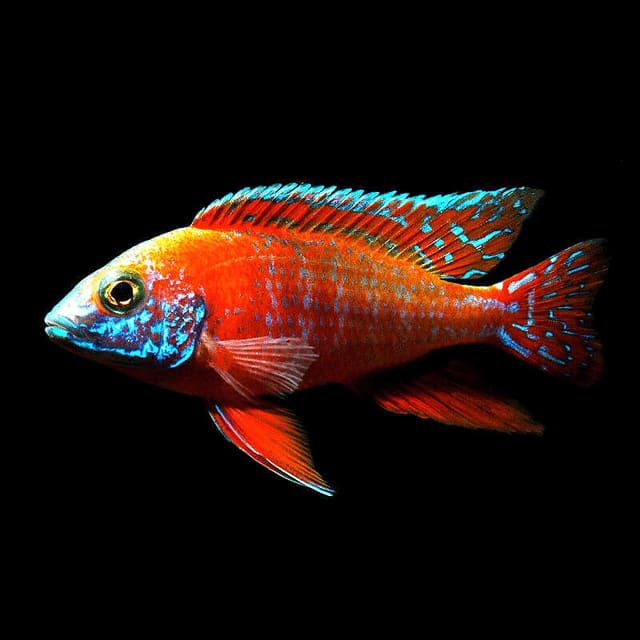
The scientific label here is deliberately Aulonocara sp. The genus is recognised within the cichlid family, while “orange blanche” is a trade description, not part of the scientific name. Peacock cichlids are associated with Lake Malawi, yet the trade label cannot tell us the fish's precise wild locality, parentage or adult size. Do not select it because a photograph appears to show a mature male, a pair or a particular lineage. The gallery has not established those claims. Select it because you can accommodate a peacock cichlid whose exact identity is unresolved and monitor the animal you receive.
| A promising home | Pause and prepare further |
|---|---|
| A mature, filtered Malawi aquarium with a spacious swimming run and stable hard, alkaline water | A newly filled or short tank chosen only because its volume label looks large |
| Measured zero ammonia and nitrite, with a record of routine water tests | Clear water assumed to be safe without testing the filter's biological capacity |
| A plan for each resident's size, feeding and behaviour, plus a safe separation option | A mixed community chosen by colour alone, with nowhere for a pursued fish to retreat |
Enjoying this fish begins with accepting what is known about the offer and what can only be judged as it grows. A young peacock can be modest in colour and later become more conspicuous, but that does not allow a photograph or trade label to identify the individual that will arrive. Give the fish a setting whose water and space remain suitable through change, then let its actual behaviour guide adjustments. Compare the wider African cichlid collection only after deciding which husbandry demands your aquarium can meet.
For a quick first screen, ask whether the aquarium is mature and filtered; whether repeated tests show zero detectable ammonia and nitrite; whether the water is stably hard and alkaline; whether there is open swimming room as well as secure retreats; and whether every existing fish can cope with a Malawi cichlid's behaviour and water. If any answer is uncertain, resolve that before adding an animal. A calm juvenile does not establish how it will behave as it grows or after the group changes. Our first aquarium guide explains preparation, while the care below helps you plan this more specialised fish.
Start with a tank whose footprint leaves real swimming space after rockwork, equipment and other fish are included. The OATA Malawi group sheet uses 200 litres as a guide for a reasonable community and notes that some specialised species can differ. Because Orange Blanche is not identified to species, that figure is best used as a conservative prompt for planning a spacious display, not a species-specific minimum or a stocking formula. Longer usable runs matter: a tall, narrow vessel with the same volume gives fish fewer routes to avoid one another. Give the fish room to pass behind cover and also move into open water without being pinned against a boundary.
Plan the layout before adding the fish. Stable rock structures can make sight breaks and retreat spaces, but secure heavy pieces against collapse before any animal digs nearby. Leave an open area to swim and feed. A suitable substrate should be easy to maintain and should not trap uneaten food in places you cannot reach. OATA mentions coral sand or a similar material as one way to support hard, alkaline Malawi water; test your source and tank water instead of assuming a particular bag of substrate will deliver exact chemistry. Sudden chemical adjustment is less useful than a stable measured environment.
The OATA sheet gives 23–27°C, pH 8.0–8.6 and 12–18 dGH as broad guidance for Malawi cichlids. These group-level values are not measurements of this unidentified Orange Blanche fish and do not establish its individual optimum. Check your aquarium's normal values across several days, not once at the moment of purchase. Read temperature from an independent thermometer and understand whether its daily variation is controlled. Know the source water's pH and hardness before deciding whether a Malawi setup is a realistic match. A fish should not be asked to cope with repeated, abrupt corrections made to chase a number.
Ammonia and nitrite should be undetectable on the tests used. The group guidance sets nitrate no more than 20 mg/l above the normal tap-water level, which requires a tap reading as well as a tank reading. A nitrate figure without source-water context can mislead. Record trends after feeding, water changes or adding livestock. If a reading rises, investigate the filter, feeding, waste and stocking rather than disguising the problem with an unmeasured additive. Our water chemistry guide explains how to interpret the main tests, and the water matcher can help compare measured values with stated ranges.
Biological filtration is essential. Fish waste becomes toxic ammonia and then toxic nitrite before established bacteria convert it further; a clear-looking tank can still contain dangerous dissolved waste. OATA advises generous filtration and aeration for a Malawi community. Choose equipment for the final stocking plan, arrange circulation so debris reaches the filter, and ensure oxygen exchange at the surface. Watch how the fish actually swim: flow should maintain clean, oxygenated water without forcing a smaller newly arrived fish to struggle continuously. The goal is steady function, not the largest published flow number in isolation.
Maturation is a biological process, not an elapsed-week promise. Test the aquarium while establishing it and after changes. Add animals in a way the filter can support, then keep testing; each extra fish and each extra feed increases the load. If the tank has been emptied, dried, medicated, cleaned aggressively or had its filter media replaced, do not assume its previous capacity still exists. The RSPCA's general aquarium guidance explains why a maintained filter matters, while OATA describes the particular waste and oxygen pressures of Malawi communities. Together they support a measured start and a measured response to any problem.
Replace water with dechlorinated water of suitable temperature and broadly matching chemistry. OATA recommends a partial change of around 25% at least weekly for its Malawi group, alongside regular testing. The actual frequency and amount should answer the tank's measured waste trend, bioload and source-water quality. Siphon visible waste and food debris without disrupting all surfaces at once. If filter media needs cleaning, rinse it gently in removed tank water rather than chlorinated tap water. Never interpret a suggested weekly rhythm as permission to ignore a concerning midweek test result.
Rock and open space serve different purposes. A wall of caves can occupy so much water that it leaves little usable swimming room; a bare glass box can leave a pursued fish nowhere to break sight. Build several routes between areas, with entrances that do not create a single trap. Watch where food drifts and where waste collects. If one animal controls all routes to food or cover, a rearrangement may help, but it cannot compensate for a fundamentally mismatched group or too little space. The plan should make observation and maintenance easy for you as well as allowing fish to move naturally.
A varied Malawi cichlid community may contain fish with very different feeding needs. OATA specifically distinguishes more plant-focused mbuna from larger, more predatory utaka. A food suitable for one subgroup is not automatically ideal for every other cichlid, and Orange Blanche has no species-specific diet prescription here. Use an appropriately sized, complete food selected for the actual peacock cichlid and the other residents, with suitable variety, rather than reducing feeding to a one-word “omnivore” label. Ask for specific feeding advice if the fish's condition or the current diet is uncertain.
Offer a portion that the fish can take without a cloud of food escaping into the rocks, and watch whether the individual actually receives it. In mixed groups a fast or territorial fish may take the entire feed while a quieter fish stays back. More food is not a cure for that imbalance: leftover food increases waste and can destabilise water quality. Separate feeding points, smaller portions and a changed stocking plan may be more effective, provided all are checked against test results. Remove accessible uneaten food and review portions when the fish grows or the group changes.
Observe feeding alongside breathing, posture, swimming, fins and skin. A healthy fish's normal behaviour is the best baseline for noticing change. OATA asks keepers to look for altered swimming, hiding, aggression, breathing, spots, scale loss and appetite changes. These signs are prompts to test water and seek informed help, not proof of a particular disease. A fish that stops feeding may have a water-quality problem, be excluded by another animal, or be ill; a single symptom is not enough to choose a medicine. Record what changed, when it started and whether other fish show the same sign.
Look at the aquarium when it is quiet as well as when food arrives. A fish that appears bold at feeding time may spend the rest of the day hiding from a dominant neighbour. Note whether it uses open space, can retreat without being followed, and can rest without rapid breathing. Check the heater and filter are working, the water surface is moving and no animal is trapped behind equipment. Normal colour can change with age and social setting; colour alone cannot confirm sex, health or the final form of an Orange Blanche fish.
If signs concern you, test ammonia, nitrite, nitrate, pH and temperature promptly and compare with recent records. Consider recent additions, feeding increases, filter maintenance and any source-water change. Protect the affected fish from harassment where practical, but do not move it into an uncycled container simply because it is available. If a separate hospital or quarantine tank is used, it too needs biologically supported filtration, suitable water and monitoring. An experienced aquatic veterinarian or appropriately qualified fish professional can help identify the problem and guide treatment.
Seasonal room changes deserve attention. A heater dial is an instruction to the device, not a measurement of the water. Check the thermometer at different times, especially after moving the aquarium, changing a lid or adjusting circulation. Likewise, a water change can briefly alter temperature and hardness if the replacement water differs sharply. Prepare replacement water before it enters the tank. A regular, calm routine is easier for fish to tolerate than repeated emergency corrections after values have drifted.
OATA says Malawi cichlids will often dig and rearrange the substrate, which will uproot plants rooted in it. Their presence does not make filtration or testing optional. If you use hardy attached plants, leave room to clean around them and make sure they do not block the view of a fish being pursued. Lighting should allow you to observe the fish without producing a stressful, permanently exposed tank. Provide periods of darkness as part of a consistent daily routine, and avoid sudden disturbance when newly arrived animals are settling.
The offered centimetre grades describe fish supplied at different sizes. They do not describe the maximum adult length. An exact adult length and lifespan cannot be promised for this genus-level offer. OATA says Malawi cichlids vary widely in size. Give the fish a long-term home that can accommodate growth, changed social behaviour and increased waste, and do not rely on a small juvenile remaining compatible forever. If your available aquarium only works for the smallest current grade, it is not yet a sound long-term plan.
Choose the size grade based on the actual aquarium and its current residents, not on an assumption that the largest fish is always more robust or that a smaller fish can safely join a much larger territorial group. Size gaps change how food and refuge are shared. If a particular measurement matters, confirm the current selected grade; XL needs clarification because it carries no numeric range here. The selection changes the size supplied, not the fish's identity or a right to a particular sex.
Before delivery, check water repeatedly, prepare the filter and lay out stable cover. Know where the animal will go if a resident persistently attacks it. The store's delivery guidance has the current postcode, day, packing, receipt and Live Arrival Guarantee terms. The policy describes tracked transport with protective packing and requires someone present to receive live fish. Use the confirmed delivery details for your order when planning to receive the parcel.
At arrival, inspect the parcel and the animal promptly, and use the delivery page's claim guidance promptly if something is wrong. Handle the bag gently, minimise light and noise, and follow the acclimation guidance on the delivery page. Avoid pouring transport water into the aquarium. Do not extend acclimation indefinitely in deteriorating bag water merely because a generic article gives a longer timer. Once released, let the fish find cover and watch breathing, balance and interactions without repeatedly chasing it around the tank.
A quarantine period in a suitable separate system can protect both established fish and the arrival, but the system must itself be mature, heated appropriately and tested. Sharing wet equipment between tanks can defeat separation. If quarantine is not possible, increase observation and be candid about the risk before ordering. In either case, do not medicate prophylactically without a reason and appropriate guidance. The first week should include water tests and checks that the new fish can feed without being pursued.
Introduce fish with a stocking plan, not a hope that the existing group will “sort itself out”. Malawi cichlid hierarchies can change after a new arrival, a rock rearrangement, maturation or removal of a dominant fish. OATA suggests careful sequencing and group introduction for some Malawi communities, yet its advice is group-level; the right sequence depends on the exact fish already present. Watch all residents after the addition, not only the newcomer. Repeated chasing, cornering, inability to reach food or visible fin damage calls for intervention and perhaps separation.
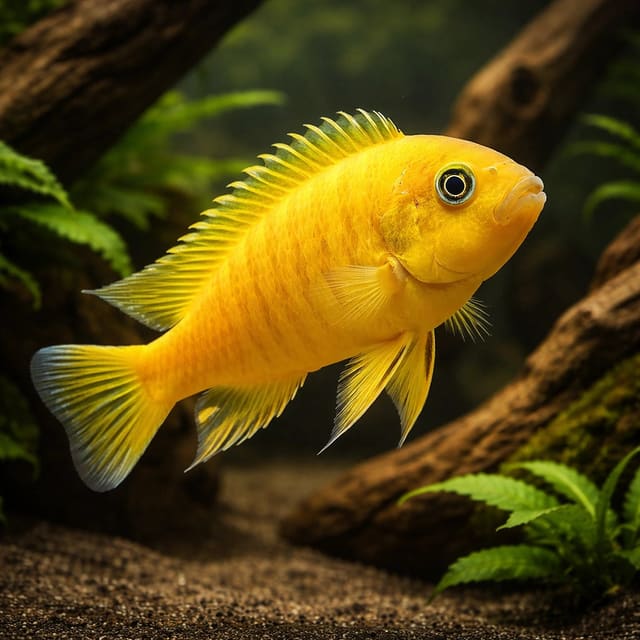
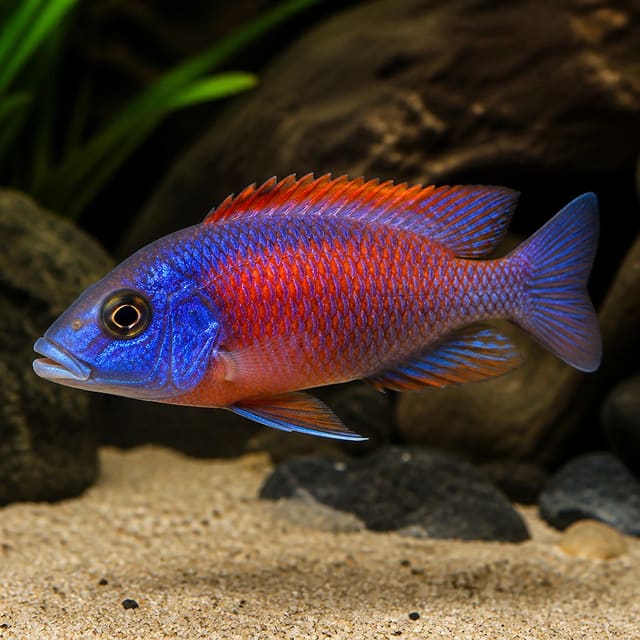
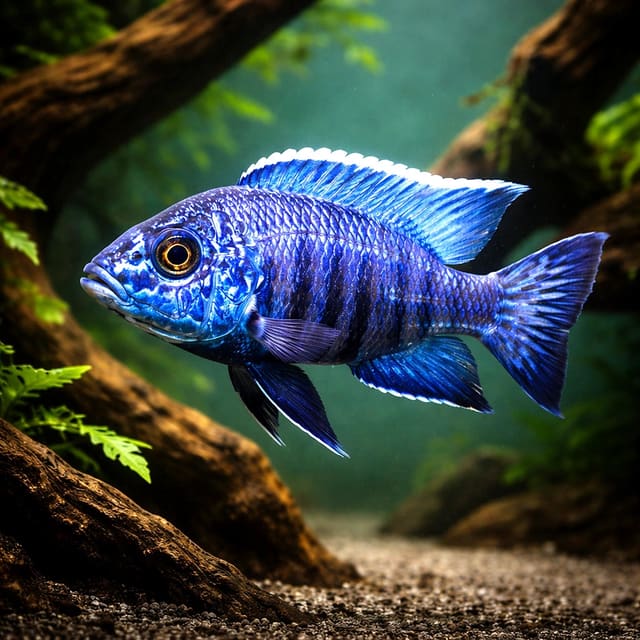
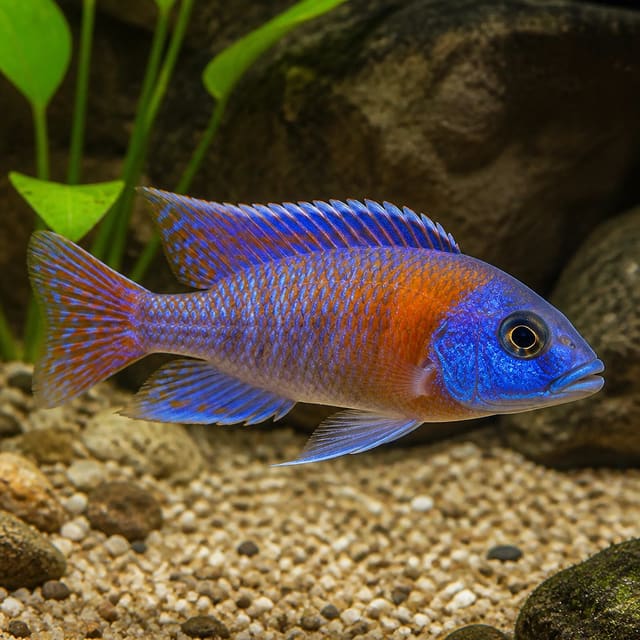
Do not use a photograph showing two fish to infer a pair. This offer is a single fish and has no sex-guaranteed size choice. Juvenile colour and appearance may change as the fish develops; an image cannot establish the sex of the individual shipped. If a breeding arrangement, particular lineage or guaranteed male is essential to your project, this listing cannot promise it. Choose a genuinely sexed and documented offer instead of trying to infer one from the trade label.
A Malawi cichlid community needs more than several attractive names on a shopping list. OATA describes the group as capable of strong aggression and recommends mixing cautiously. Its broad guidance points towards other appropriate Malawi cichlids or some suitable Synodontis catfish, while excluding a generic peaceful community assumption. That is a starting boundary, not a promise that any two named animals will live safely together. Match water, adult size, feeding style, swimming space and individual behaviour before adding a companion.
First compare the required water of each candidate. A fish suited to soft, acidic water should not be put in hard, alkaline Malawi conditions for visual contrast. Then compare adult sizes, mouth size and the possibility that a small fish could be intimidated or eaten as the group matures. Consider territorial style and where each animal uses the aquarium. A proposed partner that needs the only cave, feeding lane or quiet zone can create conflict even if both species tolerate similar pH. A long tank with several routes provides choices that a short, crowded one does not.
OATA discusses larger group stocking and female-heavy ratios as possible ways to manage aggression in particular Malawi communities. Those ideas are not a recipe for this unidentified Orange Blanche fish. This listing has no sex guarantee; buying several units cannot create a known one-male, several-female arrangement. Nor should a keeper add fish simply to reach a group number without a mature filter and suitable space. Observe the real animals and obtain advice for the specific group rather than relying on a fixed ratio.
Be cautious with especially forceful rock-dwelling Malawi cichlids. A smaller peacock may be excluded from food or cover, while a larger individual may itself pressure quieter fish. One temperament label cannot predict every individual or social context. Provide retreats and an intervention plan, then watch after feeding, at lights-on and during quieter periods. Persistent pursuit, damaged fins, fish pinned at the surface or behind a filter, and loss of appetite are reasons to change the arrangement.
Do not treat another shop product as an endorsed tank mate merely because it appears as an alternative. Related listings can help compare appearance and offers; compatibility still needs an independent check against the exact fish, aquarium and water. Similarly, a fish described as another “peacock” may have different adult size or temperament, and a catfish genus contains more than one species. Research the actual candidate, not just the label, before making a shared-home decision.
The fish's colour form does not create a separate ecological rule. “Orange Blanche” is a trade descriptor attached to a genus-level record. The recognised genus is associated with Lake Malawi, and peacocks can change colour with development and sex, but this does not let us assign a precise sex or species from a picture. Keep the stocking plan flexible as the individual grows. If the goal is a carefully documented breeding line or a species-specific biotope, choose fish with a more precise identity and provenance.
A healthy community is not measured by the absence of fighting during the first hour. Fish may appear restrained after transport and later establish territories. Record which animal feeds, where each rests and whether one fish repeatedly controls a route or shelter. A rearranged layout may interrupt a local contest; it does not repair inadequate volume or unsuitable water. Have a cycled separation option or a responsible rehoming route ready before the first serious conflict, rather than waiting for an injury.
There is no verified species-level adult length for this genus-level offer. The centimetre grades describe the fish supplied, not its final size. Plan a spacious long-term Malawi aquarium and allow for growth.
OATA gives at least 200 litres for a reasonable Malawi community as broad group guidance. The useful space, mature filtration, cover, other fish and their behaviour matter as much as the volume; it is not a species-specific minimum.
No exact group number is established for this unidentified fish. This offer supplies one fish and does not guarantee sex, so do not assume that buying several creates a balanced group. Plan the whole community with experienced advice.
It is best for a keeper ready to manage specialised hard, alkaline Malawi water, a mature filter and possible cichlid aggression. A new keeper can learn those skills, but a newly filled uncycled aquarium is unsuitable.
Choose an appropriately sized complete cichlid food for the actual fish and vary it sensibly. OATA notes that Malawi cichlid diets differ by group, so one broad diet label is not a precise feeding prescription. Watch that this fish gets its share.
OATA's broad Malawi guidance is 23–27°C and pH 8.0–8.6, with hard water around 12–18 dGH. Keep values stable and measured; these are group-level planning ranges rather than an exact species optimum.
Malawi cichlids can be territorial and aggressive, but the behaviour of this individual cannot be predicted from a trade name. Watch for repeated pursuit, blocked access to food or damaged fins, and be ready to separate fish.
OATA points to carefully chosen Malawi cichlids and some suitable Synodontis catfish as broad possibilities. Each candidate still needs matching water, size, space, feeding and observed behaviour; there is no universal safe partner list.
Tropical Fish Co's current delivery page explains protective live-fish packing, tracked licensed transport, receipt and the Live Arrival Guarantee terms. Be present for the confirmed delivery, inspect the fish promptly and follow the current arrival advice there.
The exact trade identity, selected size grades, single-fish unit and lack of sex guarantee come from this product's current offer and its supplier identity. The accepted genus and family are supported by the Aulonocara taxonomic record. The OATA Malawi cichlid care sheet supplies the explicitly broad water, aquarium, feeding and social guidance. The RSPCA aquarium environment advice explains biological filtration. The store delivery page holds current arrival and claim terms.
Before buying, measure your usable swimming space, test water from the aquarium and tap, confirm the filter's maturity, check the demands of every existing fish and plan what you will do if aggression appears. Choose the desired supplied size on this product's live selector. If you need a certified species, precise adult length, sex or lineage, this offer cannot establish them. A thoughtful pause now is easier on the fish than trying to repair an unsuitable community after arrival.
No reviews for this item yet. Bought one? Honest reviews only, good or bad.
What customers say about ordering from us
I have a small group of long finned mountain minnows. So was delighted to be able to order ten of this variety to increase the genetics in my tank . The ones I recieved are healthy but it’s to early to give a verdict on wether they are of a long finned type since they are small currently.
Gordon Walker · 23 Sept 2026
100% success travel and "installation". Pleased with quality of purchase. The Siamese fighter a bit "shy" so have not yet seen him at his best yet but looking good. Happy customer. GG
George E Garratt · 21 Sept 2026
Reviews of our shop, collected by Judge.me, an independent third-party review collector. Newest first.