Moderate
Acei Cichlid (Pseudotropheus sp. 'Acei')
24–26°C · pH 7.5–8.5 · 300L
£7.99
The OB Red Zebra Mbuna (Maylandia zebra) is an aggressive rock-dwelling cichlid from Lake Malawi that reaches 15.2 cm standard length. It suits a carefully planned Malawi aquarium of around 205 litres; Seriously Fish advises three females per male, while FishBase, Seriously Fish and OATA guidance overlaps at 23–27°C, pH 8.0 and 12–18 dGH. Sold individually in 3–4 cm, 4–5 cm, 5–6 cm and XL sizes.
Adult size is the maximum length this species reaches at full maturity (scientific sources). The livestock you receive will be younger and smaller — pick a size above for the actual shipping size. Product-photo provenance and any image-specific limitations are stated on the listing.
Maylandia zebra
Save when buying multiple fish. Each quantity is one fish; sex and pair formation are not guaranteed unless the selected variant explicitly states them.
The OB Red Zebra Mbuna (Maylandia zebra) is an aggressive rock-dwelling cichlid from Lake Malawi that reaches 15.2 cm standard length. It suits a carefully planned Malawi aquarium of around 205 litres; Seriously Fish advises three females per male, while FishBase, Seriously Fish and OATA guidance overlaps at 23–27°C, pH 8.0 and 12–18 dGH. Sold individually in 3–4 cm, 4–5 cm, 5–6 cm and XL sizes.
Adult size is the maximum length this species reaches at full maturity (scientific sources). The livestock you receive will be younger and smaller — pick a size above for the actual shipping size. Product-photo provenance and any image-specific limitations are stated on the listing.
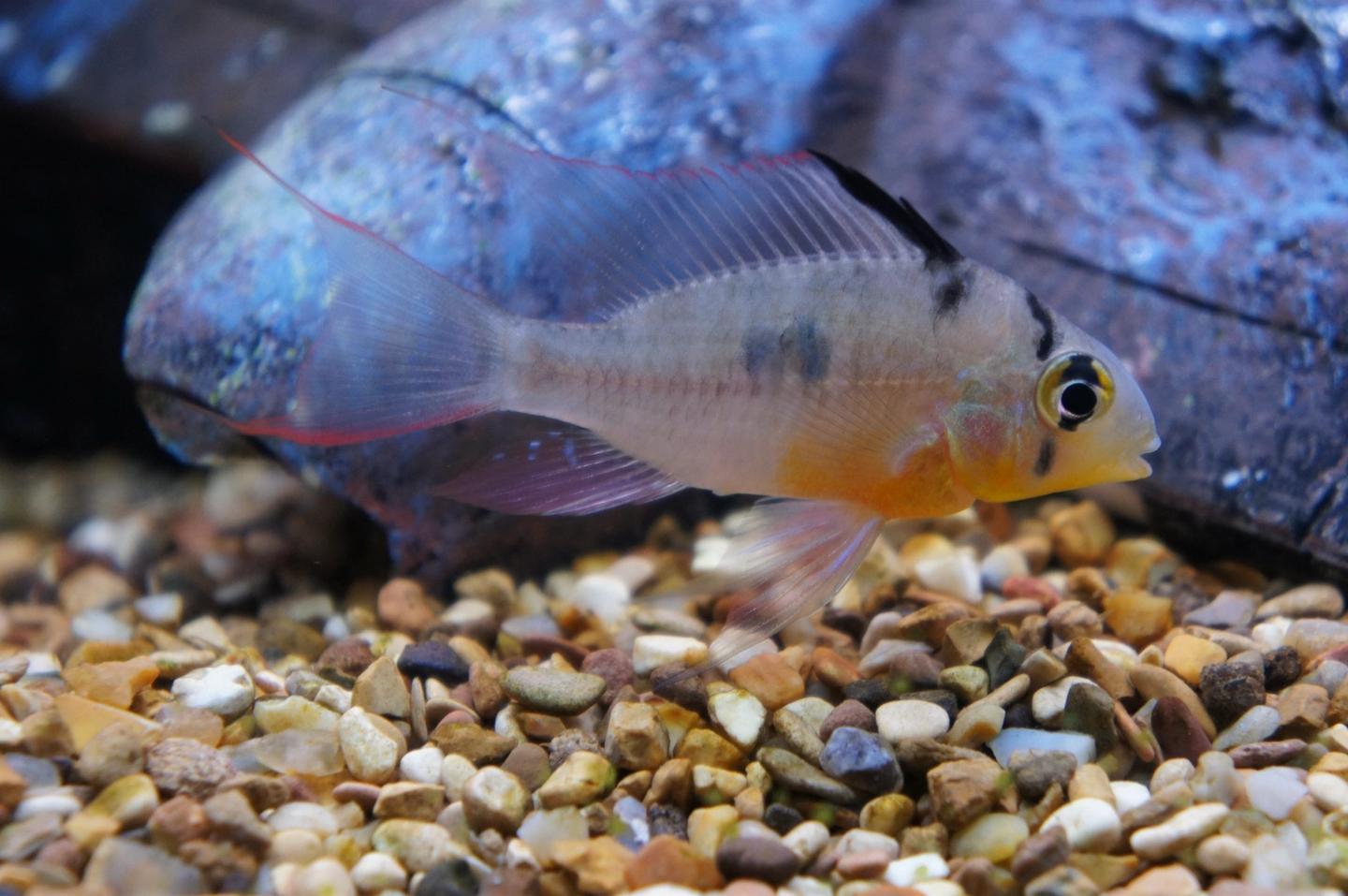
Cichlids are a family of roughly 1,800 accepted species, not one care type. Before buying, identify the exact species and source, then compare adult measurement, usable tank dimensions, social system, territory, tested water, diet and an exit plan. No family-wide minimum tank, water range or tank-mate list is safe.
Maintain these water conditions for optimal health and vibrant colors
The OB Red Zebra Mbuna (Maylandia zebra) is a freshwater, rock-dwelling cichlid from Lake Malawi in Africa. It belongs to the family Cichlidae and reaches 11.3 cm standard length. This is an aggressive territorial fish for a deliberately planned Malawi aquarium, not a general tropical community. It suits a keeper prepared to provide a large rocky footprint, hard alkaline water, strong filtration and a practical response to aggression.
FishBase records Maylandia zebra around Lake Malawi, including Likoma and Chizumulu islands. Adults inhabit rocky areas from shallow, sediment-free zones to deeper places with more sediment. They comb loose material from the biological covering on submerged surfaces and also take plankton in open water. Those habits explain the need for extensive rockwork, grazing surfaces and some open swimming room.
Its normal range is freshwater at depths of 6–28 m. FishBase also classifies the species as demersal and non-migratory. In an aquarium, focus on stable Malawi conditions rather than trying to reproduce a named collection locality.
| Suits | Not suited to |
|---|---|
| A dedicated or carefully screened Malawi aquarium | A general tropical community |
| A rocky layout with caves and crevices | A layout without defensible refuge areas |
| Hard, alkaline water maintained consistently | Soft-water community conditions |
| A keeper ready to manage aggressive behaviour | Gentle Mbuna or Aulonocara companions |
Choose this fish for its Malawi biology and territorial character rather than colour alone. The decisive questions are whether the aquarium has the required footprint, whether every inhabitant shares compatible water and feeding needs, and whether a chased fish can be separated promptly.
One purchase supplies one live fish in the size selected on the live selector. The named choices are 3–4 cm, 4–5 cm, 5–6 cm and XL. The size you select is the size supplied, not the adult size. Treat XL as a named grade rather than converting it into a centimetre measurement.
Dispatch size helps you assess the immediate introduction, but every choice needs an aquarium planned for the adult fish. Do not treat a smaller fish as a permanent solution for a smaller tank. Before adding it to an established group, compare the selected size with the residents and assess whether it can reach food and refuge without being persistently chased.
Sex is guaranteed only when the selected option explicitly states male or female. This OB Red Zebra Mbuna listing has no sex-guaranteed option. Seriously Fish advises a managed ratio of three females for every male, so do not assume that ordering four fish will automatically create that ratio.
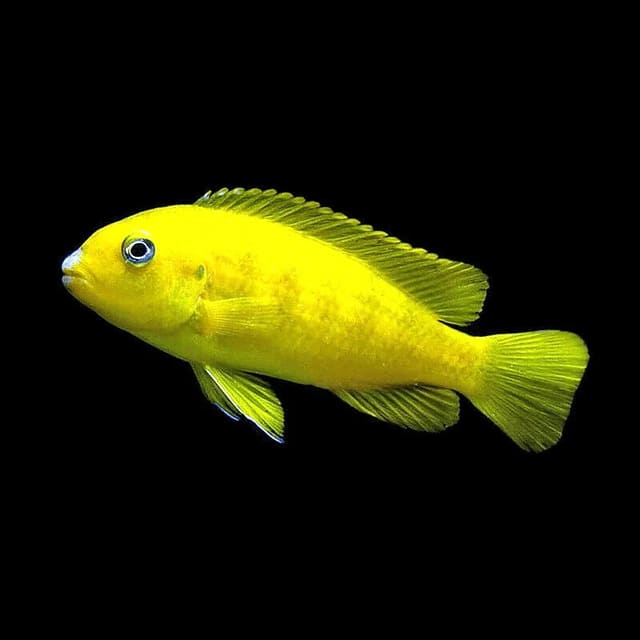
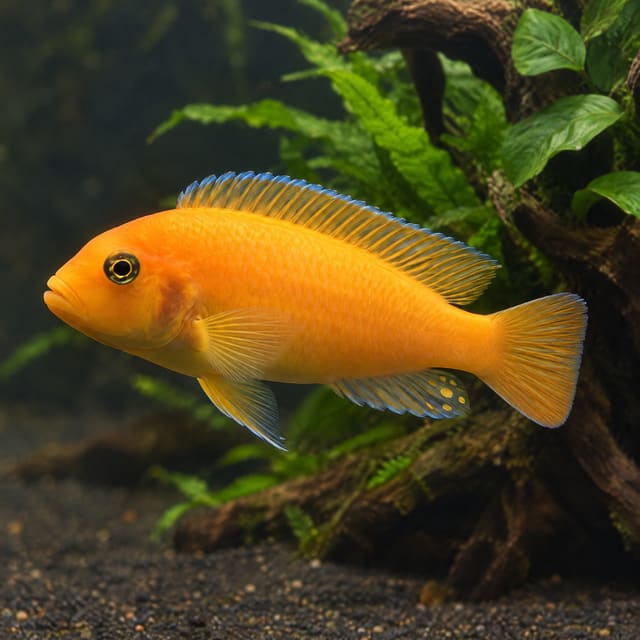
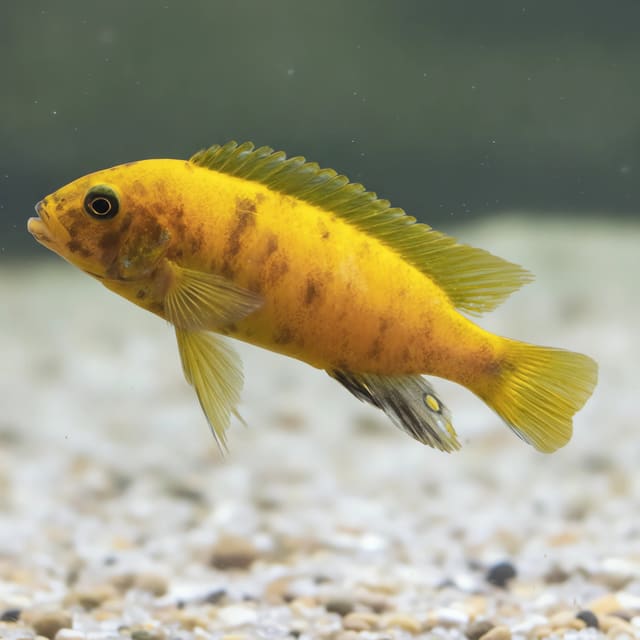
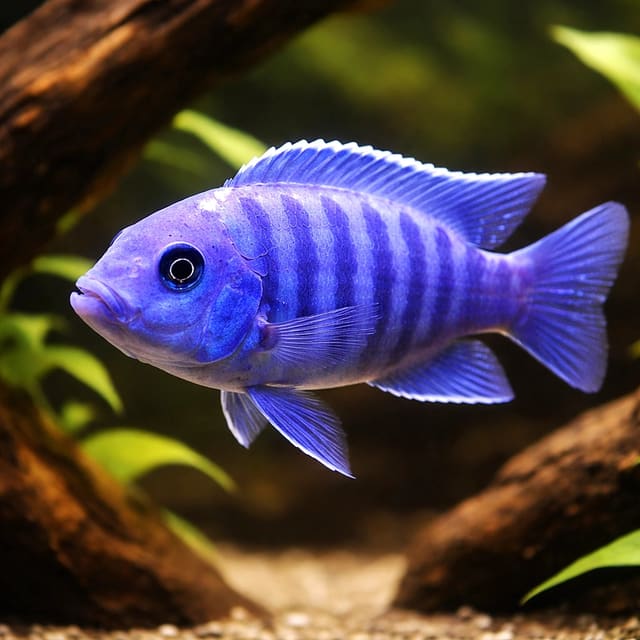
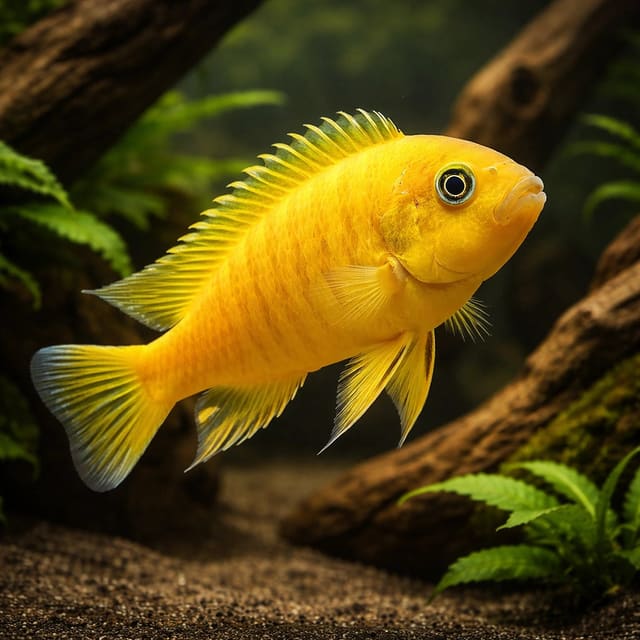
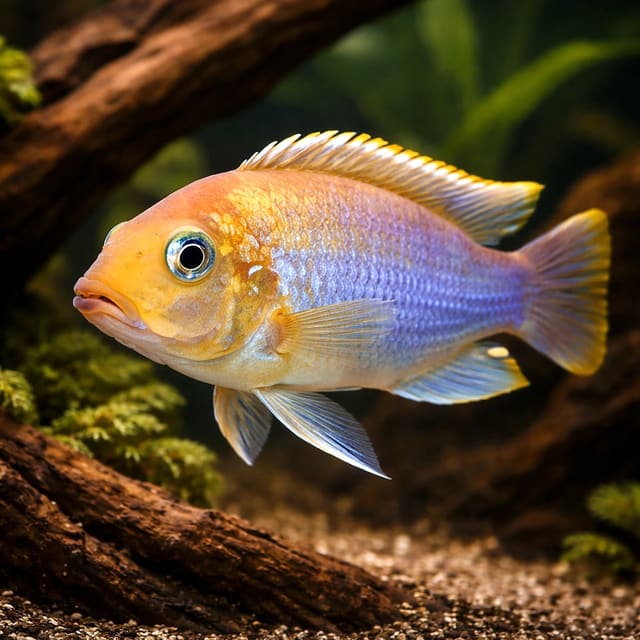
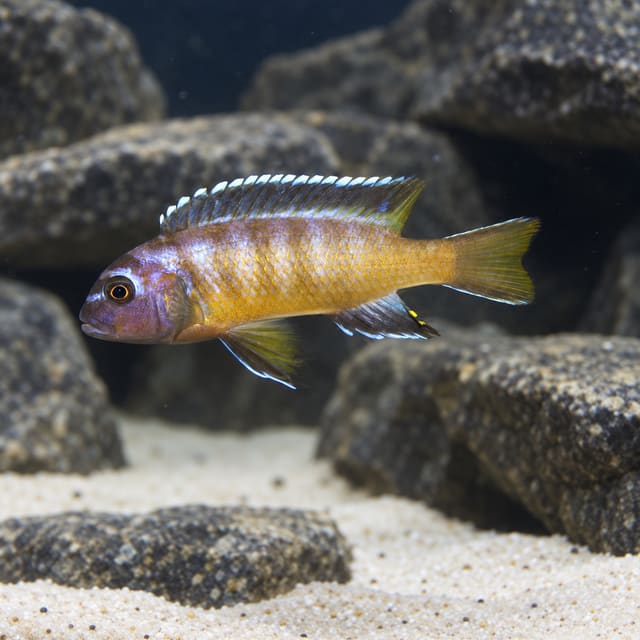
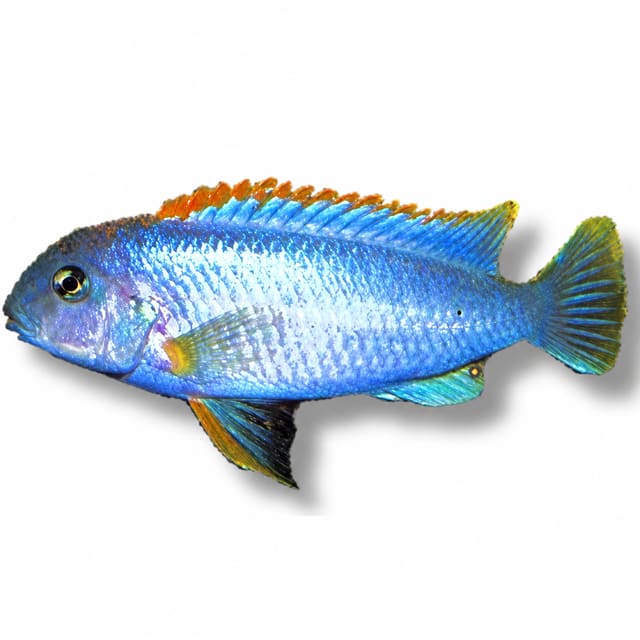
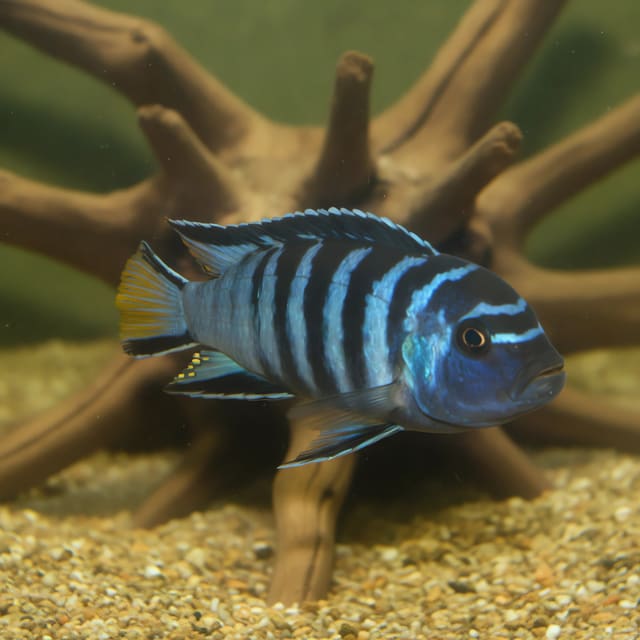
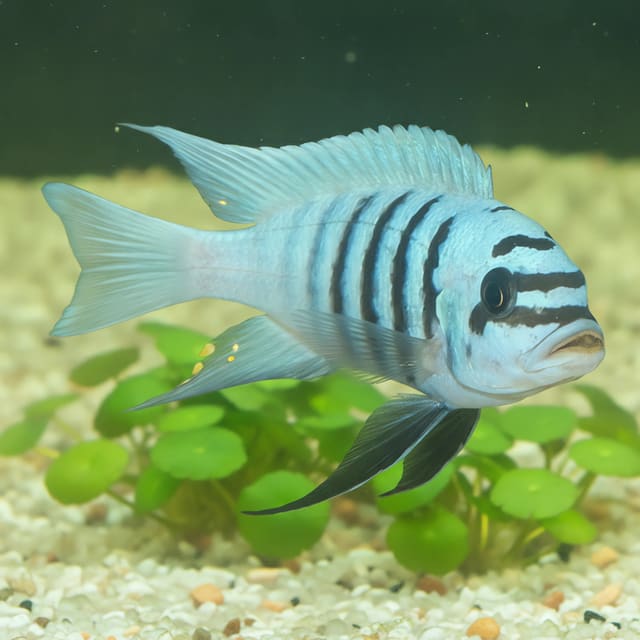
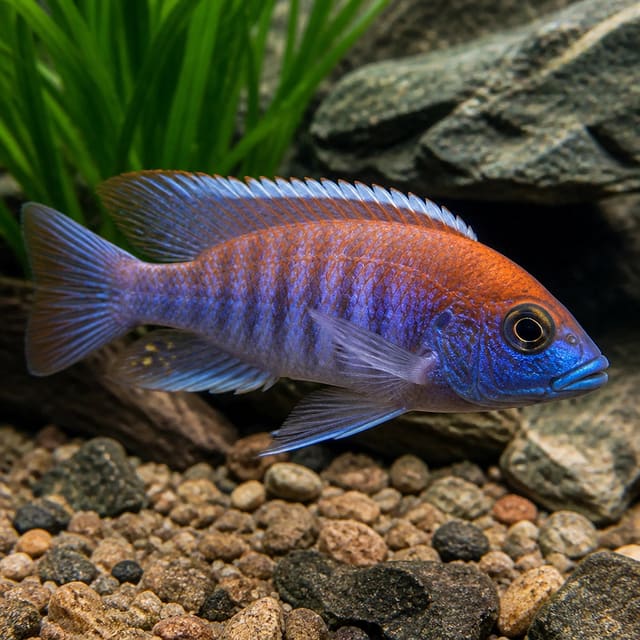
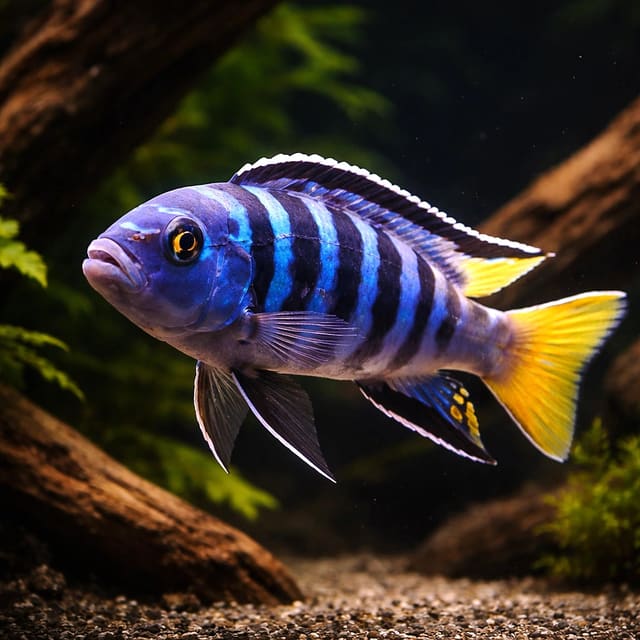
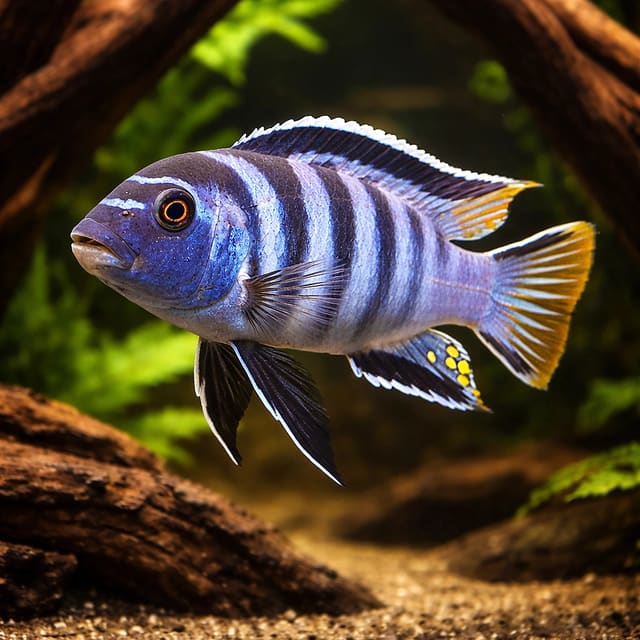
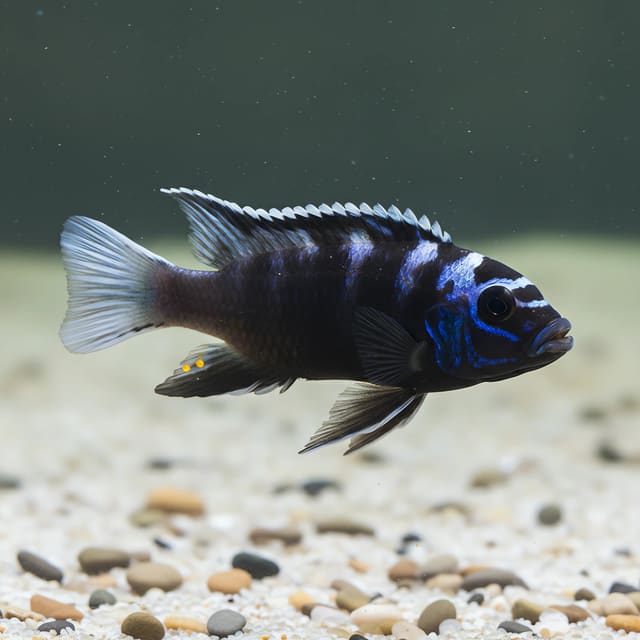
Some gallery images have been digitally enhanced to improve image quality. They show the listed type of animal rather than guaranteeing the exact markings of the individual supplied, so natural colour and pattern can vary. Use the photographs to understand the illustrated orange fish, dark markings and mbuna body form, while making care decisions from the species' adult size, temperament and environmental needs. A gallery scene containing two fish does not change the purchase unit: one selected quantity supplies one animal.
Plan around 11.3 cm standard length. That is the maximum recorded by FishBase and the adult-size figure used throughout this page. Standard length ends at the base of the tail, so it must not be compared directly with a dispatch measurement taken using a different convention.
Seriously Fish gives a different planning reference of 15.2 cm standard length. It pairs that larger figure with an aquarium base of 120 × 38 cm and a volume of about 205 litres. Use that footprint and volume as the practical aquarium plan while keeping 11.3 cm standard length as the recorded adult-size figure for this animal.
| Decision | Plan |
|---|---|
| Adult size | 11.3 cm standard length |
| Aquarium volume | Around 205 litres |
| Base dimensions | 120 × 38 cm |
| Interior structure | Rock piles with many caves and crevices |
Footprint matters because rock structures and territories consume floor space. A tall aquarium with a short base does not reproduce the 120 × 38 cm plan merely by holding a similar volume. Preserve open lanes between rocky zones so a fish can leave an encounter instead of remaining trapped against one continuous wall.
A 3–4 cm selection still belongs in this adult aquarium plan. Starting with the full layout also allows the filter, rockwork and maintenance routine to remain consistent as the fish grows. Check every cave and passage against the body size of all residents, and revise the layout when one fish controls access to most of the usable structure.
Fill much of the aquarium with piles of rock arranged to create numerous caves and crevices. Seriously Fish recommends a typical Malawi setup and a sand substrate. Build several distinct rocky areas rather than relying on one cave that a dominant fish can control.
Keep passages open enough for fish to enter, turn and leave. Arrange the structure so excavation cannot make a pile unstable, then inspect it whenever the substrate is moved. Malawi cichlids often dig and rearrange the substrate, so the finished aquascape must remain safe after that behaviour begins.
Bright lighting is preferable because it encourages algae growth, which Mbuna graze together with the microorganisms it contains. This does not replace a complete diet, but it makes the environment fit the fish's recorded feeding behaviour more closely.
Malawi cichlids will often dig and rearrange the substrate, which will uproot any plants present. If plants are used, limit them to robust choices that can tolerate the aquarium conditions and place them where their loss will not remove an essential refuge. Decorative planting should never take the place of the extensive rock structure required by this fish.
Review the layout from both ends of the aquarium. If one uninterrupted line of sight covers the full 120 cm base, add a separate rock face or change the angle of an existing pile. If a fish cannot leave a cave without passing a dominant resident, create another exit or provide an additional refuge elsewhere.
Keep the aquarium at 23–27°C, pH 8.0 and 12–18 dGH. These routine values are the overlap of FishBase's recorded environment, the Seriously Fish aquarium range and OATA's group guidance for Malawi cichlids. OATA also gives 10–15 dKH for carbonate hardness.
Test the aquarium rather than relying on the label applied to local tap water. The water chemistry guide explains the values to measure, while the water matcher can compare those measurements with this care range. Record results consistently so gradual movement is visible before it becomes a sudden change.
| Value | Routine instruction |
|---|---|
| Temperature | 23–27°C |
| pH | 8.0 |
| General hardness | 12–18 dGH |
| Carbonate hardness | 10–15 dKH |
| Ammonia | 0 mg per litre |
| Nitrite | 0 mg per litre |
| Nitrate | Up to 20 mg per litre above the normal tap-water level |
Check ammonia and nitrite before adding fish and keep both at zero. OATA warns that Malawi cichlids can be stressed by even small amounts of either substance. Nitrate should not exceed 20 mg per litre above the normal level in the tap water used for replacement.
Prepare replacement water with conditioner before it enters the aquarium so chlorine and chloramine are removed. Match the established temperature and mineral conditions consistently. Stability matters: repeated movement across a broad permitted range is not a reason to chase readings with abrupt corrections.
Use established biological filtration with strong flow and aeration. The RSPCA explains that a biological filter supports bacteria that convert toxic ammonia to toxic nitrite and then to the safer nitrate. The filter must be mature and operating reliably before this fish is introduced.
For an aquarium of about 205 litres, Seriously Fish recommends turnover of four to five times the aquarium volume each hour. That corresponds to a filter rating of approximately 820–1,025 litres per hour. Treat this as a starting calculation, then make sure the completed rock layout still permits circulation and that the outlet does not leave debris collecting throughout inaccessible gaps.
| Check | Action |
|---|---|
| Biological capacity | Mature the filter before livestock is added |
| Nominal turnover | Use about 820–1,025 litres per hour for 205 litres |
| Oxygen | Provide strong aeration and surface movement |
| Blockages | Inspect the filter regularly |
| Filter cleaning | Rinse lightly in removed aquarium water |
OATA recommends an oversized filter and aggressive aeration for crowded Malawi communities. More fish create more waste and demand more oxygen, so managed density must always remain within the aquarium's filtration and maintenance capacity.
Do not rinse filter media under the tap. Chlorine or chloramine may kill the beneficial bacterial population established in the media. When cleaning is needed, rinse it lightly in aquarium water removed during a partial water change. Avoid cleaning every part of the filtration system so thoroughly that biological capacity is lost at the same time.
If this is your first cycled setup, follow the guide to preparing and maturing an aquarium before choosing livestock. A clear tank is not automatically biologically ready; ammonia and nitrite testing shows whether the filter can process waste.
Make vegetable matter the basis of the diet. Seriously Fish recommends Spirulina flakes, blanched spinach, nori and other green foods for Maylandia zebra. This matches the wild fish's habit of combing loose material from the biological covering on rocks while still recognising that it also takes plankton in open water.
Feed only what the fish can eat within a few minutes, twice a day. OATA gives that portion and frequency for Malawi cichlids. Spread food so several fish can feed instead of allowing one territorial animal to control a single feeding point.
| Food role | Use |
|---|---|
| Daily basis | Spirulina flakes and other complete algae-based food |
| Green variety | Blanched spinach, nori and other green foods |
| Occasional treat | Small amounts of live or frozen bloodworm or Artemia |
| Avoid | Beefheart and other animal meat |
Keep protein treats to a couple of occasions each week and control the amount offered. Seriously Fish warns that high-protein foods are not recommended and that this species is particularly prone to obesity. A treat remains a small addition to the vegetable-based routine, not a substitute for it.
Remove food that remains after the feeding period. Uneaten food breaks down and releases waste, increasing the load on the biological filter. If food repeatedly disappears into the rockwork, reduce the portion and distribute the next meal where the fish can collect it promptly.
Prepare the mature aquarium before the parcel is received. Check that temperature, pH and hardness match the stated range and confirm that ammonia and nitrite are zero.
Follow the current Tropical Fish Co delivery and Live Arrival Guarantee policy when the fish arrives:
Film every delivery from the sealed parcel onward. Keep the fish in the sealed bag while its condition is shown, and finish the required acclimatisation before release. If there is a live-arrival concern, contact us the same day with the order number and the continuous unboxing video.
After release, observe swimming, breathing and the response of established residents. OATA advises watching for hanging at the surface, sitting on the bottom, erratic swimming, altered breathing, hiding and changes in aggression. Act promptly if the new fish cannot use a refuge or move through the aquarium without continuous pursuit.
At least once every week, change 25% of the aquarium water. OATA places the minimum frequency on the weekly task: it recommends at least one 25% partial water change each week. Use a siphon to remove settled solid waste, especially where it collects around rockwork.
Test ammonia and nitrite at least once per week and after a change in stocking or feeding. Both must remain at zero. Check the filter for blockages and confirm that aeration and surface movement remain strong. Condition replacement tap water before it enters the aquarium.
| Change you see | First response |
|---|---|
| Surface hanging or unusual bottom sitting | Test water and check aeration |
| Faster or slower gill movement | Check water quality and observe all fish |
| Darker or paler colour | Review aggression, hiding and recent water results |
| More aggression or persistent hiding | Check refuge access and prepare separation |
| White spots, fluffy growths or lost scales | Test water and isolate the care decision from routine feeding |
| Reduced food intake | Check water, body condition and feeding access |
OATA recommends checking swimming behaviour, colour, temperament, breathing, appearance, body condition and feeding because changes can reveal a problem early. Compare each fish with its own normal behaviour instead of waiting for every resident to show the same sign.
If you are concerned about a health change, test water quality and contact us for further guidance. Do not respond to an unexplained appetite change by adding richer food. A missed meal combined with abnormal breathing, hiding or aggression calls for observation and water testing first.
Rinse media lightly in the aquarium water removed during the partial change. Do not rinse it under the tap. Restore the filter promptly, verify normal flow and check that no rearranged rock blocks the intake or outlet.
Increase the fish population slowly so the beneficial bacteria in the filter can adjust to additional waste and feeding. OATA warns that adding too many fish too quickly can cause new tank syndrome, in which the biological filter cannot process the increased ammonia and nitrite.
Test ammonia and nitrite before every addition and require both to be zero. After adding fish, continue checking the values while observing feeding access and aggression. A mature filter still needs time to respond when the biological load increases.
OATA recommends introducing more peaceful species before more aggressive species. As Maylandia zebra is one of the more aggressive Mbuna, assess the existing order before adding it to a Malawi community. Rearranging rockwork may reduce attachment to established territories, but the revised arrangement must still provide caves, crevices and stable structures.
This species is a maternal mouthbrooder. Seriously Fish recommends one male with at least three females for a breeding project and notes that the male may become aggressive while pursuing females. The same refuge and ratio planning therefore remains important when breeding is not the keeper's main aim.
Do not solve an introduction problem simply by adding more fish. First test water, identify the aggressor, check the footprint and confirm that the filter can support any proposed increase.
Seriously Fish advises three females for every male and no more than one male in any aquarium below 200 litres. The ratio is intended to disperse aggression, but the fish selected from this offer cannot be assumed to form it. Plan enough refuge and separation capacity for the group that actually develops.
OATA's Malawi-cichlid guidance says these fish can be kept in groups of at least 15 and slightly overcrowded to limit aggression; it also warns that small groups often fight. That is group-level community guidance, so apply it only after checking the adult footprint, filtration, oxygen and species mix. Managed density must not exceed the capacity to keep ammonia and nitrite at zero.
| Planning question | Decision |
|---|---|
| Can four selected fish be treated as a harem? | No; use the ratio as a management aim, not an assumed outcome |
| Can two males share a tank below 200 litres? | Avoid this; Seriously Fish limits such tanks to one male |
| Can a Malawi community use a larger group? | OATA permits groups of at least 15 when capacity is carefully planned |
| What if one fish is persistently pursued? | Separate it and reassess territories and group structure |
Watch access rather than counting chases alone. Each fish needs a route to food, a usable refuge and a way to retreat. A fish that remains hidden, hangs at the surface, loses condition or suffers fin and scale damage requires intervention.
More females than males may reduce the pressure on one female, but visual sex differences may not become apparent until adulthood. Do not postpone space planning until the hierarchy is established. The aquarium should be capable of holding the intended adult community from the beginning.
Keep this fish only with carefully assessed Malawi cichlids or some species of Synodontis catfish that naturally inhabit Lake Malawi. OATA gives that restriction for Malawi cichlids, while Seriously Fish says Maylandia zebra can fit many Malawi communities when its aggression is respected.
Avoid the general tropical aquarium. Also avoid gentler fish such as Aulonocara, commonly called Peacock cichlids; Seriously Fish specifically advises against that combination. Aggression, water chemistry and feeding requirements all need to align before any proposed mix is attempted.
| Potential companion | Decision |
|---|---|
| Carefully selected Malawi cichlids | Consider after screening aggression, adult space, water and diet |
| Some Lake Malawi Synodontis | Consider only after identifying and assessing the exact species |
| Aulonocara or other gentle companions | Avoid |
| General tropical community fish | Avoid |
Compatibility remains an individual management decision even within a named category. Observe actual behaviour after introduction and separate a fish that is continuously pursued, prevented from feeding or confined to one part of the aquarium. Rearranging rockwork can help residents establish new territories, but it does not turn an unsuitable mix into a suitable one.
For a stocking and compatibility assessment, contact us with the aquarium volume, base dimensions, water values and full list of intended residents. Those details allow the aggression and environmental requirements to be considered together.
Browse the African cichlid collection to compare potential residents, but treat each product as a separate care decision. Similar origin alone does not guarantee that two fish share the same temperament, diet or adult space requirement.
FishBase records a maximum of 11.3 cm standard length for the OB Red Zebra Mbuna, and that is the adult size to use when planning its long-term care.
Use the Seriously Fish aquarium plan of around 205 litres with a base measuring 120 × 38 cm, extensive rockwork, caves and crevices.
Seriously Fish advises three females per male, while OATA says Malawi cichlids can be kept in groups of at least 15; plan the aquarium around the resulting adult group because selected fish cannot be assumed to create a particular ratio.
It is not a general beginner community fish because it is one of the more aggressive Mbuna and needs a rocky Malawi aquarium, stable hard alkaline water, strong filtration and an effective separation plan.
Make vegetable matter the basis of its diet using Spirulina flakes, blanched spinach, nori and other green foods; feed what it can eat within a few minutes twice daily and limit protein treats to a couple of occasions each week.
Keep the OB Red Zebra Mbuna at 23–27°C, pH 8.0 and 12–18 dGH, the overlap of FishBase, Seriously Fish and OATA guidance.
Treat it as an aggressive territorial fish and watch for continuous pursuit, lost feeding access, persistent hiding or fin and scale damage; avoid keeping it in a general tropical aquarium.
Consider carefully assessed Malawi cichlids or some species of Synodontis catfish that naturally inhabit Lake Malawi, but avoid Aulonocara and other gentle companions.
Tropical Fish Co hand-bags live fish in pure oxygen, uses an insulated poly box and adds a heat pack when the weather calls for it; someone must receive the parcel, film it from sealed opening and float the bag for 20–30 minutes before release.
No reviews for this item yet. Bought one? Honest reviews only, good or bad.
What customers say about ordering from us
Easy website plenty of info on fish your buying great to pick a time slot
TRACEY DURRANT · 7 Oct 2026
Got some lovely fish thank you
Kevin Mackie · 7 Oct 2026
Reviews of our shop, collected by Judge.me, an independent third-party review collector. Newest first.