Moderate
Acei Cichlid (Pseudotropheus sp. “acei”)
24–26°C · pH 7.5–8.5 · 300L
£7.99
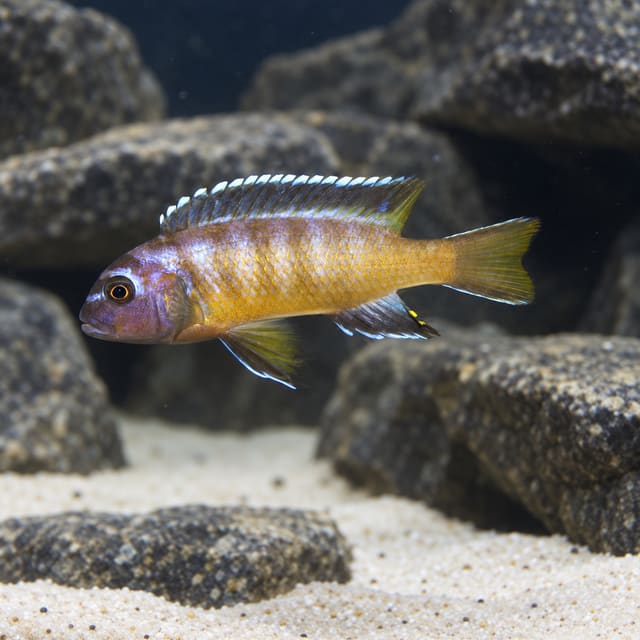
The Red Top Emmiltos Mbuna, Mphanga Rocks (Pseudotropheus emmiltos) is a rock-dwelling cichlid from Mpanga Rocks in Lake Malawi that reaches 8.4 cm standard length. It suits keepers prepared for an aggressive Malawi community; OATA’s group guidance gives at least 15 Malawi cichlids, 23–27°C and pH 8.0–8.6. Sold individually in sizes from 3–4 cm to 6–7 cm.
Adult size is the maximum length this species reaches at full maturity (scientific sources). The livestock you receive will be younger and smaller — pick a size above for the actual shipping size. Product-photo provenance and any image-specific limitations are stated on the listing.
Pseudotropheus emmiltos
Save when buying multiple fish. Each quantity is one fish; sex and pair formation are not guaranteed unless the selected variant explicitly states them.
The Red Top Emmiltos Mbuna, Mphanga Rocks (Pseudotropheus emmiltos) is a rock-dwelling cichlid from Mpanga Rocks in Lake Malawi that reaches 8.4 cm standard length. It suits keepers prepared for an aggressive Malawi community; OATA’s group guidance gives at least 15 Malawi cichlids, 23–27°C and pH 8.0–8.6. Sold individually in sizes from 3–4 cm to 6–7 cm.
Adult size is the maximum length this species reaches at full maturity (scientific sources). The livestock you receive will be younger and smaller — pick a size above for the actual shipping size. Product-photo provenance and any image-specific limitations are stated on the listing.

Cichlids are a family of roughly 1,800 accepted species, not one care type. Before buying, identify the exact species and source, then compare adult measurement, usable tank dimensions, social system, territory, tested water, diet and an exit plan. No family-wide minimum tank, water range or tank-mate list is safe.
Maintain these water conditions for optimal health and vibrant colors
Red Top Emmiltos Mbuna is a rock-dwelling Lake Malawi cichlid associated with the Mpanga Rocks near Chilumba. Wikipedia records the species as endemic to Lake Malawi and known only from that locality. Its native range is therefore highly localised.
The familiar scientific name is Pseudotropheus emmiltos. The World Register of Marine Species now lists it as Maylandia emmiltos. Both names refer to the same cichlid here, while the established aquarium name remains useful when comparing labels and older references.
A maximum length of 8.4 cm standard length is given for the species. Standard length is measured to the base of the tail fin, so it is a planning reference rather than a promise that every individual will finish at exactly 8.4 cm. Use that adult figure when assessing permanent space, companions and feeding competition.
“Mbuna” is the useful husbandry clue: OATA describes mbuna as the rock-dwelling branch of Malawi cichlids. This fish therefore belongs in a deliberate Malawi arrangement rather than an ordinary peaceful community. Keepers comparing other fish for the same style of aquarium can browse our African cichlid collection, but every proposed combination still needs its own compatibility check.
One purchase quantity supplies one animal of the size selected. The live selector carries the labels “3 - 4 cm”, “4 - 5 cm”, “5-6 cm” and “6-7 cm”; use that selector to see which choice can be selected when ordering. These are dispatch measurements and do not describe separate species, guaranteed sexes or final adult lengths.
The size you select is the size supplied, not the adult size. For example, choosing “3 - 4 cm” means the fish is supplied in that size band, while the aquarium should still be planned around the species reference of up to 8.4 cm standard length. A larger dispatch choice does not establish age, maturity, sex or eventual dominance.
Sex is guaranteed only when the selected option explicitly states male or female. This Red Top Emmiltos Mbuna, Mphanga Rocks listing has no sex-guaranteed option.
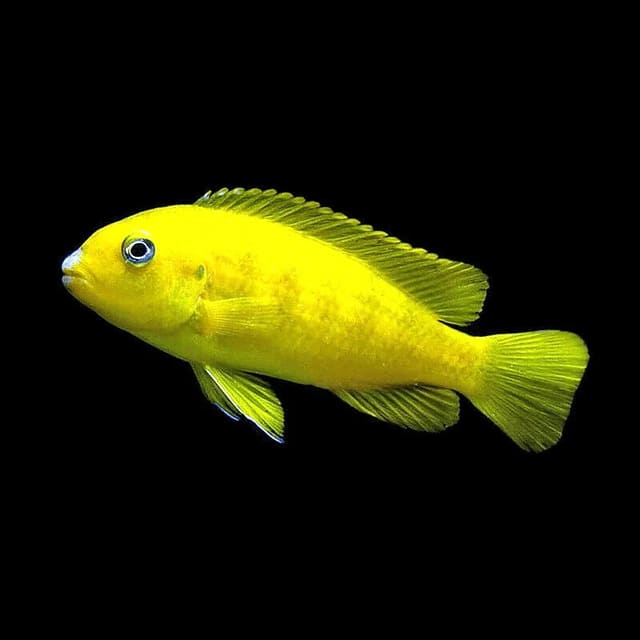
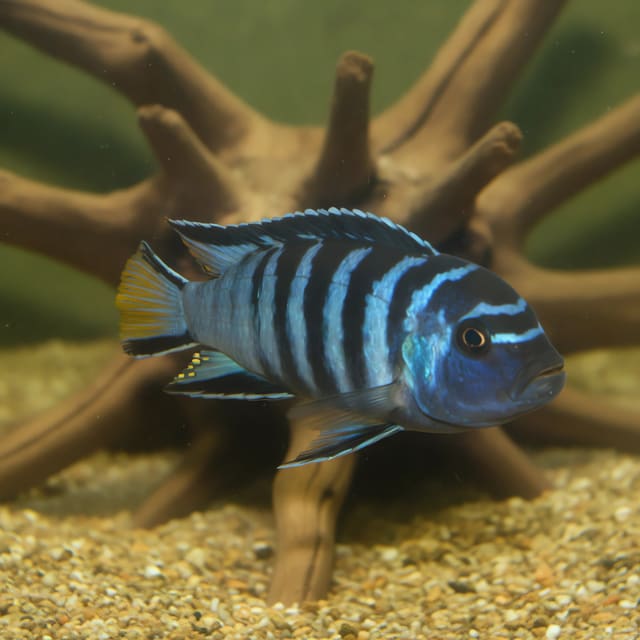
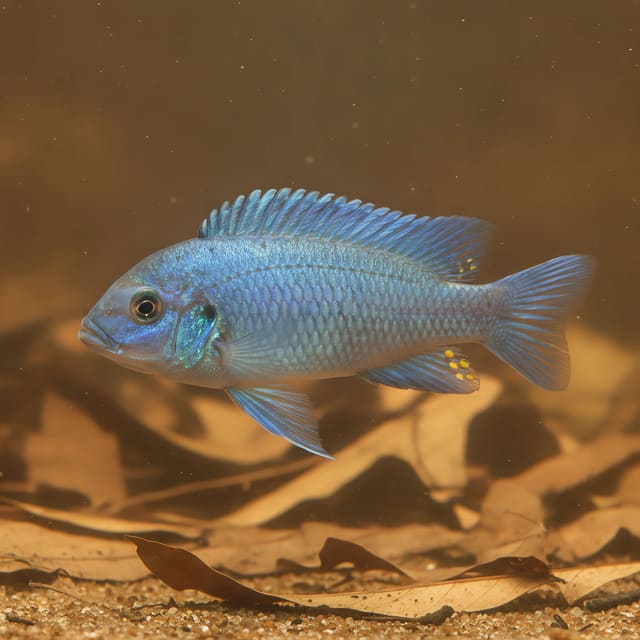
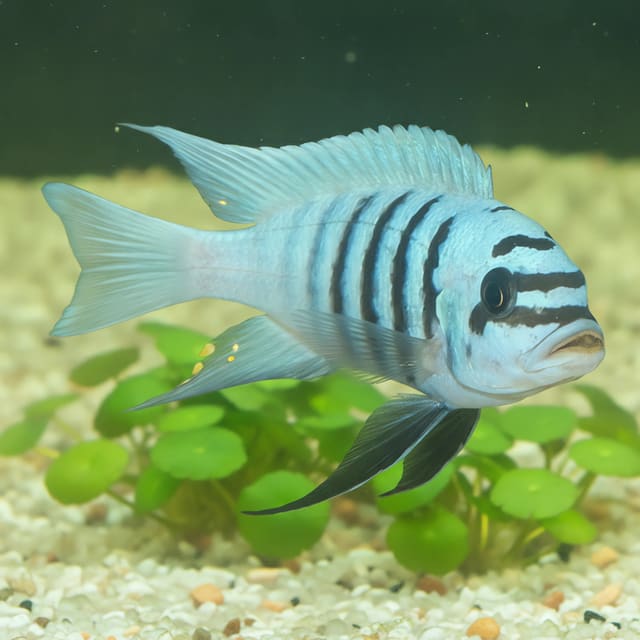
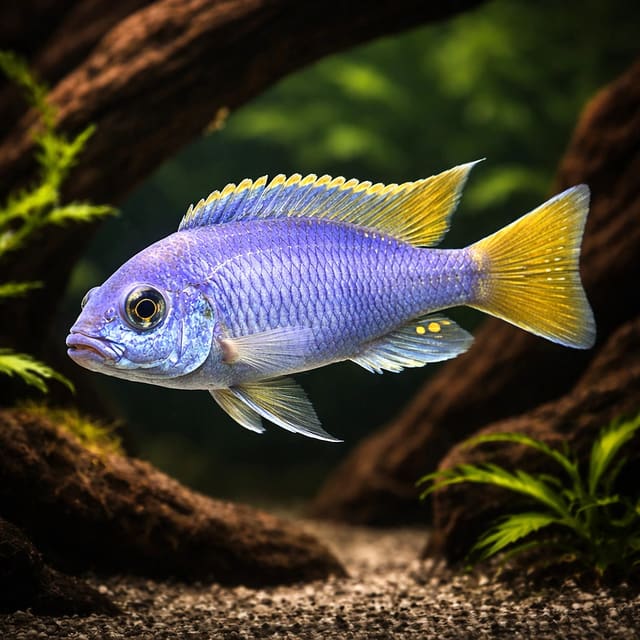
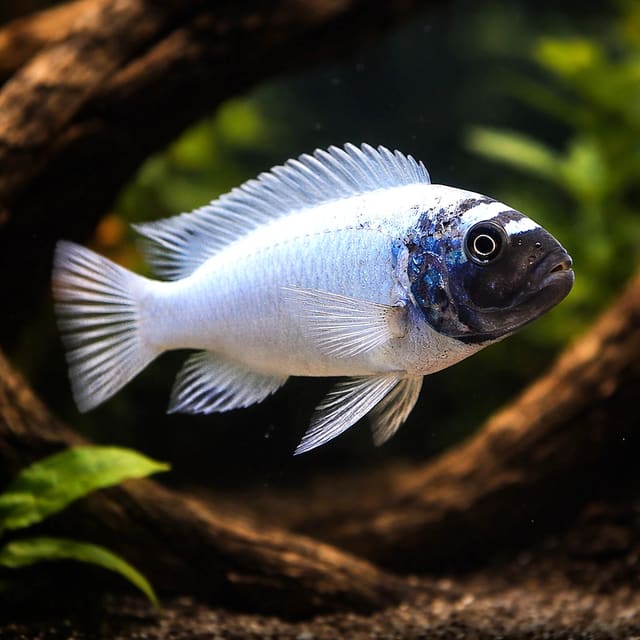
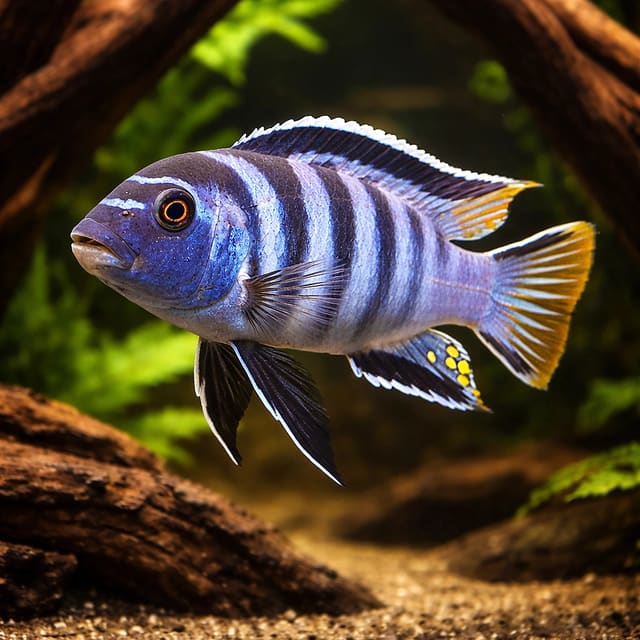
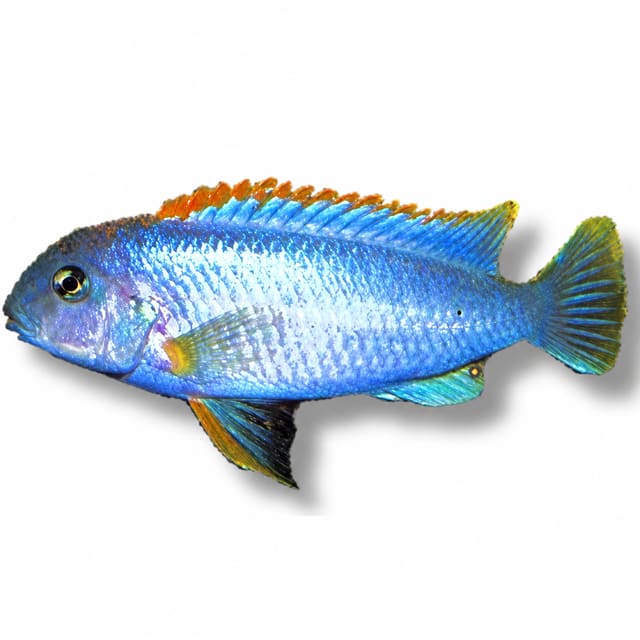
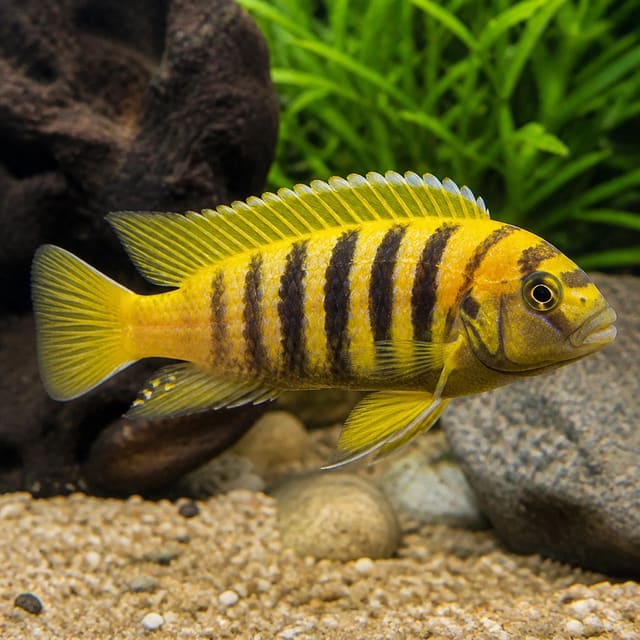
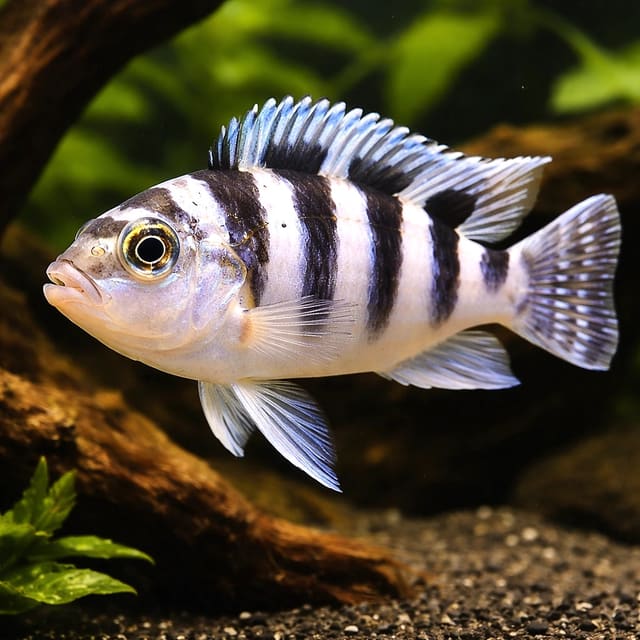
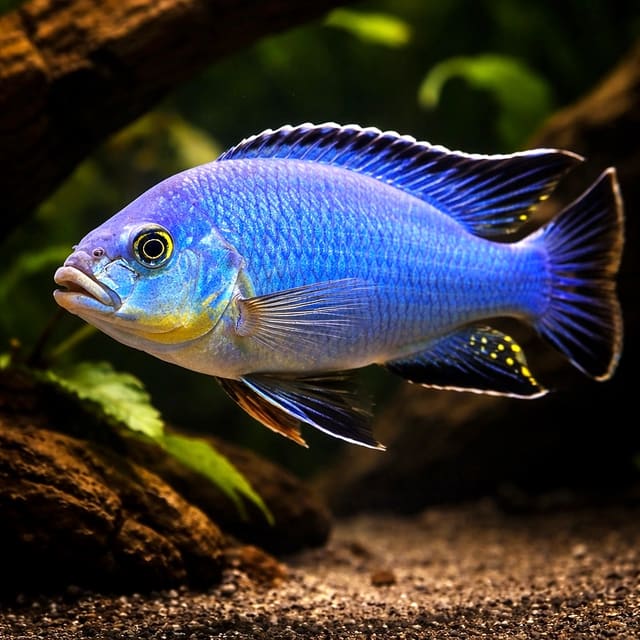
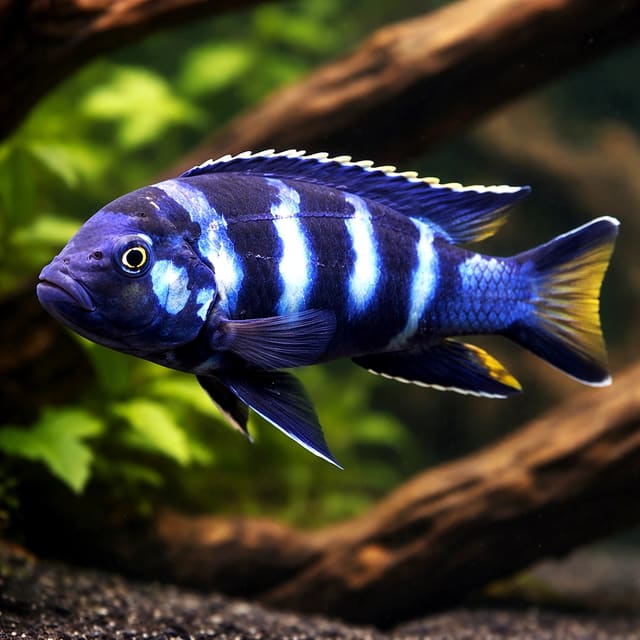
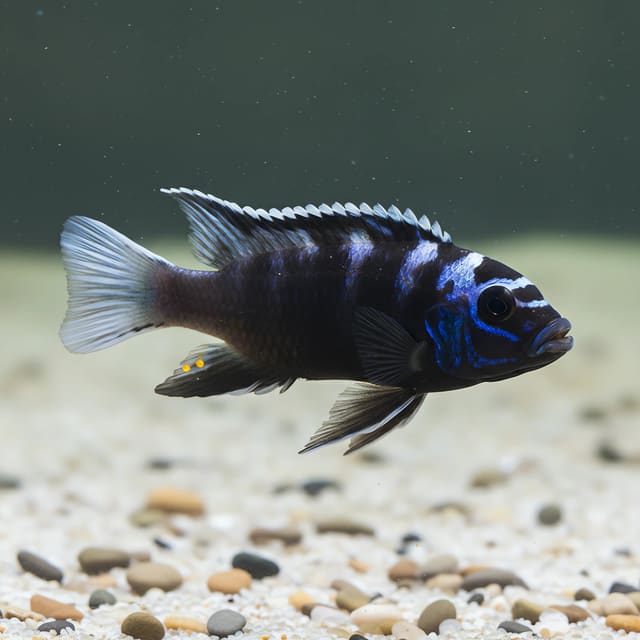
Colour can also differ between individuals and under different aquarium conditions. The gallery images are representative of this type of animal rather than photographs of the exact animal supplied, so colours can look slightly different from the live animal.
OATA’s African Malawi cichlid guidance gives 23–27°C, pH 8.0–8.6, general hardness of 12–18°dH and carbonate hardness of 10–15°dKH for the group. Use these as the working aquarium targets rather than treating them as a species-specific optimum.
| Decision | Planning figure |
|---|---|
| Adult length | Up to 8.4 cm standard length |
| Temperature | 23–27°C |
| pH | 8.0–8.6 |
| General hardness | 12–18°dH |
| Carbonate hardness | 10–15°dKH |
| Community aquarium | At least 200 litres for a reasonable Malawi community |
| Community group | At least 15 Malawi cichlids |
The 200-litre figure applies to a reasonable Malawi community, not to one fish in isolation. OATA also explains that small Malawi groups often fight and that a group of at least 15, with slight and carefully managed crowding, can spread aggression. That plan needs an oversized biological filter, strong aeration and slow additions so waste does not outpace the filter.
This mbuna suits a keeper prepared to maintain hard alkaline water, build around rock-dwelling behaviour and intervene when aggression changes. It is a poor match for an unplanned mixed community, a new uncycled aquarium or a setup whose water cannot be held within the stated range.
| Suits | Not suited to |
|---|---|
| A hard, alkaline, rock-led Malawi community | A general peaceful community |
| Keepers prepared to manage aggressive behaviour | An uncycled aquarium |
| A mature system with oversized filtration and strong aeration | A setup that cannot maintain the stated Malawi water range |
Start with a rock-led Malawi aquarium and treat at least 200 litres as OATA’s benchmark for a reasonable community. A larger aquarium gives more stable temperature and water quality, which matters when several territorial fish share the same system. The volume must work together with filtration, aeration and a coherent stocking plan; litres alone do not control aggression.
Plan the finished layout before the main community settles, but retain the ability to rearrange décor if territorial aggression develops. OATA specifically recommends changing the décor as a way to make fish establish territories again, so avoid a design that cannot be safely adjusted.
Do not judge the setup from the photograph alone. The gallery shows the animal in a natural-looking scene, but the aquarium decision belongs to the adult fish and the planned community. Before adding livestock, confirm that temperature, pH, hardness, ammonia and nitrite are already within target and that the biological filter is functioning.
Check whether every rock remains secure when substrate is moved away from its base, whether the siphon can reach the main waste traps and whether the filter intake and outlet remain unobstructed. Then identify which pieces of décor could be moved if one territory becomes a repeated source of conflict. This dry run prevents an attractive arrangement from becoming difficult to maintain or unsafe once digging begins.
A working biological filter is essential. The RSPCA’s aquarium welfare guidance explains that fish release toxic ammonia, filter bacteria convert it to toxic nitrite and further bacteria convert nitrite to the safer nitrate. Fish should not be placed in an aquarium without a properly established and maintained filter.
Prepare the system before choosing a delivery date. Our first tropical aquarium guide explains how to set up and mature a new tank before livestock arrives. Maturity is demonstrated by water results and filter performance, not simply by the number of days the aquarium has contained water.
| Result | Decision |
|---|---|
| Ammonia above 0 mg/l | Do not add the fish |
| Nitrite above 0 mg/l | Do not add the fish |
| Temperature, pH or hardness outside target | Bring the aquarium into range before introduction |
| Filter blocked or not running correctly | Restore reliable filtration before introduction |
| All checks meet target | Proceed with the planned, gradual addition |
Malawi communities create a substantial biological load. OATA recommends an oversized filter and aggressive aeration for the crowded arrangements used to spread aggression. Oversizing does not remove the need for maturation, testing or water changes; it gives the bacterial colony and oxygenation appropriate capacity for the planned population.
Add fish gradually because the beneficial bacterial population must increase whenever fish numbers and feeding rise. If ammonia or nitrite appears after an addition, pause further stocking, test the system and correct the water-quality problem before increasing the load again. Do not turn the recommendation for a sizeable Malawi group into a single rapid addition to a new filter.
Maintain 23–27°C, pH 8.0–8.6, general hardness of 12–18°dH and carbonate hardness of 10–15°dKH. Measure the aquarium rather than assuming the tap-water values remain unchanged after buffering substrate, fish waste, feeding and water changes have influenced the system.
Use our water chemistry guide to understand each measurement, then enter actual results in the water matcher when comparing the aquarium with these targets. Record temperature, pH and hardness together: a temperature match alone is not enough for a specialised hard-water cichlid.
The nitrate limit is relative to the source water. If conditioned tap water measures 10 mg/l nitrate, the stated ceiling for the aquarium is 30 mg/l; if the tap level is 20 mg/l, the ceiling is 40 mg/l. This calculation does not replace weekly maintenance. It tells you how to compare the aquarium result with the water used for changes.
Test at least weekly and also after a stocking increase, a feeding increase or any change in behaviour. A result outside target is a reason to pause new additions and examine maintenance, filtration and source-water values. Keep a short log so a slow movement in pH, hardness or nitrate is visible before it becomes a larger problem.
Take the tap-water and aquarium nitrate readings close enough together for the comparison to remain useful. Record whether the aquarium reading was taken before or after the weekly change, because those two results answer different questions. The pre-change value shows the highest routine accumulation; the post-change value shows whether maintenance brought the system back towards its normal baseline.
Use a specialised Malawi cichlid food with a high algae content as the principal prepared diet and add fresh vegetables. OATA describes smaller mbuna as more herbivorous than the larger, more predatory utaka group, so this is the closest feeding pattern for a Red Top Emmiltos Mbuna.
Feed twice a day, offering only what the fish can eat within a few minutes. The time limit is important: uneaten food breaks down and releases waste, adding pressure to ammonia, nitrite and nitrate control. A small measured portion that disappears cleanly is more useful than a large portion left around the rocks or substrate.
| What happens | What to do next |
|---|---|
| Food remains after a few minutes | Remove it and reduce the next portion |
| Food repeatedly reaches only dominant fish | Spread the portion so access can be observed |
| Interest in food falls | Test water and check the wider health signs |
| Body condition rises or falls | Review portion size and feeding access |
Feeding response is also a daily welfare check. Watch whether the fish approaches food, swims normally and maintains condition rather than judging success only by an empty feeding area. Reduced intake, lack of interest and changing body condition are among the warning signs OATA recommends monitoring.
Do not increase food simply because the community contains many fish. Match the total amount to what the group finishes within the stated few minutes, twice daily, and use weekly water tests to show whether the combined feeding and filtration routine is coping.
Begin with a deliberately small portion and observe the whole community until the few-minute feeding period ends. Note whether food is left behind, whether one territory controls access and whether quieter fish take part. Repeat the same observation at both daily feeds for a week before making a large adjustment. Change one factor at a time—portion size or distribution—so the next feeding response shows whether the change helped.
At least once every week, carry out a partial water change of 25%. Use a siphon to remove solid waste from the substrate while taking out water, especially where particles collect around rocks. Treat replacement tap water with a suitable conditioner before it enters the aquarium so chlorine or chloramine does not harm fish or filter bacteria.
If the filter needs cleaning, rinse the media lightly in aquarium water removed during the partial change. Do not run established filter media under the tap: chlorine or chloramine may kill part of the beneficial bacterial population. The purpose is to clear enough debris for the filter to work while retaining the bacteria that process fish waste.
Make extra checks after adding fish because both feeding and waste production have increased. The planned Malawi population may be comparatively crowded to spread aggression, but crowding only works alongside oversized filtration, strong aeration and disciplined maintenance. A missed test or blocked filter has greater consequences when the biological load is high.
Use the same routine even when the water looks clear. Ammonia, nitrite, pH and hardness cannot be judged reliably by appearance, and clear water can still fall outside the required range. Weekly measurements turn maintenance into a decision based on the aquarium’s actual condition.
If nitrate rises more quickly from one week to the next, compare feeding, fish additions and the amount of waste removed before changing several parts of the routine at once. If pH or hardness drifts, compare the aquarium result with the replacement water and check whether the buffering substrate remains part of the working setup. A consistent written sequence makes an unusual result easier to investigate.
Arrange for someone to receive the live-fish parcel so it is not left unattended. Before the delivery window, complete the aquarium checks, confirm the filter and aeration are working and make sure ammonia and nitrite are both 0 mg/l. Avoid making major layout or water changes while the fish is waiting to be introduced.
The 20–30 minute floating period comes from our delivery and Live Arrival Guarantee policy. That page also explains the current delivery process and what must be recorded for a Live Arrival Guarantee claim. Review it before the delivery day rather than waiting until the parcel has arrived.
Acclimatisation cannot make an unsuitable aquarium safe. The receiving water must already meet the Malawi targets of 23–27°C, pH 8.0–8.6 and 12–18°dH general hardness, with a mature biological filter. If those checks fail, correct the aquarium plan before arranging the fish’s arrival.
During the first week, separate arrival stress from a developing water problem by measuring the water whenever behaviour changes. Keep the planned feeding portions small enough to finish within a few minutes, and do not add another group until this addition is feeding, swimming normally and leaving ammonia and nitrite at zero.
Record swimming, breathing, hiding, feeding response and visible fin condition at the same point each day. Pair any behavioural change with a water test rather than assuming it is part of settling in. If ammonia or nitrite rises, stop further additions and deal with the biological-load problem. If results remain on target, continue the established routine without repeatedly disturbing the rock layout.
Learn the normal behaviour and appearance of the individual after it settles, then react to changes rather than waiting for several signs to appear together. OATA recommends watching swimming, colour, temperament, breathing, external appearance, body condition and feeding response.
| Change to notice | Immediate check |
|---|---|
| Hanging at the surface, sitting on the bottom or erratic swimming | Test water and check aeration |
| Gill covers moving faster or slower than usual | Test water and check aeration |
| Darker or paler colour, increased hiding or changed aggression | Check water and recent stocking changes |
| White spots, fluffy growths, damaged fins, lost scales, ulcers or bumps | Record the appearance and test water |
| Reduced feeding or changed body condition | Check feeding access, portions and water |
Begin with temperature, ammonia, nitrite, nitrate and the filter’s operation. Ammonia and nitrite should both remain at 0 mg/l, while nitrate should stay within 20 mg/l of the normal tap-water level. Compare pH and hardness with earlier readings as well, because this fish depends on a stable hard-water Malawi setup.
Contact us if a health change continues after the immediate water and equipment checks, or if the fish shows visible damage or growths. Share the measured water results, recent additions, feeding response and the change you observed. Those details are more useful than a general description that the fish seems unwell.
Continue the ordinary weekly routine when the fish appears well. Clear eyes, intact scales and fins, appropriate swimming and a consistent feeding response provide a practical baseline for noticing later change.
If several fish change breathing, swimming or feeding at the same time, prioritise water tests, aeration and filter operation because the aquarium itself may be affecting the group. If one fish alone is hiding, damaged or missing meals while results remain within target, examine aggression and feeding access. This distinction directs the first response without delaying the basic water checks.
OATA advises keeping Malawi cichlids only with other Malawi cichlids or with some species of Synodontis catfish associated with Lake Malawi. That is a boundary for planning, not a universal promise that every Malawi cichlid or every Synodontis will work with this mbuna.
| Check | Pass condition |
|---|---|
| Community type | A deliberate Malawi cichlid aquarium, or a carefully assessed Lake Malawi Synodontis |
| Water | All fish suit 23–27°C, pH 8.0–8.6 and hard water |
| Behaviour | The plan accounts for aggressive Malawi cichlid behaviour |
| Adult size | Permanent space and feeding access are assessed at adult size |
| Filtration | The mature filter and aeration can support the final biological load |
| Introduction order | More peaceful species enter before more aggressive species |
Avoid adding this fish to a general peaceful community or mixing it with fish outside the Malawi plan, apart from individually assessed Synodontis. The required hard alkaline water and aggressive behaviour make “similar temperature” an inadequate compatibility test on its own.
Some uncertainty remains even after a careful screen because individual aggression and established territories can change the outcome. Contact us with the aquarium volume, current species and numbers, adult sizes, measured water values, filter capacity and proposed addition for a stocking assessment. A species name without the existing community details is not enough to judge the mix.
Keep a fallback plan for a fish that receives repeated aggression or prevents another fish from feeding. The first response can include rearranging décor so territories are formed again, but continued observation must decide whether the community remains workable.
A candidate that needs softer or more acidic water fails before behaviour is considered. A fish that shares the water range still fails if the aquarium cannot accommodate its adult size, aggression or feeding needs. Only after those points pass should introduction order and territory management be planned. This sequence prevents one convenient match, such as temperature, from hiding a decisive conflict elsewhere.
Malawi cichlids are not social fish in the peaceful shoaling sense, yet OATA advises that they can be managed in groups of at least 15 and that small groups often fight. Slight crowding can spread aggression across the population, but it must be planned within at least a 200-litre reasonable community, an oversized filter and strong aeration.
Do not add the whole intended population rapidly to an immature biological filter. Increase numbers gradually so filter bacteria can respond to the additional waste and feeding. When expanding an established community, add Malawi cichlids in groups rather than placing one isolated newcomer into all the attention of established residents.
OATA also recommends keeping more females than males of each species where possible to reduce repeated male attention towards one female. Use that only when sexes are genuinely known. Many Malawi cichlids show clearer sex differences only as adults, so colour, egg spots or a dispatch measurement should not be used to assign this selection to a sex-ratio slot.
Review the community after every change rather than assuming the final headcount guarantees peace. A workable arrangement combines a large enough planned group, suitable introduction order, adjustable décor, access to food and water quality that remains within target. If one fish persistently hides, stops feeding, suffers damage or drives repeated aggression, treat that as a stocking problem even when the total number matches the planning figure.
After a planned group enters, wait for the aquarium to demonstrate stable ammonia and nitrite results, normal feeding access and manageable aggression before taking the next stocking step. Check whether any fish is repeatedly excluded from food or shelter and whether fin damage is appearing. A headcount target never overrides these observations; the next addition belongs after the filter and existing community have absorbed the previous change.
It is a rock-dwelling Lake Malawi cichlid known from Mpanga Rocks near Chilumba and recorded to 8.4 cm standard length.
One purchase supplies one animal of the size selected. The dispatch measurement does not guarantee sex, age, maturity or final adult length.
The live selector carries “3 - 4 cm”, “4 - 5 cm”, “5-6 cm” and “6-7 cm”. Check the selector when ordering and plan every choice around an adult length of up to 8.4 cm standard length.
Use a mature, filtered and strongly aerated rock-led Malawi aquarium. OATA’s group guidance recommends at least 200 litres for a reasonable Malawi community, with coral sand or a similar buffering substrate.
OATA’s group guidance says Malawi cichlids can be kept in groups of at least 15 and that small groups often fight. Build that community gradually so filtration can adjust to each addition.
OATA’s Malawi cichlid group guidance gives 23–27°C, pH 8.0–8.6, 12–18°dH general hardness and 10–15°dKH carbonate hardness, with ammonia and nitrite at 0 mg/l.
OATA’s Malawi cichlid guidance recommends specialised food with a high algae content and fresh vegetables for smaller mbuna. Feed only what is eaten within a few minutes, twice a day.
Start filming before opening the sealed parcel and continue through opening until the fish is shown inside the sealed bag. Receive it in person, open and inspect it the same day, float the bag for 20–30 minutes before releasing, and do not pour the bag water into the aquarium.
Screen other Malawi cichlids or individually suitable Lake Malawi Synodontis. Avoid a general peaceful community, and assess water, adult size, aggression, feeding access and the established population before introduction.
No reviews for this item yet. Bought one? Honest reviews only, good or bad.
What customers say about ordering from us
Easy website plenty of info on fish your buying great to pick a time slot
TRACEY DURRANT · 7 Oct 2026
Got some lovely fish thank you
Kevin Mackie · 7 Oct 2026
Reviews of our shop, collected by Judge.me, an independent third-party review collector. Newest first.