Advanced
Pseudotropheus elongatus "Usisya Mara Rock" Mbuna
24–28°C · pH 7.6–8.8 · 135L
£17.99

A bold red to orange mbuna for a rocky Lake Malawi aquarium. Territorial behaviour calls for plenty of space, hard alkaline water and a carefully planned group.
Adult size is the maximum length this species reaches at full maturity (scientific sources). The livestock you receive will be younger and smaller — pick a size above for the actual shipping size. Product-photo provenance and any image-specific limitations are stated on the listing.
Maylandia zebra
Save when buying multiple fish. Each quantity is one fish; sex and pair formation are not guaranteed unless the selected variant explicitly states them.
A bold red to orange mbuna for a rocky Lake Malawi aquarium. Territorial behaviour calls for plenty of space, hard alkaline water and a carefully planned group.
Adult size is the maximum length this species reaches at full maturity (scientific sources). The livestock you receive will be younger and smaller — pick a size above for the actual shipping size. Product-photo provenance and any image-specific limitations are stated on the listing.
Cichlids are a family of roughly 1,800 accepted species, not one care type. Before buying, identify the exact species and source, then compare adult measurement, usable tank dimensions, social system, territory, tested water, diet and an exit plan. No family-wide minimum tank, water range or tank-mate list is safe.
Maintain these water conditions for optimal health and vibrant colors
The Zebra Red Cichlid, sold here as Maylandia zebra, is a bold Lake Malawi mbuna for a rocky African aquarium. It has red to orange body tones, a deep-bodied shape and a confident personality. Reaching around 12 cm and living up to 10 years, it suits keepers with experience of territorial fish. This hard-water grazer needs a setup built around its natural behaviour.
Choose this fish for its care requirements as well as its colour. A spacious aquarium, stable alkaline water and a sensible stocking plan make all the difference. Check the size selector before ordering; the size options describe purchase sizes rather than the adult maximum, and do not specify sex.
Maylandia zebra is one of the classic mbuna cichlids from Lake Malawi. In the aquarium hobby it is valued for its many colour forms, including red and orange strains. It belongs to the same broad cichlid family as peacocks, haps, and many South American cichlids, but its care is very different because it prefers hard, alkaline water and a rock-dominated layout.
The Zebra Red Cichlid comes from Lake Malawi in East Africa, one of the great Rift Valley lakes. In the wild, mbuna live around rocky shorelines where wave action, mineral-rich water, and countless cracks in the stone shape their behaviour. This is not a soft-water forest stream species. It evolved in a bright, alkaline environment with high dissolved minerals, strong oxygenation, and lots of surfaces to graze.
That natural setting explains much of its aquarium care. In the wild, these fish spend a lot of time pecking at algae films and biofilm growing on rocks. They also take in tiny organisms mixed with that growth, but they are primarily adapted for a vegetable-heavy diet. The essentials for a mbuna aquarium are rocks, territory, stable hard water, and controlled feeding.
This tropical mbuna needs a heated, hard-water aquarium. It is unsuitable for an outdoor pond or a cold-water setup. If you keep softer-water species, plan a separate suitable environment before adding it.
Zebra Red forms combine the classic mbuna shape with warm colours. Correct species selection and group ratios matter when planning a Lake Malawi rockscape.
Mimicking the natural rocky habitat does more than improve appearance. It reduces line-of-sight aggression, gives females escape routes, and encourages natural grazing behaviour that keeps Zebra Reds active and settled.
The minimum recommended aquarium for this species is 200 litres, but bigger is better. Tank space depends on aggression as much as body size. A single male with 4-5 females needs room to establish territory without trapping subdominant fish. A 240-300 litre tank is a much safer long-term choice than a cramped setup.
Small heated aquariums and starter kits are usually unsuitable for adult mbuna. Even a 50cm aquarium or 60cm aquarium is too short for proper territory structure. Aim for at least a 90cm aquarium, with a 100cm aquarium or larger strongly preferred for mixed groups.
For one male and several females, start at 200 litres and think in terms of floor space and rock volume. Mbuna use the whole tank, from bottom caves to open midwater dashes, so they are not just bottom fish. If you want mixed mbuna, increase volume and filtration together. Overstocking slightly is sometimes used by advanced keepers to spread aggression, but this only works with excellent maintenance and careful species selection.
The temperature range for Zebra Reds is 24-28°C, with 25-26°C being a practical target for most home aquariums. Keep the temperature stable rather than making daily adjustments. A good heater and thermometer matter more than the exact number within range.
Use a reliable heater and check the actual water temperature with a thermometer. Water requirements vary between species. Guidance for tetras or guppies does not replace mbuna care advice: Zebra Reds prefer harder, more alkaline conditions. Keep pH between 7.5 and 8.5, hardness around 10-20 dGH, and avoid sudden swings. If the temperature rises above 28°C for long periods, oxygen levels drop and aggression can worsen.
Because mbuna are messy eaters and active diggers, use strong filtration. A capable external filter or a high-output internal unit is better than the basic heater and filter combination often included with beginner kits. When setting up the aquarium, make sure the filter can turn over the full tank volume at least 6-8 times per hour. Pairing a filter and heater with extra circulation helps keep oxygen high.
Heater placement matters too. Place the heater near water flow so warm water circulates evenly. Dead spots behind rock piles can collect waste, so direct current through those areas. This species benefits from stable, clean water more than from fancy gadgets.
Use sand or fine gravel with plenty of stacked rockwork. Build secure caves directly on the tank base before adding substrate, so digging cannot collapse the structure. For mbuna, plants are optional and often nibbled. Tough species such as Anubias or Java fern attached to rock can work, but a classic mbuna tank is mostly stone.
Lighting should be bright enough to show colour and support natural algae films on rocks, but not so intense that algae growth becomes a nuisance. A balanced photoperiod of 7-9 hours is usually enough. If you use a 90cm aquarium light or a blue light for evening viewing, keep it subtle so fish still get a dark resting period.
Always cycle the aquarium for 4-6 weeks before adding mbuna. A fully matured filter is the foundation of good aquarium care, especially with territorial cichlids that do not tolerate ammonia or nitrite spikes.
Zebra Reds are primarily herbivorous mbuna. In nature they graze algae and associated microorganisms from rocks, so their captive diet should be rich in spirulina, vegetable matter, and quality cichlid pellets designed for plant-leaning African species. Their diet differs from that of many other aquarium fish. Feeding the wrong protein-heavy foods too often can trigger digestive problems, including Malawi bloat.
The best staple diet is a spirulina flake, algae wafer, or quality mbuna pellet. Offer small portions 1-2 times daily. A fish this active will always beg, but that does not mean it needs more food. If you are also dealing with algae, remember that natural grazing on rock surfaces is normal and beneficial for mbuna.
Supplement with blanched spinach, shelled peas in tiny amounts, and occasional vegetable-based gel foods. Some keepers add a little high-quality frozen food, but it should be a minor part of the diet. Zebra Reds are not snail-control fish and should not be bought for that purpose.
Feed only what the group clears in 30-60 seconds. Excess food quickly fuels brown algae, green algae, and declining water quality. Overfeeding and insufficient maintenance also contribute to cloudy water and bad smells.
If nuisance algae becomes a problem, address the cause rather than looking for a miracle algae treatment. Reduce waste, shorten lighting, and improve water changes. Black hair algae and hair algae usually point to excess nutrients or unstable light balance. Zebra Reds are not algae eaters in the same way as specialist algae fish, but they do browse surfaces naturally.
Use dechlorinator as part of your water-treatment routine and avoid adding random supplements. If you keep hardy plants, dose plant fertiliser sparingly because excess nutrients can worsen algae in bright cichlid tanks.
| Time | Food | Amount |
|---|---|---|
| Morning | Spirulina flake or mbuna pellet | Small pinch, eaten within 30-60 seconds |
| Evening | Algae wafer or vegetable-based pellet | Light feed, no leftovers |
Overfeeding causes ammonia spikes, poor digestion, and fast water quality decline. Avoid frequent bloodworm or rich meaty foods with mbuna, as long-term use can lead to bloating and stress.
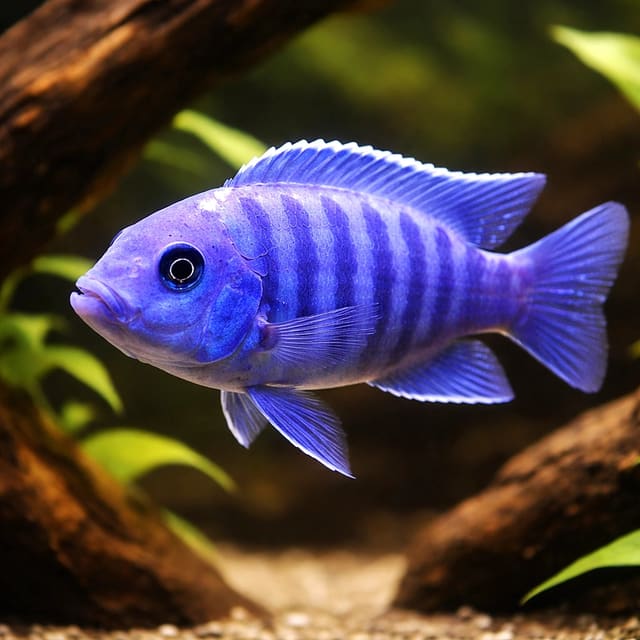
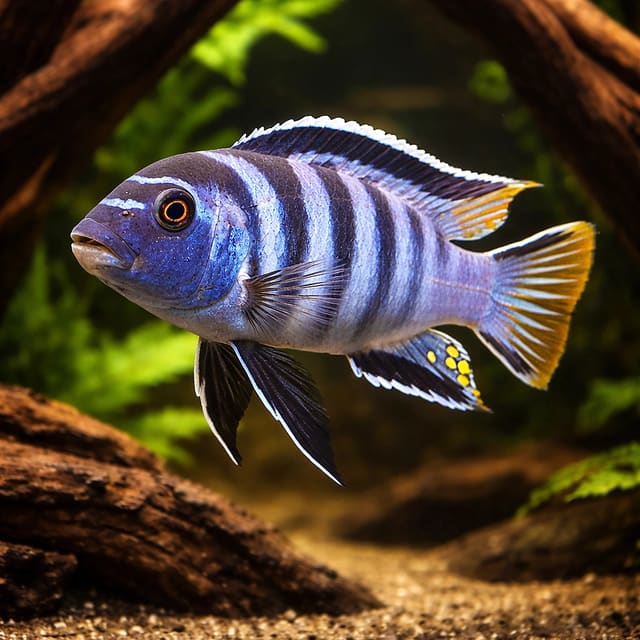
If you are building a colour-focused African display, this striking peacock shows how different feeding and temperament needs can be across Malawi species.
A useful comparison species for aquarists choosing between rock-grazing mbuna and more open-water peacock cichlids.
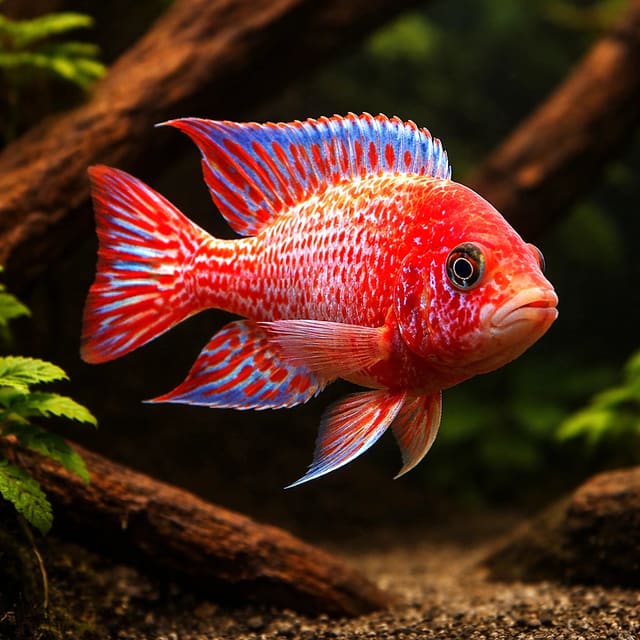
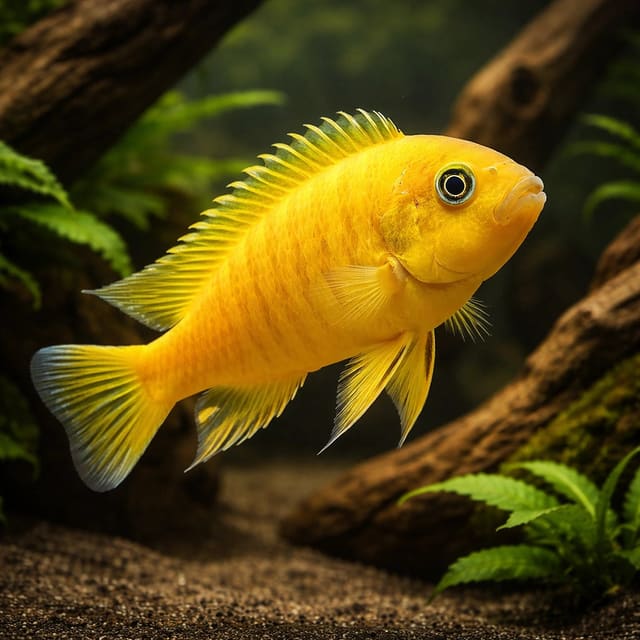
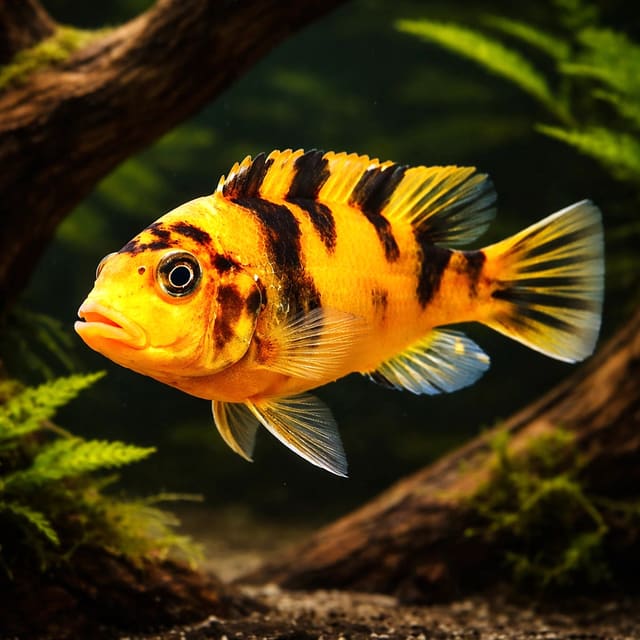
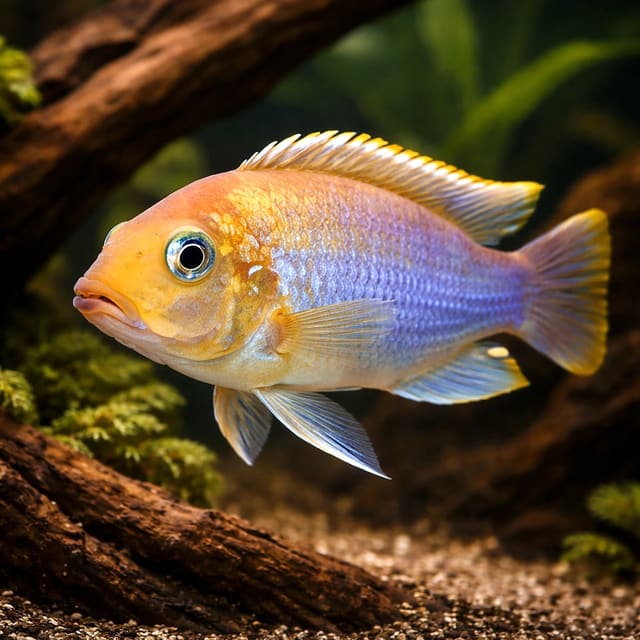
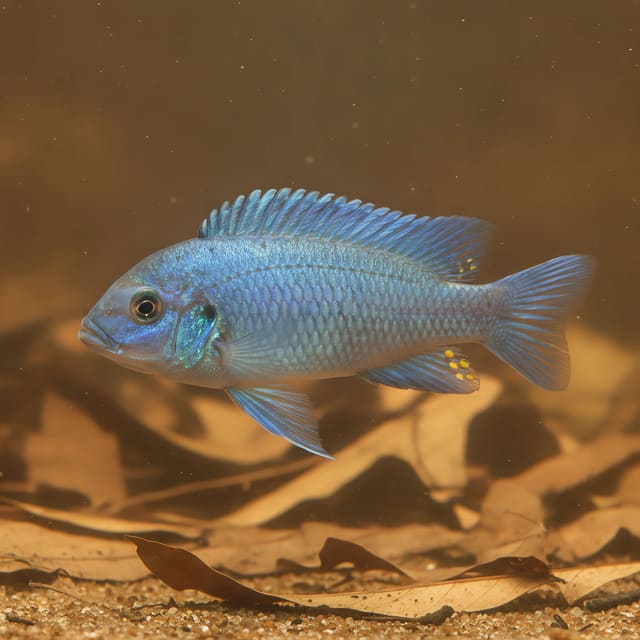
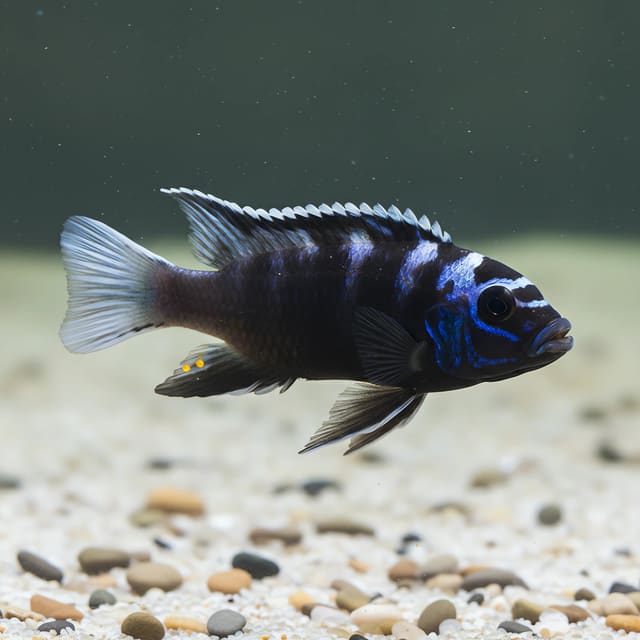
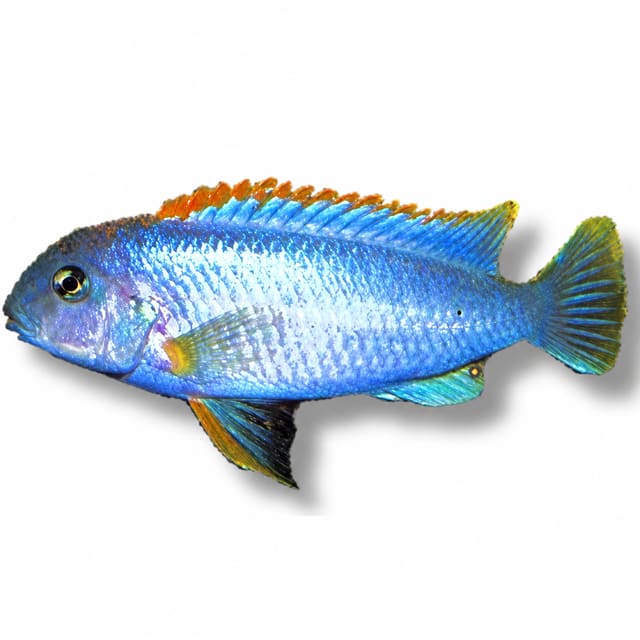
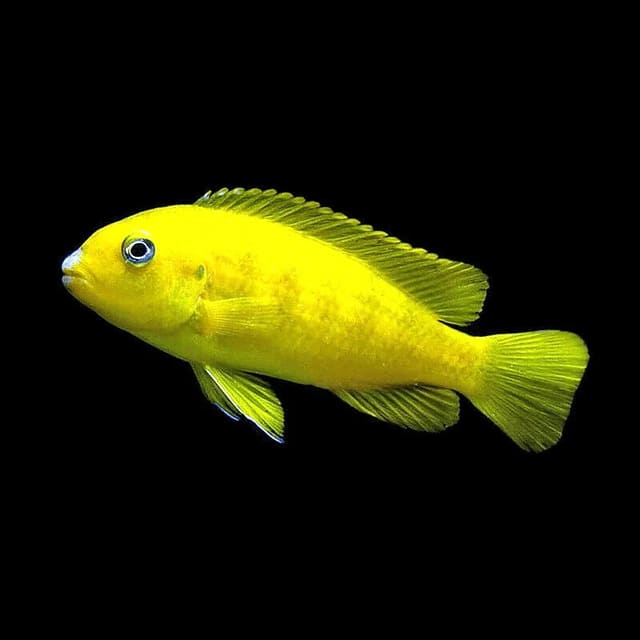
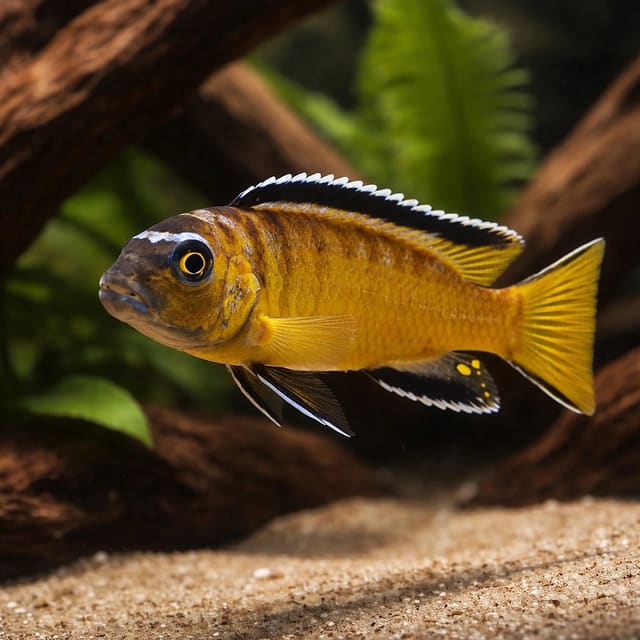
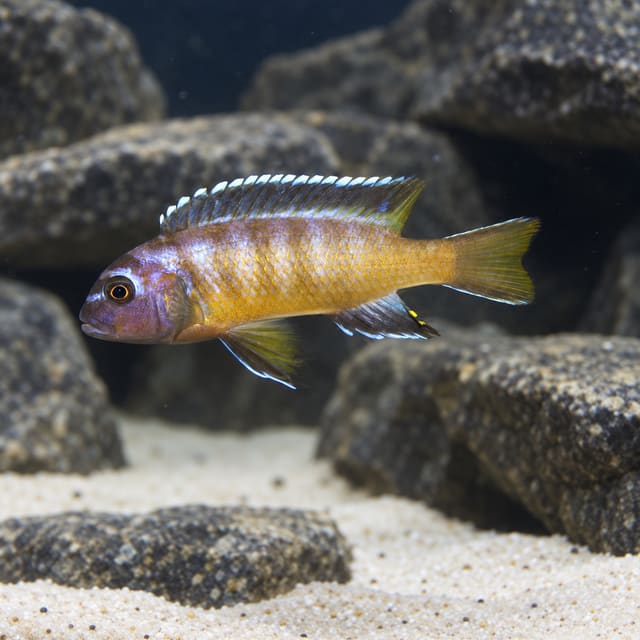
The Zebra Red is a deep-bodied mbuna with a strong forehead, pointed fins, and a muscular profile built for darting among rocks. Adults reach around 12 cm, though dominant males often look larger because of body depth and finnage. Depending on strain, colour can range from orange-red to rusty red with faint barring or patchy darker markings.
Males are usually brighter and more territorial, especially when displaying. Females may be slightly plainer, though good lines still show attractive warm colour. In a well-kept 80cm aquarium or larger display, strong lighting and dark rock backgrounds can make the red tones appear richer. Our photos show the warm body colour and contrast best under balanced daylight spectrum rather than an overly blue lamp.
For best presentation, use a dark substrate and avoid washing the tank in intense blue-only light. A blue light can be useful briefly for evening viewing, but natural-looking white light shows the fish more accurately. If your 90cm aquarium has bright lighting and nutrients are excessive, watch for surfaces turning green; some algae is natural, but a full green haze reduces the impact of the fish.
Colour depends on genetics, low stress, proper diet and suitable water chemistry.
This species is aggressive and territorial, especially males. It is not suitable for a peaceful community aquarium with tetras, guppies, or slow fish. When choosing companions, consider robust African cichlids and tough catfish, not mixed community species. A mixed community is unsuitable unless it is planned specifically around Malawi cichlids.
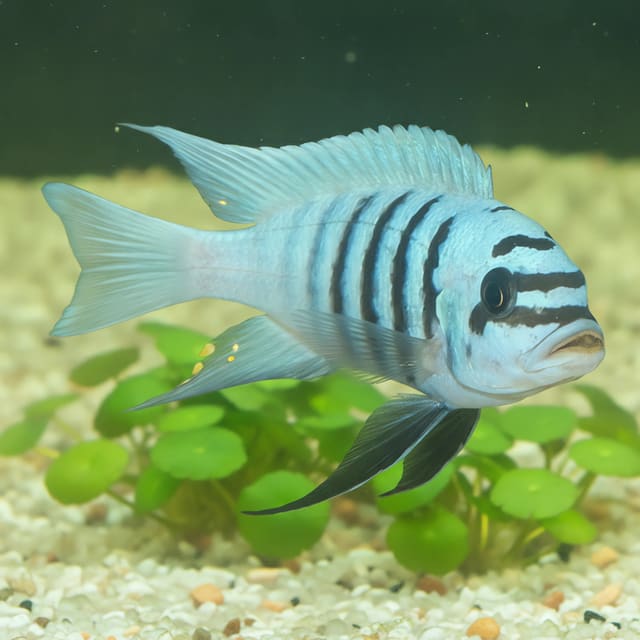
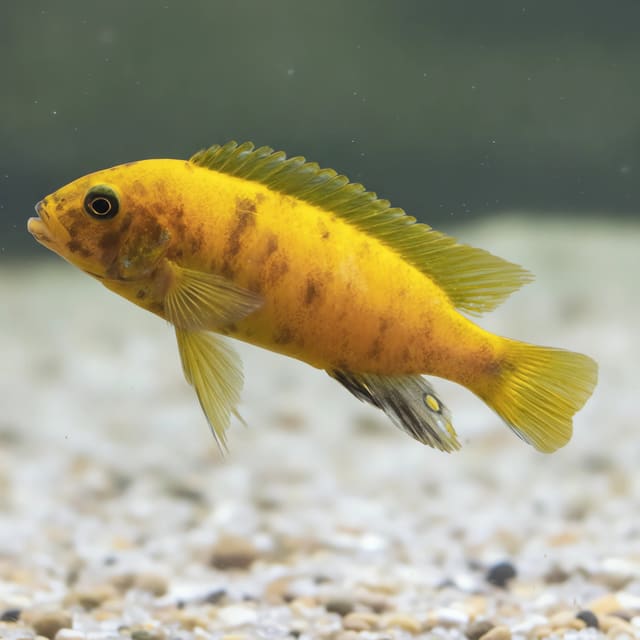
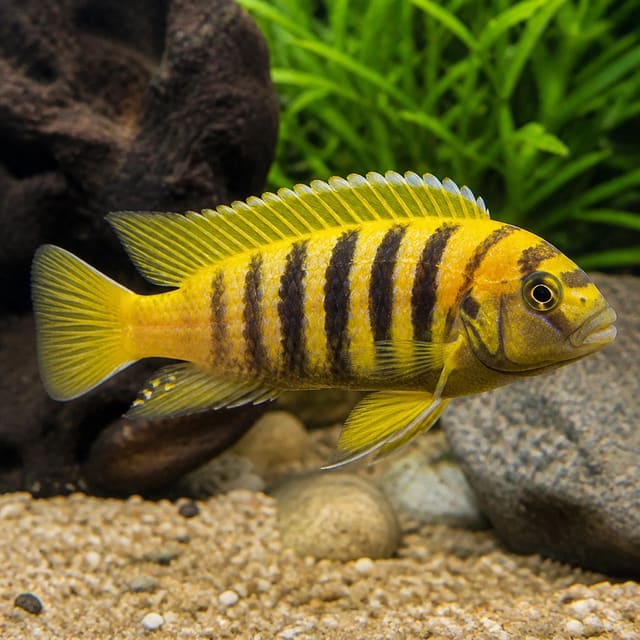
Good companions include other carefully chosen mbuna of different shape and colour, plus some Synodontis catfish. Avoid fish that look too similar, because same-colour rivals attract more aggression. Suitable comparison and companion species include the Yellow Elongatus Cichlid - Chindongo Elongatus, the colourful Rubin Red Peacock Cichlid - Aulonocara in larger mixed Malawi systems, and the striking Aulonocara Sp Neon Red Calico Peacock where stocking is planned carefully. For aquarists comparing African cichlid styles, Aulonocara kandeense offers a different temperament profile from mbuna.
You can also compare them with non-Malawi cichlids such as Thorichthys Maculipinnis - Elliot'S Cichlid - or Guianacara Dacrya - South American Cichlid, but those are not ideal tank mates because they prefer different water chemistry and social structure. Likewise, species such as Kiriza Yellow Cichlid - Tropheus Moorii and Orange I Blunthead Cichlid - Tropheus are fascinating comparisons for experienced keepers, yet they have different dietary and behavioural demands.
Avoid peaceful fish, long-finned fish, shrimp, and most snails. Do not add delicate “clean-up crew” animals to a Zebra Red tank expecting them to survive. This species may harass or kill them. Tetras and Siamese fighting fish are also unsuitable companions.
Many compatibility problems are really husbandry problems. Regular maintenance, water testing and cleaning reduce stress and aggression. If waste accumulates, fish become more irritable and disease risk rises. A stocking plan for mbuna should include water chemistry and temperament, not just size.
Carry out regular water changes without shocking the fish. Match temperature and pH closely. When upgrading from a beginner setup, the essentials are space, rocks, filtration, test kits, and a stocking plan. Use dechlorinator and accurate tests; a buffer may be needed if your water is very soft. Do not medicate or dose blindly.
| Species | Compatible? | Notes |
|---|---|---|
| Yellow Elongatus Cichlid - Chindongo Elongatus | ✅ Yes | Works in larger Malawi setups with rockwork and careful stocking ratios. |
| Aulonocara Sp Neon Red Calico Peacock | ⚠️ Caution | Possible in larger mixed cichlid tanks, but mbuna can bully calmer peacocks. |
| Tetras, guppies, shrimp | ❌ Avoid | Too peaceful or too small for an aggressive mbuna environment. |
Always use a quarantine tank for 2-4 weeks before adding new fish. Quarantine protects established cichlids from parasites and gives you time to observe feeding strength and aggression levels.
Breeding Maylandia zebra is moderate rather than difficult once the fish are mature and correctly sexed. The best approach is one male with several females. This species is a maternal mouthbrooder, so you usually will not see eggs scattered around the aquarium for long. After spawning, the female collects them in her mouth and carries them until the fry are developed.
A dedicated breeding group does best in a spacious rocky tank with stable hard water. Keep pH in the 7.5-8.5 range. The breeding aquarium should still be at least 200 litres, with more space preferred if the male is especially dominant.
The male intensifies in colour and claims a spawning site on rock or a cleared patch of substrate. He circles and shivers to attract a female. After laying and collecting eggs, the female retreats and may stop feeding while brooding. This is normal, but she must not be harassed constantly. If the tank is too crowded or unstable, she may spit the brood early.
Incubation usually lasts around 18-21 days depending on temperature. Because the female carries the brood, there is little direct egg care for the aquarist. Once released, fry can be fed finely crushed spirulina flake, specialised fry foods, and freshly hatched brine shrimp in moderation. However, groups are usually safer than fixed pairs because males can be relentless.
If water becomes cloudy or green as fry appear, overfeeding and insufficient maintenance are common causes. Fry need clean water, not constant heavy feeding.
If a brooding female is being chased heavily, move her to a separate mature rearing tank late in the holding period rather than stripping eggs too early. This reduces stress and often gives stronger, better-formed fry.
Choosing between Malawi cichlids is not just about colour. You need to compare aggression, diet, tank style, and long-term compatibility. Their care differs greatly from that of peacocks or South American cichlids. If you want a fish that spends time among rocks, shows strong territorial behaviour, and suits a hard-water setup, Zebra Reds are excellent. If you want calmer behaviour and more open-water display, another species may fit better.
| Feature | Zebra Red Cichlid | Neon Red Calico Peacock |
|---|---|---|
| Max Size | 12 cm | 12-15 cm |
| Care Level | Moderate | Moderate |
| Temperature | 24-28°C | 24-27°C |
| Best For | Rocky mbuna tanks | Colourful mixed Malawi displays |
| Feature | Zebra Red Cichlid | Elliot's Cichlid |
|---|---|---|
| Water Type | Hard, alkaline | Moderately hard to neutral |
| Temperament | Aggressive | Semi-aggressive |
| Diet Focus | Herbivore | Omnivore |
| Best Setup | Mbuna rockscape | Central American cichlid tank |
| Best For | Experienced Malawi keepers | Keepers wanting a less specialised cichlid |
Choose Zebra Red if you want a classic mbuna with bold colour and strong personality. Choose the Aulonocara Sp Neon Red Calico Peacock if you prefer a more open-water Malawi display, or look at Thorichthys Maculipinnis - Elliot'S Cichlid - if you want a cichlid with a different water profile. Among Malawi cichlids, the Zebra Red is best where rockwork, structure, and species planning come first.
A healthy Zebra Red is alert, brightly coloured, quick to feed, and confident around rockwork. Clamped fins, fading colour, hiding, flashing, rapid breathing, or a swollen belly all signal trouble. Among the most common diseases affecting mbuna are white spot, bacterial infections after fighting, and digestive issues linked to poor diet.
Prevention starts with water quality. Keep the main aquarium and any temporary grow-out system clean and the water clear. Test ammonia, nitrite, nitrate, pH, and temperature regularly. Maintain zero ammonia, zero nitrite, low nitrate and stable alkaline water.
Cloudy water, foul smell, and repeated illness often trace back to overstocking, under-filtration, or overfeeding. This is especially common when fish are moved from a basic beginner setup into a more demanding mbuna aquarium without enough rockwork or filtration. A proper quarantine routine matters too, especially when sourcing fish from several places.
Never use medication without identifying the problem first. Many issues that look like disease are actually stress, fighting damage, or poor water quality. Fix the environment before reaching for treatment.
Zebra Reds are active, bold, and highly territorial. They patrol caves, graze rock surfaces, chase rivals, and constantly test boundaries. This is normal mbuna behaviour, not a sign that the fish is “mean” in the human sense. The key is giving that energy a suitable outlet through space, rockwork, and proper stocking.
This species is best kept in a harem structure rather than alone with one partner. The recommended group is not a true shoal, but one male with 4-5 females. In a sparse tank, the dominant male may control the entire aquarium. In a well-structured setup, subdominant fish can break line of sight and settle.
Even in a planted aquarium, territory design takes priority. They are much better suited to a rocky hardscape. Their space and behaviour requirements make them better suited to a large aquarium than to a beginner's first cichlid setup. Still, with research and patience, they can work for hobbyists moving beyond beginner species into more specialised African cichlid care.
Before ordering, make sure your aquarium provides enough room, stable hard water and suitable companions for territorial mbuna. Use the care information to decide whether this fish fits your setup.
Live fish travel in oxygen-filled bags within insulated packaging, with heat packs when conditions require them, via a tracked courier licensed to carry live animals. Someone must be at the delivery address to receive the parcel. Read the delivery and live-arrival information before ordering.
Have a mature filter running, test the water and match the temperature before arrival. Plan the rockwork and stocking carefully so the new fish has a suitable place to settle.
Order your Zebra Red Cichlid today with confidence if you are ready to build a proper Lake Malawi setup.
For other Lake Malawi options, compare the Chilumba Maison Reef Zebra Mbuna and Yellow-Tail Acei Cichlid. These are comparison links: review each fish's diet, adult size and temperament before planning a mixed aquarium.
No reviews for this item yet. Bought one? Honest reviews only, good or bad.
What customers say about ordering from us
I have a small group of long finned mountain minnows. So was delighted to be able to order ten of this variety to increase the genetics in my tank . The ones I recieved are healthy but it’s to early to give a verdict on wether they are of a long finned type since they are small currently.
Gordon Walker · 23 Sept 2026
100% success travel and "installation". Pleased with quality of purchase. The Siamese fighter a bit "shy" so have not yet seen him at his best yet but looking good. Happy customer. GG
George E Garratt · 21 Sept 2026
Reviews of our shop, collected by Judge.me, an independent third-party review collector. Newest first.