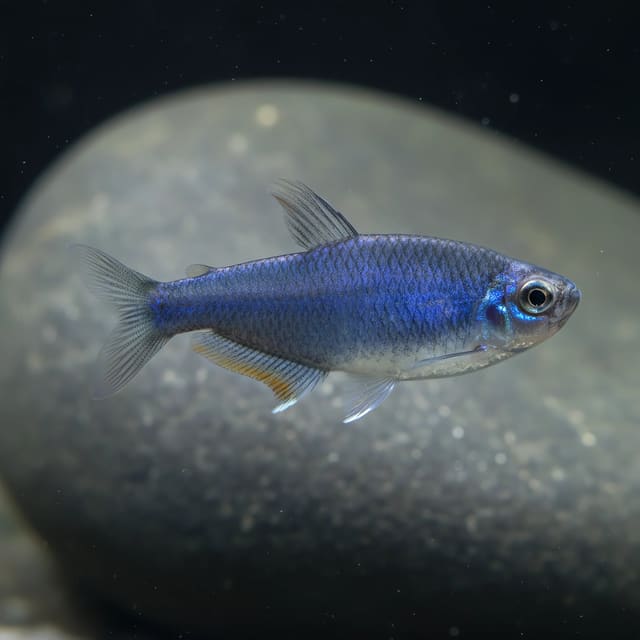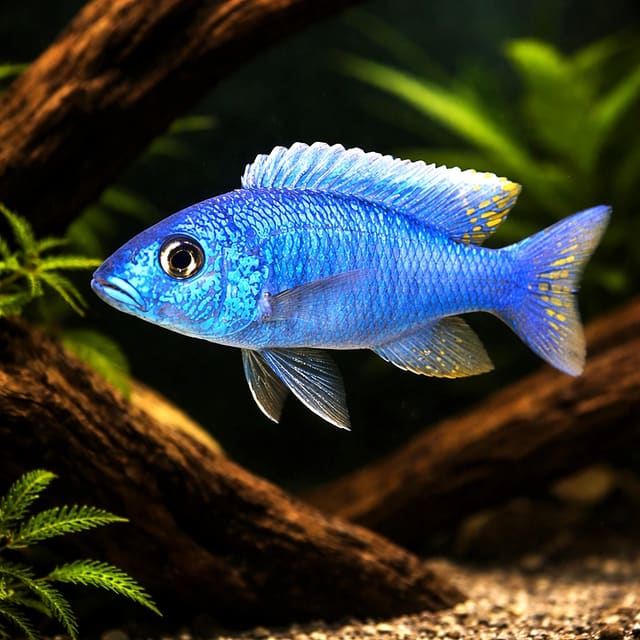
Electric Blue Hap (Sciaenochromis fryeri)
24–27°C · pH 8–8.6 · 304L
£42.99
Social Lake Malawi mbuna for mature 300L+ hard-water aquariums. Supplier designation White-Tail Acei; representative image does not guarantee exact locality, sex or selected stock appearance.
Adult size is the maximum length this species reaches at full maturity (scientific sources). The livestock you receive will be younger and smaller — pick a size above for the actual shipping size. Product-photo provenance and any image-specific limitations are stated on the listing.
Pseudotropheus sp. "acei"
Save when buying multiple fish. Each quantity is one fish; sex and pair formation are not guaranteed unless the selected variant explicitly states them.
Social Lake Malawi mbuna for mature 300L+ hard-water aquariums. Supplier designation White-Tail Acei; representative image does not guarantee exact locality, sex or selected stock appearance.
Adult size is the maximum length this species reaches at full maturity (scientific sources). The livestock you receive will be younger and smaller — pick a size above for the actual shipping size. Product-photo provenance and any image-specific limitations are stated on the listing.
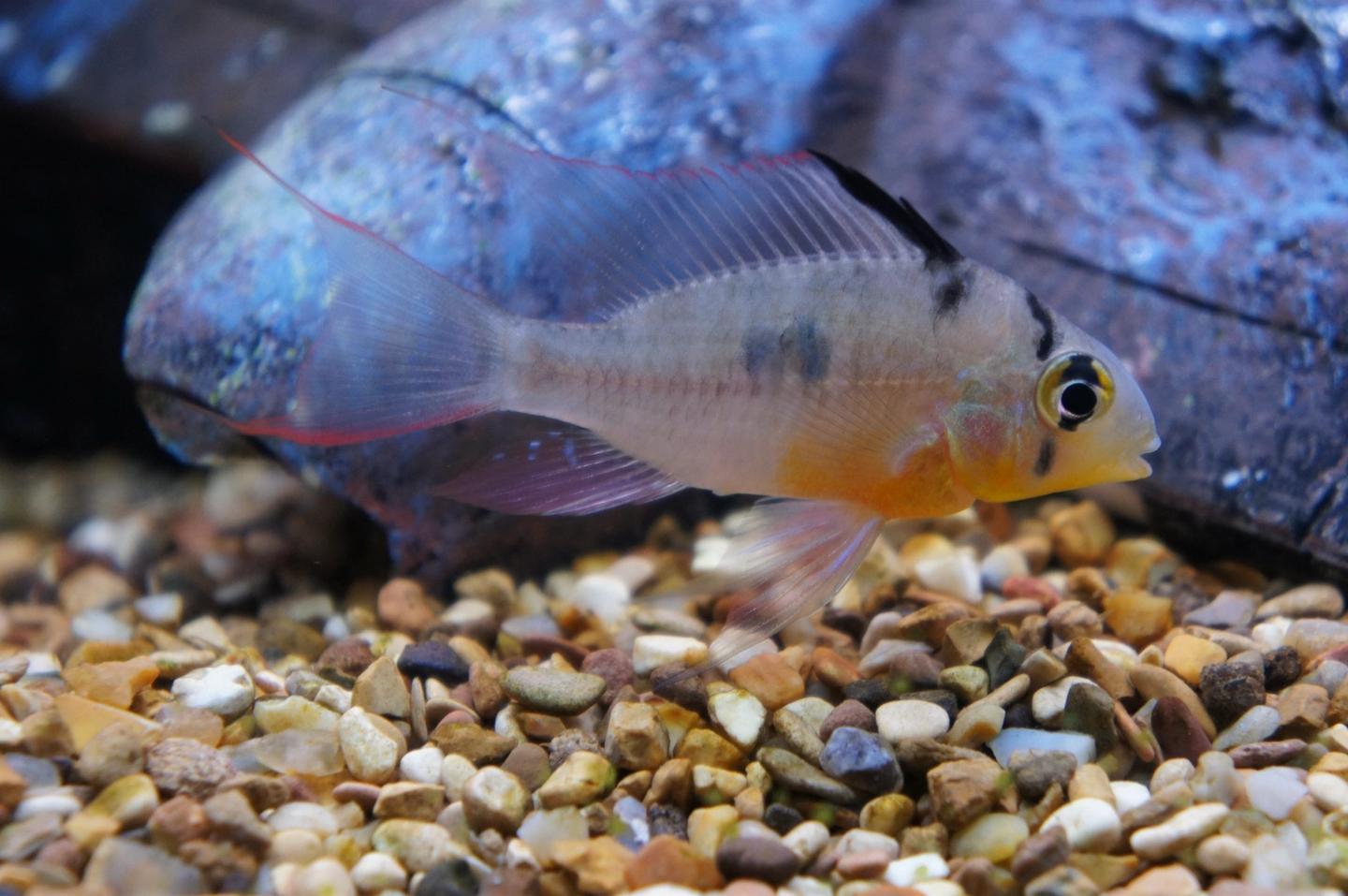
Cichlids are a family of roughly 1,800 accepted species, not one care type. Before buying, identify the exact species and source, then compare adult measurement, usable tank dimensions, social system, territory, tested water, diet and an exit plan. No family-wide minimum tank, water range or tank-mate list is safe.
Maintain these water conditions for optimal health and vibrant colors
Acei Cichlid is the aquarium trade fish usually written as Pseudotropheus sp. "acei". It is an active Lake Malawi mbuna known for moving in loose groups and grazing aufwuchs from submerged wood and other hard surfaces. Compared with many mbuna it is often less combative, but it remains a territorial African cichlid that needs a large, carefully planned hard-water aquarium.
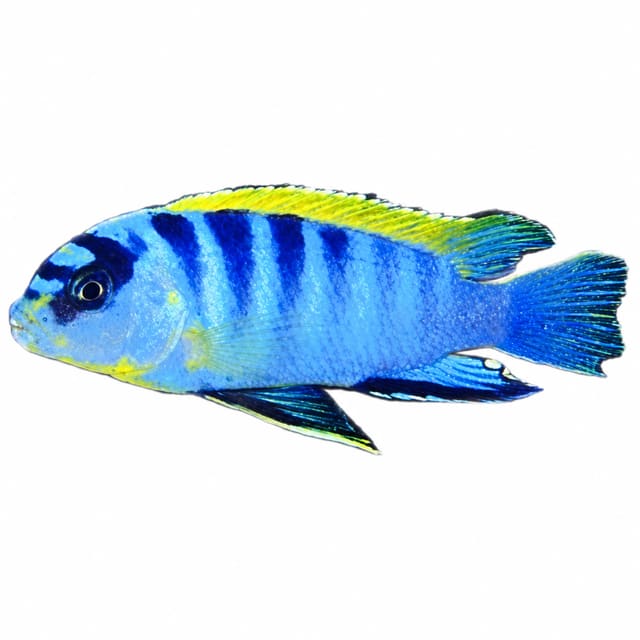
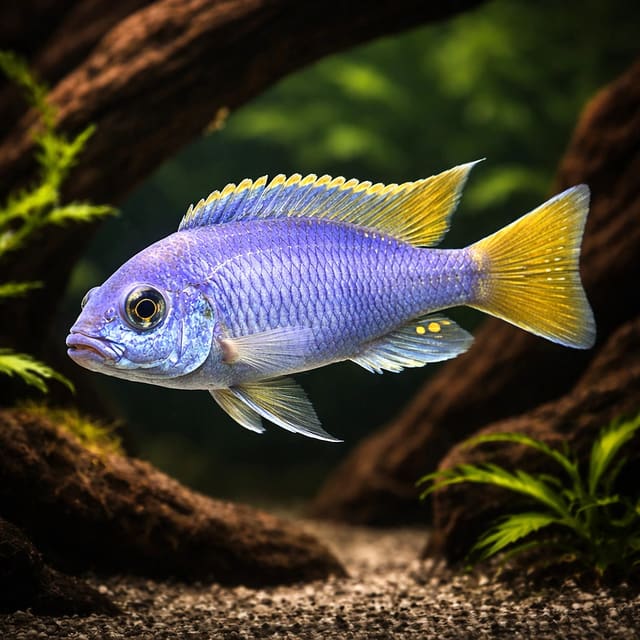
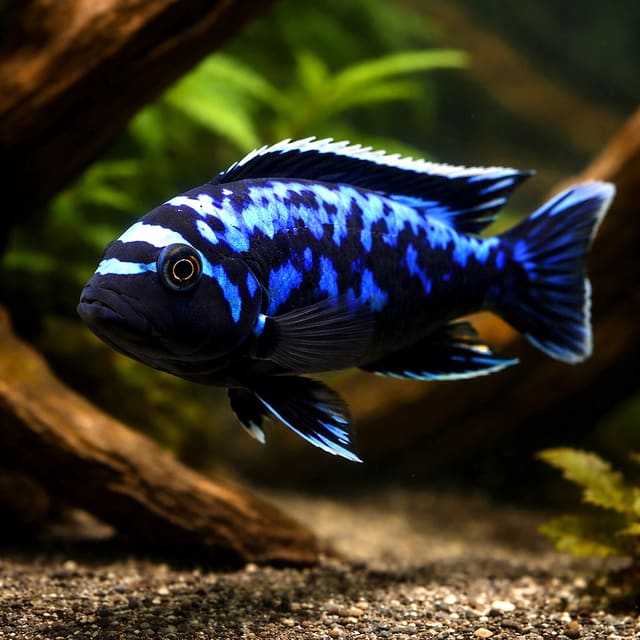
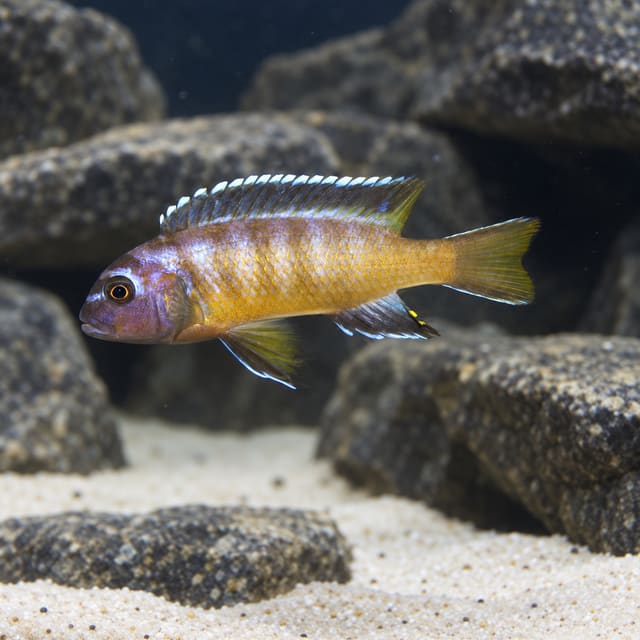
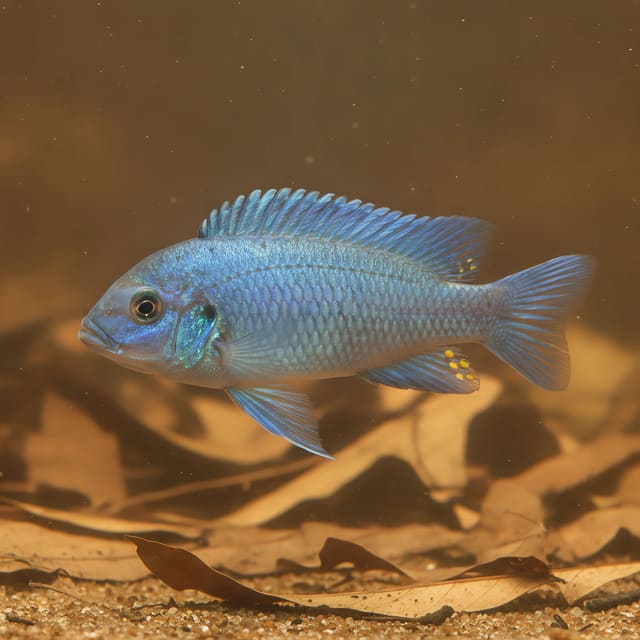
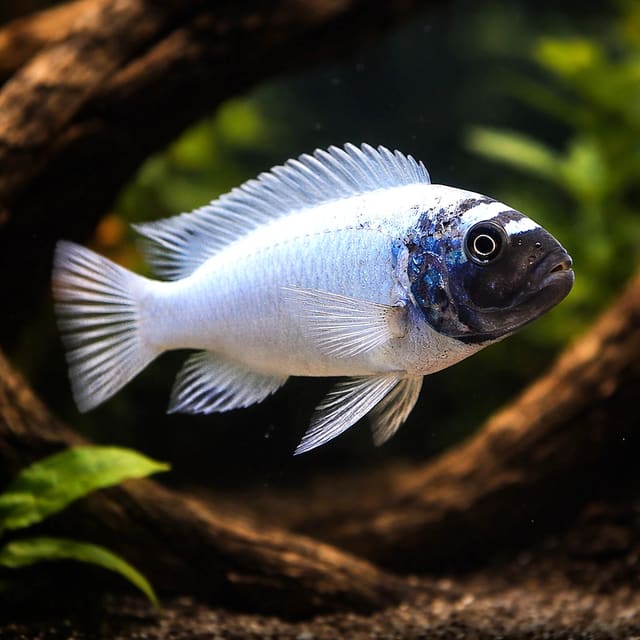
Stock identity and gallery: the supplier designation is White-Tail Acei. The current representative image shows a dark blue/black fish with pale fins. A representative view does not establish the exact appearance, sex or collection locality of the fish selected for an order. This listing retains the qualified Acei trade identity rather than promising Ngara, Luwala or a particular locality line. If a named geographic form is essential, compare the dedicated listings and ask about current stock records before ordering.
The name also needs care. Pseudotropheus acei is commonly printed as though it were a formally described binomial, but the aquarium fish remains represented in scientific databases as Pseudotropheus sp. "acei". Northern white-tail populations have also been associated with Pseudotropheus elegans or P. cf. elegans. Because our stock records cannot settle that taxonomy, the page uses the recognised trade identifier without inventing a species or locality.
| Customer name | Acei Cichlid |
|---|---|
| Trade identifier | Pseudotropheus sp. "acei"; not a formally described species name |
| Supplier designation | White-Tail Acei; exact locality is not verified |
| Origin | Lake Malawi at trade-group level; exact locality is not verified for this stock |
| Care level | Moderate |
| Temperament | Semi-aggressive; relatively mild for mbuna, not a peaceful community fish |
| Adult planning size | Approximately 12-15cm depending on form, sex and conditions |
| Recommended aquarium | 300L+ and around 120cm long for a planned group; larger for mixed mbuna |
| Temperature | 24-26C as a stable routine range |
| pH | Approximately 7.5-8.5, stable and buffered |
| General hardness | Approximately 10-20 dGH |
| Diet | Aufwuchs-focused omnivore with a plant-rich staple and modest animal protein |
| Breeding | Maternal mouthbrooder |
| Selection | Size option only; tail colour, locality and sex are not guaranteed |
Select the available size option for one live fish. The listed centimetres are dispatch-size bands, not adult sizes. Five size variants currently sit under this product, and availability can differ by size. The XL label is a supplier grade rather than a precise measurement. Always plan the aquarium for an adult before ordering a juvenile.
Sex is not selected. Young Acei are difficult to sex reliably from colour alone, and both sexes can share similar basic colour. A customer cannot use a random-size order to build a guaranteed one-male-to-several-female breeding group. If group composition matters, allow for uncertainty and keep a separation or rehoming plan.
The current gallery is a representative single-fish view, not evidence of a supplied pair, a measured dispatch size or verified geographic provenance. The dedicated Yellow-Tail Acei Luwala and Acei Ngara listings should be considered separately rather than treating all Acei names as interchangeable.
NCBI currently records the aquarium fish as Pseudotropheus sp. "acei". The abbreviation "sp." signals an undescribed or unresolved species-level identity. Writing Pseudotropheus acei without quotation marks is common in shops and search results, but it implies a formal name that has not been established in the usual taxonomic way.
Trade history adds another complication. Yellow-finned populations from central and southern localities are usually sold as Yellow-Tail Acei. Darker northern fish with pale or white fins have long been sold as White-Tail Acei, especially with the Ngara label. Specialist locality references now often associate those northern populations with Pseudotropheus elegans or P. cf. elegans. The colour forms can therefore represent more than a simple decorative variation.
No verified locality accompanies this product. The White-Tail supplier designation and pale-finned representative image do not establish a named geographic population. Retain the customer-recognised Acei trade group and check the source records when a particular locality line is required.
| Feature | Yellow-tail trade form | White-tail trade form | This product |
|---|---|---|---|
| Typical appearance | Blue to purple body with yellow caudal and other fins | Darker body with white or pale caudal and fin markings | Current representative image has pale fins; supplier says White-Tail |
| Common locality labels | Luwala, Msuli and related central/southern populations | Ngara and northern populations | No locality evidence supplied |
| Taxonomic treatment | Usually Pseudotropheus sp. "acei" | Often linked to P. elegans or P. cf. elegans | Cannot be settled from the record |
| Colour promise | Use a verified Yellow-Tail locality listing | Use a verified Ngara/white-tail listing | No exact tail colour guarantee |
The care principles overlap, but that does not justify mixing locality forms in a breeding project. Keep named populations separately and do not distribute fry under a locality name unless the parents have reliable provenance. If you only want an attractive display group and accept the disclosed uncertainty, this general Acei product may be suitable.
The Acei trade group comes from Lake Malawi. Specialist field accounts describe populations along sandy shores where submerged branches and tree trunks provide feeding surfaces. This association with waterlogged wood is unusual among mbuna, many of which are better known as rock-associated aufwuchs grazers.
Acei gather around submerged timber and rasp the attached algal and microbial community. They may also take small invertebrates and plankton associated with the substrate and water column. This explains their relatively elongate body, active midwater movement and willingness to use more open space than strongly cave-bound mbuna.
An aquarium cannot recreate an exact locality when the stock locality is unknown. It can reproduce the useful functions: hard alkaline water, high oxygen, mature rock and wood grazing surfaces, open swimming lanes and secure retreats. Use aquarium-safe wood that does not drive the water toward unsuitable acidity, and balance it with mineral-stable source water and rockwork.
Plan for approximately 12-15cm total length, accepting that population, sex, diet and aquarium conditions affect the result. Our stock records give 11cm, while specialist locality information often places males around 12-14cm and females somewhat smaller. Captive fish can become heavier and larger when overfed.
Do not use the smallest purchase option to justify a small aquarium. A 2-3cm juvenile has years of growth ahead and needs stable water immediately. Growth should be steady rather than forced. Excess food and heavy animal protein may produce rapid bulk while increasing digestive and water-quality risk.
| Purchase option | Meaning | Planning response |
|---|---|---|
| 2-3cm | Small juvenile | Protect from large tank mates and feed fine plant-rich food |
| 4-5cm | Growing juvenile | Sex and final colour remain uncertain |
| 6-7cm | Larger juvenile or subadult | Match companions by mouth size and behaviour |
| 7-9cm | Subadult-sized grade | Adult hierarchy may begin to become clearer |
| XL | Supplier grade | Ask for current measured guidance if exact size is essential |
We recommend at least 300 litres and roughly 120cm aquarium length for a planned Acei group. A larger mixed-mbuna community benefits from 400 litres or more and a longer footprint. Litres alone do not solve territorial pressure; the aquarium must provide horizontal travel, several retreat zones and enough room for weaker fish to avoid a dominant individual.
A 250-litre figure appears widely in trade care. It can be physically workable in a well-designed species-focused setup, but 300L gives a more responsible margin for a social adult cichlid that may reach 12-15cm. The recommendation is not permission to overcrowd: filtration, adult biomass and aggression still set limits.
Acei should not be kept as a lone decorative fish in a general community aquarium. A group of at least five or six is a sensible social starting point where space allows, because it provides more natural interaction and distributes attention. Avoid buying a group before the aquarium is ready for every adult.
There is no magic one-male-to-three-female ratio that makes every group safe. That ratio is a captive breeding-management convention, not a guarantee. Sex may be unknown in juveniles, and multiple males can coexist in a sufficiently large, structured aquarium. A small group with one persistently dominant fish can be less stable than a larger well-planned group.
Start with six or more juveniles only if the aquarium can house six adults. Watch access to food, resting sites and open water. Remove or separate a fish that remains dark, hides continuously, cannot feed or is chased whenever it emerges. Do not wait for severe injury because Acei have a reputation for being "peaceful."
Never add one tiny juvenile directly to an established adult mbuna community without assessing predation and aggression. Use a divider or separate cycled system where necessary. Introduce fish with lights reduced and hardscape adjusted only when doing so will not destabilise the whole aquarium.
Combine open swimming space with stable rock structures and some submerged wood. Build rocks directly on a protected base rather than on loose sand where digging can undermine them. Every cave should have a usable exit; narrow dead ends can trap a subordinate fish.
Wood offers grazing area and reflects the unusual natural association, but it is not a reason to create soft acidic water. Choose cured aquarium wood and monitor pH and KH. Arrange several separate visual zones so one fish cannot control the whole length. Leave a clear central or upper lane for group movement.
Fine sand is appropriate and allows natural foraging. Avoid sharp gravel that can damage mouths or bodies during chasing. Plants are optional. Anubias, Java fern or Vallisneria may survive if securely attached or protected, but Acei and other mbuna may uproot or graze delicate growth. A representative aquarium image is not a promise that every plant will remain untouched.
| Parameter | Routine target | Management point |
|---|---|---|
| Temperature | 24-26C | Stable; avoid treating 28C as the default because warmer water holds less oxygen |
| pH | Approximately 7.5-8.5 | Keep buffered and avoid sudden chemical adjustment |
| GH | Approximately 10-20 dGH | Match hard-water Malawi companions |
| KH | Maintain useful carbonate buffering | Protects against sudden pH fall |
| Ammonia | 0 mg/L | Any detectable value requires immediate action |
| Nitrite | 0 mg/L | Toxic and evidence of inadequate biological processing |
| Nitrate | Keep low and stable | Control through stocking, feeding and regular matched water changes |
Test the source water before adding buffers or minerals. If remineralisation is required, use a measured aquarium product and prepare replacement water consistently. Repeatedly chasing pH with quick-fix powders can create larger swings than leaving a suitable stable source alone.
Acei are active cichlids with a substantial adult biomass. Use mature biological filtration sized above the nominal aquarium volume and strong surface movement. Distribute flow so waste reaches the filter without forcing every fish to swim in a jet. Warm, crowded Malawi tanks need particular attention to oxygen.
Test water during the early months and after any stocking change. Clean mechanical media before it blocks, but preserve biological media and never sterilise every filter component together. Use dechlorinated replacement water with closely matched temperature and mineral profile.
A weekly partial water change is a sensible baseline, adjusted from measured nitrate, feeding and stocking. No fixed percentage is correct for every system. The result should be low waste and stable chemistry, not a dramatic weekly swing.
Wild Acei graze aufwuchs, especially growth on submerged wood, but aufwuchs is not pure plant matter. It contains algae, microbes and small invertebrates. The most accurate aquarium description is an aufwuchs-focused omnivore with a plant-rich diet, not a strict herbivore that can never receive animal protein.
Use a quality spirulina or algae-rich cichlid pellet or flake as the staple. Rotate with other complete plant-supported foods and occasional small portions of appropriate frozen food. Avoid using bloodworm, fatty mammalian products, feeder fish or large protein-heavy meals as routine foods.
| Food | Role | Use |
|---|---|---|
| Spirulina-rich cichlid pellet or flake | Daily staple | Choose a size every fish can swallow easily |
| Algae wafer or vegetable-rich granule | Dietary variety | Break and distribute so one fish cannot monopolise it |
| Blanched courgette or spinach | Occasional fibre-rich supplement | Remove uneaten portions promptly |
| Mysis or brine shrimp | Occasional animal-protein variety | Small portions, not the staple |
| Bloodworm, feeder fish or fatty meat | Unnecessary high-risk choice | Avoid as routine feeding |
Offer modest portions once or twice daily, with an occasional lighter day if appropriate to the established routine. Spread food across the surface so subordinate fish can feed. A meal should be consumed promptly without leaving a cloud of fragments in the rocks.
Judge body condition from a clear dorsal and side view. A healthy fish should not have a pinched belly or become continuously bloated. Rapid heavy growth, long pale faeces, loss of appetite and abdominal swelling require investigation of diet, water and possible disease rather than another large meal.
Do not assume every digestive sign is "Malawi bloat." Similar signs can have different causes. Quarantine the affected fish where possible, test water and seek experienced aquatic-veterinary advice before medicating the display.
Acei are relatively mild compared with many mbuna, but "peaceful" is misleading without the comparison. They establish hierarchy, males may defend spawning areas in aquariums and any individual can harass a weaker fish. Their group movement does not make them equivalent to tetras or peaceful livebearers.
A well-planned group in a long aquarium often looks confident and cohesive. A cramped pair or trio can concentrate aggression. Temperament changes with maturity, sex ratio, layout, food and neighbouring species. Monitor beyond the juvenile stage.
Keep Acei with carefully selected Lake Malawi cichlids of compatible adult size, diet and aggression. A Yellow Lab Cichlid may work in a large planned mbuna display, while a Maingano Cichlid needs more caution because adult aggression can be stronger. Species names are only the beginning; group size and individual behaviour still matter.
Selected Lake Malawi Synodontis can sometimes share a large aquarium, but generic Synodontis are not interchangeable. Check adult size, lake origin and diet. Do not add a riverine catfish merely because the broad genus appears in a compatibility list.
Avoid small community fish, soft-water fish, long-finned slow swimmers, tiny catfish and any animal small enough to be swallowed. Avoid highly aggressive mbuna that will dominate feeding and space. Mixing peacocks with mbuna is not an automatic recommendation; it requires compatible diet, sufficient footprint and close observation.
| Companion | Assessment | Condition |
|---|---|---|
| Other Acei of the same verified form | Preferred social option | Six or more where 300L+ adult space is available |
| Selected moderate mbuna | Possible | Match diet and size; provide 400L+ for complex communities |
| Yellow Lab Cichlid | Often considered | Large structured aquarium and behaviour monitoring |
| Lake Malawi Synodontis | Possible | Verify exact species, adult size and feeding access |
| Peacock cichlids | High caution | Diet and aggression can conflict; not a default mix |
| Small community fish | Avoid | Wrong chemistry and predation/aggression risk |
| Shrimp and small snails | Avoid | Likely to be harassed or eaten |
Acei are maternal mouthbrooders. The male displays and spawning occurs on or near the substrate; the female collects fertilised eggs and carries developing young in her mouth. She may eat little or nothing while brooding and can lose condition.
Do not strip eggs or isolate a brooding female without understanding the risks. A move can cause her to swallow or release young prematurely, while leaving her in an aggressive community can also be stressful. Provide a mature cycled recovery space and a plan before breeding begins.
Fry require fine complete food, clean water and protection from adults and filters. Keep locality records with every generation. Do not cross this uncertain line with verified Luwala or Ngara fish, and do not sell offspring under a named locality.
Prepare the aquarium before dispatch day and read the current Tropical Fish Co acclimation instructions. Match temperature and introduce the fish without allowing opened shipping water to remain unattended for a long period. Shipping-water chemistry can change after exposure to air.
Reduce lighting and provide immediate cover. Do not feed heavily on arrival. Observe breathing, balance and the response of established fish. Retain the packaging and take clear evidence within the published live-arrival window if there is a concern.
Quarantine is strongly recommended. The quarantine system must be cycled, heated, hard and alkaline, with shelter and a secure cover. A bare uncycled container is not quarantine. Use separate equipment and avoid transferring water between systems.
| Period | Priority | Evidence to keep |
|---|---|---|
| Arrival day | Controlled acclimation and calm placement | Condition, breathing, balance and any delivery concern |
| Days 2-7 | Confirm feeding and zero ammonia/nitrite | Foods accepted, waste, aggression and water tests |
| Weeks 2-4 | Assess group hierarchy and body condition | Chasing, hiding, fin damage and weight trend |
| Months 2-3 | Set long-term maintenance and stocking limits | Growth, nitrate trend, sex signs and adult-space plan |
Test water first. Many disease-like signs begin with ammonia, nitrite, oxygen shortage or aggression. Do not medicate the whole display from a guessed diagnosis. Some treatments affect biological filtration and tank mates; obtain specialist guidance where signs are severe or persistent.
| Frequency | Task | Purpose |
|---|---|---|
| Daily | Observe breathing, feeding, hierarchy and equipment | Find practical problems early |
| Weekly | Test as needed and change matched water | Control nitrate and replenish stable conditions |
| As required | Clean mechanical filter media | Maintain flow without sterilising biological media |
| Monthly | Review adult biomass, rock stability and growth | Prevent a juvenile plan becoming an overcrowded adult tank |
| After any new fish | Reassess aggression and food access | Hierarchy changes when stocking changes |
This product suits a keeper who has a mature 300L+ hard-water aquarium, wants a social Lake Malawi mbuna, can maintain strong filtration and accepts the disclosed uncertainty over tail colour and locality. It is not suitable for a small general community, a soft-water aquarium or a buyer who requires an exact white-tail or yellow-tail form.
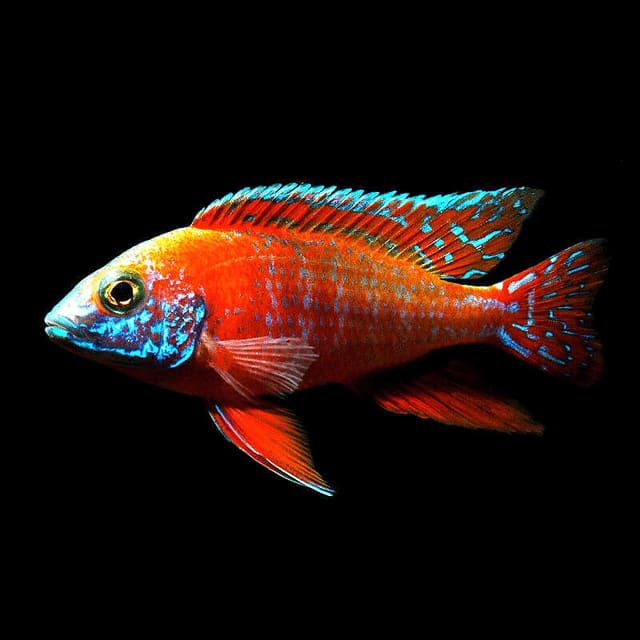
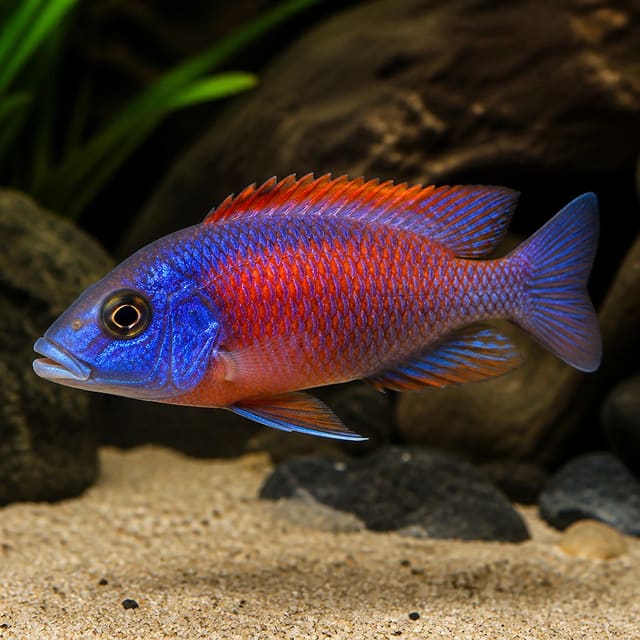
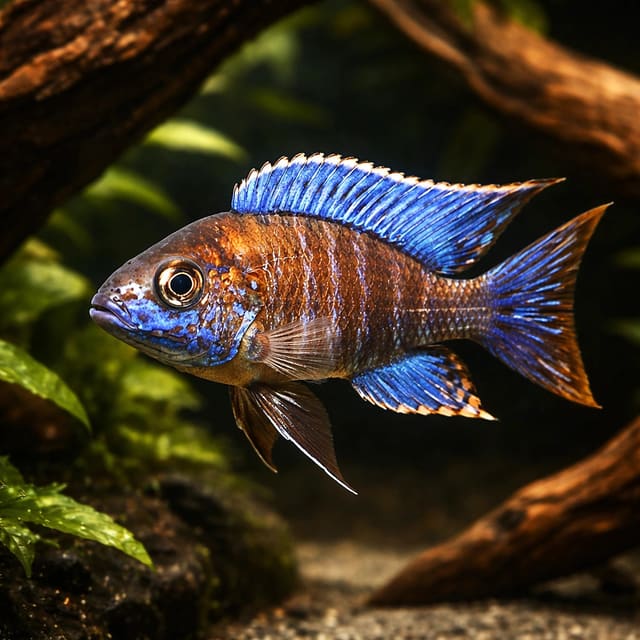
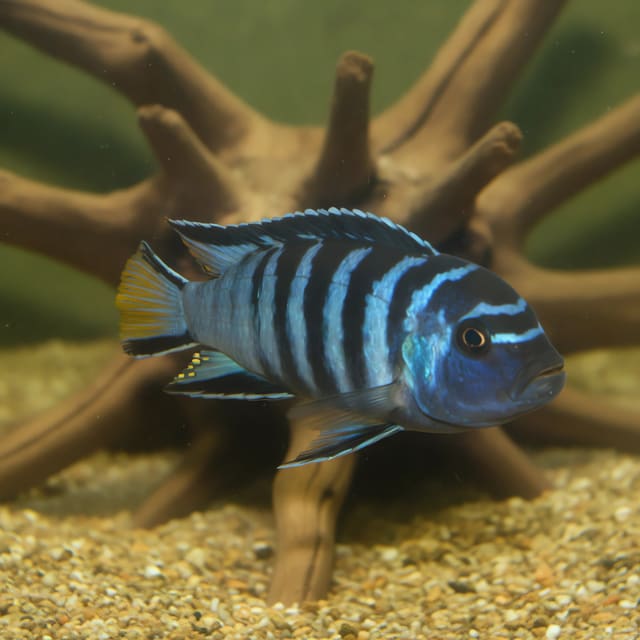
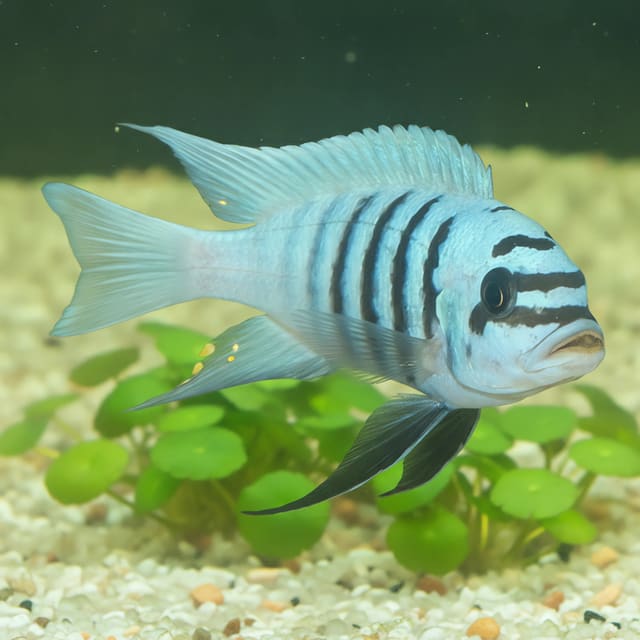
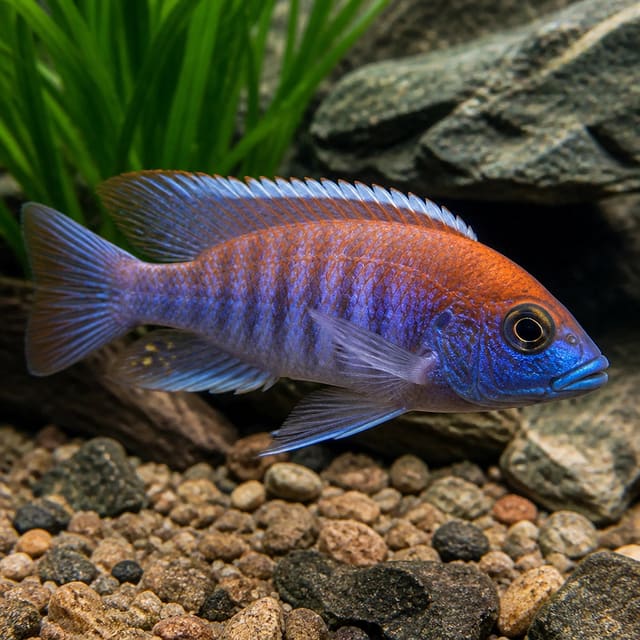
The current gallery contains one representative Acei-like fish with a dark blue/black body and pale caudal and dorsal fin edges. Use it to understand the general body plan, not as a diagnostic photograph of the fish selected for your order.
| View | Useful information | What it cannot promise |
|---|---|---|
| Single-fish side view | General body shape and visible pale fin markings | Exact size, current stock appearance, sex or geographic locality |
Actual juveniles may be less saturated or less clearly marked after transport. Colour develops with age, condition, lighting, diet, hierarchy and background. Assess breathing, balance, feeding and recovery rather than judging health from a colour match during the first few hours.
Tropical Fish Co currently carries separate Acei-labelled products because suppliers distinguish geographic or trade forms. The Yellow-Tail Acei Luwala listing is the appropriate route when the Luwala supplier designation is the buying requirement. The Acei Ngara listing is the closer route for customers specifically seeking the northern Ngara trade line.
This product should not be treated as identical to a dedicated locality line merely because the fish share an Acei name. Its supplier designation is White-Tail, but no verified locality accompanies the current record. Keeping that limitation visible helps prevent accidental cross-breeding and lets buyers compare separately labelled products when provenance matters.
Even a dedicated locality name is only as strong as its source records. Photograph new breeding stock, retain invoices and keep populations in separate aquariums. Do not rely on memory after several years or distribute mixed offspring as wild-locality fish. Where a display group is the only aim, never release or trade uncertain fry under a more desirable name.
Male and female Acei can look similar, particularly as juveniles. Adult males may become larger, show stronger display behaviour and develop more pronounced egg spots or fin extension, but none of those traits is a universal retail guarantee. Venting mature fish can improve confidence when performed by an experienced keeper, yet unnecessary handling creates stress and injury risk.
Colour intensity is also not a simple male-female test. A dominant female can be strongly coloured, while a subordinate male may remain muted. Background, lighting and social pressure can alter visible tone within hours. The safest promise for all five size variants is unsexed stock with variable colour.
Hierarchy should be evaluated from access, not only dramatic fighting. A fish that is always last to feed, remains behind one rock or changes direction whenever a dominant fish approaches may be under chronic pressure even without torn fins. Add visual barriers, spread food and be prepared to separate individuals. Adding more fish to dilute aggression is only ethical when the aquarium has spare adult capacity and filtration.
Quarantine every new cichlid where practical. Use a fully cycled tank with the same warm, hard, alkaline water, secure cover, appropriate shelter and enough room for the purchased size. Observe appetite, faeces, respiration, skin, fins and balance before moving the fish into a valuable group. A quarantine system that produces ammonia or large pH swings can cause more harm than it prevents.
Do not combine fish from several deliveries in one quarantine batch unless you intend to restart the observation period after each addition. Use separate nets, siphons and towels. Wash and dry equipment between systems. Never pour shop or shipping water into the display.
White spot, external parasites, bacterial lesions and internal problems require different responses. A broad medication cocktail is not a substitute for diagnosis. Confirm dose against actual water volume after decor displacement, maintain oxygen and understand whether the treatment affects the filter. Seek aquatic-veterinary help for severe breathing distress, major wounds, uncontrolled swelling or repeated losses.
Acei are a long-term commitment even though this page does not promise a fixed lifespan. Well-kept Malawi cichlids can live for many years. The aquarium must remain suitable after the original group matures, breeds and changes hierarchy. Plan for equipment replacement, holiday care and the possibility that offspring or surplus males require separate homes.
Older fish may become less competitive at feeding or develop chronic conditions. Offer food in several areas and watch body condition individually. Do not assume weight loss is simply age. Check teeth and mouth injury after territorial disputes, review water trends and obtain qualified advice where decline persists.
Responsible ownership includes energy and water use, but it must not compromise welfare. Efficient pumps, insulated lids and scheduled lighting can reduce waste. Water removed during maintenance can be reused for suitable garden plants only when it contains no salt or medication and local biosecurity is respected. Never release fish, fry, plants or aquarium water into natural waterways.
This guide distinguishes the common Pseudotropheus acei trade wording from the qualified Pseudotropheus sp. "acei" identity. Choose this fish for a suitable hard-water mbuna setup, with a group plan, adult space and a separation option ready.
Check the current delivery areas, dispatch options, live-arrival terms and acclimation instructions before ordering. Prepare a mature aquarium for the selected size and adult group rather than relying on a promotion to decide your stocking.
Browse the Lake Malawi and Victoria cichlid collection for locality-specific Acei and compatible alternatives. Do not choose from colour alone; compare adult size, diet, group needs and aggression.
It is common trade wording, but the aquarium fish remains represented as Pseudotropheus sp. "acei" because it is not formally described under the name Pseudotropheus acei.
The supplier designation is White-Tail Acei and the current representative image has pale fins. No verified locality accompanies this product. The image does not guarantee the appearance or sex of an ordered fish; compare the dedicated locality listings when a particular line is essential.
Plan for approximately 12-15cm total length. Exact size varies by geographic form, sex, diet and aquarium conditions.
We recommend at least 300 litres and around 120cm length for a planned group. Use 400 litres or more for a complex mixed-mbuna community.
A group of at least five or six is a sensible starting point where the aquarium can house every fish as an adult. A single fish or cramped pair can experience concentrated stress.
They are often relatively mild for mbuna, but they remain semi-aggressive territorial cichlids. They are not peaceful community fish and still require hierarchy monitoring.
Use a spirulina or algae-rich complete cichlid food as the staple, with plant-supported variety and modest occasional animal protein. Avoid routine heavy bloodworm, feeder fish or fatty meat.
They can be considered for a large, structured Malawi aquarium where adult size, diet and behaviour are compatible. No pairing is guaranteed; monitor the actual fish.
That mix needs caution because mbuna and peacocks can differ in diet and aggression. It is not a default recommendation and requires a large aquarium and close observation.
External differences are unreliable in young fish and colour alone does not guarantee sex. This listing sells by size, not by sex.
They are maternal mouthbrooders. The female carries developing young in her mouth and needs protection from excessive stress and a suitable recovery plan.
Read the current Tropical Fish Co live-arrival terms before ordering, including delivery, evidence and acclimation requirements. Eligibility and reporting windows are determined by the published terms, not by this species guide.
Care values are conservative retail guidance for an unresolved trade stock. They do not claim that every geographic population has identical biology. Preserve locality forms separately and use the fish's actual condition, water tests and behaviour to guide husbandry.
No reviews for this item yet. Bought one? Honest reviews only, good or bad.
What customers say about ordering from us
Easy website plenty of info on fish your buying great to pick a time slot
TRACEY DURRANT · 7 Oct 2026
Got some lovely fish thank you
Kevin Mackie · 7 Oct 2026
Reviews of our shop, collected by Judge.me, an independent third-party review collector. Newest first.