Moderate
Acei Cichlid (Pseudotropheus sp. “acei”)
24–26°C · pH 7.5–8.5 · 300L
£7.99

Yellow Lab Cichlid is a comparatively manageable Lake Malawi mbuna for a mature, hard-water aquarium with rock caves, deliberate stocking and a vegetable-rich diet. One purchase supplies one fish in the selected size option.
Adult size is the maximum length this species reaches at full maturity (scientific sources). The livestock you receive will be younger and smaller — pick a size above for the actual shipping size. Product-photo provenance and any image-specific limitations are stated on the listing.
Labidochromis caeruleus
Shoaling fish: kept in a group they feel safer, stay calmer and show their best colour.
Yellow Lab Cichlid is a comparatively manageable Lake Malawi mbuna for a mature, hard-water aquarium with rock caves, deliberate stocking and a vegetable-rich diet. One purchase supplies one fish in the selected size option.
Adult size is the maximum length this species reaches at full maturity (scientific sources). The livestock you receive will be younger and smaller — pick a size above for the actual shipping size. Product-photo provenance and any image-specific limitations are stated on the listing.
Cichlids are a family of roughly 1,800 accepted species, not one care type. Before buying, identify the exact species and source, then compare adult measurement, usable tank dimensions, social system, territory, tested water, diet and an exit plan. No family-wide minimum tank, water range or tank-mate list is safe.
Maintain these water conditions for optimal health and vibrant colors
Yellow Lab Cichlid (Labidochromis caeruleus) is a bright Lake Malawi mbuna for an aquarist prepared to provide hard, alkaline water, rock caves and carefully chosen companions. It is comparatively manageable among mbuna, but territorial behaviour still makes deliberate aquarium planning essential. This fish suits a mature Malawi aquarium or a selected hard-water community rather than a general soft-water community.
The dispatch size is the size supplied, rather than the fish’s eventual adult size. A larger option gives you a larger fish on arrival, but every option needs an aquarium planned around the same adult space, water and territorial requirements. Check the live selector for the size choices available when you order rather than relying on a static availability statement.
Sex is guaranteed only when the selected option explicitly states male or female. This Yellow Lab Cichlid listing has no sex-guaranteed option.
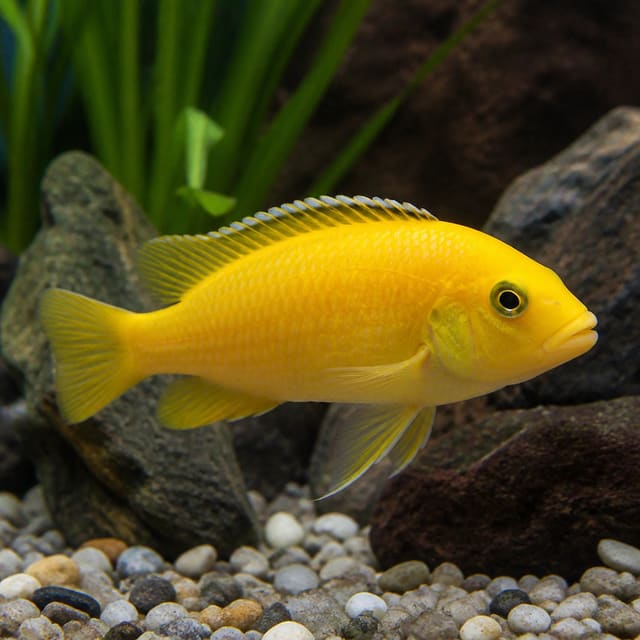
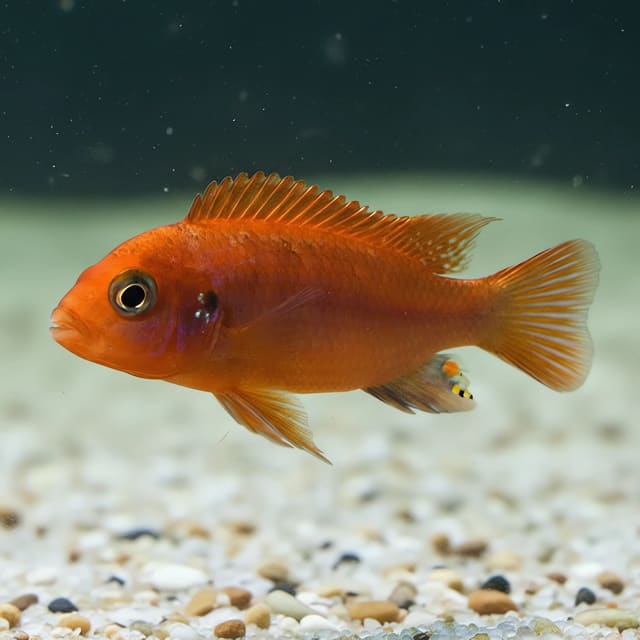
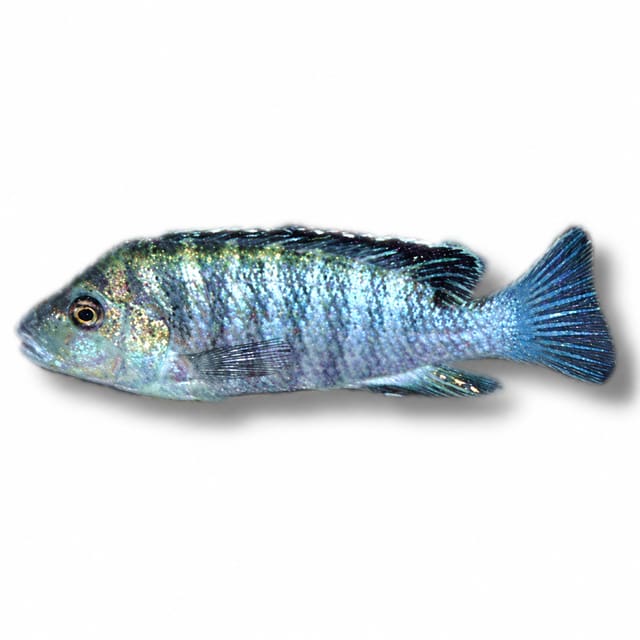
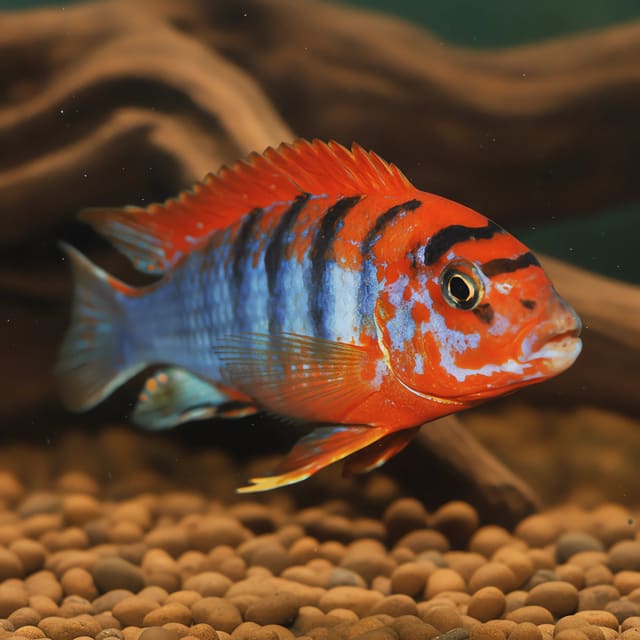
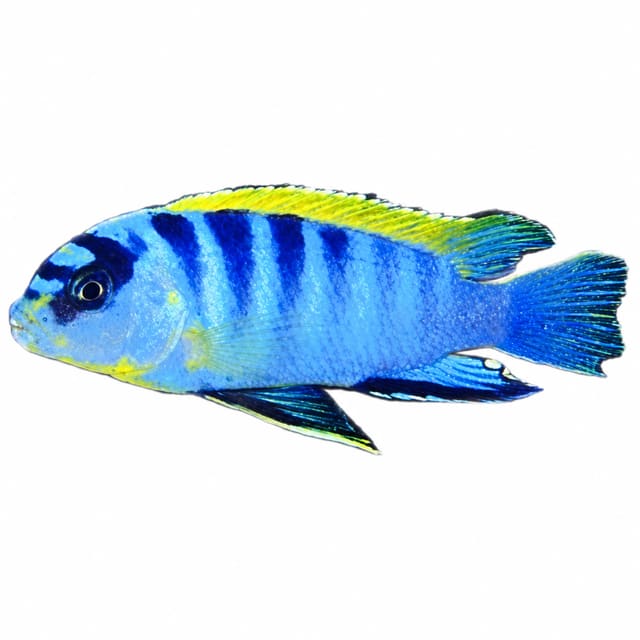
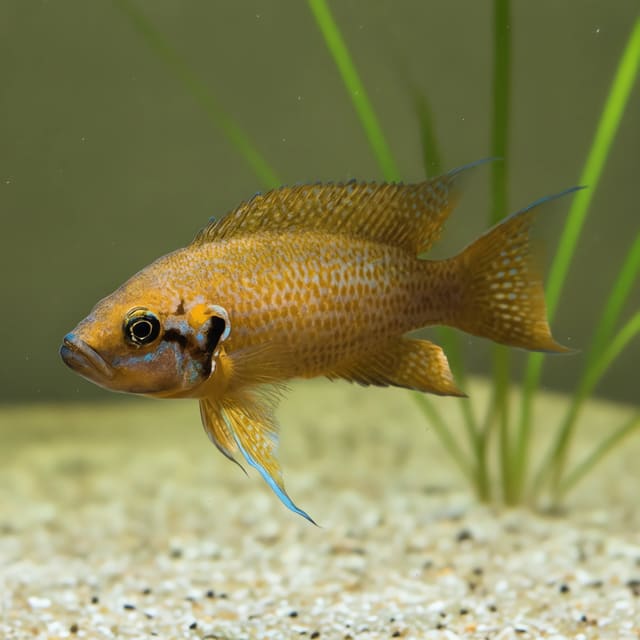
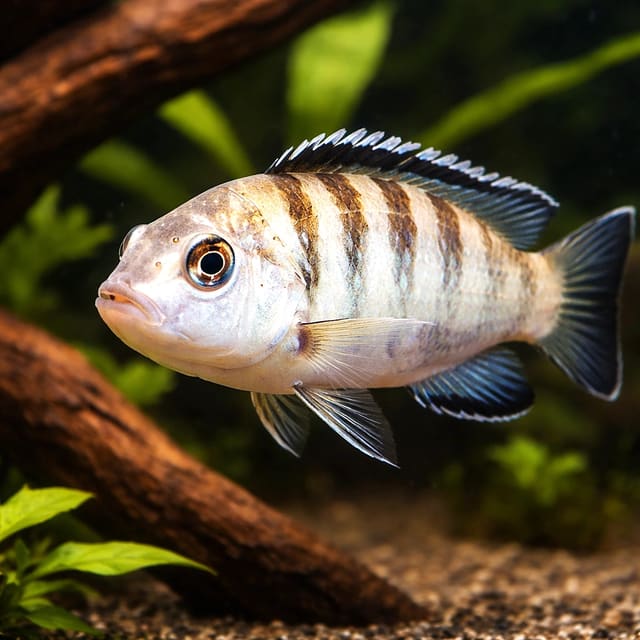
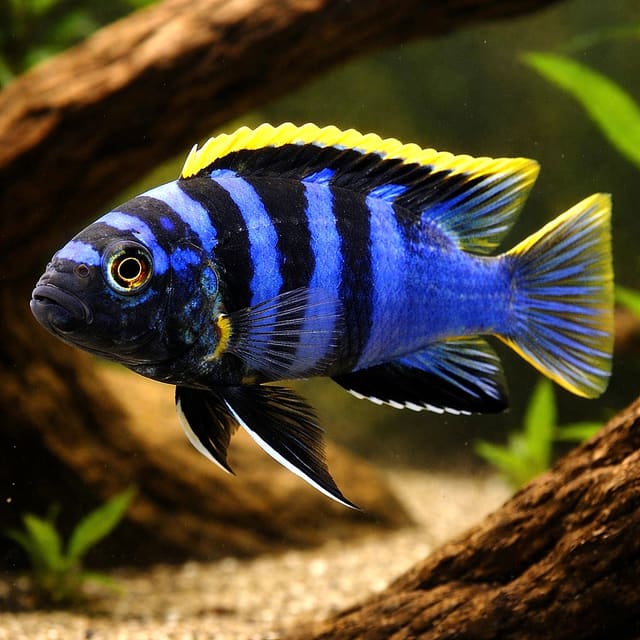
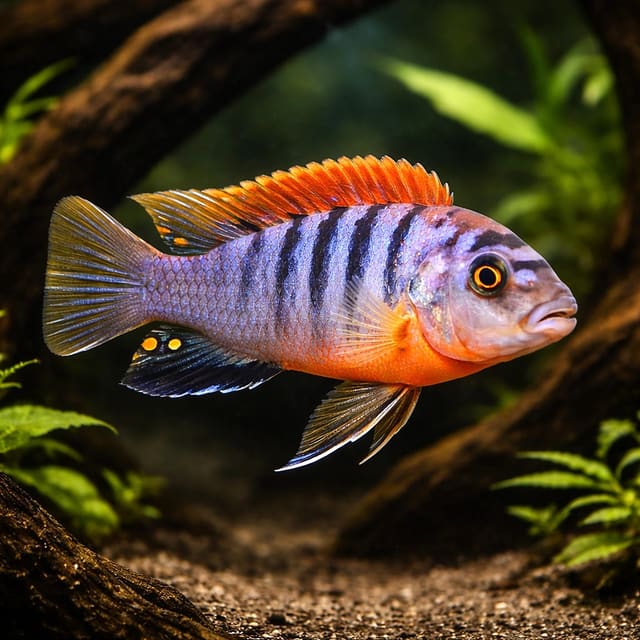
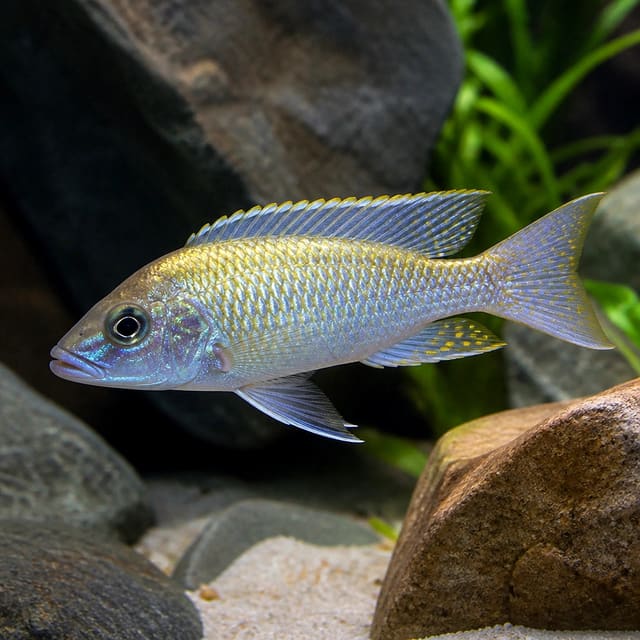
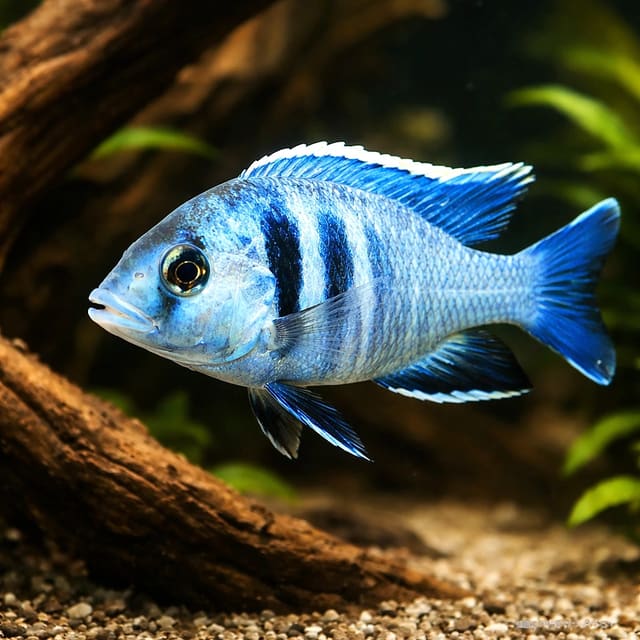
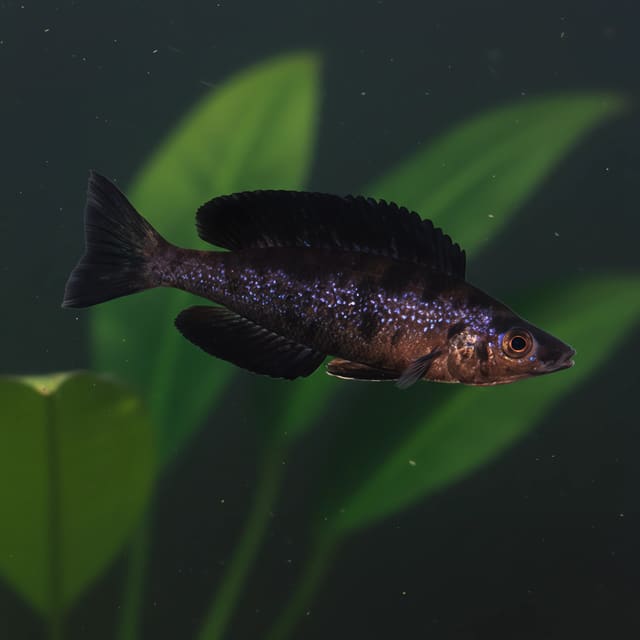
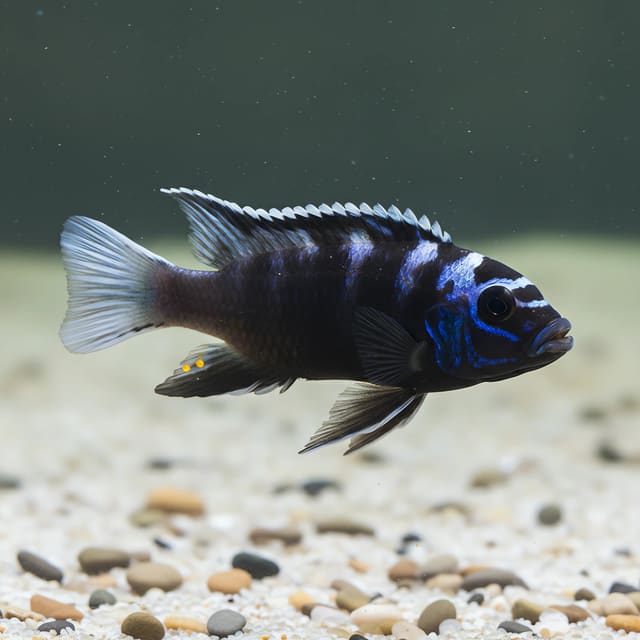
The gallery images are representative, based on reference photographs of this species, so colours can look slightly different from the live animal. Use the illustrations to recognise the familiar yellow form and dark fin markings, while allowing for natural variation between individual fish.
Choose this mbuna when you can maintain its alkaline water, give it defensible caves without blocking all swimming room and screen every companion for compatible size, temperament and water needs. Choose another aquarium plan if the existing fish require soft or acidic water, because compromising between incompatible water requirements gives neither group a suitable long-term environment.
FishBase’s species account identifies the fish in the cichlid family Cichlidae. The listed identity is Yellow Lab Cichlid, Labidochromis caeruleus; FishBase also lists Blue streak hap as a common name. It describes a tropical freshwater, benthopelagic species associated with the lower part of the water column, endemic to Lake Malawi and known from the lake’s northwestern coast. Its maximum recorded length is 8.1 cm standard length for male or unsexed fish, its recorded wild-environment temperature is 23–26°C, and its IUCN Red List status is Least Concern. Seriously Fish’s profile gives an adult planning length of about 100 mm standard length, or 10 cm; allow a base of at least 90 × 45 cm, with the referenced 90 × 45 × 38 cm aquarium holding about 154 litres. For aquarium care, aim for 24–28°C, pH 7.7–8.6 and hardness of 10–25°dGH. This bright Lake Malawi mbuna has a relatively manageable temperament, but it still needs hard, alkaline water and carefully chosen companions rather than an ordinary soft-water community.
Several natural colour forms occur, so the familiar yellow aquarium form does not represent every wild population. The popular electric-yellow form is comparatively rare in nature, while blue-and-white forms are more widespread. Most Yellow Labs offered in the aquarium trade are tank-bred, while wild specimens are comparatively uncommon in the hobby. The species was originally imported under the name Labidochromis tanganyicae, a historical name that may still appear in older aquarium literature. (seriouslyfish.com).
Use the 10 cm husbandry figure and the full aquarium footprint when planning permanent space. The recorded FishBase maximum and the aquarium-planning length come from sources with different purposes, so the larger husbandry reference provides useful room for body size, movement and territorial spacing. The 90 cm base length matters alongside volume because rock piles and caves occupy floor area.
Match your actual test results against the care range with our aquarium water comparison tool. Compare temperature, pH and hardness together; one matching value does not compensate for unsuitable readings elsewhere.
The species husbandry profile advises you to build substantial rock piles into caves, leave small open-water areas between them and use a sandy substrate. At the referenced aquarium size, aim for four to five aquarium turnovers per hour; this equates to a filter rated about 615–770 lph. For the same footprint, roughly 175–250 W of heating is estimated when the room is around 20°C.
Arrange caves at more than one point rather than creating a single dominant shelter. Separate openings let fish move between cover and open water while reducing the value of any one entrance as a territory. Check that every rock rests securely before adding fish, because digging cichlids can shift loose substrate from beneath décor. Leave enough visible sand and water between structures for normal movement and for you to inspect each fish.
Use the turnover figure as a starting point for the referenced 154-litre setup. Actual flow depends on the filter, media, pipework and the resistance created as debris accumulates, so select equipment that can maintain dependable circulation through normal service intervals. Position outlets so water reaches the spaces around the rockwork without creating a single harsh route that the fish must constantly fight.
The heating estimate assumes a room near 20°C. A warmer or cooler room changes heat loss, while aquarium shape and placement also affect the equipment required. Use a thermostat-controlled heater arrangement capable of holding the selected temperature steadily throughout the aquarium. Confirm the result with an aquarium thermometer instead of treating the wattage estimate as a substitute for measurement.
A visually impressive rock pile is only useful when it remains stable, leaves enough water volume and allows routine maintenance. Plan the hardscape before choosing the final stocking pattern, because territorial boundaries depend on the available footprint as much as the nominal litre capacity.
Maintain 24–28°C, pH 7.7–8.6 and 10–25°dGH for the aquarium. Measure your source water before buying the fish, then decide how you will keep the readings stable through water changes. A naturally hard, alkaline supply can simplify maintenance, while substantially different tap water requires a repeatable preparation method rather than occasional correction after readings drift.
OATA’s Malawi-group care sheet gives broad guidance: 23–27°C, pH 8.0–8.6, ammonia and nitrite at 0 mg/l, nitrate no more than 20 mg/l above tap levels, general hardness of 12–18°dH and carbonate hardness of 10–15°dKH. These values are broad group-level guidance, not a species-specific optimum. Coral sand or a similar buffering substrate can help support the hard, alkaline conditions used for a Malawi aquarium. Expect Malawi cichlids to dig and rearrange the substrate, which can uproot plants and alter carefully placed décor.
Use sand where the fish can dig without meeting sharp material. If you use a buffering substrate, test the aquarium rather than assuming the substrate will create or permanently hold a particular value. Its effect depends on the starting water, the quantity used and ongoing maintenance.
Choose plants only with the expectation that digging may expose roots or move them. Tough plants attached securely to décor may be easier to retain than delicate rooted planting, but the central design remains rock caves, sand and open gaps. Do not let planting reduce the cave network or make accumulated waste inaccessible.
RSPCA aquarium-welfare guidance calls for a properly established and maintained filter; fish should not be kept in an aquarium without working filtration. A biological filter supports bacteria that process toxic ammonia into toxic nitrite and then into the safer end product, nitrate. Before adding this fish, confirm that the aquarium is mature, appropriately sized and producing suitable water-test results. OATA’s Malawi guidance recommends at least 200 litres for a reasonably sized Malawi cichlid community, with larger aquariums offering more stable conditions. Increase the population gradually so beneficial bacteria can adjust as waste and feeding rise; adding too many fish too quickly can overwhelm nitrifying bacteria, allow toxic compounds to rise and cause new tank syndrome. At least once a week, test the water and make a 25% partial water change. Use a siphon to remove accumulated solid waste, condition replacement tap water to remove chlorine or chloramine, and check the filter for blockages. Never rinse established filter media under the tap; rinse it lightly in aquarium water removed during a partial change.
If this is your first livestock aquarium, follow our guide to preparing and maturing the aquarium before arrival. Use the separate water-chemistry guide to understand which readings to test and why they matter.
Test more promptly whenever behaviour, breathing or appetite changes. A scheduled weekly check sets the minimum routine; it should never delay investigation of a sudden problem. If ammonia or nitrite appears, examine recent stocking, feeding, filter flow and maintenance together because each affects the waste load or the filter’s ability to process it.
A deliberately crowded Malawi community places a larger burden on filtration than a lightly stocked aquarium. Match any aggression-management stocking plan with the space, filter capacity, aeration and testing frequency it requires. Overstocking without that supporting system exchanges one welfare problem for another.
Yellow Labs accept a wide variety of aquarium foods, making dietary quality and balance more important than simple willingness to eat. Make vegetable matter a large part of every Yellow Lab diet by using spirulina flakes, blanched spinach, quality dried food and an algae-based food, with live or frozen foods as supplements. OATA’s Malawi feeding guidance advises offering only what the fish can finish within a few minutes, twice a day. Avoid overfeeding because uneaten food decomposes and adds toxic waste to the aquarium.
Choose a quality dried product that gives you a consistent staple, then rotate a suitable algae-based food through the routine. Spirulina flakes make the vegetable component easy to portion, while blanched spinach can add variety. Remove any vegetable that remains after feeding rather than allowing it to deteriorate among the rocks.
Live and frozen foods broaden the diet, but they do not replace the vegetable-rich foundation. Offer modest amounts that the fish can take cleanly. A fish eagerly accepting a rich food does not make that food an appropriate staple, so judge the routine by nutritional balance and aquarium cleanliness rather than appetite alone.
When several fish share the aquarium, distribute food where each can reach it without forcing every individual into one contested point. Watch the whole group during the short feeding period. A dominant fish taking most of the food while another remains behind the rockwork requires a change in distribution, companion management or layout rather than simply adding a larger total portion.
Check body condition over time rather than reacting to a single enthusiastic meal. A stable appetite and condition support the current routine; falling condition, refusal to feed or a fish repeatedly excluded from food calls for a prompt water check and closer assessment of social pressure.
OATA’s fish-health checklist describes a healthy fish as having clear bright eyes, intact scales, undamaged fins, no ulcers or bumps and appropriate swimming behaviour. Investigate hanging at the surface, sitting unusually on the bottom or erratic swimming, especially when these differ from the fish’s normal behaviour. A marked change to a darker or paler colour can signal stress or a developing health problem. Watch for an unexpected rise or fall in aggression, or a fish hiding much more than usual. Gill covers moving noticeably faster or slower than normal warrant an immediate water-quality check. White spots, fluffy growths, or newly missing fins or scales are visible warning signs that should not be ignored. Monitor body condition and appetite; unexplained weight change, reduced feeding or complete loss of interest in food can indicate trouble. When behaviour, breathing, colour or appetite changes, test the aquarium water promptly before assuming the cause.
Start with a water test because ammonia, nitrite, temperature or pH problems can affect several fish and demand immediate correction of the environment. Also inspect filter flow and aeration when breathing changes. A normal test result does not make a visible lesion or persistent behavioural change irrelevant; it narrows the first environmental checks while you continue observing the affected fish.
Territorial behaviour requires context. A brief chase away from a cave differs from repeated pursuit that prevents another fish from feeding or settling. Record where aggression occurs and which fish is involved, then use that information when reassessing territories and stocking. Prompt action is especially important when fin damage, hiding and reduced feeding occur together.
Choose companions only when their adult size, temperament, water requirements and use of space fit the complete aquarium plan. The species profile treats this as a relatively peaceful mbuna for carefully selected hard-water communities, although it may become territorial while spawning. OATA’s group guidance advises at least 15 fish for a deliberately managed Malawi community because small groups commonly concentrate fighting. A settled group may become more territorial during spawning, so monitor boundaries and weaker fish closely. Where the sexes of mature fish are reliably known, keep several females for each male to spread persistent courtship attention. Many Malawi cichlids show clearer sex differences only as adults, while younger fish may look alike. Do not mix different colour forms or other Labidochromis species if avoiding hybrids matters, because they may interbreed in aquaria.
A Lake Malawi biotope with peaceful haplochromine cichlids is the preferred community setting. Suitable hard-water rainbowfish and some cyprinids can also work when their water needs, size and temperament align. Other mbuna can be considered, but the aquarium must be planned around territorial behaviour and aggression control. A crowded community needs an oversized filter and strong aeration so the waste load and dissolved-oxygen demand remain manageable. Slight overstocking may spread aggression only when matched by sufficient space, oversized filtration, strong aeration and close water monitoring.
Add compatible Malawi cichlids in groups rather than introducing a lone newcomer that may receive concentrated aggression. Introduce more peaceful species before more aggressive ones. If established territories cause persistent aggression, rearrange stable rocks so the fish must establish new boundaries.
This is an approachable beginner mbuna, but it still belongs in a mature Malawi setup. Before ordering, read the current delivery and Live Arrival Guarantee policy; it currently lists Wednesday dispatch for Thursday delivery, and the current page should guide your receipt planning.
One purchase supplies one animal, but that retail unit does not establish that keeping a single Yellow Lab alone is the preferred social plan. Decide between a carefully selected hard-water community and a deliberately managed Malawi group before buying. If choosing a substantial Malawi community, meet the space, filtration, aeration and monitoring conditions together rather than copying the fish count in isolation.
If aggression develops around established caves, change the territorial map by rearranging stable rocks, then watch whether displaced fish regain access to food and shelter. Rearrangement is a response to territory pressure, not a substitute for adequate space or compatible stocking.
You can browse the African cichlid collection to compare identities and aquarium needs. Treat collection membership as a browsing aid rather than proof that two animals belong together.
The species breeding profile reports that adult males tend to be somewhat larger and may become brighter while spawning, but these tendencies do not identify the sex of the animal offered. Extra black pigmentation in the fins is an inconclusive sexing method and should not be treated as proof. Use only an explicitly sex-labelled offer when a guaranteed male or female is essential to your stocking plan. For planned spawning, keep one male with at least three females to spread persistent courtship pressure. Yellow Labs are maternal mouthbrooders: after spawning, the female carries the eggs in her mouth. Planned spawning is described in a dedicated species aquarium rather than an ordinary mixed community, with a 48-inch aquarium recommended for deliberate breeding. Flat stones and areas of open sand provide spawning-site choices. During courtship, the male cleans a chosen site, displays intense colour and may pursue females vigorously. After laying eggs at the spawning site, the female picks them up into her mouth.
Colour intensity can change with condition and spawning behaviour, while fin pigmentation overlaps between individuals. The black-edged dorsal fin shown in the familiar yellow form is therefore useful for recognising appearance, not for assigning sex to a fish in the selector or gallery.
The harem recommendation depends on reliably known mature sexes. Do not buy several fish on the assumption that size, brightness or black markings will produce the intended ratio. If the group later proves to contain persistent male pressure, reassess the social structure, available refuges and whether the aquarium can support the intended breeding arrangement.
Mouthbrooding behaviour can alter feeding, social position and use of shelter. Observe the female without assuming that every refusal of food is breeding-related; test the water and assess the fish’s condition whenever appetite changes. A known breeding context helps interpretation, but it does not replace the routine health checks applied to every fish.
It is Labidochromis caeruleus, a freshwater mbuna cichlid endemic to Lake Malawi. The familiar aquarium form is bright yellow, although other colour forms occur naturally.
One purchase quantity supplies one fish in the selected option. Increase the purchase quantity only when your complete stocking plan has enough space, filtration and suitable companions.
The selector has six recurring dispatch-size options spanning 2–9 cm. Check the live selector when ordering, and plan every option around an adult husbandry reference of about 10 cm.
Provide a mature, filtered aquarium with a base of at least 90 × 45 cm, substantial rock caves, small open-water areas and sand. A larger Malawi community needs more space and filtration.
One animal is the retail unit, not a solitary-care recommendation. It can live in a carefully selected hard-water community or a deliberately managed Malawi group; group stocking must account for aggression, space, filtration and aeration.
Aim for 24–28°C, pH 7.7–8.6 and hardness of 10–25°dGH. Keep ammonia and nitrite at zero and monitor nitrate through regular testing and partial water changes.
Make spirulina, algae-based foods and other vegetable matter a large part of the diet. Add quality dried food and modest live or frozen supplements, offering only what can be finished within a few minutes twice daily.
Before acclimation, confirm that the aquarium is mature, correctly sized, filtered and producing suitable temperature, pH, hardness, ammonia and nitrite readings. Arrange stable caves and complete the stocking plan before arrival.
Screen every candidate for compatible hard-water needs, adult size and temperament. Peaceful haplochromine cichlids are a preferred Malawi option; some hard-water rainbowfish, cyprinids and other mbuna may work when the full aquarium plan aligns.
The care guidance above uses sources according to their subject and scope:
Species-level aquarium values guide the Yellow Lab setup. OATA’s Malawi figures remain broad group-level guidance rather than a species-specific optimum, while general filtration guidance applies across aquarium fish.
No reviews for this item yet. Bought one? Honest reviews only, good or bad.
What customers say about ordering from us
I have a small group of long finned mountain minnows. So was delighted to be able to order ten of this variety to increase the genetics in my tank . The ones I recieved are healthy but it’s to early to give a verdict on wether they are of a long finned type since they are small currently.
Gordon Walker · 23 Sept 2026
100% success travel and "installation". Pleased with quality of purchase. The Siamese fighter a bit "shy" so have not yet seen him at his best yet but looking good. Happy customer. GG
George E Garratt · 21 Sept 2026
Reviews of our shop, collected by Judge.me, an independent third-party review collector. Newest first.