−15%
Moderate
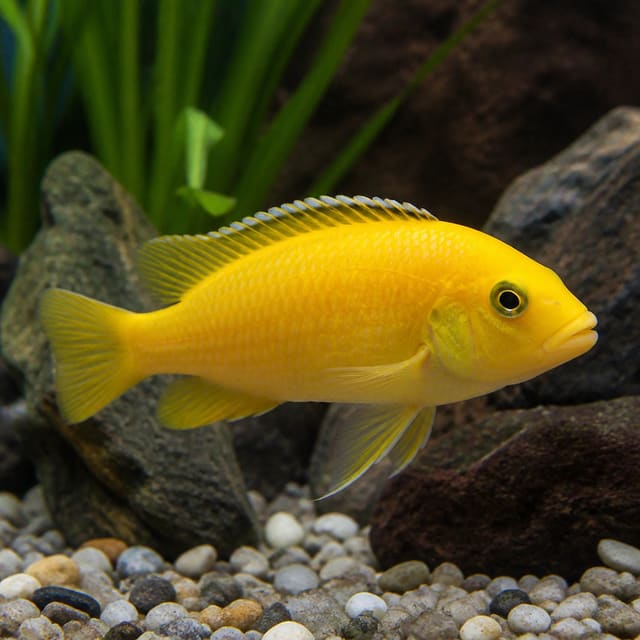
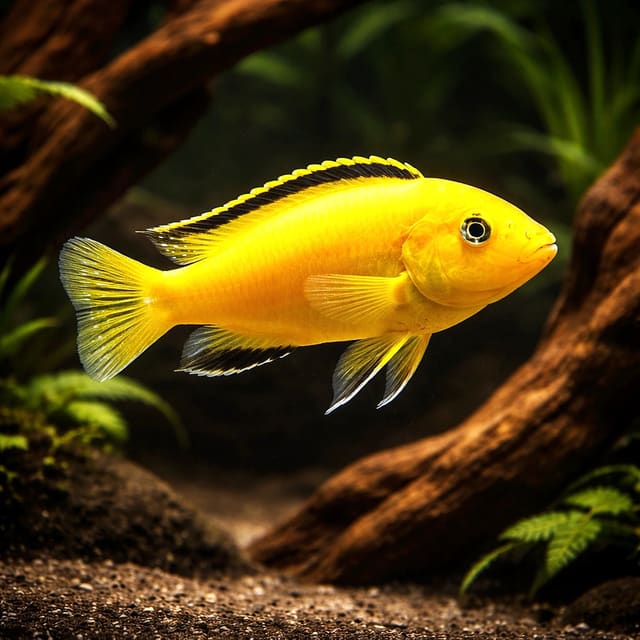
Yellow Lab Cichlid (Labidochromis caeruleus)
24–28°C · pH 7.7–8.6 · 154L
£8.39£10.99

Add bold colour and character with Sunflower Lamprologus, a striking cichlid for established freshwater setups. Order today with fast UK delivery.
Adult size is the maximum length this species reaches at full maturity (scientific sources). The livestock you receive will be younger and smaller — pick a size above for the actual shipping size. Product-photo provenance and any image-specific limitations are stated on the listing.
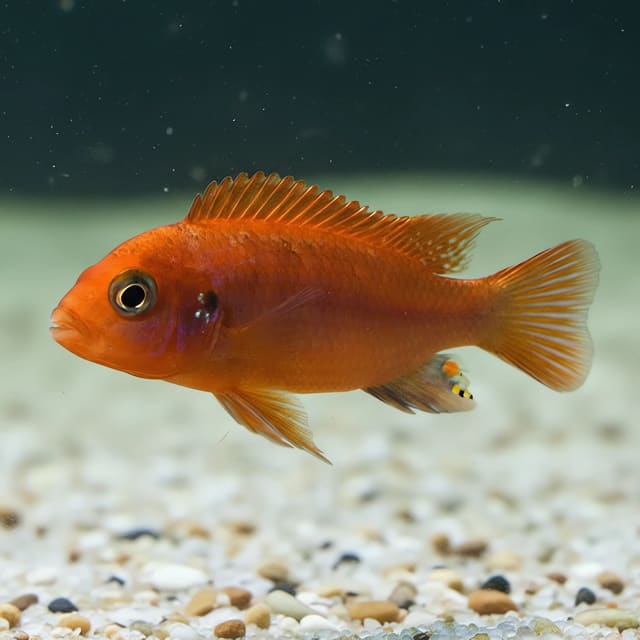
Labidochromis sp. "Sunflower Red"
Save when buying multiple fish. Each quantity is one fish; sex and pair formation are not guaranteed unless the selected variant explicitly states them.
Add bold colour and character with Sunflower Lamprologus, a striking cichlid for established freshwater setups. Order today with fast UK delivery.
Adult size is the maximum length this species reaches at full maturity (scientific sources). The livestock you receive will be younger and smaller — pick a size above for the actual shipping size. Product-photo provenance and any image-specific limitations are stated on the listing.
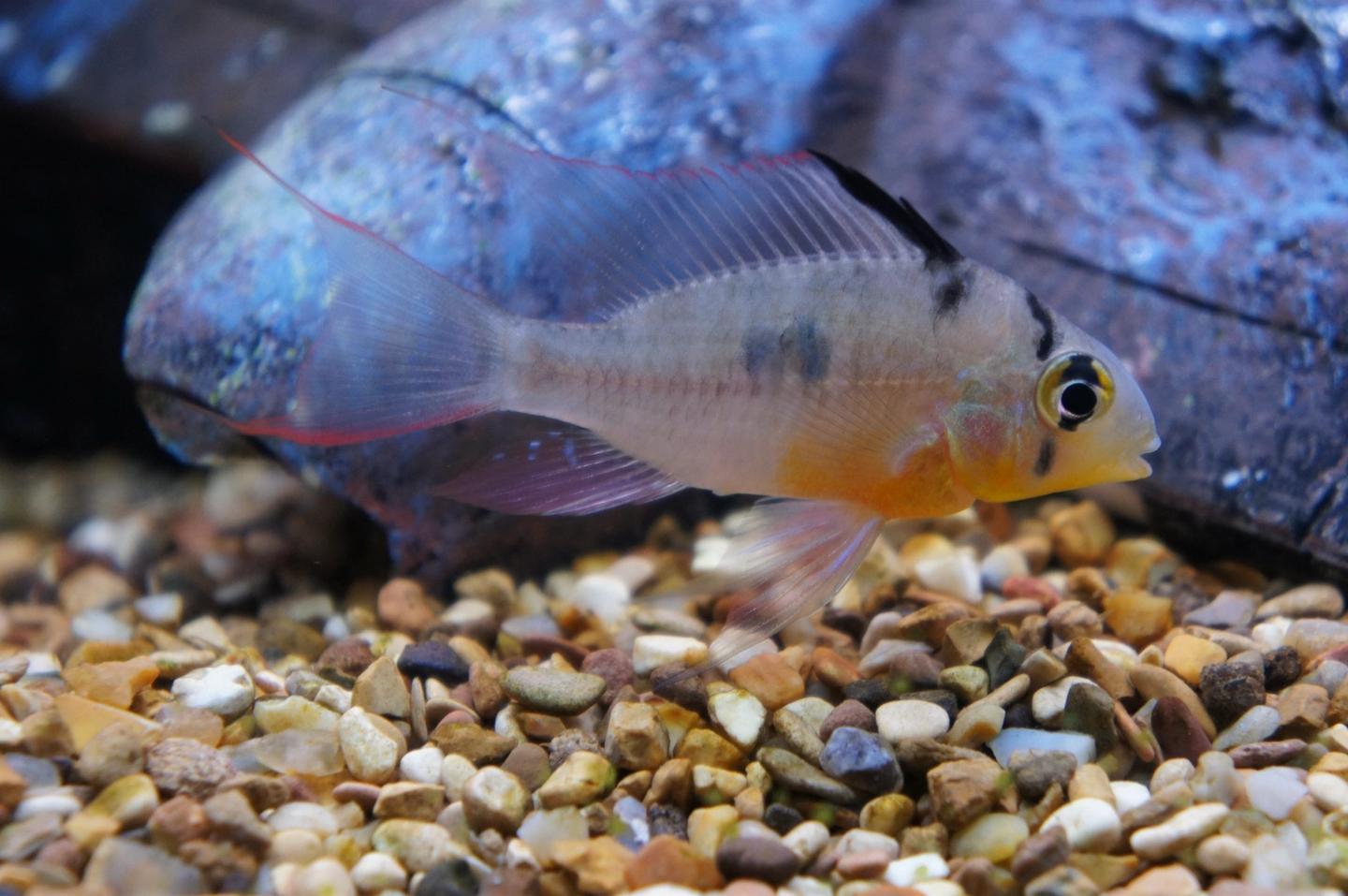
Cichlids are a family of roughly 1,800 accepted species, not one care type. Before buying, identify the exact species and source, then compare adult measurement, usable tank dimensions, social system, territory, tested water, diet and an exit plan. No family-wide minimum tank, water range or tank-mate list is safe.
Maintain these water conditions for optimal health and vibrant colors
The Labidochromis Sunflower Red is a vivid, character-rich African cichlid that stands out the moment it claims a stretch of rockwork. Sold under the Labidochromis “sunflower red” trade name, it carries warm yellow-gold colour, classic cichlid intelligence, and a compact, manageable adult size. It is a hard-water, alkaline-loving Rift Lake species that stays close to the substrate and rock structure rather than open water. For aquarists who want a colourful, behaviour-rich African cichlid for sale UK that is more unusual than standard community species, this is a rewarding choice: not difficult to keep, but interesting enough to hold the attention of experienced cichlid keepers. It is one of the more distinctive aquarium fish UK hobbyists remember long after seeing it.
Because it prefers alkaline, mineral-rich water and a rocky aquascape, it is very different from soft-water Amazonian community fish, and that is exactly why it stands out in the freshwater fish UK market. If you are comparing cichlid fish for sale and weighing up a colourful Rift Lake species for a hard-water display, the Sunflower Red deserves a close look. For aquarists who want colour, personality, and authentic rock-dwelling cichlid behaviour in one fish, it is an excellent pick.
This fish belongs to the African Rift Lake cichlids, a group prized in the aquarium hobby for vivid colour, strong territorial behaviour, and classic cichlid intelligence. Like its relatives, it thrives in hard, alkaline water over a rocky aquascape and rewards aquarists who enjoy watching behaviour as much as colour.
African Rift Lake cichlids of this type come from clear, hard, alkaline waters dominated by rock. In the wild, fish like this are usually found around rocky shorelines where crevices, broken stones, and layered rock faces provide shelter and breeding sites. Rather than ranging across open water, they stay close to the bottom and rarely stray far from hard structure. That natural preference tells you exactly how to build the right fish tank ecosystem at home: stone first, open swimming lanes second.
Rift Lake water is famous for being exceptionally clear, hard, and alkaline, with stable chemistry year-round. This is not a habitat for soft-water, plants-and-driftwood community fish, which is why these cichlids appreciate consistency in the aquarium. Strong light, territorial displays, and species recognition all help drive the vivid colour development that makes them so popular.
Because it comes from a bright, rocky environment, the best aquascapes use stacked stone, caves, and open areas of sand or fine gravel between territories. A few hardy plants can be added, but the emphasis should always be on secure rockwork. The fish is alert, interactive, and constantly aware of its territory, which makes it excellent to observe in a well-designed display.
Mimicking the natural rocky habitat improves confidence, colour, and breeding success. When the Sunflower Red can claim caves and stone boundaries, it shows more natural behaviour and less random stress.
To help this species thrive, start with the right footprint rather than water volume alone. The recommended minimum tank size is 120 litres, but a larger tank is better if you plan to keep a pair alongside other Rift Lake species. A 90 cm (roughly 36 inch) aquarium is a very practical starting point for a pair, because a wider base lets these bottom-oriented cichlids establish territories without constant conflict. For a mixed setup, 150 litres or more is ideal.
A single pair can live in 120 litres when the layout is carefully structured with multiple rock piles and visual barriers. For a small group, move upward in size to reduce aggression. This is not a fish for tiny desktop tanks; it needs a stable, properly filtered setup. A larger water volume means steadier chemistry and far fewer sudden losses after stress or poor maintenance.
Correct water chemistry is essential. Aim for a tank temperature of 24-27°C, a pH of 7.8-9.0, and hardness of 10-20 dGH. This is a narrower window than many general community fish, so keep the fish in the mid-20s with minimal daily fluctuation. Stable, alkaline conditions matter more than chasing an exact number.
Strong biological filtration is important, because cichlids are messier than tiny shoaling fish. Choose a reliable external canister or a high-capacity internal filter with plenty of media volume. Moderate flow works best: enough to keep oxygen high and waste moving, but not so much that the fish are blasted away from their rocky shelters. Clean filter media gently in old tank water, never under chlorinated tap water, so you preserve the beneficial bacteria that keep ammonia and nitrite at zero.
As a tropical species, it needs stable warmth. In most UK homes, room temperature drops too far overnight and through winter, so a fully thermostatic heater sized to your aquarium volume is essential. A quality guard-protected heater installed near water movement is safe and effective; just follow the manufacturer's instructions and avoid exposing a hot heater to air during water changes.
Use sand or fine gravel with piles of secure rock. The fish spend most of their time near the bottom, so unstable decor is dangerous; build caves and line-of-sight breaks, placing heavy rock on the glass before adding substrate. Hardy plants such as Anubias or Java fern can be attached to rock, but this is not a lush planted-aquarium species. A rocky setup with open swimming lanes suits it best.
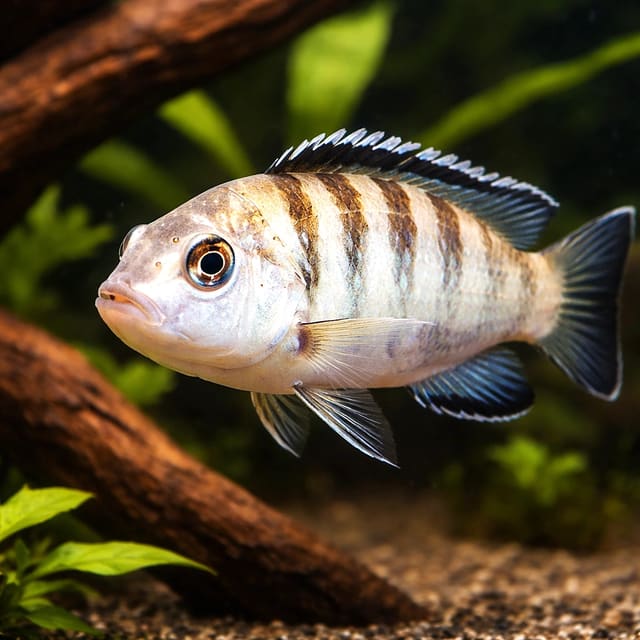
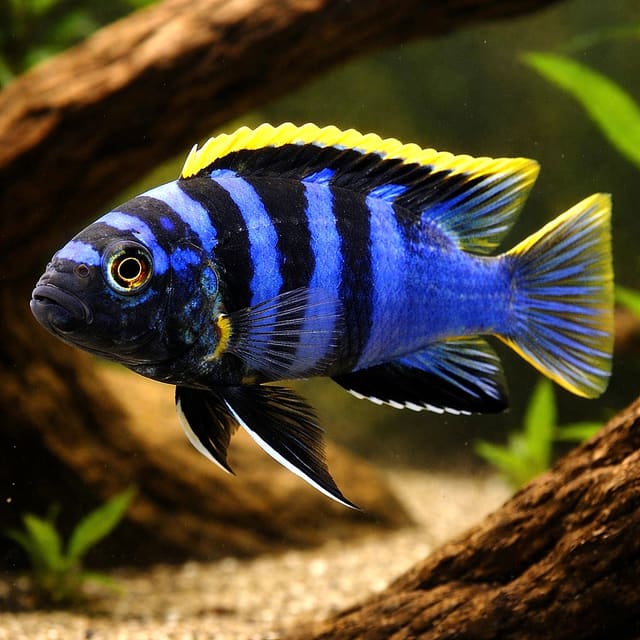
If you are planning a themed Rift Lake display, related African cichlids such as Neolamprologus Falcicula - Lake Tanganyika Cichlid, Five-Barred Lamprologus - Neolamprologus Tretocephalus, and Kasanga Striped Goby Cichlid - Eretmodus can help you build the stocking plan. For a different colour contrast, you can also compare the Dwarf Golden Mbuna Cichlid - Melanochromis.
Always cycle the tank for 4-6 weeks before adding the Sunflower Red. Most early losses in new setups come down to immature filtration, unstable pH, or rushed stocking.
The diet is best described as omnivorous with a preference for meaty foods. In the wild, fish of this type pick at tiny invertebrates and edible material among rocks. In the aquarium, they do very well on quality cichlid pellets supplemented with frozen foods such as brine shrimp and bloodworm. Think small, protein-rich foods rather than oversized sticks or generic flakes.
A good staple is a small sinking or slow-sinking cichlid pellet, which works better than relying on flakes alone, although some fish will accept flakes if trained. Feed only what the fish clear quickly. Once or twice daily is ideal, with each portion eaten in under a minute.
Frozen brine shrimp and bloodworm are excellent additions and most fish relish them. Bloodworm should be part of a varied diet rather than the only food. You can also offer daphnia or finely chopped krill-based foods for variety.
Feed species-appropriate food. Goldfish flakes and goldfish foods are not formulated for hard-water African cichlids and should not be used as a staple. Betta food is acceptable only as a one-off emergency, never long term. This is an ornamental aquarium fish, so feed it as one: a balanced cichlid diet, not random kitchen scraps.
| Time | Food | Amount |
|---|---|---|
| Morning | Small cichlid pellet | What they eat in 30-60 seconds |
| Evening | Frozen brine shrimp or bloodworm | Small pinch or a few thawed pieces |
Overfeeding causes ammonia spikes, cloudy water, and long-term organ stress. If leftovers hit the substrate after every meal, you are feeding too much. Poor feeding discipline is a major reason fish are lost unexpectedly in otherwise established tanks.
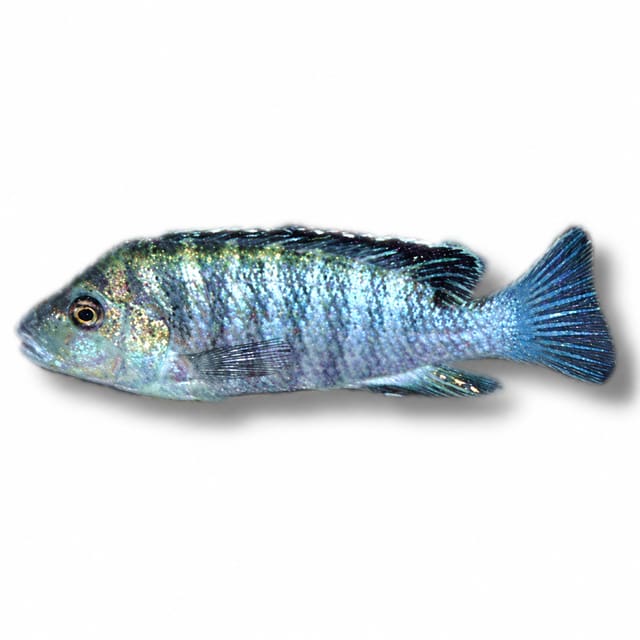
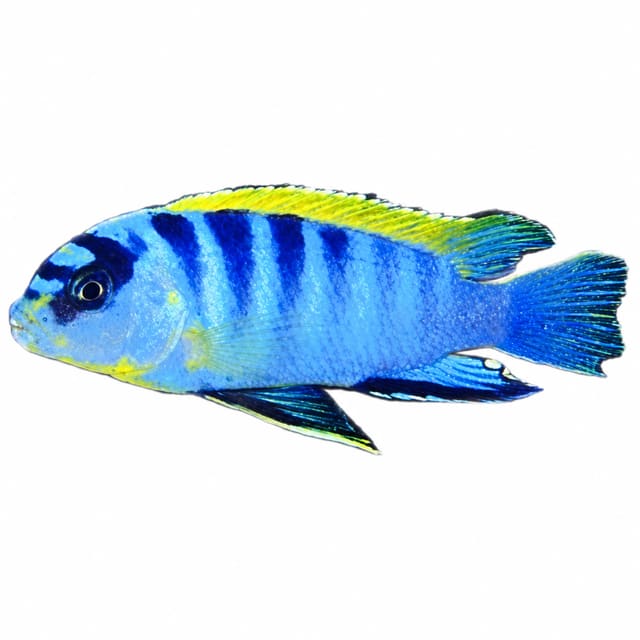
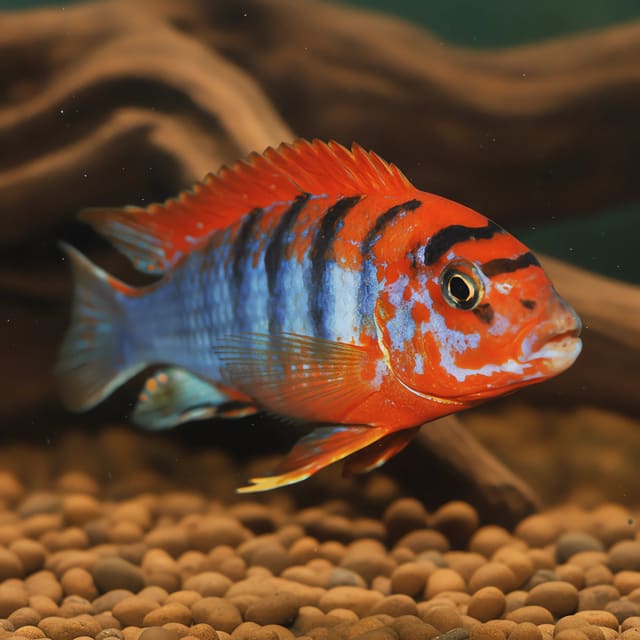
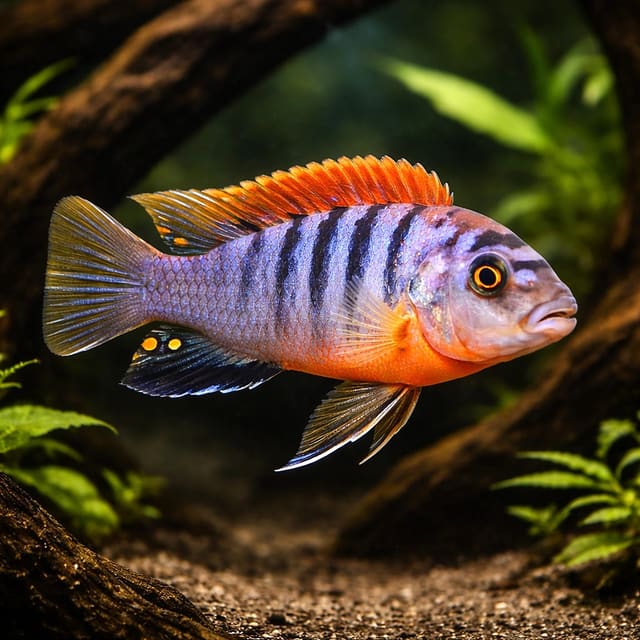
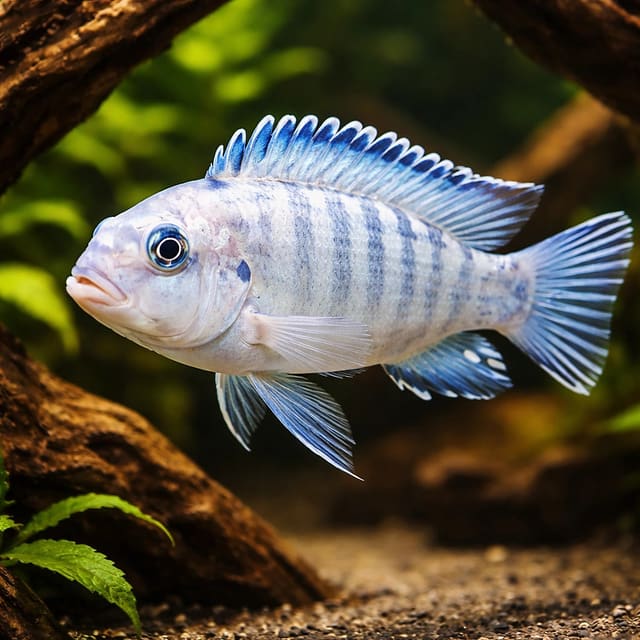
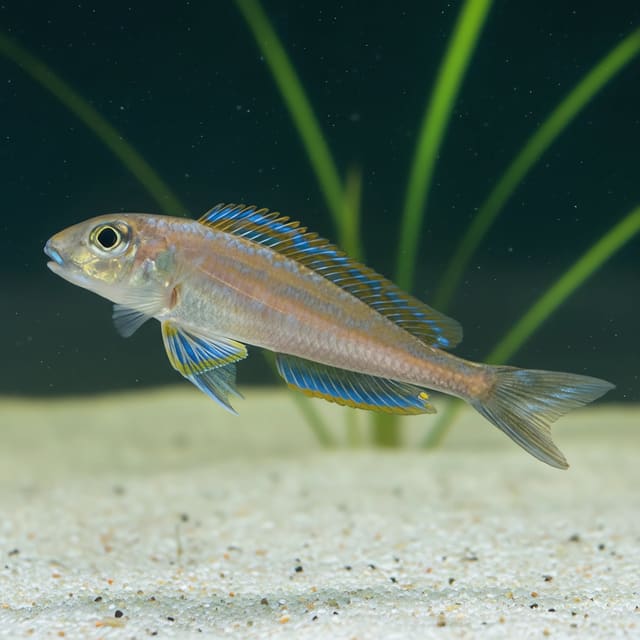
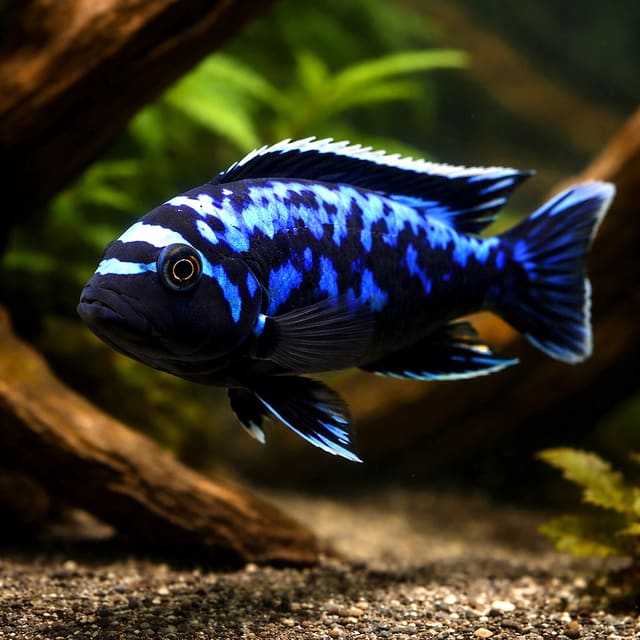
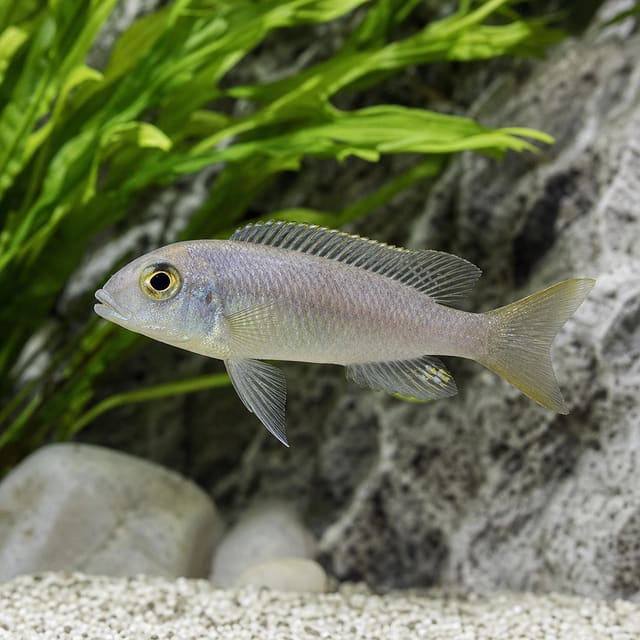
This is a compact, laterally compressed cichlid built for darting between rocks. The body is sturdy for its size, with a sloping forehead, alert eyes, and neat fins suited to precise movement around caves and crevices. The appeal is in the colour: the Sunflower Red typically shows warm yellow to golden tones, often with contrasting markings and subtle fin edging, and colour can intensify with mood, hierarchy, and lighting.
Clean, mineral-rich water and a pale sand base help that yellow body stand out, while poor water clarity will dull its impact. The fish looks its best against stacked rock with open foreground space, where it can display naturally. Males are often slightly more intense in colour and tend to claim more obvious territories, while females can appear a little rounder when in breeding condition.
Compatibility is where many cichlid purchases succeed or fail. The Sunflower Red is semi-aggressive, territorial, and especially defensive during breeding, so it is not suited to a random community of soft-water tetras, shrimp, and peaceful nano fish. When you plan cichlid tank mates, match by water chemistry and temperament, not just by size.
The best tank mates are other hard-water African cichlids that enjoy alkaline water and can handle some territorial posturing. Good examples include Neolamprologus Falcicula - Lake Tanganyika Cichlid, Five-Barred Lamprologus - Neolamprologus Tretocephalus (with caution, in larger tanks), Kasanga Striped Goby Cichlid - Eretmodus, and Titcha Mandarin Compressiceps - Altolamprologu. Some Synodontis catfish can also work in suitably sized aquariums. This is a community fish only within a specialist hard-water community; the list of truly compatible species is narrower than for generic community fish.
Avoid very small fish, delicate long-finned species, and most shrimp, which are usually seen as food or intruders. This fish should not be mixed with goldfish, which need completely different temperature, water chemistry, and social conditions. Snails may survive if large enough, but cichlid tanks often limit snail populations naturally through disturbance.
In 120 litres, a bonded pair is often the safest plan. In 150-180 litres, a pair with one carefully chosen bottom companion may work. In larger setups, mixed Rift Lake communities become realistic. Good husbandry reduces fights: match temperature, dechlorinate, and avoid huge swings on every water change. Hungry fish are often more aggressive, so regular measured feeding also helps keep behaviour steady.
| Species | Compatible? | Notes |
|---|---|---|
| Neolamprologus Falcicula - Lake Tanganyika Cichlid | Yes | Good water match; best in larger rocky setups |
| Kasanga Striped Goby Cichlid - Eretmodus | Caution | Possible in well-structured tanks with careful territory planning |
| Shrimp and very small fish | Avoid | Likely to be harassed, hunted, or stressed |
Always quarantine new arrivals for 2-4 weeks before adding them to a hard-water cichlid display. This protects established fish from parasites and lets you observe temperament before full introduction.
Breeding is achievable for aquarists who provide stable water, secure caves, and a compatible pair. This is a cave-associated cichlid, so success depends on pair selection, territory, and water stability rather than open spawning sites.
A dedicated pair in a 120-litre tank is ideal. Use rock caves, narrow crevices, and broken sight lines. Keep the water between 25 and 27°C, the pH above 7.8, and the hardness in the hard, alkaline range. Condition the pair with varied foods including pellets, brine shrimp, and occasional bloodworm. The single most important point in any breeding guide for this fish is simple: the pair must feel secure before they will spawn.
Spawning usually follows a period of stable conditions, good feeding, and territory control. Courtship often includes intensified colour, cave inspection, and chasing away intruders. Eggs are deposited in a protected site, and the male guards the surrounding territory.
Once eggs are laid, avoid major rearrangements or heavy maintenance. Keep water quality high with small, regular changes. Newly free-swimming fry can be offered finely crushed food, baby brine shrimp, and powdered fry diets. Parents may guard fry closely, though behaviour varies by pair.
The biggest problems are pair incompatibility, overstocking, and unstable chemistry. Breeding often fails in tanks where stronger tank mates constantly interrupt the pair. If fry vanish, check filtration intake guards and watch whether other fish are raiding the brood.
For the best results, let a young group form natural pairs in a larger grow-out tank, then move the bonded pair to a breeding setup with mature biofiltration and several cave choices. Forced pairings are far less reliable than natural pair formation.
Choosing between hard-water African cichlids can be tricky, because many share the same alkaline-water requirements but differ in temperament and display style. The Sunflower Red is a great choice if you want a smaller, bright, rock-oriented fish with strong pair behaviour and plenty of personality, without the scale of larger cichlids.
| Feature | Sunflower Red Cichlid | Five-Barred Lamprologus |
|---|---|---|
| Adult Size | Compact | Larger and more robust |
| Care Level | Moderate | Moderate to advanced |
| Temperature | 24-27°C | 24-27°C |
| Best For | Smaller specialist hard-water tanks | Keepers wanting a bolder, more forceful cichlid |
| Feature | Sunflower Red Cichlid | Dwarf Golden Mbuna |
|---|---|---|
| Decor Style | Rocky caves with open substrate | Dense rockwork with grazing surfaces |
| Temperament | Semi-aggressive | Often more active and pushy |
| Water Chemistry | Hard, alkaline | Hard, alkaline |
| Best For | Pair-focused behaviour | Busy mbuna displays |
If you want a hard-water African cichlid with a compact size and attractive yellow colour, choose the Sunflower Red. If you want a more assertive striped species, compare it with the Five-Barred Lamprologus - Neolamprologus Tretocephalus. If your interest is in active rock dwellers, look at the Dwarf Golden Mbuna Cichlid - Melanochromis or the Bumblebee Cichlid - Pseudotropheus Crabro -.
A healthy Sunflower Red should be alert, hold position confidently near rockwork, feed eagerly, and show clear eyes with intact fins. Faded colour, clamped fins, hovering in corners, or rapid breathing usually signal stress. Prevention is far easier than treatment, and most problems trace back to water quality rather than bad luck.
Like many cichlids, this fish can suffer from bacterial infections, external parasites, and digestive trouble if overfed or kept in poor water. Ulcers, fin damage, and flashing can all occur in stressed fish. Diagnose from behaviour, water-test results, and how symptoms progress, and start any cichlid disease response by correcting water quality and isolating the affected fish if needed.
A simple quarantine tank is one of the best investments you can make. Even a bare-bottom setup with a heater, sponge filter, and hiding place can stop disease entering the main display. Quarantine new fish for 2-4 weeks and watch appetite, waste, respiration, and skin condition before moving them across. When you do treat, never medicate blindly, and avoid copper-based treatments in any system that also holds shrimp or snails.
In normal use, aquariums are safe if you wash your hands after maintenance and avoid cross-contamination. A clean, well-maintained tank is also one of the most calming features you can add to a home, which is a big part of why so many people keep fish in the first place. Choose a tank size you can maintain properly rather than the smallest one you can fit.
Never medicate blindly. Test the water first, as poor conditions often mimic disease. Avoid copper-based treatments in mixed systems with invertebrates, as copper is lethal to shrimp and many snails.
This is an intelligent, observant fish that is strongly attached to structure. It is not a schooling species, and adults do not form loose shoals the way many community fish do. Instead they establish territories around caves and rock faces near the bottom, which makes them highly engaging to watch in a properly designed setup.
Most of the day the Sunflower Red patrols its chosen area, investigates food quickly, and reacts to nearby movement. During breeding, behaviour becomes more intense, with pair coordination and active defence of the nest site. It is a behaviour-rich cichlid rather than a passive display fish, and with caves, visual barriers, and a calm routine it rewards you with confident, natural behaviour. Like all tropical cichlids, it needs stable warmth from a heater year-round.
When you buy aquarium fish online, species accuracy and pre-sale conditioning matter just as much as appearance. The Sunflower Red is a specialist hard-water cichlid, so we keep it in suitable alkaline conditions before sale rather than treating it like a generic mixed tropical. That helps each fish arrive stronger, feed sooner, and settle faster into a correctly prepared aquarium. For customers searching for tropical fish for sale UK, freshwater fish UK for sale, or a dependable source of African cichlids, that species-specific preparation makes a real difference.
Each fish is checked for condition, respiration, body weight, and visible damage before dispatch. We recommend a proper acclimation process on arrival, especially for hard-water cichlids going into high-pH systems. Orders are packed in insulated boxes, with seasonal heat packs in colder weather to protect temperature-sensitive livestock, and tracked delivery reduces transit uncertainty while careful bagging helps maintain oxygen and water quality in transit.
The real value is not just finding a fish; it is receiving the correct fish, in good condition, with realistic care guidance. When you buy fish online, that matters more than price alone. Plan and mature your aquarium first, then order your Sunflower Red once the tank is cycled and stable.
If you are building a hard-water Rift Lake collection, pair your research on the Sunflower Red with other specialist African cichlids. The Neolamprologus Falcicula - Lake Tanganyika Cichlid is a natural comparison for a rocky setup, and the Titcha Mandarin Compressiceps - Altolamprologu offers a different body shape and ambush-style behaviour. For more colour variety, the Firefish Cichlid Lake Malawi Aulonocara and Haplochromis Sunset Cichlid - Dimidiochromis Strigatus show how different Rift Lake colour styles can be, while the Bumblebee Cichlid - Pseudotropheus Crabro - is a bolder rock-dweller. These related choices help you compare temperament, tank style, and long-term stocking plans before you buy.
No reviews for this item yet. Bought one? Honest reviews only, good or bad.
What customers say about ordering from us
I have a small group of long finned mountain minnows. So was delighted to be able to order ten of this variety to increase the genetics in my tank . The ones I recieved are healthy but it’s to early to give a verdict on wether they are of a long finned type since they are small currently.
Gordon Walker · 23 Sept 2026
100% success travel and "installation". Pleased with quality of purchase. The Siamese fighter a bit "shy" so have not yet seen him at his best yet but looking good. Happy customer. GG
George E Garratt · 21 Sept 2026
Reviews of our shop, collected by Judge.me, an independent third-party review collector. Newest first.