
Expert
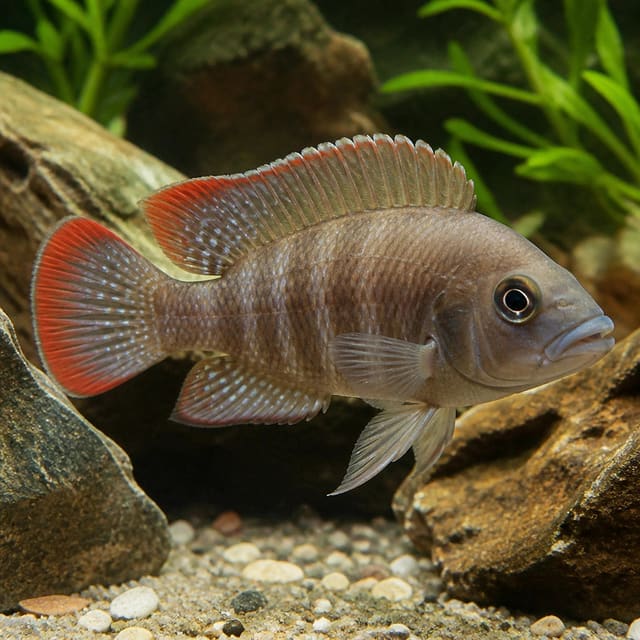
Altolamprologus compressiceps red fin kagunga
24–27°C · pH 8–9 · 200L
£19.99
Titcha Mandarin is the supplier trade name for Altolamprologus compressiceps. Four size grades are listed; each quantity is one fish. Plan a mature rocky hard-water Tanganyika aquarium.
Adult size is the maximum length this species reaches at full maturity (scientific sources). The livestock you receive will be younger and smaller — pick a size variant above for the actual shipping size. Product-photo provenance and any image-specific limitations are stated on the listing.
Altolamprologus compressiceps
Save when buying multiple fish. Each quantity is one fish; sex and pair formation are not guaranteed unless the selected variant explicitly states them.
Confirm your email, then we’ll send an availability message for this exact item if it returns within 180 days.
This request is only for this product—no newsletter or other promotions. A mail-provider retry may very rarely duplicate the same availability message. Unconfirmed addresses are removed after 48 hours. See our privacy policy.
Titcha Mandarin is the supplier trade name for Altolamprologus compressiceps. Four size grades are listed; each quantity is one fish. Plan a mature rocky hard-water Tanganyika aquarium.
Adult size is the maximum length this species reaches at full maturity (scientific sources). The livestock you receive will be younger and smaller — pick a size variant above for the actual shipping size. Product-photo provenance and any image-specific limitations are stated on the listing.
24–27°C · pH 8–9 · 200L
24–27°C · pH 7.5–8.5 · 120L
24–27°C · pH 7.5–8.5 · 450L
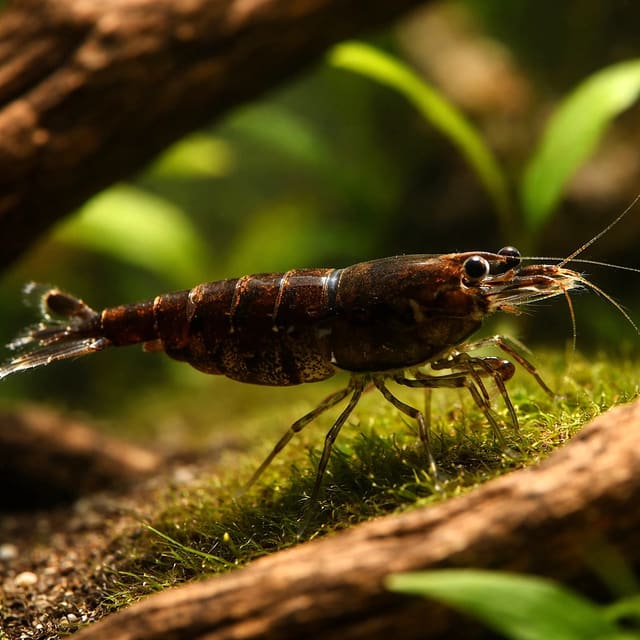
18–26°C · pH 6.5–8 · 30L

Cichlids are one of the most diverse fish families in the hobby. From tiny apistogrammas to massive oscars, this guide covers the basics of keeping them well.
Maintain these water conditions for optimal health and vibrant colors
Titcha Mandarin Compressiceps is the supplier trade name used for this Altolamprologus compressiceps, a laterally compressed cichlid from the rocky margins of Lake Tanganyika. It is a deliberate crevice hunter rather than a general community fish: plan hard, alkaline water, secure rockwork and companions that cannot be swallowed or dominate every cave.
This parent listing has four selectable size grades: approximately 3.5-4 cm, 4-5 cm, 5-6 cm and 7-8 cm. Each selected quantity is one fish. The size is a dispatch grade, not the adult size. Sex and pair formation are not guaranteed, and a multi-buy price does not certify a male/female pair.
| Accepted species | Altolamprologus compressiceps (Boulenger, 1898) |
|---|---|
| Supplier trade name | Titcha Mandarin Compressiceps |
| Origin | Endemic to Lake Tanganyika, East Africa |
| Adult planning size | FishBase records 12.3 cm total length; Maidenhead Aquatics lists 12.5 cm |
| Aquarium | Do not plan below 250 litres or a 5-foot footprint; use more space for multiple territorial fish |
| Temperature | 23-25°C |
| pH | 8.0-8.5, kept stable |
| General hardness | 15-20 dGH |
| Diet | Carnivorous; quality carnivore foods with suitable frozen aquatic invertebrates |
| Behaviour | Territorial around shelter and predatory towards small fish, fry and shrimp |
| Breeding context | Secretive cave or crevice substrate spawner; this listing is not a guaranteed breeding pair |
The accepted scientific name is Altolamprologus compressiceps. The older combination Lamprologus compressiceps still appears in supplier catalogues and historic aquarium literature, so both names may be encountered when researching the fish. Titcha Mandarin is retained here as the supplier's trade-form name. It should not be read as proof of a wild collection locality, captive-breeding line or exact colour outcome because that provenance was not supplied for this batch.
The body is deep and strongly compressed from side to side, with a large mouth and a profile adapted to working around narrow rock spaces. The Cichlid Room Companion classifies the species as a medium-sized, sediment-free rocky-habitat cichlid and a crustacean eater. FishBase records it as endemic to and widely distributed in Lake Tanganyika. Those species-level facts explain the aquarium priorities: rock structure, stable mineral-rich water, room to withdraw from other cichlids and food that reaches a deliberate predator.
Do not identify a Titcha Mandarin form from colour alone. A. compressiceps is sold under several geographic and trade colour names, and appearance changes with age, sex, mood, lighting and background. The supplier name is the sales anchor for this product; the accepted species name is the biological anchor.
The size selector describes the approximate fish length offered for dispatch. A 3.5-4 cm juvenile and a 7-8 cm fish are the same parent product but need different feeding-piece sizes and may behave differently when introduced to established cichlids. Select the grade that suits the aquarium and existing stock rather than assuming that the largest available fish is automatically the safest choice.
| Displayed grade | Practical interpretation | Planning point |
|---|---|---|
| 3.5-4 cm | Small juvenile | Use small foods and protect access from faster or larger tankmates. |
| 4-5 cm | Juvenile | Still too young for a reliable sex or pair promise. |
| 5-6 cm | Growing fish | Allow for increasing territory use as it settles and matures. |
| 7-8 cm | Larger growing fish | Check that existing fish cannot trap it and that it cannot swallow smaller livestock. |
Living fish vary within a stated grade, so the selected range is approximate rather than a millimetre guarantee. The buy box shows the current price and stock for each option from live Shopify data. Those changing values are deliberately not repeated in this care description.
FishBase records a maximum of 12.3 cm total length for the species, while Maidenhead Aquatics lists 12.5 cm. Plan around an adult of approximately 12.5 cm rather than designing the aquarium around the dispatch grade. Mature males are generally larger than females, but neither source supports extending the stated adult length beyond those recorded figures.
Adult length alone understates the space requirement. A Compressiceps uses caves, rock faces, feeding lanes and escape routes, and a mature territorial fish can control more area than its body length suggests. Tank footprint and layout therefore matter more than choosing a tall aquarium with the same nominal volume.
Published specialist guidance uses both volume and footprint. Fishipedia recommends 250 litres for community maintenance, while Maidenhead Aquatics advises an aquarium at least 5 feet long. For a conservative purchase check, do not plan this fish below either benchmark. Multiple territorial fish may need a still larger or longer aquarium. More volume does not solve a poor layout, but it creates more possible territories and a better chance of breaking sight lines.
Two randomly selected juveniles are not a guaranteed pair. They may be the same sex, may mature at different rates or may simply be incompatible. If you buy more than one fish, have a divider, spare mature aquarium or realistic rehoming plan available before conflict starts. Persistent exclusion from food or shelter can be harmful even when there is little visible chasing.
Use the tank volume calculator to estimate actual water volume, then account for the space displaced by substantial rockwork. A headline litre figure is only one input; adult stocking, filtration capacity, territory shape and escape routes determine whether the setup works.
Recreate function rather than copying a decorative photograph. Use stable rock structures with several crevices, caves and broken lines of sight. Support heavy rocks on a firm base so they cannot collapse if sand is moved. Do not balance a large pile on loose substrate. Leave enough access to siphon trapped waste and remove equipment without dismantling the entire territory.
Provide more usable retreats than territorial fish. Openings should vary in shape and orientation, with routes that let a subordinate fish leave without passing directly in front of a dominant cave. A narrow crevice is natural for this species, but a growing fish must not be able to wedge itself into a dead end from which it cannot reverse.
Fine sand is a practical substrate because it is easy to inspect around rocks and suits a Tanganyika-style display. Calcareous sand or rock can increase hardness and alkalinity, but its effect depends on the starting water. Test the result rather than adding mineral material or buffers on assumption. Plants are optional; any species used must tolerate hard alkaline water and must not obstruct essential retreats or maintenance access.
Fishipedia reports 23-27°C, pH 8.0-8.5 and 5-20 dGH; Maidenhead Aquatics reports 23-25°C, pH 8.0-9.0 and 15-25 dH. Their literal common range is 23-25°C, pH 8.0-8.5 and 15-20 dGH, which is the conservative planning range used on this page. These are operating ranges, not targets to push towards their maximum. Choose stable values that also suit every companion and the measured source water.
Temperature, pH and hardness do not replace nitrogen-cycle testing. The aquarium should be mature, ammonia and nitrite should remain at zero, and nitrate and organic waste should be controlled by realistic feeding and maintenance. Sudden changes made to chase a single pH reading are often more dangerous than a stable value within the suitable range.
Use good biological filtration, surface movement and oxygenation. Protein-rich foods and complex rockwork can create waste pockets, so flow should circulate water around the aquarium without blasting every resting crevice. Check warm-weather oxygenation and confirm that the heater can recover after maintenance without creating a hot zone against the rocks.
| Measure | Before ordering | After introduction |
|---|---|---|
| Temperature | Stable within the planned range over day and night | Watch seasonal room changes and heater recovery |
| pH and dGH | Measured, not assumed from a postcode or substrate label | Record trends and correct causes gradually |
| Ammonia and nitrite | Zero in a mature system | Test promptly after appetite, breathing or behaviour changes |
| Nitrate and debris | Controlled by a sustainable routine | Adjust feeding and siphon rock traps before waste builds up |
| Oxygen and circulation | Good surface movement and no stagnant cave zone | Observe respiration at lights-out and during hot weather |
The water parameter matcher can help compare measured values with the care range. It is a planning aid, not a substitute for testing the actual aquarium.
Field diet data summarised by FishBase found shrimp and prawns dominated a juvenile sample, while the Cichlid Room Companion identifies the species as a crustacean eater. This supports a carnivorous feeding plan, but it does not mean aquarium fish should receive only one type of shrimp.
Use a reputable, correctly sized carnivorous cichlid pellet or granule as a dependable nutritional base, then rotate suitable frozen aquatic invertebrate foods such as mysis, brine shrimp and finely sized krill. Offer pieces appropriate to the selected size grade. A small juvenile should not have to wrestle with chunks intended for an adult.
Feed small observed portions and confirm that this deliberate rock-associated fish actually eats. Faster cichlids may take everything in open water before food reaches a sheltered Compressiceps. Target food near its feeding lane without allowing excess protein to vanish between rocks. Remove accessible leftovers and reduce the next portion when food remains.
Avoid fatty mammal meat and routine use of unquarantined feeder fish. Live feeders are not required for normal nutrition and can add disease and welfare risks. Do not use food to compensate for crowding or persistent aggression; a fish excluded from safe feeding needs a stocking or layout intervention.
| Food role | Suitable approach | Watch for |
|---|---|---|
| Regular base | Quality carnivorous cichlid pellet or granule accepted by the fish | Pieces too large for the dispatch grade |
| Rotation | Clean frozen mysis, brine shrimp, krill or comparable aquatic invertebrate food | A one-food routine or oversized chunks |
| Delivery | Place small portions where the fish can see and reach them | Faster fish taking every portion |
| Water protection | Stop when the fish has fed and remove accessible excess | Food collecting behind rocks or rising nitrate |
A settled Compressiceps often holds beside a rock face or cave entrance, watches a gap and moves in short deliberate bursts. It may appear calmer than an open-water cichlid, but calm movement is not proof of peaceful community behaviour. It can defend shelter and is a predator of small fish, fry and crustaceans.
Watch access rather than waiting for torn fins. A subordinate fish may be kept away from food, the preferred cave or the lower half of the aquarium without continuous chasing. Persistent hiding, clamped fins, rapid breathing, refusal of food, a hollowing body or being pinned near the surface are reasons to investigate water and social pressure immediately.
Shared Lake Tanganyika origin is not an automatic compatibility guarantee. A suitable companion must overlap in water chemistry, be too large to swallow, feed without starving this fish and use the available space without controlling every crevice. Individual temperament, sex, age and the exact hardscape can change the result.
| Candidate | Main risk | Decision test |
|---|---|---|
| Tiny fish, fry and ornamental shrimp | High prey risk | Assume they can be eaten if they fit the mouth or can be extracted from cover. |
| Another Altolamprologus or colour form | Territory, sex and hybridisation uncertainty | Avoid casual mixing; specialist planning and separation space are required. |
| Rock- or cave-dwelling Tanganyika cichlid | Overlapping shelter territory | Count distinct usable territories and provide a removal plan. |
| Open-water Tanganyika cichlid | Feeding competition and adult-size mismatch | Check group needs, mouth size, feeding speed and the full water overlap. |
| Soft-water community fish | Water mismatch | Do not force either species outside its stable range. |
| Highly aggressive or very fast feeder | Stress and starvation | Reject the mix if this fish cannot leave sight or reach food. |
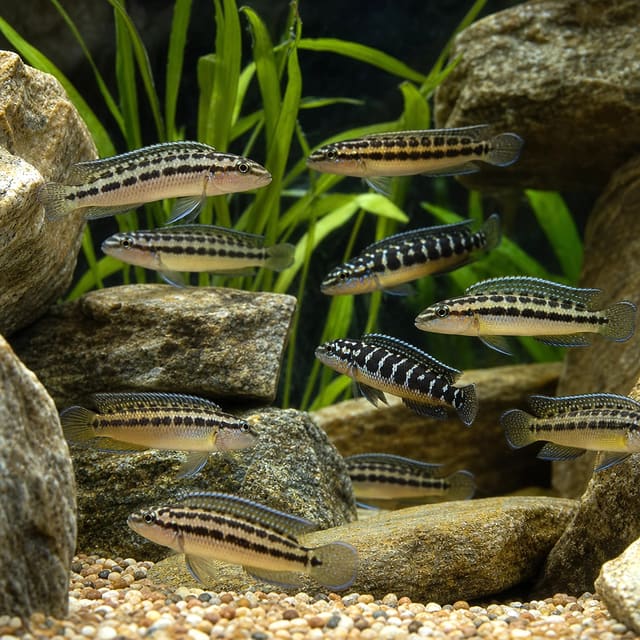
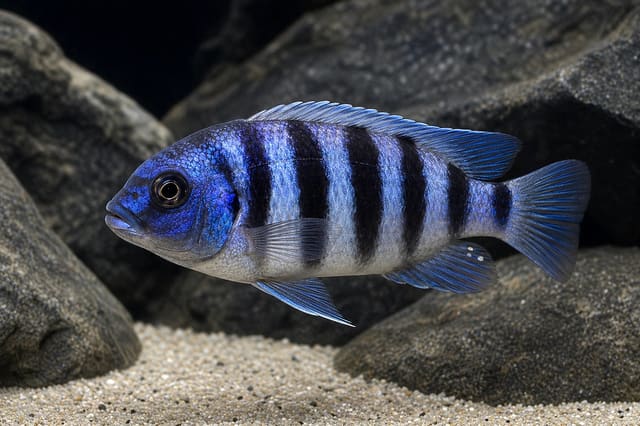
For comparison rather than a cohabitation promise, browse the African cichlid collection. Related live listings include Altolamprologus Compressiceps Red Fin Kagunga, Julie Mixed Julidochromis, Kavala Black Leleupi and Blue Zaire Moba Frontosa. Read each page independently; these links do not mean all four belong with this fish in one aquarium.
Adult males are generally larger and may develop a taller profile and more extended fins, but small and growing fish cannot be sexed reliably from a listing photograph. The four size variants are not sold as guaranteed males, females or pairs. Two fish selected through the multi-buy control remain two individual fish of unconfirmed sex and compatibility.
If breeding is the aim, obtain suitable young fish only when there is enough mature space to manage several individuals and separate them as relationships develop. A random pair can be same-sex or incompatible. A claimed male/female combination can still fail to form a stable pair.
Altolamprologus compressiceps is a secretive cave or crevice substrate spawner. Specialist sources describe the smaller female using a narrow shelter while the larger male remains near the entrance and guards the surrounding area. That biology explains the importance of narrow secure retreats and the increased territorial risk around breeding.
This is care context, not a breeding promise for the fish supplied. A breeding project needs compatible mature adults, stable hard alkaline water, several shelters, suitable fry foods and a plan for separating adults or differently sized young. Do not infer sex, fertility or pair status from the image, selected quantity or discount.
Complete the aquascape, cycling and water tests before dispatch. On delivery, inspect the sealed bag promptly and follow the current Live Arrival Guarantee evidence instructions before changing the bag or discarding packaging. Keep the room calm and aquarium lights low.
Temperature and chemistry both matter after transport, but the method should account for time in the bag and the fish's condition. Follow the fish acclimation guide and use the acclimation timer as prompts. Avoid pouring transport water into the display aquarium. Once released, give the fish immediate access to cover and observe balance, breathing and pressure from established fish.
| Before arrival | First hours | First week |
|---|---|---|
| Confirm stable water, zero ammonia/nitrite, secure rocks, lid and separation equipment. | Record any delivery concern, acclimate calmly, dim lights and prevent harassment. | Observe feeding access, respiration, waste and territorial pressure every day. |
| Prepare correctly sized food and dedicated nets or containers. | Do not chase the fish through a complex rockscape immediately after release. | Test water when appetite or behaviour changes; do not medicate on guesswork. |
A newly moved cichlid may hide and show muted colour, but it should remain upright and breathe without continuous distress. Look for gradual improvement in confidence and feeding. Rapid gill movement, gasping, loss of balance, repeated flashing, white spots, spreading fin damage, a hollowing belly or complete food refusal need investigation.
Start with measurable causes: temperature, ammonia, nitrite, recent pH change, oxygenation and aggression. Quarantine protects the display and makes close observation easier. Medication should follow a plausible diagnosis and the product instructions because unnecessary treatment can harm the fish, biological filter and invertebrates.
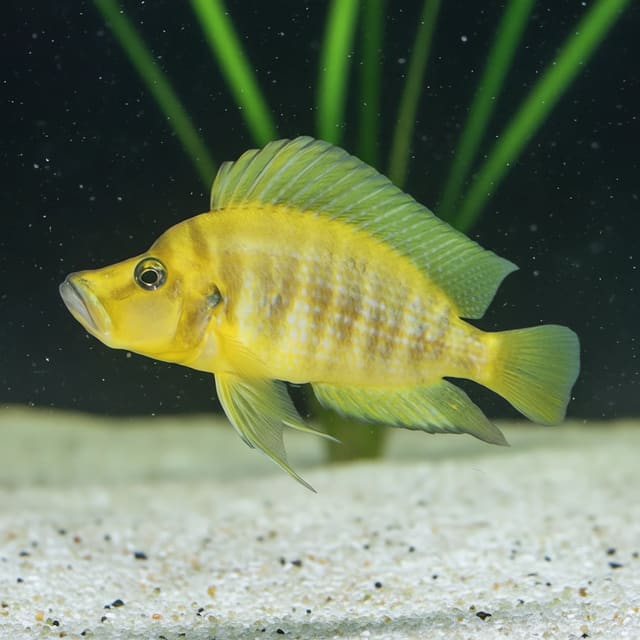
The gallery image is a representative illustration created from the supplier product name rather than a photograph of the exact fish selected for an order. It can illustrate a rocky aquarium presentation, but it must not be used to confirm the Titcha trade form, sex, size grade or exact colour and markings.
Living fish vary, and colour can change with age, mood, lighting, background and water conditions. The image does not promise the plants, hardscape or a particular specimen. The size selector and supplier identity are the purchasing references.
The accepted name, original combination and Lake Tanganyika distribution were checked against FishBase and the NCBI Taxonomy record. FishBase records 12.3 cm total length and provides field diet data in which shrimp and prawns dominate a sampled juvenile diet.
The rocky habitat, crustacean feeding and cave-spawning context are supported by the Cichlid Room Companion species profile. The practical aquarium ranges and community-space caution were cross-checked with Fishipedia and the Maidenhead Aquatics species profile. Supplier-specific claims are limited to the Titcha Mandarin trade name and the four live Shopify size options.
Choose the size and quantity deliberately. Each quantity is one fish; sex and pair formation are not guaranteed. Current stock, price and multi-buy totals come from the live buy box and may change, so check the selected variant immediately before adding it to the basket.
Eligible livestock orders are covered by the current Live Arrival Guarantee when its evidence, attendance and timing conditions are followed. Before ordering, confirm that the aquarium is mature, the measured water is stable, rocks are secure, every companion has been assessed at adult size and separation space is available if territory does not work as planned.
