Moderate
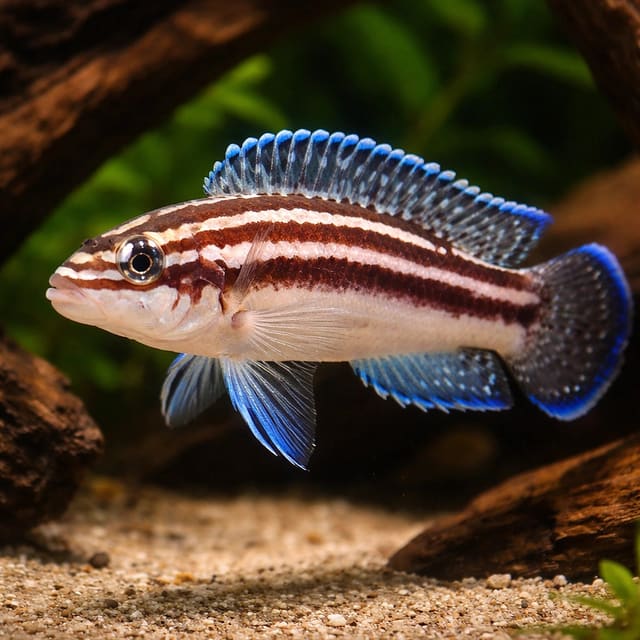
Dickfeld's Julie (Julidochromis dickfeldi)
23–27°C · pH 8–9.2 · 68L
£10.99
Stunning juvenile Blue Zaire Moba Frontosa cichlid from Lake Tanganyika. Rare, striking, and perfect for a specialist African cichlid setup.
Adult size is the maximum length this species reaches at full maturity (scientific sources). The livestock you receive will be younger and smaller — pick a size above for the actual shipping size. Product-photo provenance and any image-specific limitations are stated on the listing.
Cyphotilapia gibberosa
Save when buying multiple fish. Each quantity is one fish; sex and pair formation are not guaranteed unless the selected variant explicitly states them.
Confirm your email, then we’ll send an availability message for this exact item if it returns within 180 days.
This request is only for this product—no newsletter or other promotions. A mail-provider retry may very rarely duplicate the same availability message. Unconfirmed addresses are removed after 48 hours. See our privacy policy.
Stunning juvenile Blue Zaire Moba Frontosa cichlid from Lake Tanganyika. Rare, striking, and perfect for a specialist African cichlid setup.
Adult size is the maximum length this species reaches at full maturity (scientific sources). The livestock you receive will be younger and smaller — pick a size above for the actual shipping size. Product-photo provenance and any image-specific limitations are stated on the listing.

Cichlids are a family of roughly 1,800 accepted species, not one care type. Before buying, identify the exact species and source, then compare adult measurement, usable tank dimensions, social system, territory, tested water, diet and an exit plan. No family-wide minimum tank, water range or tank-mate list is safe.
Maintain these water conditions for optimal health and vibrant colors
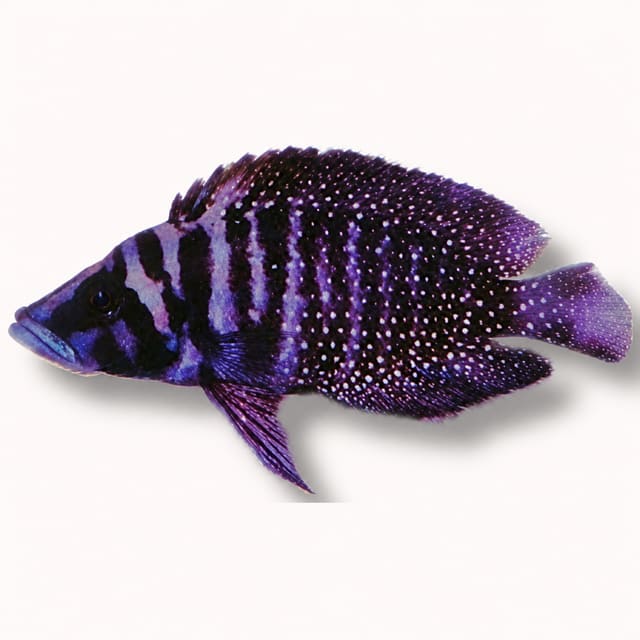
Cyphotilapia gibberosa ‘Blue Zaire Moba’ is one of the most sought-after Tanganyikan cichlids, prized for its deep blue sheen, bold vertical barring and impressive adult presence. Commonly known as the Blue Zaire Frontosa or simply Frontosa, this is a slow-growing, long-lived cichlid that develops real character as it matures. At 6-7 cm, these juveniles are still young and will reward patient keepers with years of growth and colour development.
This species is best suited to aquarists who enjoy specialist African cichlids and can provide stable, hard, alkaline water with plenty of space. Although peaceful for a cichlid, it is still a predatory species and should be kept with appropriately sized tank mates. With the right setup, Cyphotilapia gibberosa becomes a magnificent centrepiece fish, especially in a Tanganyika biotope or large display aquarium.
We supply healthy, acclimatised fish with a live arrival guarantee and fast UK delivery, so your new cichlids arrive in the best possible condition.
| Attribute | Details |
|---|---|
| Scientific name | Cyphotilapia gibberosa |
| Common name | Blue Zaire Moba Frontosa |
| Care level | Moderate |
| Temperament | Peaceful to semi-aggressive |
| Adult size | Up to 20 cm |
| Minimum tank size | 450 litres+ |
| Temperature | 24-27°C |
| pH | 7.5-8.5 |
| Hardness | 10-30 dGH |
| Diet | Omnivore with a strong carnivorous leaning |
| Lifespan | 10-15 years |
| Tank region | Middle to lower levels |
Cyphotilapia gibberosa is native to Lake Tanganyika, one of the world’s oldest and most mineral-rich lakes. The ‘Blue Zaire Moba’ form originates from the Moba region on the western side of the lake in the Democratic Republic of Congo. In the wild, Frontosa cichlids inhabit deeper rocky and transitional zones, often sheltering near caves, ledges and steep drop-offs where they can ambush small fish and invertebrates.
Lake Tanganyika water is naturally warm, hard and alkaline, with excellent clarity and high oxygen levels. Replicating these conditions in the aquarium is essential for long-term health. Because this species comes from a deep-water environment, it appreciates subdued lighting, stable water chemistry and plenty of open swimming space combined with secure retreats.
For juvenile Blue Zaire Moba Frontosa, a spacious aquarium is important from the start, as they grow into substantial cichlids and do best when not cramped. A tank of 450 litres or more is recommended for a small group, with a longer footprint preferred over height. These fish are social and are often kept in groups, but adult males can become territorial, so careful stocking and plenty of space are key.
Use a fine sand or smooth gravel substrate with rockwork arranged into caves, crevices and sheltered areas. Leave open areas for cruising and ensure the decor is stable, as Frontosa are powerful fish that may shift lighter structures. Tanganyika cichlids prefer strong filtration, high dissolved oxygen and regular maintenance. Aim for excellent water movement without creating excessive turbulence.
Ideal water parameters are:
Consistency matters more than chasing exact numbers. Avoid rapid swings in pH or temperature, and carry out regular partial water changes to keep nitrate low. A mature aquarium is strongly recommended, as Tanganyikan cichlids can be sensitive to unstable conditions in newly set-up tanks.
In nature, Cyphotilapia gibberosa is a carnivorous predator that feeds on small fish and aquatic invertebrates. In the aquarium, it should be offered a varied diet based on quality cichlid pellets or sticks, supplemented with frozen foods such as krill, mysis shrimp, chopped prawn and other suitable meaty items. Juveniles will usually accept a range of foods readily, but it is best to avoid overfeeding.
Feed small portions once or twice daily, only giving what they can consume in a few minutes. Because Frontosa are slower eaters than many cichlids, make sure more boisterous tank mates do not outcompete them. A varied diet helps support colour, growth and overall condition. Avoid relying heavily on fatty foods or mammal-based proteins, as these can contribute to digestive issues over time.
Blue Zaire Moba Frontosa are generally peaceful for a large cichlid, but they are still predatory and should be housed with suitable companions. Ideal tank mates are other Tanganyikan species that prefer similar water conditions and are not small enough to be eaten. Good options include robust, similarly sized cichlids and selected shell dwellers or rock dwellers in larger systems, provided the overall stocking plan is carefully considered.
They are not suitable for community tanks with small fish, shrimp or delicate species. Avoid aggressive Mbuna, hyper-territorial cichlids, fin-nippers and any fish that require soft, acidic water. Because this species grows slowly, it is important to plan for its adult size and social needs from the beginning rather than treating it as a temporary juvenile.
At Tropical Fish Co, we specialise in healthy, responsibly sourced aquarium fish with expert packing and careful husbandry. Your Cyphotilapia gibberosa Blue Zaire Moba will be selected for quality and condition, then shipped with care using our fast UK delivery service. We understand how important it is to receive live fish safely, which is why we back your order with a live arrival guarantee.
Whether you are building a Tanganyikan display or adding a standout specimen to an established African cichlid collection, this rare Frontosa variant offers exceptional colour, presence and long-term interest. With the right environment, it becomes a true showpiece fish that will reward you for many years.
Please note: as with all live fish, ensure your aquarium is fully cycled and suitable before ordering. Juveniles may vary slightly in pattern and intensity, with adult colouration developing as they mature.
No reviews for this item yet. Bought one? Honest reviews only, good or bad.
What customers say about ordering from us
Easy website plenty of info on fish your buying great to pick a time slot
TRACEY DURRANT · 7 Oct 2026
Got some lovely fish thank you
Kevin Mackie · 7 Oct 2026
Reviews of our shop, collected by Judge.me, an independent third-party review collector. Newest first.