Moderate
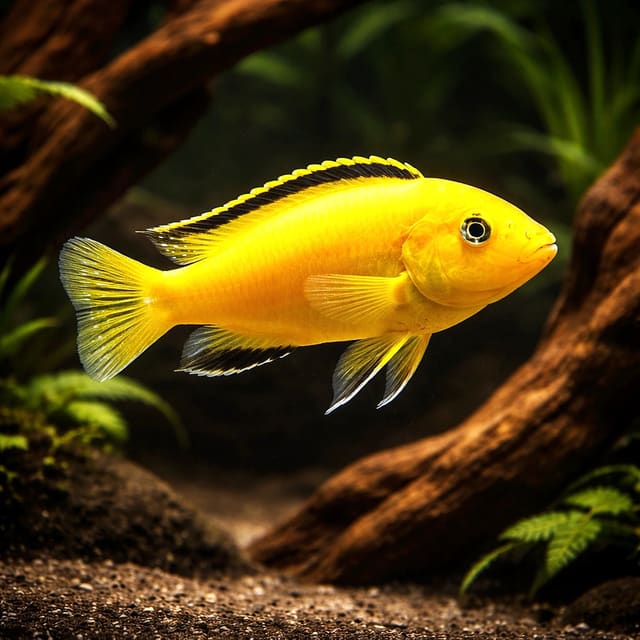
Acei Cichlid (Pseudotropheus sp. “acei”)
24–26°C · pH 7.5–8.5 · 300L
£7.99

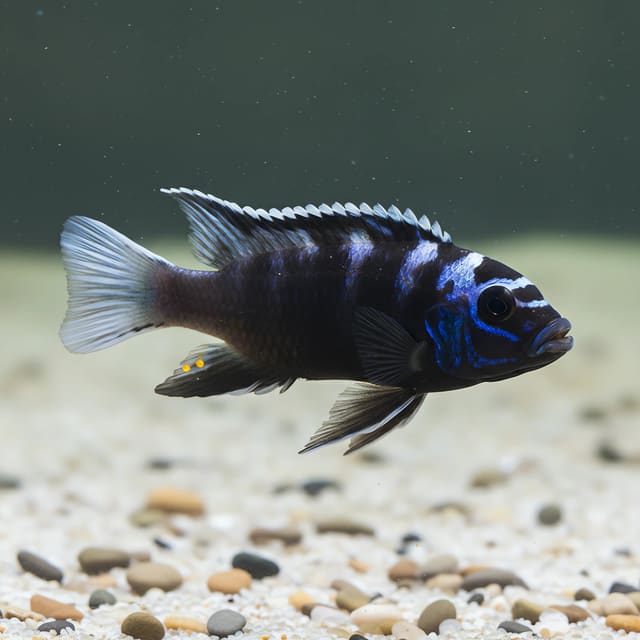
The Blue Dolphin Cichlid (Haplochromis moorii) is a freshwater cichlid endemic to Lake Malawi that reaches 20 cm. It suits keepers who can maintain a group at 25–26°C, pH 8.0–8.6 and 12–18 dGH in a large, carefully planned aquarium. Sold individually in 2–3 cm, 4–5 cm, 6–7 cm, 7–9 cm and XL sizes.
Adult size is the maximum length this species reaches at full maturity (scientific sources). The livestock you receive will be younger and smaller — pick a size above for the actual shipping size. Product-photo provenance and any image-specific limitations are stated on the listing.
Haplochromis moorii
Save when buying multiple fish. Each quantity is one fish; sex and pair formation are not guaranteed unless the selected variant explicitly states them.
The Blue Dolphin Cichlid (Haplochromis moorii) is a freshwater cichlid endemic to Lake Malawi that reaches 20 cm. It suits keepers who can maintain a group at 25–26°C, pH 8.0–8.6 and 12–18 dGH in a large, carefully planned aquarium. Sold individually in 2–3 cm, 4–5 cm, 6–7 cm, 7–9 cm and XL sizes.
Adult size is the maximum length this species reaches at full maturity (scientific sources). The livestock you receive will be younger and smaller — pick a size above for the actual shipping size. Product-photo provenance and any image-specific limitations are stated on the listing.
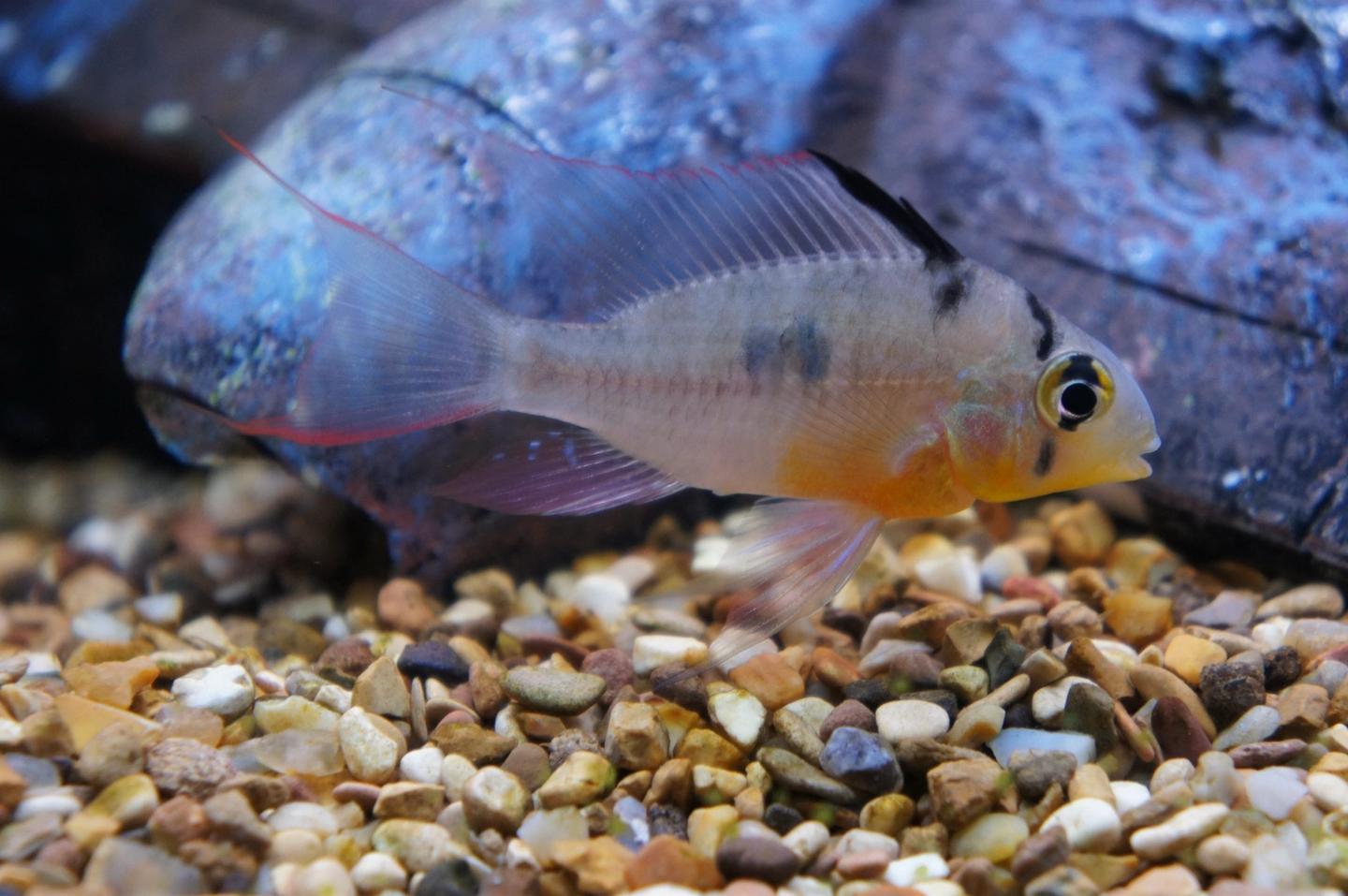
Cichlids are a family of roughly 1,800 accepted species, not one care type. Before buying, identify the exact species and source, then compare adult measurement, usable tank dimensions, social system, territory, tested water, diet and an exit plan. No family-wide minimum tank, water range or tank-mate list is safe.
Maintain these water conditions for optimal health and vibrant colors
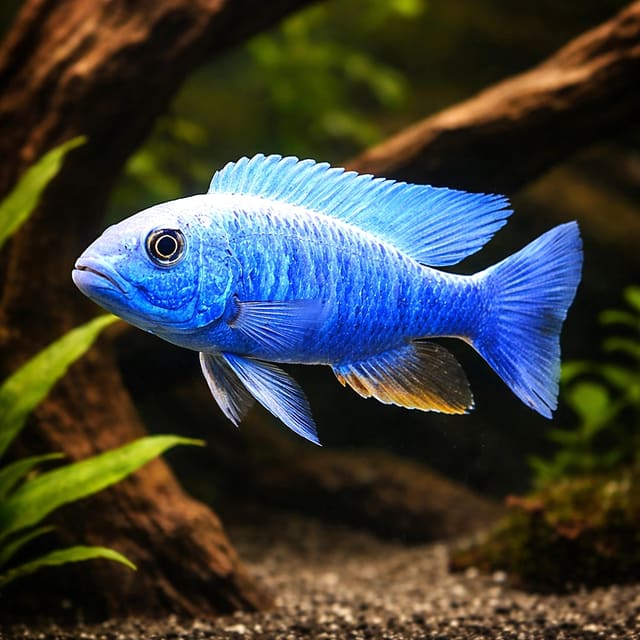
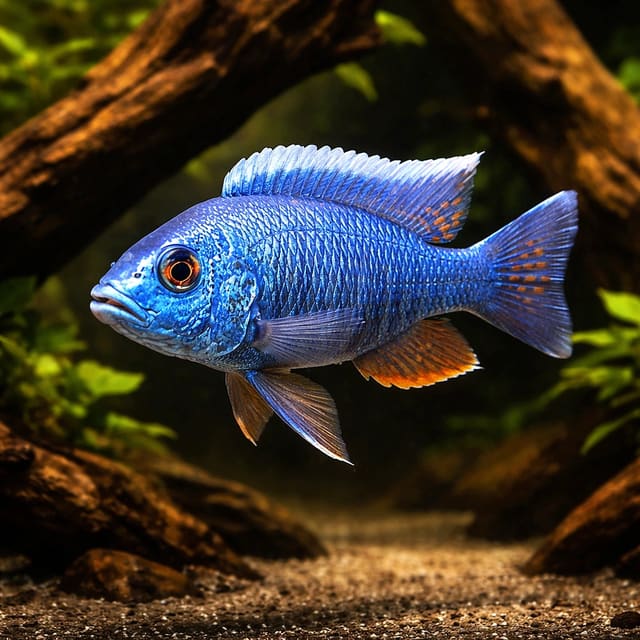
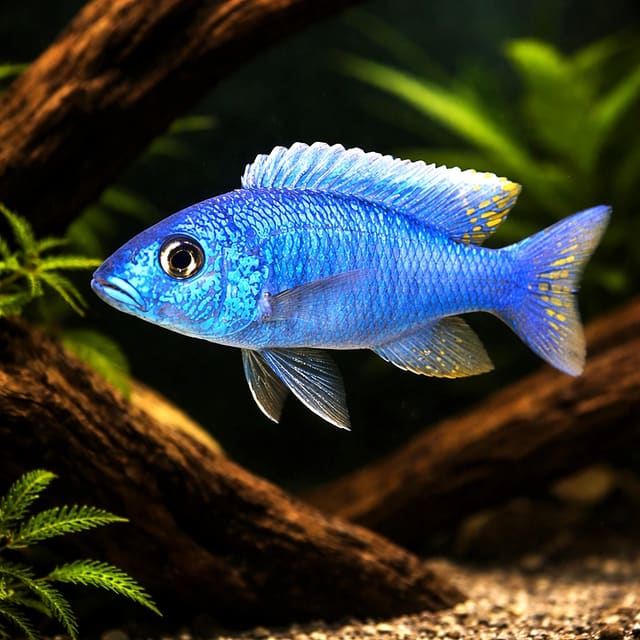
The Blue Dolphin Cichlid is a freshwater haplochromine endemic to Lake Malawi. Its rounded forehead, deep cichlid body and blue colouring give it the familiar dolphin-like outline. FishBase now lists it as Cyrtocara moorii and records the older name Haplochromis moorii as a synonym.
FishBase records a maximum adult size of 20 cm total length for male or unsexed fish. Seriously Fish separately uses 25 cm standard length as an aquarium planning reference. Plan the permanent aquarium around the 20 cm recorded adult size while retaining the species-specific minimum footprint, filtration capacity and careful screening of companions.
| Suits | Not suited to |
|---|---|
| A long aquarium with open sand and group space | A small general community aquarium |
| Stable hard, alkaline water | Small fish or boisterous mbuna |
| Keepers able to monitor group behaviour | A solitary display plan |
In Lake Malawi it occurs over sandy bottoms in relatively shallow water. It is known to follow substrate-sifting fish and take edible morsels exposed by the disturbed sand. In the aquarium, that natural behaviour supports a layout based on open sand rather than dense rockwork across the entire floor.
This fish suits a keeper who can make decisions from measured water values, observe group behaviour and maintain a large biological filter. The key challenge is not a complicated daily routine; it is providing enough permanent space and keeping the social environment calm as the fish grow.
One purchase quantity supplies one animal of the selected option. Choose from the size labels shown on the live selector: 2–3 cm, 4–5 cm, 6–7 cm, 7–9 cm and XL. The size you select is the size supplied, not the adult size.
A centimetre label is a dispatch measurement. XL is a named grade rather than a stated centimetre range, so select it as an XL fish without assigning it an assumed length. Whichever label you choose, prepare the permanent aquarium for the full planning size before the fish arrives. A smaller dispatch fish does not reduce the long-term footprint, group or water-quality requirements.
| Decision | What to check |
|---|---|
| Adding a smaller fish | Make sure established companions cannot dominate it at feeding or intimidate it through sheer size. |
| Adding a larger fish | Check that the aquarium has open turning space and that territorial residents will accept a newcomer. |
| Building a young group | Plan for every individual at adult size rather than sizing the aquarium around their combined dispatch length. |
| Choosing XL | Use the live label as the grade; do not calculate stocking from an assumed centimetre measurement. |
Sex is guaranteed only when the selected option explicitly states male or female. This Blue Dolphin Cichlid listing has no sex-guaranteed option.
Sexing this species is difficult because both sexes may show the nuchal hump and similar colouration. Males generally become larger, but this difference may take several years to appear. Base the purchase on the animal, size label and space you can provide rather than attempting to infer sex from colour, forehead shape or a gallery scene.
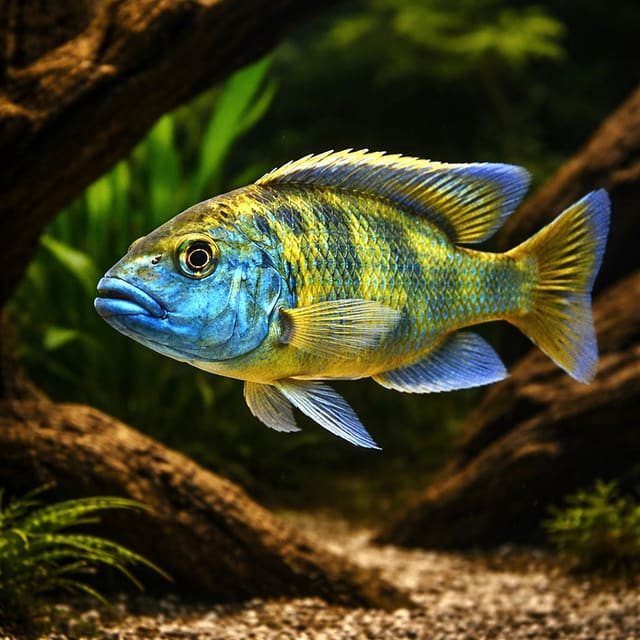
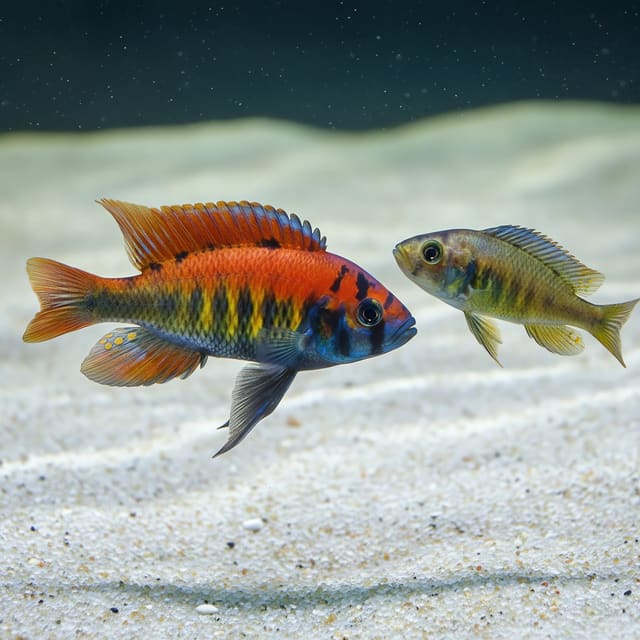
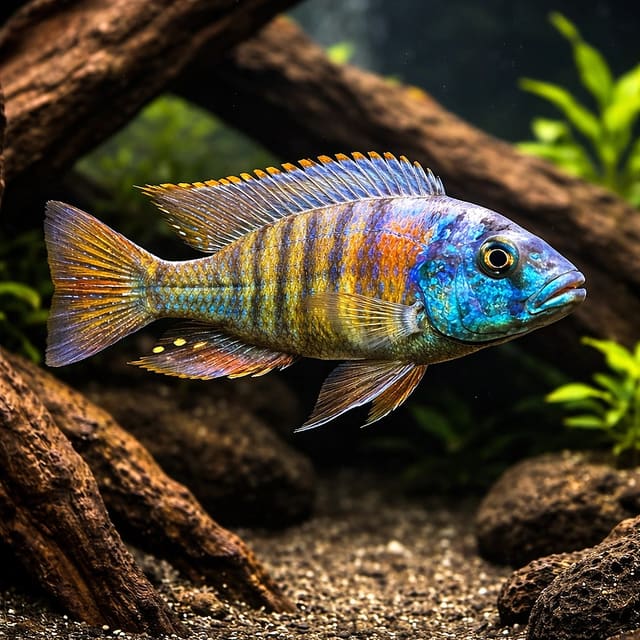
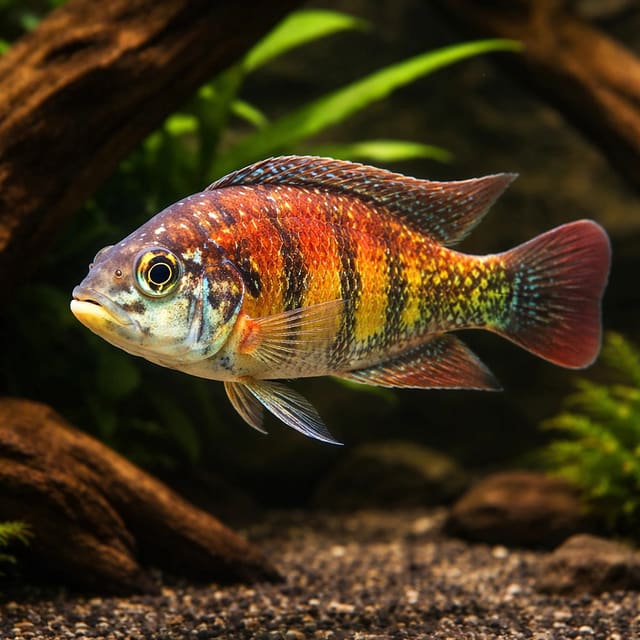
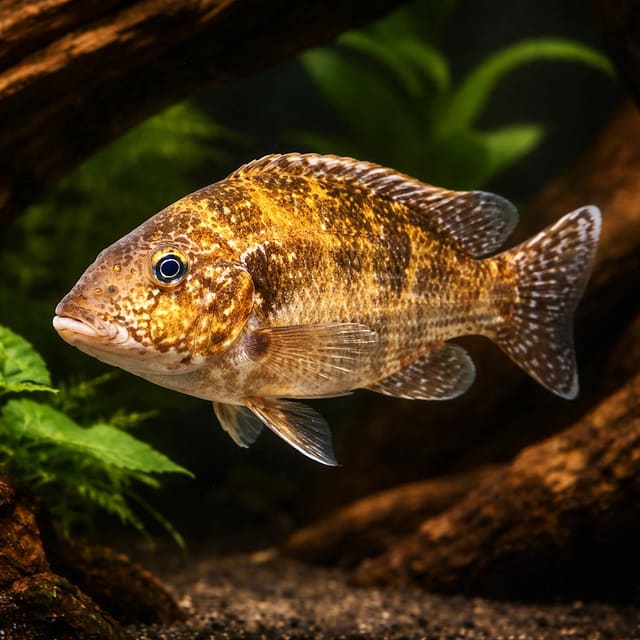
The gallery images are representative, based on reference photographs of this species, so colours can look slightly different from the live animal.
Seriously Fish recommends a minimum aquarium footprint of 150 × 38 cm and approximately 257 litres. Treat both the base dimensions and volume as minimums: a taller aquarium with too short a base does not replace the required swimming length.
FishBase records 24–26°C in the wild, while the aquarium range in Seriously Fish is 25–29°C. Use their overlap of 25–26°C for routine aquarium care. For pH and hardness, OATA’s group-level Malawi guidance narrows the species ranges to pH 8.0–8.6 and 12–18 dGH. These are practical targets rather than reasons to chase a precise midpoint after every test.
| Planning point | Working value |
|---|---|
| Recorded adult size | 20 cm total length |
| Minimum aquarium | About 257 litres |
| Minimum base | 150 × 38 cm |
| Routine temperature | 25–26°C |
| Routine pH | 8.0–8.6 |
| General hardness | 12–18 dGH |
| Ammonia and nitrite | 0 mg/l |
Space and chemistry work together. A long base lets the fish cruise and move away from social pressure, while stable hard water and an established filter protect the group from rapid waste-related changes. Sand should occupy the open centre, with any rockwork kept mainly around the perimeter unless the aquarium is exceptionally large.
Before choosing the fish, measure the aquarium base, test the actual water and calculate filtration from the real tank volume. If any one of those checks fails, improve the aquarium first. This sequence prevents a small dispatch fish from making an unsuitable setup appear adequate for a few months.
Start with an aquarium of at least 257 litres and a base measuring at least 150 × 38 cm. The length creates a proper swimming lane, while the front-to-back measurement gives a large cichlid room to turn without repeatedly meeting décor or another fish. Check both dimensions rather than relying on the litre figure printed on an aquarium.
Do not turn the whole base into a tight rock maze. A few stable structures can define boundaries, but open swimming space is the priority. Every rock must sit securely so digging cannot undermine it. Malawi cichlids will often dig and rearrange the substrate, which will uproot any plants present; hardy plants attached to décor have a better chance than soft plants rooted across the open sand.
Suppose an aquarium holds more than 257 litres but measures only 120 cm long. It passes the volume check and fails the 150 cm length check, so it is not the right permanent home. A 150 × 38 × 45 cm aquarium reaches approximately 257 litres before displacement, but sand, rocks and an operating waterline reduce the actual water volume. Calculate filtration from the real filled volume while preserving the full base dimensions for the fish.
Prepare and mature the system before livestock arrives. Our first tropical aquarium guide explains how to establish the filter and test the aquarium before adding fish. Add livestock gradually so the bacterial population can adjust to each rise in waste and feeding.
Set the routine temperature at 25–26°C, pH at 8.0–8.6 and general hardness at 12–18 dGH. Stability within those bands matters more than repeatedly changing the water to reach a favourite point. Test the aquarium and replacement water so any adjustment is planned rather than reactive.
| Result | Decision |
|---|---|
| 25–26°C and stable | Keep the heater setting and continue routine checks. |
| pH 8.0–8.6 and stable | Maintain the present replacement-water method. |
| Hardness 12–18 dGH | Use the same tested water preparation at each change. |
| Ammonia or nitrite above 0 mg/l | Treat this as a water-quality problem and reduce further stocking pressure. |
| A sudden change from the normal result | Check the test method, replacement water, filter flow and recent feeding. |
Use our water chemistry guide to understand what each measurement means, then compare your results with the working ranges through the water matcher. Record results with the date so a gradual drift becomes visible before the fish show a change in behaviour.
Ammonia and nitrite must remain at 0 mg/l. Nitrate should not rise more than 20 mg/l above the normal level in the tap water. Test the tap water as a baseline: if it reads 10 mg/l nitrate, the aquarium should not exceed 30 mg/l under this threshold.
Hard water does not remove the need for consistency. If the tap-water pH or hardness differs markedly from the aquarium, prepare replacement water before it enters the tank and avoid a large abrupt shift. Temperature-match it closely and use a conditioner that removes chlorine or chloramine. Never make an unmeasured correction simply because a fish appears pale; test first, then act on the result.
A working biological filter is essential. The RSPCA explains that beneficial filter bacteria convert toxic ammonia to nitrite and then to the safer nitrate. Blue Dolphin Cichlids are large fish, and a maintained group creates a continuing waste load that must be handled without sacrificing oxygen or swimming room.
The species recommendation is total turnover of four to five times the aquarium volume each hour. For an operating volume of 257 litres, that is approximately 1,028–1,285 litres per hour before allowing for the reduction caused by media, hoses and head height. Use the actual aquarium volume in the calculation:
Choose equipment that can maintain useful flow once it contains mature media. Oversized filtration and vigorous aeration are sensible in a Malawi community because stocking, feeding and large adult bodies all increase oxygen demand. Position outlets so the surface moves strongly without creating one narrow jet that forces the fish to fight the current continuously.
Check filters for blockages during the weekly routine. When media needs cleaning, rinse it lightly in aquarium water removed during a partial water change. Do not wash biological media under the tap, because chlorine or chloramine may damage the bacterial population. Avoid cleaning every mature biological component aggressively at the same time.
Watch the result, not just the equipment. Reduced outlet flow, debris remaining across the sand, unusual surface breathing or a measurable rise in ammonia or nitrite means the system needs immediate investigation. Check for blocked intakes, compacted media, interrupted power, excess food and a recent increase in fish numbers. Restore filtration and aeration while protecting the established media.
This Blue Dolphin is a micro-predator by nature. Make live and frozen foods the bulk of the diet, using suitable items such as bloodworm, brine shrimp, chopped earthworm and prawn. Dried foods are taken, but they should not be the only food. This differs from the algae-heavy feeding often associated with herbivorous mbuna.
Feed only what the fish can finish within a few minutes, twice a day. Begin with a small portion, watch every member of the group and stop before food accumulates on the sand. Remove obvious leftovers because decomposing food increases the load on the biological filter.
| Observation | Feeding decision |
|---|---|
| Food remains after a few minutes | Reduce the next portion and remove the excess. |
| One fish takes every item | Spread food across the open area so other group members can feed. |
| Dried food dominates the week | Restore live and frozen foods as the bulk of the diet. |
| Interest in food suddenly falls | Test water and assess breathing, colour, hiding and aggression before offering more. |
| Waste rises after feeding | Review portion size and filter performance rather than adding another meal. |
In nature, shoals may follow substrate-sifting fish and take small food items exposed in clouds of disturbed sand. Recreate the opportunity to search without depending on another species: distribute suitable food across the open area in controlled portions and let the fish find it before it reaches the substrate in excess.
Feeding is also a daily social check. A large dominant fish can intercept food while a quieter individual loses condition even though the total portion appears adequate. Watch which fish actually swallow food. If one is repeatedly excluded, reassess the group, feeding distribution and compatibility rather than simply increasing the total amount.
Do not use appetite as the only measure of need. Cichlids may continue responding after an adequate portion. The time limit, body condition and water-test trend provide a better guide than begging behaviour.
At least once every week, change 25% of the water. Use a siphon to remove settled waste from accessible areas of sand, treat the replacement water for chlorine or chloramine and match its temperature closely before adding it. Combine the water change with testing and equipment checks so small problems are found together.
Do not postpone maintenance because the water looks clear. Dissolved ammonia, nitrite and nitrate cannot be judged by clarity alone. Equally, do not turn every weekly change into a complete deep clean. The aim is to remove waste while preserving stable biological filtration and familiar social boundaries.
Use the test record to adjust the routine. If nitrate repeatedly approaches the limit before the next change, first check feeding, stocking pressure, trapped waste and filter performance. A larger or additional partial change may be needed, but replacement water must still be prepared to avoid a sharp chemistry shift.
If the group becomes unsettled after maintenance, review what changed: water temperature, décor position, flow direction or the amount of substrate disturbed. Altering all four together makes the cause difficult to identify. Keep routine tasks consistent and reserve major décor changes for a clear stocking or aggression reason.
Arrange for someone to receive the parcel so live fish are not left unattended. Follow the current delivery and Live Arrival Guarantee policy. Before handling the parcel, confirm the aquarium is at 25–26°C with suitable pH and hardness, 0 mg/l ammonia, 0 mg/l nitrite and normal filter flow.
Prepare the aquarium, net and covered transfer area beforehand. If a test shows ammonia or nitrite in the aquarium, correct the water-quality problem before adding another fish to the biological load.
| Checkpoint | What to assess |
|---|---|
| First hour | Balance, breathing, orientation and whether residents immediately pursue the newcomer. |
| First feed | Interest in food and whether the fish can reach a share without being driven away. |
| First daily test | Ammonia, nitrite, temperature and any change in filter flow. |
| End of week | Body condition, fins, scales, colour, hiding and position within the group. |
Add further fish slowly. Every increase in livestock and feeding requires the established bacterial population to process more waste. Continue testing after an addition even when the aquarium was stable beforehand.
Learn the normal pattern for each fish while the group is settled. Individual variation is expected, but a clear change can reveal water trouble, social pressure or declining condition before the problem becomes severe. Observe at feeding time and during a quiet period because dominant behaviour may hide a timid fish’s reduced activity.
| If you see | Do this first |
|---|---|
| Hanging at the surface | Check aeration, filter flow, temperature, ammonia and nitrite. |
| Sitting on the bottom or erratic swimming | Test water and observe whether another fish is pursuing it. |
| Faster or slower gill movement | Check oxygenation and all routine water values promptly. |
| Darker or paler colour | Compare behaviour, feeding and social position before changing chemistry. |
| More hiding or aggression | Review territories, group pressure and the most recent stocking change. |
| White spots, fluffy growths or damaged scales | Test the water, protect water quality and contact us for health guidance. |
| Reduced food intake | Do not add extra food; check water, breathing and bullying. |
A visible symptom is not a diagnosis. Avoid changing several water values or adding medication blindly. Begin with measured water quality, equipment function and social observation, then choose the next step from the whole pattern.
Check body condition from both sides when possible. A fish that reaches the food but steadily loses weight needs attention just as much as one that refuses a meal. Torn fins or missing scales also require a compatibility review because repeated physical damage may continue until the social cause is addressed.
Keep dated notes after any change. Record the sign, test results, maintenance performed and whether behaviour improved. This prevents repeated guessing and helps distinguish a brief settling response from a developing problem.
Blue Dolphin Cichlids should be maintained in a group rather than kept as a solitary display fish. Their shoaling behaviour needs enough base area for fish to move together while still allowing an individual to leave a tense interaction. Plan the aquarium for the adult size of every member, not the combined length of the dispatch fish.
Where fish are reliably sexed, the species guidance is to try for two or three females per male. This can reduce pressure on one female, but it is not a promise that every group will remain calm. The sexes are difficult to distinguish, both may show similar colouration and a nuchal hump, and males may take years to show their generally larger size.
When buying unsexed fish, do not force the group into an assumed ratio based on appearance. Watch how the group develops and be ready to reassess space or composition if repeated territorial pressure emerges. Males may become territorial when spawning, so a group that is peaceful during routine feeding can still change.
| Group signal | Decision |
|---|---|
| All fish reach food | Keep portions distributed and continue observing body condition. |
| One fish is always displaced | Check whether it can leave the dominant fish’s route and still feed. |
| Repeated pursuit begins | Review the group, territories and adult space before adding more fish. |
| Spawning territoriality appears | Preserve open escape routes and monitor the targeted fish closely. |
| A newcomer is isolated | Assess size difference and resident aggression rather than waiting for injury. |
Follow this species’ group and footprint requirements when applying OATA’s advice about spreading aggression in large Malawi communities. Filtration, oxygenation, adult space and territory structure must all support the final stocking plan.
This species is described as peaceful, but peaceful is relative to other Malawi cichlids. Its adult bulk can intimidate small fish, while boisterous mbuna can outcompete or stress it. Avoid small fish and boisterous mbuna. Do not treat blue colour, Lake Malawi origin or the word cichlid as enough reason to combine two animals.
Potential companions described for the species include Frontosa, large peaceful haps such as Fossorochromis rostratus, and Rift Lake Synodontis. These names are starting points rather than universal approvals. Aquarium dimensions, group numbers, individual behaviour and the needs of the proposed companion still decide whether a particular combination is responsible.
OATA limits Malawi communities to other Malawi cichlids or certain Synodontis catfish. Within that boundary, use the stricter species rule: keep the Blue Dolphin away from boisterous mbuna and fish made vulnerable by small adult size. Browse the African cichlid collection to compare identities, then assess each proposed combination on its own care requirements.
Individual cichlids can behave differently, especially around spawning. If a proposed mix passes the water and size checks but its social fit remains unclear, contact us with the aquarium dimensions, current fish, group numbers and adult sizes for a stocking assessment. After introduction, watch access to food, open-water use, breathing, hiding and fin condition rather than assuming silence means acceptance.
The Blue Dolphin Cichlid reaches a recorded adult size of 20 cm total length. Plan its permanent aquarium around that adult size rather than its dispatch measurement.
Use an aquarium of at least 257 litres with a base measuring at least 150 × 38 cm. Provide sand, broad open swimming room and rockwork mainly around the perimeter.
The Blue Dolphin Cichlid is a shoaling species and should be maintained in a group; where sex is reliably known, try for two or three females per male.
It suits a keeper able to maintain at least 257 litres, a 150 × 38 cm base, stable hard alkaline water, strong filtration and a carefully observed group. Its permanent space and social needs require deliberate planning.
Make live and frozen foods the bulk of the Blue Dolphin Cichlid’s diet, including suitable bloodworm, brine shrimp, chopped earthworm or prawn. Feed only what it finishes within a few minutes, twice daily; dried food should not be fed exclusively.
Keep it at 25–26°C, the overlap of FishBase’s wild environmental range and Seriously Fish’s aquarium range. OATA’s Malawi guidance narrows the species ranges to pH 8.0–8.6 and 12–18 dGH; ammonia and nitrite should remain at 0 mg/l.
The Blue Dolphin Cichlid is described as peaceful, although males may become territorial when spawning. Avoid boisterous mbuna and monitor repeated pursuit, hiding, feeding exclusion or fin damage.
Consider Frontosa, large peaceful haps such as Fossorochromis rostratus, or suitable Rift Lake Synodontis only after screening water needs, adult size, temperament, group numbers and aquarium dimensions. Avoid small fish and boisterous mbuna.
Start filming before opening the sealed parcel, keep one continuous take through opening and show the fish inside the sealed bag. Then float the bag for 20–30 minutes before releasing the fish without pouring bag water into the aquarium.
No reviews for this item yet. Bought one? Honest reviews only, good or bad.
What customers say about ordering from us
I have a small group of long finned mountain minnows. So was delighted to be able to order ten of this variety to increase the genetics in my tank . The ones I recieved are healthy but it’s to early to give a verdict on wether they are of a long finned type since they are small currently.
Gordon Walker · 23 Sept 2026
100% success travel and "installation". Pleased with quality of purchase. The Siamese fighter a bit "shy" so have not yet seen him at his best yet but looking good. Happy customer. GG
George E Garratt · 21 Sept 2026
Reviews of our shop, collected by Judge.me, an independent third-party review collector. Newest first.