Moderate
Acei Cichlid (Pseudotropheus sp. “acei”)
24–26°C · pH 7.5–8.5 · 300L
£7.99
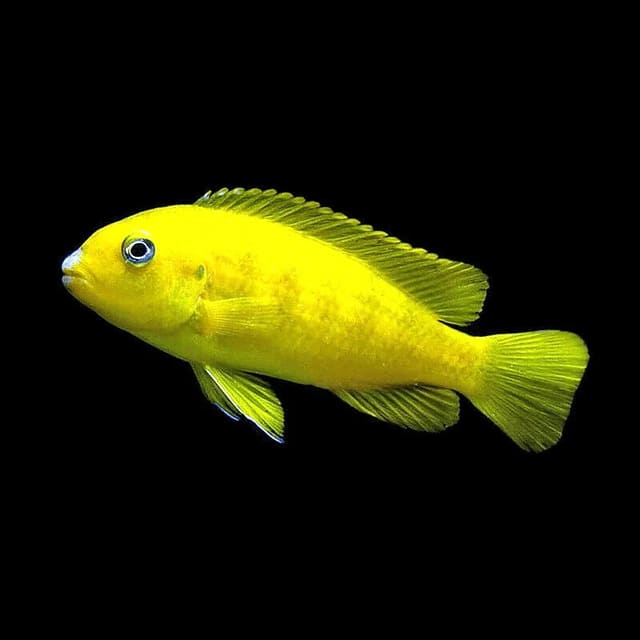
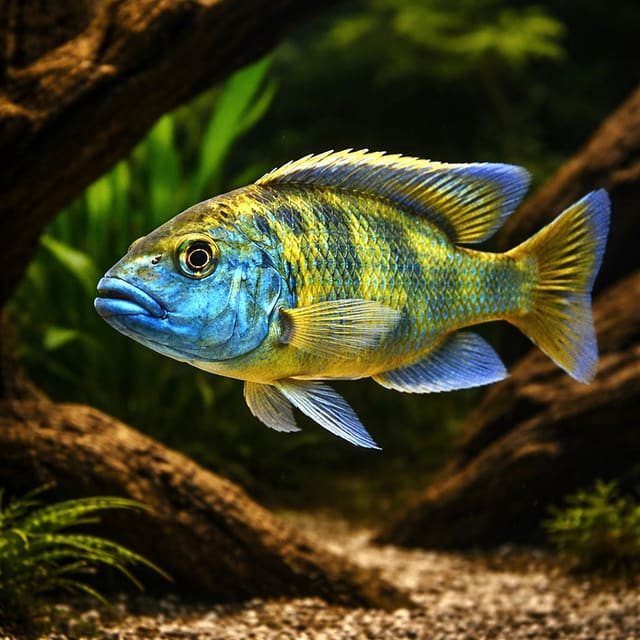
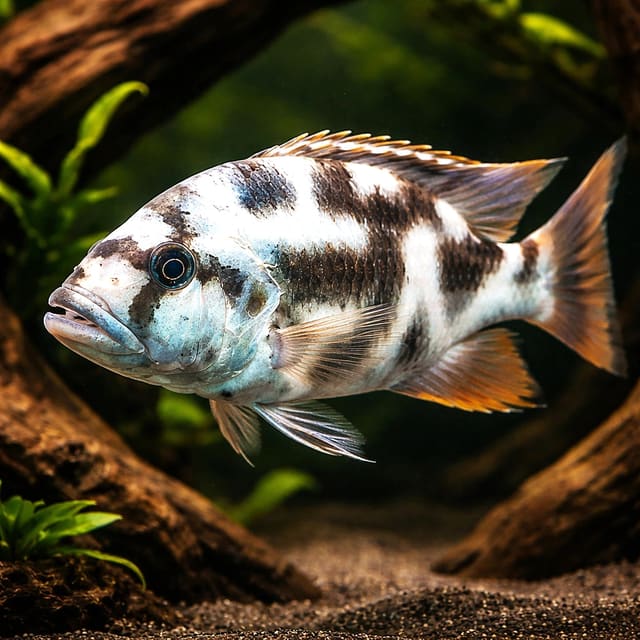
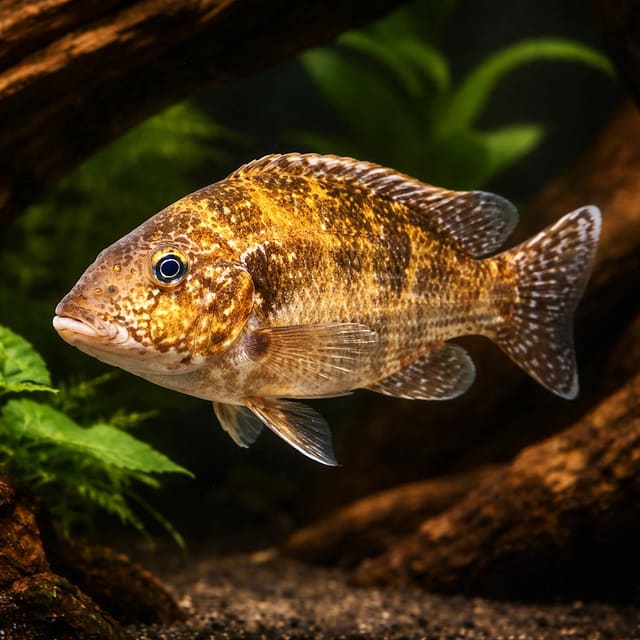
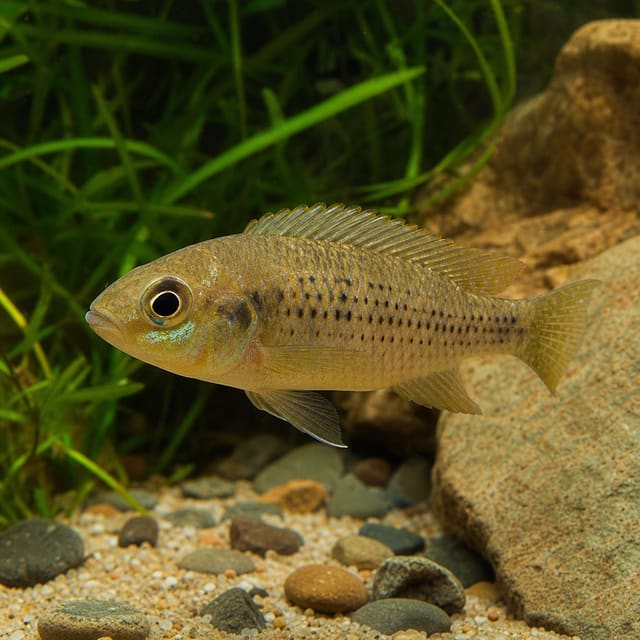
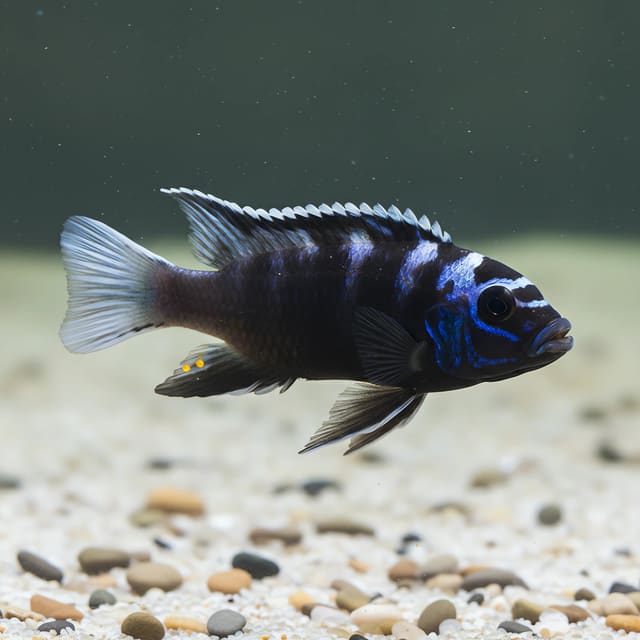
Yellow Belly Hap (Haplochromis sp.) is an African cichlid identified only to genus and supplied at 4–5 cm. It is best suited to an experienced keeper who can provide mature hard water, strong filtration, generous space and a deliberately researched cichlid community. One purchase supplies one live fish; the dispatch grade is not an adult-size promise.
Haplochromis sp.
Save when buying multiple fish. Each quantity is one fish; sex and pair formation are not guaranteed unless the selected variant explicitly states them.
Yellow Belly Hap (Haplochromis sp.) is an African cichlid identified only to genus and supplied at 4–5 cm. It is best suited to an experienced keeper who can provide mature hard water, strong filtration, generous space and a deliberately researched cichlid community. One purchase supplies one live fish; the dispatch grade is not an adult-size promise.

Cichlids are a family of roughly 1,800 accepted species, not one care type. Before buying, identify the exact species and source, then compare adult measurement, usable tank dimensions, social system, territory, tested water, diet and an exit plan. No family-wide minimum tank, water range or tank-mate list is safe.
Maintain these water conditions for optimal health and vibrant colors
Yellow Belly Hap is sold as Haplochromis sp., which means the genus is supported but the species is not. Haplochromis is an accepted genus in the cichlid family Cichlidae. The exact species has not been identified, so the care advice here follows the genus Haplochromis and its care group. That distinction matters: the genus contains many fishes, and a yellow-bellied trade label is too vague to define a particular adult size, lake origin, diet or temperament.
The genus summary for Haplochromis describes a diverse East African haplochromine group whose classification has changed extensively. Aquarium keepers commonly call related fishes haps. This listing therefore uses Yellow Belly Hap as the customer trade name while keeping the honest scientific label Haplochromis sp.
One purchase supplies one live fish at a 4–5 cm dispatch grade. The size supplied is a juvenile or sale-size measurement, not a verified mature length. A keeper should leave room in the long-term plan instead of assuming the fish will stop growing at the delivery size or at a generic figure used for other cichlids.
| Suits | Experienced African-cichlid keepers able to manage aggression, hard water and high filtration demand |
|---|---|
| Identity | Haplochromis sp.; exact species and lake origin unknown |
| Supply size | 4–5 cm; not an adult-size statement |
| Sold unit | One live fish per purchase |
| Planning context | Broad Malawi-cichlid guidance, kept clearly separate from a species optimum |
| Main caution | Do not choose companions or final tank dimensions from the trade name alone |
Browse the African cichlid collection to understand the wider range. Collection neighbours are comparisons, not automatic tank mates; each animal needs its own identity, adult-size and behaviour check.
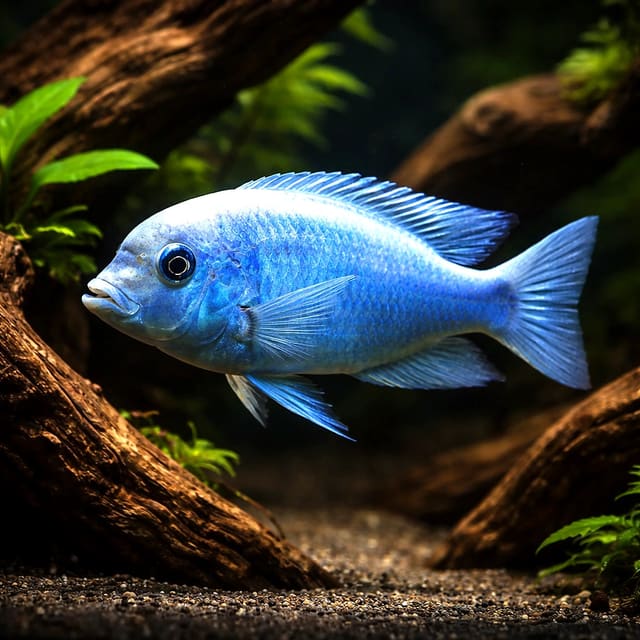
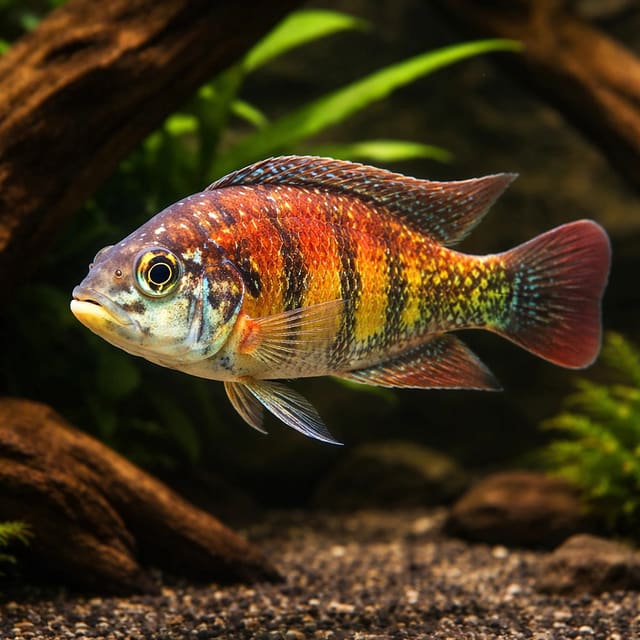
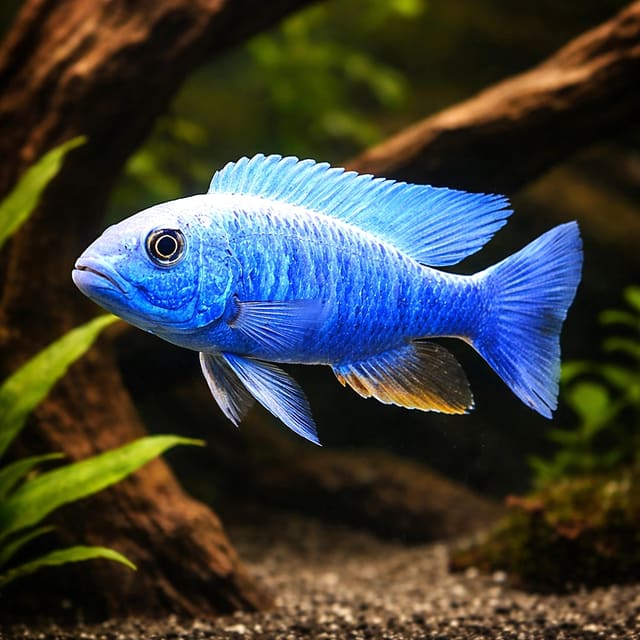
The confirmed offer is straightforward: one live fish under the Yellow Belly Hap trade name, supplied at 4–5 cm and identified as Haplochromis sp. The yellow-belly wording describes the traded form; it is not a species diagnosis. Colour can also vary with maturity, condition, social setting, lighting and individual genetics, so a photograph should never be treated as a promise of one exact pattern.
Sex is guaranteed only when the selected option explicitly states male or female. This Yellow Belly Hap listing has no sex-guaranteed option. Do not infer sex from juvenile colour, a gallery image or the presence of a yellow belly. Group planning that depends on a precise male-to-female ratio should wait until the fish can be reliably identified and sexed.
Broad Malawi-cichlid husbandry can supply a cautious framework for hard water, filtration, aeration and aggression management. It cannot turn every Haplochromis into the same fish. This animal is best for a keeper comfortable monitoring cichlid behaviour and changing a stocking plan if adult development reveals a different size or temperament than expected.
The useful approach is to build in margin: generous aquarium length, robust biological filtration, open swimming room, secure rockwork and the ability to separate a bullied fish. A compact community built around optimistic assumptions is harder to correct later than a spacious aquarium with spare capacity.
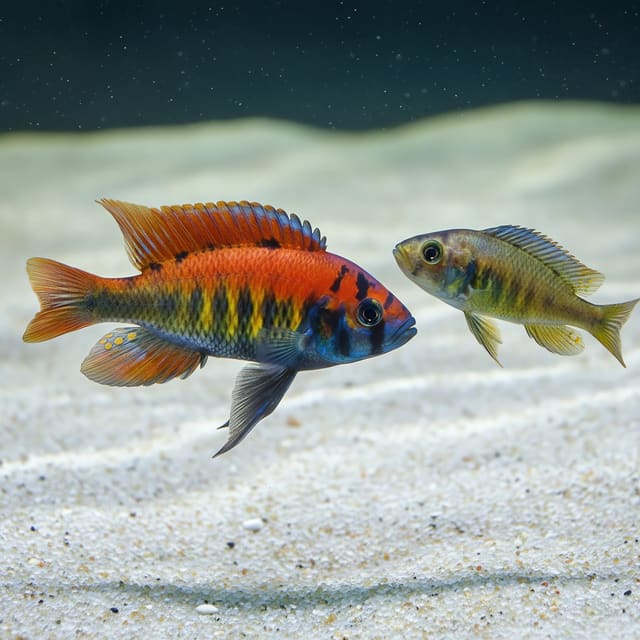
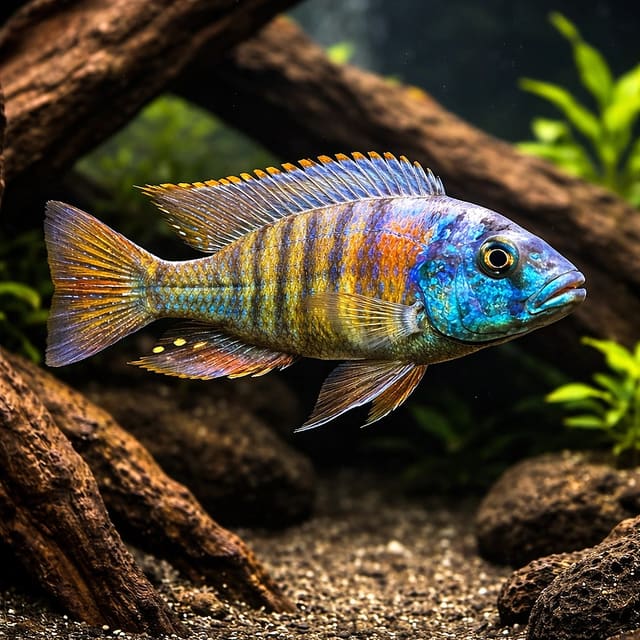
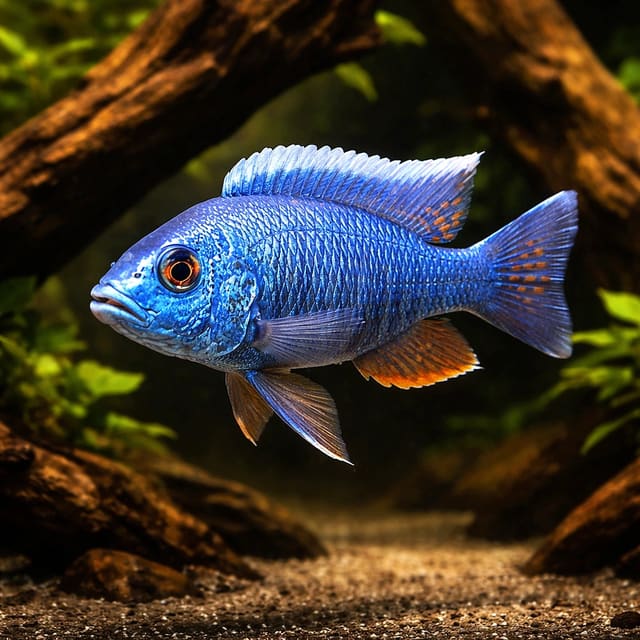
Gallery images have been digitally enhanced to improve image quality. Natural colour, pattern, size and maturity can vary between live animals.
The OATA Malawi-cichlid sheet recommends an aquarium of at least 200 litres for a reasonable-sized community, while acknowledging that some specialist species can use smaller aquariums. Because this fish is identified only to genus, 200 litres is OATA community guidance rather than a minimum for this exact fish. Choose more space when mixing several territorial cichlids, keeping multiple males or allowing for uncertain mature size.
Footprint often matters more than height. Length gives fish room to move away from conflict, and front-to-back depth allows rock structures to form separate areas without closing all the swimming water. Leave enough clearance around rockwork for maintenance and make sure every heavy piece rests securely. Digging cichlids can undermine décor that sits loosely on top of sand.
A mature aquarium is essential. The RSPCA fish environment guidance explains that biological filtration converts toxic ammonia first to nitrite and then to nitrate. Cycle and test the system before adding livestock; the first tropical tank guide covers that preparation in practical steps.
OATA recommends oversized filtration and strong aeration for crowded Malawi communities. That is particularly important where cichlid stocking is deliberately dense to spread aggression. Choose equipment by aquarium volume, expected adult biomass and feeding load rather than by the number of small juveniles seen on day one.
Test ammonia and nitrite after stocking changes. Adding several fish at once increases waste immediately, while the bacterial population needs time to expand. A clear-looking aquarium can still have dangerous dissolved waste, so appearance is not a substitute for testing.
The OATA-style Malawi-cichlid setup uses coral sand or a similar substrate that helps buffer water, plus rockwork and open swimming space. A genus-level Yellow Belly Hap should not automatically be labelled mbuna or utaka. Instead, create a flexible layout that can support an active cichlid while you observe where it chooses to swim and shelter.
Use sand or fine gravel deep enough for normal rearranging but not so deep that waste becomes inaccessible. Build rock formations with several entrances and routes rather than one prize cave. Stable stacks are vital: a fish should not be able to dig beneath a base stone and cause a collapse. Keep glass clearance for cleaning and avoid sharp points where a chased fish could be injured.
Planting is optional in many African-cichlid aquariums. OATA notes that Malawi cichlids often dig and rearrange substrate, which will uproot plants. Hardy plants attached to décor are more practical than delicate rooted displays, but even tough plants are not guaranteed to remain untouched. Treat plants as supplementary cover rather than the only territory structure.
A 4–5 cm fish can be much less assertive than the same individual later. Leave open routes and more than one usable refuge from the outset. If the fish starts excluding others from a large part of the aquarium, add usable separation by changing rock placement, not simply by adding decorative clutter that removes swimming room.
Keep a secure cover where appropriate for the full community and route cables so maintenance does not destabilise the hardscape. The best design is one you can safely adjust, clean and inspect. Permanent, inaccessible piles make it difficult to remove waste or catch an injured fish.
A flexible aquarium plan is especially valuable for a fish known only to genus. Keep a dated note of supply size, photographs and behaviour as the animal develops. Those observations can help an experienced cichlid specialist assess identity later, but they should not be turned into a confident species name from colour alone.
Build the system so it can cope with change. Spare filtration capacity, movable rock modules and a separate mature holding aquarium make it easier to respond if the fish becomes larger or more territorial than expected. That preparation also protects other livestock: waiting for serious injury before creating a separation route is poor cichlid management.
Review the plan at practical milestones. A fish that has clearly outgrown its original refuge, begun excluding tank mates or changed its feeding behaviour needs a fresh assessment of space, diet and compatibility. Measure the fish consistently rather than estimating through curved glass, and compare growth over months rather than days.
The OATA Malawi-cichlid care sheet gives 23–27 °C, pH 8.0–8.6, 12–18 dGH and 10–15 dKH. These are OATA values for the named care group rather than an optimum for this exact fish. They provide a cautious hard-water planning framework while the animal remains identified only as Haplochromis sp.
Measure source water before choosing a method to reach those conditions. If tap water is already hard and alkaline, stable maintenance may be simple. If it is very soft, repeated large chemical corrections can create swings. The water chemistry guide explains the relationship between pH, general hardness and carbonate hardness, while the water matcher helps compare actual readings with the OATA care framework.
Ammonia and nitrite should remain at zero. OATA advises keeping nitrate no more than 20 mg/l above the normal level in incoming tap water. Record both tap and aquarium nitrate so the difference is meaningful. An absolute tank reading without the source-water value can hide whether waste is accumulating.
Test at the same point in the maintenance cycle so trends are comparable. Temperature should be confirmed with a thermometer rather than relying solely on the heater dial. pH and hardness should be checked often enough to show whether buffering remains steady, particularly after large water changes or changes to substrate and décor.
Condition replacement water before it enters the aquarium and bring its temperature close to the tank. Avoid large sudden corrections. When water values drift, identify the cause—source water, exhausted buffering, accumulated waste or an inaccurate test—then correct it in controlled stages.
OATA stresses that Malawi-cichlid diets vary. Smaller mbuna are more herbivorous and benefit from algae-rich cichlid feeds and vegetables, while some larger utaka are more predatory and need pellets with a higher animal content plus frozen foods such as brine shrimp, prawn or cockle. Yellow Belly Hap has not been identified to either a particular species or a named feeding group, so neither menu should be declared its universal diet.
Begin with a reputable cichlid food chosen for the animal's confirmed identity and observed feeding behaviour, then use appropriate supplementary foods rather than a random mix. Avoid assuming that bright colour requires a high-protein diet or that every African cichlid needs spirulina as its main food. Watch body condition, waste and response to the food, and revise the ration when the fish or identification information changes.
The OATA group sheet advises feeding only what the fish consume within a few minutes, twice a day. Offer small measured portions and watch whether the fish swallows the food cleanly. Food repeatedly spat out may be too large, too hard or unsuitable. Uneaten food trapped behind rocks breaks down and adds ammonia, so the feeding routine and filter maintenance must work together.
Avoid mammal meat and improvised rich foods that are not part of an appropriate prepared cichlid diet. The safest programme is deliberate, measurable and responsive to the animal, not driven by a generic sales label.
OATA strongly recommends a partial water change of 25% at least once every week for Malawi cichlids. Adjust the overall maintenance plan to measured nitrate and stocking, but keep the frequency wording clear: the weekly interval is the minimum emphasis, not a claim that every aquarium should change a larger percentage.
Siphon accumulated waste from open sand and around rock bases. Treat replacement water with conditioner. Check filter intakes and outlets for blockages. When filter media needs cleaning, rinse it lightly in water removed from the aquarium. Do not run it under the tap, because chlorine or chloramine can harm the beneficial bacteria.
Observe swimming level, breathing, colour, feeding response, fin condition and social position before problems arise. Warning signs include hanging at the surface, sitting unusually low, erratic swimming, faster or slower gill movement, marked colour change, unusual hiding, damaged fins, white spots, fluffy growths, loss of scales, weight change or reduced appetite.
If several animals change at once, test temperature, ammonia, nitrite, nitrate and oxygenation promptly. If one fish is singled out, review territory pressure and access to food as well as health. Persistent chasing, torn fins or a fish trapped behind equipment require action; they are not simply proof that cichlids have character.
The filter should be mature, the water tested and the hardscape secure before the fish arrives. Make sure someone is present at the delivery address because live fish cannot be left unattended. Read the current delivery and Live Arrival Guarantee policy beforehand and keep the order number accessible.
The video provides the evidence needed for a claim, while the remaining steps support a careful introduction. Avoid adding multiple territorial fish to an immature filter. A new arrival should not be forced into the only cave or feeding position already controlled by a resident.
Haplochromis covers many cichlids, and the Yellow Belly trade name leaves unknown a lake, mature size or aggression level. Compatibility must therefore remain conditional. A fish that shares an African origin or a bold colour scheme is not automatically suitable.
Compare the other animal's adult size, water requirements, feeding speed and territorial behaviour. The planned aquarium must also provide enough room for both species at maturity. A combination that appears calm while every fish is juvenile can change as territories and breeding behaviour develop.
The OATA Malawi care sheet says these cichlids are aggressive and should be mixed cautiously. It advises keeping Malawi cichlids with other Malawi cichlids or some Synodontis catfish from the lake. That rule cannot be copied directly to an unidentified Haplochromis, because this listing is too vague to define a Malawi origin. Use it as a warning against casual community mixing, not as a ready-made list of companions.
Short chases and displays can occur in cichlid aquariums, but persistent exclusion is a welfare problem. A fish held at the surface, behind equipment or in one corner cannot feed and rest normally. Repeated fin damage, weight loss or frantic escape attempts mean the stocking arrangement needs intervention.
Space, décor and stocking order all influence conflict. OATA recommends adding more peaceful fish first and more aggressive fish later in Malawi communities, adding cichlids in groups and rearranging décor to reduce established territory advantage. Those are general cichlid-management tactics, can still fail despite that an incompatible mix will work.
Slight overstocking is sometimes used in Malawi aquariums to spread aggression, but it raises filtration and oxygen demand. It should never mean exceeding the aquarium's biological capacity. A keeper using that method needs oversized filtration, strong aeration, disciplined maintenance and an emergency route for separating fish.
The OATA care sheet notes that more females than males can reduce pressure on one female in identified species. That cannot be applied confidently here because this offer does not guarantee sex and juveniles may not show reliable adult differences. Buying an arbitrary number does not create a known ratio. Plan adequate space and observe developing behaviour instead.
A spacious, mature hard-water aquarium with robust filtration and no existing territorial residents gives the keeper the best chance to observe this fish before choosing companions. The layout can be adjusted around its swimming pattern, and future additions can be selected from confirmed information rather than assumptions.
Do not add Yellow Belly Hap solely because a supplier category mentions Malawi and Victoria cichlids. First confirm whether its mature needs fit the exact residents. A tank already full of assertive mbuna may overwhelm a different haplochromine; an open-water community may also lack the territory structure this individual uses.
Small tetras, guppies, delicate gouramis and similar peaceful community fish are a poor-risk match for an unidentified aggressive-group cichlid. Water chemistry may conflict, and the cichlid can outcompete or harass smaller fish as it matures. The absence of aggression on the first day does not make the long-term combination sound.
The Acei and Saulosi links elsewhere on this page are alternative African-cichlid listings for comparison, not endorsements for mixing with Yellow Belly Hap.
A mature size cannot be stated responsibly from a genus-level Haplochromis label. The 4–5 cm figure is the dispatch grade, not an adult-size forecast, so keep generous long-term space available.
OATA recommends at least 200 litres for a reasonable-sized Malawi-cichlid community, but that is OATA guidance rather than a species minimum. Use generous footprint and extra margin until the fish's mature size and behaviour are clear.
There is no verified species headcount for this trade-named fish. Broad Malawi guidance discusses groups of at least 15 and warns that small groups often fight, but applying that number safely requires a very large filtered aquarium, known species and a workable sex ratio.
It is better for an experienced cichlid keeper. The animal needs hard-water management, strong filtration, careful aggression monitoring and a flexible stocking plan because its exact species and mature size remain unknown.
Malawi-cichlid diets vary: smaller mbuna favour algae-rich foods and vegetables, while larger utaka may need higher-animal-content pellets and frozen foods. Do not choose between those diets from the trade name alone; use the fish's confirmed identity and feeding behaviour.
OATA Malawi-group guidance is 23–27 °C, pH 8.0–8.6 and 12–18 dGH. These values are a hard-water planning framework, not a optimum for this exact fish for an unidentified Haplochromis.
The care group is aggressive and should be mixed cautiously, but the precise behaviour of this unidentified species cannot be guaranteed. Provide space and secure territories, and intervene if chasing becomes sustained exclusion or damage.
Consider only robust cichlids whose confirmed origin, adult size, water needs and temperament match, or suitable Synodontis whose range and conditions overlap. Avoid delicate, very small, slow or long-finned community fish.
Tropical Fish Co hand-packs live fish in oxygenated bags inside an insulated box, using a heat pack when weather calls for it, and sends them with a licensed live-animal courier. Be present to receive the parcel. Before opening it, record a continuous unboxing video showing the sealed parcel, outer box and fish still in the sealed bag; contact the store the same day with the order number if there is a problem.
The taxonomic references establish the genus but not a species. The OATA values remain OATA group context and are labelled that way wherever they appear.
No reviews for this item yet. Bought one? Honest reviews only, good or bad.
What customers say about ordering from us
Easy website plenty of info on fish your buying great to pick a time slot
TRACEY DURRANT · 7 Oct 2026
Got some lovely fish thank you
Kevin Mackie · 7 Oct 2026
Reviews of our shop, collected by Judge.me, an independent third-party review collector. Newest first.