−11%
Moderate
Calico Peacock Cichlid (Aulonocara sp. calico)
24–28°C · pH 7.5–8.5 · 200L
£17.79£19.99
The Electric Blue Hap (Sciaenochromis fryeri) is a predatory Lake Malawi cichlid that reaches 11.5 cm standard length. It suits keepers able to provide a 150 × 45 cm, approximately 304-litre aquarium; the Seriously Fish and OATA overlap is 24–27°C, pH 8.0–8.6 and 12–18 dGH. Sold individually in 3 - 4 cm, 4 - 5 cm and XL dispatch sizes.
Adult size is the maximum length this species reaches at full maturity (scientific sources). The livestock you receive will be younger and smaller — pick a size above for the actual shipping size. Product-photo provenance and any image-specific limitations are stated on the listing.
Sciaenochromis fryeri
Save when buying multiple fish. Each quantity is one fish; sex and pair formation are not guaranteed unless the selected variant explicitly states them.
The Electric Blue Hap (Sciaenochromis fryeri) is a predatory Lake Malawi cichlid that reaches 11.5 cm standard length. It suits keepers able to provide a 150 × 45 cm, approximately 304-litre aquarium; the Seriously Fish and OATA overlap is 24–27°C, pH 8.0–8.6 and 12–18 dGH. Sold individually in 3 - 4 cm, 4 - 5 cm and XL dispatch sizes.
Adult size is the maximum length this species reaches at full maturity (scientific sources). The livestock you receive will be younger and smaller — pick a size above for the actual shipping size. Product-photo provenance and any image-specific limitations are stated on the listing.
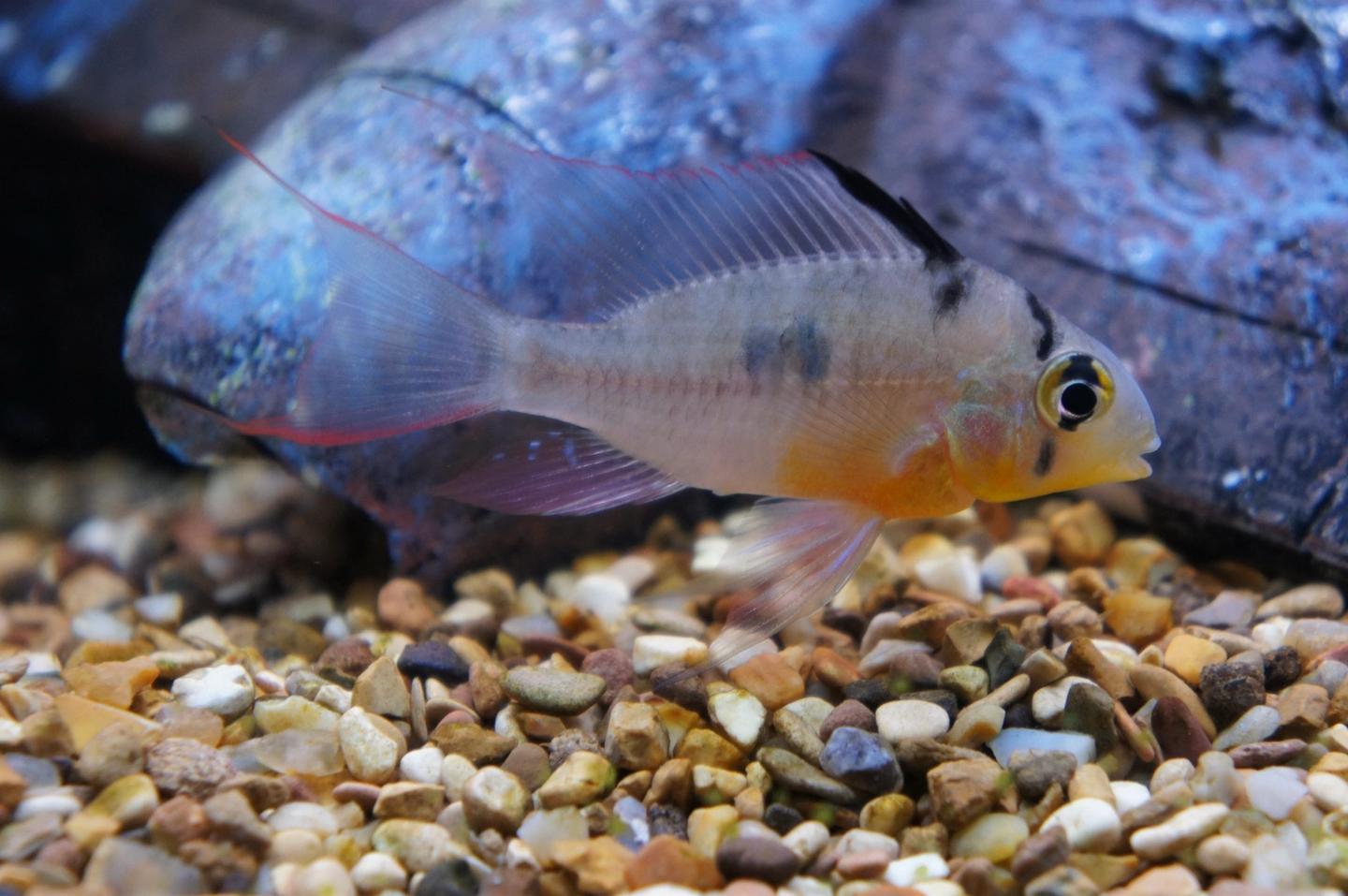
Cichlids are a family of roughly 1,800 accepted species, not one care type. Before buying, identify the exact species and source, then compare adult measurement, usable tank dimensions, social system, territory, tested water, diet and an exit plan. No family-wide minimum tank, water range or tank-mate list is safe.
Maintain these water conditions for optimal health and vibrant colors
The Electric Blue Hap is Sciaenochromis fryeri, a freshwater cichlid from Lake Malawi that reaches 11.5 cm standard length. It suits a keeper prepared to provide a 150 × 45 cm, approximately 304-litre hard-water aquarium, strong biological filtration and carefully screened Malawi companions. The familiar aquarium word “hap” remains useful, but this is a robust predatory cichlid rather than a small general community fish. Mature males may develop the intense blue colour behind the common name, while females are much plainer and juvenile fish are more difficult to sex.
FishBase records Sciaenochromis fryeri throughout Lake Malawi, including Taiwan Reef and the Chinyankwazi and Chinyamwezi islands. It inhabits rocky coasts at recorded depths of 10–40 metres and feeds on fishes. Those facts explain the aquarium priorities: leave swimming space around substantial rock structures, screen out prey-sized companions and feed an appropriate predatory-cichlid diet.
FishBase records a maximum of 11.5 cm standard length for male or unsexed fish. Standard length ends at the base of the tail fin, so it must not be presented as a total-length measurement. Seriously Fish uses 200 mm standard length as its aquarium planning reference. These figures serve different purposes: 11.5 cm is the maximum in the identity database, while 20 cm is a conservative planning reference for choosing space and companions rather than a guaranteed final size.
Plan the aquarium around the larger husbandry reference instead of assuming the fish will remain close to its dispatch measurement. The combination of adult territory, predatory feeding and cichlid waste matters more than body length alone. This animal suits a keeper prepared to manage hard alkaline water, strong biological filtration and changing social behaviour as the fish matures.
One purchase supplies one animal of the selected option. The live size selector shows “3 - 4 cm”, “4 - 5 cm” and “XL”; use that selector to choose the dispatch grade that fits your established stock plan. The size you select is the size supplied, not the adult size. “XL” is a named grade rather than a centimetre measurement, so do not assign it an assumed length.
Sex is guaranteed only when the selected option explicitly states male or female. This Electric Blue Hap listing has no sex-guaranteed option. Mature males can be vividly electric blue, females are much plainer, and juvenile fish are difficult to sex because they share similar early colouring. Choose for the species, dispatch grade and long-term care requirements rather than expecting immediate adult male colour.
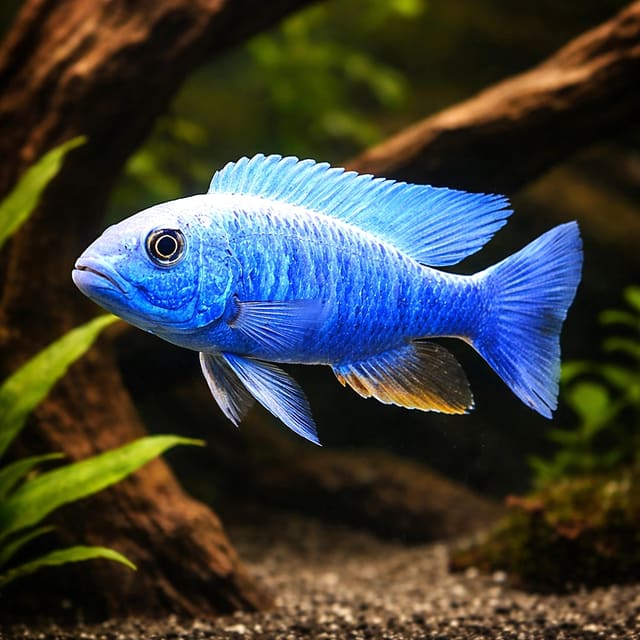
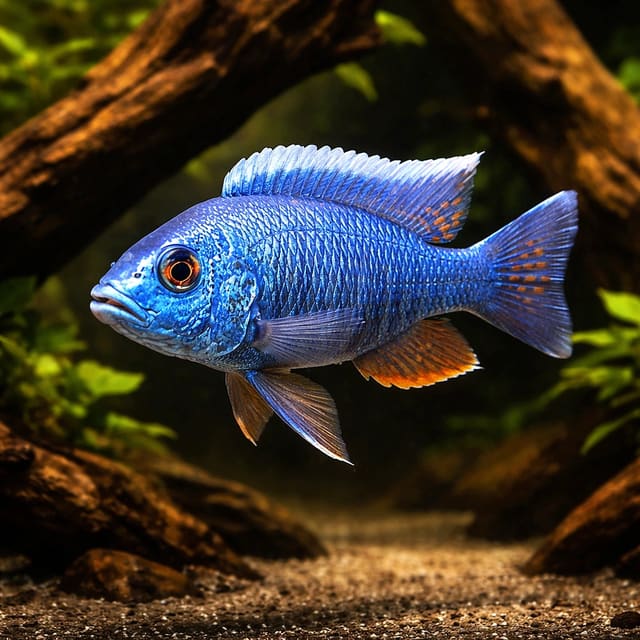
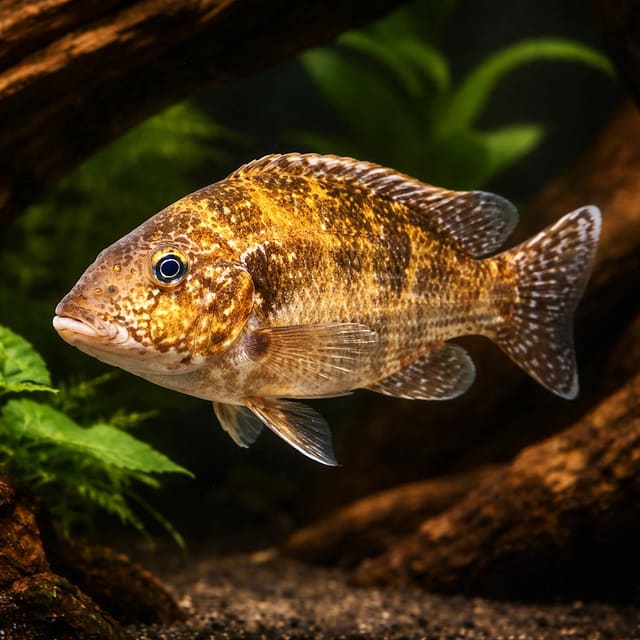
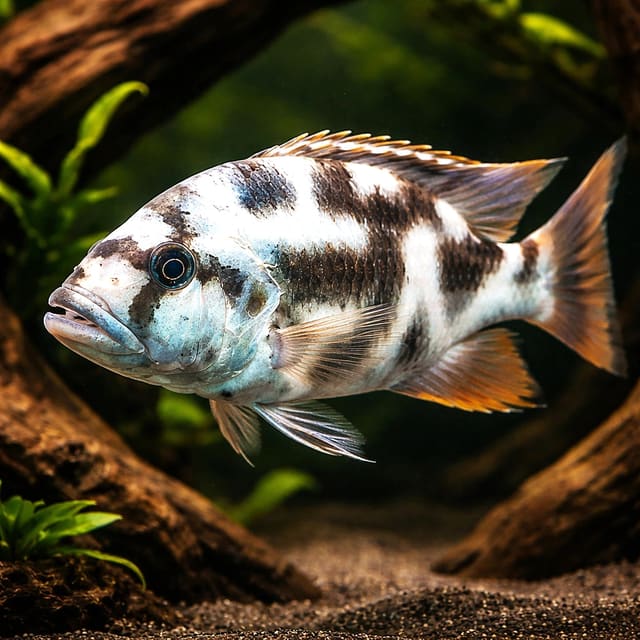
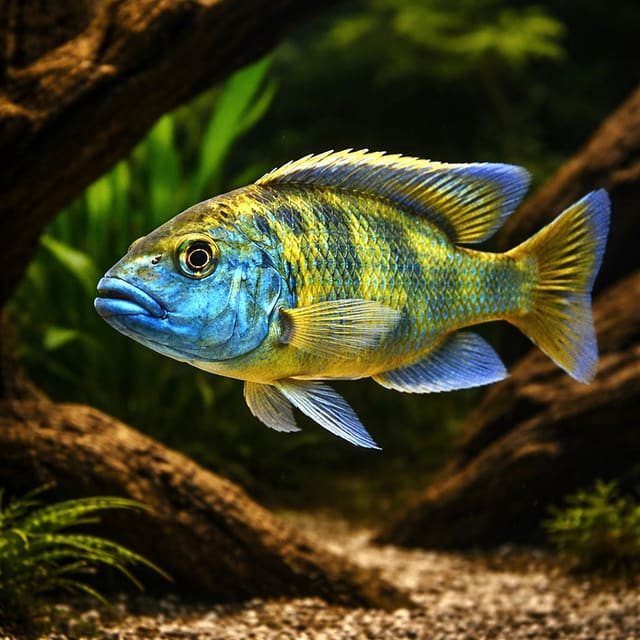
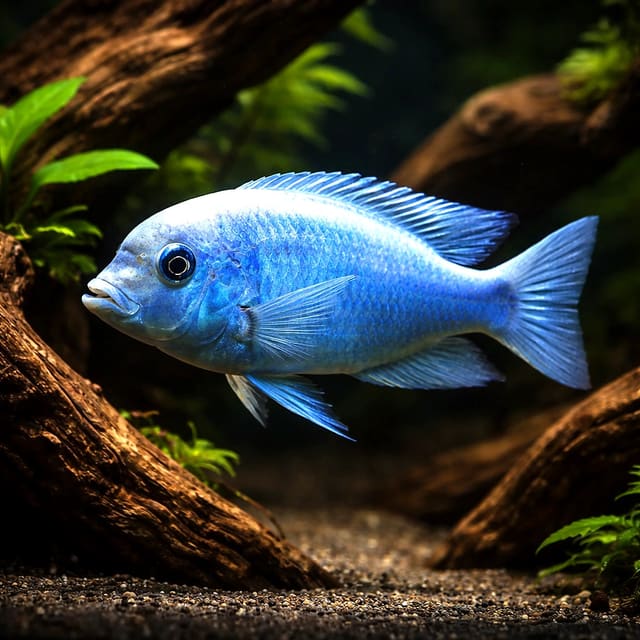
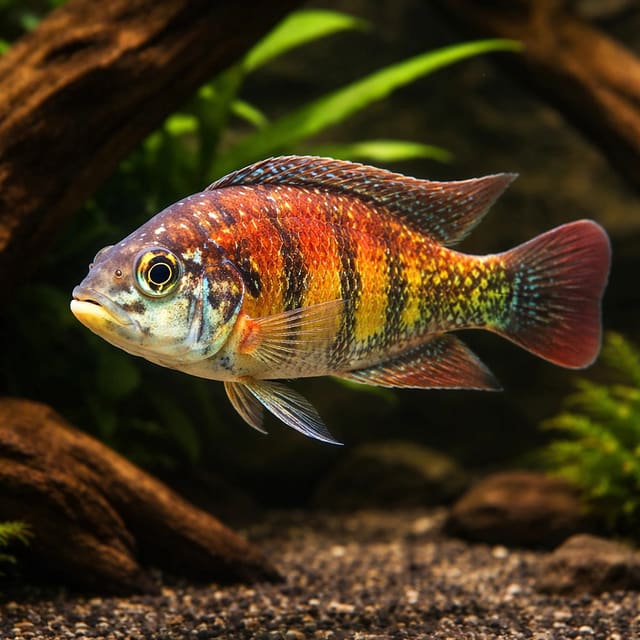
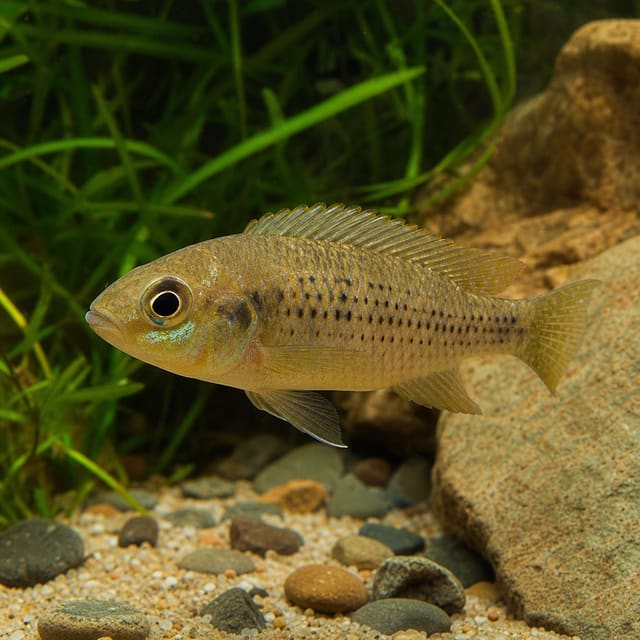
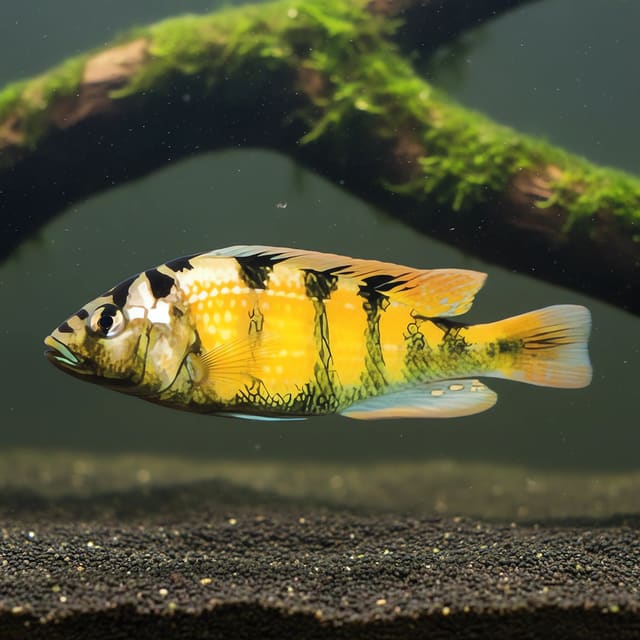
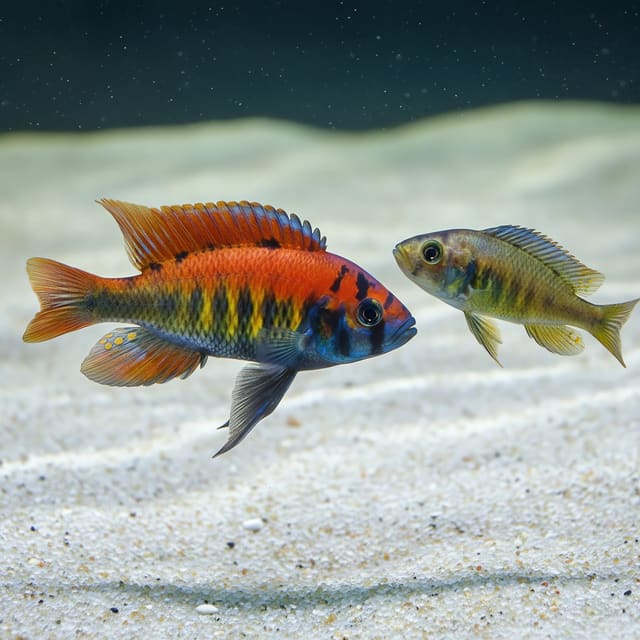
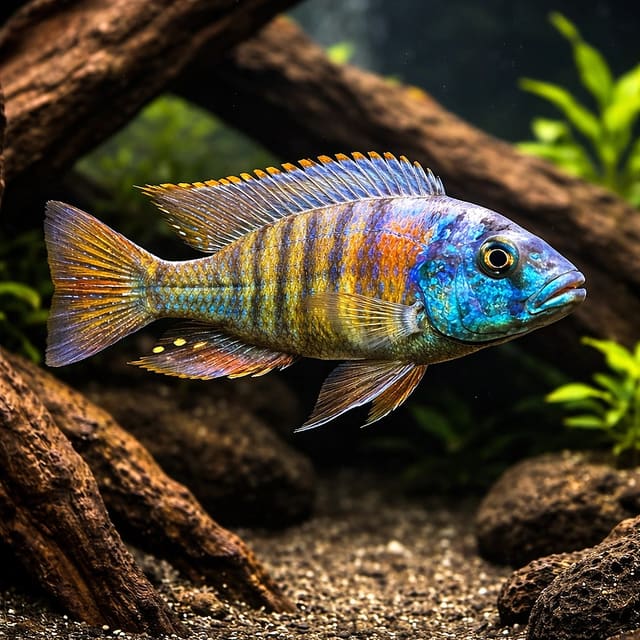
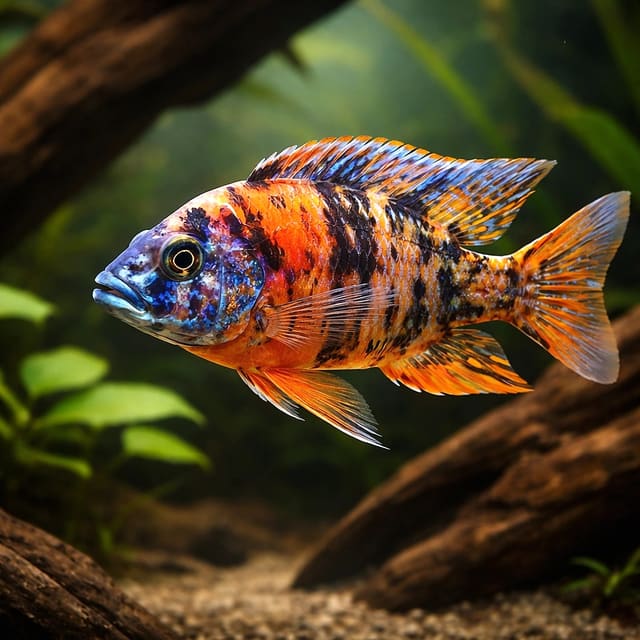
The gallery images are representative, based on reference photographs of this species, so colours can look slightly different from the live animal. They show representative blue fish with an elongated cichlid form, pale fin edges and yellow fin markings in aquarium scenes. An image showing two fish means that two fish are visible in that scene; it does not change the purchase unit.
Colour intensity can vary with maturity and mood. The profile also notes that mature males exhibit clear sexual dichromatism, while juvenile fish are much harder to sex. Use the images to understand the characteristic form and mature male colour potential, then use the offer wording and selector for the actual purchasing decision.
| Suits | Not suited to |
|---|---|
| A 150 × 45 cm, approximately 304-litre aquarium | A small general community aquarium |
| Hard, alkaline Malawi water | Water outside the supported Malawi ranges |
| Rock caves with open swimming areas | An aquarium without adult swimming space |
| Carefully screened Malawi companions | Mbuna, similarly coloured fish or prey-sized fish |
Seriously Fish recommends a 150 × 45 cm aquarium base with a volume of approximately 304 litres. It gives 24–28°C, pH 7.6–8.8 and 10–25 dGH for aquarium care. OATA’s Malawi-cichlid sheet gives group guidance of 23–27°C, pH 8.0–8.6 and 12–18 dGH. Use the overlap for routine care: 24–27°C, pH 8.0–8.6 and 12–18 dGH.
The base measurement matters as much as the litre figure. A 150 cm run provides room for open swimming lanes, cave networks and separation between territories. A shorter aquarium with similar litres does not reproduce that footprint. Build the adult layout before selecting a small dispatch size so growth does not force an urgent move later.
| Decision | Plan |
|---|---|
| Footprint | 150 × 45 cm base |
| Volume | Approximately 304 litres |
| Routine temperature | 24–27°C |
| Routine pH | 8.0–8.6 |
| Routine hardness | 12–18 dGH |
| Interior | Rock caves, sand and open swimming areas |
Start with a mature aquarium and screen the whole stocking plan before adding the fish. Browse the African cichlid collection to compare identities and care requirements, but treat every possible combination as conditional rather than assuming that a shared collection makes two fish compatible.
Use a sandy substrate and arrange piles of rockwork into networks of caves. Leave substantial open areas between and in front of those structures so the fish can swim, feed and move away from another cichlid. This follows the species profile’s balance of rocky shelter and open swimming space rather than turning the entire aquarium into a solid wall of small caves.
Plan the layout around an adult fish. A cave that works for a 3–4 cm dispatch fish may become irrelevant as it grows, while narrow gaps can concentrate disputes at one entrance. Create several usable routes through the aquarium and more than one sheltered area. The goal is to let a pursued fish move away from a territory without being forced into the same dead end each time.
| Feature | Function |
|---|---|
| Sandy substrate | Matches the recommended aquarium base covering |
| Rock piles | Create cave networks and sheltered positions |
| Open areas | Provide swimming and feeding room |
| Separate structures | Offer alternative positions during territorial pressure |
| Visible feeding space | Lets you check whether every resident eats |
Malawi cichlids will often dig and rearrange the substrate, which will uproot any plants present. OATA therefore advises choosing only the hardiest plants that grow attached to décor, and plants should not be the only cover or the organising feature of the aquarium. A coral-sand or similar substrate may contribute buffering in a Malawi setup, but water tests still determine whether the aquarium is holding the required chemistry.
Review the layout whenever chasing becomes concentrated around one cave or passage. Rearranging décor can help disrupt established territories, although it cannot compensate for an unsuitable footprint or an incompatible stock list. Preserve enough open water after every change; adding more rocks is not automatically an improvement.
Maintain 24–27°C, pH 8.0–8.6 and general hardness of 12–18 dGH for routine aquarium care. OATA also gives a carbonate-hardness range of 10–15 dKH for Malawi cichlids. Test the aquarium rather than judging chemistry from clear water or from the type of substrate alone.
Use our water chemistry guide to understand pH, general hardness, carbonate hardness, ammonia, nitrite and nitrate. Then compare your measured results with the working range using the water matcher. Record results on the same day each week so a change is visible before it becomes a persistent problem.
| Result | Required response |
|---|---|
| Temperature outside 24–27°C | Return it to the working range without abrupt swings |
| pH outside 8.0–8.6 | Check carbonate hardness and the replacement water |
| Hardness outside 12–18 dGH | Review the mineral content of source and replacement water |
| Ammonia above 0 mg/l | Investigate filtration, feeding and recent stocking immediately |
| Nitrite above 0 mg/l | Investigate biological filtration immediately |
| Rising nitrate | Review water-change frequency, portions and stocking load |
Keep ammonia and nitrite at zero. OATA advises that nitrate should not exceed 20 mg per litre above the normal level in the tap water. This comparison matters because the starting nitrate concentration varies between water supplies; test the tap and aquarium rather than working from the aquarium result alone.
Treat replacement tap water with a conditioner that removes chlorine or chloramine before it enters the aquarium. Match routine replacement water closely enough to preserve the established conditions. The aim is a repeatable maintenance pattern in which temperature and mineral values remain inside the working range from one water change to the next.
A working biological filter is essential. The RSPCA explains how aquarium filtration supports bacteria that convert toxic ammonia to toxic nitrite and then to safer nitrate. Mature filtration therefore means an established bacterial population and continued waste processing, not simply water that looks clear.
For the approximately 304-litre setup in the species profile, use turnover of four to five times the aquarium volume each hour. That works out at roughly 1,216–1,520 litres per hour before allowing for the effect of media and the aquarium layout. The profile illustrates this with two filters rated around 610–760 litres per hour each.
Prepare and cycle the aquarium before introducing livestock; our first tropical tank guide explains the setup sequence. OATA warns that stocking too quickly can cause new tank syndrome when nitrifying bacteria cannot process the increased waste. Confirm ammonia and nitrite are zero before adding this fish.
Carry out a 25% water change at least once a week and use a siphon to remove solid waste from accessible substrate. Rinse filter media lightly in aquarium water removed during the water change rather than under the tap, because chlorine or chloramine may damage the beneficial bacteria. Avoid cleaning every part of the biological filter so thoroughly that the established colony is lost.
Test ammonia and nitrite at least weekly and after a meaningful increase in feeding or livestock. A clear aquarium can still contain toxic dissolved waste, so equipment checks and test results must guide maintenance.
In Lake Malawi, this fish feeds on other fishes. In the aquarium, Seriously Fish advises a varied diet using live, frozen and dried foods and notes that vegetable matter is not required. Use a quality dried cichlid food as the regular foundation, supported by suitable frozen or live variety rather than relying on one food at every meal.
OATA’s Malawi guidance says larger predatory forms may need pellets with a higher animal content and frozen foods such as brine shrimp, prawns or cockles. Match particle size to the fish so each piece can be taken cleanly. Do not feed animal meat of any kind; the species profile explicitly excludes it.
| Decision | Action |
|---|---|
| Frequency | Feed twice a day |
| Portion | Give only what is eaten within a few minutes |
| Staple | Use a quality dried product suited to a predatory cichlid |
| Variety | Rotate appropriate frozen or live foods |
| Waste | Remove uneaten food and reduce the next portion |
Watch every resident during feeding. A robust cichlid may reach food before a quieter companion, so spread the portion across enough open water for each fish to feed. If one individual repeatedly misses food, treat that as a social problem rather than increasing the total portion until leftovers accumulate.
Overfeeding leaves uneaten food to break down and release toxic waste. It also increases the load on the biological filter. Use the “few minutes” limit as a ceiling, then adjust downward when food reaches the substrate or remains in crevices. Record appetite changes because reduced intake can be an early sign of water-quality trouble, social pressure or ill health.
Do not use food as a promise of electric-blue colour. Mature male colour varies with sexual development and mood, while females remain much plainer. Feed for steady condition and reliable water quality rather than attempting to force rapid growth or colour.
Finish the rock layout, bring the aquarium into the working water range and confirm ammonia and nitrite are zero before delivery. Add livestock gradually rather than placing several new fish into a newly matured filter at once. OATA advises these checks so the filter bacteria can process each increase in waste.
Arrange for someone to receive the parcel so the live fish is not left unattended. Follow the current delivery and Live Arrival Guarantee policy throughout unpacking and acclimatisation.
After release, observe balance, breathing and swimming position. Check whether established residents block access to open water, shelter or food. A newly introduced fish may differ slightly from its settled behaviour or appearance, so compare several observations rather than relying on one moment.
Watch for hanging at the surface, sitting on the bottom, erratic swimming, unusually fast or slow gill movement, persistent hiding or immediate repeated chasing. Test ammonia and nitrite after the new waste load has entered the system. If either rises above zero, investigate biological filtration, feeding and the pace of stocking straight away.
During the first week, observe feeding from more than one position. A fish can appear active while still being excluded from food by an established cichlid. Confirm that it swallows food, leaves a pursued area and uses more than one part of the aquarium.
Learn the fish’s normal swimming, colour, breathing, feeding response and preferred resting area. Individual behaviour varies, but a clear change from the established pattern is useful. OATA highlights surface hanging, bottom sitting, erratic swimming, unusual colour change, increased hiding, altered aggression, abnormal breathing and reduced food intake as signs that deserve attention.
| What you see | What to do first |
|---|---|
| Surface hanging or rapid breathing | Test ammonia and nitrite and check aeration and filter flow |
| Persistent bottom sitting | Check water results, breathing and whether another fish controls the open area |
| Repeated hiding | Observe chasing, feeding access and territorial pressure |
| Reduced appetite | Check whether the fish can reach food and test the water |
| White spots or fluffy growths | Record the appearance and check all water values |
| Lost scales or damaged fins | Identify repeated aggression and provide separation |
Do not wait for severe damage when one fish is continually pinned in a corner, excluded from food or pursued whenever it enters open water. Rearranging décor may interrupt territories, but sustained pressure requires separation. The species profile’s recommendation of only one male unless the aquarium is very large reflects this risk.
Test the water before treating a behaviour change as disease. Even small amounts of ammonia or nitrite can stress Malawi cichlids, and reduced filter flow can affect waste processing and oxygenation. Check the filter for blockages and review whether feeding or stocking changed shortly before the problem appeared.
During weekly maintenance, inspect fins, scales, eyes, breathing and body condition while the fish swims normally. If a health change persists after immediate water and aggression checks, contact us with the aquarium volume, complete stock list, temperature and current ammonia, nitrite, nitrate, pH and hardness results.
Reassess social behaviour as juveniles mature. Colour development can coincide with a changing hierarchy, so a group that was calm at dispatch size may need a different arrangement later.
Treat every proposed mix as conditional. Screen companions by adult size, colour, water requirements, aggression, diet and access to food. This fish is a natural piscivore, so do not combine it with prey-sized fish. The hard alkaline Malawi water requirement also rules out choosing companions solely because they share a tropical temperature.
Seriously Fish says it should not be kept with mbuna and advises avoiding similarly coloured fish. Both rules address predictable pressure: robust mbuna can create an unsuitable social match, while a fish with similar colouring may be treated as a rival. These are direct exclusions rather than suggestions to solve conflict by adding more décor.
| Candidate | Screening decision |
|---|---|
| Mbuna | Avoid |
| Similarly coloured fish | Avoid |
| Prey-sized fish | Avoid because this species feeds on fishes |
| Nimbochromis venustus | Consider only after matching adult size, space and aggression |
| Cyrtocara moorii | Consider only in a spacious planned Malawi aquarium |
| Protomelas or Copadichromis | Consider species and adult size individually |
| Aulonocara | Use caution because the profile records reservations |
The named examples are not universal tank mates. Aquarium footprint, individual temperament, sex and the rest of the stock list still determine whether a combination works. Watch feeding as carefully as chasing: a companion that remains uninjured but cannot reach food is not functioning safely in the group.
OATA advises keeping Malawi cichlids with other Malawi cichlids or certain Synodontis associated with the lake. Apply that as an initial habitat screen, then identify the exact fish and compare adult needs. A broad label such as hap, peacock or catfish cannot settle the final decision.
For a breeding-style group, the species profile recommends several females per male to spread male attention. Keep only one male unless the aquarium is very large. This is an aggression-management arrangement, not a reason to buy several unsexed juveniles and assume the resulting adult ratio will be suitable.
Juveniles are difficult to sex because they initially share similar colouring. Mature males become electric blue, while females remain much plainer. As colour and sex differences emerge, watch for one fish controlling the main cave network, blocking feeding or chasing another fish throughout the aquarium rather than only away from one local territory.
| Plan | Management need |
|---|---|
| One fish in a Malawi community | Screen every companion and monitor its adult territory |
| One male with several females | Provide the full footprint, multiple retreats and a separation plan |
| More than one male | Use only a very large aquarium and prepare for separation |
| Mixed Aulonocara community | Monitor aggression and prevent uncertain hybrid fry being distributed |
The profile notes that male S. fryeri have spawned with females from other genera, particularly Aulonocara. It also warns that different S. fryeri morphs may hybridise. If the aquarium contains possible breeding partners, treat fry identity as uncertain and do not distribute them under a species or locality name.
OATA discusses keeping Malawi communities in sizeable groups and sometimes using slight overstocking to spread aggression. Do not translate that into a recommendation for a large group of Electric Blue Haps. Follow the more precise male-management rule for this fish and ensure filtration, aeration and the aquarium footprint are appropriate for the complete community.
Rearranging décor may help when a newcomer enters an established hierarchy because every fish must find territory again. It remains a supporting measure, not a substitute for removing an incompatible individual. If one fish cannot feed, rest or leave a chase, separate it promptly.
FishBase records a maximum of 11.5 cm standard length for Sciaenochromis fryeri. Seriously Fish uses 20 cm standard length as a conservative aquarium planning reference, so choose space and companions around that larger planning figure.
Plan a 150 × 45 cm base and approximately 304 litres, with sandy substrate, cave networks, open swimming areas, mature biological filtration and strong aeration.
One fish can be planned into a screened Malawi community. For a breeding-style group, keep several females per male and only one male unless the aquarium is very large.
It suits a keeper who can maintain a mature 304-litre hard-water aquarium, manage predatory feeding and screen Malawi companions carefully. Changing sex-related colour and territorial behaviour also require ongoing observation.
Feed a quality dried cichlid product suited to a predatory fish, with varied suitable live or frozen foods twice daily. Offer only what it eats within a few minutes and do not feed animal meat.
The overlap of Seriously Fish species guidance and OATA Malawi group guidance is 24–27°C, pH 8.0–8.6 and 12–18 dGH for routine care. Keep ammonia and nitrite at 0 mg/l.
Seriously Fish describes it as robust but not especially aggressive. Keep only one male unless the aquarium is very large, and act if chasing leaves another fish pinned, unable to feed or unable to leave a territory.
Seriously Fish names Nimbochromis venustus, Cyrtocara moorii, Protomelas and Copadichromis as possible companions, with reservations for Aulonocara. Avoid mbuna, similarly coloured fish and prey-sized fish, and screen every candidate for adult size, water needs, aggression and feeding access.
Someone must be present to receive it. Start filming every delivery before opening the sealed parcel, continue as it is opened and show the fish still in the bag; then float the bag for 20–30 minutes and release the fish without pouring the bag water into the aquarium.
No reviews for this item yet. Bought one? Honest reviews only, good or bad.
What customers say about ordering from us
Easy website plenty of info on fish your buying great to pick a time slot
TRACEY DURRANT · 7 Oct 2026
Got some lovely fish thank you
Kevin Mackie · 7 Oct 2026
Reviews of our shop, collected by Judge.me, an independent third-party review collector. Newest first.