Moderate
Acei Cichlid (Pseudotropheus sp. “acei”)
24–26°C · pH 7.5–8.5 · 300L
£7.99
The Hippo Point salmon hap (Haplochromis hippo point salmon sp.) is an African haplochromine cichlid. It suits intermediate African-cichlid keepers planning a large aquarium of 250 litres or more; keep it at 24–27°C, pH 7.8–8.6 and in hard water. Sold individually in 4–5 cm and 5–6 cm dispatch sizes.
Haplochromis hippo point salmon sp.
Save when buying multiple fish. Each quantity is one fish; sex and pair formation are not guaranteed unless the selected variant explicitly states them.
The Hippo Point salmon hap (Haplochromis hippo point salmon sp.) is an African haplochromine cichlid. It suits intermediate African-cichlid keepers planning a large aquarium of 250 litres or more; keep it at 24–27°C, pH 7.8–8.6 and in hard water. Sold individually in 4–5 cm and 5–6 cm dispatch sizes.

Cichlids are a family of roughly 1,800 accepted species, not one care type. Before buying, identify the exact species and source, then compare adult measurement, usable tank dimensions, social system, territory, tested water, diet and an exit plan. No family-wide minimum tank, water range or tank-mate list is safe.
Maintain these water conditions for optimal health and vibrant colors
The Hippo Point salmon hap (Haplochromis hippo point salmon sp.) is a freshwater African haplochromine cichlid in the family Cichlidae. It suits an intermediate keeper who can provide a large, mature aquarium, hard alkaline water, powerful biological filtration and a carefully screened cichlid community. Treat its temperament as aggressive rather than expecting the behaviour of a peaceful community fish.
Use 250 litres or more as the starting point for planning its aquarium. Then check that the complete group, territorial layout, filtration capacity and behaviour of every companion fit the same system. A long, open swimming area combined with secure rockwork gives fish room to move while breaking direct lines of sight.
Keep the water at 24–27°C and pH 7.8–8.6, with hard water and stable alkalinity. Choose one temperature and pH inside those ranges and hold them steady rather than letting the aquarium swing between the limits.
Plan the complete group before adding fish. Check that the aquarium and filtration can carry every fish in the group, and assess the adult space, waste load, aggression pattern and filtration required by the complete community.
| Suits | Not suited to |
|---|---|
| Intermediate African-cichlid keepers | Small general community aquariums |
| Large, mature, strongly filtered systems | New or unfiltered aquariums |
| Hard, alkaline water | Soft, acidic conditions |
| Carefully screened cichlid communities | Small, delicate or long-finned companions |
Compare the required setup with the fish in our African cichlid collection, but screen each species separately for water, diet, aggression and space. Fish sold in the same collection are not automatically compatible.
Use the live size selector to choose 4–5 cm or 5–6 cm. One purchase supplies one fish of the selected size. The size you select is the size supplied, not the adult size. Build the aquarium around long-term growth and the whole community rather than treating the dispatch measurement as the fish’s permanent space requirement.
A practical example makes the distinction clear. A fish selected at 4–5 cm needs the same mature, filtered and chemically suitable aquarium planning as one selected at 5–6 cm. The one-centimetre difference changes the dispatch grade; it does not justify a smaller temporary tank, a reduced filtration plan or companions that would be unsuitable later. Start with the intended permanent aquarium whenever possible.
Sex is guaranteed only when the selected option explicitly states male or female. This Haplochromis hippo point salmon sp. listing has no sex-guaranteed option. Plan the group without assuming that colour, body shape, dispatch size or the gallery animal establishes the sex of the fish supplied. Where a community plan depends on a particular male-to-female balance, allow for this limit before choosing the fish.
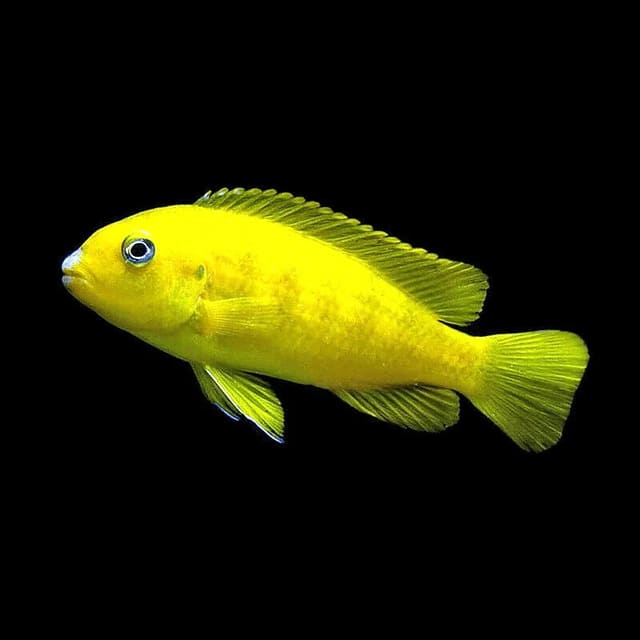
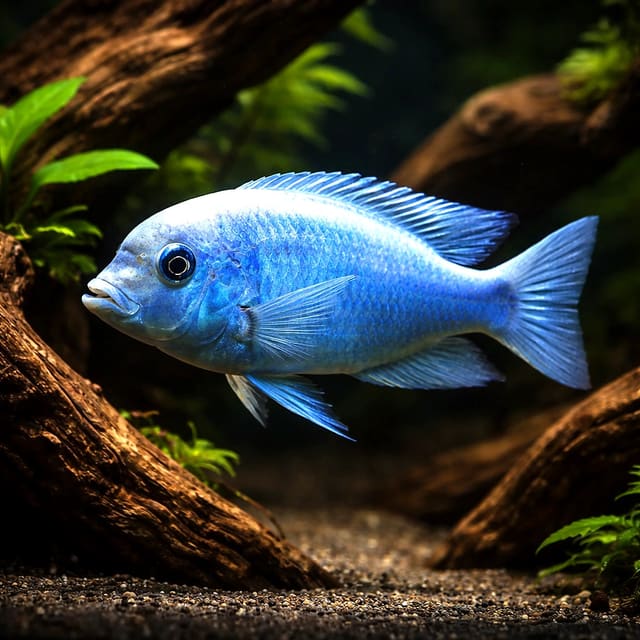
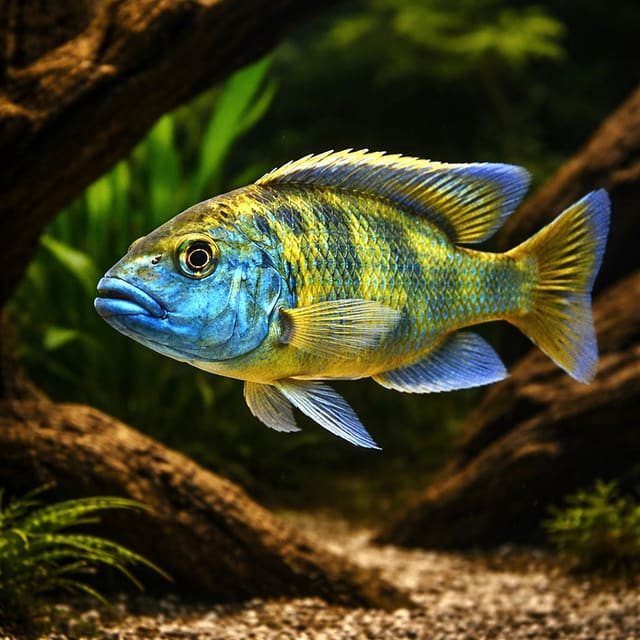
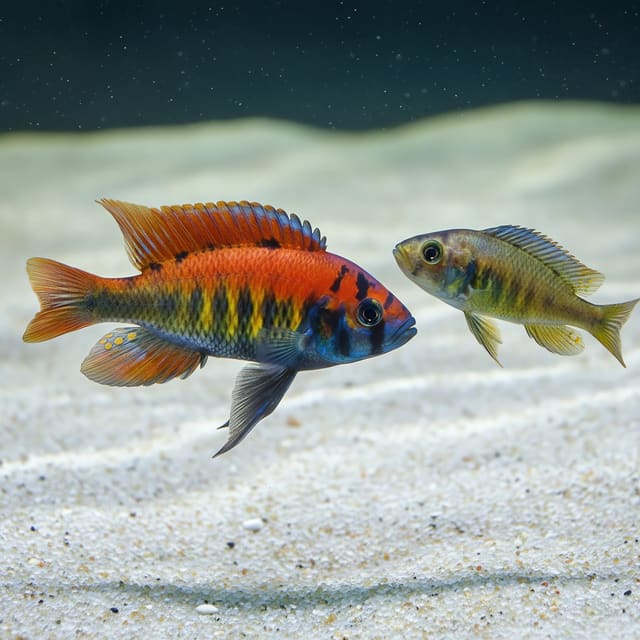
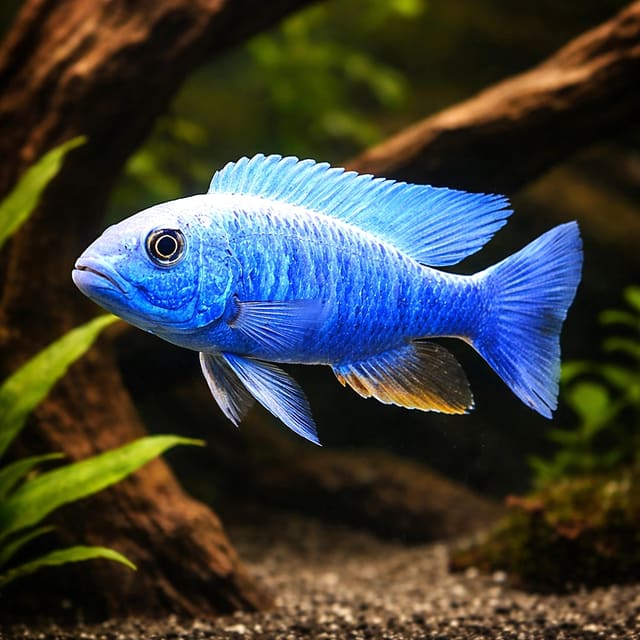
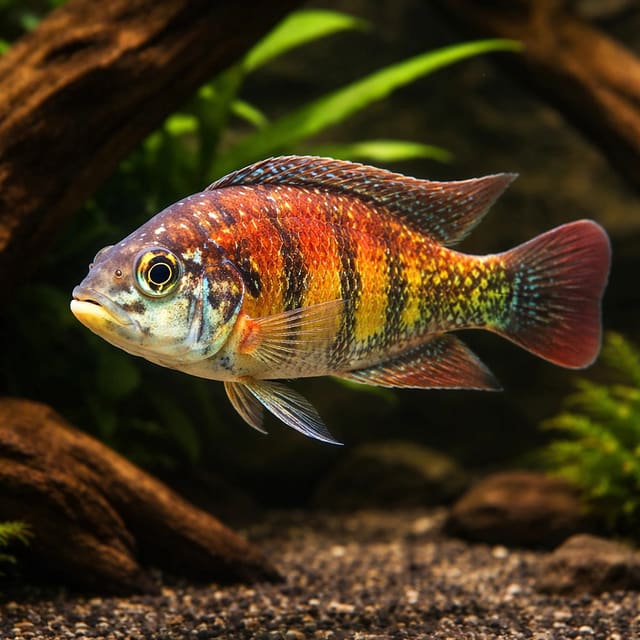
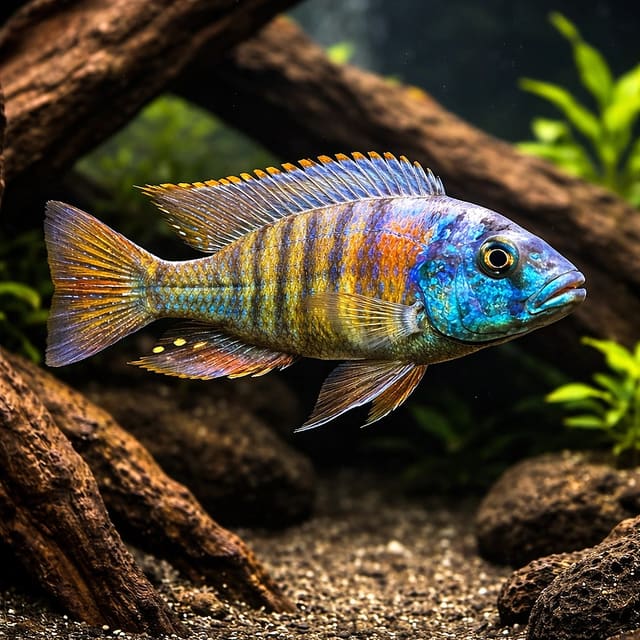
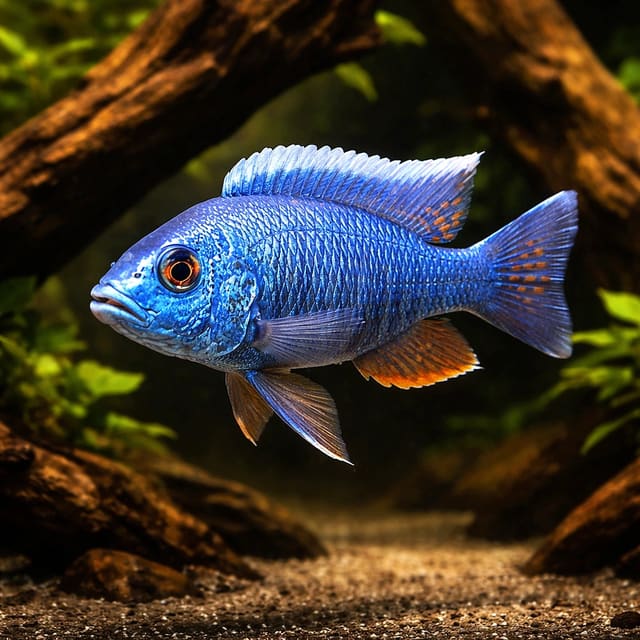
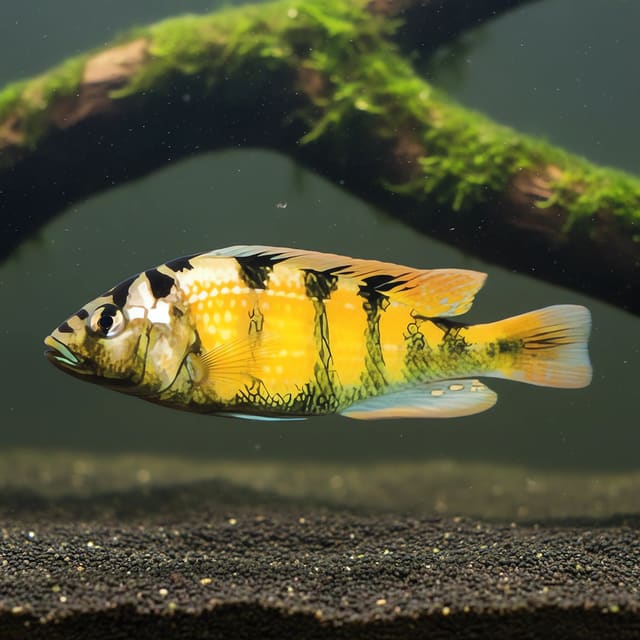
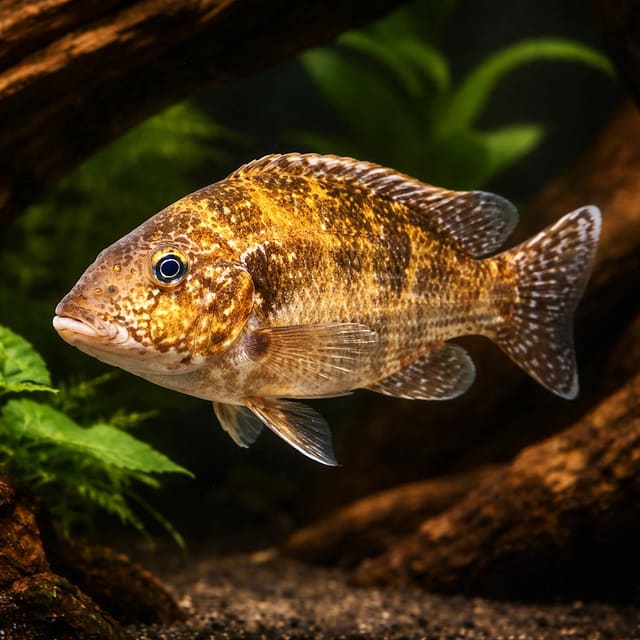
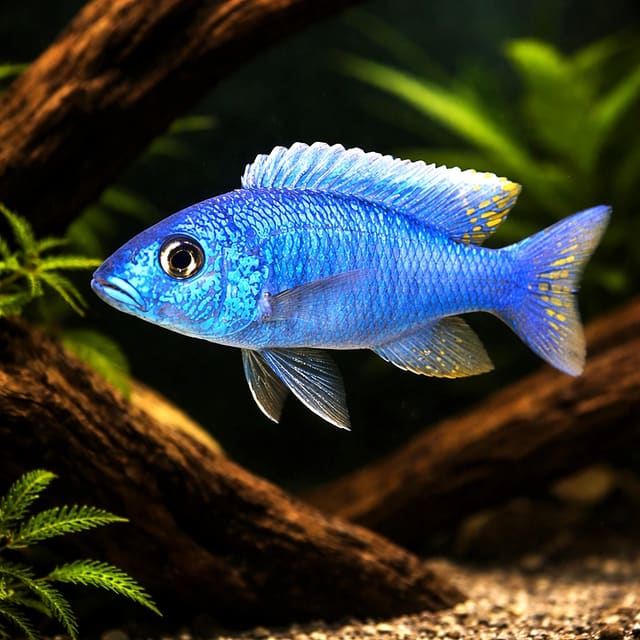
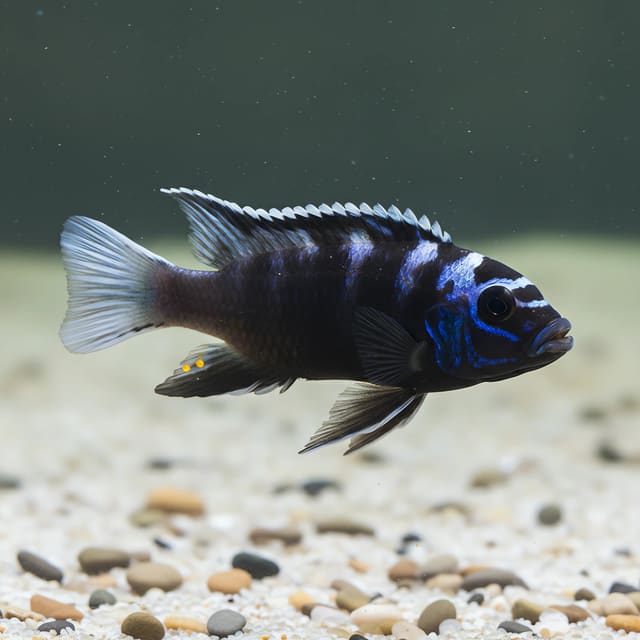
The gallery images are representative of this type of animal rather than photographs of the exact animal supplied, so colours can look slightly different from the live animal. Use the image to understand the general visual presentation, not to choose a particular individual or infer sex.
The two dispatch sizes can help you coordinate an introduction with the physical size of an established group, but size alone does not settle compatibility. Territory ownership, feeding behaviour, water chemistry and the available swimming area remain separate decisions.
Plan on 250 litres or more, and size the aquarium for the whole community you intend to keep.
Provide open swimming room together with rock formations, caves and visual barriers. The open area lets fish move without constantly entering another fish’s shelter, while separated structures interrupt prolonged face-to-face contact. Avoid filling every part of the aquarium with rock; a structured edge and clear swimming lane are more useful than one solid wall.
Stack rocks securely and check them before fish enter the aquarium. These cichlids will often dig and rearrange the substrate, so decorations must remain stable when sand moves around their bases. Recheck the structure during maintenance whenever digging exposes a support point or changes a passage.
Use coral sand or a similar substrate that helps buffer the hard, alkaline water. A sand or fine-gravel surface also makes it easier to see and siphon settled waste. Keep the bed practical rather than so deep or congested that debris collects beyond the reach of routine cleaning.
Plants are optional. These cichlids dig, which will uproot plants placed directly in the substrate, so choose hardy plants that grow attached to décor if greenery is part of the design. Leave enough clear space around them for cleaning and observation.
Arrange the permanent structure before introduction. Later changes can be useful when territorial behaviour develops, but an initial plan with multiple routes and separated shelters gives the group a better foundation than an open, featureless tank or a cramped pile of décor.
Keep this fish at 24–27°C and pH 7.8–8.6, with hard water and stable alkalinity. Choose stable targets within these ranges rather than allowing the aquarium to fluctuate between the limits.
Maintain zero ammonia and zero nitrite. Nitrate should not exceed 20 mg per litre above the normal level in the tap water used for changes. Use the source water as the baseline. For example, if treated tap water measures 10 mg/l nitrate, the aquarium should remain no more than 20 mg/l above that baseline, giving a maximum of 30 mg/l.
Read our water chemistry guide to understand what each test measures, then use the water matcher to compare measured aquarium values with the target range. Record results instead of relying on the water’s appearance: clear water can still contain ammonia, nitrite or excess nitrate.
Hardness is part of the care decision, not a decorative preference. Coral sand or a comparable buffering substrate can help support alkaline conditions, but it does not replace measurement. If the source water is soft or acidic, establish a controlled method of preparing replacement water before the fish arrives; do not make large reactive changes while the fish is in the aquarium.
Stability also depends on matching new water to the aquarium. Treat replacement water before adding it, and avoid sudden changes in temperature or chemistry during a water change. A stable value within the stated range is more useful than repeatedly chasing a different point inside it.
Run a mature biological filter at all times and size the filtration for a crowded, waste-producing cichlid community rather than the empty aquarium. OATA recommends an oversized filter for Malawi communities and strong aeration to maintain dissolved oxygen. Position the return and aeration so water moves throughout the aquarium without leaving quiet pockets behind dense rockwork.
The RSPCA’s aquarium guidance explains why filtration is essential: fish release toxic ammonia, beneficial bacteria convert it to nitrite, and another bacterial stage converts nitrite into safer nitrate. The filter therefore supports a living bacterial population; it is not simply a device that removes visible dirt.
Prepare and cycle the permanent system before adding livestock. Our first tropical aquarium guide explains how to establish the filter before fish arrive. Add the fish only when ammonia and nitrite both read zero and temperature, pH and hardness are already stable.
Add fish gradually because every addition increases respiration, feeding and waste. The filter bacteria need to increase every time fish are added or feeding increases, so allow time between additions. Adding too many fish or increasing feeding too quickly can cause new tank syndrome, with ammonia or nitrite rising faster than the biological filter can process them.
Do not switch filtration off for extended periods or replace all biological media at once. When media needs cleaning, preserve the bacteria by rinsing it lightly in aquarium water removed during maintenance. Never run filter media under the tap, because chlorine or chloramine may kill the established bacterial population.
Filtration capacity and aquarium volume must be considered together. A powerful filter cannot create physical territory, while a large tank without mature filtration cannot process waste safely. This fish needs both usable space and stable biological performance.
Change 25% of the aquarium water at least once every week. Use a siphon to remove solid waste from accessible areas of the substrate.
Treat all replacement tap water with a suitable conditioner to remove chlorine or chloramine before it enters the aquarium. Match the replacement water closely to the aquarium’s temperature and chemistry. Adding untreated or sharply different water can harm the fish and the beneficial bacteria that support the system.
Inspect the filter for blockages each week, but clean media only when flow or accumulated debris makes it necessary. Rinse it lightly in the old aquarium water removed during the partial change. Do not rinse it under the tap. Stagger maintenance if several filter components need attention so the biological system is not stripped back all at once.
Nitrate results help show whether the routine matches the current waste load. Keep nitrate no more than 20 mg/l above the normal tap-water level. If it rises faster than expected, first check feeding, trapped waste, dead plant matter, stocking changes and filter flow. Correct the cause as well as carrying out the water change.
A worked example helps keep the routine consistent. In a 250-litre aquarium, 25% is 62.5 litres. Prepare that replacement volume with conditioner and suitable temperature and chemistry before refilling. The calculation scales with the actual working water volume, so allow for displacement by rock and substrate when deciding how much water has genuinely been removed.
Record unusual observations alongside the test figures. A change in aggression, appetite or breathing can become more useful when it is tied to a dated water result, feeding change or maintenance event. Consistent notes make gradual deterioration easier to recognise than memory alone.
Feed a varied omnivorous African-cichlid diet based on quality cichlid pellets or granules with a balance of animal and vegetable ingredients. Do not base its diet on a specialised high-algae mbuna food or a high-animal-content predator pellet; choose an omnivore cichlid staple.
Offer small meals twice a day, giving only what the fish can eat within a few minutes. Watch the complete group during feeding so confident fish do not take every portion while quieter individuals miss repeated meals.
Spread food across more than one point when the group’s behaviour allows it. This creates several feeding opportunities and makes it easier to see whether one fish is excluding another. Do not compensate for a missed fish by adding a large general portion; target the next small feeding more carefully and watch the result.
Remove or siphon uneaten food rather than leaving it to break down. Excess food increases the waste that the biological filter must process and can raise ammonia, nitrite or nitrate. Feeding and water quality are therefore one husbandry decision: a portion is too large when food remains after the feeding window, even if the container’s general instructions permit more.
Use appetite as a daily observation point. A fish that normally approaches both meals but begins hanging back or missing food needs closer attention. Check the water first and compare the behaviour of the rest of the group before changing the entire diet.
Introduce a new food gradually and retain a familiar staple while assessing acceptance. Variety means rotating suitable foods in controlled portions, not combining every item into one oversized meal. Keep frozen items properly prepared and distribute them in amounts the fish can capture promptly.
Growth or stronger feeding responses do not justify unlimited food. Maintain the twice-daily schedule, judge the quantity by consumption within a few minutes and adjust in small steps. That keeps nutrition responsive without allowing food waste to become a routine source of pollution.
Arrange for someone to receive the parcel in person. Live fish must not be left unattended, and the parcel must be opened and inspected on the same day it arrives. Prepare the mature aquarium before delivery so temperature, pH, hardness, filtration and aeration are already stable.
When the parcel arrives, follow these steps:
Film every delivery from the sealed parcel onward, not only when a problem is expected. Keep the order number and continuous video. For a Live Arrival Guarantee claim, contact us on the same day with the order number and the short unboxing video showing the sealed parcel, continuous opening and fish still inside the bag. Read the full Tropical Fish Co delivery and Live Arrival Guarantee policy before receipt.
Floating the bag does not replace preparing a mature aquarium with zero ammonia, zero nitrite and the required hard, alkaline conditions. Check those aquarium values before the parcel arrives rather than trying to create them while the fish is waiting.
Do not use dispatch size as the only introduction criterion. A 4–5 cm fish and a 5–6 cm fish both enter a social environment shaped by existing territories, feeding competition and water quality. The complete compatibility assessment should already have been made before either size is released.
Observe swimming, colour, breathing, body condition, appetite and aggression as connected indicators. A single brief change may settle, but a persistent or worsening change requires a water test and closer assessment. Compare the fish with its own recent pattern as well as with the other fish in the aquarium.
| If you see | Do this |
|---|---|
| Hanging at the surface | Check aeration, filter flow, ammonia and nitrite immediately |
| Sitting on the bottom or erratic swimming | Test the water and observe whether aggression is displacing the fish |
| Faster or slower gill movement | Check oxygenation, temperature and water quality |
| Darker or paler colour | Compare behaviour, feeding and recent territorial pressure |
| More hiding or aggression | Review territories, sight lines and the stocking plan |
| White spots, fluffy growths or damaged scales | Test the water and seek health guidance promptly |
| Reduced food intake | Check water quality before changing the feeding routine |
Healthy fish should have clear, bright eyes, intact scales, undamaged fins, appropriate swimming and a consistent interest in food. Use these points as a daily baseline. Do not wait for several severe signs to appear before testing the water.
When aggression changes suddenly, examine both the social and environmental causes. A blocked filter, poor oxygenation or deteriorating water can add stress, while a newly claimed cave or interrupted sight line can alter encounters. Correcting only the décor will not solve a water-quality problem, and changing water alone will not create sufficient territory.
If a health concern persists after testing and correcting the water, contact us for further guidance. Record the test values, recent feeding, maintenance and the behaviour observed so the situation can be assessed using concrete details rather than a general impression.
Choose only robust African cichlids of similar size that share its hard, alkaline water, and screen each one for water requirements, diet, eventual space use and aggression before adding it.
Do not place it in a standard tropical community with small, slow, delicate, very peaceful or long-finned fish. Avoid shrimp and small invertebrates as companions. Also avoid adding a highly aggressive cichlid simply because it shares hard, alkaline water; a shared chemistry range does not remove the risk of injury or feeding exclusion.
Similarity in dispatch size is only one observation. It does not show how two fish will divide space, how they will behave after growth or whether one will dominate feeding. Equally, a larger aquarium helps only when its layout, filtration and stock plan use that space effectively.
Mixing with mbuna requires particular caution. The aquarium must be very large, strongly filtered and carefully planned for the aggression and feeding behaviour of the whole combination.
Before forming or changing a community, contact us with the aquarium volume, dimensions, water readings, filtration, existing stock and intended additions. That stocking and compatibility assessment is more useful than a universal companion list because it addresses the complete aquarium.
Treat aggression as a normal planning concern for this fish. Do not expect the behaviour of a peaceful general-community species, and watch how each fish uses shelters, swimming routes and feeding areas.
Treat 250 litres as the minimum and add space when the body size, rockwork and number of fish you plan to keep require it.
Where possible, keep more females than males of each species to reduce pressure on one female. This offer does not guarantee sex, so do not build a plan that depends on every selected fish filling a predetermined male or female place. Do not rely on colour or the gallery image to judge the sex of the fish supplied.
Never stock more fish than the filter and maintenance routine can handle; keep ammonia and nitrite at zero after every addition. If water quality worsens after adding fish, stop further additions and restore stable filtration and maintenance before reconsidering the stock plan.
Use visual barriers to interrupt chasing without removing all swimming space. Secure rockwork can divide the aquarium into separate routes and shelters; open areas still let the group move and feed. Watch whether one fish controls a central passage, food zone or shelter and adjust the structure when the same animal is repeatedly excluded.
Fin damage, persistent hiding, missed meals, rapid breathing or repeated confinement to one corner require action. Test the water, review the stocking plan and change the territorial layout as appropriate. Do not wait for severe injury before treating repeated aggression as a compatibility failure.
Start with at least 250 litres and increase the space when the complete cichlid community, territory pattern or filtration load requires it.
Keep it in a carefully planned African-cichlid group, then check that the aquarium, filtration and species mix can support every fish.
It is an intermediate-care fish suited to a keeper who can maintain a large mature aquarium, hard alkaline water, powerful filtration and a carefully screened aggressive-cichlid community.
Feed quality omnivorous cichlid pellets or granules as the staple, with brine shrimp, daphnia, mysis, chopped krill, spirulina foods and prepared greens for variety. Offer only what it can eat within a few minutes, twice daily.
Keep it at 24–27°C and pH 7.8–8.6 in hard, alkaline water, with ammonia and nitrite at zero.
Treat it as aggressive and plan for chasing, territorial disputes and possible fin damage during fights. Provide ample space, secure visual barriers and close observation rather than placing it with small, slow, delicate or long-finned fish.
Keep it only with robust African cichlids of similar size in a large hard-water aquarium, screening each one for water, aggression, diet and space. Avoid shrimp, small invertebrates and standard community fish.
Tropical Fish Co packs live fish in pure oxygen inside an insulated poly box, with a heat pack when the weather calls for it. Someone must receive the parcel, film it continuously from sealed box to fish in the sealed bag, inspect it that day and float the bag for 20–30 minutes before release.
No reviews for this item yet. Bought one? Honest reviews only, good or bad.
What customers say about ordering from us
Easy website plenty of info on fish your buying great to pick a time slot
TRACEY DURRANT · 7 Oct 2026
Got some lovely fish thank you
Kevin Mackie · 7 Oct 2026
Reviews of our shop, collected by Judge.me, an independent third-party review collector. Newest first.