Moderate
Acei Cichlid (Pseudotropheus sp. “acei”)
24–26°C · pH 7.5–8.5 · 300L
£7.99
The Haplochromis nyererei Ruti Island (Haplochromis nyererei) is a Lake Victoria cichlid that reaches 7.7 cm standard length. It suits intermediate keepers planning an assertive African cichlid community; the FishBase–OATA temperature overlap is 23–27°C, while OATA’s group guidance gives at least 15 cichlids, pH 8.0–8.6 and 12–18°dH. Sold individually at a dispatch size of 6–7 cm.
Adult size is the maximum length this species reaches at full maturity (scientific sources). The livestock you receive will be younger and smaller. Product-photo provenance and any image-specific limitations are stated on the listing.
Haplochromis nyererei
Save when buying multiple fish. Each quantity is one fish; sex and pair formation are not guaranteed unless the selected variant explicitly states them.
The Haplochromis nyererei Ruti Island (Haplochromis nyererei) is a Lake Victoria cichlid that reaches 7.7 cm standard length. It suits intermediate keepers planning an assertive African cichlid community; the FishBase–OATA temperature overlap is 23–27°C, while OATA’s group guidance gives at least 15 cichlids, pH 8.0–8.6 and 12–18°dH. Sold individually at a dispatch size of 6–7 cm.
Adult size is the maximum length this species reaches at full maturity (scientific sources). The livestock you receive will be younger and smaller. Product-photo provenance and any image-specific limitations are stated on the listing.

Cichlids are a family of roughly 1,800 accepted species, not one care type. Before buying, identify the exact species and source, then compare adult measurement, usable tank dimensions, social system, territory, tested water, diet and an exit plan. No family-wide minimum tank, water range or tank-mate list is safe.
Maintain these water conditions for optimal health and vibrant colors
Haplochromis nyererei Ruti Island (Haplochromis nyererei) is a freshwater cichlid from Lake Victoria in Africa. It belongs to the family Cichlidae and reaches a recorded maximum of 7.7 cm standard length. This is an intermediate keeper’s fish: plan carefully for cichlid aggression, clean water and a deliberately structured community.
FishBase records the species close to rocky shores and rocky islands at depths of 1–4 metres. It is benthopelagic, living and feeding near the bottom rather than being restricted to the surface. Its recorded natural diet includes algae and insects, so both plant material and animal protein belong in an appropriate aquarium diet.
A Wikipedia account of the species also describes it as endemic to Lake Victoria and gives the same 7.7 cm standard-length figure. The scientific name honours Julius Nyerere, president of Tanzania from 1961 to 1985.
| Suits | Not suited to |
|---|---|
| An intermediate keeper prepared to manage assertive cichlid behaviour | A casually assembled peaceful community |
| A mature, filtered freshwater aquarium with weekly testing | An immature or unfiltered aquarium |
| A rock-led layout planned around a 7.7 cm adult fish | A layout chosen only around the dispatch size |
| A carefully screened African cichlid community | Tank mates selected without comparing water needs and behaviour |
For community planning, use at least 200 litres and consider a group framework of at least 15 cichlids. These figures come from OATA’s African Malawi cichlid guidance. Because this fish comes from Lake Victoria rather than Lake Malawi, treat that framework cautiously and base the final stocking plan on the aquarium’s dimensions, filtration and the behaviour of every proposed companion. You can also browse the African cichlid collection while comparing potential choices.
One purchase supplies one live fish. The dispatch grade is approximately 6–7 cm, while the recorded maximum adult length is 7.7 cm standard length. Dispatch size describes the animal at the point of supply; it is not a substitute for planning around its adult dimensions, territorial behaviour and community needs.
Sex is guaranteed only when the selected option explicitly states male or female. This Haplochromis nyererei Ruti Island listing has no sex-guaranteed option.
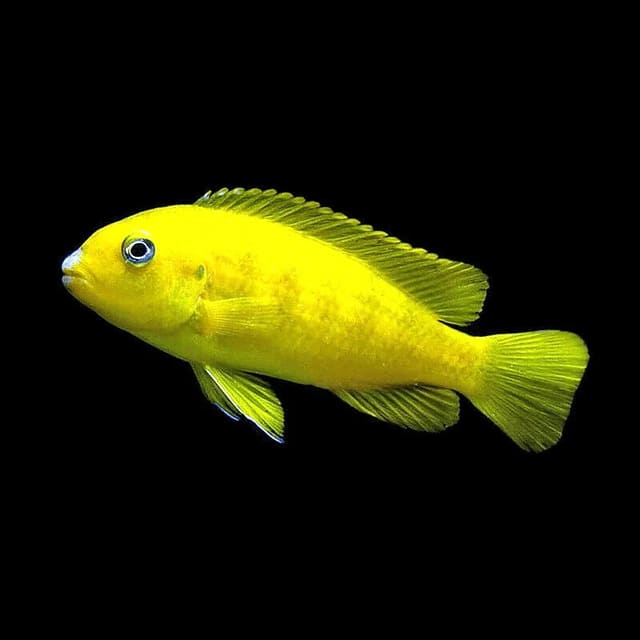
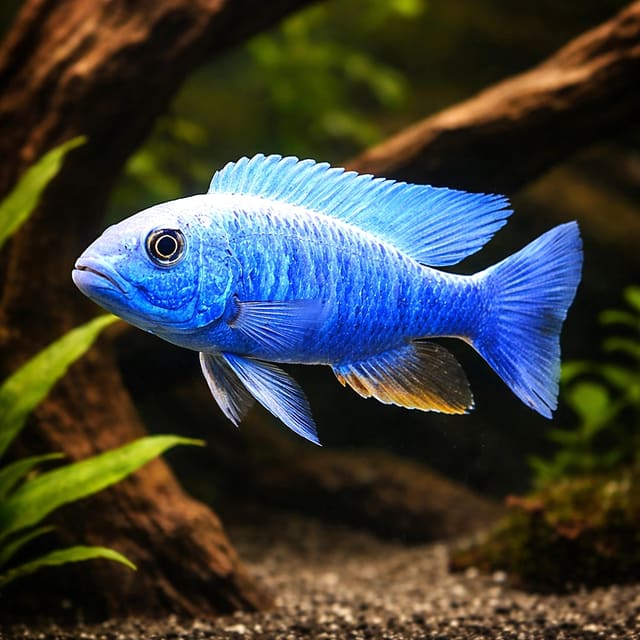
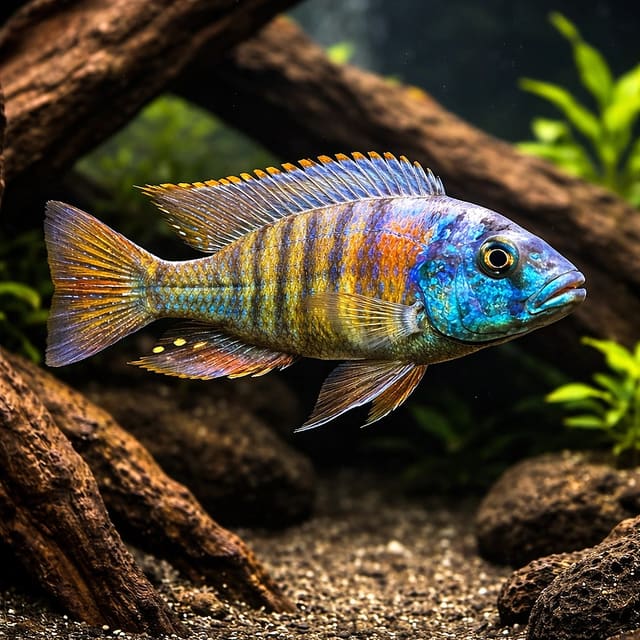
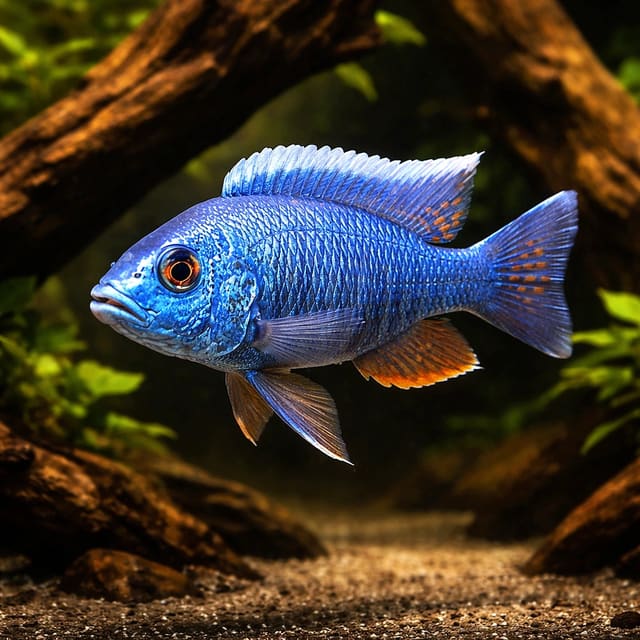
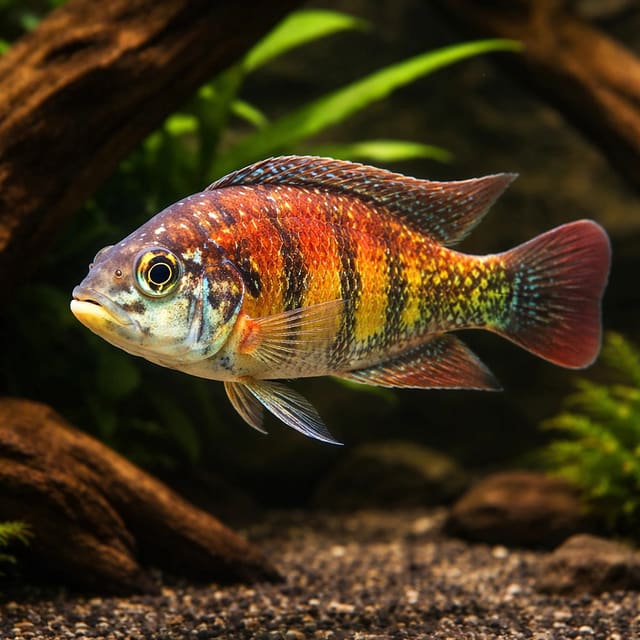
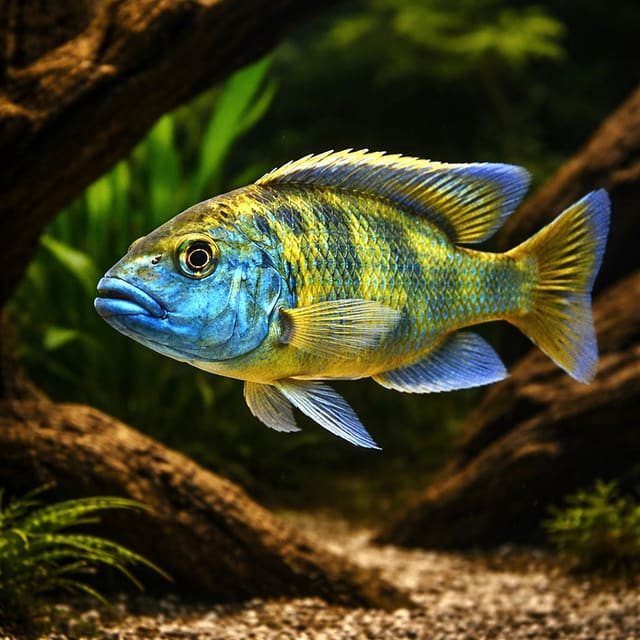
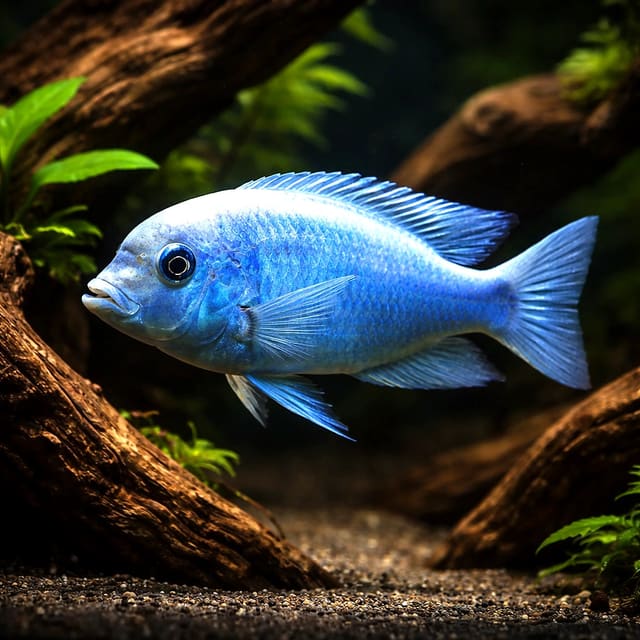
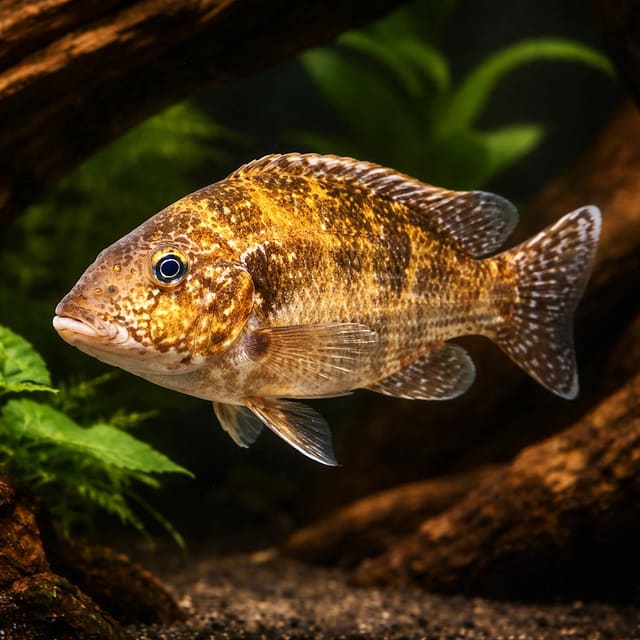
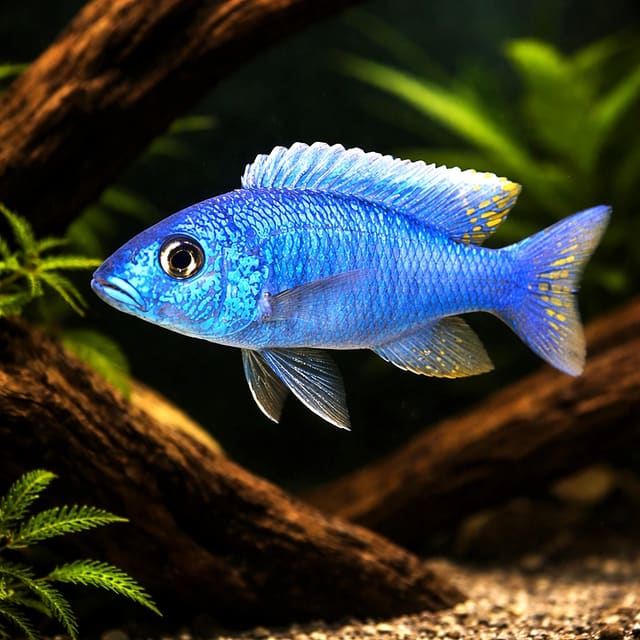
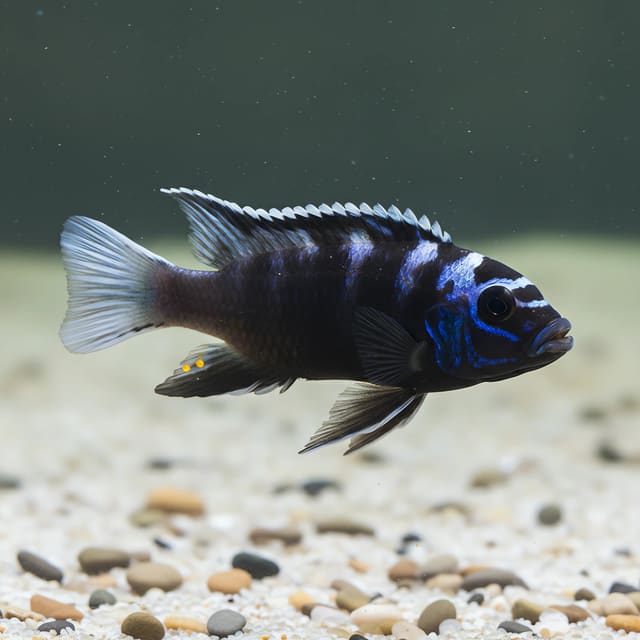
Do not use the gallery to predict the sex or exact colour of the fish supplied. Colour can vary between individuals, and appearance alone is not the purchase contract. The gallery images are representative of this type of animal rather than photographs of the exact animal supplied, so colours can look slightly different from the live animal.
The pictured pair demonstrates how differently two fish of this type can appear: one shows a vivid red-orange back, blue face and dark bars, while the other is olive-grey with muted bars. Those visible differences are useful for recognising the broad form, but the aquarium should be prepared for the same adult size, water requirements and assertive cichlid behaviour regardless of the individual colour presented after arrival.
Keep the aquarium at 23–27°C, pH 8.0–8.6 and general hardness of 12–18°dH. The temperature range is the overlap of FishBase’s recorded 22–28°C wild environment and OATA’s 23–27°C African Malawi cichlid guidance; OATA also gives the pH and general-hardness ranges, plus carbonate hardness of 10–15°dKH.
Start community planning with an aquarium of at least 200 litres. The larger water volume helps stabilise temperature and water quality, while the dimensions must still allow a rock-led layout and separation between territories. An oversized filter and strong aeration are appropriate for the crowded cichlid community approach described by OATA.
Keep the decision centred on the adult fish and the whole community rather than the 7.7 cm figure alone. Substantial space is needed when aggression, biological load and territorial boundaries are considered together.
Set the routine aquarium temperature to 23–27°C. This is the overlap of FishBase’s recorded 22–28°C wild environment and OATA’s 23–27°C African cichlid aquarium guidance. Choose a point within that band that can be held steadily rather than allowing repeated movement between the limits.
| Measurement | Working instruction |
|---|---|
| Temperature | Keep at 23–27°C |
| pH | Keep at 8.0–8.6 |
| General hardness | Keep at 12–18°dH |
| Carbonate hardness | Keep at 10–15°dKH |
| Ammonia | Keep at zero mg/l |
| Nitrite | Keep at zero mg/l |
| Nitrate | Keep within 20 mg/l above the normal tap-water level |
Measure the aquarium and the conditioned replacement water instead of assuming that tap water will remain unchanged after entering the system. Temperature, pH and hardness should all be considered together: a proposed companion that fits only one part of the range is not yet a complete match.
Use the water matcher to compare measured aquarium values with the working range. If a reading falls outside the range, pause livestock additions and identify the cause before making another change. Sudden attempts to chase a single number can create additional instability, while measured adjustments allow the fish and biological filter to remain within a predictable routine.
Record weekly readings so that a change is visible before it becomes a persistent problem. A sequence of results is more useful than an isolated test because it shows whether the aquarium is stable, gradually drifting or responding to increased feeding and stocking.
Use an aquarium of at least 200 litres as the starting point for a reasonably sized cichlid community. OATA attaches that figure to a community rather than to one fish, so the final number of occupants must reflect the aquarium’s length, width, filtration and territorial layout. More water volume also makes temperature and water quality easier to stabilise.
Build the environment around the species’ association with rocky shores and rocky islands. Create several rock-focused areas rather than one feature that every fish must contest. Leave room between structures so fish can move through the aquarium without being forced continually into one another’s immediate territory.
Do not judge capacity from litres alone. Two aquariums can hold the same nominal volume but provide very different usable layouts. A long footprint with separated rock areas supports more meaningful territorial planning than a shape that concentrates every fish around one structure.
Watch how the fish use the completed layout. Repeated chasing through the full aquarium, one fish being confined to a corner, or persistent hiding indicates that the territorial plan needs attention. OATA advises rearranging décor when aggression is entrenched because new boundaries can interrupt control of an established territory.
Add this cichlid only to a mature aquarium with a working biological filter. The RSPCA explains that fish release toxic ammonia, which filter bacteria convert first to nitrite and then to the safer nitrate. Ammonia and nitrite must both be zero before the fish is introduced.
A filter is not ready simply because water is moving through it. Beneficial bacteria must have developed sufficiently to process the waste created by the intended livestock and feeding routine. If this is a first aquarium, follow our guide to preparing and maturing a tropical tank before setting an arrival date.
OATA warns that adding too many fish too quickly can produce new tank syndrome. In that situation, the bacterial population cannot process the increased waste, allowing ammonia or nitrite to rise to harmful levels. This risk matters in cichlid communities because the behavioural plan may favour several fish while the biological filter still needs time to expand.
Use an oversized filter and strong aeration for a busy cichlid aquarium. Check the filter for blocked intake areas or reduced flow as part of routine observation. Flow, oxygenation and biological processing work together; visible water movement alone does not replace regular water testing.
Make a varied cichlid food containing suitable algae material and animal or insect protein the main diet. FishBase records Haplochromis nyererei feeding on algae and insects in nature, so the staple should reflect both parts of that biology rather than being built around only one ingredient type.
Feed only what the fish can finish within a few minutes, twice a day. This schedule and portion rule come from OATA’s African cichlid care advice. Small, measured meals make it easier to see whether each fish is eating and reduce the amount of food left to decay in the aquarium.
Distribute food so that more than one fish can feed instead of creating a single point that an assertive animal can monopolise. The purpose is not to increase the total portion but to give each fish a fair opportunity within the same controlled meal.
Overfeeding affects more than body condition. Uneaten food breaks down and increases the waste that the filter must process, creating a route to deteriorating ammonia, nitrite or nitrate readings. If food remains after the feeding window, reduce the next portion and remove the residue rather than relying on the filter to absorb the mistake.
Change 25% of the aquarium water at least once every week. Treat replacement tap water with a conditioner that removes chlorine or chloramine before it enters the aquarium, and use the water change to siphon solid waste from accessible areas of the substrate.
Test ammonia and nitrite at least weekly and keep both at zero. Check nitrate against the OATA limit of no more than 20 mg/l above the normal tap-water level. Temperature, pH and hardness should be measured often enough to reveal drift before the fish’s behaviour or condition changes.
Our aquarium water chemistry guide explains why these measurements must be considered together. Write down the result, date and any recent change in feeding, stocking or maintenance. This simple record makes cause and effect easier to recognise.
Respond to a trend rather than waiting for a crisis. If nitrate rises more quickly from week to week, review portions, waste removal and the number of fish. If ammonia or nitrite appears, pause additions immediately, test again and correct the husbandry problem affecting the biological filter.
Consistency is the aim. A repeatable weekly routine supports the hard, alkaline water plan, keeps waste under control and gives you a regular opportunity to examine every fish closely.
Tropical Fish Co hand-packs fish in pure oxygen inside an insulated poly box and uses a heat pack when the weather calls for one. Transport is handled by a tracked courier licensed to carry live animals.
Read the current delivery and Live Arrival Guarantee policy before the journey.
Outside the delivery sequence, OATA’s cichlid guidance supports checking the aquarium before adding the fish.
OATA advises increasing fish numbers slowly so that the biological filter can respond to additional waste. It also recommends adding cichlids in groups where the community plan calls for it, reducing the chance that one new arrival receives all the established fishes’ attention. These stocking decisions must be made before purchase because they affect filtration capacity and aggression management.
During the first week, compare swimming, breathing, colour, temperament and appetite with the fish’s pattern after settling. A single observation is less useful than checking at the same points each day. Test the water promptly if breathing accelerates, the fish remains at the surface or bottom, appetite falls, or aggression changes.
Use daily observation to identify changes early. Healthy fish should have clear, bright eyes, intact scales, undamaged fins, appropriate swimming and an expected interest in food. Learn the normal posture, colour and territorial pattern of this individual so that a change has a meaningful reference point.
| If you see | Do this first |
|---|---|
| Hanging at the surface, sitting on the bottom or erratic swimming | Test ammonia, nitrite, temperature and oxygenation conditions |
| Faster or slower gill movement | Test water and check filter flow and aeration |
| Darker or paler colour than usual | Review water results, aggression and recent changes |
| More hiding or a sudden rise in aggression | Check territorial pressure and whether one fish is being excluded |
| White spots, fluffy growths, lost scales or damaged fins | Record the signs, test the water and contact us for health guidance |
| Reduced feeding | Remove leftovers and assess water, breathing and social pressure |
Water testing comes first because even small amounts of ammonia or nitrite can stress cichlids. Correct husbandry problems promptly, but do not treat every change as the same condition. Appearance, breathing, appetite and behaviour must be considered together.
Keep notes on when the change began, which fish are affected and what the test results show. That detail is especially valuable in an assertive community, where fin damage or hiding can reflect social pressure while breathing and appetite changes may coincide with deteriorating water quality.
Treat compatibility as an assessment, not a fixed list. Compare every proposed companion for water chemistry, adult size, feeding behaviour and aggression before it enters the aquarium. A shared label such as “African cichlid” does not by itself answer whether two particular fish will occupy the same system safely.
For this Lake Victoria species, use an individual screening rule: combine it only after matching water chemistry, adult size, feeding behaviour and aggression, then monitor behaviour after introduction.
Ask us for a stocking assessment with the aquarium dimensions, volume, water readings, filtration and the full species list. Include the number and approximate adult size of each proposed fish. That context allows the aggression and biological load to be considered together.
A community should be paused when a candidate fits the temperature but not the pH, shares the water values but is repeatedly excluded from food, or creates territorial pressure that the layout cannot break up. Compatibility remains something to observe after introduction, not a promise made solely from species names.
Plan for assertive behaviour from the outset. OATA describes African Malawi cichlids as aggressive and warns that small groups often fight. Its community framework uses groups of at least 15 and slight crowding to spread aggression, but that approach must be supported by at least 200 litres, oversized filtration, strong aeration and careful water testing.
Do not add fish simply to reach a number. Each addition increases waste and feeding demand, while an immature filter may not process that increase. The behavioural plan and the biological capacity must advance together.
OATA also recommends keeping more females than males where possible so that one female is not subjected to continual male attention. Use that approach only when the sex of the animals concerned is explicitly known; colour seen in a gallery or at one stage of development is not a sound basis for constructing a ratio.
Intervene when chasing is persistent rather than brief, one fish cannot reach food, fins become damaged, or an animal remains confined to one corner. First test the water, then review territory boundaries, stocking order and the behaviour of each fish. The goal is not the complete absence of display or short chases; it is a community in which no individual is continually excluded from food, space or normal movement.
It reaches a recorded maximum of 7.7 cm standard length according to FishBase. Plan the aquarium and companions around that adult figure.
Use at least 200 litres when planning a cichlid community. That figure is OATA’s recommendation for a reasonably sized Malawi cichlid community, so final stocking must also account for this Lake Victoria fish’s aggression and the aquarium’s dimensions.
OATA’s African cichlid community framework uses at least 15 cichlids because small groups will often fight. Treat this as a whole-community planning figure, not a requirement to keep 15 of this one species.
It is better suited to an intermediate keeper who can maintain hard, alkaline water, a mature oversized filter and an assertive cichlid community. Success depends on managing those demands consistently.
FishBase records algae and insects in its natural diet. Use a varied cichlid staple containing suitable algae material and animal or insect protein, feeding only what it finishes within a few minutes twice daily.
Keep it at 23–27°C, pH 8.0–8.6 and 12–18°dH. The 23–27°C temperature range is the overlap of FishBase’s recorded 22–28°C wild environment and OATA’s 23–27°C African Malawi cichlid guidance; OATA gives the pH and hardness figures.
Treat it as an assertive cichlid and monitor chasing, access to food and fin condition. OATA describes aggression as a key cichlid-community risk; persistent pursuit or damaged fins means the territorial layout and stocking plan need attention.
Choose companions only after matching their water needs, adult size, diet and aggression with this Lake Victoria cichlid. Monitor every introduction because a shared group name does not make two animals an automatic match.
Start a short unboxing video before opening every parcel, showing it sealed, its continuous opening and the fish still in the bag. Tropical Fish Co packs the fish in pure oxygen inside an insulated poly box, using a heat pack when the weather calls for one, and a tracked courier licensed for live animals. Someone must receive the parcel; float the bag for 20–30 minutes before releasing the fish and never pour bag water into the aquarium.
No reviews for this item yet. Bought one? Honest reviews only, good or bad.
What customers say about ordering from us
Easy website plenty of info on fish your buying great to pick a time slot
TRACEY DURRANT · 7 Oct 2026
Got some lovely fish thank you
Kevin Mackie · 7 Oct 2026
Reviews of our shop, collected by Judge.me, an independent third-party review collector. Newest first.