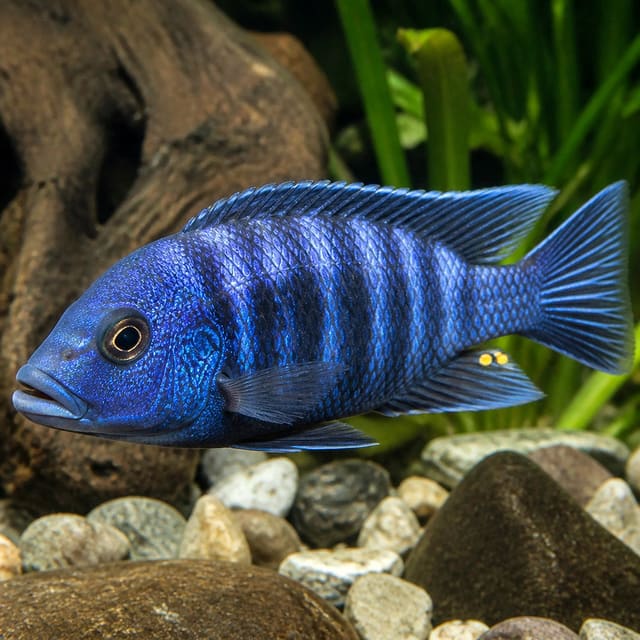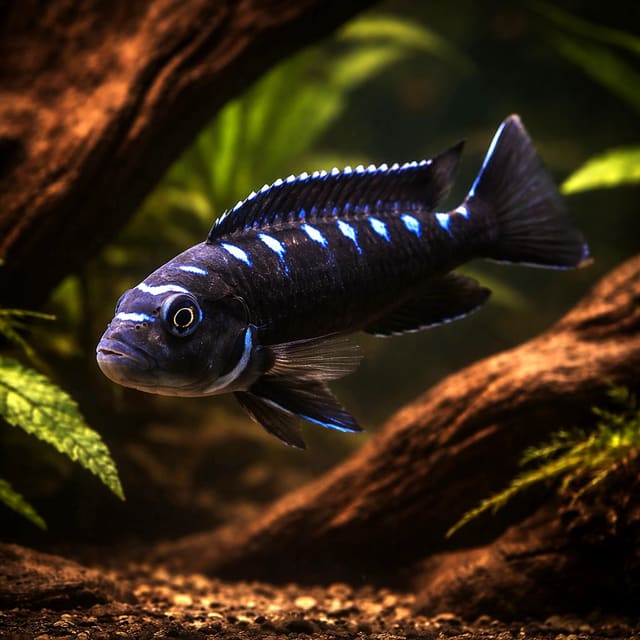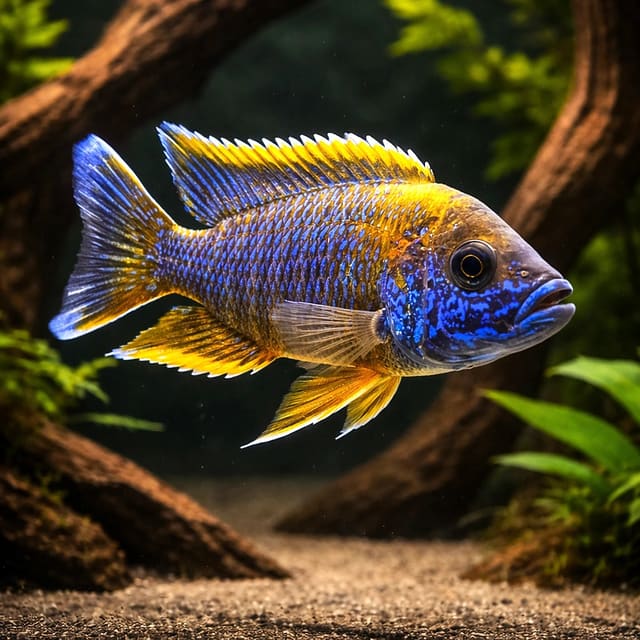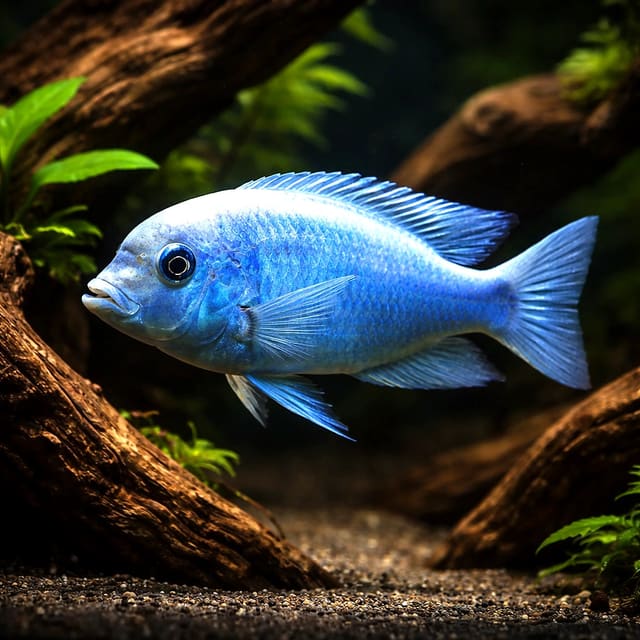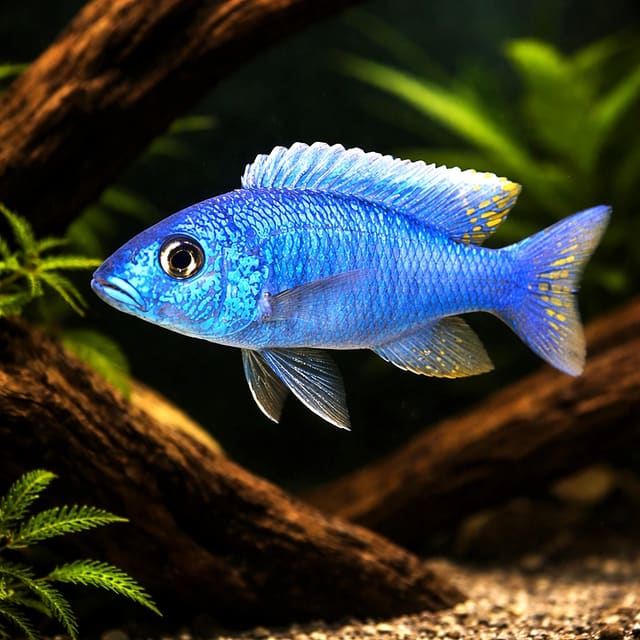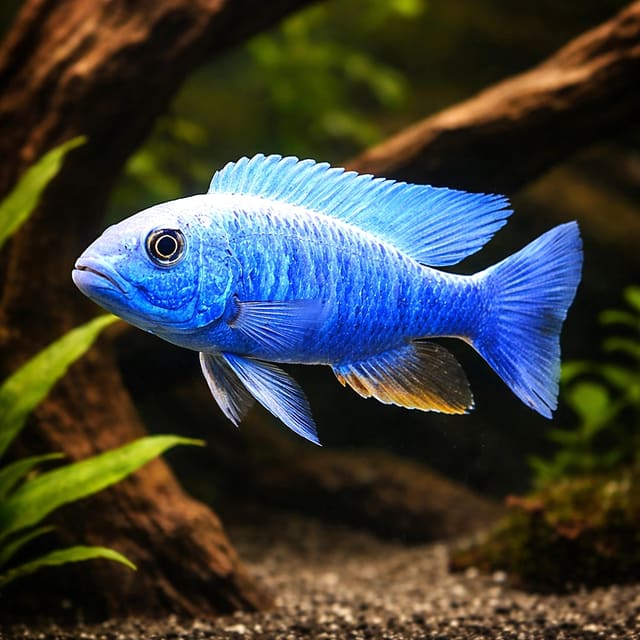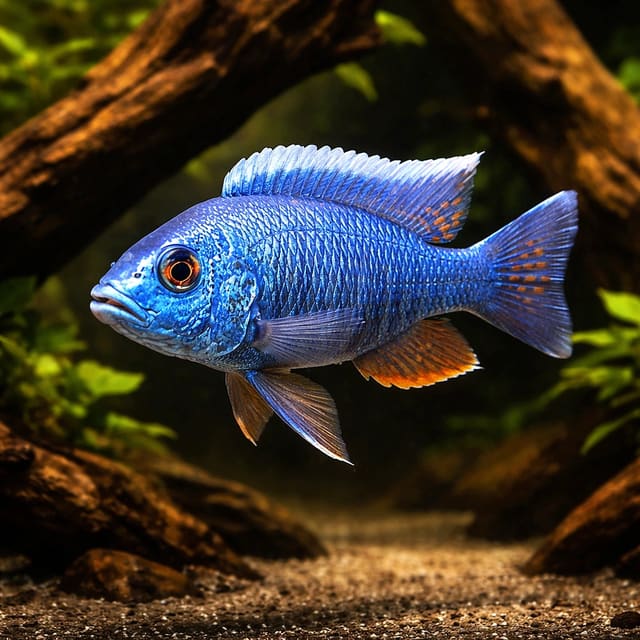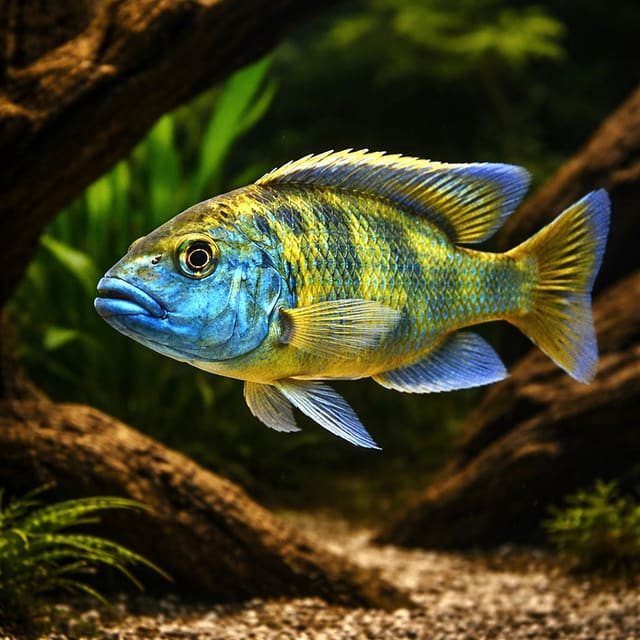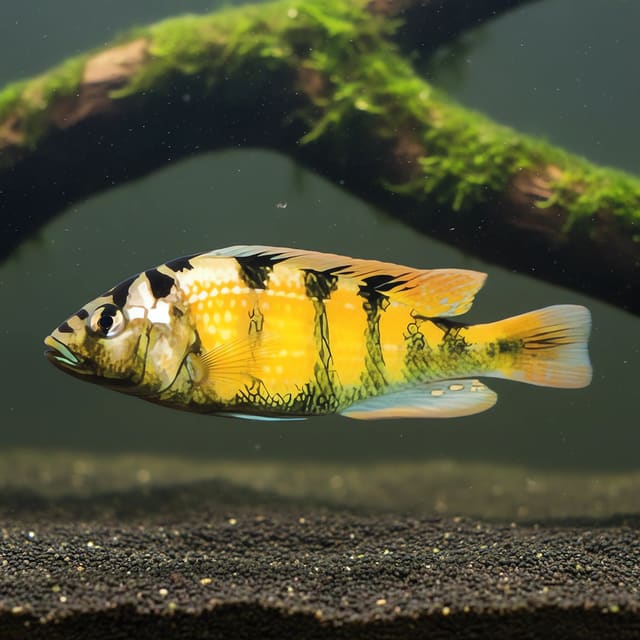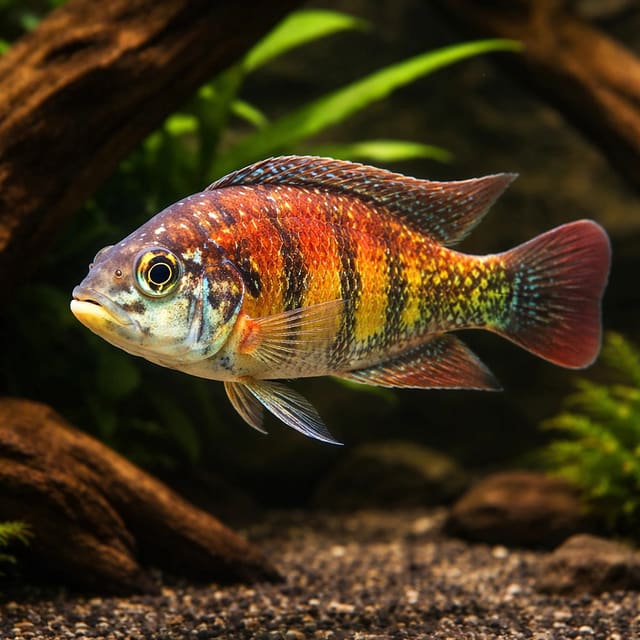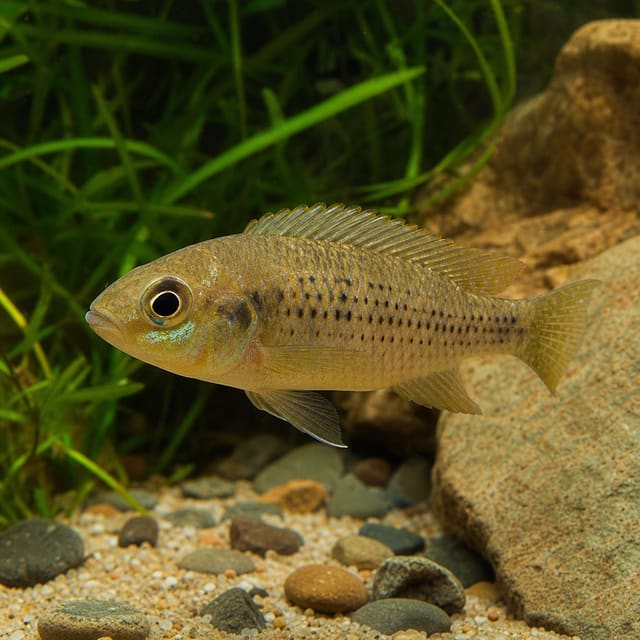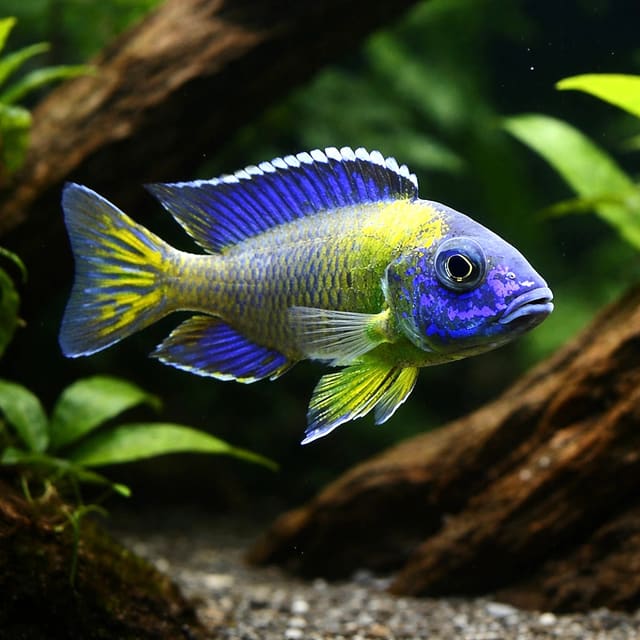
Steveni Blue Neon Peacock Cichlid (Aulonocara stuartgranti)
23–26°C · pH 8–8.6 · 243L
£18.99

Red Fin Kadango Cichlid is an active Lake Malawi fish for a mature, spacious hard-water aquarium. Each purchase supplies one fish in the chosen size grade; sex and colour are not guaranteed. Plan for the adult species, open swimming space and carefully chosen companions.
Copadichromis borleyi
Save when buying multiple fish. Each quantity is one fish; sex and pair formation are not guaranteed unless the selected variant explicitly states them.
Red Fin Kadango Cichlid is an active Lake Malawi fish for a mature, spacious hard-water aquarium. Each purchase supplies one fish in the chosen size grade; sex and colour are not guaranteed. Plan for the adult species, open swimming space and carefully chosen companions.
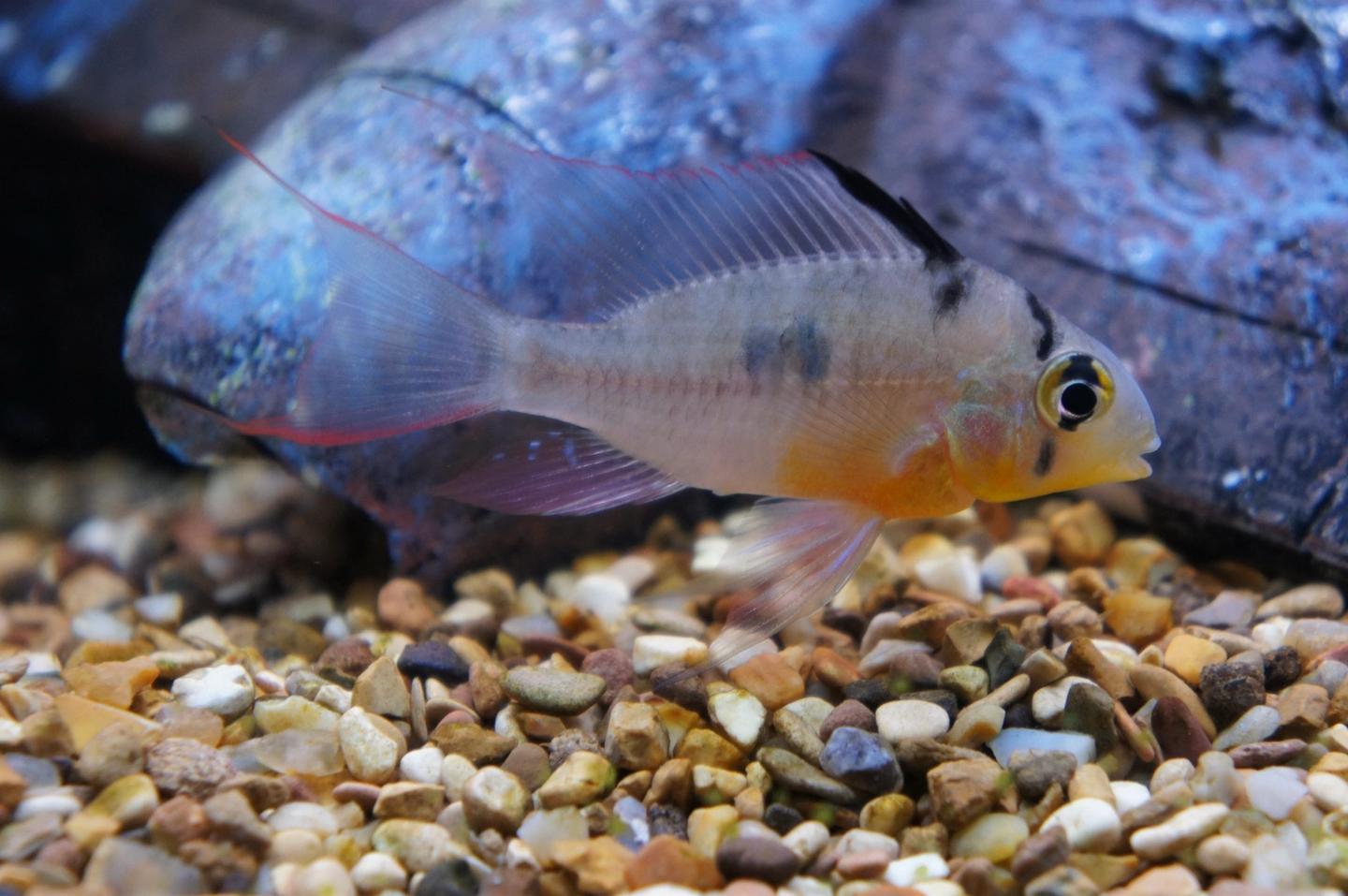
Cichlids are a family of roughly 1,800 accepted species, not one care type. Before buying, identify the exact species and source, then compare adult measurement, usable tank dimensions, social system, territory, tested water, diet and an exit plan. No family-wide minimum tank, water range or tank-mate list is safe.
Maintain these water conditions for optimal health and vibrant colors
Red Fin Kadango Cichlid (Copadichromis borleyi) is an active Lake Malawi fish for an established, spacious hard-water aquarium. One purchase supplies one fish in the selected size grade. Sex is guaranteed only when the selected option explicitly states male or female. This Red Fin Kadango Cichlid listing has no sex-guaranteed option. Adult males can become vivid, while females and juveniles may look quite different. Plan the permanent aquarium around the adult species and its social behaviour, not around the small fish you may receive.
The size choices are 2 - 3 cm, 4 - 5 cm, 6 - 7 cm, 7-9 cm and XL. XL is a trade grade without a verified centimetre conversion. The size you select is the size supplied, not the adult size. The live selector shows the current price and availability for each choice. A size grade does not establish age, sex, a breeding pair or the final colour.
This is a specialist Malawi community decision. Give the fish open swimming water beside secure rocks, a long aquarium footprint, stable alkaline conditions, dependable biological filtration and a realistic separation plan. A species-care profile recommends at least a 150 × 45 cm base and around 304 litres for active adults. More room may be needed for a group or large tank mates. Prepare that home before ordering; a juvenile will not remain juvenile-sized.
This listing is best suited to an aquarist who already has a cycled Malawi setup or is designing one around adult fish rather than the size delivered today. A small specimen does not make a small aquarium suitable. The permanent home must account for adult body size, continuous midwater movement, territorial behaviour, filtration load and every other fish in the final community.
The strongest match is a long, well-filtered Lake Malawi aquarium with open swimming lanes and securely built rock structures that interrupt sight lines. The water should already be hard and alkaline without relying on sudden chemical corrections. Ammonia and nitrite must remain at zero, and the keeper should be comfortable testing water and responding to behaviour after introduction.
This is not the right choice for a new, uncycled aquarium, a soft-water community, a planted nano tank or a tank whose occupants are small enough to be intimidated or swallowed. It is also not a colour-guaranteed purchase. If your decision depends on receiving a confirmed adult male, a particular shade or a breeding trio, do not infer that from the size selector. Contact us before ordering and ask what can genuinely be confirmed from current stock.
For a Malawi community, compare adult size, diet and behaviour before selecting every species. The African cichlid collection can help you browse, but a collection entry is not a compatibility recommendation.
The selectable values are trade size grades used to distinguish stock and price. A centimetre-labelled option is the expected trade grade, not a promise that every fish will measure at an exact point when unpacked. Natural posture, handling, recent growth and the way a fish is measured can all create small differences. “XL” is a separate trade grade and our stock records do not give it a reliable centimetre equivalent.
Size does not confirm sex. Young fish may lack dependable adult colour, and a larger fish can still be subordinate, female or not fully coloured. Nor does a size selection predict temperament. The safest buying decision is to choose an appropriate available grade for the planned community while assuming that sex and social role remain unconfirmed unless the exact selected variant states otherwise.
The numbered grades describe dispatch-size bands; XL is a separate trade grade without a supported centimetre equivalent. None of them is an adult-size ceiling. Allow for individual variation in live animals and ask before ordering if a strict size match matters to an established community.
Use the live selector for current choices, price and availability. Two cart quantities order two fish; they do not create a confirmed pair. Ask us before purchase if the social plan depends on sexing or on matching fish already in your aquarium.
A FishBase record gives a maximum of 14 cm total length (TL) for male or unsexed Copadichromis borleyi. The species husbandry profile at Seriously Fish lists 20 cm standard length (SL) and recommends a base of at least 150 × 45 cm, approximately 304 litres. SL excludes the tail fin while TL includes it, and the two sources give divergent maximum records. Neither should be converted into a precise size promise for the fish supplied. Use the roomier husbandry guidance when planning an adult home.
The footprint matters as much as the litre figure. This fish uses the water column actively and can be affected by rival males or unsuitable neighbours. A tall but short aquarium with the same nominal volume gives less swimming distance and fewer options for territories. Keep an open lane alongside robust rock structures, and assess the space left after equipment, décor and other adults are in place.
Around 304 litres is a species-profile minimum for an active adult, not an automatic approval for every group. More fish, multiple males or large companions may need substantially more space. Set up the adult aquarium before buying a small size grade rather than relying on a future upgrade. Check its mature filter capacity as well as its dimensions. A roomy empty tank that has not cycled is not ready for livestock. The first aquarium setup guide explains the maturation step before livestock is added.
Monitor actual growth and body condition over time. A healthy fish needs room to turn, feed and avoid persistent pursuit. If a developing hierarchy confines one animal to a corner or keeps it from food, the usable space is already failing that group even if a tape measure says the aquarium met a minimum dimension.
For routine aquarium planning, a stable 25–26°C, pH 8.0–8.5 and hard water around 15–18 dGH sit within the overlap of the species husbandry profile and the broad OATA Malawi care sheet. These are practical targets, not proof that every wild record has the same optimum. The species profile gives a wider 25–29°C, pH 7.5–8.5 and 10–25 dGH range; FishBase's 24–26°C environmental record describes occurrence, not a complete captive-care prescription. Use the narrower overlapping range as a steady starting point and avoid abrupt changes.
Measure your source water and the established aquarium before ordering. Check temperature with a separate thermometer and test pH, GH and KH, together with ammonia, nitrite and nitrate. A stable system that naturally holds suitable hard alkaline water is easier to manage than one repeatedly forced across a large chemistry gap. If the source water is very soft or acidic, plan a reliable long-term method before bringing home the fish.
The biological filter must already process waste: ammonia and nitrite should read zero. Clear water can still contain harmful dissolved waste. Test more frequently after adding animals, increasing food, servicing a filter or noticing unusual behaviour. Make replacement water safe for fish and match temperature and mineral conditions closely enough to avoid a sudden shift.
Warm alkaline water makes waste management especially consequential. When a test detects ammonia or nitrite, protect aeration, check filter function and address the cause promptly. Delay further stocking until readings are stable. The water chemistry guide explains what each measurement means, and the water matcher can help compare your measured water with stated guidance.
Build the layout around two needs that can look contradictory: open water for sustained swimming and solid structure for boundaries. Keep a generous central or front swimming lane, then use securely supported rocks to break long lines of sight and create retreat routes. Rock piles must rest safely so digging or a collision cannot undermine them.
Sand or fine, smooth gravel suits the visual and practical needs of a Malawi aquarium. Avoid sharp edges that could damage a fish during a chase. Leave enough access for a siphon and make sure waste cannot collect unnoticed behind an impenetrable wall of decor. The objective is not to reproduce a decorative photograph; it is to give fish usable space while keeping maintenance possible.
Plants are optional and should not be the foundation of the layout. Many Malawi cichlids dig or disturb rooted plants, and hard alkaline conditions narrow the choices. If plants are used, hard-water-tolerant plants such as Vallisneria, Anubias or Sagittaria are easier to protect and clean around. Ensure that any plant and decor choice is safe for hard water and cannot trap a larger fish.
Use a secure lid. An active cichlid can jump when startled, chased or introduced to a new environment. Position intakes, heaters and cables so fish cannot wedge behind them. Provide dimmer refuge areas without sacrificing circulation or creating dead zones.
Before changing mineral levels, compare the new water with the aquarium after treatment and aeration. A single pH reading does not describe buffering, and a rapid correction can create more instability than a value that is slightly off an idealised midpoint. Keep a written record of weekly measurements and water changes so gradual drift is visible. When fish behave unusually, test first: an unexplained change in breathing or swimming may coincide with a waste spike, oxygen shortage or social pressure. Different causes need different responses, so avoid treating every symptom with medication.
Malawi cichlids create a substantial biological load, especially in a busy community. Choose filtration for the real aquarium volume and stocking level, not the most optimistic number on a filter box. OATA recommends oversized filtration and strong aeration for stocked Malawi communities. A filter should provide dependable biological capacity and useful circulation without turning the whole tank into an exhausting current.
Keep oxygen high through good surface movement and sensible stocking. Warm water holds less oxygen than cool water, and bacterial activity rises with waste. Watch breathing rate and position in the water column. Gasping, clustering near a return or unusual lethargy can indicate an urgent water-quality or oxygen problem rather than a need for a random medication.
Test weekly as a minimum once the system is established, and more often during changes. Perform regular partial water changes based on measured nitrate, stocking and feeding. Match replacement water temperature and chemistry closely. Clean mechanical media before it clogs, but preserve biological media and never sterilise the whole filter at once.
Make a brief daily observation of breathing, appetite, fins, swimming position and chasing. Each week, test the water and review the filter's actual flow. Regular partial water changes remove accumulated waste. Set their volume and frequency using the measured load of your aquarium; the OATA sheet gives a weekly routine for Malawi cichlids as general guidance. Condition tap water and avoid washing biological media under chlorinated tap water. Persistent food exclusion or hiding belongs in this routine review just as much as water chemistry.
Copadichromis borleyi feeds on plankton in the wild and is described by the species husbandry profile as a specialised zooplankton feeder. In the aquarium, use a complete, appropriately sized Malawi-cichlid pellet or granule as the dependable staple, then add measured variety with suitable planktonic frozen foods such as Artemia and other appropriately sized live or frozen planktonic foods.
Choose foods for nutritional balance, not simply the highest protein percentage. A complete staple should provide vitamins, minerals and appropriate energy as well as protein. Keep portions modest and choose foods appropriate to the fish's size. Live food from an uncertain source can introduce contaminants, while an all-treat diet can become nutritionally narrow.
Feed small portions that the fish can consume promptly. Observe whether a subordinate fish is actually getting food rather than increasing the total until leftovers fall into the substrate. Overfeeding raises the organic load, reduces water quality and can create competition. If food remains after the fish lose interest, reduce the next portion and remove what you can.
Adjust feeding to fish size, temperature, body condition and the complete community. Juveniles may benefit from smaller, more frequent meals, but clean water remains essential. Do not promise colour through food alone. Genetics, sex, maturity, hierarchy, health, stress and lighting all influence appearance.
Prepare the aquarium before the parcel arrives. Confirm temperature, ammonia, nitrite, pH and hardness; dim the lights; secure the lid; and make sure the planned introduction area has shelter and circulation. Do not begin changing the display or mixing chemicals while a bagged fish is waiting.
The delivery policy advises floating the bag for 20–30 minutes and avoiding the addition of transport water to the aquarium. Keep handling gentle and check how the new fish responds after release. Once introduced, give the fish quiet time and watch breathing, balance and how existing occupants respond.
A suitable quarantine or observation system is useful when it is correctly cycled, heated and matched to the fish's needs. An uncycled small container is not safer merely because it is called quarantine. Use dedicated equipment where possible and seek qualified aquatic-veterinary advice for illness rather than adding medication without a diagnosis.
Reduced colour or appetite immediately after transport can reflect stress, but worsening breathing, loss of balance, visible injury or failure to recover needs prompt attention. If arrival condition is a concern, follow the current live-fish delivery and claim guidance and contact the team the same day.
Copadichromis borleyi is a maternal mouthbrooder. The species profile describes males preparing spawning sites and females carrying eggs and young in the mouth. This is valuable natural-history context, not a promise that fish from this listing will form a compatible breeding group.
Breeding can intensify colour and territorial behaviour. A breeding group needs space for females to withdraw and for the keeper to manage rising territorial pressure. Stable water, appropriate nutrition, visual barriers and room to withdraw matter more than trying to trigger spawning with abrupt temperature or chemistry changes.
Do not buy a cart quantity of two and assume it will be a pair. The fish are not sold as sexed or bonded, and even one confirmed male and one confirmed female can be a high-pressure arrangement. Any breeding project should begin with an adult-sized aquarium, a carefully planned group, spare capacity and a humane plan for fry.
Avoid stripping or manipulating a mouthbrooding fish without experience. Poor timing and handling can injure the female or developing fry. If breeding is a serious objective, use specialist cichlid references and experienced support rather than treating a product FAQ as a complete breeding protocol.
Check that the aquarium is mature, long enough for an active adult and stable in hard alkaline water. Review every resident fish at its adult size, the filter capacity and a place to separate fish if interactions fail. Choose the size grade that suits your stocking plan while remembering that it does not select sex or guarantee colour. Each cart quantity is one live fish.
Prepare to receive the parcel yourself and follow the current live-fish delivery instructions. The policy explains how fish are packed and moved by a licensed live-animal courier, how to acclimatise them and what evidence is needed for an arrival concern. Read those terms before ordering rather than assuming a fixed dispatch day or unconditional guarantee.
Male Copadichromis borleyi are described as larger and more colourful than females in the species profile. Juveniles may show much less of the striking red and blue associated with some Red Fin Kadango adults. Hierarchy, maturity, condition and lighting also affect appearance, so a size grade cannot guarantee a particular colour or sex.
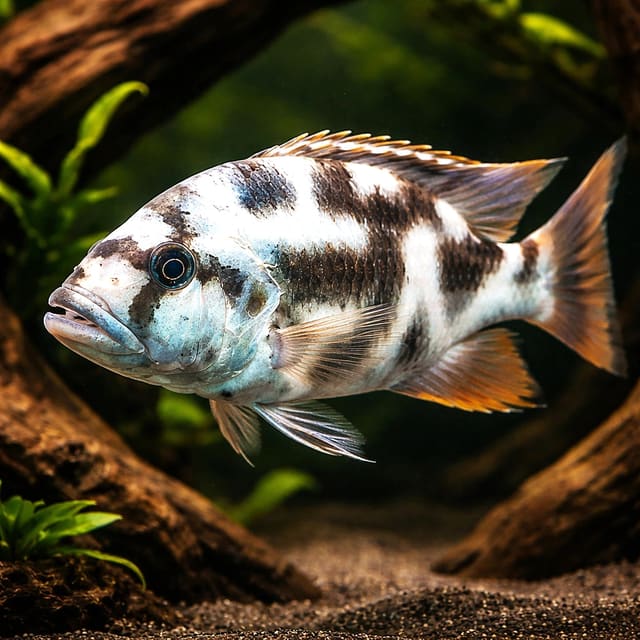
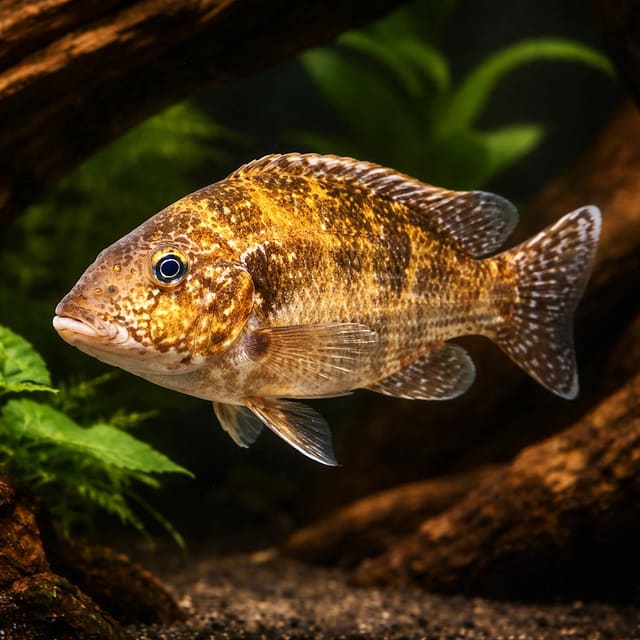
Do not treat colour as a diagnostic test on its own. Observe feeding, breathing, fins, posture and interaction with neighbours. A fish that changes colour as it settles may be responding to stress or its social setting, but persistent loss of appetite, rapid breathing, damage or exclusion calls for a water and stocking review. Images cannot certify the sex, markings or maturity of the individual fish supplied.
The species profile describes it as generally peaceful compared with more belligerent Malawi cichlids, yet rival males need space and breeding can bring territorial behaviour whose behaviour can change with sex, maturity, spawning condition, crowding and layout. Males defend spawning areas in nature. In an aquarium, persistent pursuit can prevent another fish from feeding or resting even when no obvious injury is visible.
There is no universal male-to-female formula that makes every aquarium safe, and this listing does not guarantee sex. A larger group can distribute attention in some expertly planned Malawi systems, while a small group can concentrate aggression, but density should never be copied without considering filtration, floor plan and the keeper's ability to intervene. “More fish” is not a standalone cure.
Introduce fish with observation time available. Rearranging some rockwork can reduce established territorial advantage, but the structure must remain secure. Watch whether every fish can eat, move through the aquarium and use shelter. Persistent hiding, clamped fins, rapid breathing, torn fins, weight loss or one fish being held at the surface or in a corner calls for action.
Keep a separation plan: a cycled spare aquarium, a safe divider suited to the tank, or another appropriate destination. Do not wait for serious injury before deciding where an incompatible individual could go.
Group advice has to be read alongside the actual offer. The species profile describes a social fish and, for established sexed adults, a possible arrangement of one male with several females in sufficient space. The current size choices do not specify sex. Adding four unsexed juveniles does not guarantee that arrangement, and buying a single fish does not guarantee that it will settle with an existing group. Ask about the stock and assess the aquarium before trying to build a group around an assumed ratio.
Start with shared hard alkaline water, adult size, feeding style and temperament. Seriously Fish suggests calmer Malawi companions such as some Aulonocara and peaceful haps as possibilities, and says this species certainly should not be combined with mbuna and similarly coloured fish should also be avoided. Do not include other Copadichromis, because they can hybridise. Suggested calmer companions still require individual assessment.
A small soft-water community fish is a poor fit even if it appears peaceful in a shop tank. Its water needs may conflict, and it can be intimidated or swallowed as the cichlid grows. Highly aggressive neighbours can instead dominate the Red Fin Kadango. Compare the complete adult community rather than choosing from sale size or a photograph.
Prepare secure sight breaks and a retreat route without filling the open swimming lane. Watch each introduction for repeated chasing, cornering, torn fins and food exclusion. If one fish cannot feed or occupy normal space, separate the animals and revisit the plan. More fish alone is not a reliable fix; added stocking also increases waste and reduces usable room.
FishBase records 14 cm total length for male or unsexed fish, while a species-care profile lists 20 cm standard length. The measurements and records differ; plan an adult aquarium using the roomier care guidance rather than treating a sale grade as the final size.
The species-care profile recommends a base at least 150 × 45 cm and about 304 litres for this active fish. Adult companions, social behaviour and layout may require more room.
The species is naturally social, but rival males need territory. A species profile suggests one male with at least three females in a suitably large aquarium; this listing does not provide sex selection, so do not order a presumed ratio without confirmed fish and a separation plan.
It suits a keeper prepared to run a mature, spacious hard-water Malawi aquarium, monitor water quality and manage social behaviour. It is a poor first choice for an uncycled tank or a small mixed community.
It feeds on plankton in nature. Offer an appropriately sized complete cichlid food with measured variety from suitable live or frozen planktonic foods, and remove leftovers to protect water quality.
A stable 25–26°C and pH 8.0–8.5 are practical overlapping aquarium targets from the species profile and broad Malawi guidance. Keep the water hard, around 15–18 dGH as an overlap of FishBase, the species profile and broad Malawi guidance, and avoid abrupt changes.
It is generally calmer than belligerent Malawi cichlids, but males can compete and persistent chasing can damage other fish. Give it space, secure sight breaks and a way to separate incompatible individuals.
Consider appropriately sized, calmer Malawi cichlids with matching hard alkaline water and diet; the species profile names some Aulonocara and peaceful haps as possibilities. Avoid mbuna, tiny soft-water fish and any combination that produces persistent harassment.
Tropical Fish Co's live-fish delivery policy describes protective packing and a licensed live-animal courier. Be available to receive and inspect the parcel, follow the acclimation guidance and read the current claim requirements before ordering.
The current accepted scientific name is Copadichromis borleyi. The older Haplochromis borleyi name remains a trade synonym. Both names may lead a customer to the same species, but the current name belongs in the title and primary care record.
Red Fin Borleyi and Red Fin Kadango are established trade names. The trade name does not establish a documented wild collection locality for an individual fish.
The species is endemic to Lake Malawi. Biological records associate it with rocky areas, large boulders and adjacent open sandy water where groups can feed in the water column. This is useful aquarium information: it suggests a layout with structure for boundaries and refuge, but also enough uninterrupted space for an active midwater fish. Filling every centimetre with a tight rock maze would ignore the open-water part of its ecology.
Copadichromis species are commonly described as utaka in the hobby. That label helps distinguish their open-water feeding and movement from the rock-grazing pattern associated with many mbuna, but it does not make every utaka interchangeable. Species, adult size, diet, sex balance and individual aggression still need separate assessment.
For the species name, Lake Malawi distribution, wild habitat, feeding and the 14 cm TL record, see FishBase's Copadichromis borleyi summary. For aquarium dimensions, water range, social behaviour and the separate 20 cm SL profile, see Seriously Fish's species profile.
The OATA Malawi cichlid care sheet provides broad group guidance on water, filtration and maintenance. The RSPCA aquarium environment advice explains biological filtration and maturation. Tropical Fish Co’s delivery policy sets the current arrival and claim process.
No reviews for this item yet. Bought one? Honest reviews only, good or bad.
What customers say about ordering from us
I have a small group of long finned mountain minnows. So was delighted to be able to order ten of this variety to increase the genetics in my tank . The ones I recieved are healthy but it’s to early to give a verdict on wether they are of a long finned type since they are small currently.
Gordon Walker · 23 Sept 2026
100% success travel and "installation". Pleased with quality of purchase. The Siamese fighter a bit "shy" so have not yet seen him at his best yet but looking good. Happy customer. GG
George E Garratt · 21 Sept 2026
Reviews of our shop, collected by Judge.me, an independent third-party review collector. Newest first.