−11%
Moderate
Calico Peacock Cichlid (Aulonocara sp. calico)
24–28°C · pH 7.5–8.5 · 200L
£17.79£19.99

Photo coming soon
The size, price and care details on this page are for this listing.
The Spindle Hap Cichlid (Protomelas taeniolatus) is a freshwater cichlid endemic to Lake Malawi that reaches 11.3 cm total length. It suits Malawi keepers planning around 205 litres; use the FishBase and Seriously Fish overlap of 24–26°C and the Seriously Fish and OATA overlap of pH 8.0–8.6, and keep one male with several females when sexes are known. Sold individually in 3 - 4 cm, 4 - 5 cm and 6 - 7 cm sizes.
Adult size is the maximum length this species reaches at full maturity (scientific sources). The livestock you receive will be younger and smaller — pick a size above for the actual shipping size. Product-photo provenance and any image-specific limitations are stated on the listing.
Protomelas taeniolatus
Save when buying multiple fish. Each quantity is one fish; sex and pair formation are not guaranteed unless the selected variant explicitly states them.
The Spindle Hap Cichlid (Protomelas taeniolatus) is a freshwater cichlid endemic to Lake Malawi that reaches 11.3 cm total length. It suits Malawi keepers planning around 205 litres; use the FishBase and Seriously Fish overlap of 24–26°C and the Seriously Fish and OATA overlap of pH 8.0–8.6, and keep one male with several females when sexes are known. Sold individually in 3 - 4 cm, 4 - 5 cm and 6 - 7 cm sizes.
Adult size is the maximum length this species reaches at full maturity (scientific sources). The livestock you receive will be younger and smaller — pick a size above for the actual shipping size. Product-photo provenance and any image-specific limitations are stated on the listing.

Cichlids are a family of roughly 1,800 accepted species, not one care type. Before buying, identify the exact species and source, then compare adult measurement, usable tank dimensions, social system, territory, tested water, diet and an exit plan. No family-wide minimum tank, water range or tank-mate list is safe.
Maintain these water conditions for optimal health and vibrant colors
The Spindle Hap Cichlid (Protomelas taeniolatus) is a freshwater member of the cichlid family, Cichlidae, endemic to Lake Malawi in Africa. FishBase records a maximum length of 11.3 cm total length. It suits a Malawi keeper who can provide hard, alkaline water, a substantial aquarium, open swimming room and a carefully screened Malawi community. It is not a choice for a small, mixed tropical community.
Plan around approximately 205 litres with a 120 × 45 cm base. Seriously Fish gives that aquarium volume and footprint for this species. Keep the routine aquarium at 24–26°C, pH 8.0–8.6 and 12–18 dGH. The temperature sits within both FishBase’s recorded 24–26°C environment and the 24–28°C aquarium range from Seriously Fish. For pH and hardness, the species ranges from Seriously Fish overlap OATA’s Malawi-cichlid group guidance at pH 8.0–8.6 and 12–18 dGH.
In Lake Malawi, this fish inhabits shallow, sediment-free rocky habitat. FishBase describes it feeding on aufwuchs attached to rocks, but also taking small invertebrates, including zooplankton when this is abundant. In the aquarium, combine rock piles and caves with open swimming areas and use a high-fibre diet led by vegetable matter.
Seriously Fish describes the species as peaceful but more robust than other members of its genus. Males are very territorial, so keep one male with several females when the sexes are known. More than one male requires a very large aquarium. Its recorded IUCN category is Least Concern, which describes the wild species and does not change the need for careful aquarium welfare.
One purchase supplies one Spindle Hap Cichlid. The live size selector shows 3 - 4 cm, 4 - 5 cm and 6 - 7 cm. The size you select is the size supplied, not the adult size. Use the selector to choose the dispatch size, but prepare the aquarium around the adult fish, its territory and the full community before ordering.
Sex is guaranteed only when the selected option explicitly states male or female. This Spindle Hap Cichlid listing has no sex-guaranteed option. Do not build a fixed male-to-female stocking plan around colour, body size or a gallery image. Apply the one-male-with-several-females arrangement only after the fish can be identified reliably within the aquarium.
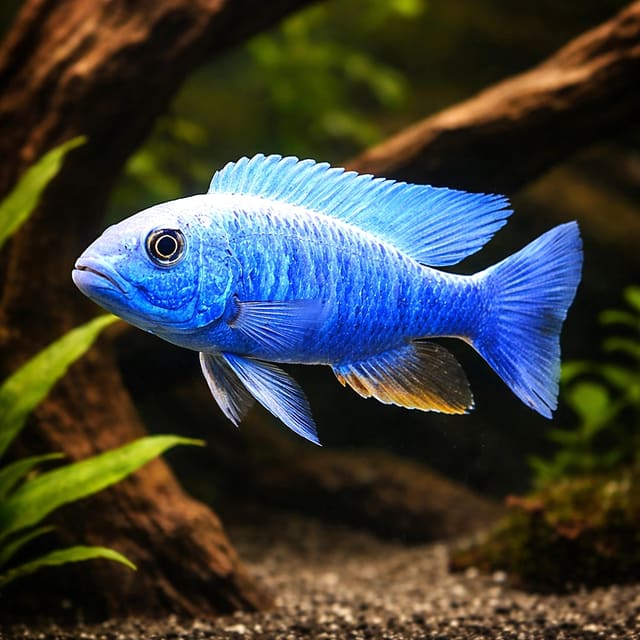
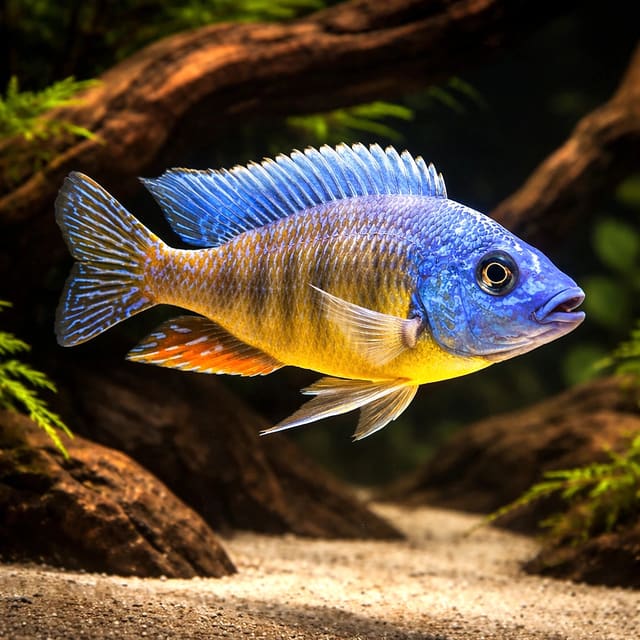
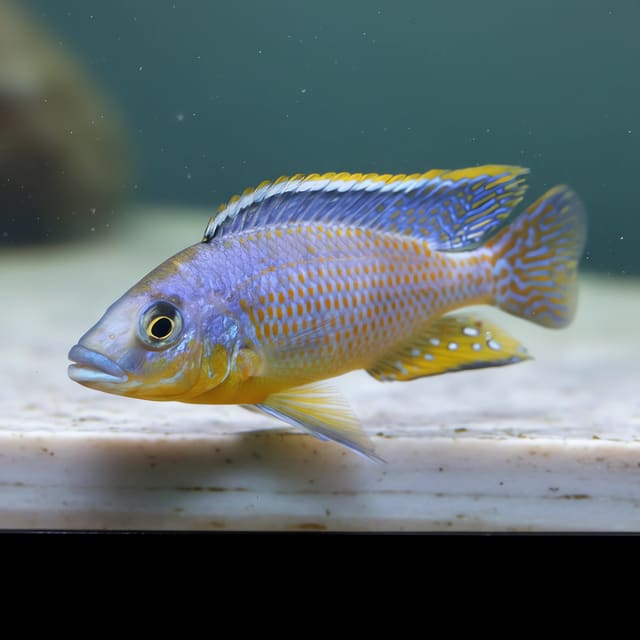
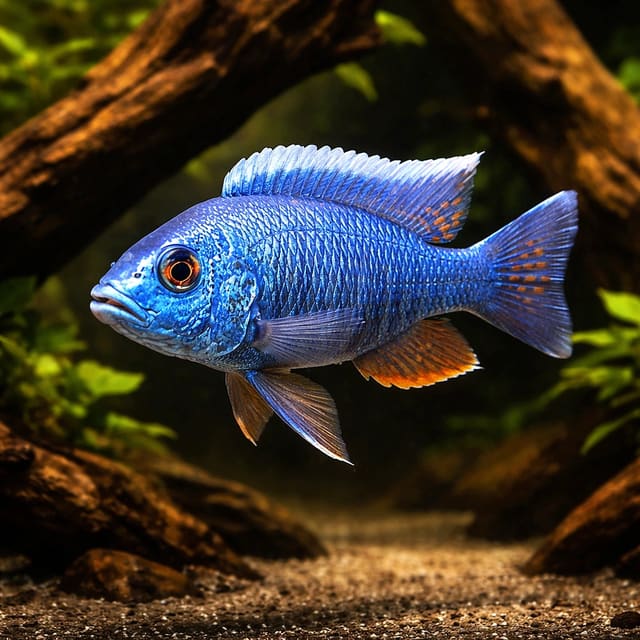
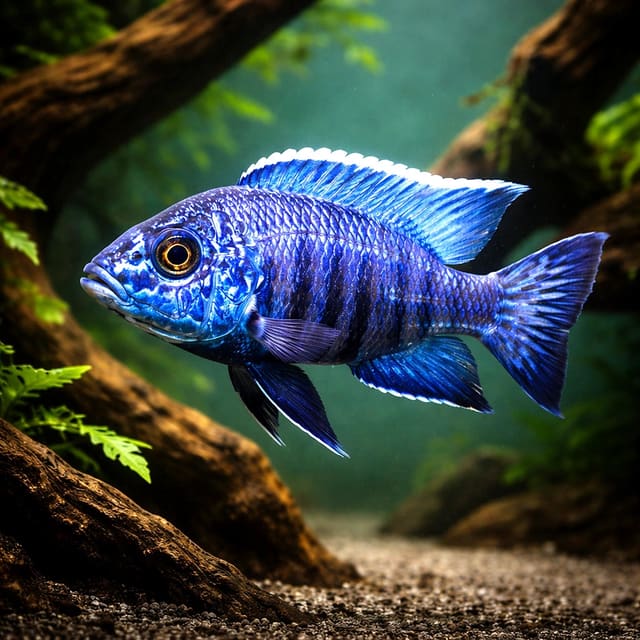
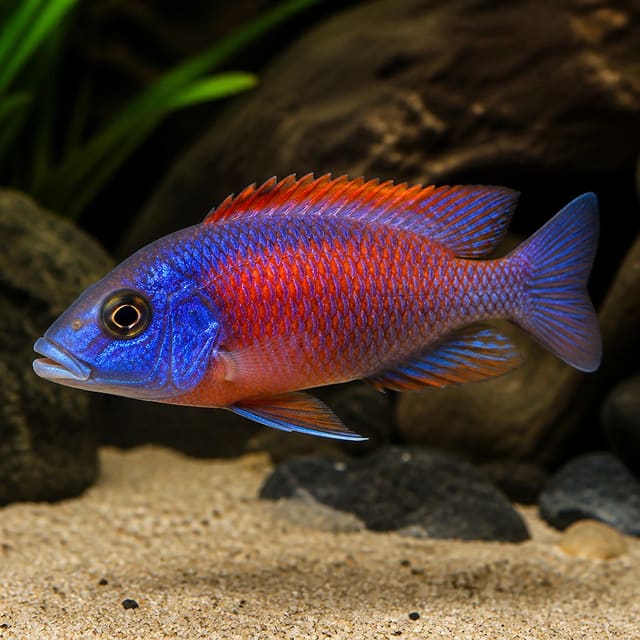
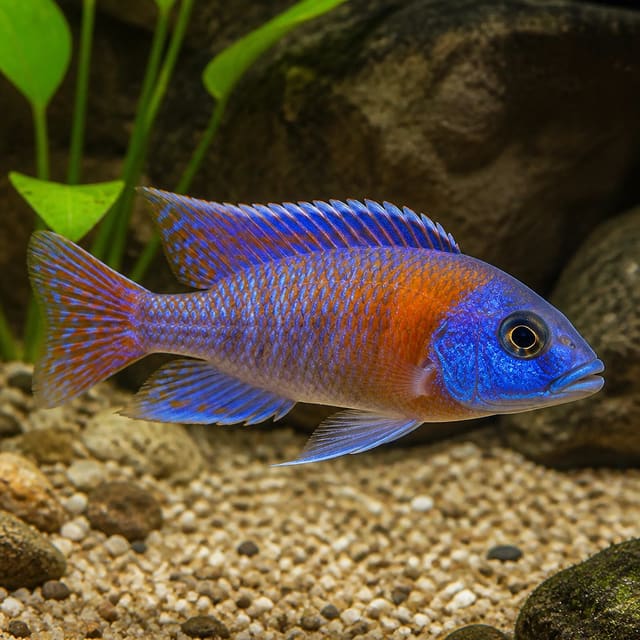
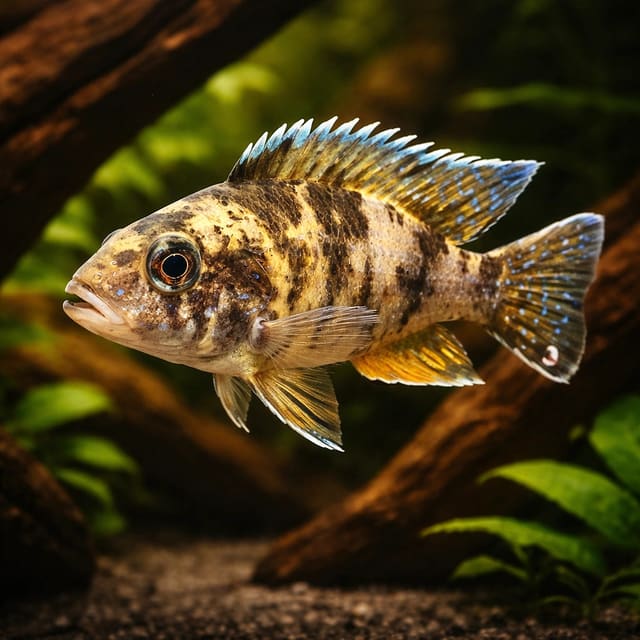
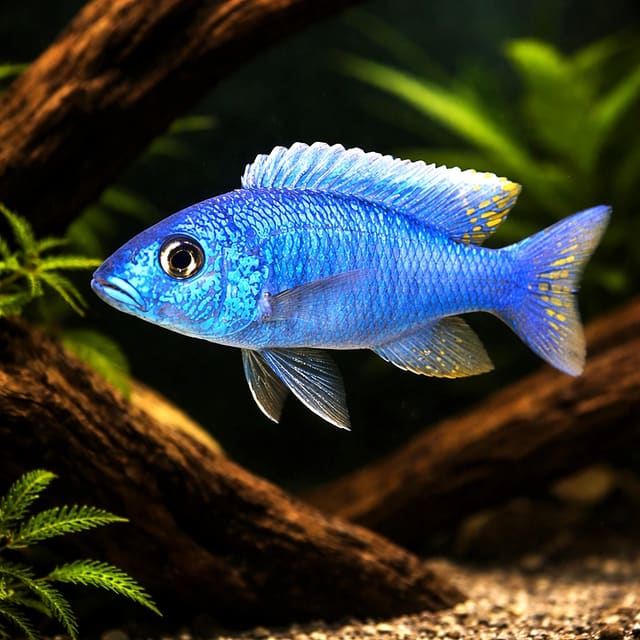
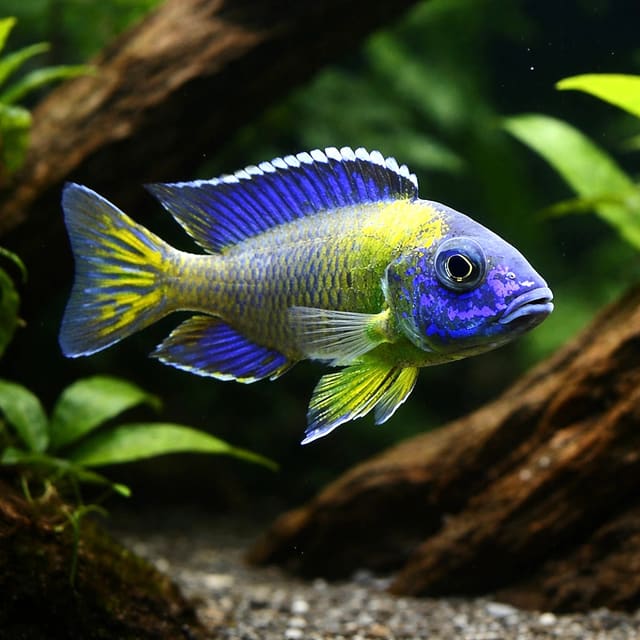
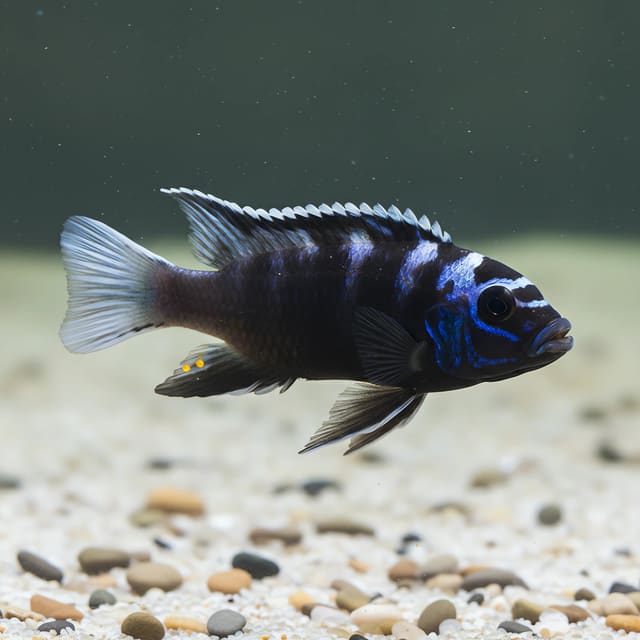
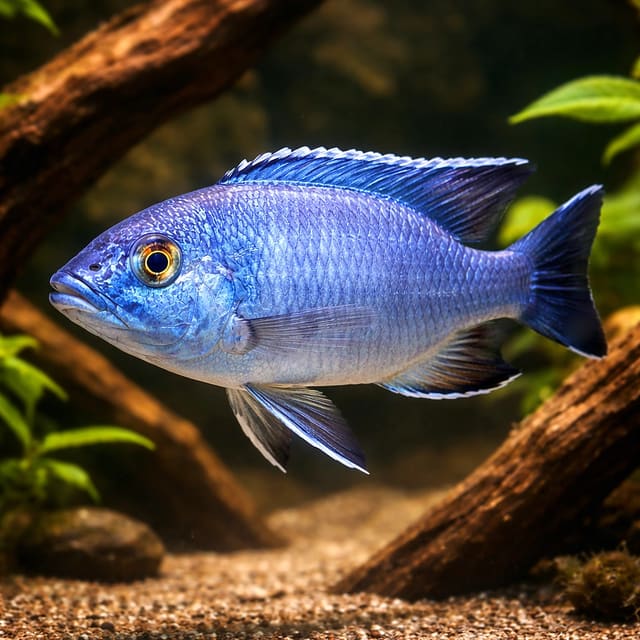
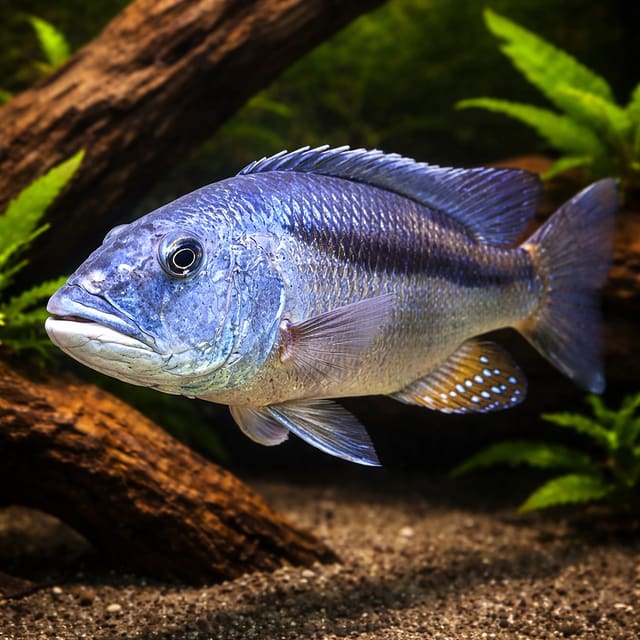
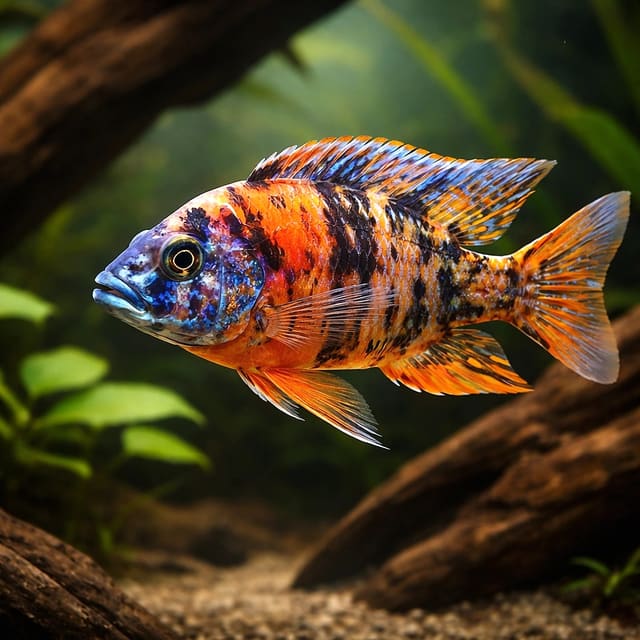
The gallery images are representative, based on reference photographs of this species, so colours can look slightly different from the live animal. Use the images to understand the elongated cichlid shape and general appearance, not to predict the colour, sex or individual markings of the animal supplied.
| Suits | Not suited to |
|---|---|
| A Malawi aquarium planned around approximately 205 litres and a 120 × 45 cm base | A small or general mixed tropical community |
| Stable water at 24–26°C, pH 8.0–8.6 and 12–18 dGH | An aquarium maintained outside the stated hard, alkaline range |
| Rock piles, caves, sand and open swimming areas | A layout with no open space or territorial cover |
| A carefully screened peaceful Malawi community | Related forms that may hybridise or an unplanned mix of cichlids |
| One male with several females when sexes are known | More than one male without a very large aquarium |
The routine is straightforward once the aquarium is established, but the combination of hard alkaline water, territorial males, dietary control and deliberate Malawi stocking requires more planning than a general community aquarium. Measure the aquarium base, test the source water and decide how aggression would be managed before choosing a dispatch size.
Use 11.3 cm total length as the adult-size figure. FishBase records that maximum for male or unsexed Protomelas taeniolatus. Plan the aquarium from the Seriously Fish footprint below rather than from the dispatch size, and do not reduce it.
Start with an aquarium of approximately 205 litres and a base measuring 120 × 45 cm. The base matters because the layout must hold rock piles and caves while retaining open space between them. A nominally similar volume with a much smaller base does not follow the stated footprint. Measure the usable base after allowing for internal equipment and arrange the principal swimming lane before adding decorative rockwork.
More than one male changes the space decision substantially. Seriously Fish says a very large aquarium is required to keep more than one male. Do not treat approximately 205 litres as permission for two males. If the intended group may include multiple males, choose a different stocking plan or provide a substantially larger aquarium before the fish mature.
The same caution applies to a crowded Malawi community. OATA recommends at least 200 litres for a reasonably sized Malawi community, while the species profile uses approximately 205 litres and a 120 × 45 cm base. Those figures are starting dimensions, not a fixed capacity for any number of fish. Final stocking depends on species, sex ratio, territorial behaviour, filtration and the physical arrangement of the aquarium.
Keep the aquarium at 24–26°C, pH 8.0–8.6 and 12–18 dGH. Use those values as the routine operating range rather than aiming at an edge. A reading of 25°C, pH 8.2 and 15 dGH sits comfortably inside all three targets. A temperature of 27°C sits inside the wider aquarium range from Seriously Fish but outside FishBase’s recorded 24–26°C environment, so bring it back towards the shared range.
The pH and hardness targets are also deliberate overlaps. Seriously Fish gives pH 7.6–8.8 and hardness of 10–25 dGH for the species. OATA gives pH 8.0–8.6 and 12–18 dGH for Malawi cichlids as a group. Keeping pH 8.0–8.6 and hardness 12–18 dGH stays inside both. For example, pH 7.8 fits the wider species range but misses the narrower Malawi target used here.
Use our water chemistry guide to understand what each test measures. Record actual readings instead of relying on descriptions such as hard or alkaline. If the source water repeatedly falls outside the target, resolve how the aquarium will be maintained within range before choosing livestock.
Consistency matters alongside the numbers. OATA notes that larger aquaria provide more stable temperature and water quality. Make changes through the planned maintenance routine and test afterwards, rather than allowing the aquarium to drift to an edge and then making an abrupt correction. The goal is a repeatable set of readings that remains suitable between weekly checks.
Arrange piles of rocks to create several caves and hiding places, then preserve open swimming areas between them. Use a sandy substrate. The rock piles follow the species profile and reflect the shallow, rocky, sediment-free habitat recorded by FishBase. Several separated refuges give fish more choices than one dominant cave, while open space allows the Spindle Hap to move without every route passing through a territory.
Malawi cichlids will often dig and rearrange the substrate, which will uproot any plants present. Treat plants as secondary to the required sand, rock cover and swimming room. Check the layout after digging and restore access to caves or open routes when substrate has been moved.
For an aquarium of approximately 205 litres, Seriously Fish recommends turnover of four to five times the aquarium volume each hour. That works out to a filter rating of about 820–1,025 litres per hour. Check the manufacturer’s rating and allow for the fact that the aquarium still needs open swimming room after equipment and décor are installed.
The RSPCA explains why a well-established biological filter is essential: fish release toxic ammonia, beneficial bacteria convert it to nitrite, and further bacteria convert nitrite to the safer nitrate. Prepare and mature that biological filtration before livestock arrives. Our first tropical aquarium guide sets out the preparation sequence.
Seriously Fish estimates roughly 125–175 W across two heaters for an aquarium around 205 litres when the room is approximately 20°C. Treat that as a worked example tied to those conditions, then confirm that the installed equipment actually holds 24–26°C. Do not choose heater power from aquarium volume alone while ignoring room temperature.
OATA recommends oversized filtration and strong aeration for crowded Malawi communities because the fish need adequate dissolved oxygen and the biological filter must process the community’s waste. Keep the filter unobstructed, check its flow and arrange the outlet or separate aeration so that water circulates through the aquarium without removing the open swimming area.
Feed a high-fibre diet in which vegetable matter forms a large proportion. FishBase records the wild fish grazing aufwuchs attached to rocks and also taking small invertebrates, including zooplankton when abundant. Seriously Fish translates that pattern into aquarium feeding advice: use vegetable foods such as spirulina flake or blanched spinach and lettuce as the foundation, then add suitable live or frozen invertebrate foods as supplements.
Useful supplements named for this species include brine shrimp, Daphnia and bloodworm. Rotate them to provide variety without turning every meal into a rich animal-based feed. Seriously Fish warns that meaty foods such as beefheart are detrimental to the fish’s long-term health, so avoid them. The species is also described as greedy and prone to becoming overweight, making portion control as important as ingredient choice.
OATA advises feeding Malawi cichlids twice a day and offering only what they can eat within a few minutes. Base most feeds on the vegetable foods and use the named invertebrate foods only as supplements. Variety should change the ingredient, not increase the total amount.
Match the food to this species rather than applying one diet to every Malawi cichlid. OATA notes that Malawi diets vary widely, from more herbivorous mbuna to more predatory utaka. For Protomelas taeniolatus, the recorded aufwuchs feeding and the species profile both support the high-fibre approach.
Observe appetite as part of the health check. A sudden reduction in feeding interest can accompany a wider change in behaviour, breathing or water quality. Test the aquarium rather than trying to restore appetite by adding extra food, because surplus food increases the waste load on the filter.
Test the aquarium at least weekly and keep ammonia and nitrite at zero milligrams per litre. OATA says nitrate should not exceed 20 mg per litre above the normal tap-water level. If the tap water measures 10 mg/L nitrate, that guidance makes 30 mg/L the upper aquarium limit; it is a ceiling, not a target. Record the tap-water baseline so the aquarium result can be interpreted correctly.
Change 25% of the water at least once every week. Use a siphon to remove solid waste from the substrate and treat replacement tap water with a conditioner that removes chlorine or chloramine before it enters the aquarium. Match replacement water to the planned conditions so that routine maintenance supports stable temperature and chemistry.
Use the water matcher to compare measured temperature, pH and hardness with the target range. A complete weekly record should include 24–26°C, pH 8.0–8.6, 12–18 dGH, zero ammonia, zero nitrite and the nitrate result relative to the tap-water baseline.
If ammonia or nitrite appears, pause further stocking and check filter flow, blockages, feeding and recent changes to the fish population. OATA explains that adding fish and food increases the waste load, while the beneficial bacterial population needs time to increase. Stocking too quickly can therefore lead to new tank syndrome.
If nitrate climbs faster than usual, review portion sizes, solid-waste removal and whether the weekly 25% change is being completed. If temperature, pH or hardness repeatedly reaches an edge of the range, correct the maintenance plan before adding livestock. Stable repeated results provide a better basis for stocking than one acceptable test immediately after a water change.
Have the aquarium fully prepared, heated, filtered and within range before the fish arrives. OATA advises checking that ammonia and nitrite are zero and increasing livestock numbers slowly so the established bacterial population can adjust to the extra waste and feeding. Do not use the arrival day to finish maturing the filter or to make a major stocking change.
Confirm 24–26°C, pH 8.0–8.6 and 12–18 dGH, then check that rock caves and open swimming routes are accessible. Review the existing Malawi community for territory pressure before adding another fish. If the aquarium already contains aggressive individuals, plan the introduction order and décor arrangement before the delivery day.
The current delivery and Live Arrival Guarantee policy explains that live fish are hand-bagged in pure oxygen, placed in an insulated poly box and given a heat pack when the weather calls for one. A tracked courier licensed to carry live animals transports the parcel. Make sure someone can receive it because live fish must not be left unattended.
Open and inspect the parcel on the day it arrives, as the Live Arrival Guarantee requires. If anything has gone wrong, contact us the same day your fish arrive with your order number and the unboxing video.
OATA says it is best to add Malawi cichlids in groups so no individual receives unnecessary aggression as they settle in, and to add more peaceful species before more aggressive ones. That guidance must still fit the aquarium’s capacity and the species-level rule for territorial males. Never add extra fish merely to complete an introduction group when the space, filtration or sex ratio does not support them.
Learn the fish’s normal swimming, colour, breathing, temperament, body condition and feeding response. OATA lists clear bright eyes, undamaged fins, intact scales, no ulcerations or bumps and appropriate swimming among the signs of a healthy fish. Individual behaviour can vary, so a change from the established pattern is often more useful than comparing one fish with a gallery image.
| What you see | What to do |
|---|---|
| Hanging at the surface, sitting on the bottom or erratic swimming | Test ammonia, nitrite, temperature and the other routine water values immediately |
| Faster or slower gill-cover movement | Check water quality, filter flow and aeration |
| Darker or paler colour than normal | Look for accompanying aggression, hiding or water changes |
| More aggression or more hiding | Review territories, sex ratio and recent additions |
| White spots, fluffy growths, missing scales or damaged fins | Record the change and seek prompt fish-health guidance |
| Reduced feeding or changing body condition | Check water, portion size and competition at feeding time |
Do not respond to reduced appetite by adding a larger meal. Uneaten food increases the waste load and can worsen water quality. Test first, then compare the result with zero ammonia, zero nitrite and the normal nitrate pattern for the aquarium.
During the first days, watch whether the new fish can reach open water, use a refuge and feed without persistent pursuit. Continue the same observations through the first week while maintaining the normal twice-daily portions and weekly test schedule. Later, compare changes with the notes taken during that settling period.
If the water is within range but concerning behaviour or appearance continues, seek help from our fish team with the test results and a clear description of the change. Treatment choice falls outside routine care and should follow an assessment of the fish and its water rather than colour alone.
Build the community around peaceful Lake Malawi species that share the same hard alkaline water. Seriously Fish names Aulonocara, Copadichromis and other peaceful Malawi species as the more suitable companions for Protomelas taeniolatus. OATA limits Malawi-cichlid communities to other Malawi cichlids or some Synodontis catfish that also naturally inhabit Lake Malawi.
Browse the African cichlid collection to compare identities, then assess each proposed combination against adult space, water range, diet and territorial behaviour. A shared Lake Malawi origin is only the first filter; it does not make every pairing automatic.
| Category | Decision |
|---|---|
| Preferred screening pool | Aulonocara, Copadichromis and other peaceful Malawi species that fit the aquarium |
| Conditional | Mbuna; Seriously Fish says this robust species can be kept with them, but identifies peaceful Malawi species as more suitable |
| Specialist possibility | Some Synodontis species that naturally inhabit Lake Malawi, after checking the exact catfish |
| Avoid | Protomelas fenestratus, related species and related colour forms that may hybridise with this fish |
Do not keep this fish in a general tropical community. The OATA compatibility boundary is a Malawi community with the limited Synodontis exception, while the species profile narrows the most suitable cichlids to peaceful Malawi types. That rule also protects the hard alkaline water plan from being compromised for unrelated community fish.
Watch whether every fish can swim, feed and use cover without persistent pursuit. Territorial display may increase around caves or open sand. If one fish remains hidden, loses access to food or develops damaged fins, review the territories and stocking arrangement immediately. OATA recommends rearranging décor to help reduce aggression as fish establish new territories.
Compatibility remains conditional because individuals vary in behaviour and the layout changes how territories form. Base the decision on the exact aquarium and all its residents, not a universal tank-mate label.
Keep one male with several females when the sexes are known. Seriously Fish says males are very territorial and that a very large aquarium is required for more than one male. It is also better to keep several females per male, and OATA explains that more females than males stops a male harassing one individual female.
Apply that ratio only after the fish can be sexed reliably. Do not infer a fixed sex from dispatch size, colour intensity or fin shape at the time of purchase. Sexual differences described for adults include a larger, more colourful male with extended dorsal, anal and pelvic fins, but those biological differences do not turn an unsexed purchase into a guaranteed ratio.
OATA says Malawi cichlids can be kept in groups of at least 15 and slightly overcrowded to limit aggression, and that Malawi cichlids kept in small groups will often fight. That is broad guidance for the whole Malawi community, not an instruction to keep 15 Spindle Haps. The species-level social plan remains one male with several females, and any wider community must fit the aquarium, filtration and territorial layout.
Slight crowding increases the importance of filtration and oxygen. OATA recommends an oversized filter and strong aeration for Malawi communities. It also advises increasing fish numbers slowly because the biological filter must adjust to the extra waste. Do not add a large group to an immature filter in an attempt to manage aggression.
When introducing a planned Malawi group, OATA recommends adding more peaceful species before more aggressive ones and adding Malawi cichlids in groups where the aquarium permits. Rearranging décor can reduce established territorial advantage. Continue watching access to food, caves and open water after the fish settle.
FishBase records a maximum of 11.3 cm total length for male or unsexed fish. Plan the aquarium around that adult-size figure and approximately 205 litres, not the selected dispatch size.
Seriously Fish recommends a 120 × 45 cm base and approximately 205 litres, with rock piles, caves, open swimming areas and a sandy substrate. More than one male requires a very large aquarium.
When the sexes are known, keep one male with several females. Seriously Fish says males are very territorial, so do not plan more than one male unless the aquarium is very large.
It needs more planning than a general community aquarium because it requires hard alkaline water, approximately 205 litres, controlled high-fibre feeding and deliberate management of male territory within a Malawi community.
Make high-fibre vegetable matter such as spirulina flake or blanched spinach and lettuce the main diet. Add brine shrimp, Daphnia or bloodworm as supplements, feeding only what it can finish within a few minutes twice daily.
Keep it at 24–26°C, pH 8.0–8.6 and 12–18 dGH. The temperature overlaps FishBase and Seriously Fish, while the pH and hardness overlap Seriously Fish species guidance with OATA’s Malawi group guidance.
Seriously Fish describes it as peaceful but robust, while males are very territorial. Screen the community carefully and act if pursuit causes persistent hiding, loss of feeding access or damaged fins.
The preferred choices are Aulonocara, Copadichromis and other peaceful Malawi species. Some Lake Malawi Synodontis may also fit; use caution with mbuna and avoid related forms that may hybridise.
It is hand-bagged in pure oxygen, packed in an insulated poly box with a heat pack when weather calls for one, and carried by a tracked licensed live-animal courier; someone must be present to receive it. Start filming as soon as you receive the sealed parcel, with the outer box visible, and before it is opened, then film continuously as the parcel is opened with the fish still in the bag. Float the bag for 20–30 minutes and keep bag water out of the aquarium.
No reviews for this item yet. Bought one? Honest reviews only, good or bad.
What customers say about ordering from us
I have a small group of long finned mountain minnows. So was delighted to be able to order ten of this variety to increase the genetics in my tank . The ones I recieved are healthy but it’s to early to give a verdict on wether they are of a long finned type since they are small currently.
Gordon Walker · 23 Sept 2026
100% success travel and "installation". Pleased with quality of purchase. The Siamese fighter a bit "shy" so have not yet seen him at his best yet but looking good. Happy customer. GG
George E Garratt · 21 Sept 2026
Reviews of our shop, collected by Judge.me, an independent third-party review collector. Newest first.